
-
Inside Hong Kong’s Hare Krishna Community: Unsung Devotees Powering Faith, Service, and Unity
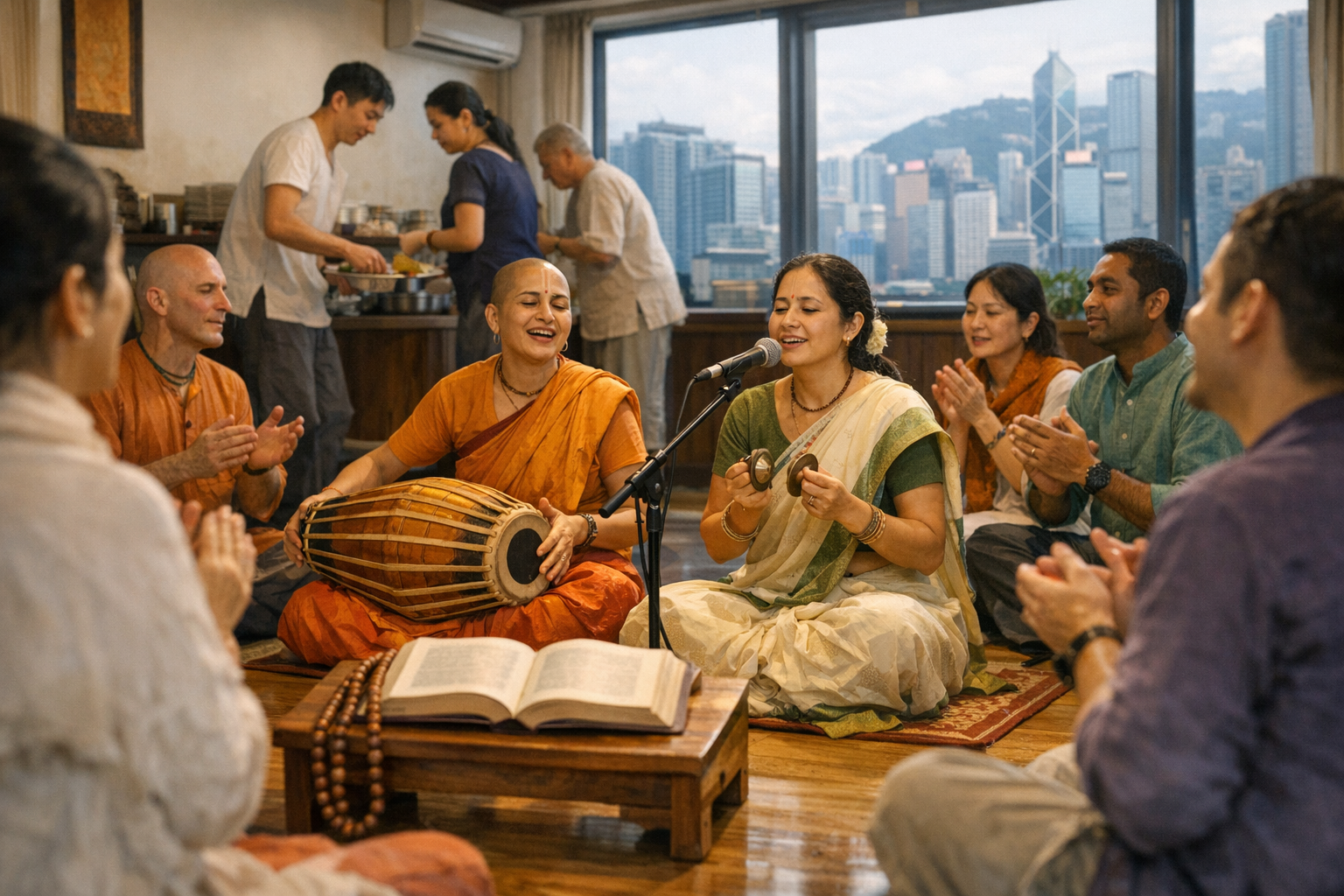
This long-form analysis spotlights Shereimony and Suchandratwo long-time devotees in Hong Kong’s Hare Krishna communitywhose steady sadhana, seva, and sādhu-saṅga exemplify quiet leadership. Readers gain an academic yet accessible overview of Krishna consciousness in the diaspora, including how Bhakti Yoga practices such as japa and kirtan support resilience. The article outlines practical, research-aligned benefits of…
-
Power and Grace of ISKCON London’s Ladies Sankirtan: Book Distribution and Community Impact

ISKCON London’s ladies Sankirtan party demonstrates how devotional service, ethical outreach, and disciplined training can transform brief public encounters into enduring spiritual inquiry. Through consent-first dialogue, culturally sensitive communication, and the voluntary distribution of texts like the Bhagavad-gita, the teams nurture curiosity without coercion. Women-led leadership adds relational depth and approachability, improving the quality of…
-
Sri Siksastakam Unveiled: How Krishna Sankirtana Cleanses the Heart and Heals Suffering
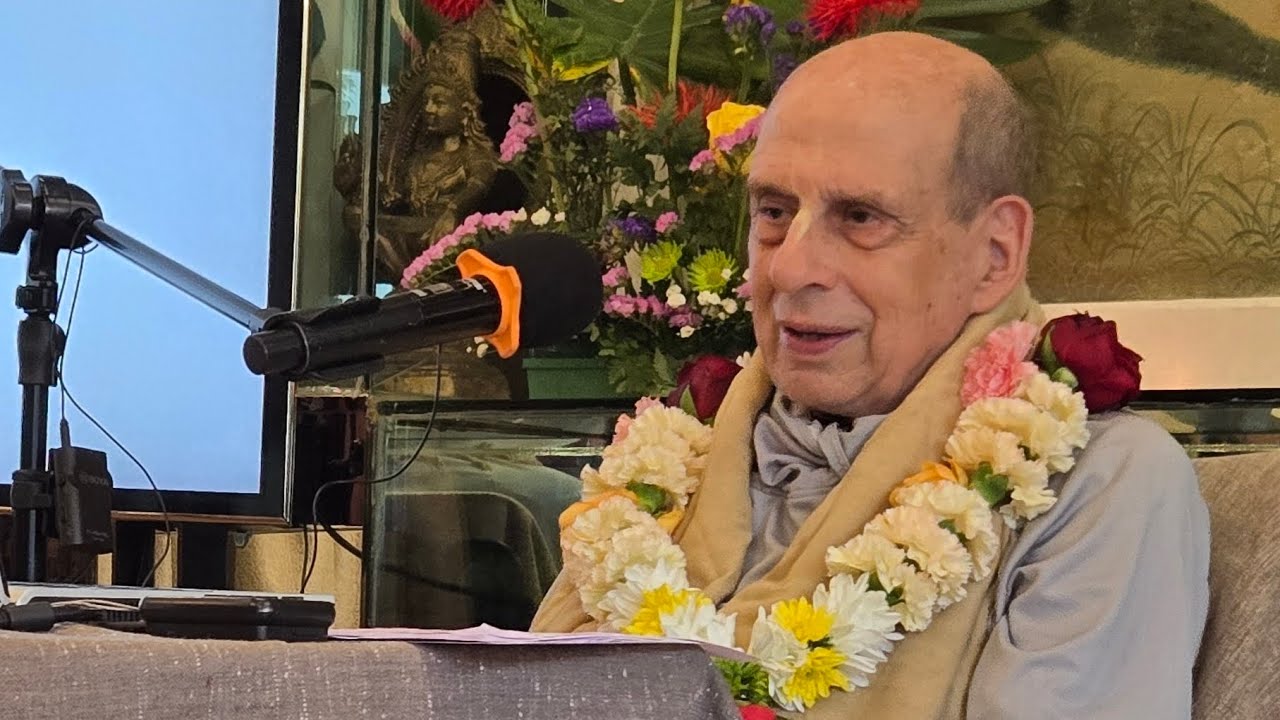
An in-depth ISKCON Hong Kong seminar led by HG Bhurijana Prabhu unpacked the first verse of Sri Siksastakam with philological precision and practical guidance. The discussion mapped the verse’s eightfold arcfrom cleansing the mirror of consciousness to bathing the entire selfshowing how sankirtana systematically heals inner turbulence. By contextualizing Sri Caitanya Mahaprabhu’s theology of the…
-
The Charismatic Harinama: ‘Jai Shri Rama’, Ram Setu, and the Dharmic Science of Naam

Harinama, the sacred practice of chanting the Divine Name, is explored through the Ramayana’s setu narrative, where ‘Jai Shri Rama’ symbolizes devotion’s power to bridge the impossible. The discussion grounds Harinama in scripture, citing the Bṛhan-nāradīya Purāṇa and the Kali-santarana Upaniṣad, and explains nāma-tattvathe non-difference of Name and Named. It highlights inter-dharmic resonances with Sikh…
-
Srimad Bhagavatam 11.5.32 Decoded: Chaitanya’s Sankirtana as Kali Yuga’s Transformative Path

Srimad Bhagavatam 11.5.32 presents congregational chanting of the divine Name as Kali Yuga’s most intelligent path, a vision Gaudiya Vaishnavism reads as pointing to Sri Chaitanya Mahaprabhu. Drawing on classical commentaries by Jiva Goswami and Krishnadasa Kaviraja, and on expositions by H.H. Jayapataka Swami Maharaj, this analysis unpacks the verse’s grammar, theology, and praxis. The…
-
Gaura Purnima Explained: Advaita Acharya’s Call that Reawakened Bhakti in Bengal

Gaura Purnima marks the full-moon appearance of Sri Chaitanya Mahaprabhu (1486 CE) in Navadvip, Bengal, and inaugurates the Gaurābda calendar. Situated in the Bhakti Tradition and celebrated as a major Hindu Festival, its historical context critiques performative religiosity and re-centers inner transformation. Gaudiya sources depict Sitanath Advaita Gosai invoking Krishna’s descent through worship with Ganga…
-
Inside Gaura Purnima 1975 at Mayapur: Srila Prabhupada’s Vision, Discipline, and Lasting Impact

Gaura-purnima 1975 in Mayapur, witnessed in the presence of Srila A.C. Bhaktivedanta Swami Prabhupada and preserved in the recollections of Srutakirti das, offers a disciplined, practice-centered model for celebrating Sri Chaitanya Mahaprabhu’s appearance. The festival integrated mangalā-ārati, focused japa, scriptural study, sankirtana, abhiṣeka, and prasāda into a coherent arc of devotion. Theologically anchored in acintya-bheda-abheda,…
-
Gaura Purnima 2026: Gaura‑lila, Nama‑sankirtana, and ISKCON Ljubljana’s Living Legacy
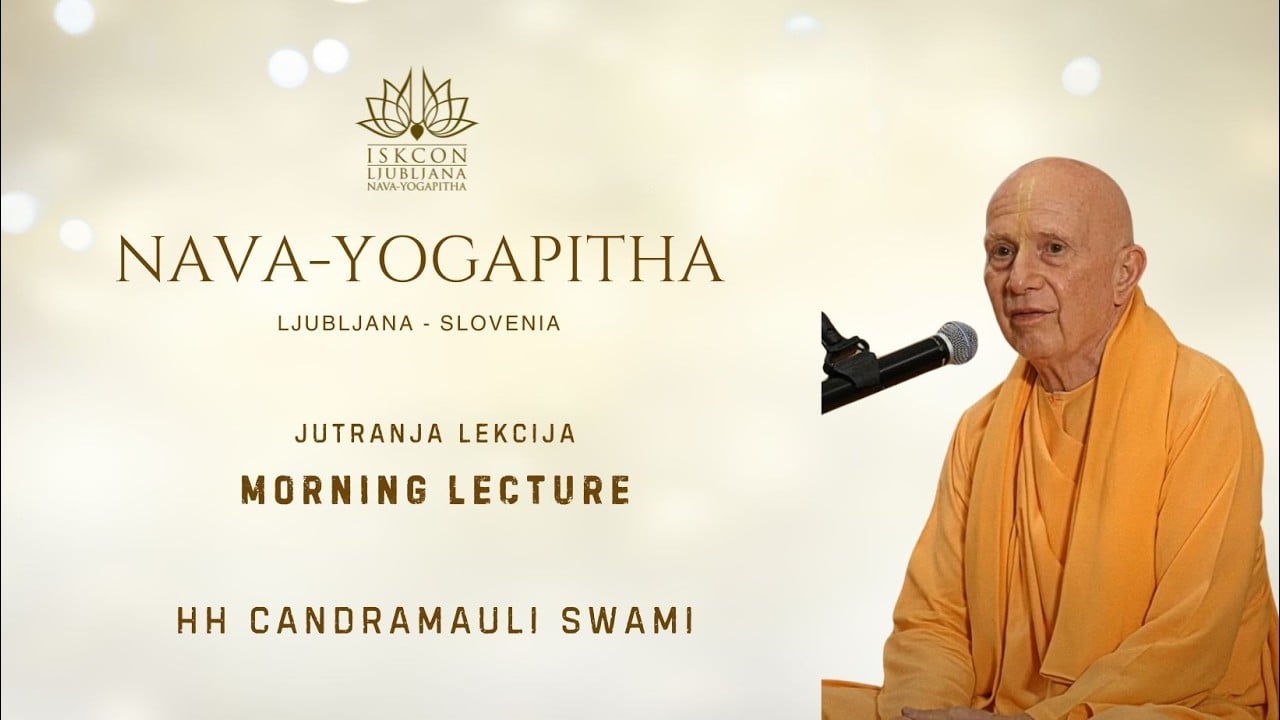
Sri Gaura Purnima 2026 at ISKCON Ljubljana brings the golden legacy of Sri Chaitanya Mahaprabhu (Gaura‑lila) into vivid focus through nama‑sankirtana, study, and service. Grounded in Gaudiya Vaishnava scriptures, the festival highlights acintya‑bhedabheda‑tattva and the transformative power of the Hare Krishna maha‑mantra. Reflections inspired by teachers such as HH Candramauli Swami underline sadhana, sadhu‑sanga, and…
-
Auspicious Departure of Ranjit das (ACBSP): Kirtan, Grace, and Vaishnava Legacy in Alachua

Ranjit das, ACBSP, passed away on February 25 at 6:45 pm ET in Alachua, Florida, surrounded by soft kirtan and the loving care of his family and community. The use of ACBSP denotes a disciple of Srila A. C. Bhaktivedanta Swami Prabhupada, reflecting affiliation with ISKCON and the Gaudiya Vaishnava guru–śiṣya paramparā. This tribute explains…
-
Beyond Chanting Alone: How Pancaratrika-vidhi Powers Bhagavad-vidhi in Kali-yuga

Many devotees wonder whether chanting alone suffices in Kali-yuga or whether the formal Pancharatra tradition remains essential. This analysis clarifies the complementary roles of Pancaratrika-vidhi (regulated Deity worship) and Bhagavad-vidhi (the Bhagavata’s path of hearing and chanting) as taught in ISKCON and Gaudiya Vaishnavism. It explains how Pancharatra codes purify and qualify the practitioner so…
-
When Sacred Sound Met the Beatles: Srila Prabhupada’s 1969 Kirtan at Tittenhurst Park

In September 1969 at Tittenhurst Park, Srila Prabhupada brought rigorous bhakti practice into dialogue with leading artists of the age. This article reconstructs that setting and examines chanting kirtan and japa as a precise method for liberation within Gaudiya Vaishnavism. It explains how sacred sound functions theologically and technically, from breath mechanics and vocal health…
-
Taguig City’s Sri Sri Radha Madhava Mandir Opens: 24‑Hour Kirtan, Devotion, and Unity

From January 30 to February 1, 2026, Taguig City in Metro Manila marked the opening of the Sri Sri Radha Madhava Mandir with a 24-hour kirtan and a formal ribbon-cutting. The inauguration signaled the formal relocation of the Deities to a permanent spiritual home, strengthening Hindu cultural presence in the Philippines. In Vaishnava practice, such…
-
From Ritual to Revelation: End ‘Courtesy Japa’ with Focused, Science-Backed Mantra Practice

Courtesy japamechanical, minimally attentive mantra repetitionyields little transformative benefit because it lacks clear sound, focused attention, and heartfelt intent. Drawing on Srila Prabhupada’s memorable illustration, this analysis explains why ritual without presence does not mature into love of Krsna, while still acknowledging the protective value of vow-keeping. Integrating insights from Hinduism, Buddhism, Jainism, and Sikhism,…
-
Gambhira’s Sacred Depths: Sri Chaitanya Mahaprabhu in PuriHistory, Bhakti, and Unity
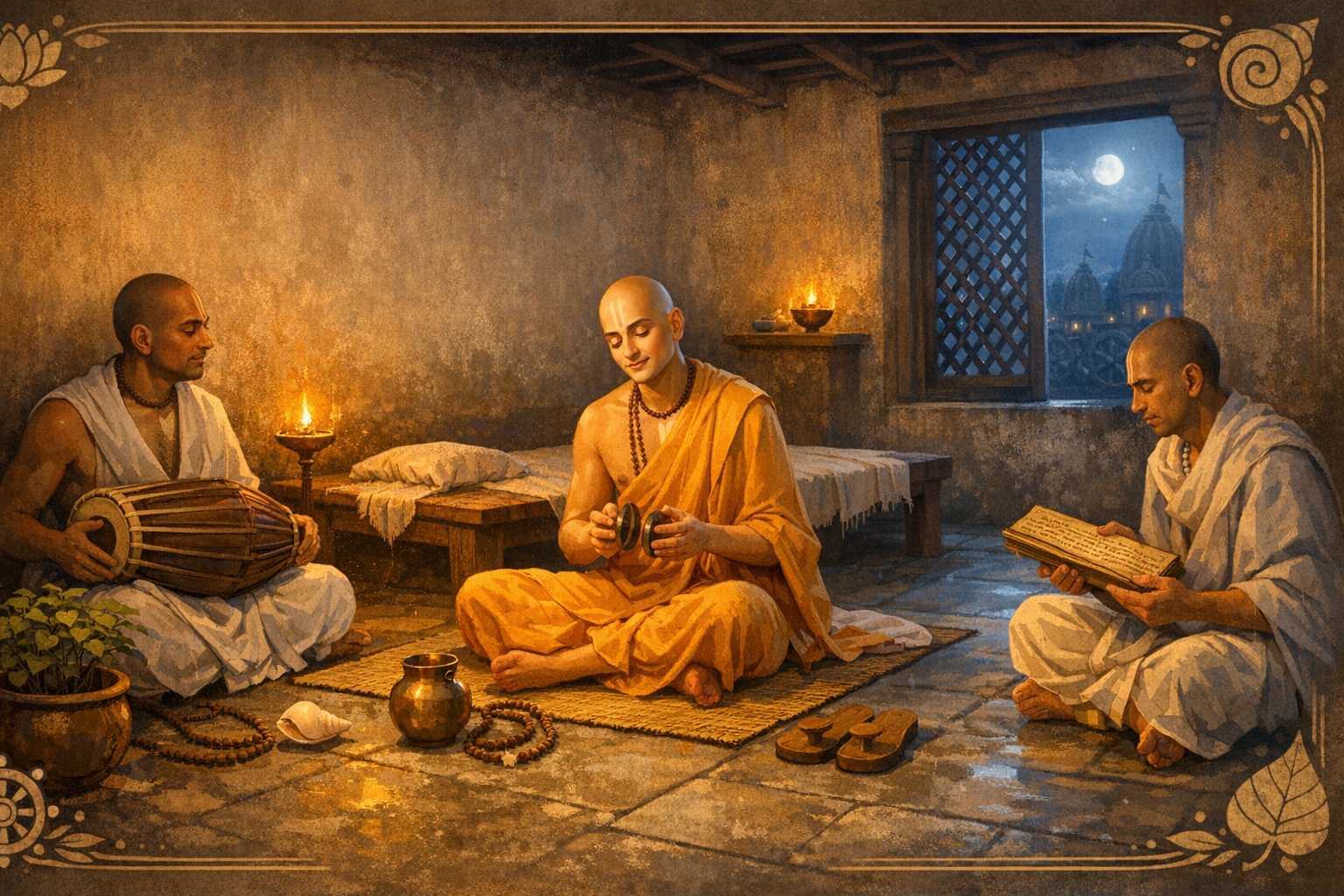
This in-depth study presents the Gambhira of Jagannath Puri as a pivotal site in the devotional history of Sri Chaitanya Mahaprabhu, connecting place, practice, and theology. It synthesizes insights from the rare Bengali work Gambhiraya Sri Gauranga with core Gaudiya texts to explain how nocturnal kirtan, scriptural recitation, and aesthetic theology shaped Mahaprabhu’s later years.…
-
Sri Radha’s Luminous Eyes: Heart-Purifying Insights on Kohl, Japa, and Vrindavan Bhakti
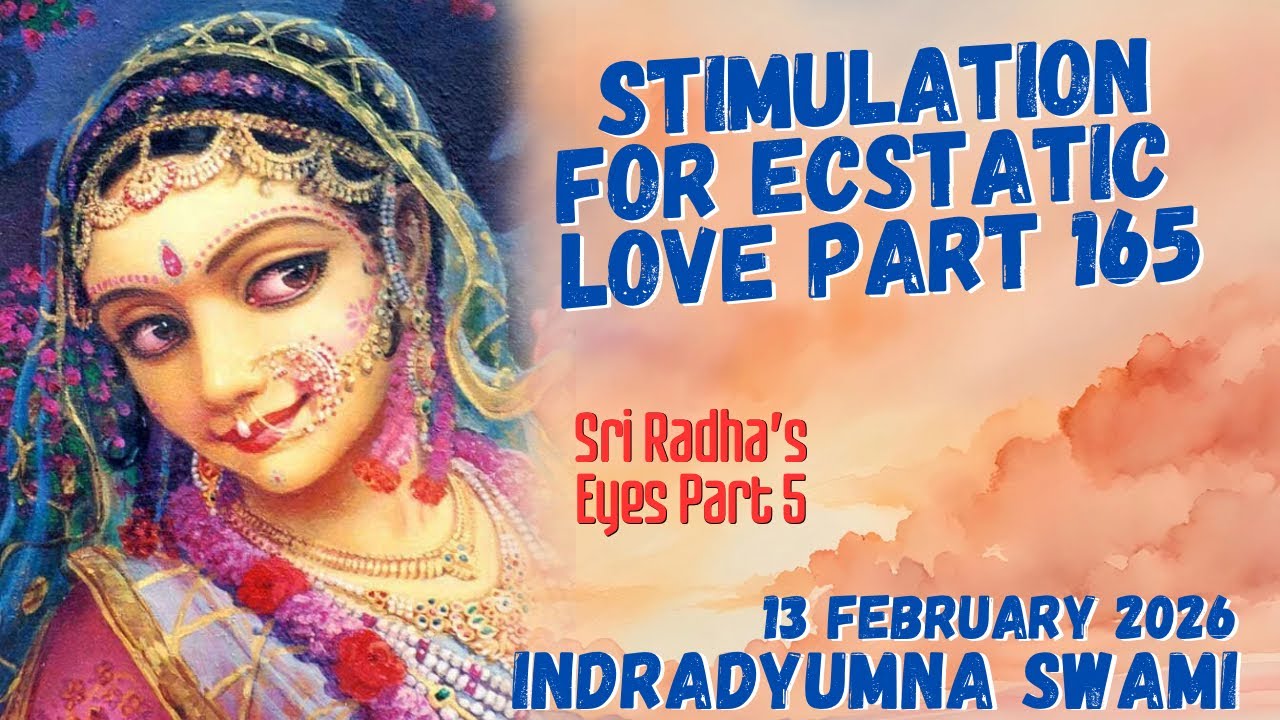
This installment in the ecstatic love series explores the devotional symbolism of Srimati Radharani’s eyes in Vrindavan bhakti. Opening with Vyasadas’s prayers to guru and Gauranga, it emphasizes purification of the heart through chanting (japa) and meditation (dhyana). The application of dark kohl (kajal) is interpreted as both an aesthetic intensifier and a metaphor for…
-
Timeless Deity Worship in the Vedic Tradition: Yuga‑Wise Paths and Dharmic Unity

This article clarifies a common misconception: Deity worship (murti-puja) in the Vedic Tradition is not a recent innovation but part of an ancient, continuous heritage. It explains how each yuga recommends distinctive practicesmeditation in Satya-yuga, yajna in Treta-yuga, Deity worship in Dvapara-yugawhile showing that these disciplines persist across ages. For Kali-yuga, it highlights why mantra…
-
When ‘Failure’ Becomes Success: Transforming Painful Chanting Doubts into Growth

Acknowledging chanting as central to spiritual practice can feel painful because it exposes gaps between ideals and daily effort. This reflection reframes that discomfort as diagnostic feedback, turning apparent failure into a catalyst for growth. Instead of avoiding conversations about quality chanting, compassionate accountability and mindful attention help align intention, technique, and devotion. The same…
-
Awe and Revelation: Early Miracles of Caitanya Mahaprabhu and the Transforming Power of Nama
Early narratives of Caitanya Mahaprabhu recount how, after Sarvabhauma Bhattacarya sought refuge, the Lord revealed a four-armed Visnu form and then the original two-armed Krsna form. This sequence communicates both transcendence and intimacy, guiding readers toward humility and sustained remembrance through chanting. The episode clarifies a core bhakti principle: mercy opens understanding, and understanding ripens…
-
ISKCON Mayapur Sankirtan Welcome: Joyous Homecoming and Dharmic Unity (Feb 7, 2026)

On February 7, 2026, ISKCON Mayapur hosted a Sankirtan Devotees’ welcome ceremony that celebrated collective devotion and community service. The gathering highlighted Krishna-bhakti while reflecting values shared across Hinduism, Buddhism, Jainism, and Sikhism. With congregational chanting and a reverent atmosphere, the ceremony emphasized gratitude, seva, and social cohesion. Framed by living tradition, it functioned as…
-
Om Namah Shivaya Benefits: A Transformative Mantra for Calm, Clarity, Courage, and Grace

Om Namah Shivaya is a foundational Shaivite mantra known for enhancing calm, clarity, and emotional resilience through focused japa and mantra meditation. Its meaningsalutation to Shiva as auspiciousnessanchors ethical living and compassionate strength. Rhythmic recitation, aligned with the breath, supports stress reduction and balanced mood by gently calming the nervous system. Practitioners often experience improved…