-
The Quiet Architecture of Grief: Evidence-Based Ways Small Rituals and Memories Sustain Love

Grief seldom ends; it changes form. Using a clear case of companion‑animal loss, this piece explains how routine, memory, and community support help sustain love after bereavement without minimizing sorrow. Readers will learn key frameworks from contemporary bereavement science—Continuing Bonds Theory, the Dual Process Model, disenfranchised grief, and post‑traumatic growth—and how these map onto everyday…
-
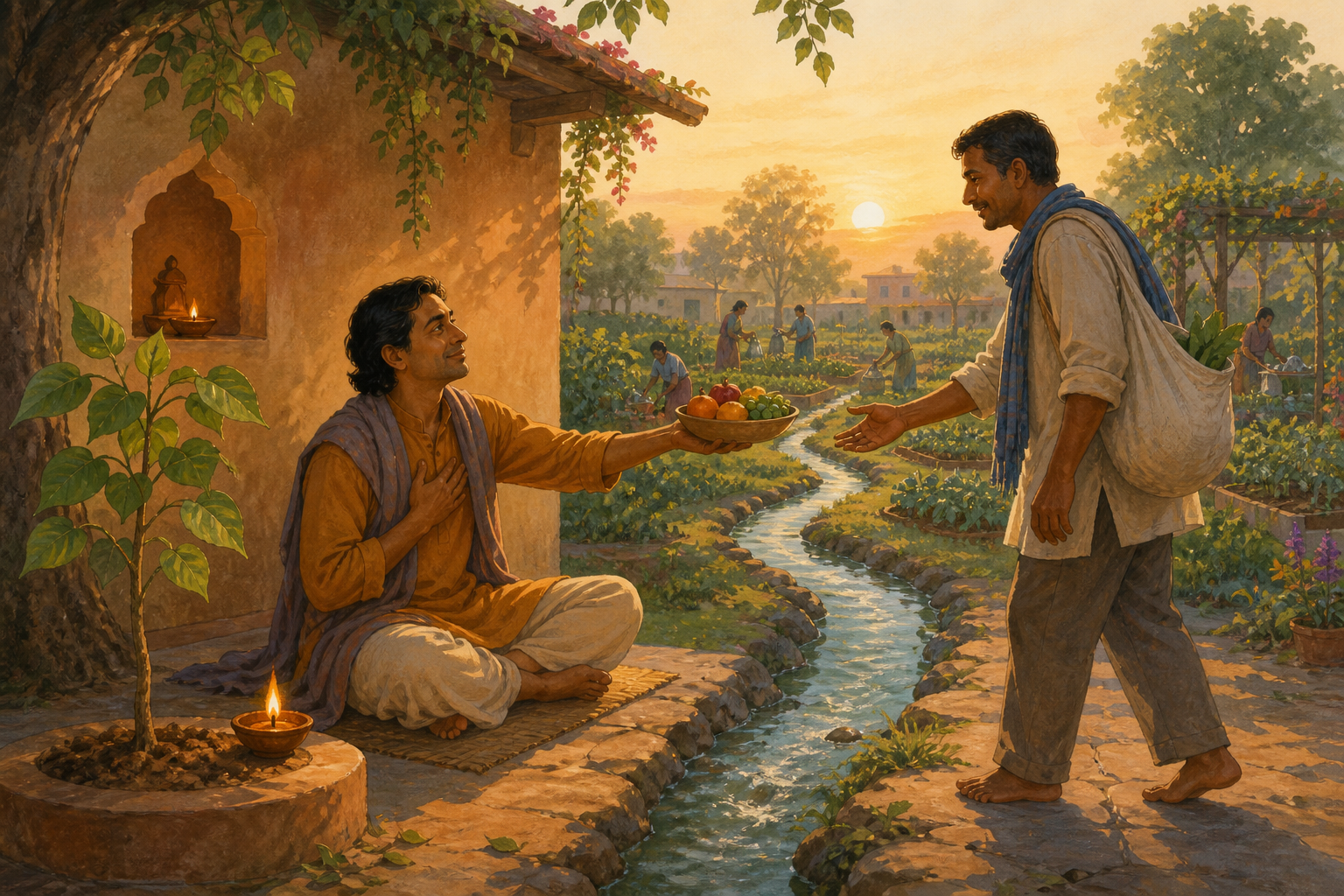
Mahabharata Wisdom on the True Gift: Markandeya’s Guide to Nishkama Dāna and Seva

This long-form exploration distills Sage Markandeya’s Mahabharata teaching on the nature of the true gift (dāna) and explains why intention, not magnitude, confers ethical value. It maps dāna to the Bhagavad-Gita’s guṇa framework, clarifying the difference between sāttvika, rājasa, and tāmasa giving. Through the exemplar of King Śibi, it highlights abhayadāna (the gift of fearlessness)…
-
Spirituality of Nature: Dharmic wisdom and science for resilient, unshakable inner strength

This long‑form exploration presents a rigorous, Dharmic view of nature as a living revelation of consciousness, uniting Hinduism, Buddhism, Jainism, and Sikhism around interdependence, non‑harm, disciplined awareness, and service. It clarifies how Upanishadic, Buddhist, Jain, and Sikh insights translate into ecological ethics and everyday practices. Evidence from psychology and physiology shows why slow breathing, awe,…
-
Spirituality of Nature: Sacred Dharmic Wisdom, Science-Backed Healing, Inner Resilience

This long-form guide presents an academic yet accessible exploration of the spirituality of nature across Hinduism, Buddhism, Jainism, and Sikhism. It grounds ecological reverence in the Upanishads and the Bhagavad Gita, links practices like mindfulness and pranayama to measurable health benefits, and shows how Ahimsa and Aparigraha become daily Environmental stewardship. Readers gain a stepwise…
-
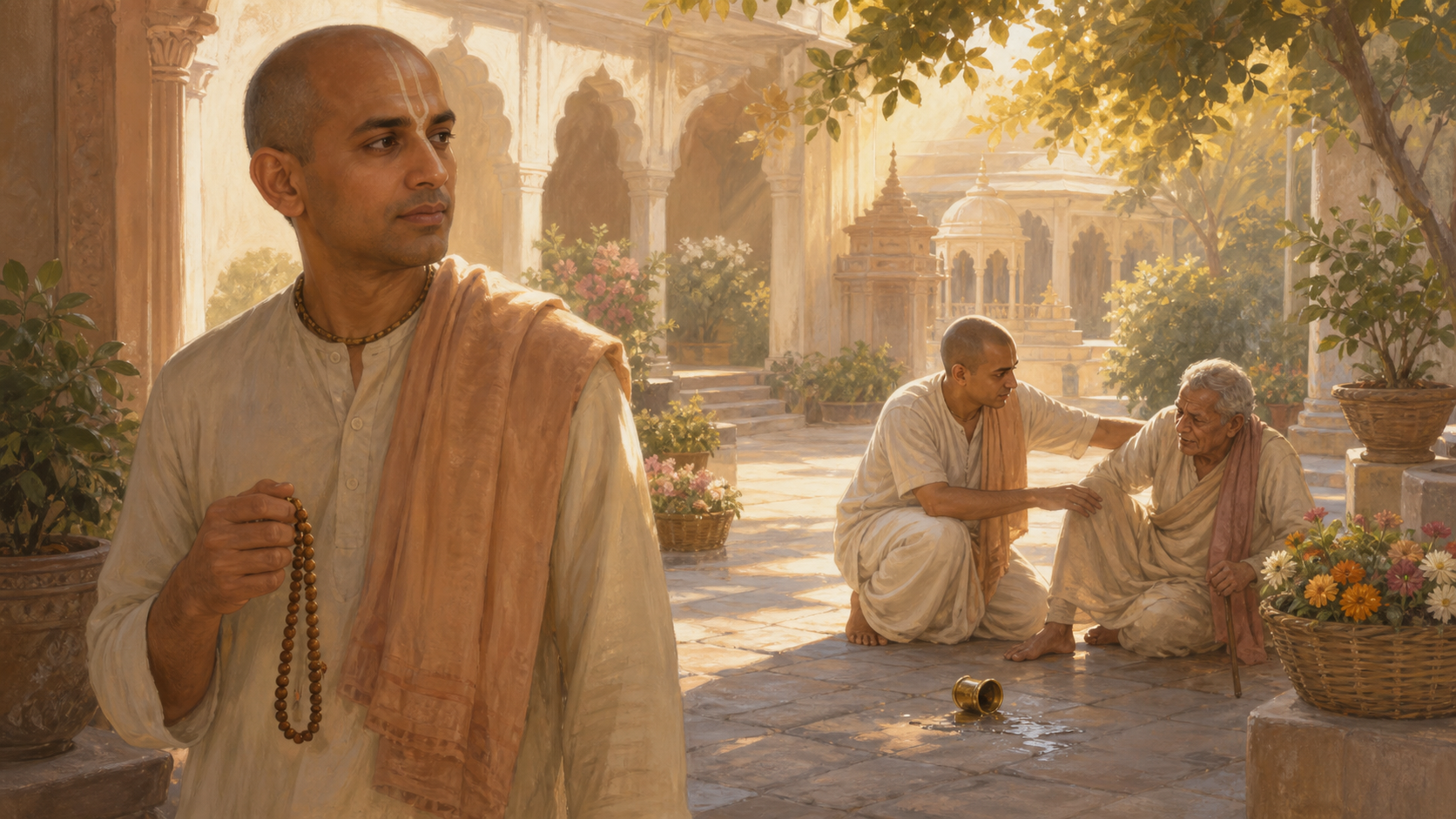
From Envy to Compassion: Dharmic Ethics of Bhakti, Ahimsa, and Unity Across Traditions

Non-envy is presented as a defining criterion for authentic religion across Hinduism, Buddhism, Jainism, and Sikhism, aligning with A.C. Bhaktivedanta Swami Prabhupada’s emphasis within Krishna consciousness. The article clarifies envy versus jealousy and shows how dharmic ethics reject both as inner violence that fractures community. It integrates scriptural insights—Bhagavad Gita, Śrīmad-Bhāgavatam, Dhammapada, Jain vows, and…
-
Choose Mental Fuel, Not Noise: Dharmic Wisdom to Protect Self‑Respect and Clarity

This essay presents a rigorous, dharmic framework for curating a nourishing “mental diet” that protects clarity and self‑respect in an age of digital distraction. Drawing on the Upanishads, the Bhagavad Gita, and Yoga Sutra, it explains how sattva, abhyasa–vairagya, and pratyahara translate into concrete media habits. Buddhist thought contributes the four nutriments and wise attention;…
-
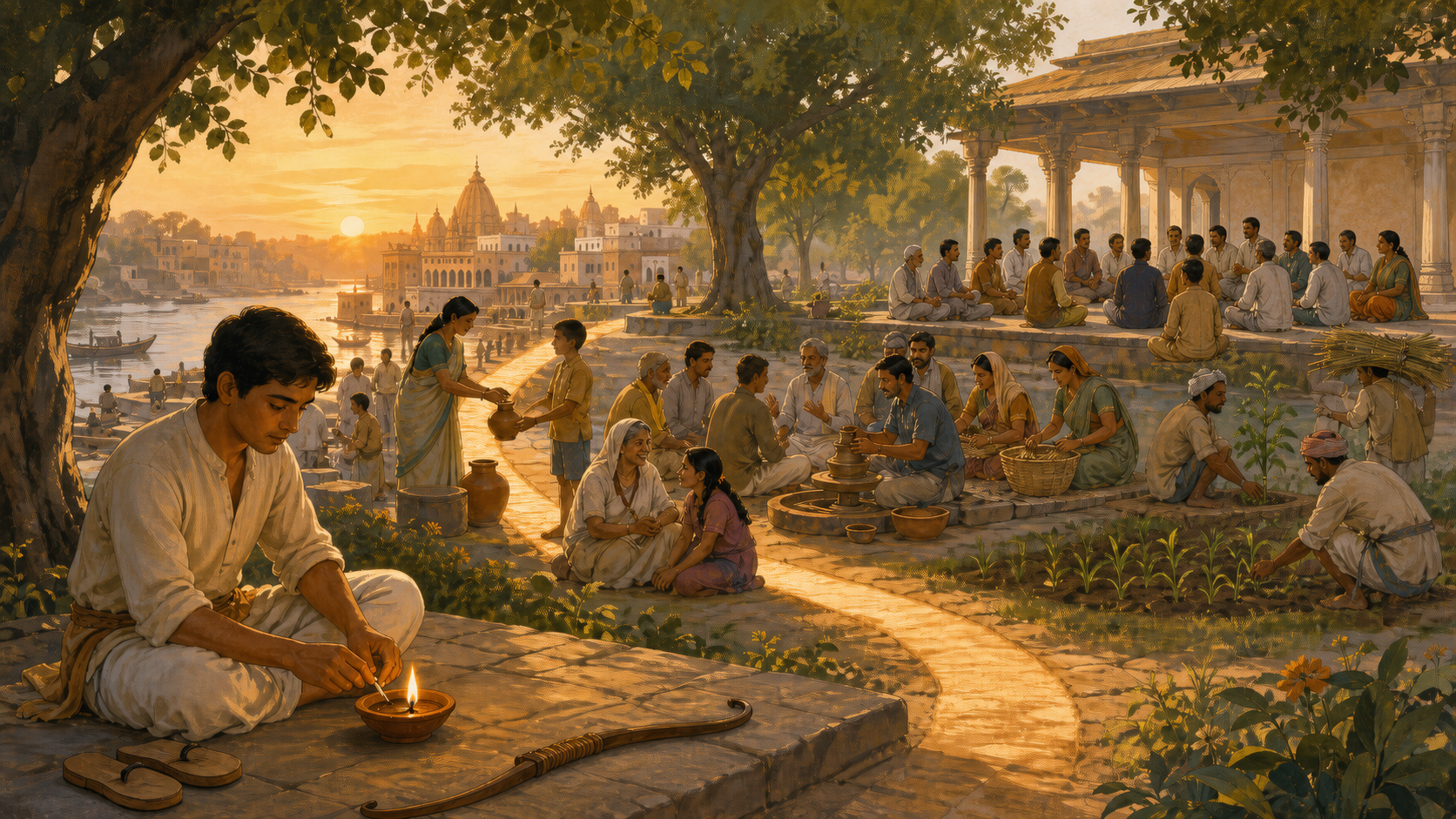
The War They Could Not Win: How Dharmic Resilience Defied Empire and Erasure

This long-form analysis explains why attempts to subdue India’s civilizational core repeatedly failed. It argues that dharmic polycentricity—rooted in Hindu, Buddhist, Jain, and Sikh traditions—produced resilient networks of ethics, learning, and care beyond the reach of central control. Drawing on the Revolt of 1857, British Colonial Rule, and the intellectual countercurrents of Vivekananda and Aurobindo,…
-
‘Gems of Sikhism’ Review: Timeless Teachings, Khalsa Ethos, and Dharmic Unity Today

This academically grounded review of ‘Gems of Sikhism’ distills the core teachings of Sikhism—Ik Onkar, Naam, Seva, Kirat Karni, Vand Chakna, Sarbat da bhala, and the Khalsa ethos—into a coherent, accessible framework. It explains how Sikh practices like Langar and Seva institutionalize equality and compassion, while Miri–Piri and the Sant–Sipahi ideal provide a disciplined theory…
-
Backbiting and Dharma: Psychological, Social, and Karmic Costs—Plus Practical Remedies

Backbiting may appear trivial, yet dharmic ethics and modern psychology converge on its real costs: eroded trust, increased anxiety, fragmented communities, and deepened karmic imprints. Hinduism (Bhagavad Gita 17.15), Buddhism (Right Speech), Jainism (ahimsa and satya), and Sikhism (rejection of ninda) all prescribe compassionate, truthful, and beneficial speech. Research likewise shows that malicious gossip undermines…
-
West Bengal Ends Public Slaughter: Cow/Buffalo Sacrifice Limited to Licensed Abattoirs with Strict Penalties

West Bengal has mandated that cow and buffalo sacrifice occur only within licensed abattoirs during Bakri Eid 2026, ending public or street-side slaughter across urban areas. The directive clarifies venue and hygiene requirements without prohibiting festival observance, aligning with national animal welfare, food safety, and municipal health laws. Concentrating slaughter in authorized facilities enables veterinary…
-
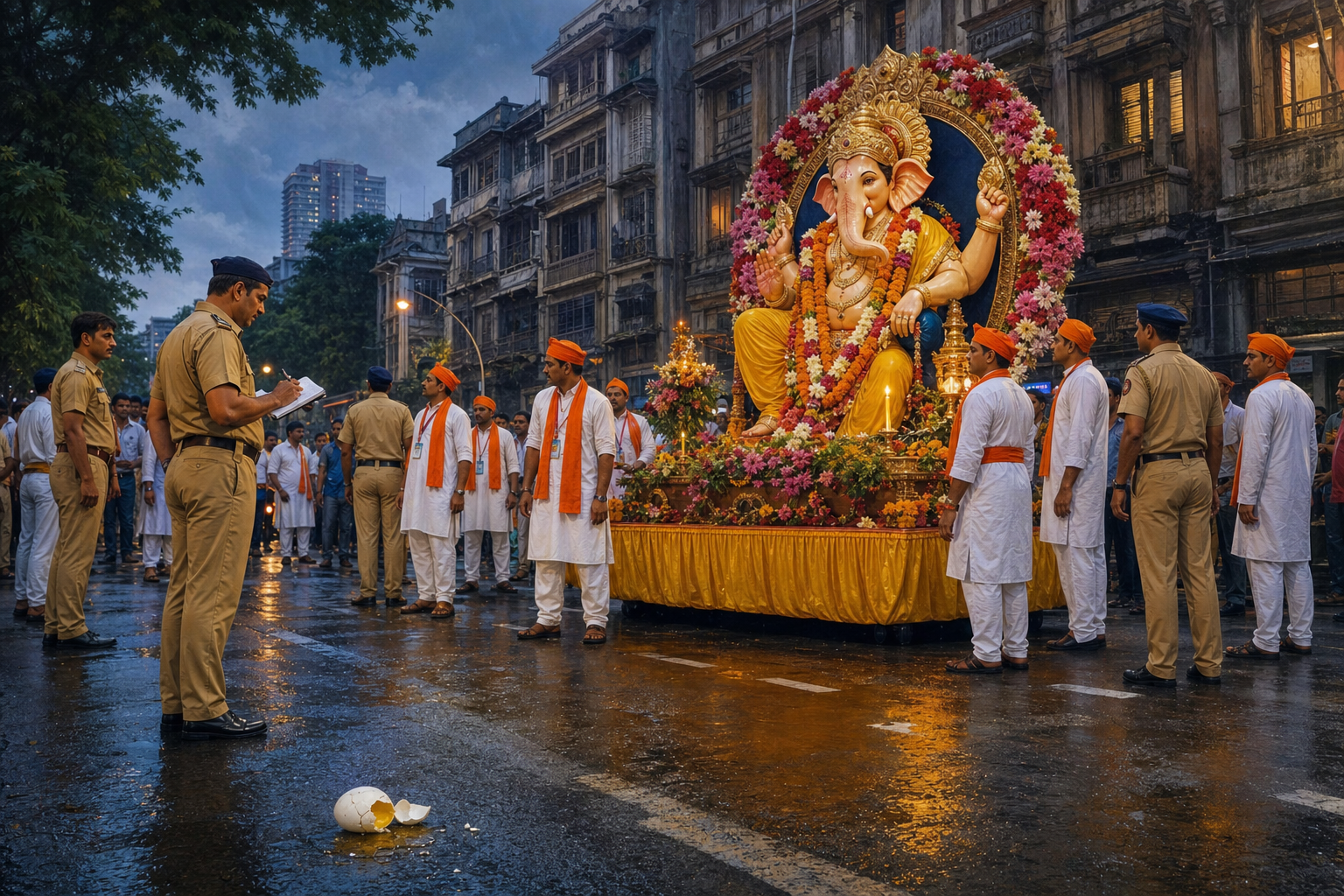
Ulhasnagar Interfaith Marriage Tensions: Legal Rights, Policing Protocols, and Paths to Harmony

Reports from Ulhasnagar on 13 May 2026 describe an alleged post-marriage family altercation linked to an interfaith union; this analysis uses the case as a lens to clarify law, policing, and peacebuilding. Readers will learn how Article 21, landmark Supreme Court rulings, and the Special Marriage Act protect adult choice while guiding authorities to deter…
-
As You Believe, So You Live: Hindu Dharma’s Science of Mindset, Health, and Longevity

This long-form analysis explores how dharmic wisdom—Hinduism, Buddhism, Jainism, and Sikhism—anticipated modern findings on the mind-body connection by showing that belief (śraddhā, bhāva) measurably shapes healthspan and longevity. It integrates Bhagavad Gita and Yoga Sūtra insights with Ayurveda’s sattvavajaya and rasāyana, and aligns them with contemporary stress biology, autonomic regulation, and immune resilience. Practical guidance…
-
Malati the Cow: A Dramatic New Vrindaban Rescue and Evidence-Based Guide to Milk Fever

A postpartum emergency at New Vrindaban became a textbook case in recognizing and treating milk fever (periparturient hypocalcemia) while showcasing the power of community-based, dharmic care. The narrative follows Malati from calving to life-threatening recumbency with bloat, through improvised oral calcium, expert IV therapy, and careful use of hip lifters to restore sternal recumbency and…
-
Vasudhaiva Kutumbakam and Dharma: A Powerful Blueprint for Shared Global Peace

Vasudhaiva Kutumbakam frames global peace as a disciplined practice of shared responsibility rooted in Rta, Dharma, and the ethics of ahimsa and karuna. The essay explains how loka-samgraha in the Bhagavad Gita links personal virtue to social welfare through reciprocal duty. It outlines pluralism across Hinduism, Buddhism, Jainism, and Sikhism as a practical foundation for…
-
From Tehsils to Nation: Gau Samman Avahan Abhiyan’s Roadmap to Honor Gaumata as ‘Rashtramata’

The ‘Gau Samman Avahan Abhiyan’ channels reverence into a lawful, evidence-based framework for cow protection and conservation. By submitting detailed memorandums to Tehsildars across Maharashtra and Goa, citizen groups seek tehsil-level coordination, humane animal care, and transparent, data-driven governance. The campaign’s invocation of Gaumata as ‘Rashtramata’ functions as an inclusive civilizational metaphor that unites Hindu,…
-
Dharma Unveiled: The Living Code of Virtue Guiding Daily Life Across Dharmic Traditions

Dharma is presented as a living, context-sensitive code of virtue shared across Hinduism, Buddhism, Jainism, and Sikhism. The article clarifies its scope—from universal virtues like ahiṃsā and satya to role-specific duties—and shows how it governs the pursuit of prosperity and well-being without compromising conscience. It draws on classical sources (Dharmashastras, the Bhagavad Gita, Buddhist canons,…
-
Beyond Maya: Dharmic Wisdom on Materialism, Ethical Wealth, and Lasting Fulfilment

Hindu philosophy and its sister Dharmic traditions view wealth as a legitimate aim governed by ethics, moderation, and service. The puruṣārthas align Artha with Dharma and Moksha, while the Bhagavad Gita’s Karma Yoga reframes success as disciplined action without fixation on results. Upanishadic counsel, Yoga’s aparigraha, Buddhism’s Right Livelihood, Jain vows of limitation, and Sikh…
-
Tapasya in Hinduism: Transformative Austerity for Self-Realization, Clarity, and Inner Power

Tapasya in Hinduism is a disciplined, life-affirming austerity that refines body, speech, and mind to foster Self-Realization and ethical clarity. Drawing on the Upanishads, Bhagavad Gita, and Yoga philosophy, it is defined as a transformative heat that burns impurities and ripens insight. The Gita’s typology (sāttvika, rājasika, tāmasika) and Patañjali’s Kriyā Yoga supply practical guardrails…
-
‘Gavyapataye’ Bhairava: Tantric Guardian of Cows, Compassion, and Sacred Ecology

Gavyapataye Bhairava reveals Bhairava’s Tantric role as guardian of cattle, food purity, and sacred ecology. The epithet’s Sanskrit morphology (gavya + pati) ties devotion directly to agrarian life and ritual substrates like pañcagavya. Set within Bhairava-sahasranāma practice, it unites vigilant protection with compassionate stewardship. Textual, iconographic, and ethnographic threads—spanning Skanda Purāṇa references, temple sub-shrines, and…
-
Many Paths, One Dharma: How the Ramayana Maps Righteous Action Across Conflicting Duties

This long-form, scholarly exploration reads the Ramayana as a rigorous map of dharma where competing duties are weighed rather than simplified. It clarifies crucial categories—sādhāraṇa-dharma, svadharma, āpad-dharma, maryādā, and rājadharma—and shows how they animate choices made by Rāma, Sītā, Bharata, Lakṣmaṇa, Hanumān, Vibhīṣaṇa, and others. Multiple retellings (Valmiki, Kamban, Tulsidas, Adhyatma Ramayana, Jain Paumachariya) are…