

If you came here after encountering the footage and want to know whether Ram Sanehi’s death was a caste killing, the honest answer has two parts. A Scheduled Caste Hindu laborer was bound and beaten before being found near a canal bank and declared dead. Police registered a murder case with provisions of the Scheduled Castes and Scheduled Tribes (Prevention of Atrocities) Act, but the motive had not been established in the disclosed investigation.
That distinction does not diminish the crime. It keeps the demand for justice credible. You can acknowledge caste vulnerability, condemn the assault without qualification, and insist on accountability without turning an allegation, a name, or a viral caption into a judicial finding.
What is known about Ram Sanehi’s death
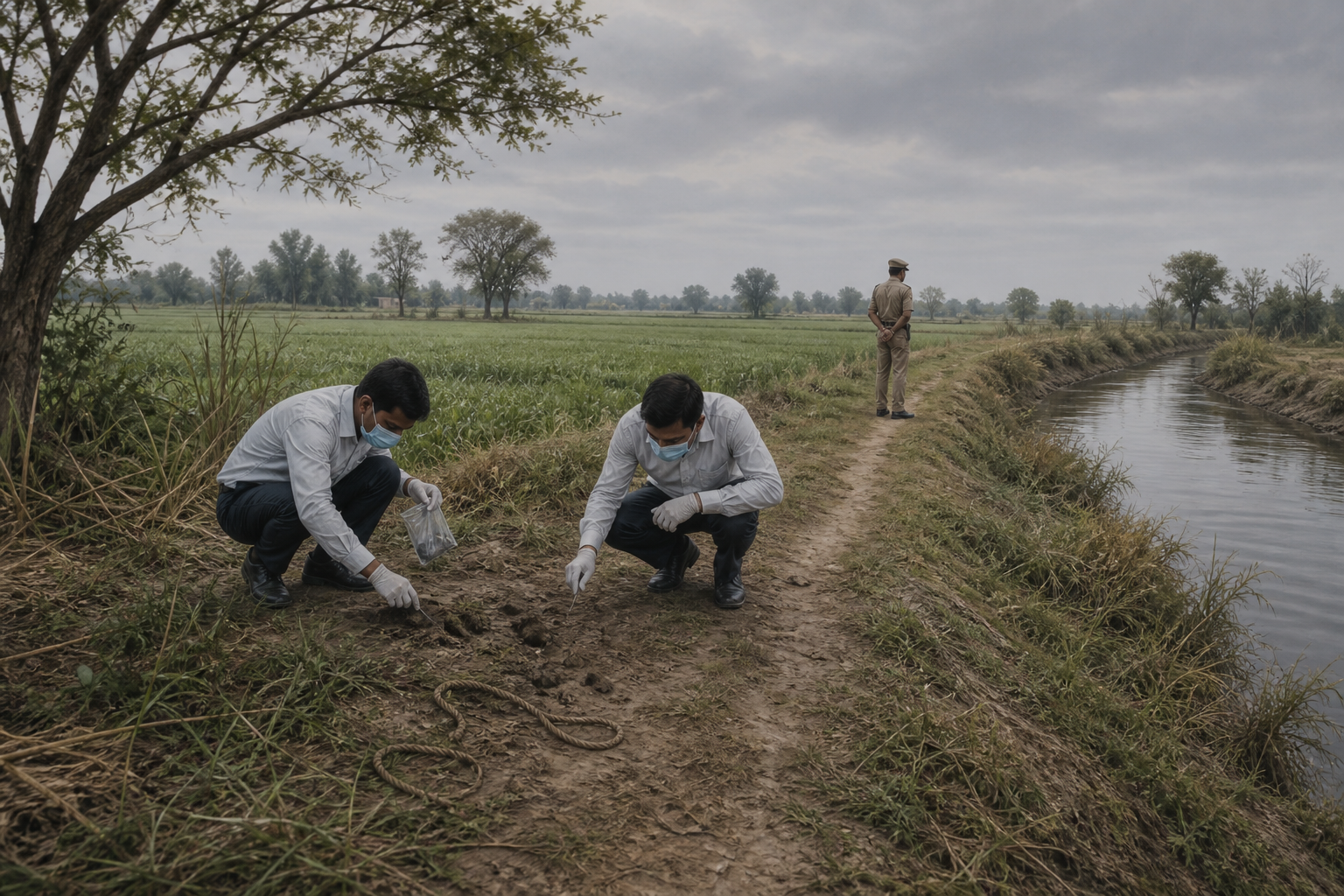
Ram Sanehi was a 38-year-old Scheduled Caste Hindu laborer from Vishunpur Kalan village in Uttar Pradesh’s Balrampur district. He supported himself and his family through labor. The reported assault occurred in the Thakurpur area under Gasdi police station.
- A circulating video shows Ram Sanehi tied to an electric pole while a man strikes him with a stick.
- In the footage, Ram Sanehi can be heard pleading, “Brother, don’t hit me, let me go.”
- He was found near a canal bank on the morning of 11 August. People took him to a hospital, where doctors declared him dead.
- His brother, Phool Kumar, said the family learned that footage had been placed on Facebook, downloaded it, and gave it to police.
- The family’s complaint named Guddu, Guddu’s father Akbar Ali, Magghe Nau, and several other people as accused in the beating.
- Police arrested Akbar Ali and a minor described as approximately 14 years old. They also said that a stick allegedly used in the assault had been recovered.
Those facts do not settle every question. The disclosed case status does not establish the identity and role of every person allegedly involved, the full medical and forensic findings, or the eventual judicial outcome. Arrest is not conviction, and a named complaint begins an investigation rather than ending one.
Why the caste question requires precise language

Discussion of this case can easily collapse three different propositions into one. Keep them separate:
- Ram Sanehi’s social identity: He belonged to a Scheduled Caste community and was Hindu.
- The police classification: Authorities registered murder and invoked the SC/ST Act.
- The motive for the assault: Nothing disclosed so far proves that Ram Sanehi was attacked because of his caste.
The first proposition concerns the victim’s identity. The second describes a legally significant step taken by police. The third is a conclusion about why the violence occurred. Registration under the SC/ST Act must be taken seriously, but it is not by itself a final finding that caste hatred caused the killing. The complaint, applicable statutory provisions, evidence, and eventual court findings will determine the legal conclusion.
If you are describing the case now, the most accurate formulation is that Ram Sanehi was a Scheduled Caste Hindu laborer whose death led police to register murder and SC/ST Act provisions. Calling it a proven caste-motivated murder goes beyond the presently disclosed facts. Calling it an alleged caste atrocity, or a murder case registered under the SC/ST Act, preserves both the seriousness and the uncertainty.
The same discipline applies to communal claims. A person’s name cannot substitute for evidence about religious identity, collective responsibility, or motive. Nothing presently disclosed establishes that Ram Sanehi was attacked because he was Hindu. A pro-Hindu concern for his life does not require you to manufacture a communal conclusion that investigators have not established.
A theft suspicion cannot become a street verdict

Ram Sanehi was reportedly apprehended on suspicion of attempted theft. Police were also examining whether theft was actually involved or whether a personal grudge lay behind the incident. Until that question is resolved, describing him as a thief converts an accusation into a fact.
More importantly, even proof of attempted theft would not authorize torture or killing. Suspicion should lead to evidence being preserved and placed before police. It cannot confer on private people the power to bind someone to a pole, beat him, extract a confession, impose punishment, or decide whether he deserves to live.
There are therefore two separate duties of accuracy. Do not turn Ram Sanehi into a convicted thief to excuse what happened to him. Do not turn every person named in the complaint into a convicted murderer before a court determines responsibility. Use “suspected theft” for the allegation against Ram Sanehi and “accused” for those being investigated in his death.
This is not procedural softness. It prevents the same mob logic from being reproduced in reverse. Justice requires a full investigation of the assault while protecting the integrity of the case against exaggeration, retaliation, and false certainty.
How you can support justice without damaging the case

The footage gave the family something concrete to place before investigators. That does not mean its widest possible circulation is automatically helpful. If you report, campaign, or post about the case, use the following sequence.
- Preserve evidence before adding commentary. If you possess relevant material, retain the original file, URL, uploader information, and visible date or time details. Do not crop, subtitle, compress, or combine the evidentiary copy with other footage. Give it to investigators or an authorized legal representative rather than relying on a social-media repost.
- Do not circulate graphic footage merely to display outrage. Repeated public sharing can strip the victim of dignity, expose relatives to the assault again, and spread edited or decontextualized copies. A factual description and a link to non-graphic case information are usually sufficient for public discussion.
- Label each claim by its status. State what the video visibly depicts, what the family alleges, what police have done, and what remains under investigation. Do not merge those layers into one confident narrative.
- Ask for verifiable investigative milestones. Useful questions concern the identification and role of every alleged participant, preservation and authentication of the video, medical and forensic findings, the basis for the invoked provisions, the motive determination, and the progress of prosecution. Demand a reasoned finding, not a predetermined one.
- Protect the minor’s identity. One accused was described as approximately 14 and was being handled under the Juvenile Justice Act. Do not publish the child’s name, image, address, school, or other identifying information. Anyone preparing formal coverage should obtain case-specific legal advice before releasing sensitive material.
- Reject doxxing and collective retaliation. Threatening relatives, targeting a locality, or blaming an entire caste or religious community neither proves the case nor honors Ram Sanehi. It creates new victims and can divert attention from the people whose individual conduct must be investigated.
The Dharmic standard is clearest when someone is accused
Ahimsa does not mean indifference to violent crime. It means refusing to let accusation become permission for cruelty. Dharma cannot depend on whether the person tied to the pole is rich or poor, socially powerful or Scheduled Caste, admired or suspected of wrongdoing. Human dignity matters precisely when anger makes it convenient to forget.
A serious Hindu public voice should therefore do two things at once: refuse the erasure of a Scheduled Caste Hindu victim, and refuse to invent caste or communal motives before evidence establishes them. This discipline is not neutrality between victim and attacker. It is loyalty to truth, lawful accountability, and the equal worth of life.
Key takeaways
- Say: Ram Sanehi was a 38-year-old Scheduled Caste Hindu laborer who was bound and beaten before being found near a canal bank and declared dead.
- Say: Police registered murder and SC/ST Act provisions, arrested Akbar Ali and a minor, and recovered an alleged weapon.
- Do not say as settled fact: that Ram Sanehi was a thief, that every named accused is guilty, or that caste or religious hatred has been proved as the motive.
- Keep the moral point clear: no theft allegation could justify private confinement, torture, or killing.
- Act usefully: preserve original evidence privately, avoid amplifying graphic footage, use precise legal language, protect the minor’s identity, and track concrete investigative and court developments.
If you speak about this case, attach your concern to a checkable next step. Ask what has happened to the remaining allegations, whether the footage and medical evidence have been secured, and how the prosecution is progressing. That keeps public attention on justice for Ram Sanehi rather than allowing his death to become another instrument of rumor or temporary outrage.
References
