
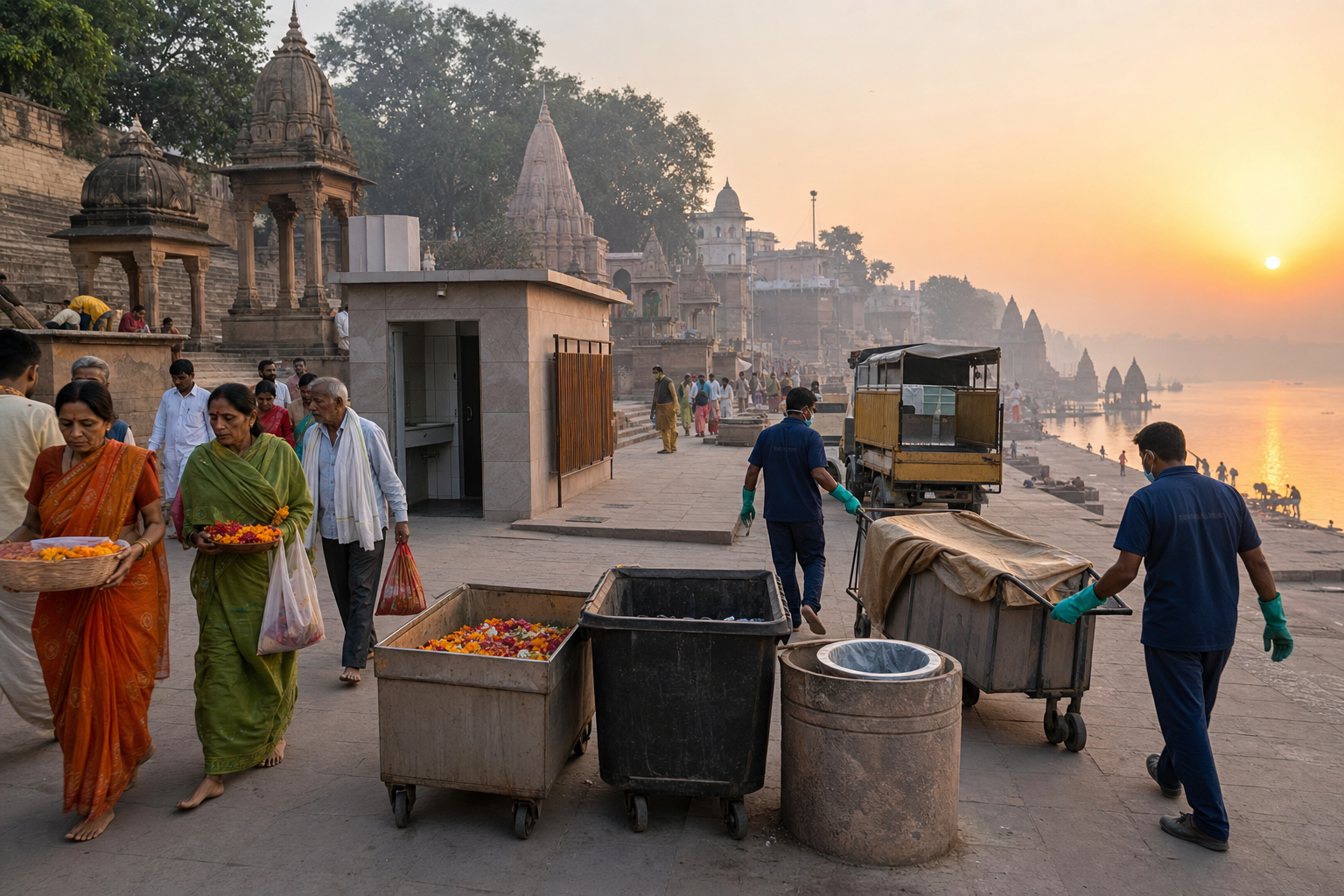
You may carry flowers, food, water and a change of clothes to a tirtha. You also carry responsibility for every wrapper, bottle and discarded offering those things can produce. If you are preparing for a yatra, the practical rule is simple: decide where each item will end up before you enter the sacred area.
The same rule applies at institutional scale. A temple committee or yatra administration must plan the full journey of waste, from the pilgrim’s hand to collection, transport and safe processing. Bins without timely removal merely create new rubbish heaps. Cleaners without supplies, toilets without inspection and announcements without usable facilities cannot keep a crowded pilgrimage clean.
Key takeaways
- Bring fewer disposable items, carry your own waste until you find the correct collection point and never leave an offering, bag or bottle beside an overflowing bin.
- Treat shaucha, seva and ahimsa as operational duties: prevent filth, support the people doing sanitation work and do not shift avoidable harm onto rivers, animals, residents or cleaners.
- Place and service facilities around actual pilgrim movement: arrival points, queues, food areas, ghats, changing rooms, toilets, resting areas and departure routes.
- Plan for the busiest hours and the final departure surge, not the average crowd. Waste can accumulate faster at the end, just when temporary staff and vehicles are under the greatest pressure.
- Assign a named owner, an inspection routine and an escalation path to every sanitation zone. A facility that nobody is required to check will eventually become unusable.
- Measure whether waste was removed safely and on time. Counting bins, workers or vehicles alone does not tell you whether the sacred site stayed clean.
Carry a no-trace yatra plan, not just good intentions
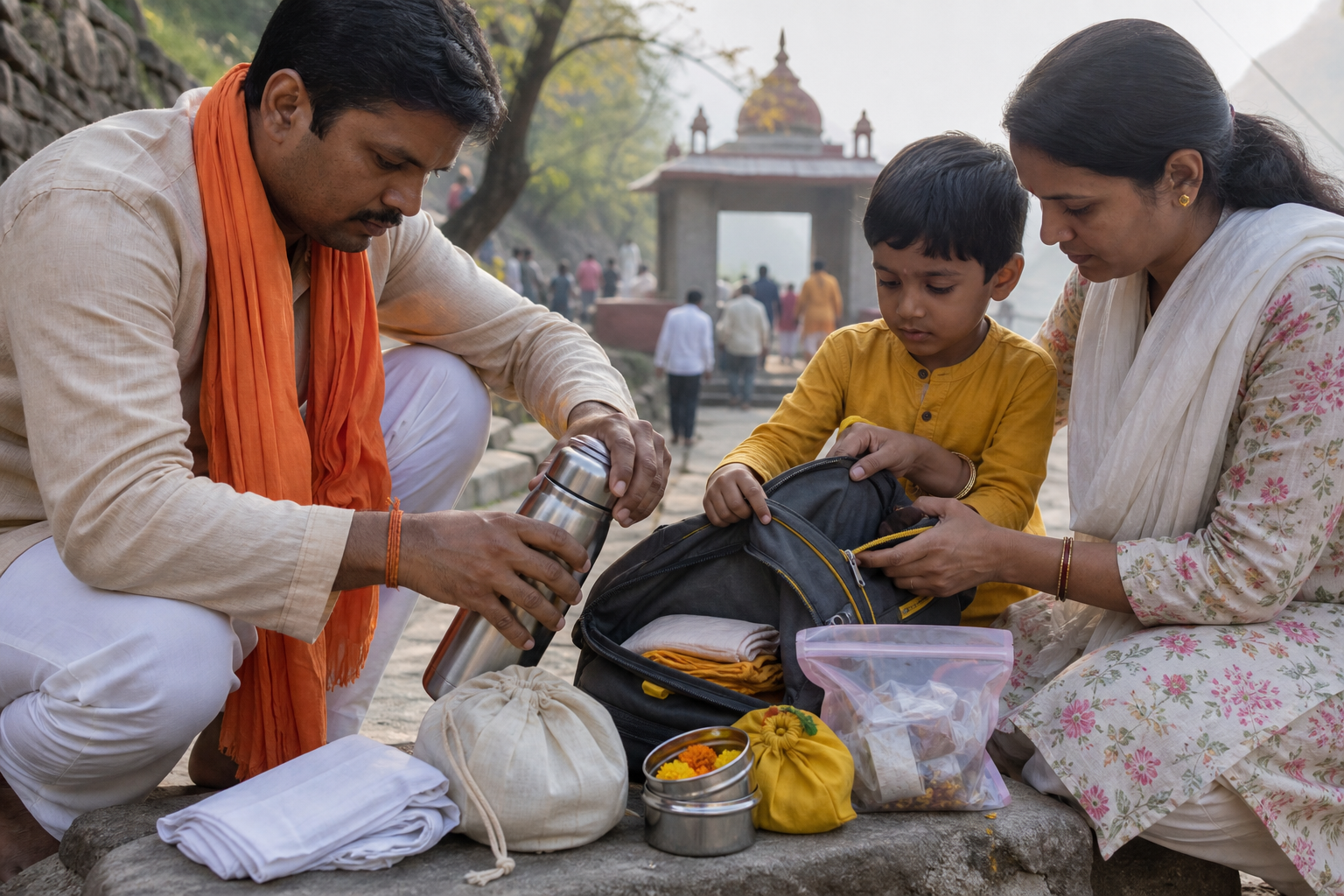
A pilgrim usually does not arrive intending to litter. Waste appears through a chain of small decisions: accepting an unnecessary bag, buying several disposable bottles, leaving an offering where others have left theirs, or balancing a cup on a full bin in the hope that somebody will collect it. Break that chain before departure.
- Reduce packaging at home. Remove unnecessary outer wrapping from food, toiletries and other supplies before you travel. Keep medicine in its original labelled packaging, and do not compromise anything that must remain sealed for hygiene or safety.
- Carry a reusable water container where safe drinking-water refills are available. If you must use a disposable bottle, flatten or close it only as local collection instructions permit, then retain it until you reach the correct bin.
- Pack a dedicated waste pouch. It should close securely and be distinct from bags used for food, prasad or clean clothing. Keep wet, leaking or sanitary waste separately contained rather than mixing it loosely with dry material.
- Check the facilities when you arrive. Notice the locations of toilets, drinking water, waste points and volunteer desks before joining a long queue. This prevents a hurried decision later.
- Follow the labels actually provided. If a site separates wet waste, dry waste, offerings or sanitary material, use those categories. Guessing based on a bin’s colour can contaminate a correctly separated load when local colour systems differ.
- Carry waste past a failed collection point. If a bin is overflowing, do not place rubbish on its lid or on the ground beside it. Retain ordinary personal waste and report the location to a worker, help desk or control point.
- Ask where offerings belong. Flowers, leaves, cloth, food, lamps and packaging should not automatically go into a river simply because they were used in worship. Use the temple’s designated offering collection system when one exists.
- Leave only after checking your resting place. Look beneath the mat, seat or vehicle area you used. Small items left during departure become somebody else’s burden and are easily scattered through the sacred precinct.
Do not pick up needles, broken glass, human waste, leaking sanitary material or an unidentified substance with bare hands. Keep other people away from the immediate spot and notify trained sanitation staff. Seva does not require an untrained pilgrim to accept a preventable health risk.
If you travel with children or a group, make one person responsible for the group’s waste pouch and do a visible count at each departure point. A general instruction to keep the area clean is easy to forget; a named responsibility survives the rush to move on.
Design sanitation around the pilgrim’s actual route

For organisers, cleanliness begins with a route map rather than a purchase order for bins. Walk the site in the same sequence as a pilgrim. Mark where people arrive, wait, eat, bathe, change, worship, rest and leave. Each transition produces a different sanitation demand, and a single uniform arrangement will miss the pressure points.
Give every zone a complete service chain
At each location, answer six questions before the crowd arrives:
- What waste or sanitation problem is likely to occur here?
- What facility will prevent it?
- Who inspects that facility during each operating period?
- What condition triggers servicing rather than another inspection?
- Who removes the material, and by which route?
- Where does it go after leaving the visible pilgrimage area?
The last question matters. Moving rubbish from a ghat to an unseen roadside is not sanitation. The plan must include collection, protected temporary storage, vehicle access and a legitimate destination beyond the site. If any link is missing, waste will accumulate at the weakest handoff.
Set site-specific service triggers before the event. The trigger should reflect container capacity, collection time, distance to storage, vehicle availability and the speed at which the zone fills. Workers should not have to improvise a definition of full while standing inside a crowd.
Run toilets and changing rooms as active services
A toilet or changing room is not operational merely because its door is open. It needs water where the design requires it, functioning locks, lighting during dark hours, cleaning supplies, safe disposal options and a visible way to report failure. Women, older people, children and people with disabilities must be able to reach and use the facilities intended for them.
Changing rooms deserve their own inspection record. In Haridwar, circulating visuals allegedly showed urine-filled bottles left inside changing facilities at Har Ki Pauri. The allegation should not be enlarged beyond what the images can establish, but the operational lesson is clear: a room can become unsanitary between general cleaning rounds if nobody owns frequent checks and rapid escalation.
Keep restroom inspection separate from general litter collection. The work may require different supplies, training and protective equipment. Record closures and the time at which service was restored. If the only available toilet becomes unusable, an announcement asking pilgrims to maintain cleanliness cannot solve the immediate problem.
Make vendors and ritual services part of the plan
Food stalls, flower sellers, prasad counters and transport points influence what enters the waste stream. Their operating conditions should specify what packaging is permitted, how waste is separated, where it is stored during service and who clears the area at closing. Provide a workable collection route before enforcing the rule.
Offerings need a dignified alternative to abandonment. Put designated receptacles where the ritual action ends, not at a distant location pilgrims discover only afterward. Use signs and spoken announcements to explain that reverence belongs to the material’s whole journey. A sacred offering does not become harmless when it enters water or is left on a bank.
Announcements work best when they name one action and one place: carry your bottle to the dry-waste point beside the exit, or place flowers in the offering receptacle after darshan. Repeating a broad slogan about cleanliness gives a conscientious pilgrim no help when the correct destination is unclear.
Judge the plan at the crowd’s hardest moment
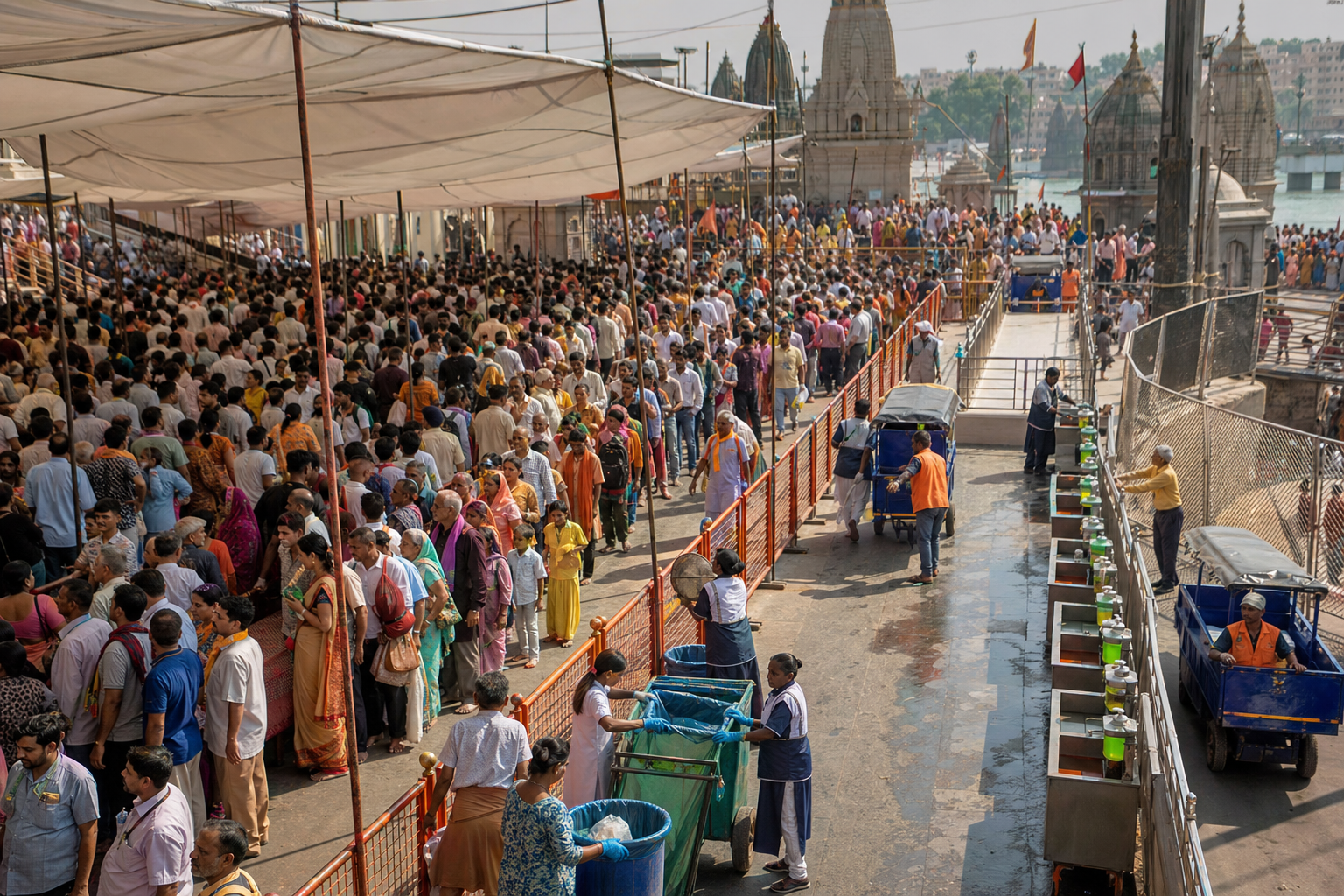
Haridwar’s post-Kanwar Yatra conditions show why average-day planning fails. A pilgrimage involving more than 4.8 crore devotees was followed by nearly 7,000 metric tons of accumulated garbage. Of that total, 2,000 tons were collected in the final two days. Waste continued to pile up despite the deployment of 1,000 additional Swachhta Doots and more than 80 vehicles.
Those figures do not establish the cause of every local failure, and they should not be used to blame individual sanitation workers. They do establish the scale of the handoff problem. A large workforce can still be overwhelmed when disposal behaviour, container capacity, access routes, storage and vehicle cycles are not aligned with the surge.
Build the operating plan around three distinct conditions: normal flow, peak congestion and final departure. The final phase needs explicit staffing and transport coverage. People discard travel food, damaged belongings, temporary bedding and packaging while moving quickly toward stations, roads and parking areas. At the same time, stalls close, barriers move and temporary teams may begin standing down. That combination makes the last phase a separate operation, not a continuation of the ordinary shift.
A useful control log should let the zone lead see:
- which toilets and changing rooms are open, restricted or closed;
- which collection points are approaching their predetermined service trigger;
- which requests are awaiting a worker, vehicle, supply delivery or supervisor;
- which access routes are blocked by pedestrian or vehicle congestion;
- whether temporary storage is secure and still accepting material;
- which unresolved problems must be handed to the next shift; and
- whether the final sweep has covered ghats, queues, food areas, rest points, parking and departure corridors.
Do not report success solely through inputs such as the number of workers, bins or vehicles deployed. Pair those counts with outcomes: facilities remaining usable, response requests being closed, waste leaving each zone before overflow, and no rubbish being shifted to an unofficial site. Inputs show effort. Outcomes show whether the tirtha was protected.
Make cleanliness visible as seva and accountability
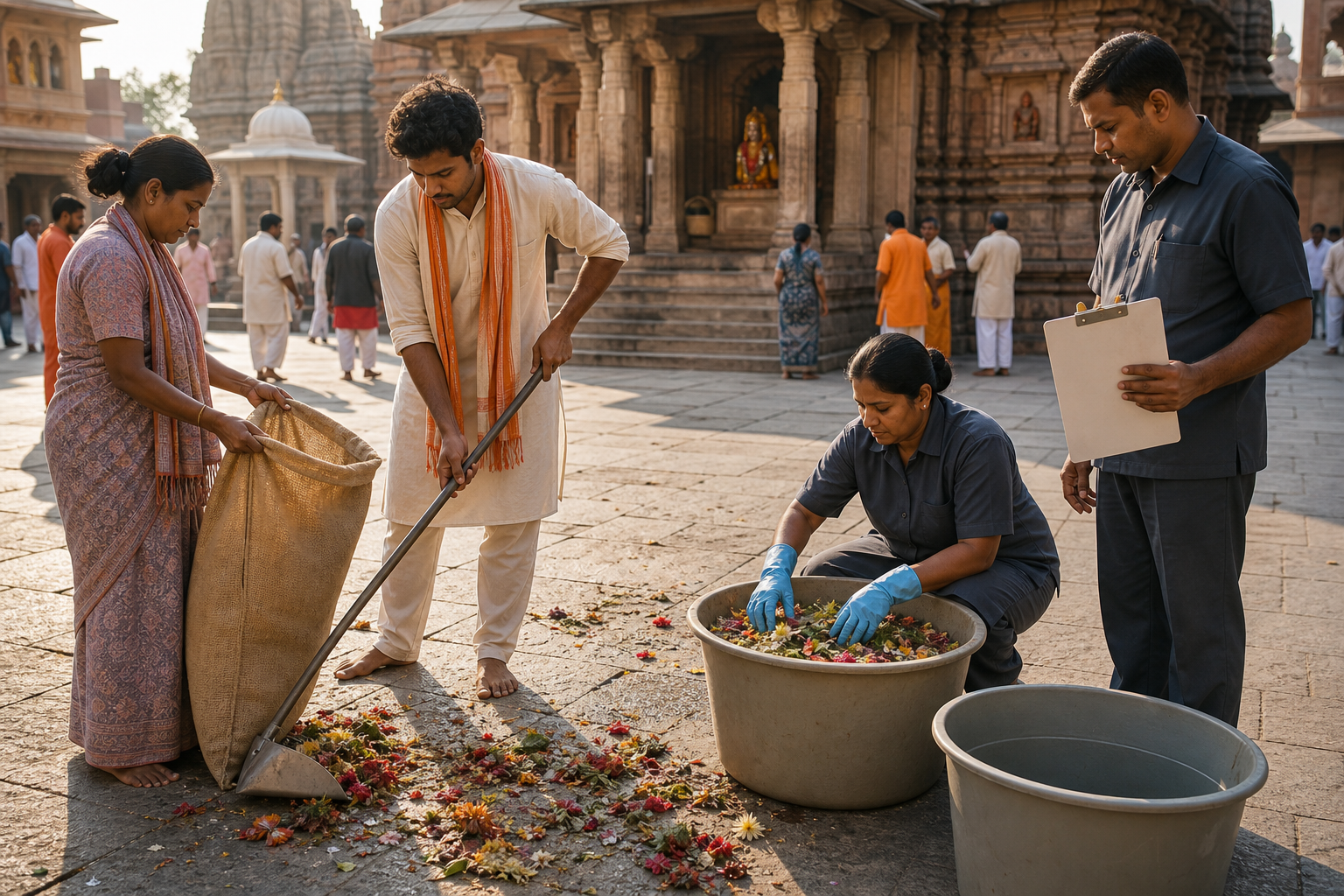
The strongest Dharmic response is neither denial nor contempt for fellow pilgrims. Calling people impure does not tell them where to put a bottle, repair a failed toilet or clear a blocked collection route. The useful question is whether our conduct preserves the tirtha for the person who arrives after us.
Shaucha gives cleanliness a place within disciplined life. Seva turns that value into organised work. Ahimsa reminds us that carelessness transfers harm to sanitation workers, local residents, animals, soil and water. These principles become credible when they appear in budgets, volunteer duties, vendor rules, facility checks and pilgrim habits.
If you donate to, volunteer with or help govern a pilgrimage institution, ask concrete questions. Who owns sanitation during the busiest period? How are toilets and changing rooms inspected? Where do offerings go? What happens when a collection vehicle cannot enter? Who remains responsible after the crowd departs? A committee that can answer those questions has the beginnings of a system. One that can only point to a cleanliness slogan still has work to do.
Organisers should also protect the dignity of Swachhta Doots. Give them the supplies, protective equipment, water, rest arrangements, access authority and escalation support required for the assigned work. Do not celebrate cleanliness while making waste invisible through unsafe or degrading labour.
For your next yatra, begin with one commitment you control: carry a secure waste pouch and bring it back empty only because every item reached the correct collection point. Then ask your family, travel group or temple committee to adopt the same standard. A sacred journey should leave evidence of worship in conduct, not evidence of neglect on the ground.
References
