
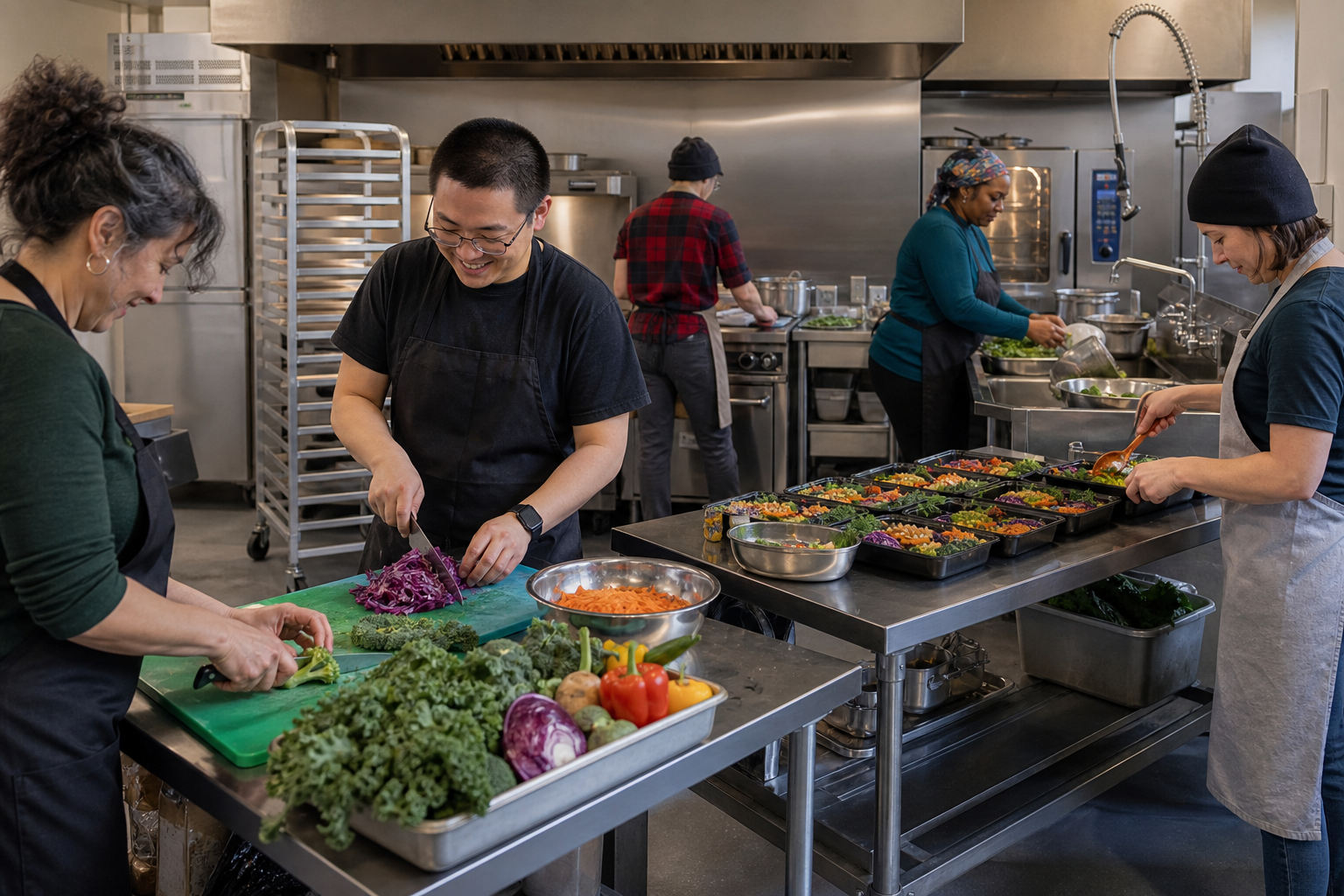
If you saw that Manitoba is funding an ISKCON kitchen and wondered whether this is primarily a religious project or a practical food-security investment, start with the asset being built. The province is providing $100,000 for a fully equipped, certified commercial community kitchen in Winnipeg’s Weston neighbourhood.
The planned kitchen will be capable of preparing more than 500 meals a week. That gives you a concrete way to understand the project’s scale, but it is a capacity target, not a guarantee that 500 meals will immediately leave the kitchen every week.
Key takeaways
- Manitoba’s $100,000 contribution comes through the From the Ground Up – Safe Healthy Communities for ALL program.
- The money will help ISKCON Manitoba develop a fully equipped, certified kitchen rather than simply finance a one-time food distribution.
- The kitchen is intended to support Food for Life, which provides free plant-based meals to families, seniors and students.
- Meals are distributed from ISKCON Manitoba’s facility at 1390 Roy Ave. and through mobile outreach.
- The facility is also expected to support emergency relief, yoga and meditation, Soul Spark and Sacred Gathering programs.
- The number to watch after the kitchen opens is actual meal delivery, not theoretical production capacity alone.
The grant builds capability, not 500 guaranteed meals
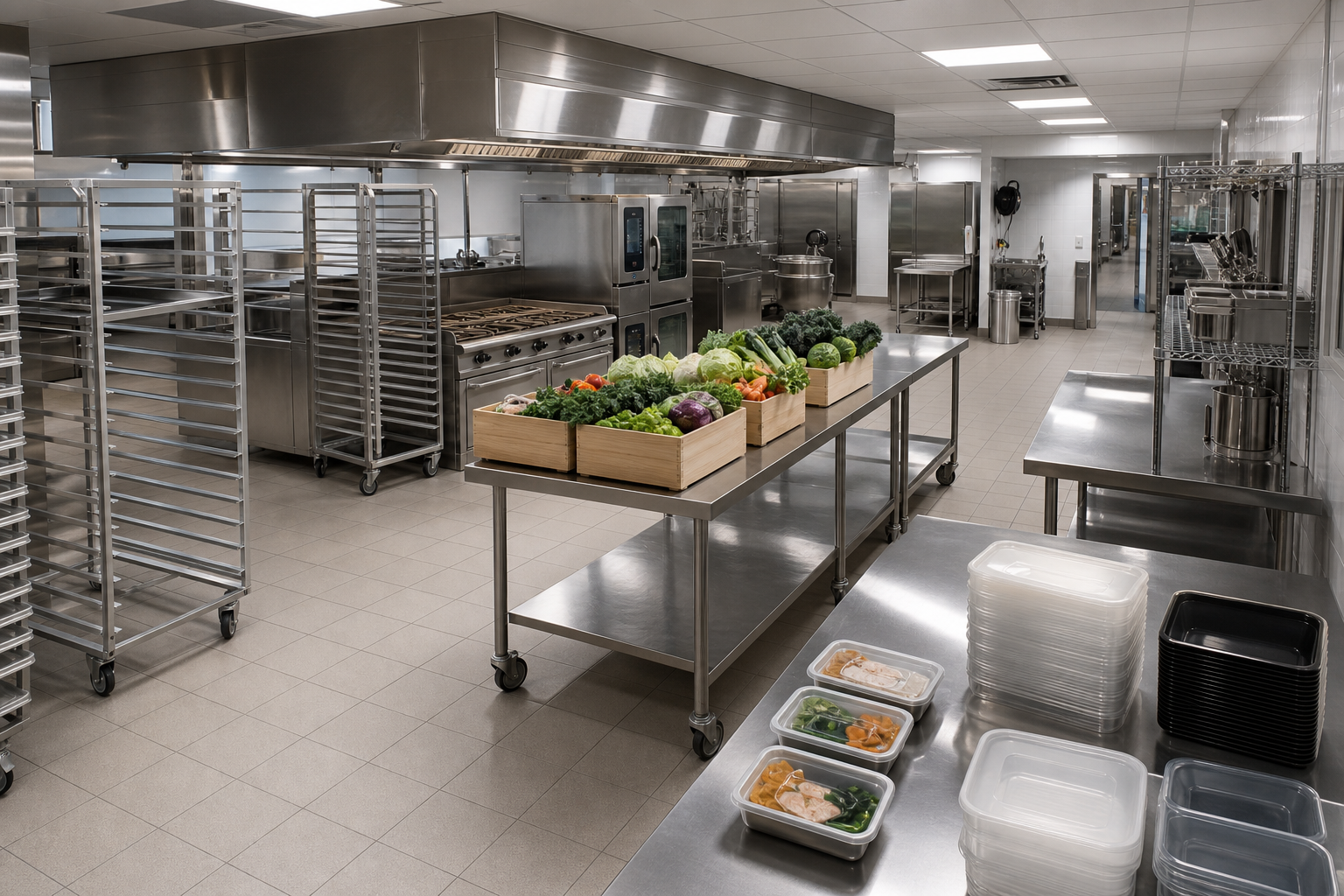
The most important word in this announcement is not “commercial.” It is “capacity.” In this context, a commercial kitchen is a properly equipped and certified facility intended for sustained food preparation. The announced purpose is charitable community service, not the creation of a retail restaurant.
That distinction matters because a permanent kitchen removes physical constraints that volunteers cannot solve through goodwill alone. ISKCON Manitoba president Vivek Singh has described volunteers preparing meals under difficult conditions. A purpose-built kitchen can give that work a stable base, make larger production possible and reduce dependence on improvised arrangements.
The From the Ground Up program offers grants of up to $100,000 to non-profit organizations, municipalities and Northern Affairs community councils for eligible work that includes capital improvements. ISKCON Manitoba’s award matches that stated ceiling. It should not be read as proof that the grant covers the project’s entire cost, however. No total construction cost, opening date or ongoing operating budget has been specified.
The same care is needed with the weekly meal figure. “Capable of preparing more than 500 meals” describes what the completed facility is being designed to handle. Actual distribution will also depend on demand, ingredients, volunteer or staff availability, operating funds and the mobile outreach schedule. Multiplying 500 by the number of weeks in a year would therefore create a projection that the announced commitment does not support.
When you assess progress, look for three separate milestones: completion of the kitchen, certification for its intended use and sustained meal distribution. A ribbon-cutting would establish only the first part of that chain.
Why the kitchen matters beyond its equipment

Food for Life already serves free plant-based meals to families, seniors and students at 1390 Roy Ave. and through mobile outreach. The grant is meant to expand that service rather than introduce an unrelated program.
For a Dharmic community, feeding people can be understood as seva: service offered through disciplined action rather than sentiment alone. The public value becomes visible when that impulse is translated into dependable access, safe facilities and meals that reach people outside the immediate congregation. Mobile distribution is especially important because a kitchen’s usefulness should not be measured only by how many people can travel to its address.
There is also a social dimension. Food insecurity is experienced as a shortage of food, but it can be accompanied by isolation. A regular meal service can provide repeated human contact as well as relief from food costs. That does not mean every gathering produces a measurable food-security outcome. It means the kitchen can anchor both nourishment and community contact when the two functions are managed deliberately.
The facility’s planned uses reflect that broader role. In addition to Food for Life, it is expected to support emergency relief and ISKCON Manitoba’s Soul Spark, Sacred Gathering, yoga and meditation activities. Multipurpose use can make a community asset more valuable, especially during an emergency. It also makes clear reporting more important: meal-service results, emergency use and participation in spiritual programs should not be blended into one inflated measure of impact.
How to judge public funding for a faith-based organization

A grant to a religious non-profit is not automatically a grant for worship. The practical question is what the public money builds and what public benefit that asset is expected to deliver. Here, the funded project is a certified community kitchen connected to free meal distribution.
You can evaluate this grant without either distrusting ISKCON because it is religious or exempting it from scrutiny because its mission is Dharmic. Use four tests:
<!– wp:list {