
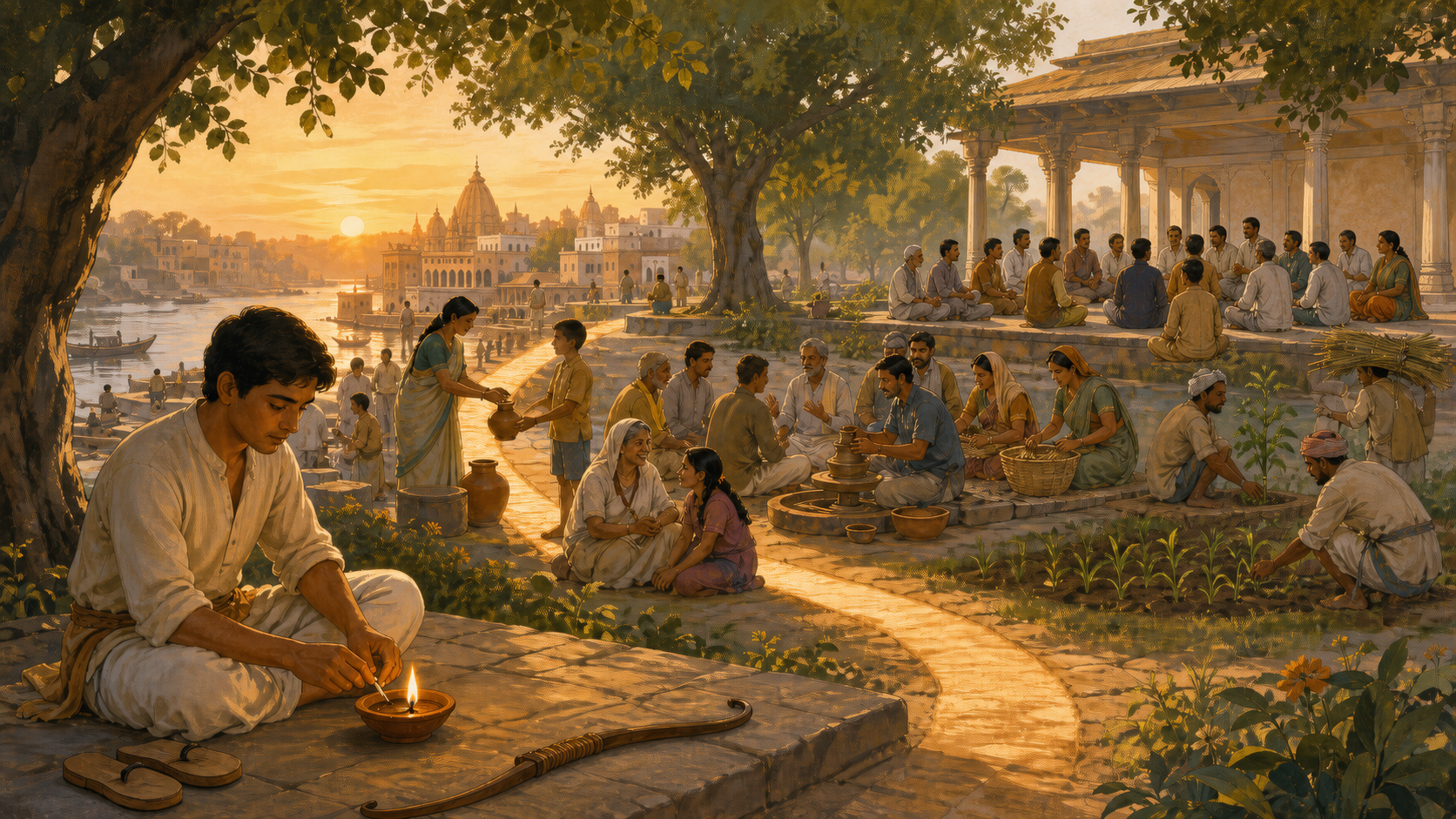
You may hear Rama Rajya invoked when conversation turns to corruption, public disorder, family conflict or political leadership. The phrase can sound inspiring but distant. If you want to know what it asks of you, not only what it demands of government, the useful answer is stricter than a campaign slogan and more intimate than an administrative formula.
Rama Rajya is a spiritual and social ideal in which public order reflects dharmic character. Truth, justice, compassion and order describe its visible fruits. Self-restraint, duty and integrity are the roots. You cannot preserve the fruits while neglecting the roots.
Rama Rajya is a moral standard, not a magic government
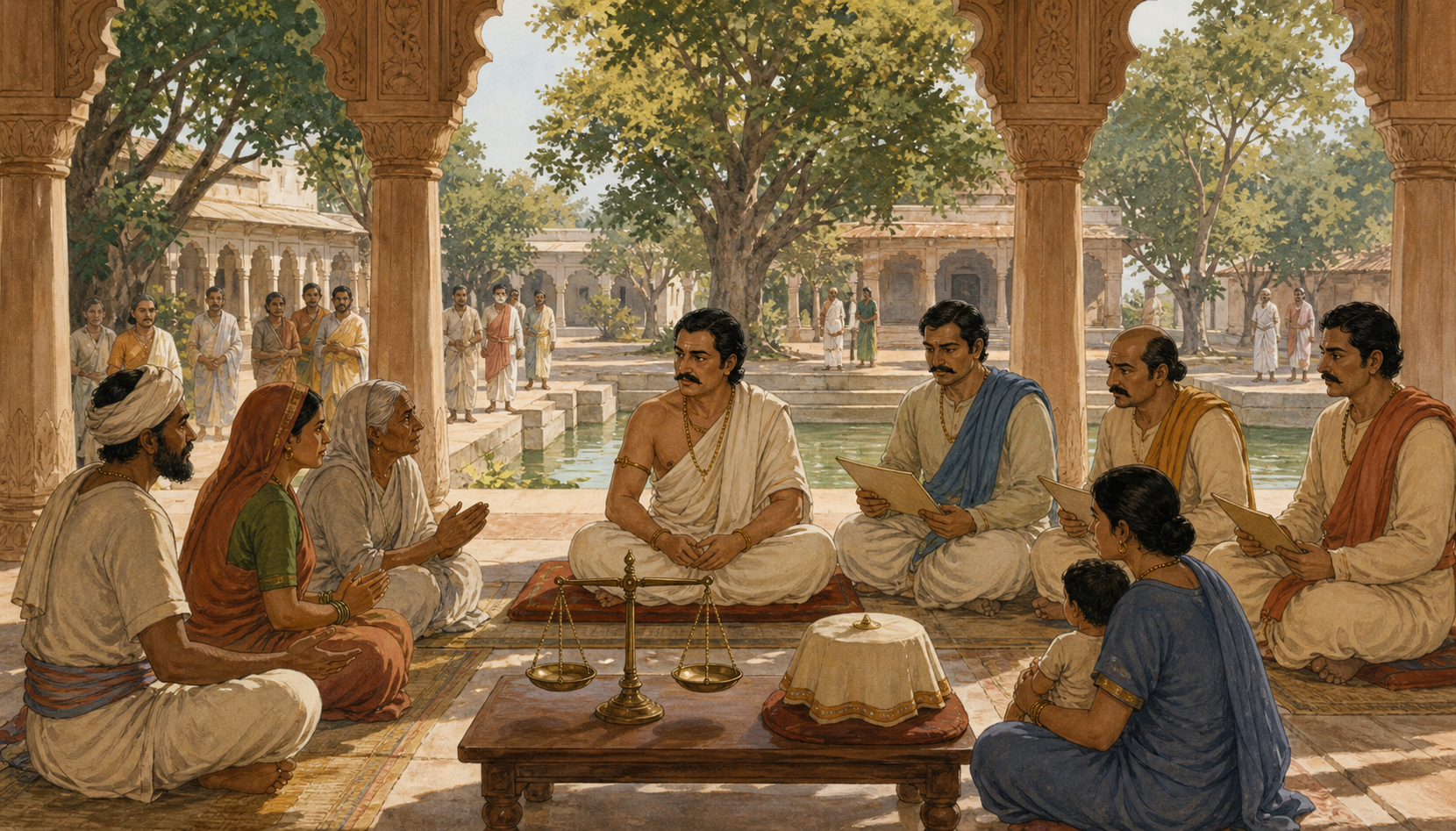
Rama Rajya is commonly understood as the rule or kingdom of Rama. Yet concentrating only on the ruler misses the ideal’s hardest demand. A kingdom can borrow sacred language, display religious symbols and still tolerate falsehood, partiality or cruelty. A Hindu identity does not automatically produce dharmic conduct.
The better question is not, “Who claims Rama?” It is, “What would Rama’s standard require here?” That shift turns Rama Rajya from a label into a test. It also protects the ideal from being reduced to nostalgia, party loyalty or admiration for a powerful personality.
Four tests make the idea concrete:
- Truth: Are public words consistent with known facts, or is convenient deception being excused because it helps our side?
- Justice: Is the same rule applied to ally and opponent, strong and weak, insider and outsider?
- Compassion: Does the decision recognise the dignity and suffering of people affected by it, including those with little influence?
- Order: Are duties, boundaries and consequences clear enough to protect society from arbitrary behaviour?
These tests must remain together. Order without justice becomes domination. Justice without truth becomes factional reward. Compassion without order can become selective indulgence. Truth without compassion can become an excuse for humiliation. Rama Rajya is not the unlimited power of a ruler, and it is not the absence of authority. It is authority placed under Dharma.
The kingdom begins where no one is watching
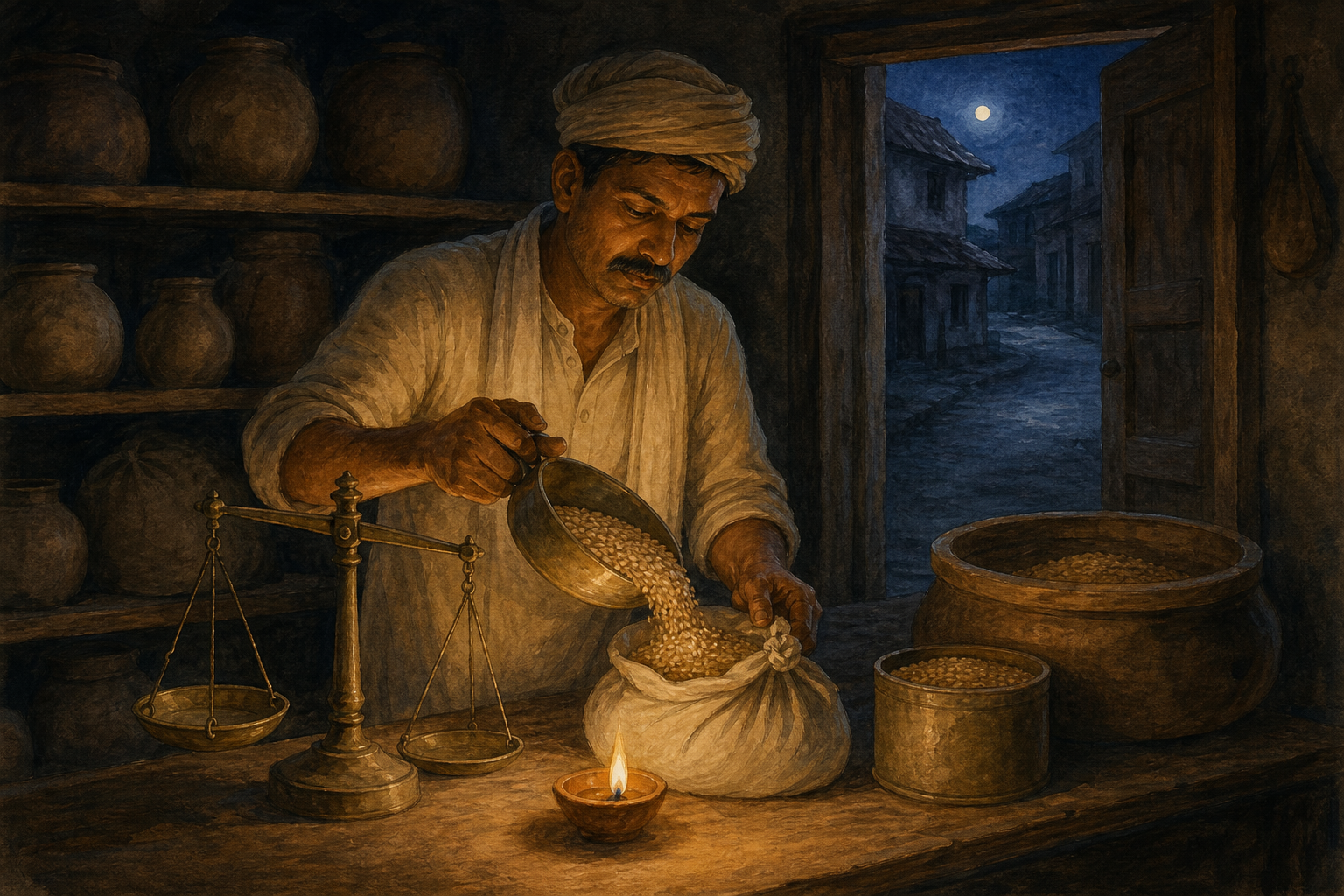
The central paradox is easy to recognise: we want the fruits of a dharmic society while resisting the discipline that could produce them. We condemn dishonest leaders but excuse a useful lie of our own. We demand impartial institutions but seek an exception for a relative. We complain about declining trust while treating promises as optional when keeping them becomes inconvenient.
This is why Rama Rajya must begin with self-government. The first territory to be governed is not a map. It is the field of your own appetite, anger, fear, pride and group loyalty. Accepting Rama as king in this sense does not mean surrendering judgment to a human authority. It means allowing Dharma to overrule impulse when the two conflict.
You can make that discipline practical by pausing at the exact point of friction:
- Before repeating a claim, ask whether you know it to be true or merely want it to be true.
- Before seeking an exception, ask whether you would accept the same exception for someone outside your family, community or political camp.
- Before exercising authority, ask whether you have heard the person who must bear the consequence.
- Before asserting a right, identify the duty that accompanies it.
- After causing harm, repair what you can without turning your apology into a defence of yourself.
Do not leave this as a vague evening resolution. Use it when inconvenience first appears: during a disagreement, while assigning blame, when money or status is involved, or when loyalty pressures you to ignore wrongdoing. That is where self-rule becomes real.
This does not mean that every social failure is caused by individual weakness. Private virtue cannot substitute for fair institutions. It means that people who demand Rama Rajya from the state should not cultivate adharma in the home, workplace or community and expect public life to remain untouched.
A dharmic society makes power answerable to duty
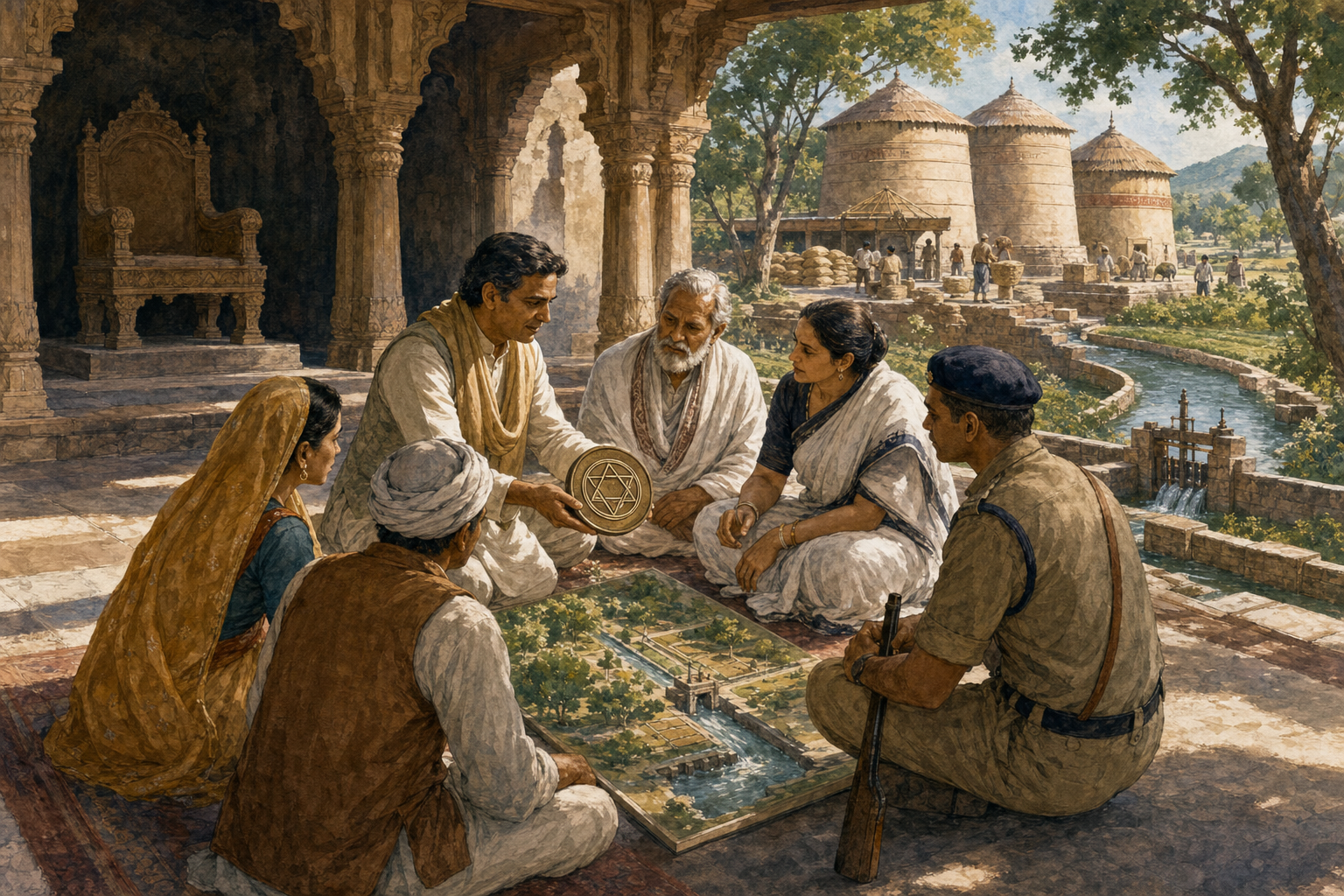
Good intentions are too fragile to carry an entire society. Institutions need known rules, honest records, fair procedures and ways to correct abuse. Spiritual character gives authority its purpose; accountable structures keep that authority from depending entirely on the character of whoever happens to hold office.
When you evaluate a leader, policy or community institution, ask questions that expose conduct rather than branding:
- Was the rule known before the dispute, or invented afterward to favour a preferred outcome?
- Does the process remain the same when the accused or beneficiary belongs to the other side?
- Can the people affected understand the reasons for the decision?
- Is authority willing to admit error and correct it?
- Are consequences proportionate, or are they designed to intimidate and humiliate?
- Does the institution reward truth-telling, or punish anyone who makes leadership uncomfortable?
These questions apply at every scale. In a family, the authority of an elder must be joined to restraint, care and willingness to listen. In a temple or community organisation, office should be treated as seva rather than personal possession. In a workplace, accurate promises and fair treatment matter more than moral slogans displayed on a wall. In the state, law must not become a weapon for allies to use against opponents.
Rama Rajya therefore requires reciprocal Dharma. The ruler owes justice, restraint and service. The citizen owes honesty, responsible participation and respect for legitimate order. The powerful cannot preach duty only to those below them. Citizens cannot demand incorruptible government while normalising bribery, favouritism or deception in their own sphere.
This reciprocity is not moral equivalence. A ruler commands greater power and therefore carries greater responsibility. It is a reminder that a dharmic social order cannot be produced by spectators. Every person participates in the habits from which institutions are eventually made.
Do not turn Rama Rajya into a weapon against Dharma
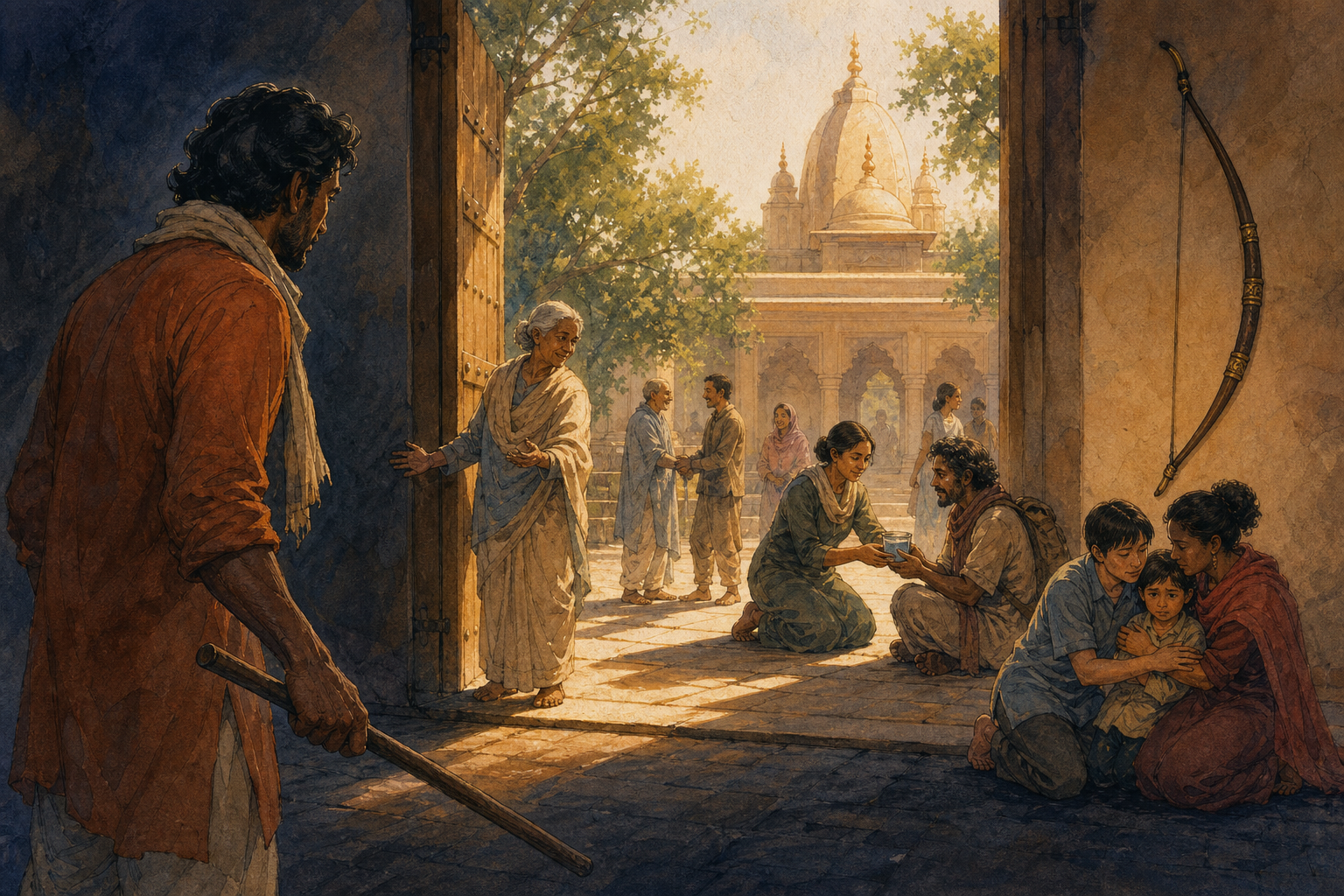
A sacred ideal can be emptied of meaning when it becomes a tool for winning ordinary power struggles. Several misreadings deserve a firm refusal.
Nostalgia is not the same as a standard
Rama Rajya can guide the present without requiring you to pretend that every society invoking the past was perfect. An ideal tells you what conduct should be measured against. It is not proof that every historical person or institution met that measure.
Devotion is not a personality cult
Reverence for Rama does not make a human officeholder equivalent to Rama. No leader becomes exempt from scrutiny by speaking the language of Dharma. If anything, a dharmic claim raises the burden of accountability. Examining whether power serves truth and justice is fidelity to the ideal, not hostility toward it.
A pro-Hindu vision is not a licence for humiliation
Hindu civilisational confidence need not be built on contempt for anyone else. If fear, collective blame or deliberate humiliation becomes an instrument of rule, the word “Rama” cannot sanctify the method. The strength of a dharmic order should be visible in its self-command, fairness and protection of dignity.
Perfection is not a reason to postpone reform
Rama Rajya is an ideal, but that does not make it politically useless. You do not need flawless people before improving a procedure, correcting a lie or making authority more answerable. Judge progress by what happens when failure is exposed: Is it concealed, defended and repeated, or acknowledged, repaired and made less likely?
When someone invokes Rama Rajya to justify a proposal, examine its ends and its means. Ask whether the proposal advances truth, justice, compassion and order; whether it uses methods consistent with those ends; whether its rules would still seem fair under an opponent’s control; and whether mistakes can be corrected without fear. A proposal that fails those tests does not become dharmic through repetition of a sacred name.
Key takeaways
- Rama Rajya is both spiritual and social: public order depends on character, while character needs institutions that reward honesty and restrain abuse.
- Its practical tests are truth, justice, compassion and order. None should be pursued by destroying the others.
- Self-rule begins when Dharma overrides convenience, anger, fear or loyalty to one’s own group.
- Religious identity and sacred language do not excuse a leader, organisation or citizen from accountability.
- The ideal applies to families, workplaces, community bodies and governments, not only to national politics.
- You move toward Rama Rajya whenever you tell the truth at a cost, apply a rule impartially, fulfil a duty or repair a wrong.
Do not wait for a national transformation before acting. Begin in the next place where you possess influence: a decision at home, a disagreement at work, a responsibility in your community or a judgment about public life. Apply the same standard to your own side that you apply to its opponents. Rama Rajya becomes credible when it is no longer only a demand made of distant rulers, but an order you permit Dharma to establish within you.
References
