-
Can God Be Seen? Discipline, Darshan, and the Hard-Won Freedom of True Liberation

Can God be seen? Dharmic traditions answer yes—but only when the instrument of knowing is refined by ethics, contemplation, study, service, and grace. Drawing on the Bhagavad Gita, the Upanishads, Yoga Sutras, and parallel insights from Buddhism, Jainism, and Sikhism, this essay explains why darshan is not a spectacle but a disciplined way of seeing.…
-
Auspicious Departure of Ranjit das (ACBSP): Kirtan, Grace, and Vaishnava Legacy in Alachua

Ranjit das, ACBSP, passed away on February 25 at 6:45 pm ET in Alachua, Florida, surrounded by soft kirtan and the loving care of his family and community. The use of ACBSP denotes a disciple of Srila A. C. Bhaktivedanta Swami Prabhupada, reflecting affiliation with ISKCON and the Gaudiya Vaishnava guru–śiṣya paramparā. This tribute explains…
-
Bedi (Beri) Lakshmi in Bengal: Sacred Grain Altars and the Living Symbolism of Prosperity

Bedi (Beri) Lakshmi is a distinctive Bengali household rite in which Goddess Lakshmi is invoked through a grain-filled altar and a carefully sanctified boundary. The practice centers prosperity in living seed, uniting ecology, economy, and devotion within the domestic sphere. Marked especially on Kojagari Purnima, it employs rice-paste alpana, paddy, turmeric, and lamp to translate…
-
Childhood Trauma, Self-Doubt, and Toxic Relationships: A Dharmic, Evidence‑Based Path to Healing

This analysis examines how childhood trauma fuels self-doubt in abusive relationships and explains why dangerous familiarity is often misread as chemistry. It unpacks the roles of attachment patterns, intermittent reinforcement, toxic shame, and the autonomic nervous system in perpetuating trauma bonds. It then outlines dharmic, evidence‑informed healing tools—mindfulness, meditation, Yoga, pranayama, metta, seva, and svadhyaya—and…
-
Kalki’s White Horse Devadatta: Profound Symbolism, Dharmic Unity, and Timeless Renewal

This article unpacks the symbolism of the Kalki Avatar’s white horse, Devadatta, drawing on the Vishnu Purana and the Bhagavata Purana to show how the motif encodes sattva, disciplined energy, and dharma-restoration at the end of Kali Yuga. It connects Vedic horse imagery (aśva) to prāṇa, time, and ethical action, and clarifies the distinction between…
-
The Art of Objectivity: Dharmic Wisdom for Clear Thinking, Equanimity, and Just Action

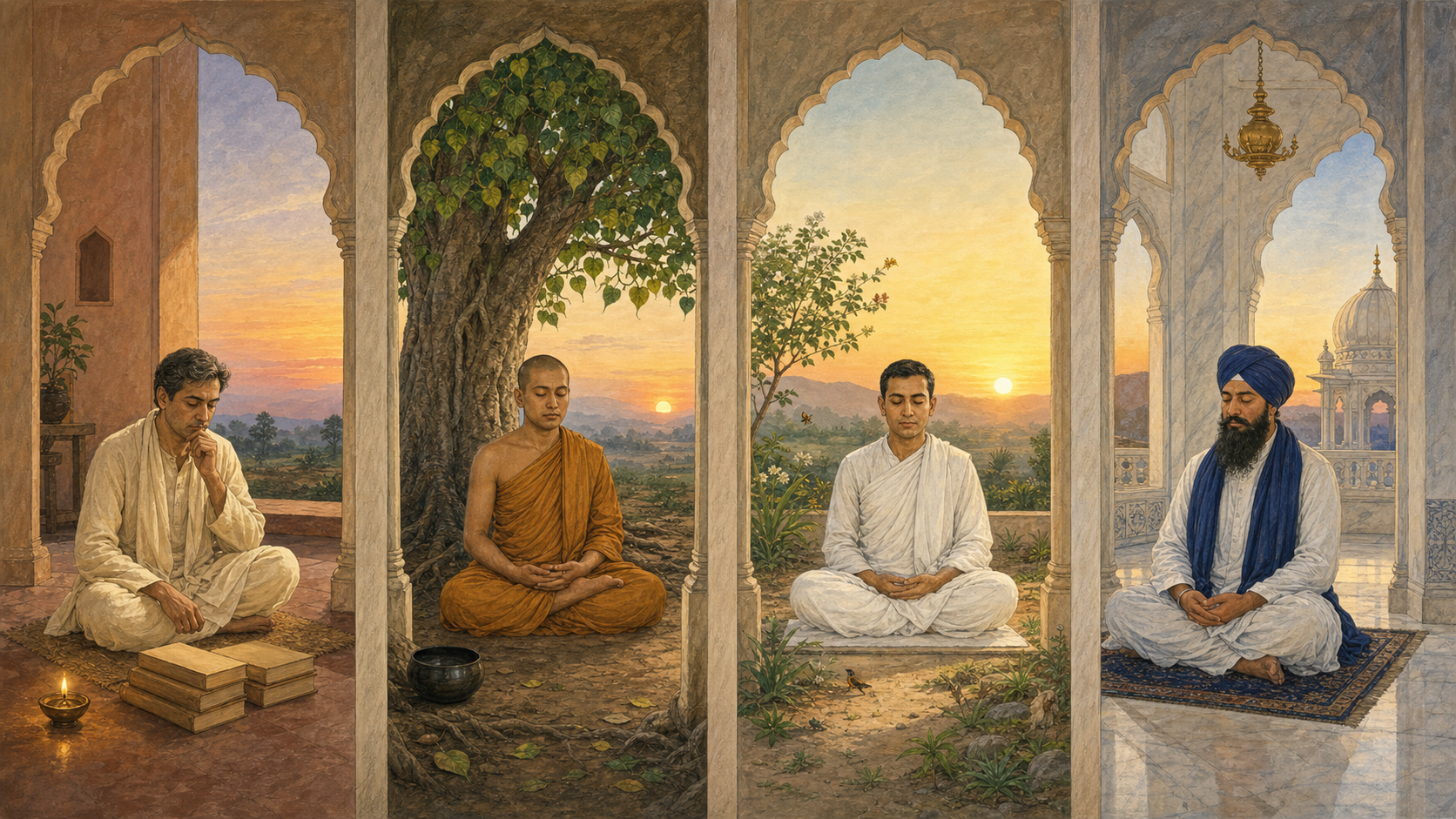
This essay presents a rigorous, dharmic approach to objectivity that integrates Hindu, Buddhist, Jain, and Sikh wisdom. It explains how Nyaya pramana, Sankhya-Yoga, and the Bhagavad Gita’s buddhi-yoga cultivate clear perception and ethical decision-making. It shows how Jain Anekantavada prevents dogmatism, while Buddhist mindfulness builds equanimity and Sikh ideals of nirbhau-nirvair align clarity with courage.…
-
March 5, 2026 Panchang: Krishna Paksha Dwitiya→Tritiya, Good Time (Muhurat), Nakshatra & Rashi

On Thursday, March 5, 2026, Krishna Paksha Dwitiya prevails until 4:28 PM, after which Krishna Paksha Tritiya begins, according to most regional Hindu Panchang computations. The day aligns with Guruvara (Thursday), emphasizing learning, counsel, and ethical leadership. Readers can identify Good Time (Shubh Muhurat) using Abhijit around local solar noon and positive Choghadiya blocks, while…
-
Why Chamunda’s Severed, Smiling Head Signifies Bliss: Decoding Ego-Death and Moksha

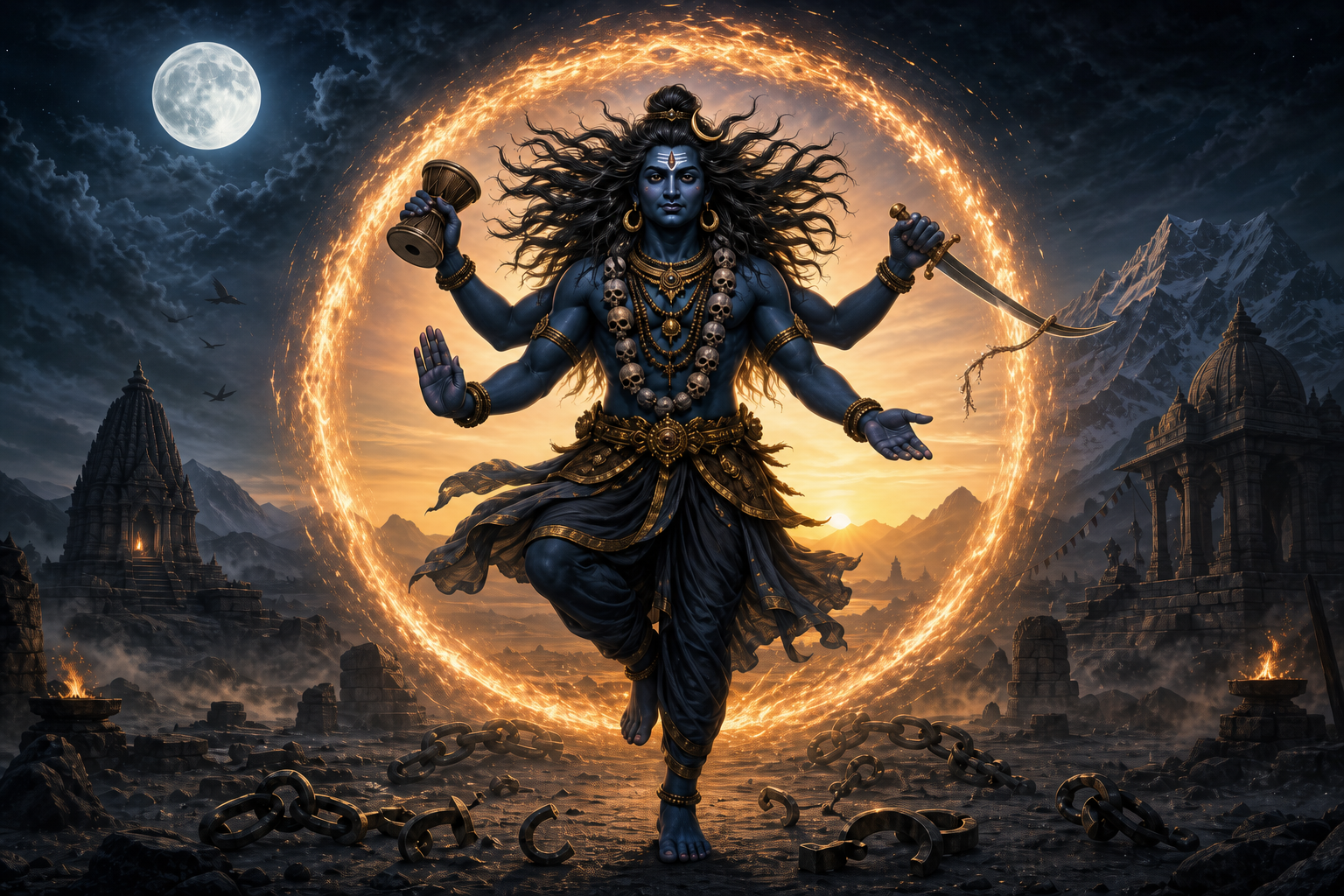
Chamunda’s severed head is not an emblem of violence but a precise symbol of liberation: the serene face represents ego-death and the bliss of moksha. By situating the image within Shakta tantra, cremation-ground sadhana, and the mundamala/kapala vocabulary, the analysis shows how fear is transmuted into insight. Panchamundi Asana symbolism and comparisons with Kali and…
-
Dissolving Matter’s Mirage: Dharmic Wisdom on Returning to the Primordial, Nondual Source

This essay examines how dharmic traditions understand the illusion of materiality and the emergence of a primordial, nondual source through deep inquiry. Drawing on the Upanishads, Bhagavad Gita, Advaita Vedanta, and yogic practice, it explains the movement from gross to subtle via pañca-kośa and the triad of sthūla–sūkṣma–kāraṇa śarīra. It highlights complementary perspectives in Buddhism…
-
The School of Life: Insights from HH Svayam Bhagavan Keshava Maharaja’s Marathon Podcast (Dec 2025)

In December 2025, HH Svayam Bhagavan Keshava Maharaja’s Marathon Podcast, The School of Life, presented a disciplined framework for living as a spiritual education. The approach integrates puruṣārthas with yogic psychology, translating Vedic philosophy and the Upanishads into daily, reproducible practices. Bhakti, karma yoga, jñāna, and dhyāna are balanced with ethics like satya, ahiṁsā, and…
-
Unlocking Kosha: From the Five Sheaths of the Self to the Treasury of Hindu Statecraft

Kosha holds a powerful dual meaning in Hindu thought: the five sheaths (panchakoshas) that veil the self in Vedanta and the treasury that sustains a kingdom in classical statecraft. Grounded in the Taittiriya Upanishad and Pancha Kosha Viveka, this analysis clarifies each sheath—annamaya, pranamaya, manomaya, vijnanamaya, anandamaya—and maps practices from asana and pranayama to pratyahara,…
-
An Unlikely Devotee in 1971 Brooklyn: Usika Das and Srila Prabhupada’s Generational Grace

In 1971 at ISKCON’s Henry Street temple in Brooklyn, a late-in-life seeker named Ezekiel—initiated as Usika Das when Srila Prabhupada visited that July—stood out in a largely youthful community. Remembered as crotchety and blunt with “you young people,” he nevertheless demonstrated unwavering devotion, illustrating how sincerity in the bhakti tradition transcends personality and age. The…
-
Forgiveness Without Self‑Abandonment: A Research‑Backed Path to Somatic Safety, Truth, and Release

Forgiveness is often rushed and performed while the nervous system is still in survival mode, turning a virtue into self-abandonment. A dharmic, research-aligned approach restores sequence: create somatic safety first, then honor anger in contained ways, and only then speak truth without re-injury. Distinguishing forgiveness from reconciliation and trust prevents pressure to resume unsafe closeness.…
-
Disarming the Ego: A Cross-Dharmic, Science-Backed Guide to Self-Realization and Freedom

Ego is the single greatest barrier to self-realization because it fuses awareness with passing roles and narratives, a pattern Dharmic traditions diagnose with remarkable agreement. This essay integrates Vedanta, Buddhism, Jainism, and Sikhism with cognitive science to explain how Avidya and identity habits form—and how to unwind them. Readers gain a precise map of the…
-
Guru Aditya Yoga Unveiled: Jupiter–Sun Conjunction Effects Across All 12 Houses

This comprehensive Vedic guide explains the Jupiter–Sun conjunction—Brihaspati and Ravi in the same bhava—across all twelve houses with clear, research-based nuance. It details how dignity, combustion, nakshatra, aspects, divisional charts, and dasha–transit timing shape outcomes in real life. Readers gain house-by-house insights on education, leadership, wealth, relationships, and spiritual growth, with practical cautions when the…
-
Agastya as Asura Samhara Moorthy: Outwitting Ilvala–Vatapi with Spiritual Fire

Rishi Agastya’s epithet Asura Samhara Moorthy comes alive in the famed Ilvala–Vatapi episode, where deception is neutralized by yogic insight rather than spectacle. The story upholds Dharma by safeguarding hospitality, demonstrating how spiritual fire (tapas) transmutes harm without amplifying violence. Yogic and Ayurvedic lenses deepen the teaching: jatharagni and disciplined breath digest not only food…
-
30 Science-Backed Reminders to Empower Highly Sensitive People and Restore Energy

This in-depth guide reframes high sensitivity as a normal, heritable temperament—sensory processing sensitivity—present in 15–20% of people. It distills current research on deep processing, empathy, and overstimulation, and explains how mindfulness, meditation, breathwork, yoga, and vagus nerve regulation foster emotional resilience. It integrates a dharmic perspective shared by Hinduism, Buddhism, Jainism, and Sikhism, affirming karuṇā…
-
Hanuman and the Five Elements in Kamba Ramayanam: Transformative Symbolism and Yogic Science

The Kamba Ramayanam presents Hanuman as an embodied map of the five great elements—Vayu, Jala, Akasha, Agni, and Bhoomi—transforming epic episodes into a precise guide for ethical action and inner balance. Vayu becomes pranic mastery and courage, Jala becomes adaptable resolve, Akasha becomes the clarity of spacious awareness, Agni becomes purifying discernment, and Bhoomi becomes…
-
When Krishna Lifts Govardhan: Tribhanga Beauty, Bhakti-Rasa, and the Ease Found in Surrender

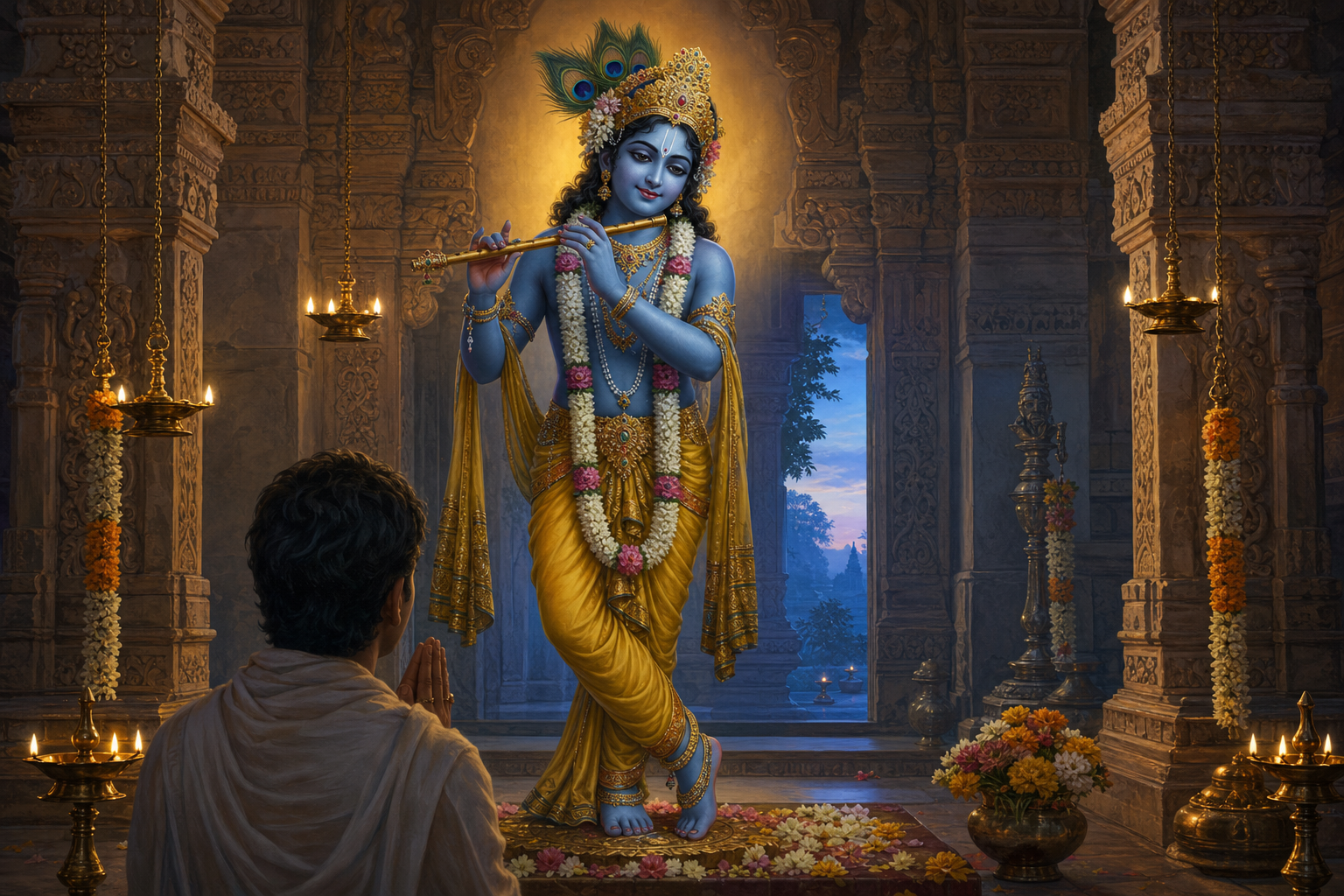
This essay offers a close reading of Krsna’s tribhanga posture amid the Govardhana-dhara-lila, highlighting how visual detail, poetic mood, and theology interlock to transform crisis into joy. It explains how the left foot ‘kissing’ the earth and the effortlessly raised arm express immanence and transcendence in one gesture. Drawing from Srimad-Bhagavatam and Sanskrit aesthetics, it…