-
Decoding Lakshmi’s Lotus: Sacred Symbolism of Prosperity, Purity, and Dharmic Wealth

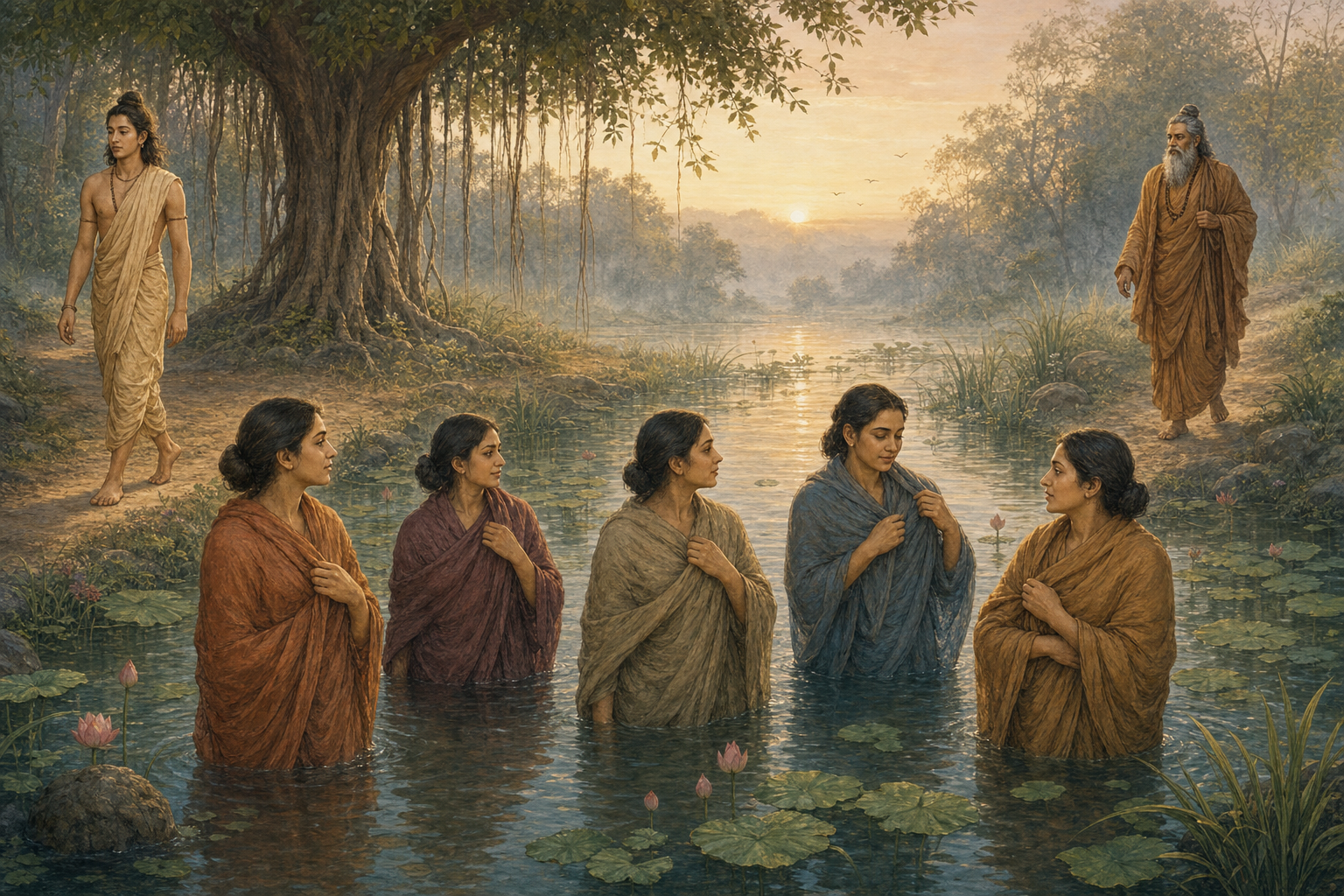
Goddess Lakshmi’s enduring association with the lotus is a precise theological and ethical statement, not a decorative habit. The lotus models purity-in-engagement—thriving in muddy waters yet remaining unstained—mirroring how dharmic wealth should arise and circulate without exploitation. Scriptural memory (Śrī Sūkta, samudra-manthana), iconographic conventions (padma-pīṭha, Gaja-Lakshmi), and temple arts all embed this meaning in public…
-
A Guru Can Guide, Not Save: Self‑Realization Across Hindu, Buddhist, Jain, Sikh Paths

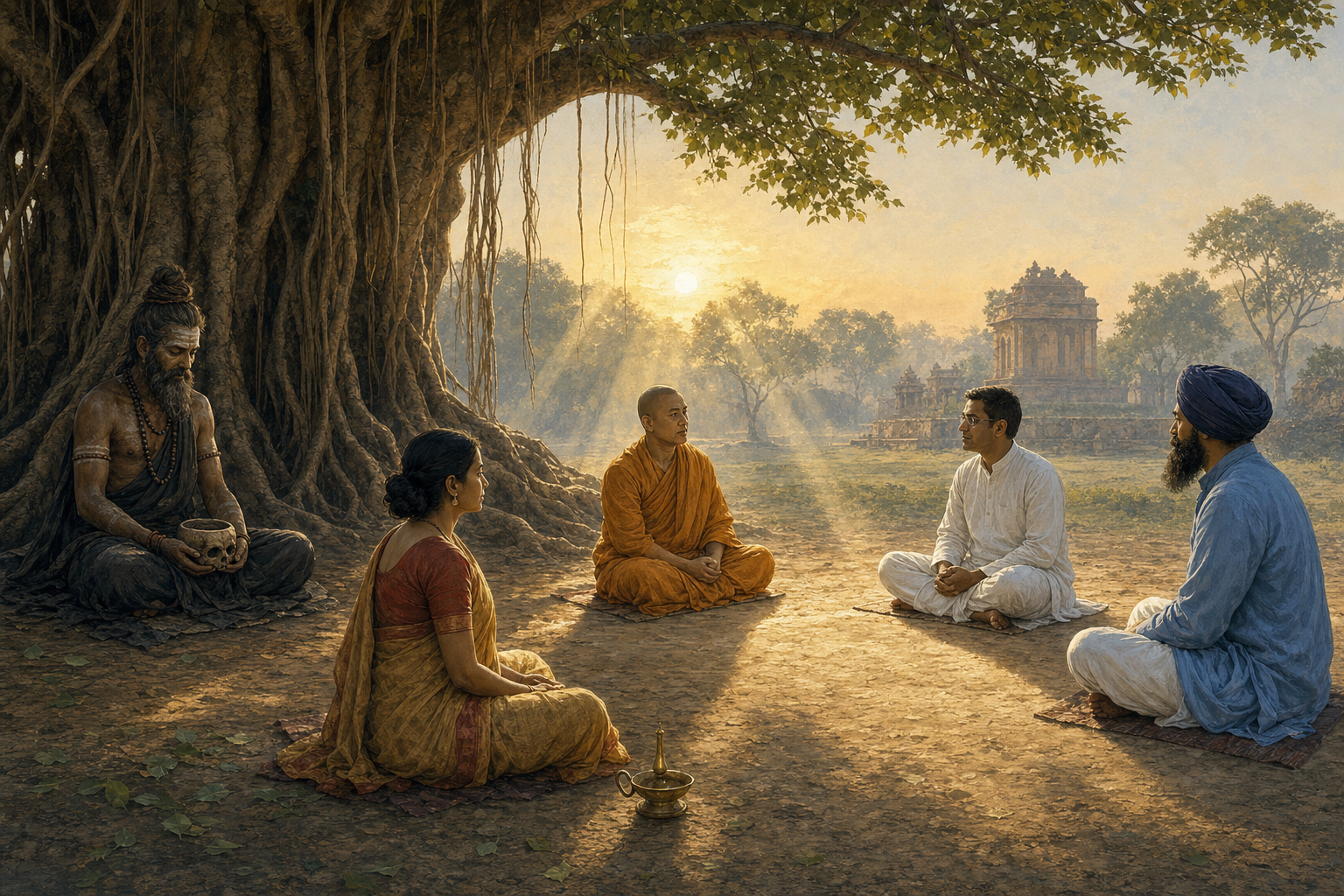
Across Hinduism, Buddhism, Jainism, and Sikhism, a unifying principle stands out: a guru can guide, not save, and Self-Realization depends on disciplined personal effort. This article grounds the point in the Bhagavad Gita and Upanishads, while showing its parallels in Buddhist, Jain, and Sikh teachings. It clarifies how grace and effort cooperate without inviting passivity,…
-
Decoding Hindu Iconography: Beyond Idolatry to Metaphysics—Bridging Dharmic–Abrahamic Insight

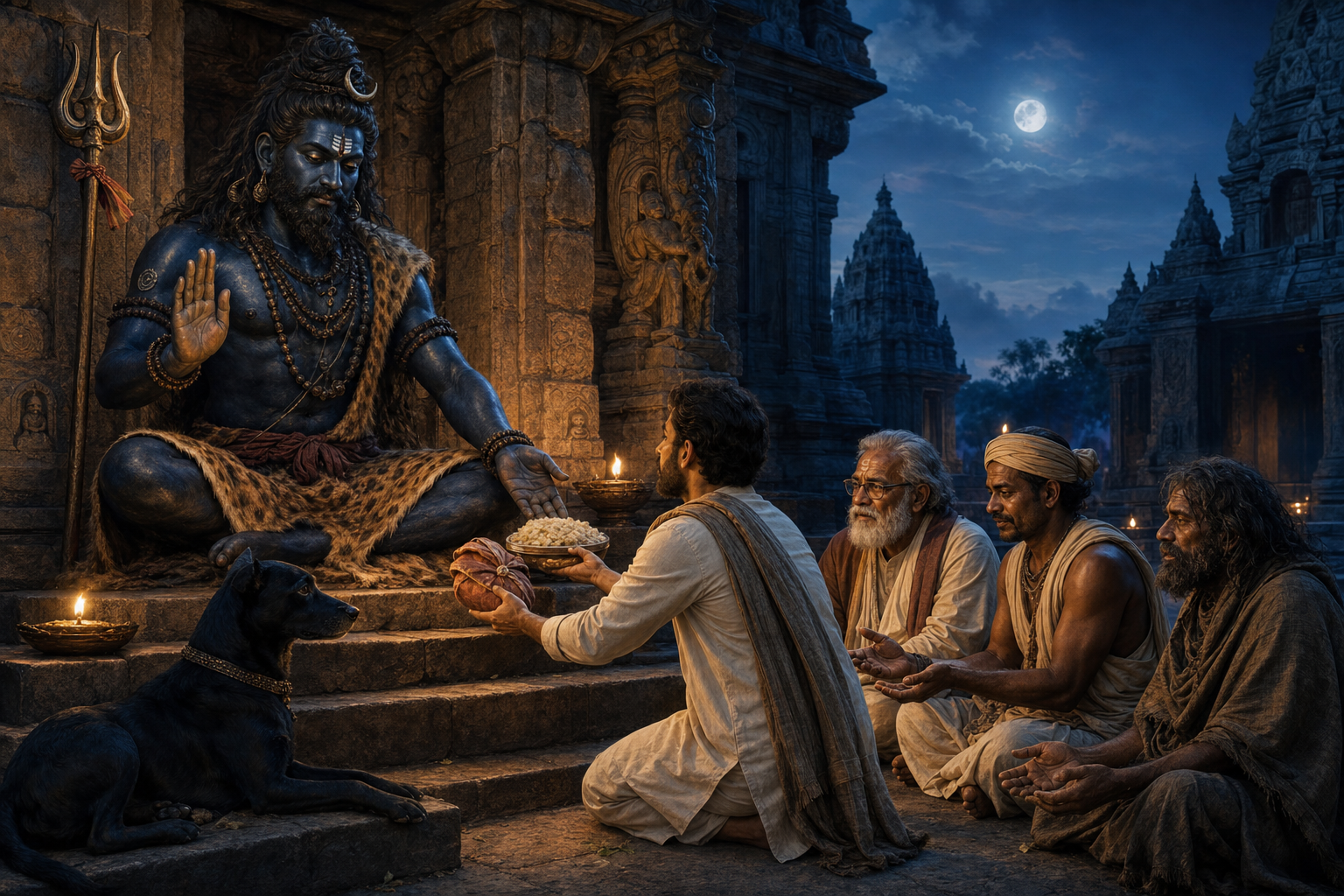
This article decodes Hindu iconography as a rigorous symbolic language that encodes metaphysics, ethics, and contemplative practice, rather than mere ‘idolatry’. It situates medieval misunderstandings within Abrahamic aniconism and outlines how mūrti, prāṇa-pratiṣṭhā, mudrā, and vāhana together form a coherent semiotic system. Readers gain a comparative framework linking Hindu saguṇa–nirguṇa practice to apophatic and cataphatic…
-
Nagabharana of Venkateswara Swamy: Adisesha’s Golden Embrace on Tirumala’s Divine Shoulders

The Nagabharana of Venkateswara Swamy—twin golden serpents resting on the Lord’s shoulders—embodies Adisesha’s protective presence in Tirumala’s Vaishnava tradition. This in-depth exploration explains its theological meaning, Agamic grounding, and South Indian craftsmanship, while showing how ornament becomes lived theology in darshan. It connects naga symbolism to Puranic narratives and to broader Dharmic motifs found in…
-
Honoring H.H. Badrinarayan Swami (ACBSP): A Life of Bhakti, Service, and Vrndavana Grace

H.H. Badrinarayan Swami (ACBSP) departed on 26 February 2026 in Sri Vrndavana Dhama, leaving a legacy of Bhakti-yoga, principled leadership, and compassionate community building within ISKCON. This tribute explains the meaning of ACBSP and situates his life within the Guru–Shishya Tradition rooted in Srila Prabhupada’s teachings. It outlines the significance, in Vaishnava understanding, of departing…
-
Always Being the Easy One: How Self-Abandonment Breeds Burnout—and How to Heal

This essay analyzes the hidden costs of being the “easy one,” reframing people-pleasing as self-abandonment with measurable impacts on the nervous system. It integrates research on masked neurodivergence in girls, allostatic load, anniversary reactions, and polyvagal theory to explain how chronic appeasement sustains burnout and trauma. Through a third-person narrative of pregnancy loss, NICU stress,…
-
Kubera’s Jewel‑Spitting Mongoose: Decoding a Dharmic Icon of Wealth, Generosity, and Grace

Kubera’s mongoose—often shown resting on his lap or spitting jewels—encodes a complete dharmic ethic of wealth: fearless guardianship, disciplined stewardship, and compassionate distribution. This long-form analysis decodes the iconography across Hinduism, Buddhism, and Jainism and shows how it resonates with Sikh ethics of seva. It explains why the mongoose signifies victory over hoarding and the…
-
Remembering Badrinarayan Swami: A Lasting Legacy of Hope, GBC Service, and Guru–Shishya Grace

This tribute distills a remembrance of Badrinarayan Swami into practical insight on succession and spiritual leadership. It explains why a simple blessing—„Now I can peacefully die“—embodies generational trust and institutional resilience. Readers gain a clear overview of the GBC’s role within ISKCON and how governance aligns with the Guru–Shishya Relationship. The essay unpacks bhakti concepts…
-
A Sacred Farewell: HH Badrinarayan Swami’s Final Day of Bhakti, Stillness, and Grace

This reflection reconstructs HH Badrinarayan Swami’s final day exactly as recorded by Abhaya Nama Das (GKG): attendance at Mangal arti, chanting at the MVT apartment, and a deliberate decision not to go to the Srimad Bhagavatam class. Rather than dramatizing the moment, it situates these ordinary acts within the technical grammar of bhakti-yoga—ritual constancy, japa-focused…
-
In Memoriam: Ranjit Das on Vrindavan 1976—Srila Prabhupada’s Enduring Lesson in Humility

This in memoriam preserves HG Ranji Prabhu’s (Ranjit Das) vivid account from Vrindavan in 1976, when A. C. Bhaktivedanta Swami Prabhupada redirected loud glorification to his own spiritual master, Bhaktisiddhanta Sarasvati Thakura. The episode offers a precise field lesson in the Guru–Shishya Tradition: authentic teachers pass honor upward through the parampara. It situates Gayatri mantra…
-
Patanjali’s Kriya Yoga Decoded: Tapas, Svadhyaya, Ishvara-Pranidhana for God-Union

Patanjali defines Kriya Yoga as a threefold discipline—tapas, svadhyaya, and Ishvara-pranidhana (Yoga Sutra 2.1)—designed to attenuate afflictions and cultivate samadhi (2.2). This synthesis of disciplined effort, self-study, and surrender functions as both foundation and consummation of practice, guiding seekers toward union with God as understood in the Yoga Sutras. The discussion clarifies how each limb…
-
Porcupine Quills in Hindu Samskaras: Forgotten Symbolism, Gentle Power, and Ethical Revival

This article explores the little-known place of porcupine quills within Hindu samskaras, situating the implement in the broader material culture of Ancient India. It clarifies that explicit scriptural references are scarce, while regional and oral recollections describe occasional, optional use for delicate ritual contact. The analysis offers a technical reading of the quill’s symbolic grammar—protection,…
-
Beyond the Body-Illusion: How Intense Concentration Unveils Pure Consciousness in Hindu Thought

Hindu philosophy teaches that in deep concentration the usual sense of having a body recedes, revealing pure, self-luminous awareness. Drawing on the Upanishads, Yoga Sutras, and the Bhagavad Gita, this article explains how pratyahara, dharana, and dhyana systematically reduce sensory dominance and disclose the witnessing consciousness. It relates these insights to parallel practices in Buddhism,…
-
March 6, 2026 Panchang: Krishna Paksha Tritiya–Chaturthi, Auspicious Muhurtas, Nakshatra, Rashi

Friday, March 6, 2026 spans two tithis in the Hindu Panchang: Krishna Paksha Tritiya until 5:15 PM, followed by Krishna Paksha Chaturthi. This transition shapes daily ritual planning, including Sankashti Chaturthi observance after local moonrise. The guide explains what a tithi is, why civil dates can hold two tithis, and how to select Shubh Muhurtas…
-
Chamunda’s Mysterious ‘Anteater’: Tantric Power, Cosmic Cycles, and Sacred Ecology Explained

Chamunda’s enigmatic ‘anteater’ is not a New World mammal but, in most Indian contexts, a carefully carved Indian pangolin—an attendant that encodes Śākta ideas of dissolution, protection, and renewal. By tracing zoological details (scales, tail, snout) and correlating them with śilpa-śāstra traditions, the essay corrects common cataloguing errors and restores ecological specificity to Hindu temple…
-
Why Pleasure Escapes Us: Hindu Wisdom on Desire, Avidya, and the Path to Lasting Ananda

Why does pleasure fade so quickly, and why does desire return so reliably? This long-form analysis uses Hindu philosophy—Bhagavad Gita, Yoga Sutras, and Upanishads—to explain the psychology of craving via avidya, raga-dvesha, samskara, and the gunas. It clarifies the distinction between sukha (contact-based pleasure) and ananda (enduring joy) and situates kama within the purusharthas under…
-
Kricchratikricchra Penance: A Rigorous Hindu Path to Heal Harm and Restore Dharma

This in-depth guide explains Kricchratikricchra—an austere Hindu prāyaścitta prescribed for injuring others—within the broader Dharmashastra tradition. It clarifies when and why this penance is used, how it integrates fasting, restitution, and service, and why proportionality and compassion are essential. The article offers a practical, textually grounded 12-day framework adaptable to modern health needs while preserving…
-
The ‘Maya Times’ of the Mind: A Dharmic Guide to Illusion, Suffering, and Liberation

This analysis reframes “Maya Times” as a precise metaphor for how the mind misreports temporary pleasures as lasting happiness. Drawing on the Bhagavad Gita, with Srila Prabhupada’s observation as a focal point, it clarifies why contact-born pleasures cannot deliver enduring fulfillment. It then situates this diagnosis within Buddhism, Jainism, and Sikhism, showing their shared strategies…