-
Tapas, Siddhis, and the Hidden Trap of Mada: Preventing Spiritual Arrogance in Sadhana

Hindu philosophy honors tapas and acknowledges the possibility of siddhis, yet warns that both can catalyze mada—spiritual arrogance—if pursued without humility and ethical grounding. Drawing on the Yoga Sutra, the Bhagavad Gita, and epic narratives, this analysis shows how austerity and unusual capacities become obstacles when they inflate identity. Converging perspectives from Buddhism, Jainism, and…
-
Choosing Our ‘Amazing Stories’: A Rigorous Case for Vedic Epistemology and Dharmic Unity

This essay examines the oft-quoted contrast between materialism and the Vedic view by asking how anyone comes to know. Drawing on the dharmic theory of pramāṇa—perception, inference, testimony, and more—it distinguishes the legitimate power of science from the unwarranted metaphysics of scientism. It argues that Vedic epistemology offers greater coherence and explanatory breadth, especially for…
-
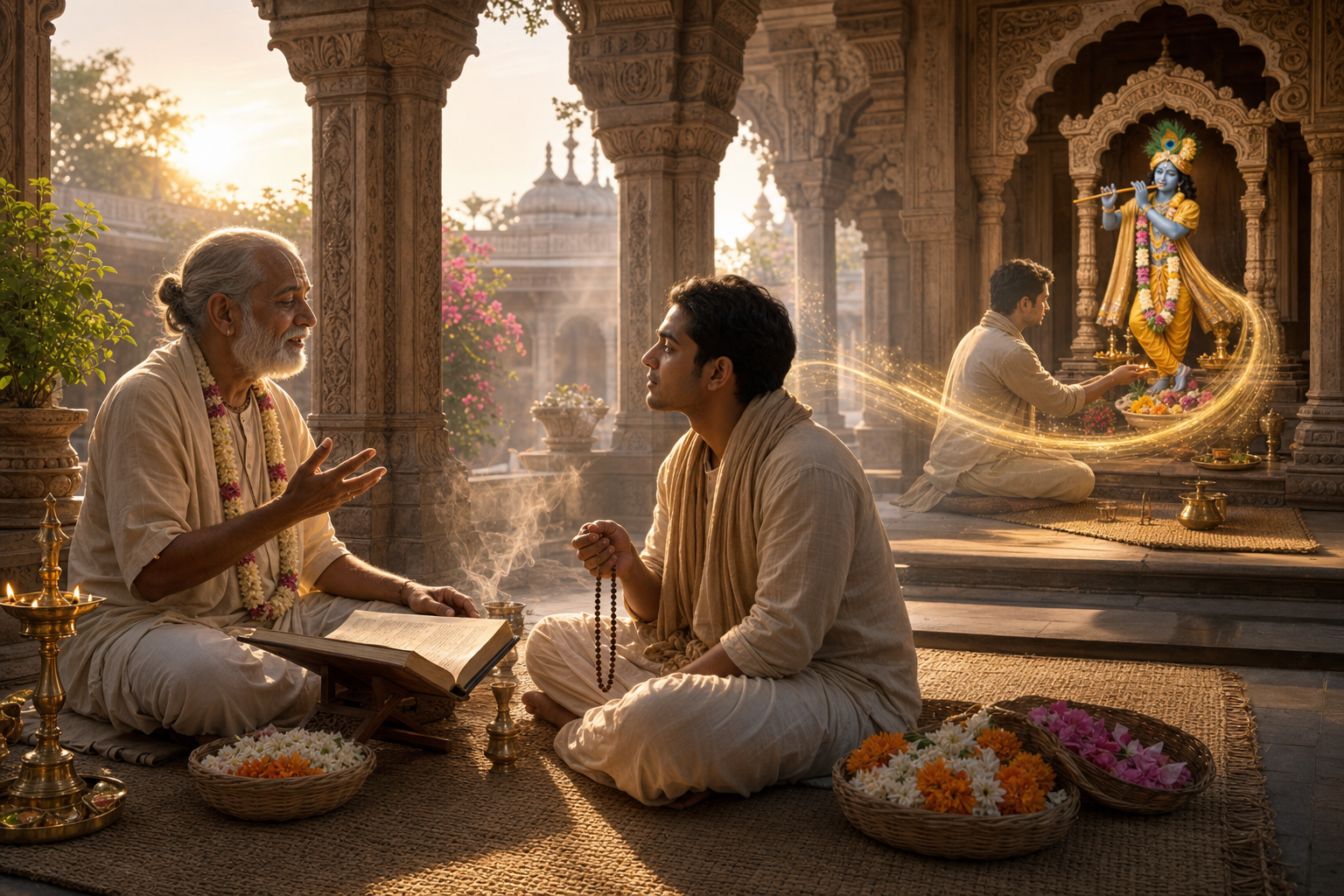
Inattentive Chanting Decoded: Bhaktivinoda Thakura’s Keys to Conquer Restlessness and Deepen Japa

This in-depth guide distills Srila Bhaktivinoda Thakura’s Harinama-cintamani on inattentive chanting, identifying indifference, laziness, and restlessness as the three core obstacles to quality japa. It explains why rushing through “prescribed rounds” is a red flag for restlessness and offers practical, research-aligned protocols to restore calm focus. Readers learn how to design a supportive environment, synchronize…
-
From Overwhelm to Ease: A Dharmic, Science-Backed Guide to Cooling an Anxious Mind

Anxiety can be cooled reliably by combining physiology, contemplative training, and ethical living. This guide bridges modern neuroscience with dharmic wisdom from Hinduism, Buddhism, Jainism, and Sikhism to offer practical tools that downregulate the nervous system. Readers learn how breath awareness, pranayama, and humming stimulate the vagus nerve and improve HRV for fast-acting calm. Somatic…
-
Marathi Panchang 2026–2027 (Parabhava): Complete Guide to Shubh Muhurats, Tithis, and Festivals

This academically grounded overview presents the Marathi Panchang 2026–2027 (Parabhava, Śaka 1948) compiled by Uttaradi Math for Maharashtra. It clarifies the year’s span from March 19, 2026 to April 6, 2027, and explains how Tithi, Vara, Nakshatra, Yoga, and Karana drive shubh muhurat selection for Vivah, Griha Pravesh, Upanayan, and Mundan. Readers learn why the…
-
From Restless Longing to Inner Guru: Bridging the Finite Self and the Infinite in Kali Yuga

This long-form exploration presents a clear, academic guide to bridging the finite self and Infinite Reality in Kali Yuga through the Inner Guru, or antaryāmin, while honoring unity among Hinduism, Buddhism, Jainism, and Sikhism. It integrates the Bhagavad Gita’s Karma, Bhakti, Jñāna, and Rāja Yoga with cross-traditional practices like ethical steadiness, meditation, mantra-japa, and seva.…
-
Why Halahala Emerged First: Profound Life Lessons and Dharma Insights from Samudra Manthan

Why did poison arise before nectar during Samudra Manthan? This analysis draws on the Bhagavata Purana and Vishnu Purana to explain the precise sequence—how halahala surfaces first, how Shiva’s Neelakantha containment averts catastrophe, and why treasures and amrita emerge only after purification. It connects the myth’s grammar to psychology, yoga, Ayurveda, leadership, and governance, showing…
-
Why Shiva Rarely Holds the Lotus: Decoding Shaiva Iconography, Vairagya, and Dharmic Harmony

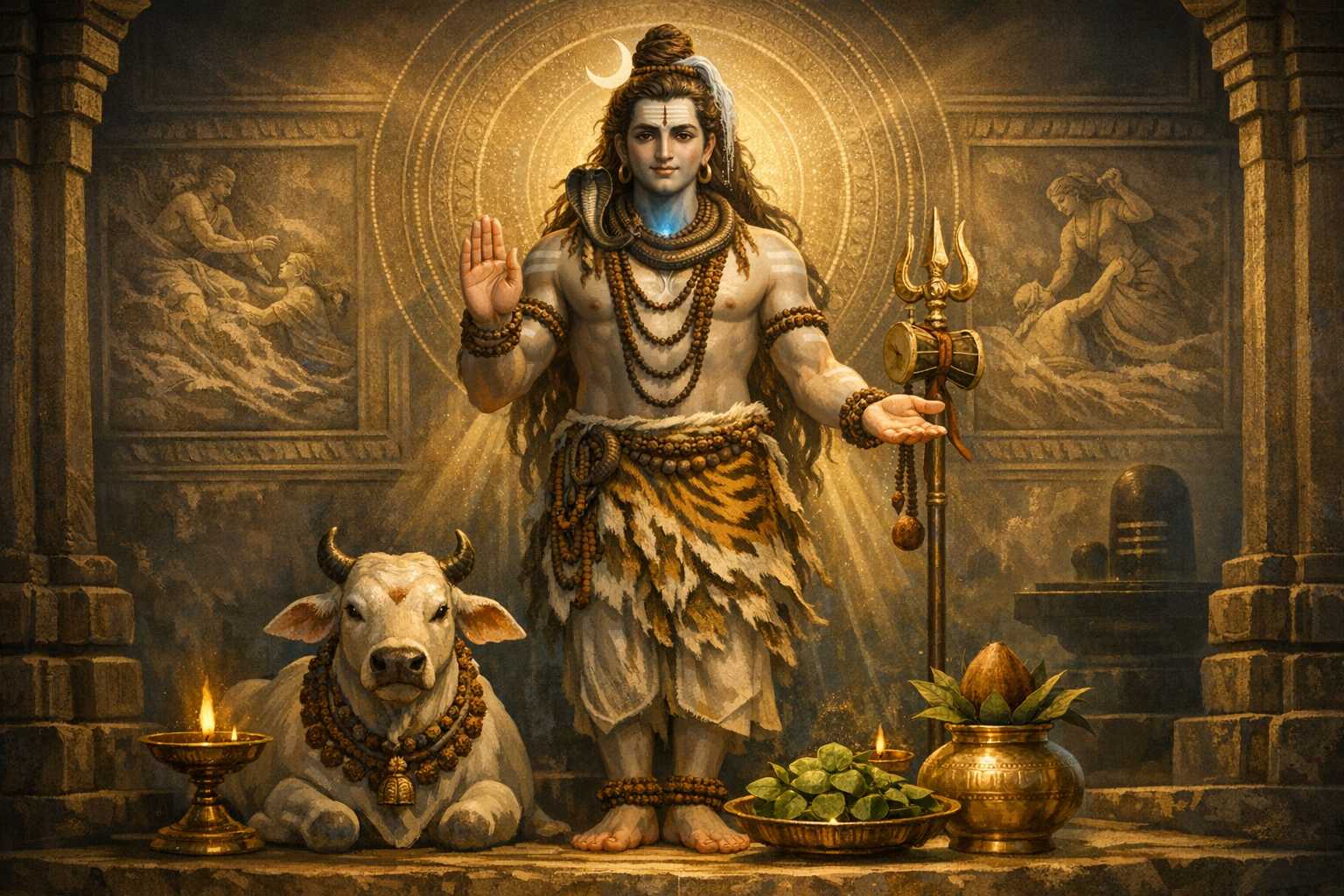
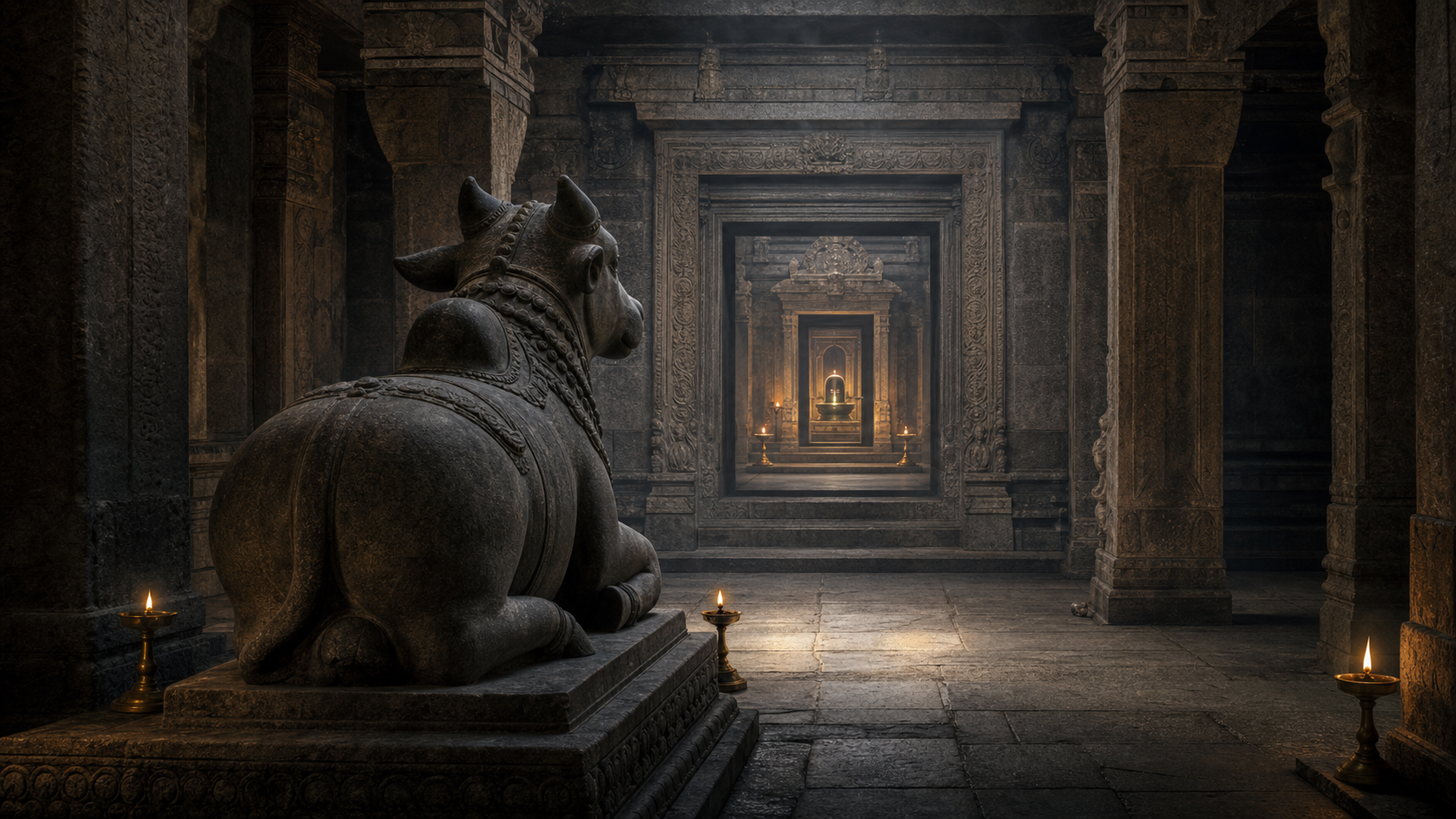
The lotus dominates Indic sacred art, yet Shiva is rarely defined by it. This essay explains why by tracing Shaiva iconography prescribed in Agamas and Shilpa Shastras, where trishula, damaru, vibhuti, rudraksha, Nandi, and the aniconic linga carry the core theological message. It contrasts the lotus’s semantics of purity, abundance, and preservation—with Vishnu, Lakshmi, and…
-
March 23, 2026 Panchang: Shukla Paksha Panchami to Sashti, Auspicious Times, Nakshatra, Rashi

Monday, March 23, 2026 in the Hindu Panchang features Shukla Paksha Panchami until 21:18 IST, transitioning to Shukla Paksha Sashti thereafter. The post explains what this Tithi change means in practice and how to plan worship, study, and vratas accordingly. It outlines reliable, location-based methods to choose Good Time (Shubh Muhurat) using Abhijit, Choghadiya, and…
-
Chakrapani Bhairava at Muktinath: Witness Shiva–Shakti–Vishnu Unity in the Himalayas

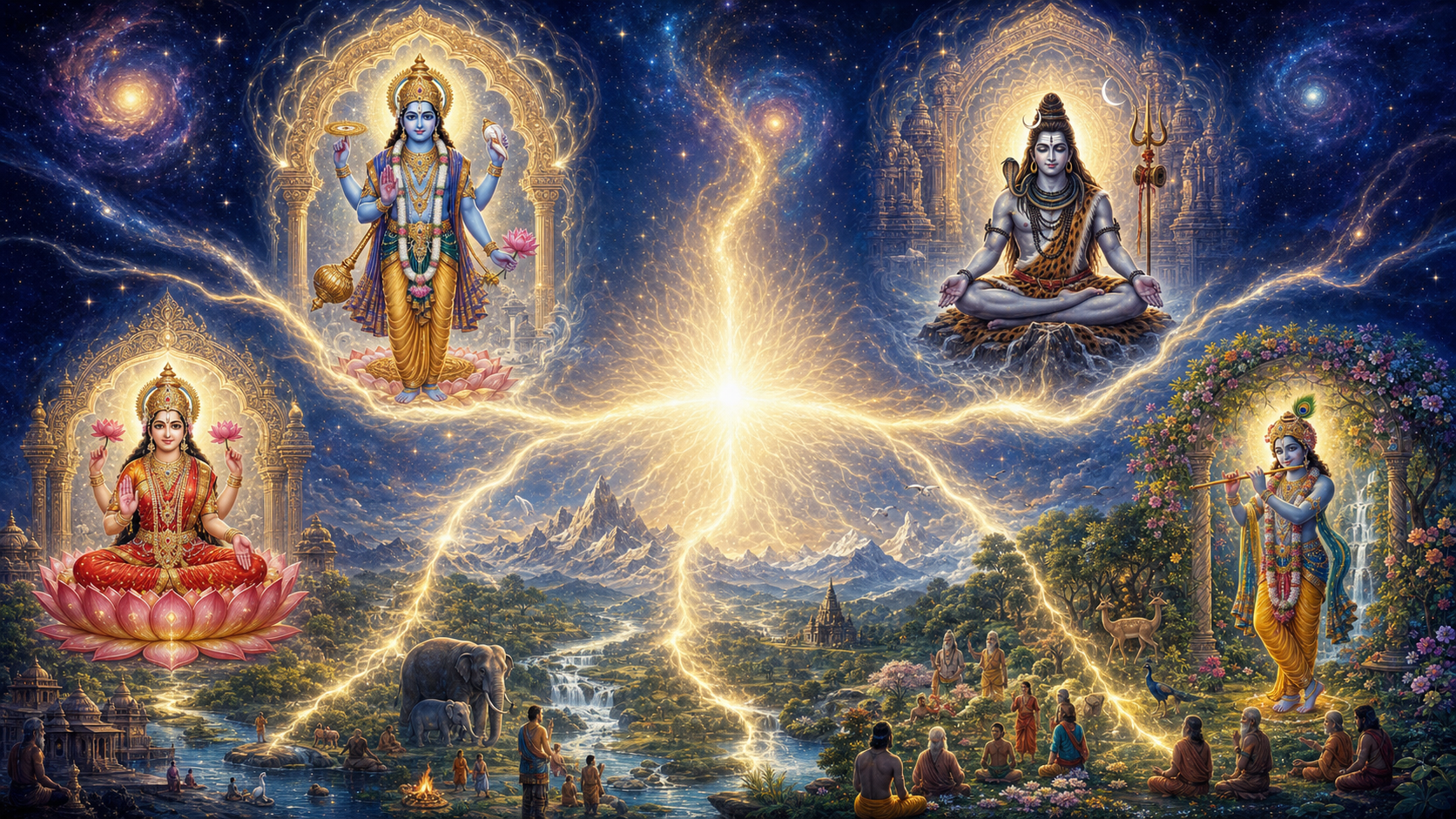
Set in Nepal’s Mustang, Muktinath (Chumig Gyatsa) unites Śākta, Śaiva, Vaiṣṇava, and Buddhist traditions in one sacred landscape. The Gandaki Devi Śakti Pīṭha is traditionally identified with Sati’s right cheek, guarded by Chakrapani Bhairava—the kṣetrapāla who protects shrine, pilgrims, and dharma. The analysis explains how the epithet “Chakrapani,” a Vaishnava title of Viṣṇu, when paired…
-
Child Sita’s Mercy Stops Dasharatha’s Ashvamedha Horse: A Timeless Lesson in Dharma

A lesser-known Ramayana tradition recounts child Sita protecting King Dasharatha’s Ashvamedha yajna horse, transforming a display of sovereignty into a lesson in compassion. Situated within the technical history of Vedic ritual, the episode illuminates how dharma transcends mechanical observance and centers ahimsa. While the Ashvamedha affirmed political order through a wandering, consecrated horse, Sita’s intervention…
-
On the Banks of Mother Ganga: Immersive Kirtan, Mantra Science, and Dharmic Unity in Rishikesh

Set in Rishikesh on the banks of Mother Ganga, this in-depth exploration of Rishikesh Kirtan Fest explains how communal chanting, breathwork, and meditation combine to create a sustained field of devotion and learning. It defines kirtan within the Bhakti Tradition, outlines its musical architecture, and connects mantra practice to contemporary insights in neuroscience and physiology.…
-
Srimad Bhagavatam 10.13.4–11: Kṛṣṇa as yajña-bhuk in a Dazzling Vraja-Līlā of Love and Wisdom

Srimad Bhagavatam 10.13.4–11 portrays Kṛṣṇa as yajña-bhuk—the supreme enjoyer of offerings—while sitting in the affectionate circle of Vraja’s cowherd boys, uniting transcendence with intimacy. The passage reframes ritual logic: the forest meal functions as a living yajña where bhāva (devotional intention) consecrates food into prasāda. Iconographic details (flute, horn bugle, and staff) are not ornaments…
-
Yoga and Psychological Stress Relief: Evidence-Based Pathways to Calm, Clarity, and Resilience

HH Krishna Kshetra Swami’s address at China Medical University highlighted how the classical yoga tradition approaches stress through systematic preparation of the mind—uniting meditation, Pranayama, and ethics. This comprehensive analysis bridges those insights with contemporary psychophysiology, explaining how slow breathing boosts vagal tone, meditation reshapes attention and emotion, and ethical congruence reduces cognitive load. Practical…
-
May 2026 Hindu Festivals Guide: Vaishakh Purnima & Sankashti Vrat—Rituals, Timings, Significance

This IST-aligned guide to May 2026 Hindu festivals synthesizes trusted Panchang sources to clarify dates, meanings, and observances. It highlights May 1 as Vaishakh Purnima—featuring Snan–Daan–Vrat Purnima, the end of Vaishakh Snan, Gandheswari Puja in Bengal, and Annamacharya Jayanti—and May 5 as Sankashti Chaturthi Vrat (moonrise-based). The article explains how tithis work, why regional Panchang…
-
Beyond Death’s Arrow: How Arishtanemi’s Tapas in the Mahabharata Reveals Deathless Dharma

This essay examines how the Mahabharata’s doctrine of tapas frames spiritual discipline as “divine protection,” reading the image of going beyond death’s arrow as a technical claim about fearlessness and clarity. It situates Ariṣṭanemi (Neminātha in Jain tradition) within a shared Dharmic milieu, linking ahiṃsā and aparigraha to the epic’s tapas-centered ethic. Drawing on Shanti…
-
Are Animals and Plants Free from Karma? A Dharmic Deep Dive into Choice and Consciousness

Do animals and plants accrue karma like humans? This comprehensive, dharmic analysis explains why many Vedantic interpretations hold that animals and plants seldom generate fresh, morally binding karma, while humans—endowed with reflective awareness—carry heavier responsibility. It synthesizes perspectives from Hinduism, Buddhism, Jainism, and Sikhism, showing a shared insight: karmic weight scales with intention and choice.…
-
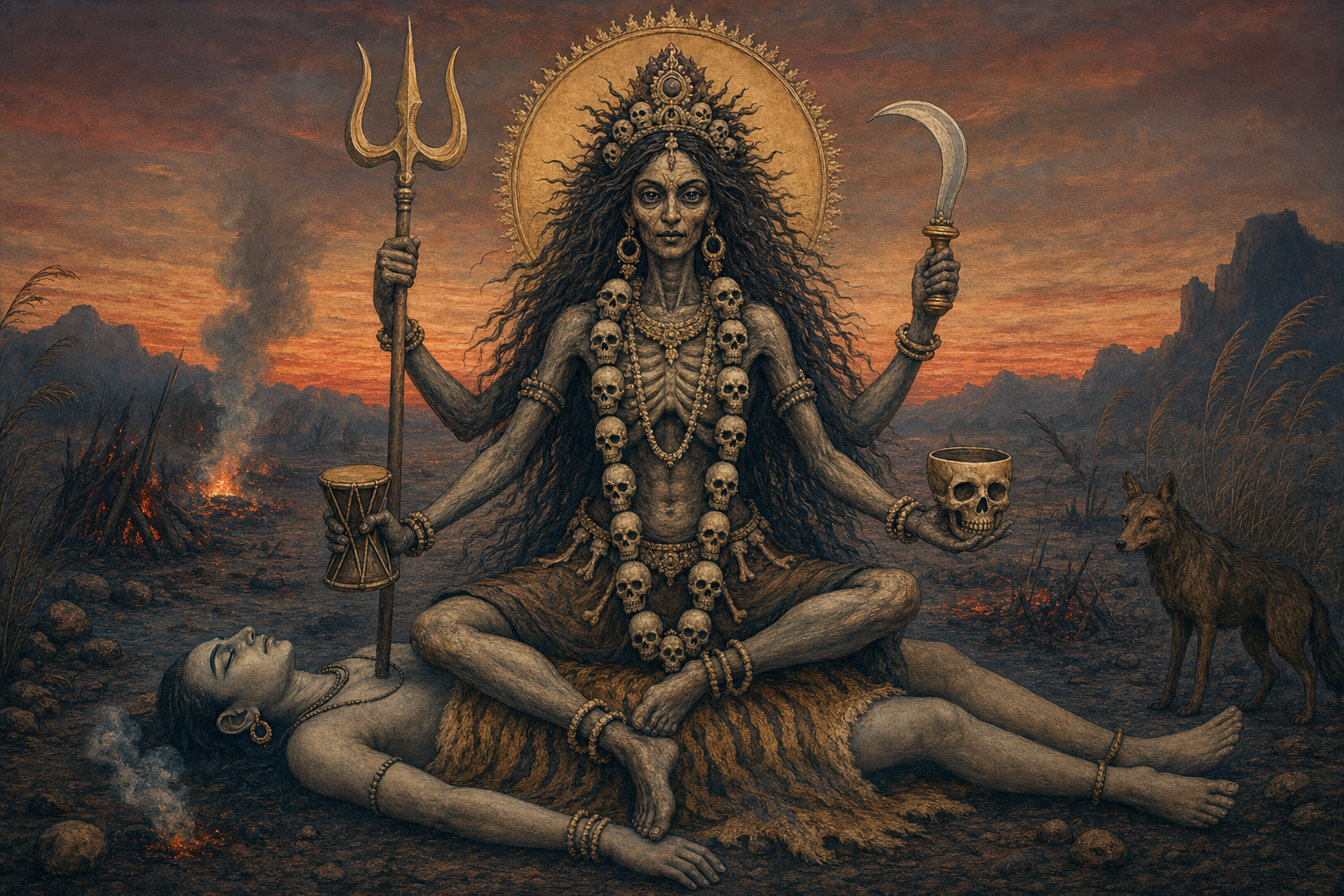
Skull Symbolism in Tantra: Decoding Kali, Bhairava, Chinnamasta to Cut Through Ego and Fear

Skull imagery in Tantric art is often misunderstood as morbid when it functions as a precise spiritual pedagogy that cuts through ego, pride, and pretension. This long-form analysis decodes the kapala, mundamala, and self-decapitation motifs across Shiva, Bhairava, Kali, and Chinnamasta, and situates them within the historical currents of Shaiva–Shakta Tantra and Vajrayana Buddhism. The…
-
Shattering the Illusion of Chains: Advaita Vedanta’s Guide to the Ever‑Free Self
Advaita Vedanta proposes a radical clarity: in ultimate truth there is neither bondage nor liberation; the Self (Atman) is ever-free, and only ignorance creates the sense of captivity. This article explains the logic of avidya and adhyasa, distinguishes empirical from absolute perspectives, and shows how moksha functions as recognition rather than attainment. Drawing on the…
-
Sri Dhanasadha and the Plough: A Powerful Bhakti Portrait of Humble Labor in Tamil Village Life

This article presents Sri Dhanasadha as a compelling exemplar of agrarian Bhakti, showing how humble labor can become Karma Yoga through remembrance and community. It clarifies that “marriage qualities of the Lord” should be read as the kalyana-gunas—auspicious attributes—thereby sharpening contemplative focus. It maps his daily practice to classical Bhakti modalities—satsanga, śravaṇa, and smaraṇa—demonstrating their…