-
Hrishikesha: Why Sri Krishna Is the Lord of the Senses and Guide to Inner Harmony

“Hrishikesha” reveals Bhagavan Sri Krishna as the Lord of the Senses—an insight central to Yoga, bhakti, and ethical action in the Bhagavad Gita. The Mahabharata deploys this epithet at decisive moments, highlighting composure, clarity, and mastery in the midst of conflict. Etymology and Upanishadic symbolism—especially the charioteer allegory—clarify how sense-discipline fosters inner harmony. This principle…
-
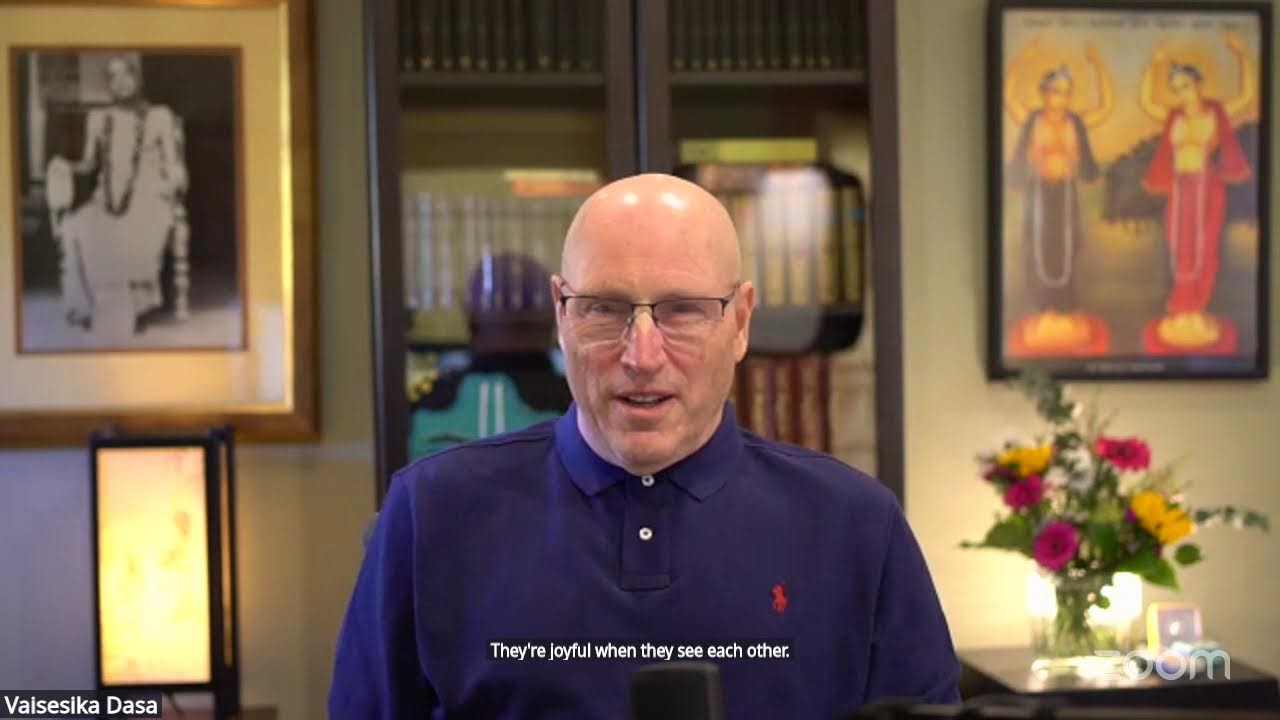
Hari Sauri Prabhu at ISKCON Vrindavan: Gopīs Reveal Kṛṣṇa’s Divinity—Love and Paradox

Presented in ISKCON Vrindavan on 08.11.2025, this Śrīmad-Bhāgavatam reflection explores Śrīla Viśvanātha Cakravartī’s portrayal of the gopīs recognizing Kṛṣṇa’s divinity. The dialogue—“if this is true, I must be God”—reveals how divine love discloses theological truth through rasa and līlā. Readers gain a clear, academic perspective on Gaudiya Vaiṣṇava hermeneutics while connecting with relatable experiences of…
-
Chanting Ramcharitmanas Chaupais: A Time-Tested Path to Peace, Protection, and Resilience

This article examines the traditional view that chanting Ramcharitmanas chaupais supports peace, protection, and resilience during adversity. It outlines why rhythmic, meaningful repetition (japa) steadies attention and breath, helping reduce anxiety and improve focus. Practical guidance highlights intention-setting, steady pacing, and reflective engagement with verses, including those in Sundara Kanda. Devotee accounts frequently describe improved…
-
Gau Mata Mahatmyam: Sacred Cow’s Transformative Grace, Vastu Harmony, and Dharmic Unity

Gau Mata Mahatmyam presents a holistic view of the cow’s sanctity in Hindu Dharma, linking spiritual symbolism, Vastu harmony, and ethical living. The preserved Hindi lines emphasize the presence of “तैतीस कोटी देवी देवताओं,” the easing of Vastu dosha where a contented cow resides, and the auspiciousness associated with her joyful presence. This understanding resonates…
-
18 Miraculous Rescues: How Lord Vishnu Shielded Prahlada from Hiranyakashipu’s Fury

This post explores the Vishnu Purana’s poignant account of Prahlada’s bhakti and Lord Vishnu’s protection against Hiranyakashipu’s eighteen attempts to kill his son. It clarifies the role of sorcery (Kritya), the teachers’ reported death and revival through prayer, and the culminating appearance of Lord Narasimha from the palace pillar. Readers gain clear, readable context for…
-
Vaikuntha Chaturmurti: Decode Vishnu’s four heads, sacred symbolism, and Kashmir devotion

Vaikuntha Chaturmurti is a powerful four-headed manifestation of Lord Vishnu, revered in Kashmir’s Vishnu temples for its profound symbolism and devotional impact. The icon unites the human, lion, boar, and fierce heads to communicate compassion, protection, restoration, and purification. Its fourfold gaze signifies omnipresence and a comprehensive guardianship of dharma. Devotees often experience a deep…
-
Vaikuntha Kamalaja: Half Vishnu–Half Lakshmi Form and Its Powerful Message of Harmony
Vaikuntha Kamalaja, the half Vishnu–half Lakshmi form known as Lakshmi-Narayana, reveals a deep synthesis of preservation and prosperity. Echoing the Ardhanarishvara paradigm, it unites divine masculine and feminine energies without conflict. The iconography—Vishnu’s shankha and chakra alongside Lakshmi’s lotus—signals interdependence and balance. Theologically, it affirms the inseparability of Sri and Narayana while illuminating a path…
-
Akhanda Dwadashi 2025: Date, Meaning, and Vaishnava Vratam Insights for Inner Peace

Akhanda Dwadashi 2025, also called Dwadasha Aditya Vratam and Margasira Dwadasi Vratam, falls on 2 December during the Shukla Paksha of Margashirsha. Dedicated to Sri Krishna within the Vaishnava tradition, the observance emphasizes unbroken devotion and is often described in three phases over a year. Common practices include fasting, Krishna puja with tulsi, chanting, and…
-
रामचरितमानस की चौपाइयों का जप: बड़े संकटों से मुक्ति और आत्मबल के सशक्त उपाय

Across the Bhakti tradition, it is widely held that chanting selected Ramcharitmanas चौपाइयाँ strengthens inner stability and helps navigate major crises. The method is simple, disciplined, and compatible with evidence-informed insights on mantra meditation and attention training. By aligning breath, sound, and intention, japa encourages calm affect, moral clarity, and courage for ethical action. Families…
-
Gau Mata Mahatmyam: Sacred Cow’s Grace, Vastu Harmony, and Dharmic Unity Explained

Gau Mata Mahatmyam frames the sacred cow as a symbol of harmony, abundance, and ethical living within Hindu Beliefs and Vedic culture. The excerpt’s claims—linking Gau Krupa to Vastu balance, associating divinity with the cow, and evoking auspicious joy—are best read as symbolic affirmations of serenity and care. This understanding integrates spirituality with agrarian sustainability,…
-
Vaikuntha Chaturmurti: Unveiling Vishnu’s Four-Faced Power and Kashmir’s Sacred Icon

Vaikuntha Chaturmurti is a celebrated four-headed form of Lord Vishnu, especially revered in the Vishnu temples of Kashmir. Its iconography—human, Narasimha (lion), Varaha (boar), and a fierce raudra aspect—unifies compassion, protection, renewal, and purification. Devotees describe the darshan as both calming and empowering, fostering moral clarity and resilience. The form’s symbolism aligns with the pluralistic…
-
Dashavatara Moorthy: Unveiling Lord Vishnu’s Ten Incarnations and Their Living Wisdom
Dashavatara Moorthy, the epithet for Lord Vishnu’s ten incarnations, conveys how the preserver intervenes to restore dharma whenever disorder rises. The tradition holds that nine avatars have appeared, with Kalki yet to come. Lists vary across regions and texts—some include Buddha, others Balarama—reflecting the breadth of Hindu belief while preserving a shared ethical core. The…
-
From Overwhelm to Clarity: A Simple Pocket Object to Slow Down, Breathe, and Recenter

A quiet pause in a parked car demonstrates how a simple tactile object can interrupt mental overload and restore breath awareness. By using a small, familiar item as a grounding cue, attention shifts from rumination to embodied presence, enabling stress reduction and mental clarity. This micro-ritual aligns with dharmic wisdom—seen in japa, mindfulness of touch,…
-
Why the Divine Answers to Every Name: Hindu Wisdom on Ishta and Radical Inclusivity

This article explains a core Hindu teaching: the Divine responds to sincere devotion regardless of the name, language, or pronunciation used. Drawing on the doctrine of Ishta and resonances from the Bhagavad-Gita, it shows why intention and inner feeling outweigh verbal precision. It situates this insight within the broader dharmic family—Hinduism, Buddhism, Jainism, and Sikhism—highlighting…
-
Bholebaba of Bengal: Why Shiva’s Serene Compassion Captivates the Land of Kali

Bengal reveres Lord Shiva as Bholebaba, the simple-hearted and compassionate Mahadeva, highlighting serenity and forgiveness over ascetic severity. This devotional focus aligns with Bengal’s Shakta heritage, where Kali’s power complements Shiva’s tranquil grace in a harmonious spiritual balance. Simple offerings and accessible ritual practices reflect an egalitarian ethos within Hindu traditions. The ethic of karuna,…
-
Poetry as an Arrow: Devotion That Pierces the Heart and Spins the Mind in Bhakti

A timeless aphorism frames a dharmic insight: true poetry and devotion should stir both heart and mind. This piece explores how bhajans, shabads, gathas, and stavans act like a bowman’s arrow—precise, transformative, and unifying across Hinduism, Buddhism, Jainism, and Sikhism. Readers gain an academic yet accessible understanding of why emotional resonance must be joined with…
-
Between Yoga and Catholic Classrooms: A Harmonious Journey into Dharmic Values

Raised in a vegetarian household rooted in yoga, the narrative highlights how ahimsa and disciplined living shaped early ethical sensibilities. An impersonal philosophical orientation within yoga coexisted with broader dharmic values, reinforcing compassion and self-restraint. Study in a Roman Catholic school introduced daily interfaith engagement, showing how yoga at home and Catholic education in the…