-
‘Get Up and Fight’: Krishna’s Counsel to Arjuna on Duty, Detachment, and Everyday Courage

Krishna’s directive to Arjuna—“get up and fight”—is a disciplined call to fulfill duty with compassion, detachment, and clarity. Framed within Dharma-Yuddha and Kshatra Dharma, it rejects aggression and centers ethical responsibility. Through Karma Yoga, one acts without attachment to results, supported by equanimity and reflective practice. The guidance adapts to everyday life: addressing injustice, sustaining…
-
Sanatana Dharma Unveiled: Living the Eternal Philosophy of Unity, Duty, and Harmony
Sanatana Dharma is presented as an eternal, living philosophy that prioritizes ethical action over mere belief. It unites Hinduism, Buddhism, Jainism, and Sikhism around shared values such as compassion, self-discipline, and respect for diverse paths. The philosophy emphasizes daily practices—truthfulness, non-violence, generosity, and service—that strengthen personal integrity and social cohesion. Concepts like Ishta and loka-saṅgraha…
-
November 17, 2025 Panchang: Krishna Paksha Trayodashi Timing, Meaning, and Guidance

November 17, 2025 (Monday) spans two tithis in the Hindu calendar: Krishna Paksha Dwadashi until 5:28 AM, followed by Krishna Paksha Trayodashi for the rest of the day. This transition offers a meaningful arc—Dwadashi supports Ekadashi parana, while Trayodashi encourages steadiness and evening Pradosh worship. Because Panchang systems vary by region, Nakshatra and Rashi should…
-
Sacred Boundaries, Unshakeable Devotion: Sita–Lakshmana’s Bond in Eknath’s Bhavartha Ramayana

Sant Eknath’s Bhavartha Ramayana offers a lucid, ethical reading of the Sita–Lakshmana bond in the Aranya Kanda, where maryada and bhakti shape a relationship of reverence and restraint. The episode highlights Lakshmana’s dilemma between guarding Sita and seeking Rama, revealing devotion as principled action. The Lakshmana Rekha motif, prominent in devotional traditions, functions as a…
-
Why Rama Chose Humanity: Profound Wisdom Behind Ravana’s Boon, Suffering, and Dharma

This article explains why Lord Rama, an avatar of Vishnu, chose to be human in response to Ravana’s boon. It shows how Ravana’s selective invulnerability created a lawful path for dharma to prevail without violating cosmic commitments. By accepting human limitations and suffering, Rama modeled maryada—ethical excellence under constraint. The narrative highlights the power of…
-
Srimad Bhagavatam 10.90.18: Mortal Wounds, Spiritual Resilience, and Dharma’s Healing Power

This reflection on Srimad Bhagavatam 10.90.18 clarifies the metaphor of a “mortal wound” and applies it to spiritual ethics and daily practice. It distinguishes minor setbacks from integrity-compromising harms that demand urgent repair. The analysis offers practical tools—atonement, meditation, seva, satsang—to prevent moral injury from becoming entrenched. It highlights parallels across Hinduism, Buddhism, Jainism, and…
-
Srimad-Bhagavatam and Sankirtan: Transformative Peace, Love, and Liberation in Kali-yuga

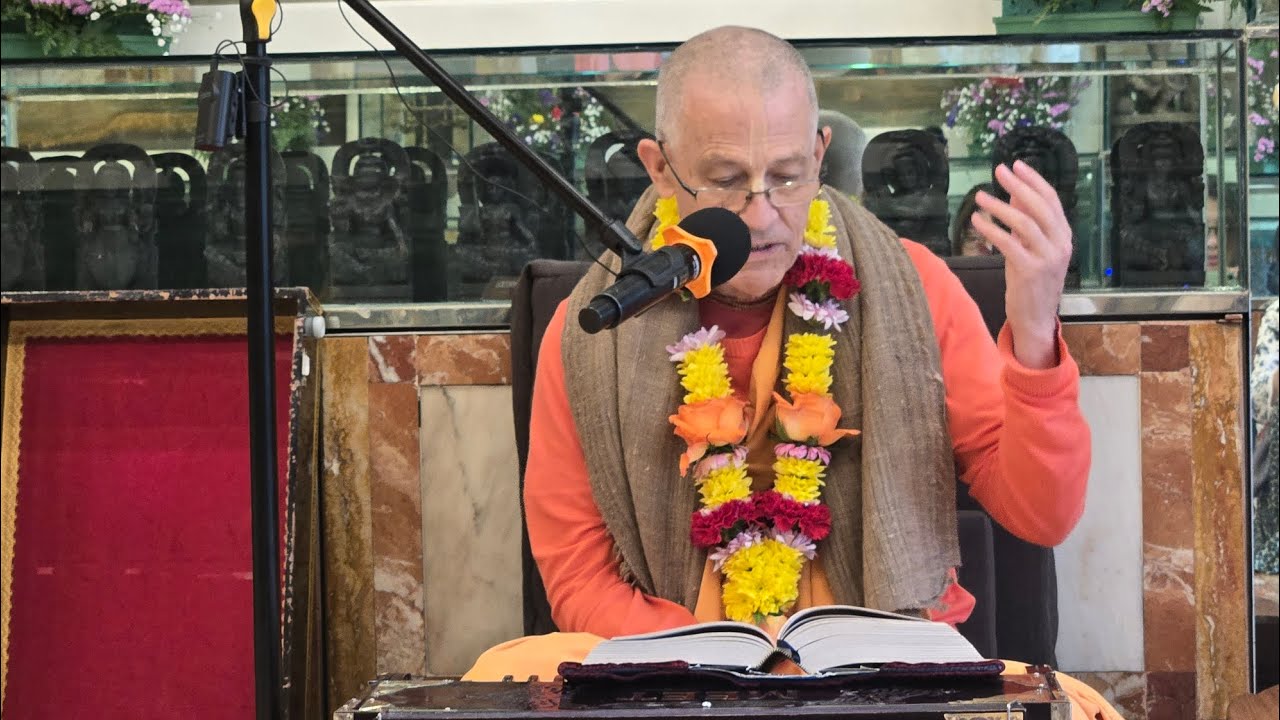
A discourse at ISKCON Kanpur by HH Guru Prasad Swami illuminates a core teaching of the Srimad-Bhagavatam: in Kali-yuga, nama-sankirtan—chanting the holy name of Krishna—offers a direct path to peace, liberation, and pure love. The devotee’s focus shifts from escaping hardship to embracing seva, transforming daily life into sacred service. This practice is simple yet…
-
Sat-sanga Reflections (08.11.2025): Remembering Vamsi, Gita Review, and the Joy of Prema-bhakti

This sat-sanga (08.11.2025) with HH Krishna Kshetra Swami concluded a systematic review of the Bhagavad Gita and turned to an illuminating exploration of prema-bhakti. Drawing on Srimad-Bhagavatam, the session explained how mature devotion may express itself as tears, laughter, singing, dancing, and reverent līlā, arising naturally from deep absorption. Remembering the vamsi (Sri Krishna’s flute)…
-
Reclaiming Sacred Duties: Hindu Women Performing Tarpan, Pinda Daan, and Shradh with Dignity

Hindu philosophy defines Matri-Pitri Rin—the universal debt to parents and ancestors—as a duty that applies to all, not restricted by gender. This post clarifies that Hindu women can perform Tarpan, Pinda Daan, and Shradh in line with both scriptural breadth and regional practice. It highlights intention, relationship, and ethical action as the core of these…
-
Parashara Gita Chapter One: Timeless Lessons on Dharma, Karma, and Courageous Virtue

The opening chapter of the Parāśara Gītā sets a clear foundation for ethical living rooted in dharma, karma, and virtue. It defines dharma as harmony with enduring values while remaining sensitive to context. Karma is framed as ethical causality, urging pure intention and compassionate action. Virtue is practical—steady cultivation of sattva through truthfulness, restraint, and…
-
Abhimanyu’s Final Stand: Why His Death in the Mahabharata Became an Unyielding Victory
Abhimanyu’s stand on the thirteenth day of the Kurukshetra War illustrates how a life can be “killed but not defeated” when Dharma is upheld. This analysis explains why his death represents an ethical victory that transcends the battlefield. It clarifies the tactical context of the Chakravyuha and the violation of Dharma-Yuddha that led to his…
-
November 16, 2025 Panchang: Essential Tithi Guide, Ekadashi End (4:23 AM) & Dwadashi

On Sunday, November 16, 2025, the Hindu Panchang notes a shift from Krishna Paksha Ekadashi to Dwadashi, with Ekadashi ending at 4:23 AM and Dwadashi continuing thereafter. This timing helps households plan parana and devotional routines with clarity. Observances are best aligned with local Panchang guidance, as regional customs and sampradaya rules may vary. Location-specific…
-
Why Duryodhana Lost: The Mahabharata’s Powerful Lesson on Strength, Dharma, and Destiny

Duryodhana’s defeat in the Mahabharata, despite commanding Bhishma, Drona, and Karna, reveals a timeless truth: strength without dharma is brittle. The Kaurava cause, rooted in adharma, undermined cohesion, judgment, and morale, while the Pandavas’ moral legitimacy and disciplined strategy produced resilience. Sri Krishna’s counsel fostered clarity and adaptability, contrasting with Duryodhana’s pride and short-term cunning.…
-
Lal Kitab Remedies for Moon in the 7th House: Nurture Love, Marriage Harmony, and Peace

Lalkitab remedies for Moon in the 7th house focus on restoring emotional balance, strengthening marital harmony, and honoring maternal blessings. Classical guidance emphasizes respect for the mother and compassionate speech to prevent relational decline. Practical steps include Somvar vrat with white offerings, Chandra mantra japa (Om Som Somaya Namah), and charity of milk, rice, and…
-
Partha and Pārthiva Revealed: Profound Symbolism of the Mortal Seeker in Gita Chapter 1

Bhagavad Gita 1.25 uses “Pārtha” to frame Arjuna not merely as a warrior but as a mortal seeker grounded in lineage, responsibility, and dharma. The cognate “pārthiva”—earthly, princely—deepens this symbolism, suggesting rulership over the self as the heart of ethical action. Krishna’s selective use of names functions as pedagogy, stabilizing Arjuna amid Kurukshetra’s tumult and…
-
Compassion Over Ritual: Transformative Caitanya Bhagavata Insights on jive-daya and Bhakti

This reflection on Caitanya Bhagavata highlights a central bhakti insight: worship of Lord Visnu is authentic only when paired with jive-daya, or compassion for all beings. Envy or harm toward others—especially toward a Vaisnava serving Lord Hari—undercuts spiritual progress. Rather than condemn, the text guides practitioners to restore empathy, humility, and responsibility. These teachings resonate…
-
When Grief Strikes: Finding Sacred Shelter and Resilience Through Dharmic Compassion

A grieving family sought solace after the sudden loss of their eighteen-year-old son, and the temple community responded with quiet compassion rooted in dharmic wisdom. The encounter highlights how inner orientation—not circumstances—can transform the experience of suffering. Drawing from Hindu, Buddhist, Jain, and Sikh traditions, the narrative emphasizes unity through practices like japa, mindfulness, ahimsa,…
-
Why a Disciplined Mind Outshines Any Army: Timeless Dharmic Wisdom for Inner Power

The saying, “A well-trained and controlled mind is better than a powerful army,” captures a core dharmic insight: inner discipline surpasses external force. Rooted in the Bhagavad Gita and Raja Yoga, this principle is echoed across Buddhism, Jainism, and Sikhism through practices like mindfulness, Ahimsa, Simran, and Seva. Practical applications—calm communication, measured leadership, and ethical…
-
Bhagavad Gita Chapter 1: Duryodhana’s Restlessness, Dharma, and the Pursuit of Inner Peace

Bhagavad Gita Chapter 1 frames the Kurukshetra War as a field of dharma, revealing how inner states drive outer actions. Duryodhana’s poised yet anxious speech to Droṇa exposes a mind divided by adharma, offering a timeless psychological reading of leadership under pressure. The scene contrasts defensive agitation with Arjuna’s reflective sorrow, clarifying two paths that…