
-
Kalmasapada’s Curse and Redemption: Ikshvaku King Saudasa, Dharma, and Deception

Kalmasapada’s storyrooted in the Ramayana and Puranic loretraces King Saudasa’s fall through deception and his eventual restoration through dharma and wisdom. It shows how a single lapse in discernment can disrupt social harmony, while penance and counsel repair moral order. The narrative’s variations emphasize shared values across Hinduism, Buddhism, Jainism, and Sikhism, including self-restraint, right…
-
Beyond Liberation: Why Devotees Decline MokshaŚrīmad-Bhāgavatam 9.4.67, CC Ādi 4.208

Śrīmad-Bhāgavatam 9.4.67, cited in CC Ādi-līlā 4.208, presents a profound principle of the Bhakti Tradition: genuine devotees do not seek liberation or time-bound pleasures because loving service to the Divine is itself complete fulfillment. Set against the narrative of Durvāsā Muni and Mahārāja Ambarīṣa, the verse clarifies why bhakti transcends both material enjoyment and even…
-
Upanishadic Wisdom and the Profound Oneness of Life: A Call to Spiritual Solidarity

The Upanishads present a clear and compelling teaching: all life is fundamentally one. By illuminating the non-dual relationship between ātman and Brahman, these scriptures ground ethics in spiritual unity and inspire compassion in action. Their inclusive approach honors multiple pathsjñāna, bhakti, karma, and dhyanasupporting religious pluralism and interfaith harmony. Resonating with Buddhism, Jainism, and Sikhism,…
-
Manthanabhairavatantra: Unveiling Kubjika’s Shakti and the Western Kaula’s Living Wisdom

The Manthanabhairavatantra is a monumental Shakta scripture centered on Goddess Kubjika and Bhairava, anchoring the Western Kaula tradition. It presents a unified vision of energy and awareness, integrating mantra, ritual, and meditation with a nuanced map of consciousness and kundalini awakening. The churning metaphor makes complex metaphysics vivid and emotionally resonant, offering readers an accessible…
-
Mastering the Senses in Bhakti: Narayani Devi Dasi on Srimad Bhagavatam 4.29.11

On December 19, 2025, ISKCON Brisbane hosted a thoughtful class by HG Narayani Devi Dasi on Srimad Bhagavatam 4.29.11, focusing on sense gratification and the purposeful engagement of the senses in Krishna Consciousness. The session clarified that sense control is not suppression but skillful redirection toward seva. Practical methodsśravaṇa, kīrtana, association, and regulated habitswere presented…
-
Padmanabha Unveiled: The Lotus-Naveled Vishnu and the Cosmic Source of Creation

Padmanabha“He whose navel is the source of the lotus”encapsulates Vishnu’s role as the serene ground of creation in Hindu symbolism and Puranic cosmology. This post explains how the lotus and navel together express purity, origin, and balance, linking iconography with philosophy and practice. It explores scriptural foundations in the Bhagavata Purana and Padma Purana, and…
-
Ananta Shayana Kshetra Mahatmya: Timeless History and Symbolism of Padmanabhaswamy Temple

Ananta Shayana Kshetra Mahatmya preserves the sacred identity of the Padmanabhaswamy Temple in Thiruvananthapuram while situating it within the broader kshetra mahatmya tradition of Hindu scriptures. The chronicle, believed to predate the fourteenth century, illuminates the symbolism of Vishnu in Ananta Shayana and the theological ideas that shape ritual practice and daily darshan. Readers gain…
-
Kashyapa and Takshaka: Destiny, Dharma, and the Unfolding Tragedy of King Parikshit

This retelling situates the fate of King Parikshit and the choice of the sage Kashyapa within the ethical framework of the Mahabharata and Purana traditions. It highlights how a single lapse in restraint triggers consequences aligned with karma and dharma. The encounter between Kashyapa and Takshaka shows that even great knowledge meets limits when destiny…
-
Dharmaskandha in Chandogya Upanishad: Three Pillars of Vedic Life for Timeless Ethical Living

Dharmaskandha in the Chandogya Upanishad (2.23.1) presents three complementary pillars of Vedic life: the Vedic student, the householder, and the forest-dweller. Together they integrate disciplined learning, social responsibility, and contemplative depth into a unified ethic. This triad offers a relatable blueprint for modern livingcontinuous education, family and civic stewardship, and mindful simplicity. The framework resonates…
-
Bhadra of Ayodhya: Unveiling a Quiet Witness in the Ramayana Who Shaped Dharma

Bhadra, a lesser-known figure in the Ramayana, embodies the link between Ayodhya’s public voice and royal duty. Remembered as both “the amuser” and an attentive informer, his brief presence helps explain how rajadharma listens to everyday concerns. Through Bhadra, the epic captures realistic social textures while sustaining its moral vision of dharma. Readers gain insight…
-
When Devotion Leads and Divinity Follows: Maharaja Ambarisha and Krishna’s Grace
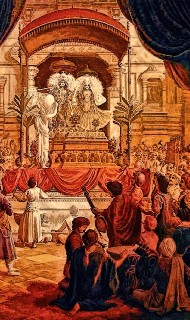
This reflection examines the Bhakti insight that Krishna responds to pure devotion, epitomized by the scriptural principle “aham bhakta-parādhino.” Maharaja Ambarisha’s example shows how disciplined, loving service transcends material opulence and invites divine protection. The narrative is presented in an accessible, academic tone while preserving theological accuracy. It connects the account to practical, everyday spiritual…
-
Krishna–Arjuna’s Sacred Friendship: Choosing Companions Who Challenge and Elevate the Soul

The Krishna–Arjuna friendship in the Mahabharata showcases how authentic companionship challenges, clarifies, and elevates. It models truth with empathy, accountability without humiliation, and steadfast alignment with dharma. The same ideal appears across dharmic traditions: kalyāṇa-mitra in Buddhism, sādhu-saṅgha in Jainism, and sangat in Sikhism, alongside Hinduism’s satsang and Bhakti Tradition. Readers gain practical criteria for…
-
Garuda’s Immortality Without Amrit: A Timeless Dharmic Guide to Purpose and Freedom

Garuda’s story from the Mahabharata and Puranas reveals how immortality can arise without consuming Amrit, redefining freedom as self-mastery rather than possession. It demonstrates purpose over acquisition, filial devotion as seva, and non-attachment as a source of clarity and strength. The episode models ethical intelligencefulfilling vows while sustaining cosmic orderthrough Garuda’s restraint and discernment. Readers…
-
Vayudeva Mahatmyam: Exploring the Wind God’s Power, Prana, and Dharma Across Traditions

Vayu Bhagavan, the wind god of Hindu tradition, is revered as the sustaining force behind prana, movement, and life. Classical narratives honor him as the divine father of Hanuman and Bhima, whose devotion to Lord Rama and loyalty to Lord Krishna exemplify courage and service. Philosophically, Vayu’s essence is experienced through pranayama and mindful breathing,…
-
Achyuta Unveiled: Meaning, Symbolism, and the Imperishable Grace of Vishnu

Achyutameaning “the unfallen”is a profound Sanskrit name of Lord Vishnu and Sri Krishna that conveys imperishability and unwavering grace. Scriptural anchors such as Bhagavad Gita 1.21 and the Vishnu Sahasranama highlight its theological depth and devotional relevance. The name’s symbolism nurtures steadiness, moral clarity, and resilience, guiding practitioners through uncertainty. Its core intuition of a…
-
Vrindavan Wisdom with HG Gopinath Acharya Prabhu: How Remembrance Unlocks Nectar

This Vrindavan reflection, associated with HG Gopinath Acharya Prabhu, clarifies a core teaching of the Srimad-Bhagavatam: constant remembrance of Krishna leads to the same Supreme Truth that yogic disciplines seek. It highlights how unwavering focusthrough bhakti or yogatransforms consciousness and grants access to the ‘nectar’ of divine grace. The discussion draws parallels with Buddhist mindfulness,…
-
Nārada’s Grace and the Guru’s Gift: Insights from HH Guru Prasad Swami on SB 7.7.16
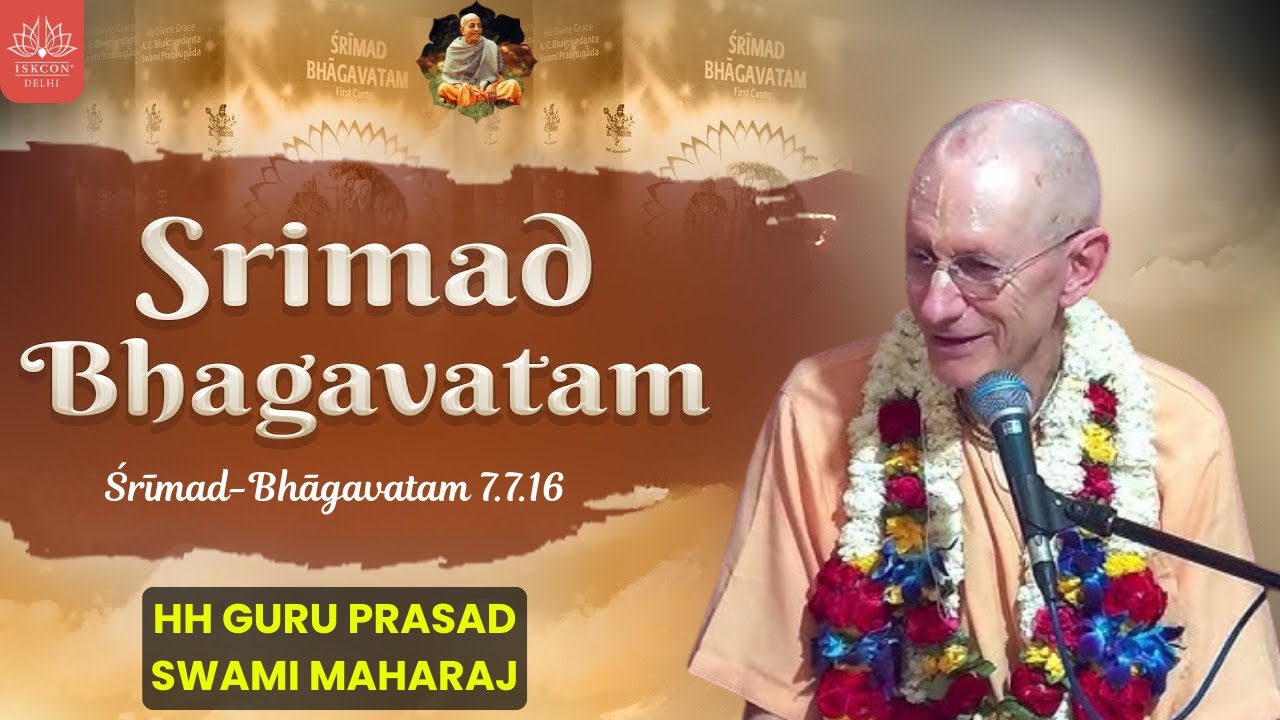
This morning reflection on Srimad Bhagavatam 7.7.16, guided by HH Guru Prasad Swami, explores how Nārada’s grace preserved Prahlāda’s remembrance of sacred teachings. The analysis reframes the verse to emphasize inclusive, dharmic values and the transformative power of a guru’s blessing. Listeners gain practical methodsdaily reading, meditation, gratitude, and satsangato convert inspiration into long-term memory…
-
Divine Wisdom and Human Desire: Parashara, Matsyagandhi, and the Transformative Birth of Vyasa

This post revisits the encounter of Rishi Parashara and Matsyagandhi as an ethically nuanced narrative where divine wisdom and human desire align to serve dharma. Readers gain clear historical context linking the episode to the Mahabharata and the Puranas, with the birth of Krishna Dvaipayana Veda Vyasa at its center. The analysis highlights Matsyagandhi’s agency,…
-
Kuchela Anugraha: Krishna’s Impartial Grace to Sudama and the Power of Patient Bhakti

The episode of Kuchela (Sudama) and Sri Krishna illuminates a central dharmic insight: divine grace is impartial and arrives at the right time. Sudama’s humble offering and Krishna’s affectionate welcome model friendship, humility, and non-transactional devotion. The crane’s stillness symbolizes disciplined patience while awaiting the moment of grace. These values resonate across Hinduism, Buddhism, Jainism,…
-
Vayudeva Mahatmyam: Unveiling the Power, Grace, and Living Legacy of Vayu Bhagavan

Vayu Bhagavan, the wind god of Hindu scriptures, embodies the cosmic prana that sustains life and guides conscious action. The Vayudeva Mahatmyam highlights his lineage from Rishi Kashyapa and Aditi, and his enduring legacy through Hanuman and Bhima, whose service to Lord Rama and Lord Krishna exemplifies strength, humility, and devotion. By linking Vayu’s power…