
-
Ucchista Ganapati Revisited: Beyond Stereotypes, the Inclusive Tantric Wisdom of Ganesha

Ucchista Ganapati, the eighth of Ganesha’s 32 forms, is often miscast as merely an “unclean” Tantric deity. Drawing on the ancient “Ucchista Ganapathi Puja Vidhanam,” this analysis clarifies that the practice is scripturally grounded, disciplined, and transformative. The term ucchista“that which remains”signals a theology of sanctifying remainders, not endorsing impurity. Framed by mantra, nyasa, and…
-
When Duty Meets Divine Will: Arjuna’s Tapas to Shiva and the Blessing of Astras

Arjuna’s tapas at Mount Indrakeel reveals how inner discipline aligns human duty with divine will in the Mahabharata. Guided by Veda Vyasa, Arjuna seeks Shiva’s grace and receives the Pashupatastra, exemplifying power entrusted only to ethical hands. The episode illustrates Kshatra Dharma as measured protection rather than aggression, echoing cross-dharmic ideals from Hinduism, Buddhism, Jainism,…
-
Four Faces of Varuna: Unveiling Vedic Symbolism for Cosmic Order and Inner Harmony

This article decodes the “Four Faces of Varuna” as a Vedic metaphor for omniscient care, moral order, and compassionate accountability. It clarifies how Rita (ṛta) structures both the cosmos and ethical life, linking Varuna’s symbolssuch as the pāśa and watersto practical integrity and social trust. Readers gain a clear framework that integrates the four Vedas,…
-
Andal’s Tiruppavai: Four Transformative Steps to Attain the Divine Presence of Vishnu
Andal’s Tiruppavai, revered across the Sri Vaishnava tradition, presents a clear four-step path to the divine presence of Lord Vishnu: shared discipline (Pavai Nombu), daily remembrance through song, surrender to grace, and compassionate service. These steps reinforce one another, enabling seekers to balance devotion, study, and ethical living. Observances during Margazhi create a supportive communal…
-
Ghritachi, Queen of Apsaras: Celestial Grace, Vedic Wisdom, and the Sages She Shaped

Ghritachi, the queen of Apsaras in Hindu mythology, exemplifies celestial beauty with philosophical depth. Across Vedic literature and Puranic narratives, her appearances mark turning points in the destinies of sages, illuminating how desire, discipline, and insight interact on the path of dharma. The symbolism surrounding Ghritachi resonates with broader Dharmic values found in Buddhism, Jainism,…
-
Paryagnikarana Explained: Sacred Ghee Purification That Elevates Vedic Yajna and Devotion

Paryagnikarana, the Vedic rite of purifying ajya (ghee) before offering it into the sacred fire, shows how material preparation and mental intention unite to elevate yajna. The procedure integrates clarity of substance, mantra recitation, and reverence for Agni to transform an ordinary ingredient into a consecrated medium. Beyond technical steps, the rite embodies an inner…
-
Sacred Parenting Mastery: Shiva–Parvati’s Timeless Lessons for Raising Wise, Compassionate Children
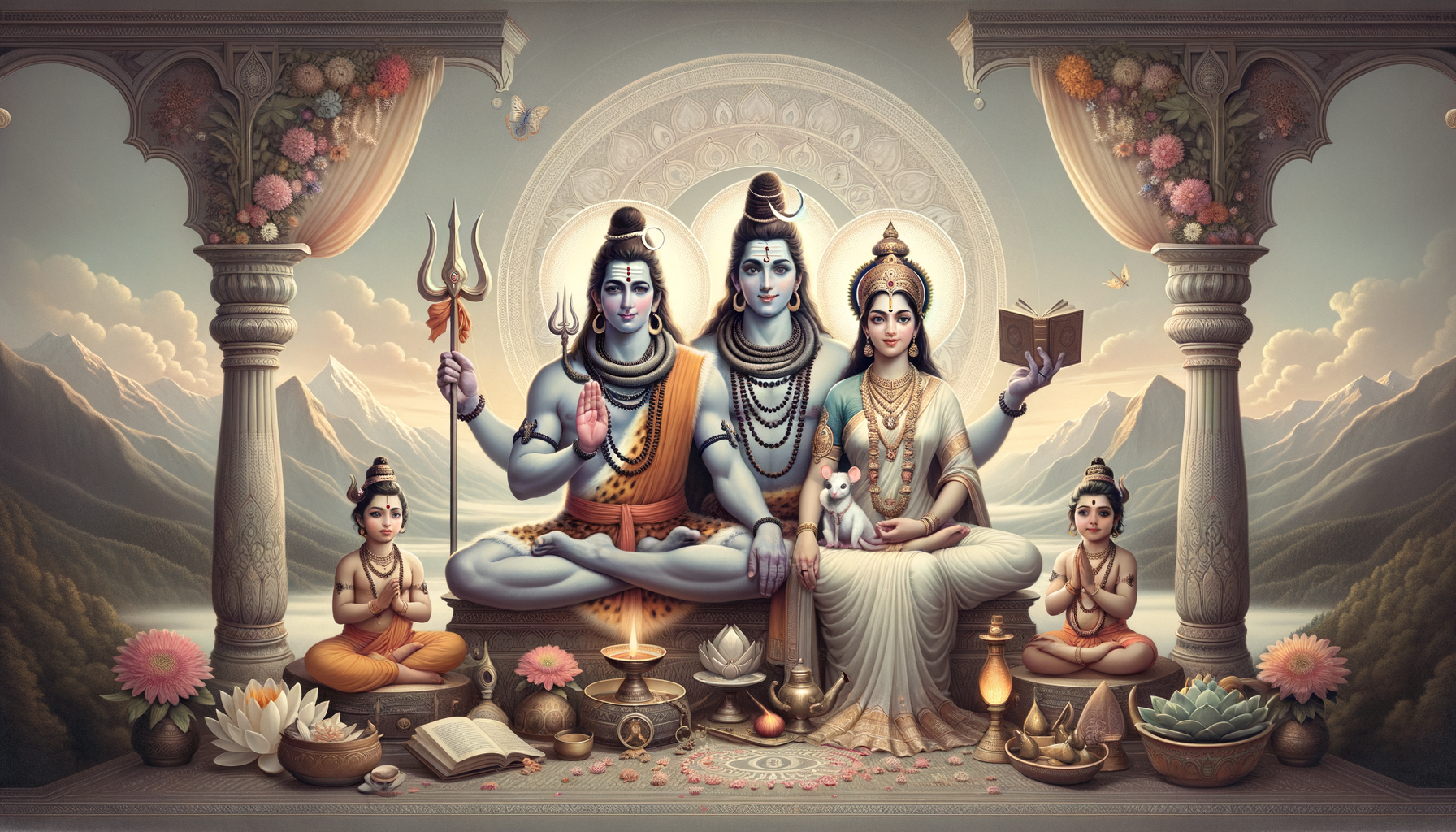
Hindu scriptures present the divine family of Lord Shiva, Mata Parvati (Pārvatī), Lord Ganesha, and Lord Kartikeya as a practical model of sacred parenting. Their narratives teach restorative accountability, healthy sibling dynamics, and the harmony of discipline with compassion. The Ganesha guardianship episode highlights firm boundaries coupled with reconciliation, while the brothers’ contest affirms diverse…
-
When Brahma Created Termites: Vishnu’s Decapitation and the Awe-Inspiring Rise of Hayagriva
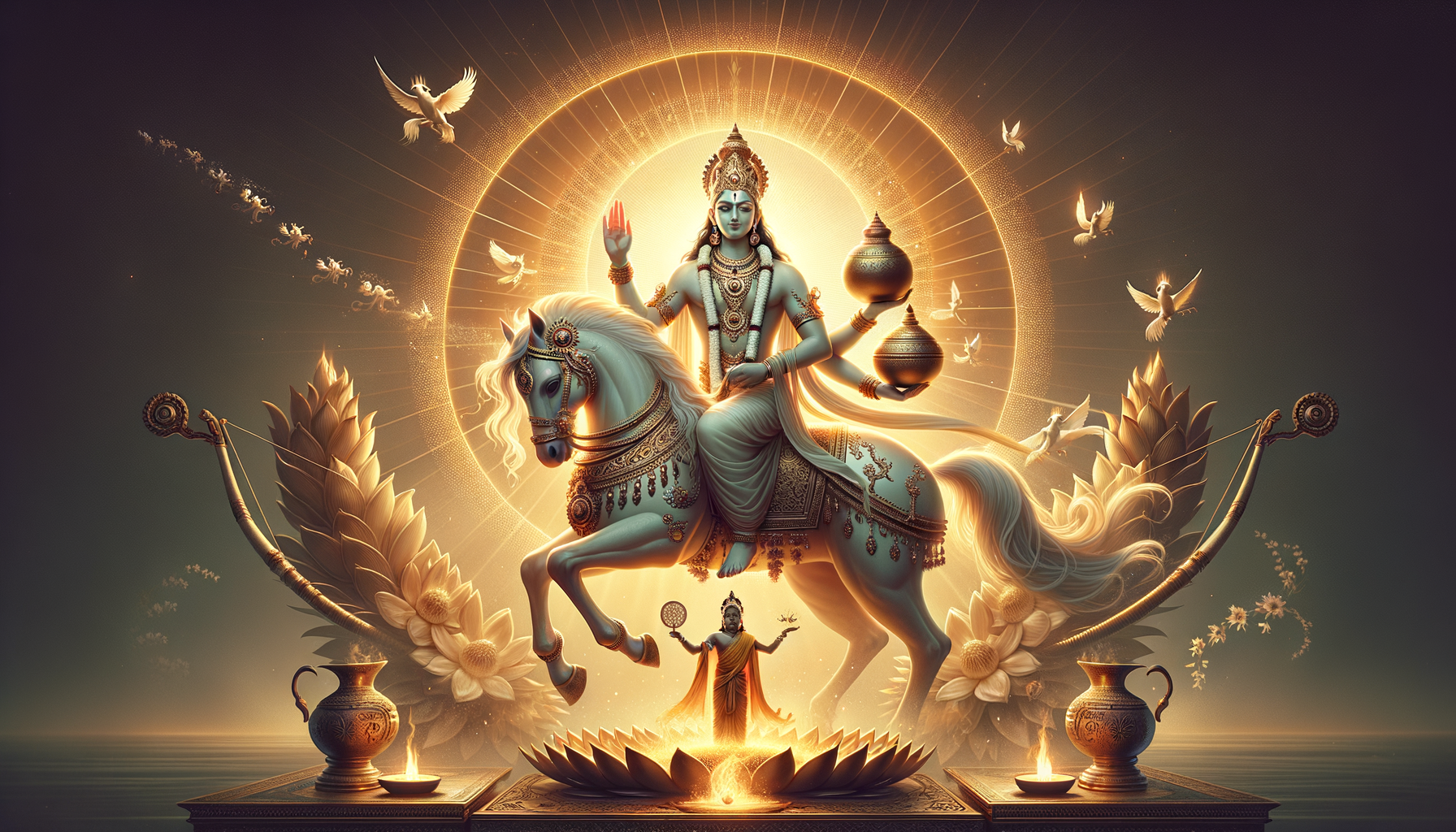
This article explores the Purāṇic narrative in which Brahma creates termites to awaken Vishnu, leading to the unexpected decapitation that culminates in Vishnu’s horse-headed form, Hayagriva. It clarifies major variations found in Hindu scriptures, highlighting how yajna, vigilance, and knowledge restore cosmic order. Readers gain a nuanced, academic account that remains emotionally resonant: small causes…
-
Why Ravana Took Sita to Lanka: Exploring a Protective Motive Across Dharmic Perspectives

This article examines why Ravana took Sita to Lanka by engaging both the Valmiki Ramayana and alternative interpretations that emphasize restraint and honor. It highlights how Sita’s inviolable dignity becomes the ethical fulcrum of the narrative across Hindu, Buddhist, Jain, and Sikh perspectives. Readers gain a nuanced understanding of motive, vow, and dharma without displacing…
-
Jati in Nyaya Philosophy: Exposing False Analogies to Elevate Dharmic Dialogue and Truth

Jati in Nyaya philosophy identifies fallacious rebuttals that rely on superficial comparisons rather than addressing the core claim. By naming these errors, Nyaya helps readers detect false analogies, category mistakes, and shifting grounds in everyday debate. The approach supports rigorous, fair, and focused discussion. Practical examples show how irrelevant similarities can mislead, while simple tests…
-
Who Created Brahma? Unveiling Devi, the Supreme Mother and Cosmic Source of All

Hindu cosmology addresses the classic questionwho created Brahma?by pointing to Devi, the Divine Mother, as the primordial creative potency (Shakti) behind all manifestation. Purāṇic narratives and Vedic philosophy converge on a hierarchy of emanation rather than a simplistic creator-of-creator chain. Symbols like the lotus and the Śri Yantra, and texts such as the Devi Mahatmya…
-
Jatukarnya: Unveiling an Ancient Dharmashastra Luminary Shaping Dharma and Society

Jatukarnya (Jatukarni/Jatukarna) emerges from the Dharmashastra tradition as an early voice in Hindu legal history, likely predating the 3rd century CE. Even without a fully preserved standalone text, later references attest to his participation in formative debates on law, ethics, and social norms in Ancient India. His remembered contributions exemplify how the Dharmashastras blend jurisprudence,…
-
Wheel of Brahma and Naimisharanya Dham: A Sacred Refuge in Kali Yuga, Revealed in the Puranas

Naimisharanya Dham, or Naimisha Vana, is celebrated in the Puranas as a sacred forest where the divine Wheel of Brahma marked a refuge for seekers in Kali Yuga. The site’s name recalls nimishaa momentsignifying swift inner transformation when devotion, study, and discipline align. Purāṇic accounts describe sages convening here for extended sacrifice and study, with…
-
Experience the Divine Everywhere: Applying Bhagavad Gita Wisdom in Everyday Life
Bhagavad Gita teaches that the Divine pervades all, and this can be experienced through a disciplined union of Bodha (insight) and Vyavahara (lived practice). A simple, relatable analogythe house of wooden objectsshows how shared essence and distinct functions coexist. Practical methods such as mindful breathing, silent japa, and small acts of seva make awareness tangible…
-
Tara Devi Mahatmyam: Fear-Dispelling Power and Cross-Traditional Significance of Tara Mahavidya
Tara Devi, one of the Dasamahavidyas and a manifestation of Durga Devi, is honored for fear-dispelling power and liberating wisdom. The Adbhuta Ramayana recalls Tara within the Goddess’s cosmic play, celebrated after Kali’s defeat of a powerful asura. Shakta Tantra presents Tara as both fierce and compassionate, associated with insight (jnana), transcendent speech (vak), and…
-
Rama’s Darbha Sayana: Sacred Patience and Yoga Nidra Before Crossing the Ocean

This post explores Darbha Sayana Murthy, the Ramayana moment when Sri Rama, seeking to cross the ocean to Lanka, prays to Varuna and rests in Yoga Nidra on a bed of darbha grass. Readers learn the ritual significance of darbha (kusa) in Vedic practice and how Yoga Nidra symbolizes restful awareness and ethical clarity. The…
-
Vritrasura Samhara Murthy: Indra’s Vajrayudha, Dharma, and the Defeat of Obstruction

Vritrasura Samhara Murthy honors Indra’s decisive victory over Vritrasura with the Vajrayudha and the restoration of dharma. The narrative portrays Vritra as a symbol of obstruction and Indra as a restorer of cosmic order. Read through a dharmic lens, this tale aligns with Buddhist, Jain, and Sikh teachings on overcoming inner afflictions and ego. The…
-
From Flight to Fortitude: Prince Uttara’s Mahabharata Lesson on Pride, Guidance, and Courage

Prince Uttara’s story in the Mahabharata reveals how fear can yield to courage when guided by humility and mentorship. Set during the Virata Parva, the episode exposes the brittleness of pride built on bravado and the strength that comes from accepting instruction. Brihannala (Arjuna in disguise) reframes crisis as training, modeling the guru–shishya ethos. The…
-
Paryavartanakam Explained: Hinduism’s Warning Against Denying Food and the Power of Compassion

Paryavartanakam, described within Hindu ethical thought, warns against the grave act of denying food to the hungry and elevates anna-dāna as sacred duty. Purāṇic narratives such as those in the Garuḍa Purāṇa frame Naraka as a mirror of karmic consequence, not mere punishment. This teaching aligns with a wider dharmic consensus: Buddhist dāna, Jain ahiṃsā…
-
Ramabhadra, Not King of Ayodhya: Sri Rama’s Humility in Bhavabhuti’s Uttara Rāma

This article explores why classical sources such as Bhavabhuti’s Uttara Rāma emphasize the intimate name “Ramabhadra” for Sri Rama over the formal title “King of Ayodhya.” It shows how the choice reflects a deliberate centering of dharma, humility, and ethical proximity rather than hierarchical distance. Readers gain insight into Rama’s model of kingship, where restraint,…