-
Hamsa Gita in the Mahabharata: A Timeless Swan-Song of Self-Knowledge and Liberation

The Hamsa Gita in the Mahabharata’s Shanti Parva distills Hindu philosophy into a lucid teaching on witness-consciousness, ethical living, and liberation. It clarifies how ātman stands apart from body and mind, and why steady contemplation and virtue are indispensable for moksha. Read alongside the Bhagavata Purana’s Hamsa avatāra, it reveals a complementary synthesis of jñāna,…
-
Unveiling Pushpaka Vimana: Adivasi Ass-Drawn Chariot Symbolism and Ramayana’s Living Tapestry

Pushpaka Vimana is widely known from the Ramayana as a self-moving, flower-decked aerial vehicle, yet in central India’s Adivasi traditions it is reimagined as a humble ass-drawn chariot. This long-form analysis explains how that shift is a culturally precise translation rather than a loss of meaning. Drawing on philology, iconography, and cultural anthropology, it shows…
-
Conquering the Restless Mind: Markandeya’s Counsel to Lakshmana in Skanda Purana

This article examines a Skanda Purana dialogue in the Nagara Kanda where Sage Markandeya counsels Lakshmana on the restless mind, the genesis of sin, and the restoration of dharma. It outlines a classical Hindu psychological framework—antahkarana and the guṇas—and explains why intention (saṅkalpa) is ethically decisive. Readers receive a practical sādhanā protocol that includes breath…
-
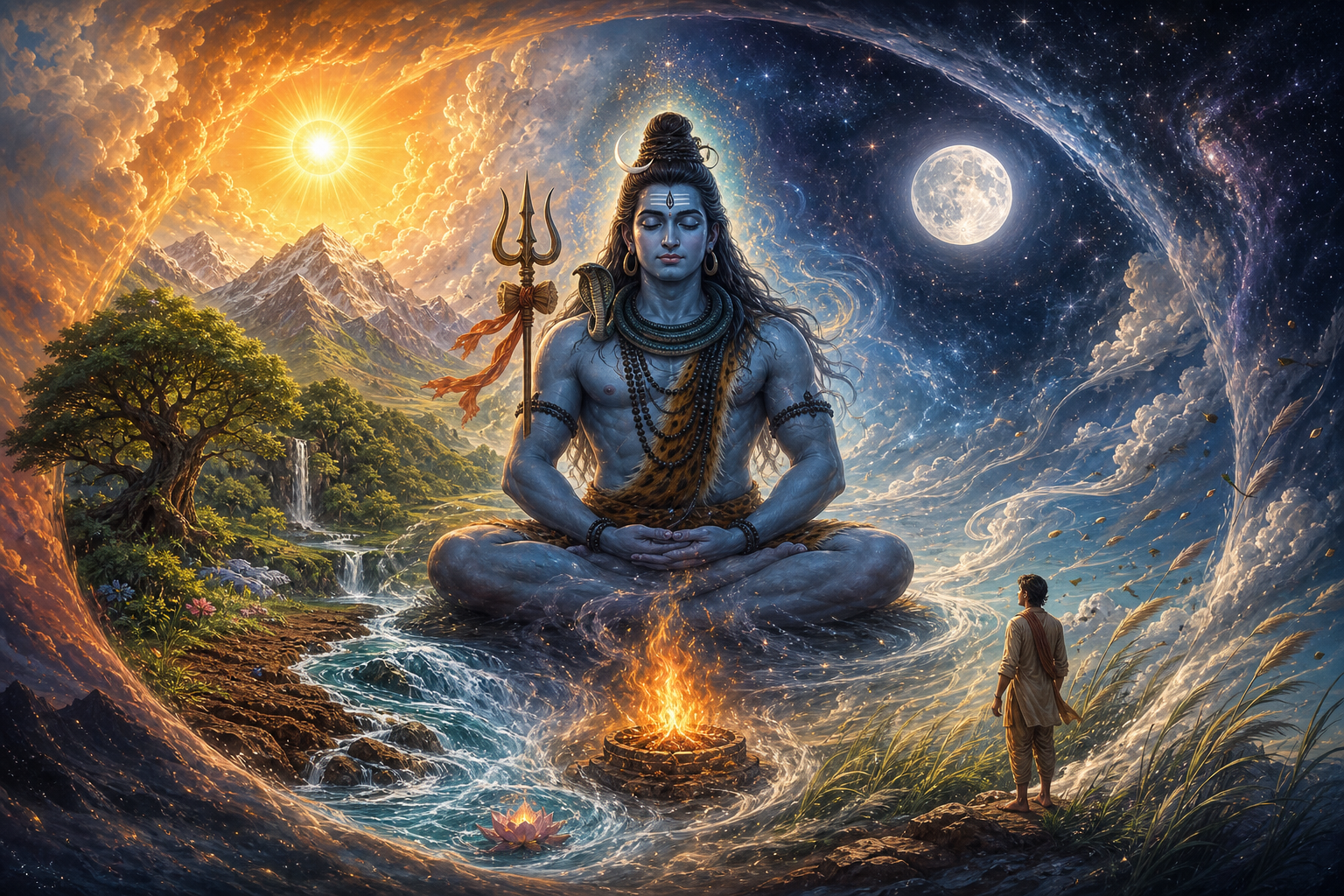
Maha Shivaratri Jagaran and Lingodbhava: Ritual Science, Sacred Myth, and Inner Awakening

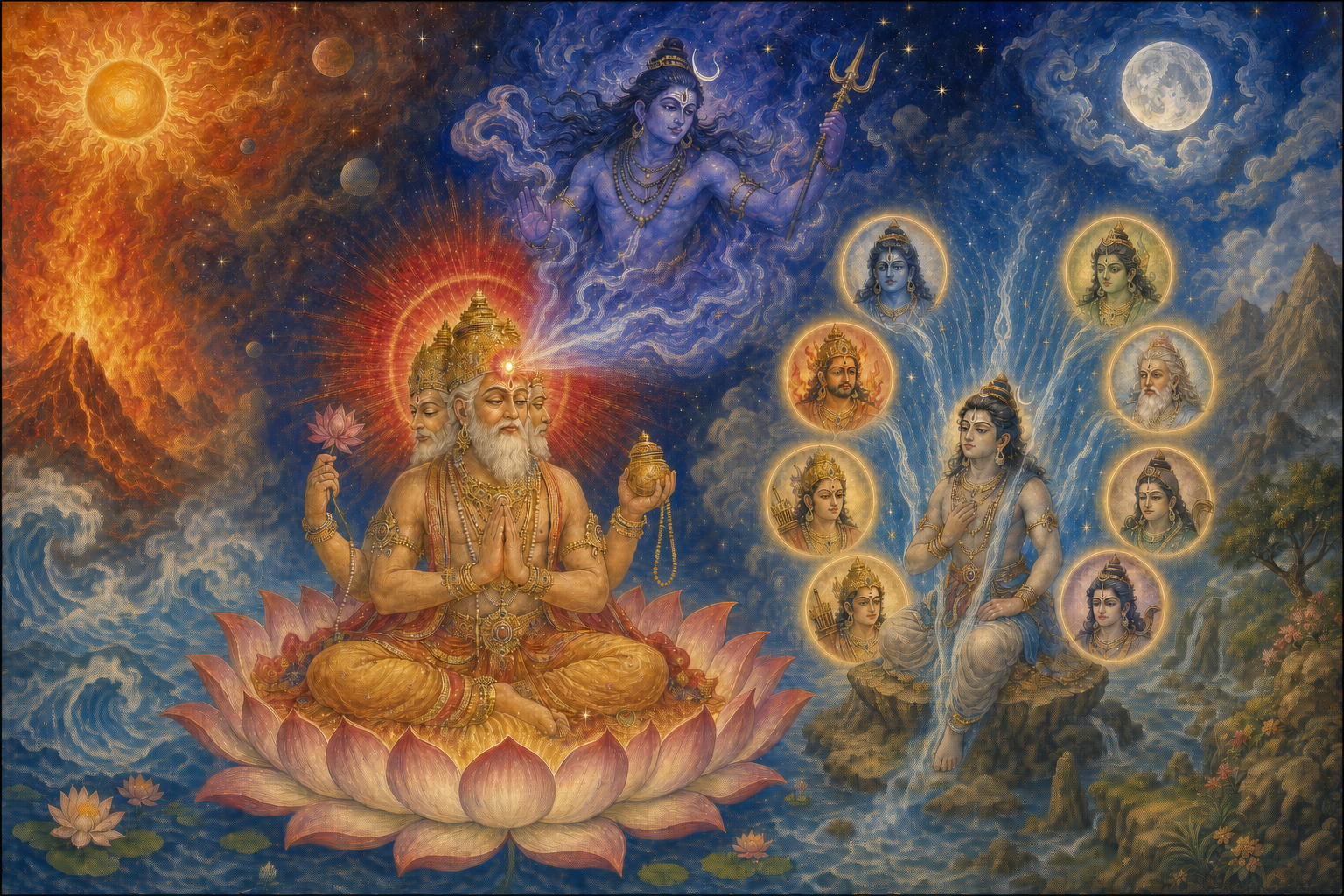
Shivaratri Jāgaraṇa is the disciplined practice of wakefulness at the heart of Maha Shivaratri Vrat, guiding awareness from tamas to sattva through mantra, dhyāna, and Shivalinga Puja. Scriptural sources in the Shiva Puranam and Linga Puranam describe Lingodhbhavam, the emergence of Śiva as an endless column of light, establishing the linga as the aniconic sign…
-
Unveiling Kena’s Dual Identity: Why It’s the Talavakara Upanishad—and Why It Matters Today

The Kena Upanishad is called the Talavakara Upanishad because it is embedded in the Tālavakāra Brāhmaṇa of the Sāma Veda, reflecting its precise textual lineage. Its name “Kena” comes from the opening question—“by whom?”—that frames a profound inquiry into the source of mind, speech, and life. Structured in four sections—two metrical and two prose—it advances…
-
Srimad Bhagavatam 7.12.16: Bhakti Discipline and Inner Transformation at ISKCON GEV

This in-depth summary of the Srimad Bhagavatam 7.12.16 class by H.G. Mahamaya Mataji at ISKCON GEV presents a clear, academically grounded pathway to devotional growth. It situates the verse within Canto Seven’s broader ethical and spiritual framework and explains how guru–shishya parampara safeguards scriptural integrity. Readers gain a practical map of sadhana—from śraddhā to prema—supported…
-
Revealing the Pandavas’ Durga Worship in the Mahabharata: Virata Parva’s Earliest Shakta Trace

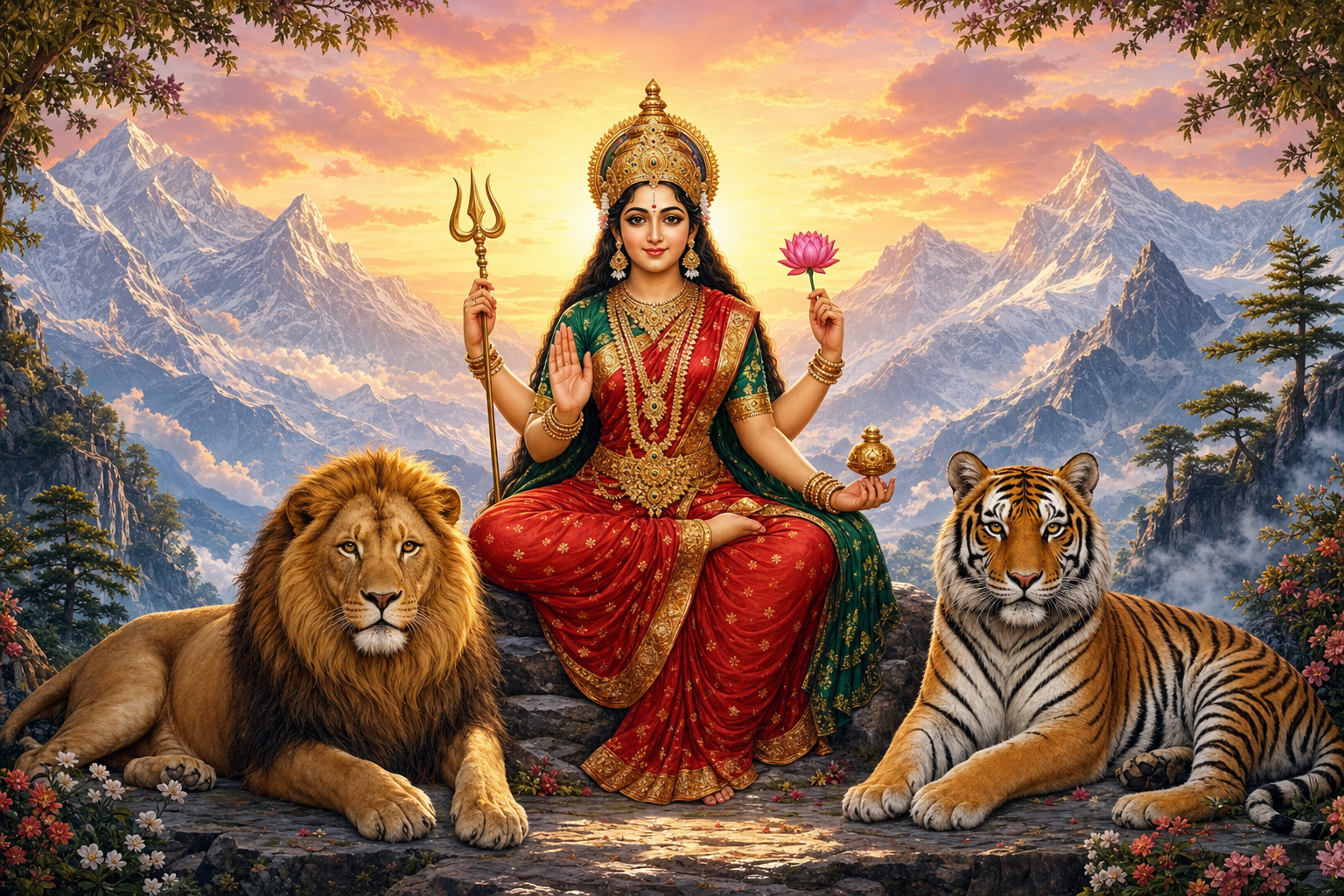
This study traces one of the earliest epic references to Goddess Durga in the Mahabharata’s Virata Parva, where the Pandavas invoke Shakti before their perilous year in disguise. It situates the hymn—naming Durga, Katyayani, Bhadrakali, and Mahishasuramardini—within the narrative hinge between exile and restoration. Attention is given to manuscript variation and critical edition debates while…
-
Brahmā’s Joy, Kapila’s Descent: A Powerful, Unifying Study of Srimad-Bhāgavatam 3.24.11

Srimad-Bhāgavatam 3.24.11 marks the moment Brahmā, purified by worship, speaks to Kardama and Devahūti as the Supreme Lord prepares to descend as Kapila. The verse frames avatāra as purposeful revelation and grounds understanding in devotion, anticipating Kapila’s theistic Sāṅkhya. Connected to Bhagavad-gītā Chapter 4—especially 4.9 (“janma karma ca me divyam”)—it teaches that properly understood divine…
-
Unlocking the Kalagni (Panchavaktra) Rudraksha: Sacred Meaning, Safe Practice, and Dharmic Unity

The Panchavaktra (Kalagni) Rudraksha is the five-faced sacred bead revered in Hindu Dharma and identified in Shiva Purana (1.25) with Rudra Himself. This comprehensive guide explains its symbolic link to Shiva’s five cosmic faces and to fivefold frameworks such as the elements, vital airs, and sheaths. It outlines safe, lineage-respectful practice with mantras like Om…
-
Mahashivratri 2026: Puja Mantras, Stotras, and Step-by-Step Vidhi for a Sacred Night

Mahashivratri 2026 falls on February 15 and centers on Shiva Puja, night-long vigil, and disciplined mantra-japa. This guide provides a precise, step-by-step vidhi with academically grounded context for Bilvashtakam, Lingashtakam, Shiva Ashtakam, Om Namah Shivaya, Shiva Chalisa, Shiva Aarti, and the Shiva Sahasranama Stotram. It also situates Sri Rudram (Namakam–Chamakam) and the Mahamrityunjaya mantra within…
-
Vibhishana’s Daring Intervention: How Dharma Rescued Rama and Lakshmana from Indrajit’s Sorcery

Vibhishana’s interventions during the Lanka campaign reveal how moral clarity and technical insight can rescue an army immobilized by occult warfare. By correctly identifying Indrajit’s Naga-pāśa and steadying the Vanara ranks until Garuḍa’s release, he prevents collapse at a decisive moment. He repeatedly exposes māyā, including the illusion of Sita’s severed head, foiling psychological warfare.…
-
Vṛtrāsura, Indra, and Ṛta: Timeless Dharmic Lessons on Leadership, Anarchy, and Renewal

This rigorous reading of the Vṛtrāsura cycle—spanning the Ṛg Veda, the Mahabharata and Ramayana, and the Purāṇas—unpacks how the myth encodes a timeless governance and ethics playbook. It clarifies Indra’s moral complexity (Brahmahatyā-dōṣa and Tapas), the leadership caution of Nahusha’s ascent and fall, and the systemic anatomy of anarchy when Ṛta is disturbed. Readers gain…
-
Arthavada in Mimamsa: Unlocking the Purposeful Praise That Animates Vedic Ritual

Arthavada, the eulogistic and explanatory stratum of Vedic discourse in Mimamsa, explains why rites matter and how their value should be understood. It complements injunctions and prohibitions by providing praise, censure, and narrative that motivate precise action and steady restraint. Distinguishing Arthavada from mantra and namadheya clarifies the complete architecture of Vedic literature: what to…
-
Katha Rudra Upanishad: A Timeless, Transformative Guide to Sannyasa and Brahma-Jnana

The Katha Rudra Upanishad, affiliated with the Krishna Yajurveda, presents 47 mantras that redefine sannyasa as inner renunciation oriented to Brahma-jnana. It privileges ethical foundations like ahiṁsā and aparigraha, uniting conduct and contemplation as prerequisites for non-dual insight. By emphasizing Om, mahāvākya meditation, silence, and self-inquiry, the text converts knowledge from concept to lived clarity.…
-
Kathaka Grhya Sutras: Unveiling Vedic Household Rites, Samskaras, and Living Dharma

The Kathaka Grhya Sutras, aligned with the Katha school of the Krishna Yajurveda, present a concise and authoritative guide to Vedic household rites and samskaras. As part of the Kalpa (Kalpasutra) literature within the Vedanga, the text distills domestic ritual wisdom into memorable aphorisms that balance mantra and action. Readers gain a clear view of…
-
Satguru in Sri Guru Granth Sahib: Timeless Wisdom for Inner Freedom and Dharmic Unity

This article clarifies the meaning of Satguru in the Sri Guru Granth Sahib as the eternal, word-centered True Guru known as the Shabad Guru. It outlines how devotion to Naam, alignment with Hukam, and receptivity to Gur Prasad dissolve ego and cultivate ethical virtues. Readers gain practical steps—daily shabad study, simran, kirtan, seva, and participation…
-
12 Incarnations of Ganesha: Sacred Avatars of Ganapati in the Mudgala and Ganesha Puranas

This overview situates the twelve incarnations of Ganesha within the Mudgala Purana and Ganesha Purana, emphasizing accurate, text-grounded understanding. It presents the Mahotkata Vinayaka narrative in the Satya Yuga, where Ganesha vanquishes Devantaka and Narantaka by scattering grains, and explains its ethical symbolism. It notes the fragmentary listing of Mayureshwara in the excerpt without speculating…
-
Devaki Mata: Krishna’s Brave Mother, Kamsa’s Terror, and the Enduring Power of Faith
Devaki Mata’s story, rooted in the Bhagavata Purana, presents a powerful portrait of maternal courage and unwavering faith. As the sister of Kamsa and wife of Vasudeva, she endures imprisonment in Mathura and the loss of her first six infants. Protected by divine grace, the seventh (Balarama) is transferred to Rohini, and the eighth, Krishna,…
-
Indrani Mata Mahatmyam: Vedic Origins, Saptamatrika Power, and Sacred Significance

Indrani Mata—revered as Aindri, Shachi, and Paulomi—stands at the confluence of Vedic authority and Shakta devotion. Rig Veda 10.86 attests to her sovereign presence, while Saptamatrika traditions depict her as the protective Shakti of Indra, wielding the vajra and embodying righteous leadership. Her symbolism aligns courage with dharma, inspiring devotees toward clarity and steadfastness in…