-
Surabhi (Kamadhenu): Emblem of Abundance, Health, and Compassion Across Dharmic Traditions

Surabhi, also known as Kamadhenu and revered as Gomatha, is celebrated in Hinduism as the celestial cow symbolizing abundance, health, and dharma. While rarely worshipped as a standalone deity, her presence thrives in household reverence, ethical living, and community service. Puranic literature portrays her as a benevolent, wish-fulfilling source of auspiciousness linked to sages and…
-
Indrani Mata Mahatmyam: Vedic Origins, Saptamatrika Power, and Living Devotion

Indrani (Shachi), the queen of the Devas and consort of Lord Indra, is a vivid presence in the Vedas, with Rig Veda (10.86) preserving a powerful hymn in her honor. As Aindri among the Saptamatrikas, she embodies Devi Shakti’s protective strength, symbolized by the vajra and the elephant. Her mahatmyam bridges Vedic literature and Puranic…
-
Srimad Bhagavatam 1.10.26–27: Unveiling Krishna’s Divine Appearance and Timeless Grace

This analysis of Srimad Bhagavatam 1.10.26–27, presented at ISKCON Ujjain by HG Gaurashakti Prabhu, explains why Krishna’s appearance is transcendental and not bound by material causality. Using the sun’s rising and setting as an accessible analogy, it clarifies how divine presence remains constant even when not outwardly perceived. The discussion shows how understanding Krishna’s birth…
-
Yajurveda on Om: The Pranava’s Transformative Power for Realizing Brahman

The Yajurveda presents Om (Aum, Praṇava) as a sacred syllable that unites ritual precision with contemplative depth, guiding seekers toward Brahman. In yajña, Om sanctifies intention and aligns speech, breath, and resolve; in meditation, it concentrates attention and clarifies consciousness. Upanishadic interpretations linked to the Yajurveda read Om as an imperishable sound pointing beyond waking,…
-
Indrajit Samhara Moorthy: Lakshmana’s Slaying of Meghanada and the Dharma of the Ramayana

Lakshmana’s epithet “INDRAJIT SAMHARA MOORTHY” commemorates his defeat of Indrajit (Meghanada) during the Lanka war in the Ramayana. The episode centers on the Nikumbila yajna (yagna), where Lakshmana, supported by Hanuman and guided by Vibhishana, intervened to prevent an invincibility boon and then prevailed in open combat. Ethically, the act aligns with Dharma-Yuddha principles: stopping…
-
Bhutapataye Bhairava: Timeless Protector of the Five Elements and Pathway to Fearlessness

Bhutapataye Bhairava signifies the protective sovereignty of Bhairava over the five elements and subtle realms, uniting cosmology, ethics, and practice. The name encodes sacred stewardship of panchabhuta and compassionate guardianship of space, aligning with Tantric and Shaiva insights. Practitioners consistently describe greater grounding, clarity, and fearlessness through mantra, japa, and vrata. Iconography—dog, kapala, and trishula—teaches…
-
Lord Caitanya’s Radical Compassion: Redeeming Jagai–Madhai and Uniting Dharmic Hearts

An episode from Navadvipa in the Gaudiya Vaishnava tradition reveals Lord Caitanya’s radical yet disciplined compassion. Nityananda Prabhu and Haridasa Thakura confront public disorder caused by Jagai and Madhai, whose decline stems from corrosive association. The response—welcome paired with a vow to renounce harm—embodies a Bhakti model that balances mercy and personal responsibility. Readers gain…
-
Lakshmana’s Defining Victory: Indrajit Samhara Moorthy and Dharma’s Triumph in the Ramayana

Lakshmana is revered as INDRAJIT SAMHARA MOORTHY for defeating Indrajit (Meghanada) during the Ramayana war, shortly after interrupting the yagna at Ma NIKUMBILA. This turning point affirms dharma’s triumph over adharma and highlights disciplined strategy, moral clarity, and steadfast courage. The episode’s ethical resonance extends beyond a single tradition, reflecting values cherished across Hindu, Buddhist,…
-
Goddess Durga’s Triumph over Durgamasura: A Sacred Tale of Dharma, Grace, and Renewal

This article presents an academically grounded retelling of Goddess Durga’s triumph over Durgamasura, highlighting how Shakti restores balance first through compassion as Śatakṣī–Śākambarī and then through righteous courage as Durga. Readers gain clear insight into the Puranic sources, the symbolism of eclipsed knowledge and restored Vedas, and the ecological and ethical dimensions of the legend.…
-
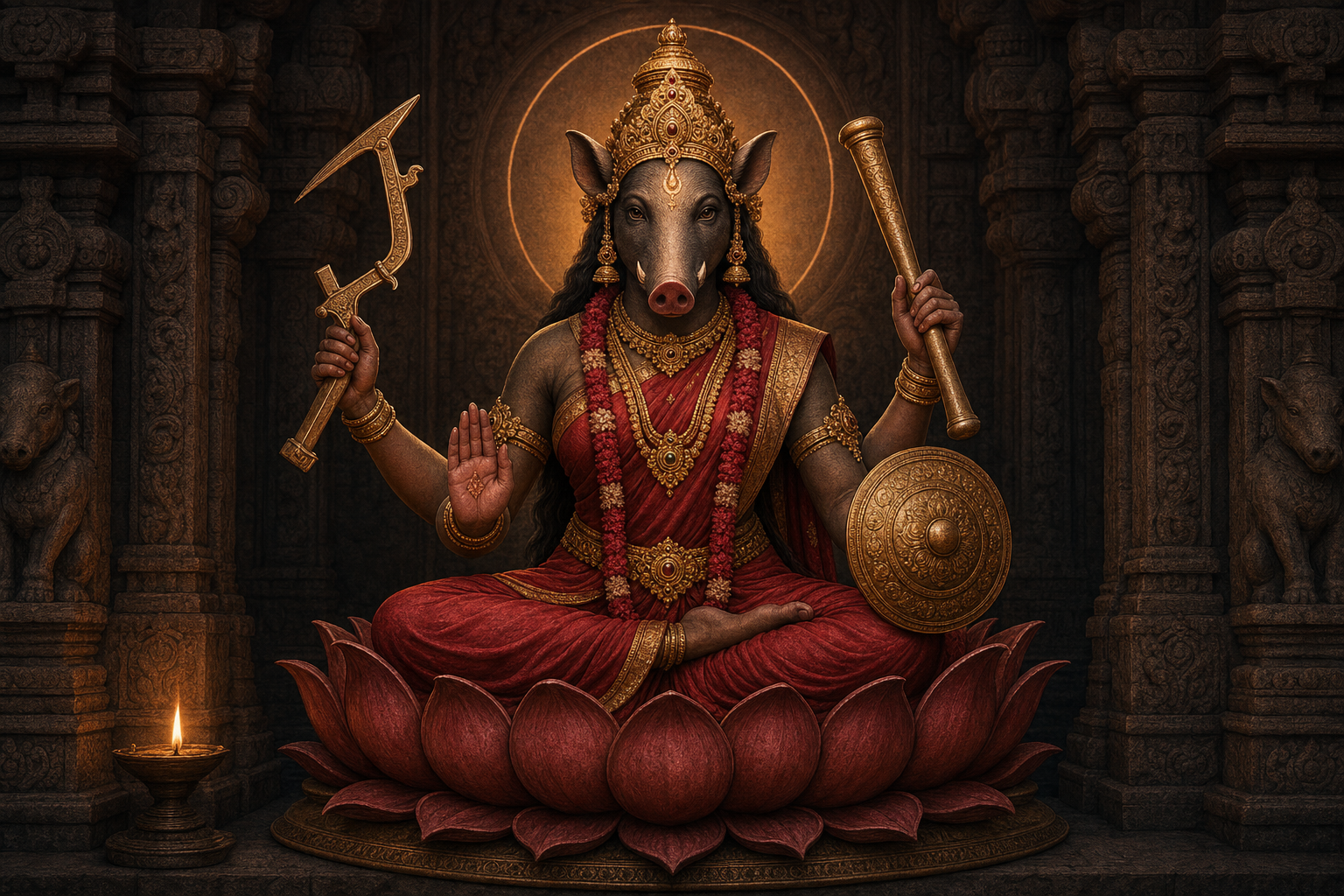
Durga’s Sacred Mace (Gada): A Powerful Emblem of Strength, Justice, and Living Dharma

The gada (mace) in Goddess Durga’s hands signifies ethical strength guided by justice and compassion. Rooted in the Devi Mahatmya, it recalls how Yama endowed Durga with the power to restore order against adharma. The mace symbolizes grounded resolve, impartial accountability, and the stabilizing force of dharma in public and personal life. Beyond martial imagery,…
-
Mahabahu in Hinduism: Unveiling the Mighty-Armed Ideal of Strength, Dharma, and Service

Mahabahu, from the Sanskrit roots “maha” (great) and “bahu” (arms), is a profound ideal in Hindu scriptures that unites power with ethical responsibility. Found in the Ramayana, Mahabharata, and Bhagavad Gita, it signifies strength guided by self-mastery and compassion. The term illuminates how epic narrative encodes philosophical principles: arms symbolize disciplined action in the service…
-
Symbolism of Durga’s Axe and Armor: Timeless Emblems of Courage, Protection, and Dharma

Goddess Durga’s axe (Kuthar or Parashu) and armor (Barm or Kavach) are profound symbols of ethical strength in Hinduism. The axe represents decisive wisdom that cuts through ignorance and adharma, while the armor reflects protective grace sustained by discipline and devotion. Referenced in texts like the Devi Mahatmyam (Durga Saptashati) and the Devi Kavacham, these…
-
Dakshineshwari Stuthi: Timeless Praise of Shakti, Consort of Lord Dakshinamurthy

Dakshineshwari Stuthi honors Ma Dakshineshwari Mata as Shakti and as the consort of Lord Dakshinamurthy, the Guru form of Shiva. The hymn reveres her as the foremost Sanyasini, aligning renunciation, wisdom, and compassion in a single spiritual ideal. Devotees approach the stuthi with mindful breath, clear intent, and measured recitation—often during auspicious observances like Navaratri,…
-
Prahlada Gita: Timeless Lessons on Devotion, Fearless Faith, and Dharma for Everyday Life

Prahlada Gita presents a clear, practice-centered pathway to devotion, ethical courage, and emotional steadiness grounded in Sanatan Dharma. Set within the Gurukulam context of Sri Shukracharya, Prahlada’s instruction guides peers toward fearless faith in Lord Vishnu and principled living. Its disciplines—śravaṇa, smaraṇa, seva, and ātma-nivedana—translate readily into modern routines that foster clarity and resilience. Read…
-
Mooka Panchashati: Miraculous Hymn to Kamakshi and the Living Grace of Kanchipuram

The Mooka Panchashati is a 500-verse Sanskrit hymn devoted to Goddess Kamakshi of Kanchipuram, attributed to Mooka Kavi, whose transformative devotion is central to its legacy. Rooted in the bhakti tradition, the hymn blends accessible prayer with philosophical depth, illuminating Kamakshi’s form, compassion, and power. The Kamakshi Amman Temple provides a living context for this…
-
Manasa Snana and Mantra Snana: Compassionate Vedic Paths to Purity, Presence, and Peace

Manasa Snana and Mantra Snana are compassionate, dharmashastra-sanctioned practices that preserve purity through focused awareness and Vedic chanting when physical bathing is not feasible. Manasa Snana employs visualization of sacred waters and ethical intention to cultivate inner clarity. Mantra Snana invokes Rig Vedic hymns—such as water hymns—to consecrate consciousness with sacred sound. Together, they uphold…
-
Sacred Sound at Life’s Threshold: The Transformative Power of Om for Conscious Departure

This essay explores why chanting Om at the end of life is revered in Hinduism and how it supports a conscious, peaceful departure. Drawing on the Bhagavad Gita and the Upanishads, it explains Om as a symbol of total consciousness and a practical aid for liberation (moksha). It highlights how regular mantra-japa, meditation, and pranayama…
-
Kaliyuga Ramayana: Timeless Dharma, Courage, and Compassion for Today’s World

Kaliyuga Ramayana offers a contemporary, ethical reading of the Ramayana—set in the Treta Yuga—applied to modern challenges. It distills lessons from Lord Rama, Mata Sita, Lakshmana, Bharata, and Shatrughna into practical guidance for leadership, family duty, and social harmony. The text’s symbols—Ravana as ego, the vanara sena as collective service, and the bridge to Lanka…
-
Vinayaka Purana Mahatmyam: Timeless Ganesha Stories that Inspire Devotion and Unity

Vinayaka Purana Mahatmyam presents Lord Ganesha’s inspiring glory through accessible, ethically rich stories attributed in tradition to Veda Vyasa. These narratives illuminate Ganesha’s qualities as the remover of obstacles and patron of wisdom, linking miracle accounts to practical virtues such as patience, clarity, and compassion. Related texts like the Ganesha Purana and Mudgala Purana complement…