-
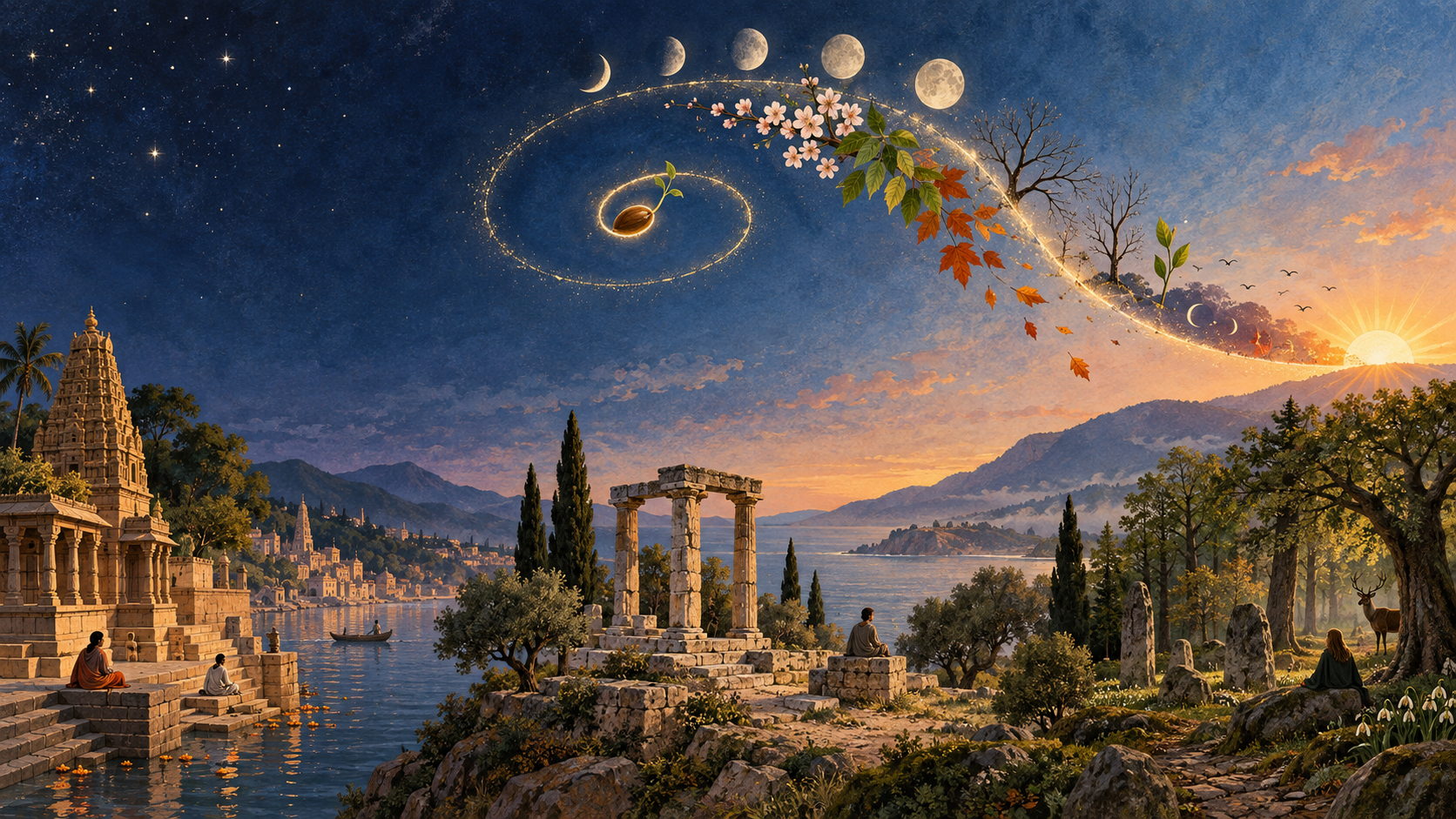
Facing Kāla, the Winkless God: A Dharmic and Scientific Exploration of Time’s Power

This essay examines kāla—“the winkless God”—as a propertyless yet sovereign principle across Hindu, Buddhist, Jain, and Sikh thought. Drawing on classical commentaries that describe time as causally independent and “endless,” it explains how time can terminate all conditioned things without itself being terminated. It situates Purāṇic time reckoning within vast cycles and relates the metaphor…
-
Shattering the Myth: Why Enlightenment Demands Action—Dharma, Karma Yoga, and Sacred Work

Many assume enlightenment frees a person from work; Hindu philosophy and its dharmic counterparts show the opposite. The Bhagavad Gītā teaches that action is unavoidable and must be transformed through Karma Yoga into selfless service. Dharma aligns individual role and aptitude with the common good, while prārabdha karma explains why even the realized remain outwardly…
-
As You Believe, So You Live: Hindu Dharma’s Science of Mindset, Health, and Longevity

This long-form analysis explores how dharmic wisdom—Hinduism, Buddhism, Jainism, and Sikhism—anticipated modern findings on the mind-body connection by showing that belief (śraddhā, bhāva) measurably shapes healthspan and longevity. It integrates Bhagavad Gita and Yoga Sūtra insights with Ayurveda’s sattvavajaya and rasāyana, and aligns them with contemporary stress biology, autonomic regulation, and immune resilience. Practical guidance…
-
Bhujanga Lalita Tandava: Decoding Shiva’s Serpentine Grace and the Defeat of Avidya

Bhujanga Lalita Tandava unites Shiva’s dynamic tandava with the soft cadence of lalita, translating complex Shaiva metaphysics into a clear, embodied grammar of movement. The dance’s serpentine wave, read through kundalini symbolism, demonstrates how intelligence and grace transform raw force into awakened action. Iconography of Nataraja—especially the subduing of Apasmara (avidyā)—grounds an ethics where clarity…
-
Transcend Forms, Find Clarity: Hindu Wisdom for Locating the Cause Behind All Phenomena

This article examines a central teaching of Hindu philosophy: look past nāma-rūpa (names and forms) to the abiding kāraṇa (cause). Drawing on the Upaniṣads and Bhagavad Gītā, it explains how Vedānta distinguishes empirical from ultimate reality and why māyā is a principle of appearing rather than mere illusion. It shows how forms function as upāya—means…
-
Kalika Tandava Decoded: Shiva’s Eight‑Armed Cosmic Dance of Renewal and Liberation

Kalika Tandava presents Shiva’s eight‑armed dance as a rigorous map of cosmic processes and inner transformation. The iconography—Abhaya and Varada mudras, damaru, agni, trishula, kapala, and more—translates metaphysics into a readable visual grammar. Drawing on Shaiva Agamas, Shilpa‑Shastras, and the Natya Shastra, the form aligns creation and dissolution with a living rhythm practitioners can contemplate…
-
Maya’s Illusion of ‘Normal’: A Dharmic Inquiry into Avidya, Bhakti, and Our True Belonging

This essay examines how Maya manufactures a persuasive sense of normalcy in material life and how dharmic traditions respond. Drawing on Gaudiya Vaishnava insights and Srila Prabhupada’s teachings, it argues that life without love and service to the Divine is an abnormal state for consciousness. It synthesizes parallel perspectives from Buddhism, Jainism, and Sikhism, showing…
-
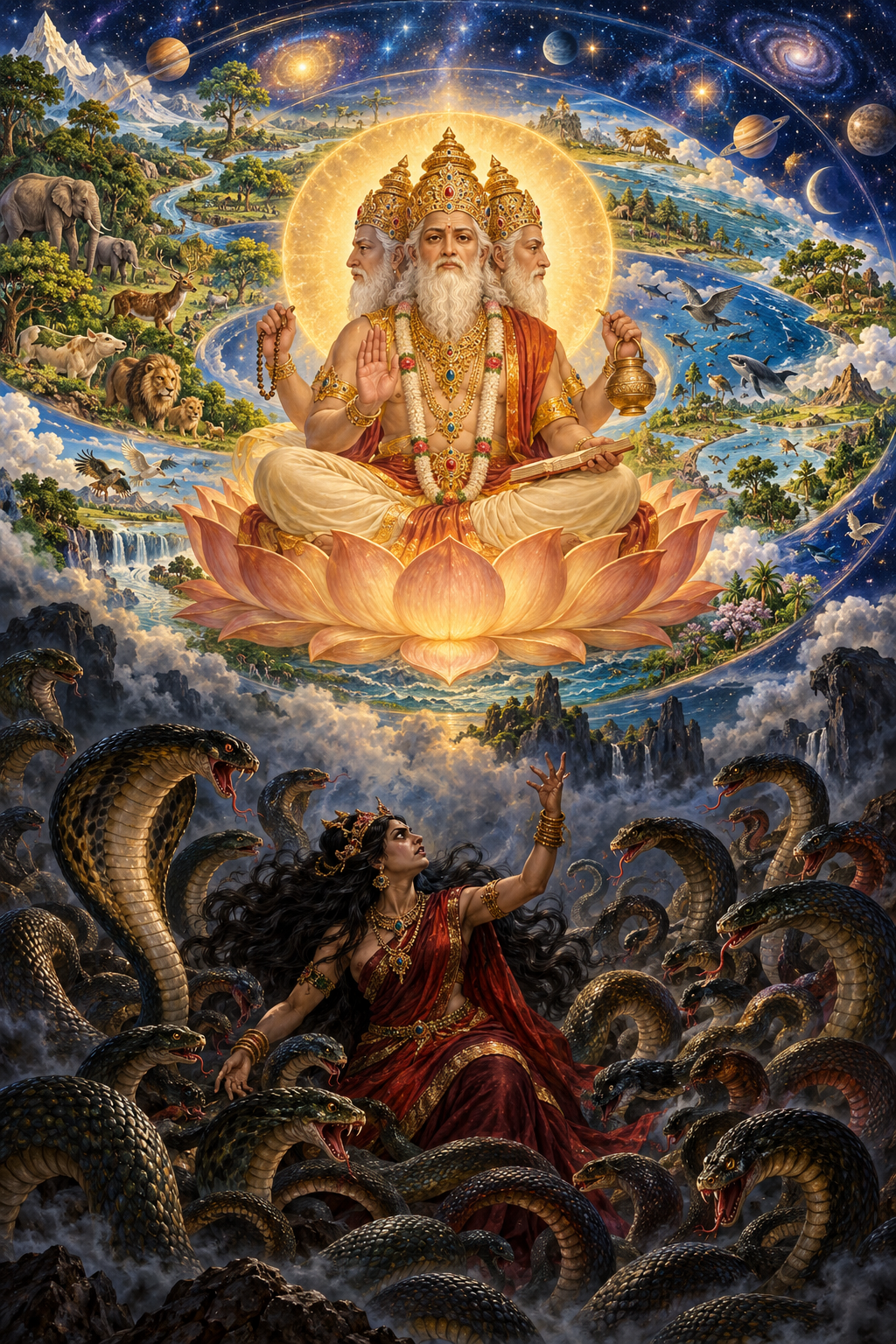
Self‑Born, Mind‑Born, Womb‑Born: Decoding the Profound Hindu Cosmology and Sanat Kumaras

Hindu cosmology describes creation in three interlinked stages: self-born (svayambhū), mind-born (mānasa), and womb-born (jarāyujā). Drawing on the Viṣṇu Purāṇa, Śrīmad-Bhāgavatam, and allied texts, this analysis shows how sarga (primary emanation) and visarga (secondary diversification) structure a descent from subtle principle to mental formation and biological life. The Sanat Kumaras and Nārada exemplify the mind-born…
-
Decoding ‘One in a Million’ Knows God: A Vedantic Blueprint for Rare Realization

The ancient saying that “one in a million knows God in reality” is best read as a diagnostic of depth rather than an exclusionary claim. Grounded in Bhagavad Gita 7.3 and clarified by Upanishadic methods, it highlights why direct realization is rare: the path requires exacting qualifications, disciplined practice, and tested guidance. This article unpacks…
-
Dissolve Thoughts at Their Source: Hindu Wisdom and Dharmic Science for a Clearer Mind

Ancient Hindu wisdom teaches that thoughts gain power only when grasped; dissolving them at inception restores clarity and self-mastery. The method aligns with Yoga Sutra principles of vritti-nirodha, abhyasa, and vairagya, and is reinforced by Upanishadic and Bhagavad Gita guidance. Practical protocols—breath coherence, light labeling, mantra gating, atma-vichara, and somatic defusion—make the technique accessible in…
-
Nīti in Hindu Thought: Timeless Ethics, Just Governance, and Dharmic Unity Explained

Nīti, from the Sanskrit nī (to lead), is the applied ethics of Hindu thought that unites personal virtue, just governance, and jurisprudence. This comprehensive overview clarifies how nīti relates to dharma, nyāya, rājadharma, and daṇḍanīti, explaining why means matter as much as ends. It surveys Vidura-nīti, the Arthasastra, Nītisāra, and narrative texts like the Pañcatantra…
-
Decoding the Fourth Khanda of Nrisimha Tapaniya Upanishad: Protective Mantra, Dhyana, Relevance

The Nrisimha Tapaniya Upanishad’s Purva section reaches practical culmination in its Fourth Khanda, which integrates mantra, nyasa, and dhyana into a coherent path of protection and insight. It presents the Nṛsiṁha Gāyatrī and allied formulas as tools that refine attention and dissolve fear at its root. The Khanda’s nyasa anchors awareness in the body, while…
-
Beyond Guru Worship: Living Sanatana Dharma through Practice, Pluralism, and Service

Public celebrations of guru anniversaries have grown spectacular, but the risk of drifting from teachings to personality worship is real. This essay reframes devotion through a Dharmic lens shared by Hinduism, Buddhism, Jainism, and Sikhism: live the message, not the messenger. It maps classical yardsticks of authentic progress—yamas and niyamas, lokasangraha, simran and seva, sīla…
-
Kumbhakarna and Vikarna: Tragic Brothers of Conscience, Loyalty, and Dharma in the Epics

Kumbhakarna (Ramayana) and Vikarna (Mahabharata) embody the epic dilemma between loyalty to kin and loyalty to dharma. This rigorous, text-grounded comparison explains how each man speaks the truth, anticipates disaster, and yet dies fighting for causes he judged unjust. Readers gain a practical framework—kṣātra-dharma, bandhu-dharma, rāṣṭra-dharma, and ātma-dharma—to evaluate conflicts of duty. The analysis connects…
-
Unlock the Ocean Within: Dharmic Pathways to Atman, Timeless Wisdom, and Resilient Strength

This essay examines the statement “You know little of that which is within you. Within you is the ocean of infinite power” through the shared frameworks of Hinduism, Buddhism, Jainism, and Sikhism. It explains the Upanishadic vision of ātman and Brahman, the yogic map of prāṇa and kundalinī, and the ethical preconditions that make inner…
-
Nitya in Hinduism: Timeless Truths and Daily Duties for Transformative Dharmic Clarity

Nitya in Hindu thought unites two powerful ideas: the eternal ground of being and the disciplined regularity of daily practice. Classical sources such as the Upanishads and Bhagavad Gītā affirm the ātman as nitya, while Mīmāṃsā and Dharmaśāstra define nitya-karma as obligatory daily duties that stabilize conduct and clarity. Agamic and Vaiṣṇava traditions embed nitya…
-
Beyond Sectarianism: Dharmic Wisdom for an Inclusive, Boundless Vision of the Divine

This essay examines the insight that a sectarian mind yields a defective image of the Divine, drawing on Hindu philosophy and the wider Dharmic traditions. It traces Vedic and Upanishadic roots of pluralism, explains the Bhagavad Gita’s inclusivism, and shows how Ishta, Advaita, Vishishtadvaita, and Dvaita approach the One-and-many problem without mutual negation. It integrates…
-
Decoding Kamadeva’s Five Arrows: How the Senses Shape Desire, Dharma, and Creation

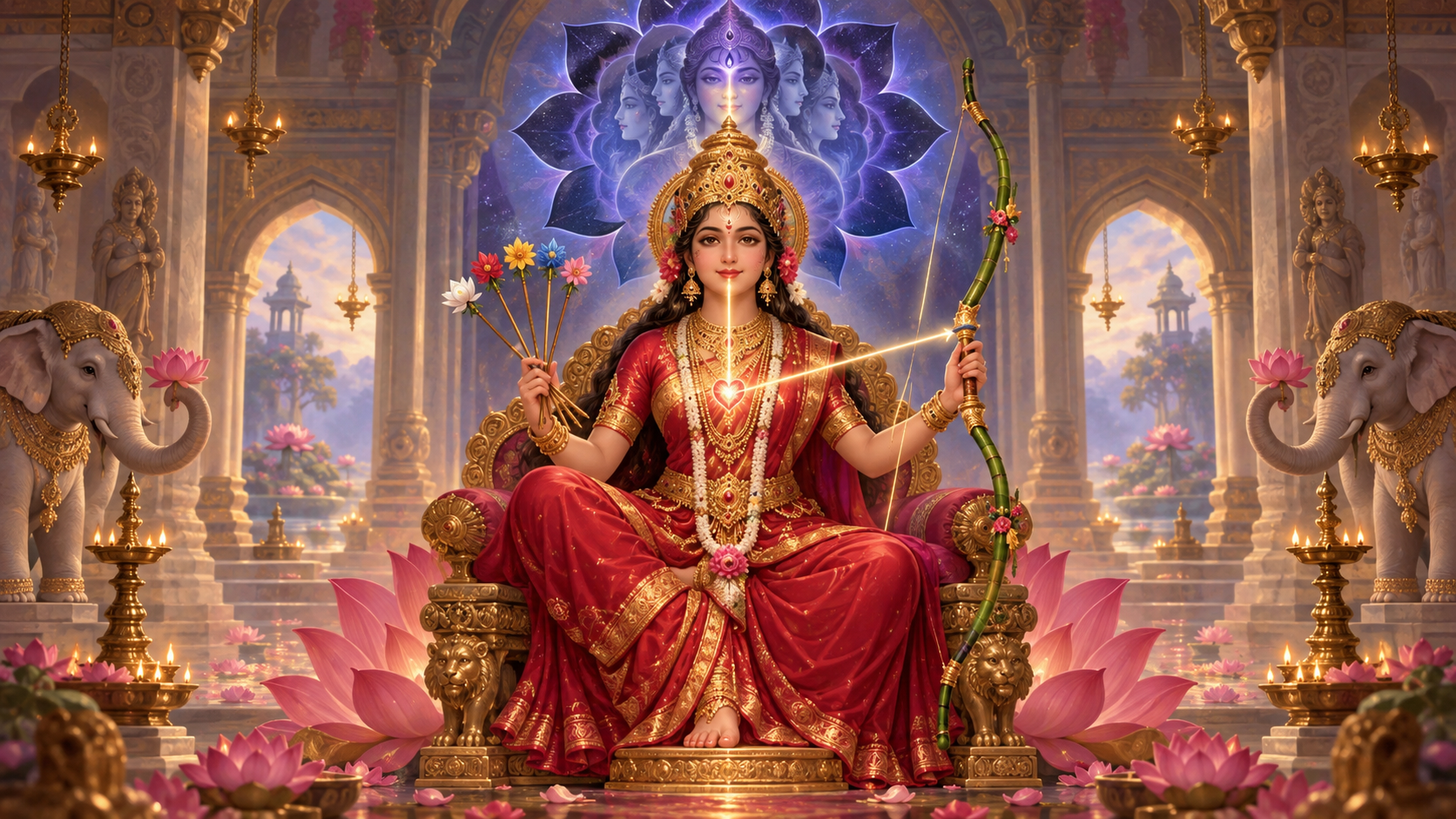
Kamadeva’s five flower-tipped arrows and sugarcane bow form a precise allegory for how the senses animate desire and sustain the cosmic cycle of life. Read as psychology, the allegory maps stimulus, attention, valuation, and pursuit; read as theology, it integrates kāma into the puruṣārthas alongside dharma, artha, and mokṣa. The Madana-dahana narrative shows desire sublimated…