Category: Philosophy

  • Introspection to Self-Realization: A Rigorous Dharmic Blueprint for Knowing the Divine

    Introspection to Self-Realization: A Rigorous Dharmic Blueprint for Knowing the Divine

    This long-form analysis explains why disciplined self-analysis is a direct, repeatable path to self-realization and knowing the Divine across Hinduism, Buddhism, Jainism, and Sikhism. It integrates the Upanishads, the Bhagavad Gita, Patanjali’s Yoga Sutra, the Satipaṭṭhāna Sutta, Jain Anekāntavāda with Samayik and Pratikraman, and Sikh Naam-centered living under hukam. A rigorous seven-phase practice cycle—intention, observation,…

  • Krishna’s Omnipotence Explained: Why Name, Mantra, and Scripture Offer Direct, Daily Companionship

    Krishna’s Omnipotence Explained: Why Name, Mantra, and Scripture Offer Direct, Daily Companionship

    This article explains, in clear Vedic and Bhakti terms, why Krishna’s omnipotence means His words, names, and teachings are non-different from Him, offering direct companionship at any moment. It shows how the concept of shabda as an efficacious, self-revealing medium makes scriptural hearing and mantra recitation a living encounter rather than mere symbolism. Drawing on…

  • Veda Murtis Demystified: Living Forms that Illuminate Vedic Wisdom, Ritual, and Iconography

    Veda Murtis Demystified: Living Forms that Illuminate Vedic Wisdom, Ritual, and Iconography

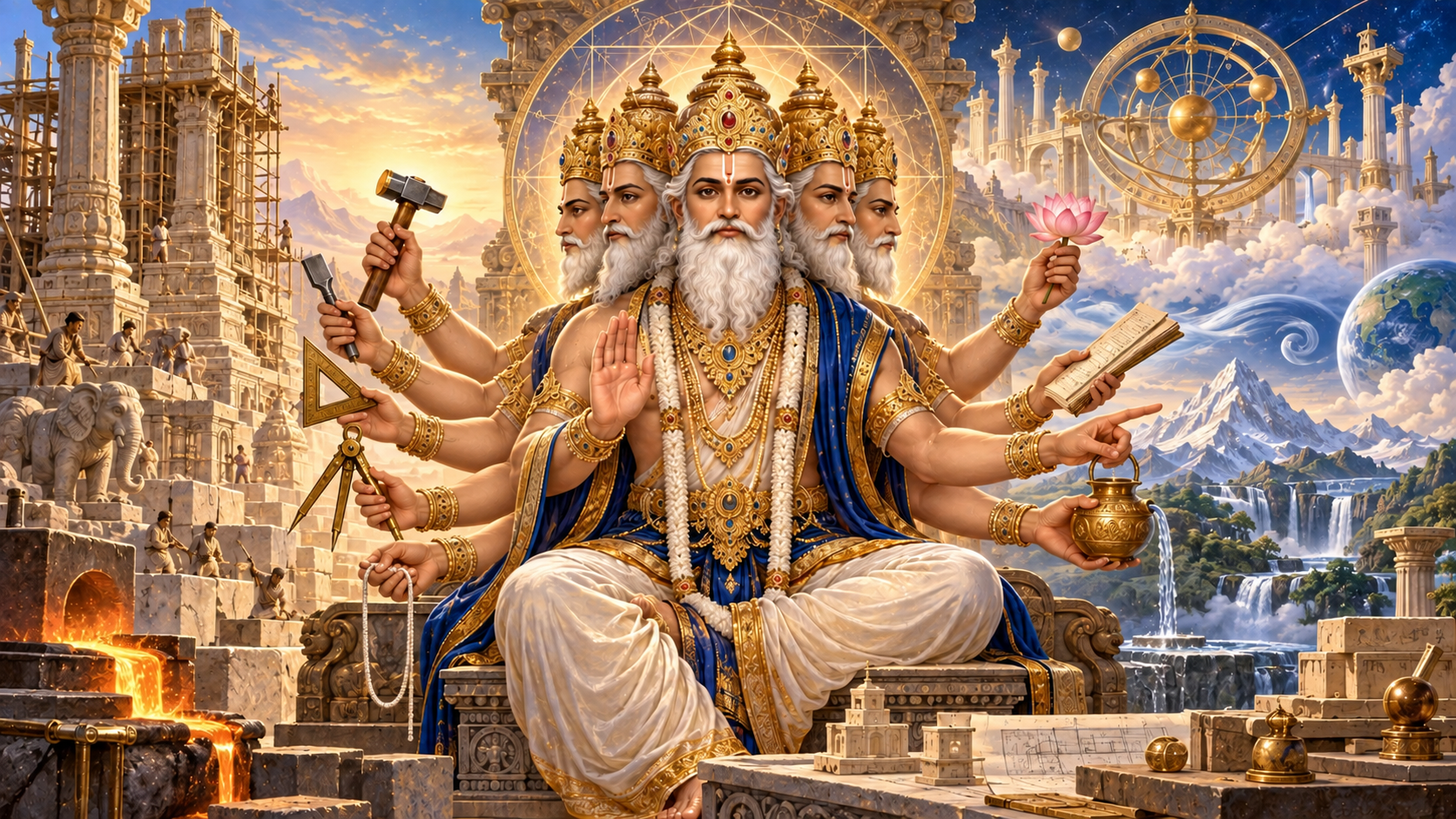
    Hindu tradition presents the Vedas as living, relational knowledge by personifying them as Veda Murtis—anthropomorphic embodiments that translate sacred sound into contemplative sight. Grounded in Mīmāṃsā, Agamas, and Śilpa-śāstra canons, these forms do not replace scripture; they deepen Vedic study by aligning hearing, seeing, and practice. Typical depictions personify the four Vedas with manuscripts and…

  • Seeking the Supreme: An Academic Exploration of Hindu Pluralism, Ishta, and One Reality

    Seeking the Supreme: An Academic Exploration of Hindu Pluralism, Ishta, and One Reality

    Many seekers raised in temple-centered Hindu life wrestle with two enduring questions: Why so many gods, and who is the Supreme? Hindu philosophy answers with a precise synthesis: the One Reality (Brahman) is accessible both without attributes (nirguna) and with attributes (saguna), and Ishta-devata personalizes that access without denying unity. Rig Veda’s “Ekam sat vipra…

  • Liberating the Householder’s Heart: Aparigraha via Dana, Seva, and Guru-centered Living

    Liberating the Householder’s Heart: Aparigraha via Dana, Seva, and Guru-centered Living

    This essay examines possessiveness in the grihastha ashrama and presents aparigraha, practiced through dāna and seva, as the shastric antidote. It outlines a give-first discipline—prioritizing Guru, Ishta, and dharmic service before personal consumption—that steadily dissolves attachment. The discussion contextualizes the aspirational fifty-percent ideal found in certain Vaishnava teachings while advocating progressive, capacity-based steps. Cross-dharmic parallels…

  • From Sensory Illusion to Self‑Realization: A Dharmic Guide to Serving the Supreme

    From Sensory Illusion to Self‑Realization: A Dharmic Guide to Serving the Supreme

    This essay unpacks the Dharmic insight “I am not these senses” and shows how a life changes when the stance shifts from unconsciously receiving to consciously serving the Ultimate Reality. Drawing on the Upanishads, Bhagavad Gita, Yoga Sutra, Buddhist mindfulness, Jain ethics, and Sikh seva, it explains how sense-identification loosens through ethical restraint, pratyahara, meditation,…

  • Hinduism’s ‘330 Million Gods’ Demystified: Unity, Ishta, and the Logic of Many Paths

    Hinduism’s ‘330 Million Gods’ Demystified: Unity, Ishta, and the Logic of Many Paths

    Why Hindus follow many gods is not a contradiction but a cornerstone of Sanatan Dharma. This essay clarifies the famous “330 million gods” as a later linguistic and devotional interpretation of the Vedic 33 categories (koti) of deities, grounding the discussion in the Vedas, Upanishads, and the Bhagavad Gita. It explains Ishta-devata as a rigorous,…

  • When Do Our Karmas Ripen? A Dharmic, Evidence‑Based Guide to Prarabdha, Agami, Sanchita

    When Do Our Karmas Ripen? A Dharmic, Evidence‑Based Guide to Prarabdha, Agami, Sanchita

    This article addresses a common spiritual question: if current experiences reflect past-life karma, when do the karmas of this life bear fruit? Drawing on the clarification by Sri Sri Ravi Shankar—”That is not how it is!”—it explains why karmic results arise on multiple horizons: immediate, near-term within this life, and across future births. It provides…

  • Shanmukha’s Six Heads: Mythic Origins, Deep Symbolism, and Dharmic Philosophical Unity

    Shanmukha’s Six Heads: Mythic Origins, Deep Symbolism, and Dharmic Philosophical Unity

    Why does Shanmukha (Kartikeya) have six heads? This in-depth exploration traces the six-faced form across Purana narratives, Agamic iconography, and philosophical interpretations. It explains how the motif honors the six Krittikas, maps the six directions, and invites a mature reading through the Shad Darshanas. Psychological and yogic lenses show how the image addresses the six…

  • Beyond Abundance: Why Modest Expectations Foster Lasting Happiness in Dharmic Wisdom

    Beyond Abundance: Why Modest Expectations Foster Lasting Happiness in Dharmic Wisdom

    Modern abundance has not eliminated dissatisfaction because expectations often outrun reality. Dharmic wisdom—Hindu, Buddhist, Jain, and Sikh—offers a unifying solution: cultivate santosha (contentment) and aparigraha (non-hoarding) while acting with clarity and purpose. The Bhagavad Gita’s karma-yoga and the Yoga Sutra’s abhyāsa–vairāgya framework train steadiness without suppressing healthy ambition. Contemporary psychology aligns with these teachings: lower,…

  • Beyond Maya: Dharmic Wisdom on Materialism, Ethical Wealth, and Lasting Fulfilment

    Beyond Maya: Dharmic Wisdom on Materialism, Ethical Wealth, and Lasting Fulfilment

    Hindu philosophy and its sister Dharmic traditions view wealth as a legitimate aim governed by ethics, moderation, and service. The puruṣārthas align Artha with Dharma and Moksha, while the Bhagavad Gita’s Karma Yoga reframes success as disciplined action without fixation on results. Upanishadic counsel, Yoga’s aparigraha, Buddhism’s Right Livelihood, Jain vows of limitation, and Sikh…

  • Success Sadhana: Shatter Illusions, Master Attention, and Live Aligned with Higher Purpose

    Success Sadhana: Shatter Illusions, Master Attention, and Live Aligned with Higher Purpose

    This Success Sadhana reflection presents a precise, practice-centered way to move beyond illusion and distraction toward a life aligned with higher purpose. It explains how bhakti practices—sravanam, kirtanam, and smaranam—converge with mindfulness, simran, and samayik across Hinduism, Buddhism, Jainism, and Sikhism. Readers gain a clear daily cadence for breath-centered attention training, scripture study, and reflective…

  • Do Our Words Convey Our Heart? HG Caitanya Charan Das on Dharmic Speech at ISKCON Adelaide

    Do Our Words Convey Our Heart? HG Caitanya Charan Das on Dharmic Speech at ISKCON Adelaide

    At ISKCON Adelaide on 01.05.26, HG Caitanya Charan Das explored how speech reflects inner consciousness and why language, refined through sādhana, is central to bhakti and community harmony. Grounded in Bhagavad Gita 17.15, the essay outlines a composite ethic for speech—truthful, kind, beneficial, and non-agitating—that resonates across Hinduism, Buddhism, Jainism, and Sikhism. It translates classical…

  • Tapasya in Hinduism: Transformative Austerity for Self-Realization, Clarity, and Inner Power

    Tapasya in Hinduism: Transformative Austerity for Self-Realization, Clarity, and Inner Power

    Tapasya in Hinduism is a disciplined, life-affirming austerity that refines body, speech, and mind to foster Self-Realization and ethical clarity. Drawing on the Upanishads, Bhagavad Gita, and Yoga philosophy, it is defined as a transformative heat that burns impurities and ripens insight. The Gita’s typology (sāttvika, rājasika, tāmasika) and Patañjali’s Kriyā Yoga supply practical guardrails…

  • Shiva’s Vibhuti Unveiled: Sacred Ash, the Fire of Transformation, and the Path to Liberation

    Shiva’s Vibhuti Unveiled: Sacred Ash, the Fire of Transformation, and the Path to Liberation

    Vibhuti, or consecrated sacred ash, condenses Shaiva philosophy into a simple, daily practice that is both contemplative and transformative. In Hindu thought, fire is a purifier rather than a destroyer, and ash is the final, stable state that reveals what endures after illusion burns away. The tripuṇḍra’s three lines encapsulate key Shaiva triads—impurities, guṇas, and…

  • Know the Infinite Within: A Dharmic Guide to Self-Realization and Mindful Speech

    Know the Infinite Within: A Dharmic Guide to Self-Realization and Mindful Speech

    This essay unpacks the teaching Know the Infinite within and give up all vain words as a unified, practical discipline shared across Hinduism, Buddhism, Jainism, and Sikhism. It grounds Self-Realization in the Upanishadic identity of Ātman and Brahman while noting convergences with Buddhist insight, Jain anekāntavāda, and Sikh remembrance of Ik Oṅkār. It translates metaphysics…

  • Beyond 330 Million Gods: How Hinduism Unites Many Deities into One Supreme Reality

    Beyond 330 Million Gods: How Hinduism Unites Many Deities into One Supreme Reality

    The familiar claim that Hinduism has 33 crores (330 million) gods is a popular misreading; classical sources enumerate thirty-three devas—eight Vasus, eleven Rudras, twelve Adityas, plus Indra and Prajapati. By clarifying the Sanskrit term koṭi (class/category vs. crore), the article shows how Vedic and Upanishadic texts integrate divine plurality within a single metaphysical reality. It…

  • When Do Our Actions Bear Fruit? Unraveling Karma’s Timing with Profound Dharmic Insights

    When Do Our Actions Bear Fruit? Unraveling Karma’s Timing with Profound Dharmic Insights

    A perennial dharmic question asks when the actions of this lifetime truly bear fruit. Drawing on Hindu sources such as the Bhagavad Gita, Upanishadic thought, the Yoga Sutras, and dharmashastra, this analysis explains how outcomes may manifest immediately, over time, or in future births through the interplay of sanchita, prarabdha, and agami karma. It integrates…

  • Facing Impermanence Now: Urgent, Courageous Surrender to Krishna—and Dharma’s Unifying Path

    Facing Impermanence Now: Urgent, Courageous Surrender to Krishna—and Dharma’s Unifying Path

    Srila Prabhupada’s call for urgent surrender to Krishna, echoed by Radhanath Swami, is best understood as a clear-eyed response to life’s impermanence rather than as fear or fatalism. This essay situates sharanagati within a unifying dharmic framework shared by Hinduism, Buddhism, Jainism, and Sikhism, highlighting convergences around anitya/anicca, aparigraha, Hukam, and refuge. It explains maya…

  • Beyond Ashes: Dharmic Wisdom on Death, Rebirth, and Why Restraint Sustains Our World

    Beyond Ashes: Dharmic Wisdom on Death, Rebirth, and Why Restraint Sustains Our World

    Modern discourse often assumes that death ends consciousness. Dharmic traditions—Hinduism, Buddhism, Jainism, and Sikhism—offer a rigorous alternative: the body returns to elements while awareness continues in accordance with karma. This article explains the classical Vedic framework (sthula, sukshma, and karana sharira), unpacks the memorable triad of the body’s material end—stool, ashes, or earth—and situates it…