-
Cultivating Abundance: A Dharmic, Sustainable Blueprint to End Food Shortages Worldwide

Food shortages stem less from absolute scarcity than from poor land use, waste, and weak market design. A dharmic ethic—uniting Dharma, Ahimsa, seva, and karuṇā—aligns naturally with modern agronomy to promote Sustainable agriculture and robust Food Security. The blueprint emphasizes proper utilization of suitable, currently idle land; regenerative soil and water stewardship; climate-resilient diversification with…
-
Dissolving Trishna’s Hidden Fire: Timeless Dharmic Strategies to Transform Craving into Freedom

This long-form, research-driven exploration explains trishna (craving) as the subtle energy that precedes action—the “root before the root.” It integrates Hindu, Buddhist, Jain, and Sikh perspectives to present a unified Dharmic framework for transforming craving into clarity and freedom. Readers gain a technical map (kleśas, vāsanās, vedanā, dependent arising), scriptural anchors (Yoga Sutra, Bhagavad Gita,…
-
Samhara of Shiva: Unveiling the Compassionate Power of Dissolution and Renewal

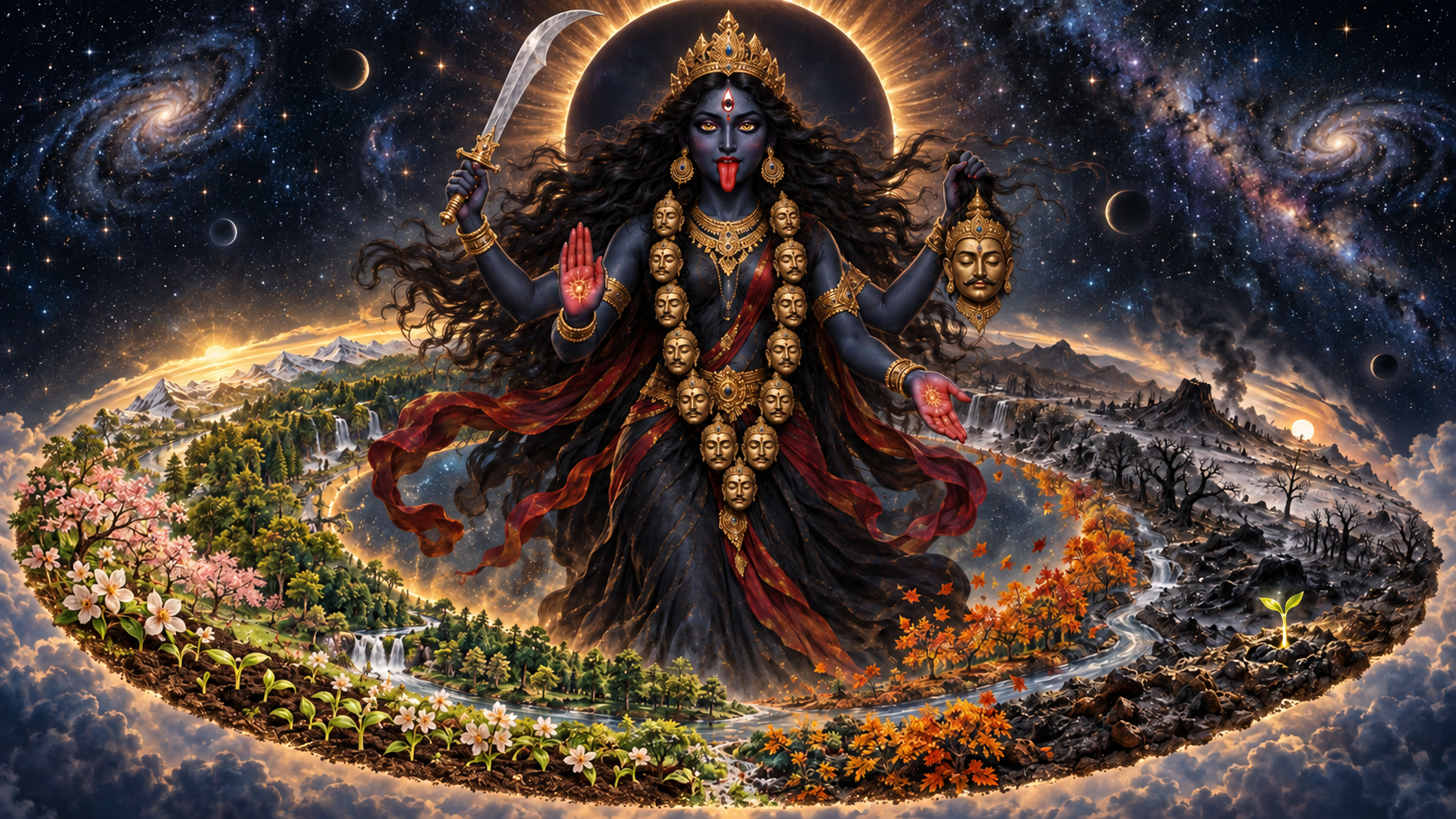
Samhara, the dissolution aspect of Shiva, is not violent destruction but compassionate renewal that clears exhausted forms so truth can shine. Grounded in Vedic, Purāṇic, and Āgamic sources, this long-form analysis explains how Samhara interlocks with Shiva’s five acts to sustain cosmic and personal transformation. The iconography of Naṭarāja, Mahākāla, and Kālābhairava decodes dissolution as…
-
Organized Religion Reconsidered: Safeguarding Dharma Without Losing the Sacred Pulse

This essay examines the enduring paradox of organized religion in the dharmic traditions: the need to institutionalize sacred insight without extinguishing its contemplative core. Drawing on historical patterns from the Buddhist sangha, Hindu mathas and ashramas, Jain fourfold communities, and Sikh gurdwaras, it shows how organization can preserve wisdom, expand seva, and protect sacred spaces.…
-
Backbiting and Dharma: Psychological, Social, and Karmic Costs—Plus Practical Remedies

Backbiting may appear trivial, yet dharmic ethics and modern psychology converge on its real costs: eroded trust, increased anxiety, fragmented communities, and deepened karmic imprints. Hinduism (Bhagavad Gita 17.15), Buddhism (Right Speech), Jainism (ahimsa and satya), and Sikhism (rejection of ninda) all prescribe compassionate, truthful, and beneficial speech. Research likewise shows that malicious gossip undermines…
-
Hindu Views on Love: A Scholarly Guide to Bhakti, Dharma, and the Heart’s Awakening

This in-depth guide explains love (prema) in Hinduism as both a metaphysical principle and a cultivated virtue, drawing on the Upanishads, the Bhagavad Gita, and classical bhakti theology. It clarifies distinctions between kāma, sneha, maitri, karuṇā, and prema, and shows how love matures through Bhakti, Jñāna, Karma, and Rāja Yoga. Readers gain practical exercises—japa, mindful…
-
Ahura vs Deva: The dramatic Indo‑Iranian reversal—and what it reveals about Dharma

Why do Zoroastrian sources revere Ahura while condemning daevas, even as Hindu texts honor devas and oppose asuras? This long-form analysis traces the shared Indo-Iranian roots of these terms and explains how later reforms, rituals, and ethical priorities reversed their valuations. It clarifies early Vedic usage where asura could be a noble epithet, outlines Zarathustra’s…
-
Do Planets Shape Our Destiny? A Timeless Vedic Guide to Jyotisha, Karma, and Free Will

Is astrology truly the “eyes of the Vedas,” and do planets govern human fate? This in-depth, academically grounded guide clarifies what Vedāṅga Jyotiṣa is, how it historically joined astronomy and ritual timing, and why life is physically and culturally entangled with celestial cycles. Readers learn the technical building blocks—rāśi, nakṣatra, lagna, pañcāṅga, daśā, gochara, and…
-
Is Life Easy or Difficult? An Evidence-Backed Dharmic Guide to Joy, Suffering, and Mastery

Is life easy or difficult? A dharmic analysis shows the question spans two complementary levels: the conventional reality of dukkha (unsatisfactoriness) and the ultimate discovery of ananda (joy). Buddhism’s Four Noble Truths, the Yoga Sutra, Vedanta’s ananda doctrine, Jain anekantavada, and Sikh Chardi Kala together form a unified method for transforming difficulty into resilience while…
-
Eternal Longing, Infinite Union: Decoding Radha–Krishna’s Divine Love and Sacred Separation

This long-form exploration decodes why Radha–Krishna’s love is revered not as a tragic failure of union but as a sacred pedagogy of longing. Drawing on Srimad Bhagavatham, Gīta Govinda, and Gaudiya Vaishnava theology, it explains how vipralambha (separation) heightens devotion and refines ethical action. The article clarifies key concepts—rasa, sambhoga, vipralambha, and mahābhāva—while situating them…
-
Shiva’s Damaru: Decoding the Cosmic Rhythm of Creation, Balance, and Transformation

This long-form exploration decodes Shiva’s Damaru as a compact, technical map of creation, balance, and transformation in Hindu philosophy. It explains Nāda-Brahma, the A-U-M schema, and the panchakritya while situating the drum’s meaning within linguistic tradition via the Maheshvara Sutras and Panini’s grammar. Readers gain an acoustical and yogic understanding of the instrument, including how…
-
Ananda Tandava Unveiled: Decoding Shiva Nataraja’s Blissful Cosmic Dance and Living Wisdom

Ananda Tandava, Shiva Nataraja’s blissful dance, is a complete grammar of Hindu philosophy translated into gesture, rhythm, and form. This comprehensive overview traces its roots in the Agamas, Puranas, and Bhakti hymns, and explains how the five divine acts (panchakritya) appear in Nataraja’s iconography. Readers learn how Chidambaram’s Chidambara Rahasya and the Pancha Sabhas embody…
-
Surrender that Liberates: How Dāsa‑Bhāva Shapes Bhakti, Seva, and Dharmic Unity

The Bhakti concept of “dasa” (dāsa)—a chosen identity of loving service and surrender—anchors Hindu spirituality in a disciplined ethic of humility, seva, and śaraṇāgati. Grounded in scriptural sources like the Bhagavad Gita and Srimad Bhagavatham, dāsya-bhāva appears across Vaishnava, Śaiva, and Śākta traditions and is elaborated by Ramanujacharya, Madhvacharya, and Chaitanya Mahaprabhu. It flourishes in…
-
Why Ramanujacharya Asked ‘Have You Loved?’—Bhakti, Emotional Maturity, and Divine Grace

A classic teaching story about Sri Ramanujacharya turns on a simple question: “Have you ever loved anybody?” Rather than prescribing abstract doctrine, he points to love (prema) as the formative ground of bhakti. In Vishishtadvaita Vedanta, devotion matures through lived relationship, culminating in prapatti (surrender) supported by divine grace. The distinction between kama (desire) and…
-
Upadhi in Hindu Thought: Unmasking Limiting Adjuncts that Veil Reality and Freedom

Upadhi—“limiting adjunct”—explains how unconditioned reality appears delimited without itself changing. In Advaita Vedānta, it clarifies the jīva–Īśvara distinction, the role of avidyā and māyā, and why body–mind vestures only seem to bind the Self. Classic analogies—pot-space, crystal-and-flower, and reflections of the sun—demonstrate avaccheda-vāda and pratibimba-vāda. Taittirīya Upaniṣad’s pañca-kośa viveka and the three-body model present a…
-
From Cosmic Ocean to Cosmic Web: How Scientific Cosmology Can Enrich Dharmic Faith

This evidence-based reflection shows how the Srimad-Bhagavatam’s image of a “cosmic ocean” aligns, at the level of metaphor, with the cosmic web mapped by modern astronomy. It explains what science reliably says about origins and possible endings—Big Bang, dark matter, dark energy, and competing end-of-universe scenarios—while clarifying where responsible uncertainty remains. It places these insights…
-
Purpose of the Vedas: Why Vaishnavas Champion Bhakti over Jnana, Karma, and Yoga

This in-depth exploration clarifies the purpose of the Vedas, tracing their layered structure from ritual to contemplative wisdom and showing how Vedānta articulates their culmination. It explains why Vaishnava traditions foreground Bhakti: not as sentiment, but as an integrative discipline endorsed by the Bhagavad Gita and Śrīmad-Bhāgavatam. It maps Bhakti’s relationship to Jñāna, Karma, and…
-
Brahman Alone Is Real: A Rigorous Guide to ‘Jagat Mithyā’ via Sri Ramakrishna

A well-known story about Harinath—later Swami Turiyananda—and Sri Ramakrishna becomes a doorway into the core Advaita Vedanta assertion that Brahman alone is real and the universe is mithyā. This long-form analysis clarifies that mithyā does not mean nonexistence but dependent reality, carefully distinguishing pāramārthika, vyāvahārika, and prātibhāsika levels. It explains key Advaita tools—adhyāsa, adhyāropa–apavāda, and…
-
Bhairava as Bhudhara Atma: The Unshakable Ground of Kalika, Earth, and All Worlds

This long-form exploration clarifies Bhudharatmajaya Bhairava as the atma of Bhudhara—the conscious support of Earth and mountains—and the Adhara, the unmoving ground of charachar prakriti. It decodes the Sanskrit terms, situates Bhairava and Kalika within Tantric and Purana frameworks, and maps their complementarity across the panchabhuta and Shaiva tattvas. Temple architecture, kshetrapala guardianship, and contemplative…
-
From Impermanence to Eternal Service: A Clear Path through Dharma, Devotion, and Liberation

The essay reframes the modern pursuit of longevity through a dharmic lens, showing how Hinduism, Buddhism, Jainism, and Sikhism converge on training attention, purifying intention, and embodying seva. Instead of biological duration, it emphasizes the continuity of rightly directed consciousness and compassionate action. Technical concepts are clarified—atman, saṁsāra, karma, ahaituky apratihata, moksha—while practical disciplines (śravaṇa,…