-
Kubera and Pluto Compared: Wealth, Underworld, and Shared Ethics Across Civilizations

This comparative study examines Kubera in Hinduism and Pluto in Roman mythology to show how both embody wealth rooted in the earth and bounded by moral law. It clarifies their distinct roles—Kubera as lord of prosperity and guardian of the north, Pluto as ruler of the underworld—and explains how each tradition links abundance with duty.…
-
Why Ravana Took Sita to Lanka: Exploring a Protective Motive Across Dharmic Perspectives

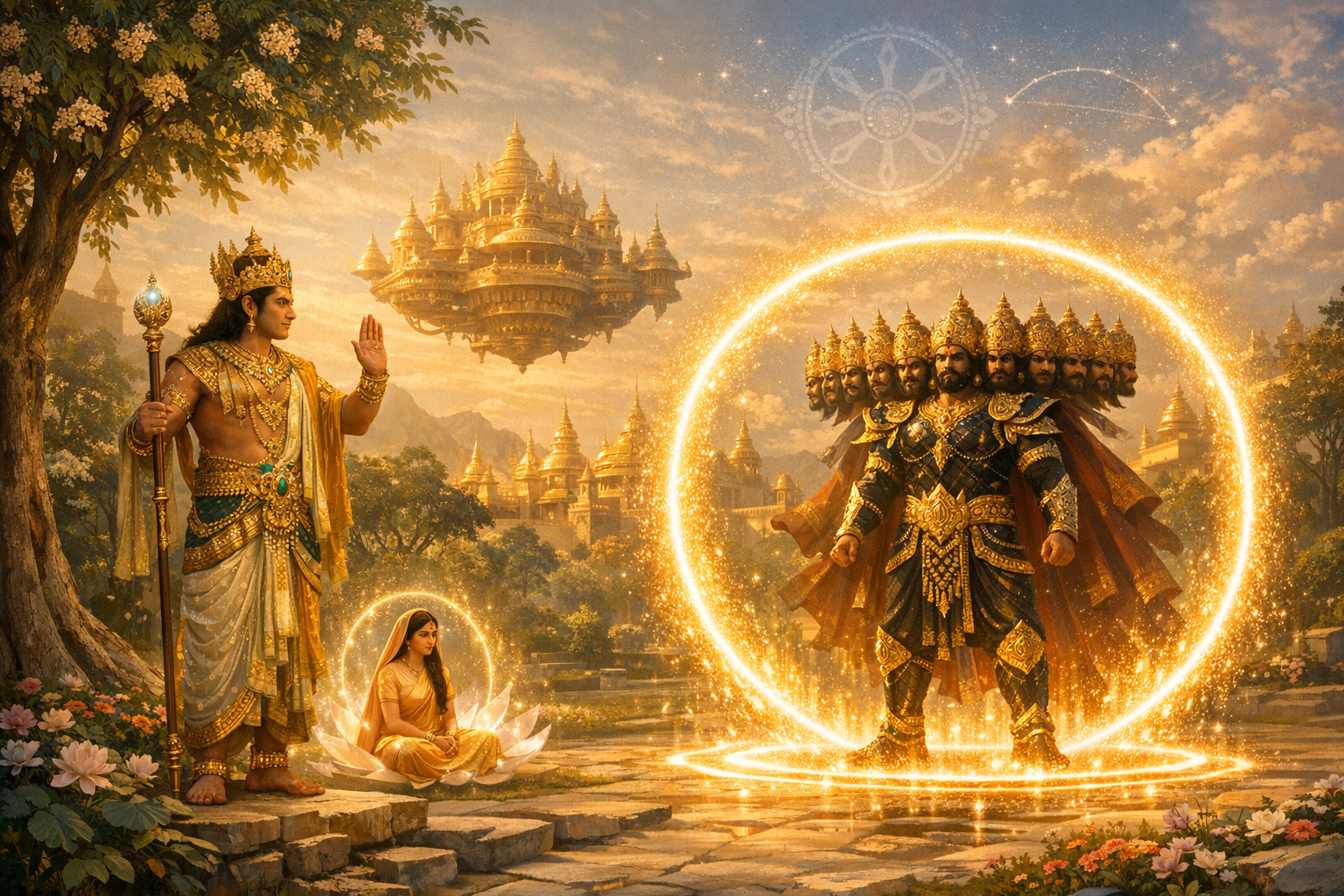
This article examines why Ravana took Sita to Lanka by engaging both the Valmiki Ramayana and alternative interpretations that emphasize restraint and honor. It highlights how Sita’s inviolable dignity becomes the ethical fulcrum of the narrative across Hindu, Buddhist, Jain, and Sikh perspectives. Readers gain a nuanced understanding of motive, vow, and dharma without displacing…
-
Mahant Mukesh Nath Reaffirms Sanatan Dharma’s Timeless Power and Dharmic Unity in Udaipur

Delivered in Udaipur on Dec 09, 2025, the address by Mahant Mukesh Nath Maharaj reaffirmed Hindutva as the living expression of Sanatan Dharma—an inclusive civilizational ethos rooted in dharma, ahimsa, karuna, and seva. The message emphasized unity among Hinduism, Buddhism, Jainism, and Sikhism, highlighting shared ethical foundations that strengthen religious pluralism in India. By linking…
-
Vin Diesel’s ‘Shroom’ Quotes the Bhagavad Gita: Duty, Fear, and Dharma in Billy Lynn’s World

A pivotal scene in Billy Lynn’s Long Halftime Walk (2016) brings the Bhagavad Gita into a modern war setting, as Vin Diesel’s ‘Shroom’ reflects on karma, fear, and duty with Joe Alwyn’s Billy Lynn. By invoking Krishna’s counsel to Arjuna, the film reframes courage as ethically grounded clarity rather than mere boldness. The moment resonates…
-
Japan Declines Separate Muslim Cemeteries: Tradition vs. Space, With Paths to Inclusion

Japan’s decision to decline separate cemeteries for Muslims rests on two key factors: strong cremation-centered cultural traditions and acute land scarcity. Rather than signaling exclusion, the move can be read as an opportunity to design inclusive, shared solutions that respect diverse funerary rites. Context on Japanese customs and zoning constraints helps explain the policy logic…
-
Two Faiths, One Vision: Pope Leo’s Unity Call Resonates with Timeless Sikh Values

This essay examines how Pope Leo’s emphasis on social concord and the common good aligns with Sikh values of Ik Onkar, seva, and sarbat da bhala. It clarifies how Catholic social teaching and Sikh ethics converge on interfaith unity and religious harmony without collapsing their distinct identities. Readers gain historical context, practical steps for collaboration,…
-
Work Is Not Family: How Workplace Trauma Redefined Boundaries, Healing, and Self‑Trust

This essay analyzes workplace trauma through an academic, trauma-informed lens while tracing a real-world journey from institutional betrayal to sustained healing. It explains how neuroception and somatic responses signal danger long before the mind recognizes abuse, and why toxic work culture often hides behind family metaphors. It clarifies the employment contract, HR’s risk-management role, and…
-
Rama, Jatayu, and Dharma: Was Cremation a Transgression—or Compassionate Justice?

A northern Kerala folk question—was Rama wrong in cremating Jatayu?—opens a nuanced inquiry into dharma, ritual norms, and compassion in the Ramayana. The episode portrays Rama honoring Jatayu as a father-figure through antyeṣṭi, foregrounding intention and gratitude over rigid taxonomies. While some customs reserve cremation for humans, the epic frames Jatayu’s valor as ethically exceptional.…
-
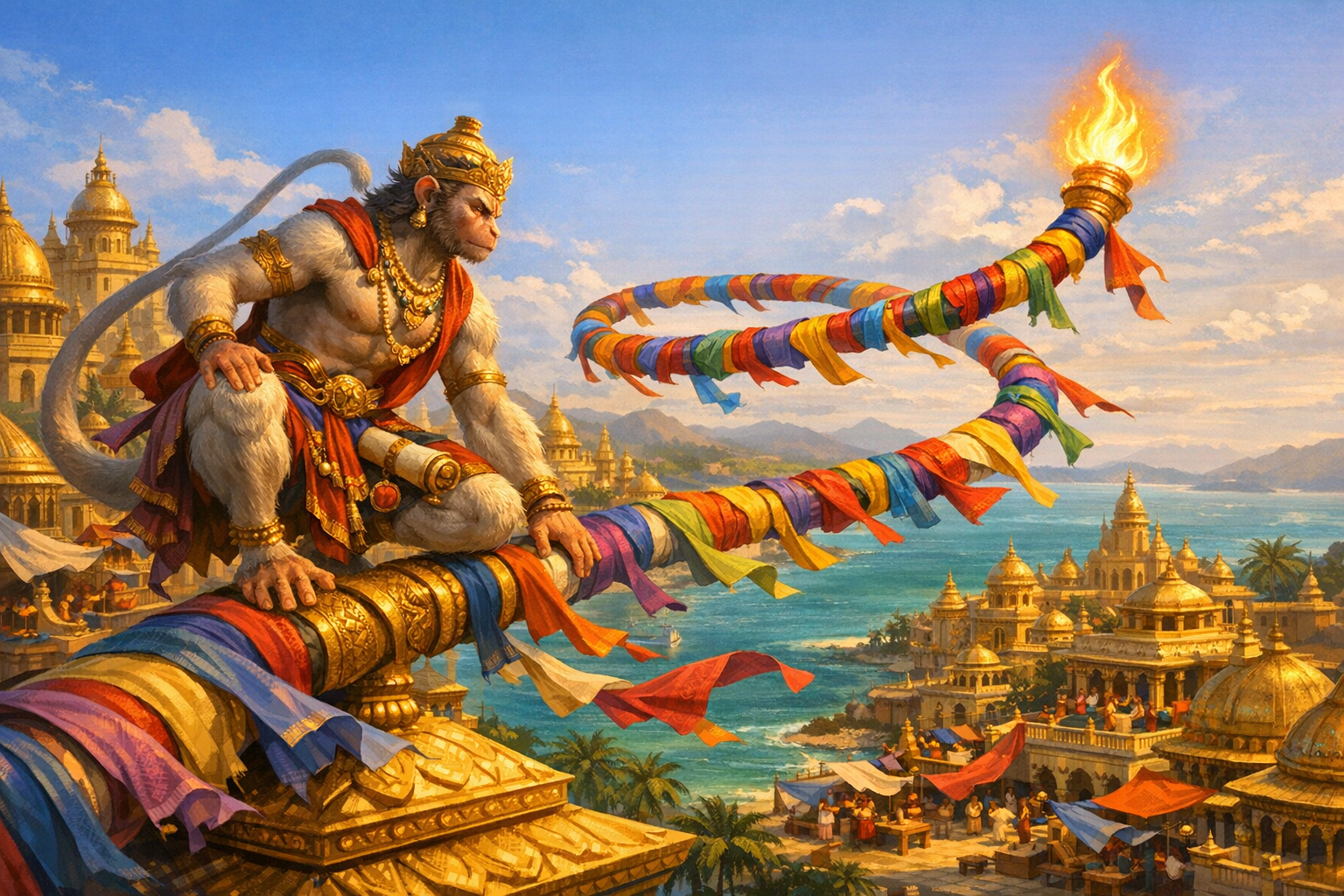
Panchmukhi Hanuman Unveiled: Powerful Symbolism of Five Divine Directions and Protection

Panchmukhi Hanuman, the five-faced form of Hanuman, symbolizes protection and guidance across the five directions while uniting devotion, courage, vigilance, stability, and knowledge. Each face—Hanuman, Narasimha, Garuda, Varaha, and Hayagriva—embodies a distinct spiritual energy that supports daily practice and contemplative focus. The form resonates with core Indic ideas such as the five elements, five vital…
-
Chamunda, the Scorpion, and the Southwest: Fierce Divine Protection from Moral Decay

Chamunda’s fierce iconography—her bony frame, sunken abdomen, and cremation-ground imagery—functions as a clear ethical lesson: face decay, confront impurity, and protect what is good. Associated with the southwest (Nairritya) direction, she stands at the threshold where decline must be halted and responsibility embraced. The scorpion motif highlights vigilant awareness, signaling that moral danger is often…
-
Lakshmanrekha in the Ramayana: Why Valmiki omits it—and how later retellings reshape it

The Lakshmanrekha is one of the Ramayana’s most iconic images—yet it does not appear in the Valmiki Ramayana. This article clarifies the textual record, explains how the motif emerged in later Ramayanas and folk performance traditions, and explores why it endures as a vivid symbol of maryada. Readers gain a clear distinction between the earliest…
-
Open the Tap of the Heart: Theater, Bhakti, and Mindful Practice for Inner Transformation

A philosophical pantomime, “Long Dream,” revealed how attention, breath, and bhava can open the tap of the heart and elevate performance into sadhana. Drawing on Yoga and Bhakti Tradition, the work demonstrates that anahata (Heart Chakra) awareness deepens presence and communicative power without words. Three actionable insights—sankalpa (clear intention), karuna (compassionate attention), and vairagya (disciplined…
-
Safeguarding Dharmic Values in Modern Schooling: A Practical Guide for Hindu Parents

This guide offers a calm, research-informed roadmap for Hindu families navigating modern schooling and social media without losing Dharmic values. It explains how early classroom narratives shape identity and why supplementary home learning improves confidence and critical thinking. It shows how adolescents can approach “woke” and other ideological labels with evidence-based analysis rather than polarization.…
-
Mohan Bhagwat’s ‘Same DNA’ Thesis: Unifying ‘Hindu’ and Bharat Under a Shared Culture

RSS chief Mohan Bhagwat’s renewed assertion—‘Bharat and Hindu are synonymous’ and ‘Muslims and Christians are Hindu if they love and respect India and its cultural legacy’—is analyzed as a civilizational, not confessional, framing. Read inclusively, it situates ‘Hindu’ as a cultural umbrella that welcomes diverse faiths while honoring distinct religious identities. The piece outlines how…
-
Surpanakha Reimagined: Folk Ramayana’s Haunting Lament and Dharma’s Grey Zones

South Indian folk Ramayana retellings give Surpanakha a complex, empathetic voice that challenges simplistic binaries of dharma and adharma. This analysis explains how Yakshagana, Kathakali, and Kaliyattam frame her suffering as an ethical prompt rather than a narrative footnote. Readers gain a nuanced understanding of gender dynamics, humiliation, and proportionality in responses. The piece connects…
-
Lakshmana’s Measured Justice: Symbolism and Dharma in Surpanakha’s Nose-Cutting

The Dandaka forest episode of Surpanakha in the Ramayana presents a nuanced study in proportionate justice. Lakshmana’s cutting of her nose and ears is framed not as impulse but as a measured defense of Sita within Kshatra Dharma. Dharmashastra context shows such penalties aligned with culturally recognized sanctions for harassment and attempted harm. Symbolically, the…
-
Surpanakha and Rama: A Heart‑Rending Clash of Cultures in the Ramayana’s Moral World

This analysis reframes Surpanakha’s meeting with Rama as a cross-cultural encounter shaped by contrasting ethical codes. It explores how direct desire, marital fidelity, and ascetic restraint collide in Panchavati and why the misreading escalates into conflict. Readers gain a nuanced view of Surpanakha’s agency without moral reductionism. The discussion highlights consent, proportionality, and empathy as…
-
Lions and Tigers in Hindu Scriptures: Powerful Symbols of Dharma, Shakti, and Dharmic Unity

Lions and tigers in Hindu scriptures symbolize disciplined strength aligned with dharma rather than domination. Narasimha, the man-lion avatar of Vishnu, exemplifies protective ferocity that restores moral order, while Pārvatī and Durga seated on a lion or tiger embody Shakti’s compassionate guardianship. The tiger’s association with Durga and Shiva transforms raw energy into ethical force.…