-
Decoding Hanuman’s Saffron and Scarlet: The Timeless Color Science of Devotion and Power

Color in Hindu traditions carries philosophical intent, and Hanuman’s saffron and scarlet encode a complete ethic of devotion and power. Saffron (bhagwa/kesari) signals tapas, renunciation, and sattva illumined by disciplined rajas; scarlet expresses vira-bhava, purposeful courage, and dharmic action. The beloved sindoor narrative explains why many Hanuman murtis are orange-red, while regional iconography shows valid…
-
This Is Life: A Poignant Classic of Hindi Cinema Restored by ITV—Story, Context, Legacy

This Is Life, reproduced by ITV, offers a succinct yet affecting window into classic Hindi social drama and is now more accessible through English subtitle autotranslation. The ensemble story of Anand Narayan, Gayetri, Kamla, Madhu, and Govind evokes shared ethical intuitions across Hinduism, Buddhism, Jainism, and Sikhism, modeling unity in diversity. Read as a socio-cultural…
-
Rongali (Bohag) Bihu 2026: Vibrant Assamese New Year—Date, Seven-Day Cycle, Traditions

Rongali (Bohag) Bihu 2026 marks the Assamese New Year on 15 April, synchronizing with Mesha Sankranti and the first day of Bohag. The festival’s living heritage unfolds through a three-day core—Goru Bihu, Manuh Bihu, and Gosai Bihu—within a broader seven-day cycle still observed in many communities. Readers gain a clear understanding of the festival’s calendar…
-
Historic Canterbury Moment: First Woman on St Augustine’s Chair and a Call to Unity

On 25 March 2026, Canterbury Cathedral marked a first in 1,400 years as Dame Sarah Mullally was installed on the Chair of St Augustine before roughly 2,000 guests. The cathedra’s symbolism—rooted in Augustine’s 597 CE mission—made the moment a powerful intersection of continuity and change. This analysis explains why the event matters for the Anglican…
-
Why the Ramayana Matters Today: Selfless Sacrifice, Dharma, and Ethical Leadership in a Me-First Age

The Ramayana remains profoundly relevant in a culture that often celebrates a me-first mindset. Its ethic of selfless sacrifice, anchored in dharma, offers a rigorous framework for ethical leadership, resilient families, and cohesive communities. Concrete episodes—Rama’s exile, Sita’s courage, Lakshmana’s boundaries, Bharata’s renunciation, Hanuman’s seva, and Vibhishana’s principled dissent—model integrity in action. Contemporary research on…
-
Chithirai Vishu (Puthandu) 2026: Astronomical Timings, Sacred Rituals, and Cultural Unity

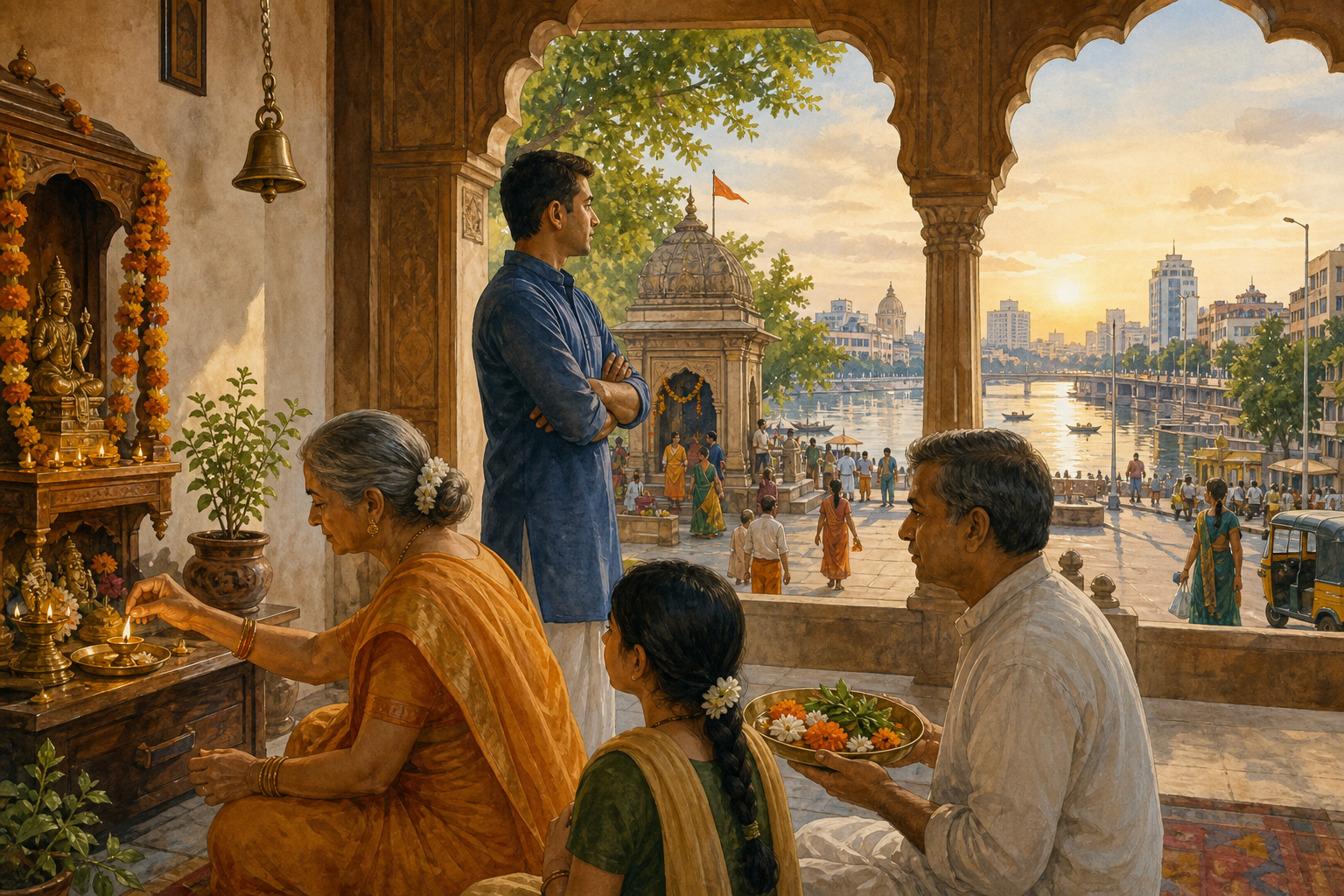
Chithirai Vishu, observed as Puthandu and Varusha Pirappu, inaugurates the Tamil New Year on 14 April 2026 with Mesha Sankranti marking the Solar New Year (Souramana Ugadi). The exact Mesha Sankramana punyakalam is at 9:25 AM IST, a window revered as Vishvath Punyakalam for meritorious acts such as snana, dana, and japa. This New Year…
-
Vasudhaiva Kutumbakam Today: A Dharmic Blueprint for Unity, Security, and Shared Prosperity

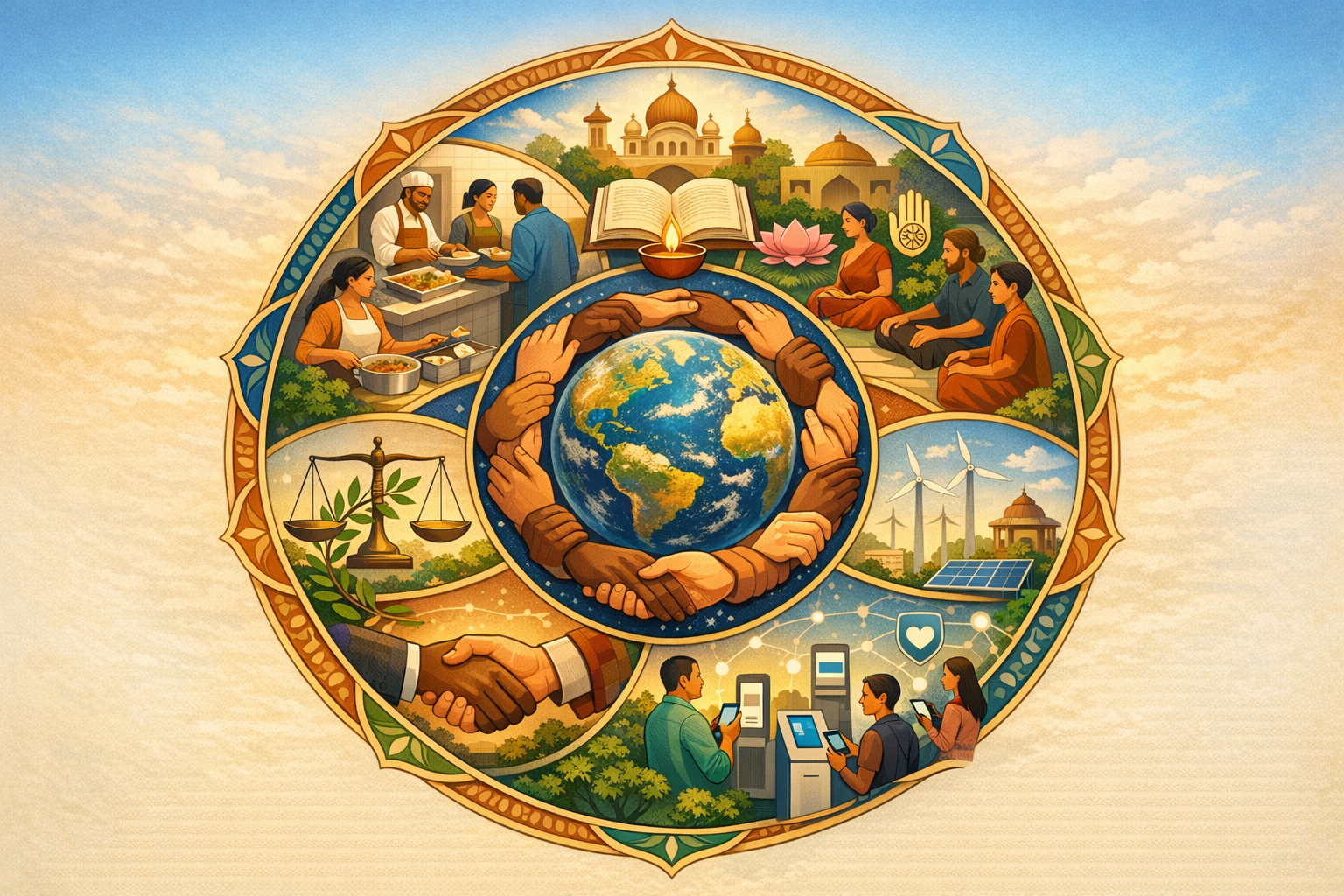
Vasudhaiva Kutumbakam — the world is one family — is reframed here as a practical, measurable framework for public policy, interfaith harmony, and global cooperation. Rooted in the Maha Upanishad and echoed across Buddhism, Jainism, and Sikhism, the concept aligns ethical statecraft with inclusive development and human security. The analysis outlines design principles — dignity…
-
Decoding Ravana’s Pushpaka Vimana: Pishacha‑Faced Mules, War Chariots, and Dharma’s Warning

This in-depth analysis clarifies a frequent confusion in Ramayana studies by distinguishing Ravana’s mule-drawn war-chariot—often depicted with piśāca-like faces—from the Pushpaka Vimana, the celestial, self-propelled vehicle reclaimed by Rama. Drawing on Valmiki’s Ramayana and southern vernacular traditions such as Kambaramayanam, it explains how these images function in classical aesthetics (rasa) and dharma ethics. The mule…
-
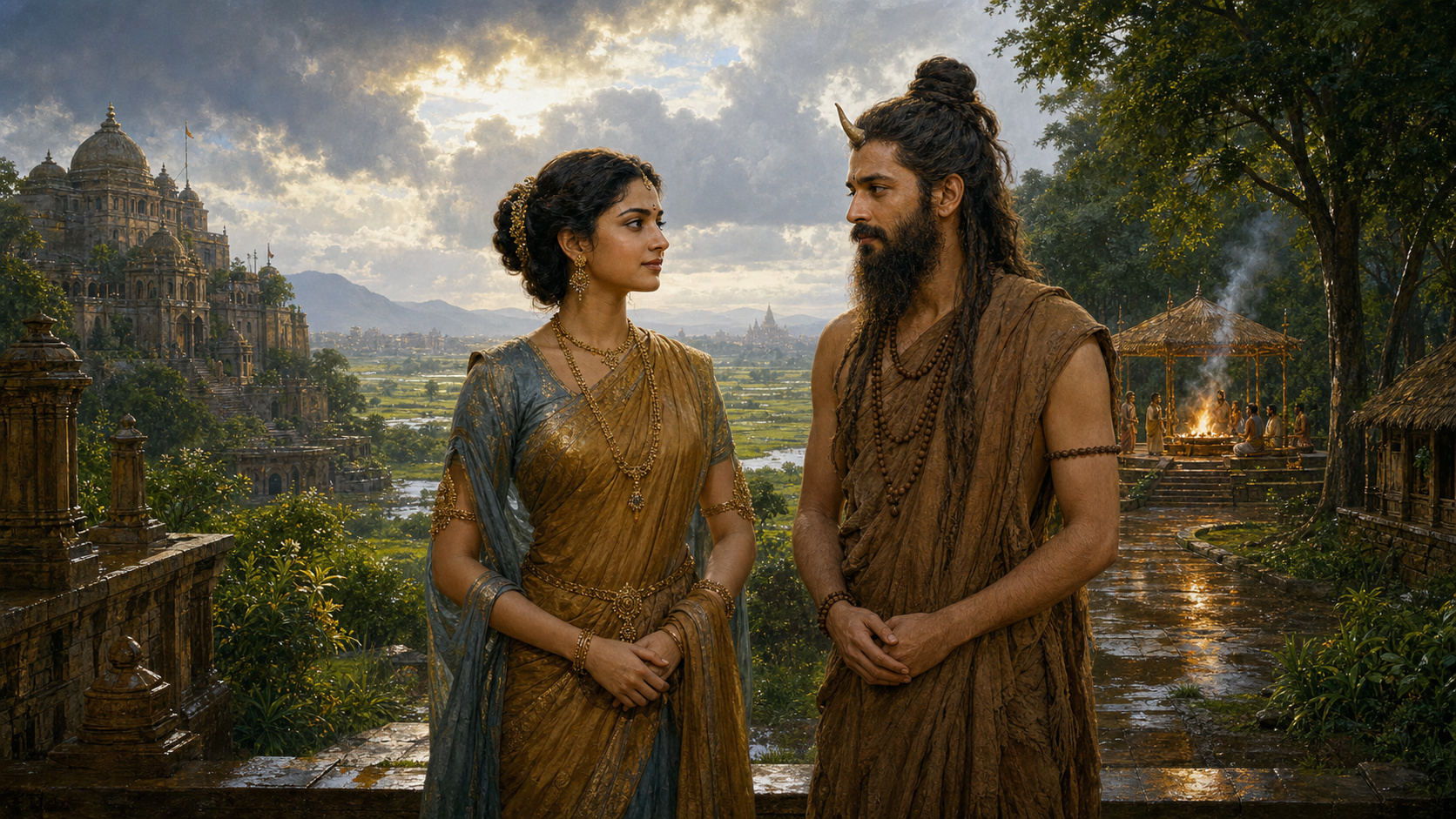
From Hunter to Bridegroom: Decoding Shiva’s Kirata and Kalyanasundara Murtis in Tamil Temple Culture

Shiva’s Kirata and Kalyanasundara murtis together reveal a powerful arc “from hunter to bridegroom,” uniting ordeal and grace, tapas and ananda. Drawing on the Mahabharata’s Kirata episode, Bharavi’s Kiratarjuniya, Puranic sources, and Kalidasa’s Kumarasambhava, this study situates both forms within Tamil temple culture and Chola–Pallava art. Readers gain clear iconographic cues (the Kirata’s hunting regalia;…
-
Behind the Tree or Face to Face? Unmasking Vali’s Death and Dharma Across Ramayanas

The contested question of whether Rama slew Vali from concealment or in open combat reveals a spectrum of ethical reasoning across Hindu scriptures and regional Ramayanas. By tracing Valmiki’s Kishkindha narrative alongside the Adhyatma Ramayana, Kamba Ramayanam, Ramcharitmanas, and eastern and southern vernacular retellings, the episode emerges as a sustained inquiry into rajadharma, sharanagati, and…
-
Hare Krishna in Ireland: Vedic Wisdom Transforming Lives and Nurturing Dharmic Unity

This academically grounded portrait of Hare Krishna practice in Ireland follows three devotees whose lives are reshaped by Vedic philosophy as taught in the Bhagavad-gita. It explains how Srila Prabhupada’s teachings address birth, old age, disease, and death in ways that are both doctrinally rigorous and practically actionable. The narrative shows how bhakti-yoga—japa, kirtan, study,…
-
Dashavatara to Digital Screens: How Vishnu’s Avatars Shape Indian Politics and Pop Culture Today

Vishnu’s avatars are not relics of the past; they are an active ethical and cultural vocabulary shaping Indian politics, cinema, music, festivals, and civic life. Drawing on the Bhagavata Purana, Ramayana, and Mahabharata, this analysis shows how Rama and Krishna anchor debates on leadership, justice, and welfare without collapsing pluralism. It explains why Ayodhya’s contemporary…
-
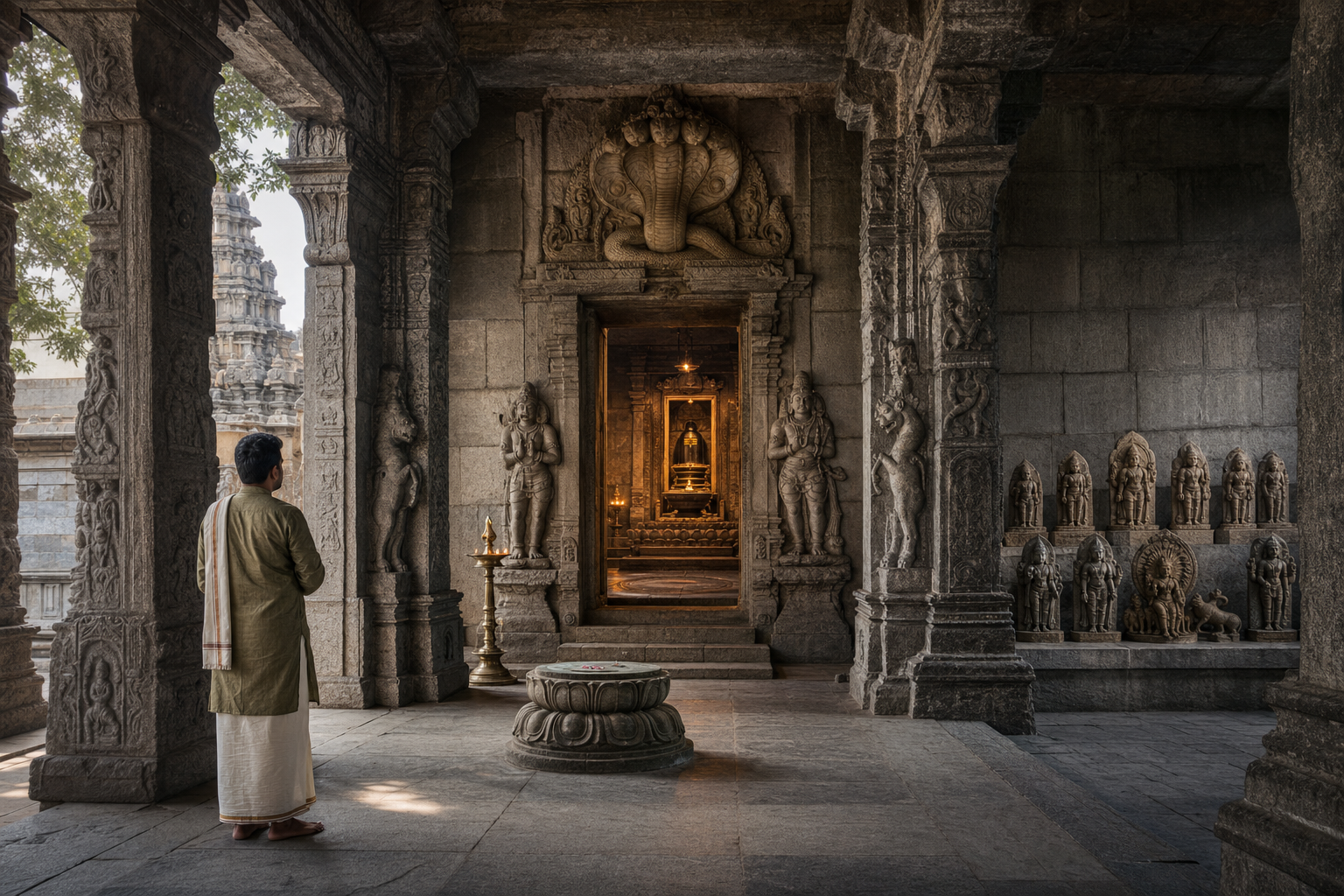
Unraveling the Vetala: Haunting Myths, Staring Gaze, and Nightmares in Hindu Tradition

Vetala (Betal/Baital) stands in Hindu mythology as a liminal being that embodies the threshold between life and death, turning fear into a vehicle for ethical insight. Classic tales such as the Vetāla Pañcaviṃśati (Vikram and Betaal) reveal the vetala as a relentless examiner of judgment, not a mere frightful apparition. Its cremation-ground setting and unblinking…
-
White and Yellow in Sharada (Saraswati) Iconography: Sattva, Basant, and Sacred Color Science

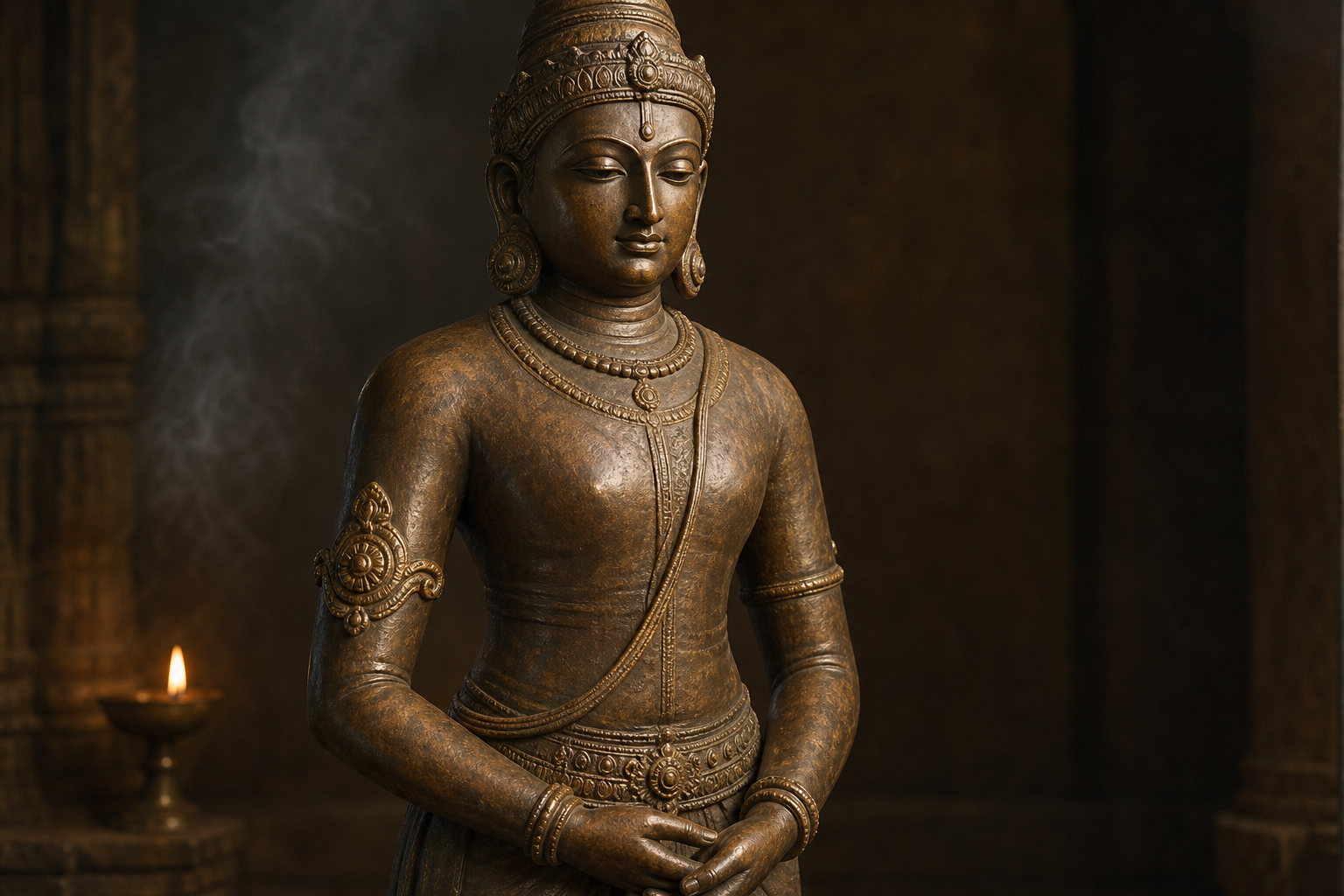
White and yellow in Sharada (Saraswati) iconography form a precise grammar for knowledge and renewal. White signals sattva—clarity, balance, and ethical steadiness—while yellow celebrates Basant’s warmth, community, and the public sharing of learning. Classical canons, from shilpa traditions to ritual practice, reinforce this dual message through the hamsa, the white lotus, the veena, and seasonally…
-
From West End Wizardry to Bhakti Beats: Uncovering London’s Living Spiritual Soundscape

Cambridge Circus in London’s West End is known for the Palace Theatre and Harry Potter and the Cursed Child, yet it also hosts a living devotional soundscape of bhakti kirtan. This long-form exploration explains how call-and-response singing, simple ragas, and cyclical rhythms create inclusive “Bhakti Beats” that harmonize with the city’s flow. Readers gain an…
-
Echoes of the Vedas in Native American Lifeways: A Scholarly, Empathic Comparison

A careful comparative analysis reveals functional resonances between Vedic culture and Native American lifeways without claiming direct historical links. Drawing on the testimony of Felicity O’rourke (Anishnaabi), the discussion shows how ancestral teachings often survived as lived lifestyle under the pressures of boarding school assimilation. Parallels emerge around sacred fire and smoke, ritual sound, directional…
-
Forgotten Guardian: Riksharajas, the Androgynous Vanara Who Shaped Kings Bali and Sugriva

This long-form exploration brings to light Riksharajas—also known as Riksharaja and sometimes rendered as Vriksharajas—the often-overlooked guardian in the Ramayana who raised Bali (Vali) and Sugriva. Drawing on Valmiki’s Kishkindha Kanda, Kamba Ramayanam, Krittivasi traditions, and Puranic echoes (Skanda Purana, Padma Purana), it explains how and why different recensions describe divine paternity while preserving Riksharajas’s…
-
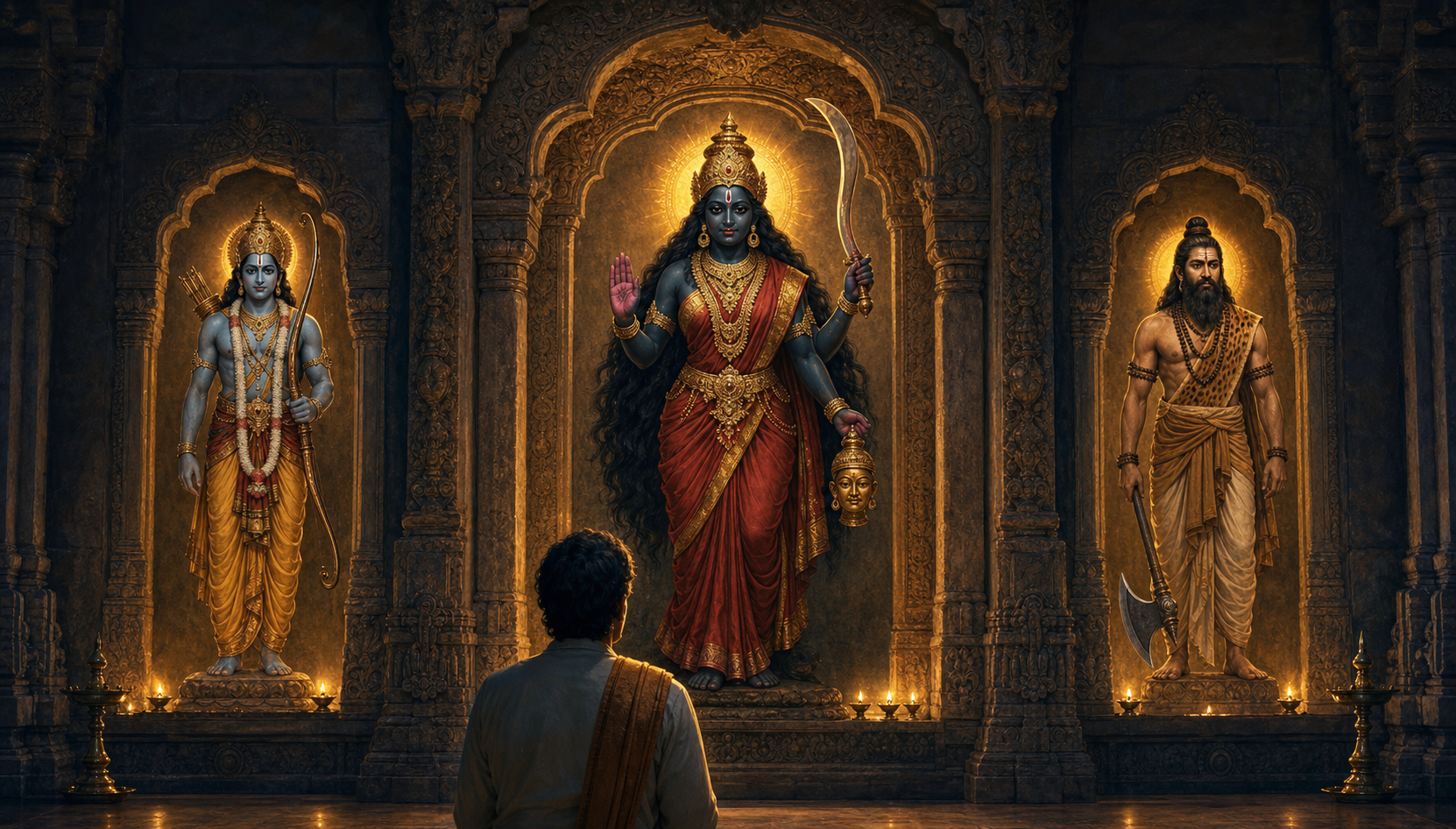
Decoding the Charchika Mudra: Chamunda’s Fearless Iconography and the Science of Inner Purification

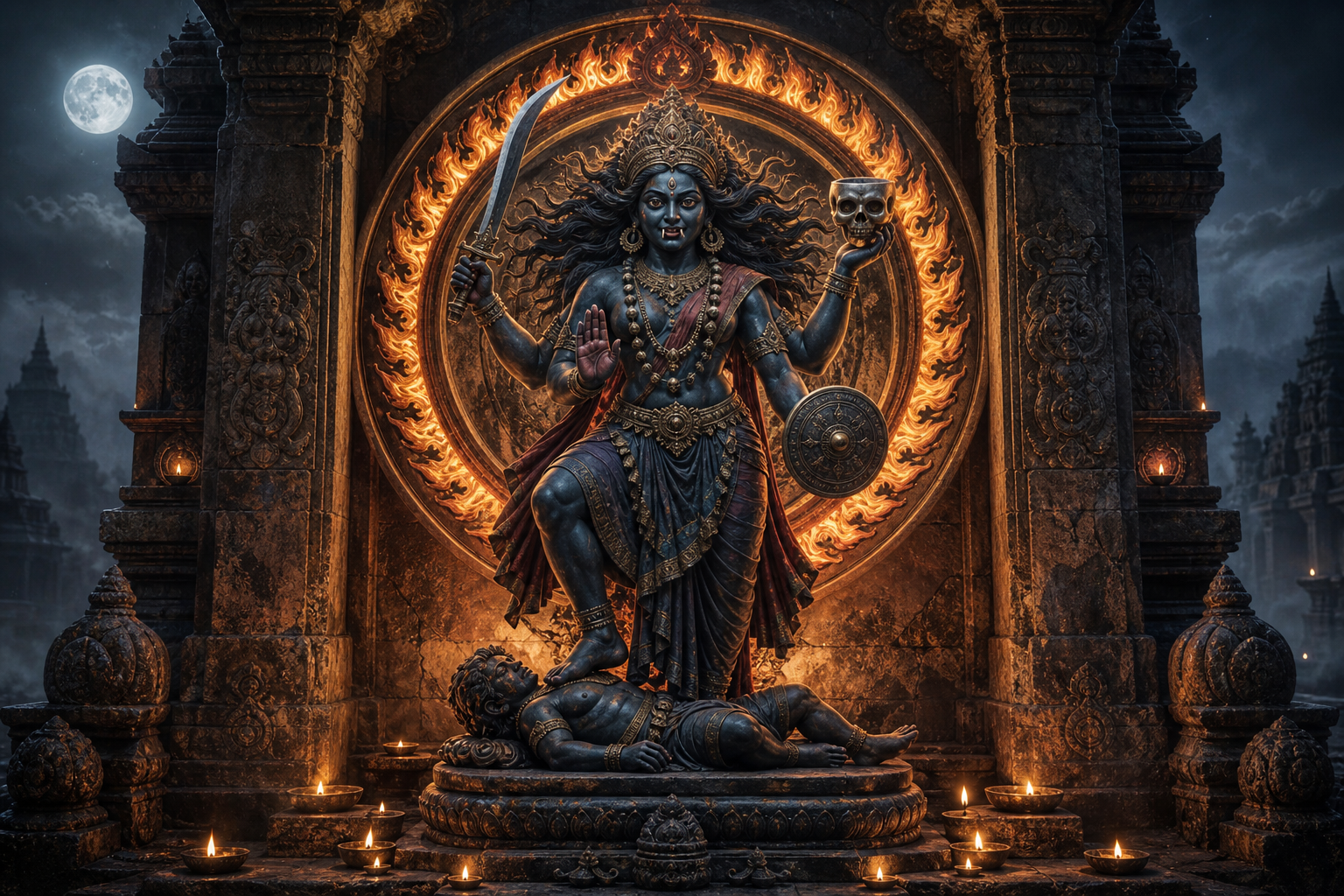
The Charchika Mudra—Chamunda cleaning her teeth with the left little finger—condenses a complete Shakta theology of protection and purification into one subtle gesture. Read against the Devi Mahatmyam and Shakta iconography, it signifies post-conflict cleansing, non-attachment to the taste of violence, and disciplined speech and appetite. Jackals, cremation ground, and skull garlands frame a fearless…
-
Mahabharata’s Karna Reclaimed: Evidence-Based Truths on Dharma, Loyalty, and Fate

This article offers an evidence-based, text-anchored reappraisal of Karna from the Mahabharata, clarifying his birth, training, alliances, battlefield record, and moral complexity. It distinguishes core episodes from later accretions, helping readers separate popular myths from the Critical Edition’s throughlines. By analyzing the Duryodhana–Karna bond through ethical and psychological lenses, it shows how unmet needs for…