-
Why Hindu Gods Ride Animals: The Profound Symbolism Behind Ganesha’s Mouse and Skanda’s Peacock

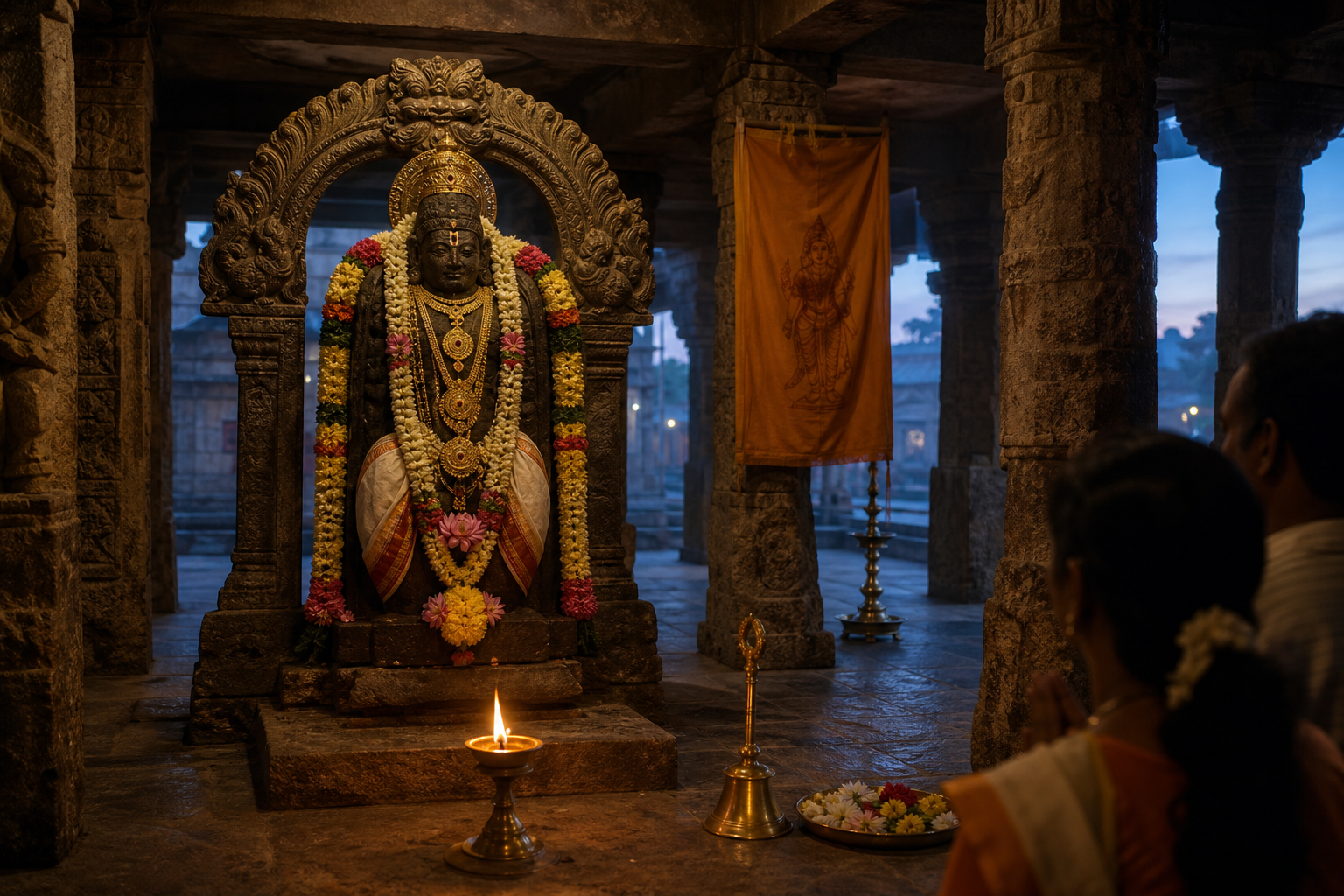
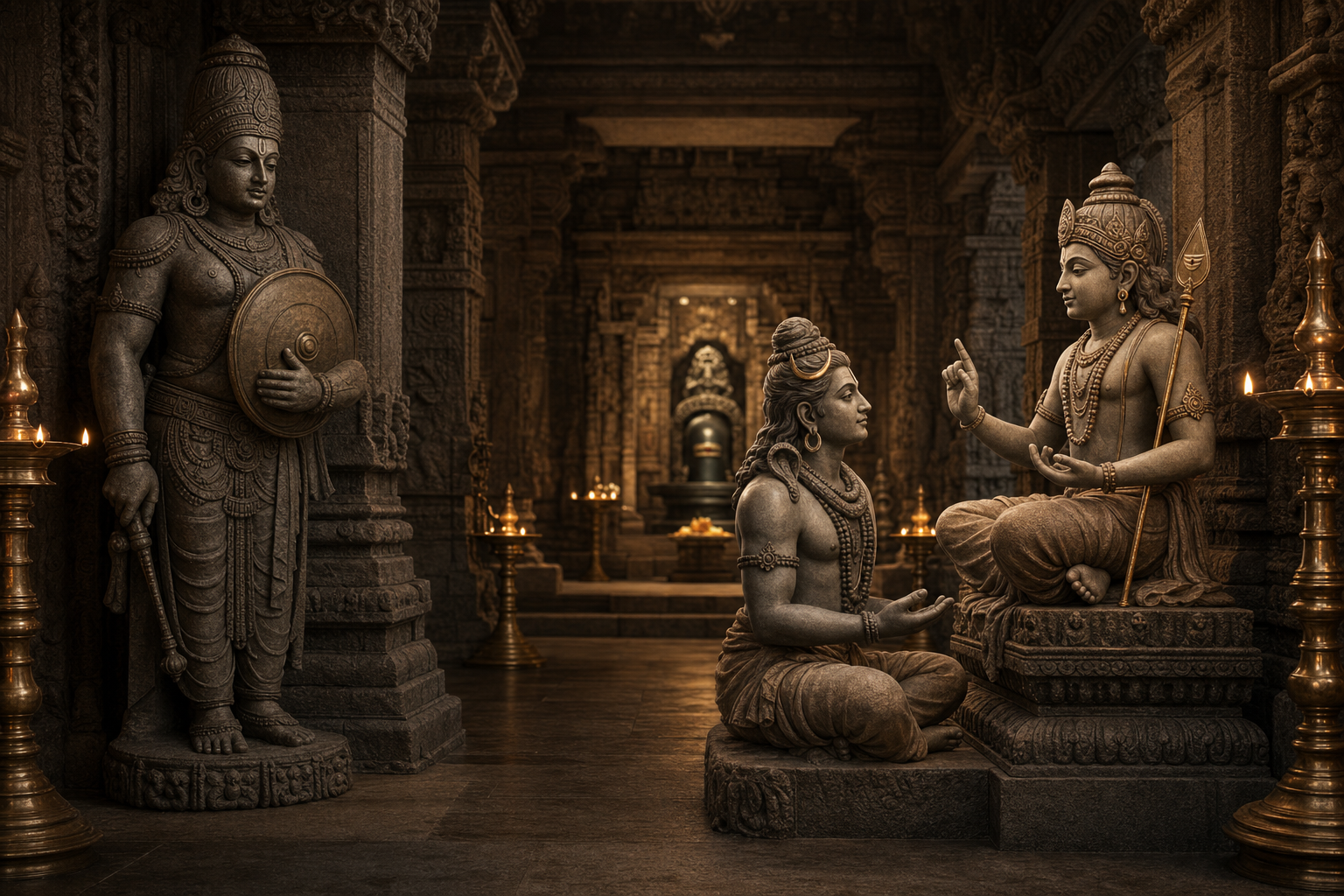
Why do Hindu gods ride animals such as Ganesha’s mouse and Skanda’s peacock? In Hindu iconography, vāhanas are a precise symbolic language codified in Purāṇas, Āgamas, and śilpa-śāstra that maps each deity’s ethical and cosmological function. Animals personify instincts and forces that the deity harmonizes, teaching that spiritual mastery begins with taming subtle habits. Case…
-
Radha-Krishna Idols Near Toilets in Delhi: Respectful Removal, Law, and Harmony

Idols of Radha-Krishna were found near a toilet at Indian Cottage Industry in Mehrauli, Delhi, prompting a swift, respectful removal by Youths Stand For Society (YSS) and a commitment to prevent recurrence. The episode highlights why sacred imagery across Hinduism, Buddhism, Jainism, and Sikhism should never be placed adjacent to sanitation areas and how such…
-
Finding Shelter in True Identity: A Transformative Dharmic Path for Diaspora Unity and Service

Lord Chaitanya’s call—realize life and serve the world—offers a rigorous, universal ethic for the Indian diaspora and beyond. This analysis defines “true identity” through Vedanta’s ātman, deepens it with Gaudiya Vaishnava notions of āśraya and sharaṇāgati, and shows how bhakti stabilizes a service-first life. It highlights natural harmony among Hinduism, Buddhism, Jainism, and Sikhism, emphasizing…
-
Karna’s Elephant-Chain Banner: Fate, Dharma, and the Unyielding Spirit of Kurukshetra

The Mahabharata’s standards were a battlefield lexicon, distilling each warrior’s identity and philosophy into potent symbols. Within this system, tradition associates Karna with an elephant-chain emblem, a motif that fuses material realism—control of war elephants—with moral allegory—power managed by duty. While not uniformly attested across all recensions, the emblem appears in parts of the textual…
-
Kumbhakarna’s Six-Month Slumber: A Tragic Shield, Strategic Weakness, and Dharma in the Ramayana

Kumbhakarna’s six-month sleep in the Ramayana is both armor and Achilles’ heel, a boon that restrains destructive potential while creating a fatal strategic gap when broken. Drawing on Valmiki’s account and later retellings, this analysis clarifies how a slight, divinely guided shift from indrāsana to nidrāsana reconfigures cosmic balance. It explores the symbolism of nidra…
-
Unveiling the Serpent Divine: Rigorous Comparison of Hindu Nagas and Ancient Greece’s Glycon

Serpent deities crystallize a universal human intuition about healing, protection, and moral order. This rigorous, evidence-based comparison places Hindu Nagas—plural, ecologically integrated, and cosmologically central—alongside the Greco-Roman Glycon, a historically bounded healing and oracular cult. Drawing on the Mahabharata, Puranas, and living festivals such as Naga Panchami and Nagula Chavithi, it shows how Nagas unify…
-
Dharma Confronts Fury: Rama and Ravana’s First Face-Off on Day Three of the Ramayana War

This article examines the first battlefield encounter between Rama and Ravana—framed in several Ramayana traditions as occurring on day three of the Lanka war—as a study in dharma confronting adharma. It situates the episode within the Yuddha Kanda’s broader chronology and notes textual variations across Valmiki, Kamba, and devotional retellings. Readers gain a technical overview…
-
Hare Krishna in the City: A Serendipitous Paul McCartney Moment and the Power of Mantra

A brief, public exchange outside mpl (McCartney Publications Limited)—a friendly “Hare Krishna Paul, nice to see you,” answered by a thumbs-up—becomes a concise case study in how sacred sound inhabits civic space. The analysis explains why kirtan carries in urban settings (phonetics, breath, and entrainment), and how Sanskrit mantras foster calm attention without coercion. Historical…
-
Decoding Kumbhakarna’s Sleep: Valmiki Ramayana vs Folklore on Duration, Boons, and Symbolism

This analysis clarifies what the Valmiki Ramayana actually states about Kumbhakarna’s sleep and why folk Ramayanas frequently specify a six‑month cycle. It explains how later boons-and-curse narratives—especially the Sarasvatī speech motif—emerged to teach ethics of intention and speech. Drawing on cosmology (Uttarāyaṇa/Dakṣiṇāyana and ṣaḍṛtu), it shows why “six months” became a memorable mnemonic in oral…
-
CinemaCon Stunned into Silence: Vidyut Jammwal’s Gayatri Mantra Elevates Street Fighter Launch

At CinemaCon in Las Vegas, the Street Fighter trailer launch paused for an unexpected moment of contemplation when Vidyut Jammwal chanted the Gayatri Mantra after brief invocations to the sun and moon. The auditorium’s energy shifted from high-decibel anticipation to attentive silence, with many audience members closing their eyes. The clip quickly went viral, widely…
-
At 11, Bodhana Sivanandan Becomes UK’s Top Female Chess Player—An Inspiring Dharmic Legacy

At 11 years old, Bodhana Sivanandan has become the UK’s top female chess player, a rare feat that spotlights exceptional junior development in British chess. This in-depth analysis explains how FIDE and national ratings work, why junior K-factors accelerate progress, and which technical habits—calculation, positional understanding, endgame technique, and opening preparation—most reliably drive elite performance.…
-
Grounded by Jatayu, Ravana Took to the Skies: Sita’s Abduction and the Power of Dharma

This long-form analysis examines the Jaṭāyu–Rāvaṇa confrontation during Sītā’s abduction, clarifying how South Indian retellings and the Vālmīki Rāmāyaṇa portray the shift from an aerial chariot to Rāvaṇa’s own ākāśa-gamana (flight) after the vehicle is disabled. It explains the semantics of ratha and vimāna, the narrative status of the Pushpaka Vimāna, and why regional traditions…
-
Vishwakarma Across India: How Bengal’s Striking Icons and Rituals Recast the Divine Architect

Vishwakarma, the divine architect, is honored across India through rich regional traditions that share a common theological core yet vary in iconography, ritual calendar, and social meaning. Bengal’s Biswakarma Puja, marked on Kanyā Saṅkrānti, relocates devotion to rooftops and workshops, pairing vivid clay icons with explicit tool worship and communal kite-flying. North and West India…
-
Forgotten Freedoms in the Ramayana: Widowhood, Remarriage, and Dharma in Lanka and Ayodhya

This essay re-reads the Ramayana’s portrayals of Ayodhya and Lanka through the wider lens of Dharmashastra and statecraft. It explains why the Valmiki text does not codify widowhood or remarriage for either society, while later retellings sometimes present Mandodari’s union with Vibhishana as a stabilizing, compassionate choice. It surveys Nārada Smṛti, Parāśara Smṛti, and the…
-
Vishu’s Timeless Mahatmya: Rituals, Astronomy, and the Soul of Kerala’s New Year

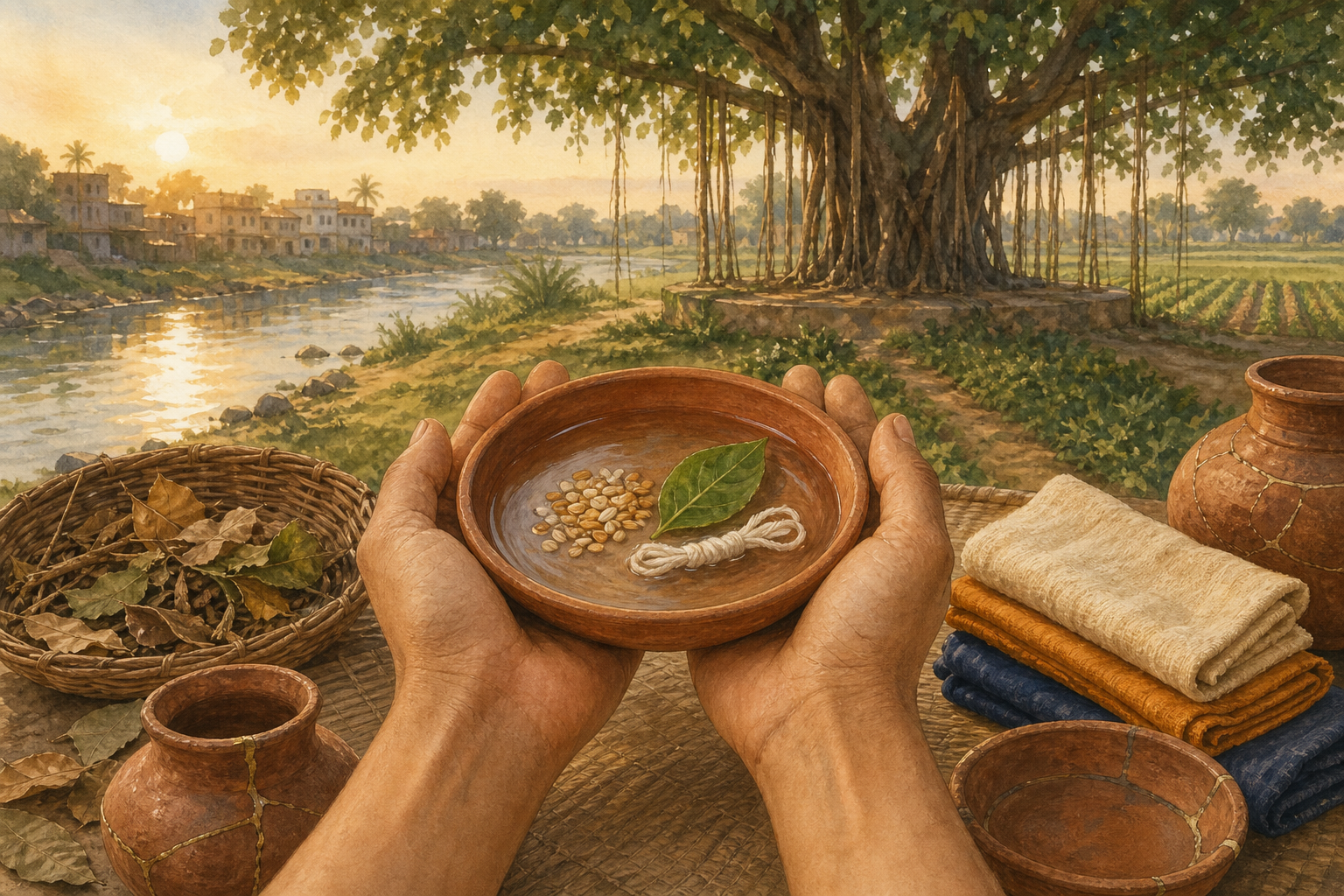
Vishu marks the Kerala New Year at Mesha Sankramana, uniting astronomy, ritual, and community in an auspicious dawn experience. The Vishukkani—lamp, mirror, grain, fruits, coins, and kani konna blossoms—creates a visual theology of light, abundance, and self-reflection. Households practice Vishukkaineetam, extending generosity to children and the wider community as a social ethic for the year…
-
Ashes of Lanka: Subaltern Ramayana Insights on Dharma, Civilians, and War Ethics

This essay reframes the burning of Lanka in Sundara Kanda through a subaltern, ethically rigorous lens that centers the ordinary people of the golden city. It retains reverence for Hanuman’s strategic brilliance and Sri Rama’s cause while probing the moral costs of urban fire on artisans, traders, elders, and children. Drawing on Dharmayuddha norms and…
-
Banda ‘Ghar Wapsi’: Voluntary Homecoming, Vedic Rites, and India’s Religious Freedom

Local media from Banda (UP) reported a consensual Ghar Wapsi on 2 April 2026, where a Muslim family returned to the Hindu fold through Vedic rites. This analysis clarifies how India’s constitutional framework—especially Article 25—protects freedom of conscience while enabling states to curb conversions by force, fraud, or undue influence. It explains the pastoral and…
-
When Pride Breaks a God-Gifted Sword: The Curse that Unmade Ravana’s Chandrahasa

This long-form, research-informed reading of the Chandrahasa episode explains how later Ramayana and Puranic traditions frame Ravana’s celestial sword as a dharma-conditioned gift from Lord Shiva. It clarifies why the blade’s power failed: not through metallurgy but through a self-executing moral law that de-authorizes weapons when wielded in arrogance. It surveys variant tellings across regional…