
-
Gurmat Sangeet Certification: Master Raags, Shabad Kirtan, and Timeless Sikh Devotional Heritage
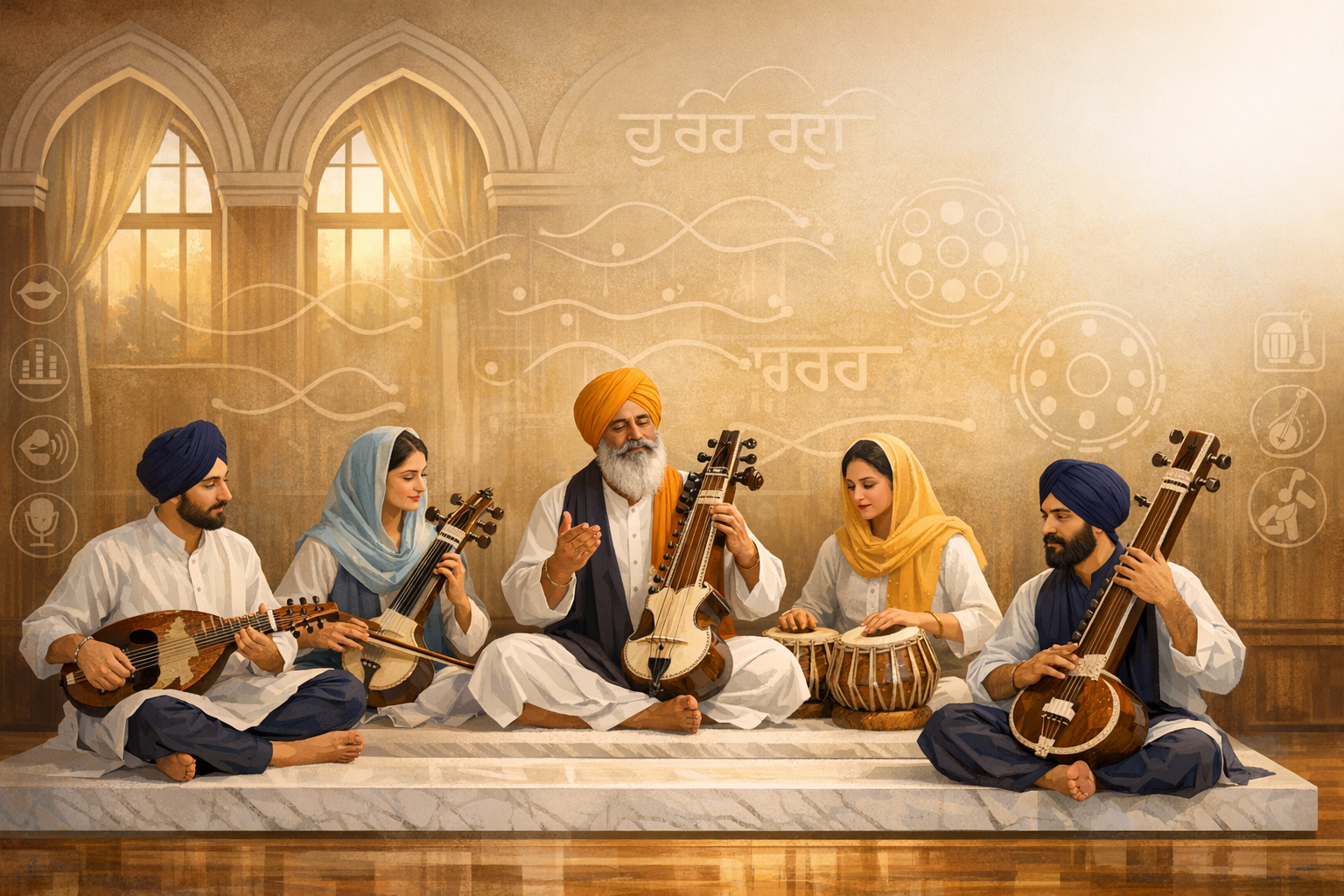
Gurmat Sangeet is the living Sikh tradition of sacred music, where Shabad is sung within the grammar of raag and taal to cultivate contemplation and ethical action. A well-designed certification program grounds training in the Guru Granth Sahib’s raag-based structure, emphasizing accurate pronunciation (santhiya), faithful use of ਰਹਾਉ (rahāo), and historically aware performance. Learners progress…
-
New Vrindaban’s Palace of Gold: A Living Testament to Devotion, Craft, and Dharmic Unity

This long-form reflection examines New Vrindaban’s Palace of Gold in West Virginia, the focus of a second documentary by Vrsabhanu das. It traces the site’s evolution from a planned residence for Srila Prabhupada to a memorial shrine and cultural landmark within ISKCON. Readers gain a technical view of materials, methods, and process discipline—marble inlay, glass…
-
Sultan-ul-Qaum Jassa Singh Ahluwalia: Visionary Sikh Commander Who Forged Unity and Hope
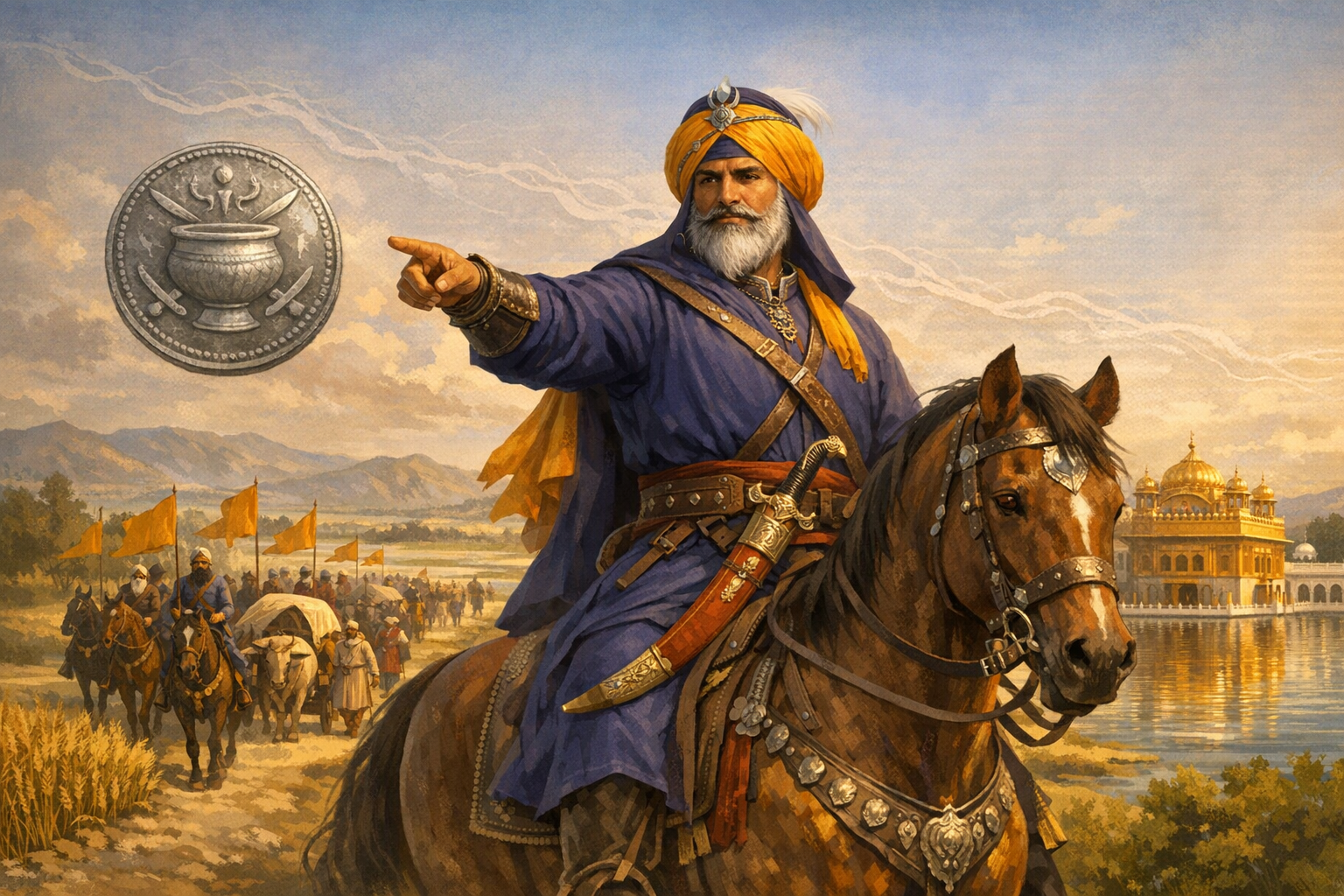
Sultan-ul-Qaum Jassa Singh Ahluwalia (1718–1783) led the Dal Khalsa through one of North India’s most turbulent centuries, transforming agile resistance into orderly governance. Elected at Sarbat Khalsa assemblies, he coordinated misl forces, protected trade and pilgrimage, and became renowned for rescuing abducted civilians during Afghan retreats. His Lahore coinage—Deg Tegh Fateh, Nusrat be-darang, yaft az…
-
Global Sikhs, Enduring Heritage: How Diaspora Guardians Safeguard Sikhi Worldwide
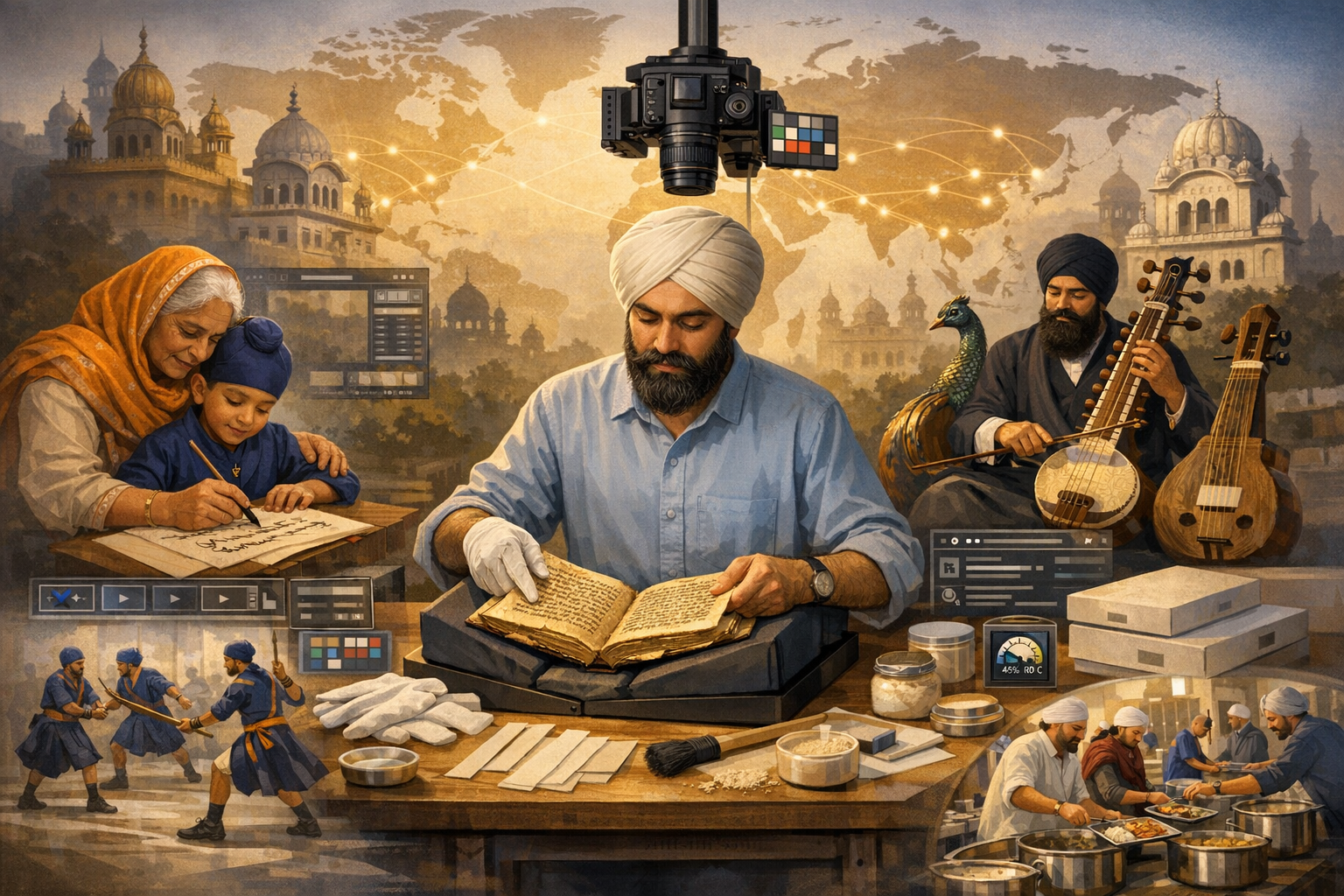
Global Sikh communities are emerging as rigorous custodians of Sikh heritage, uniting conservation science, digital archiving, and living traditions. The post maps tangible assets—manuscripts, instruments, gurdwaras—and intangible practices such as Gurmat Sangeet, gatka, langar, and Gurmukhi literacy. It outlines technical standards for digitization, metadata, storage environments, and ethical access to Gurbani. It also highlights governance…
-
Defending Punjabi: Safeguarding Punjab’s Civilizational Soul Through Language, Script, and Policy
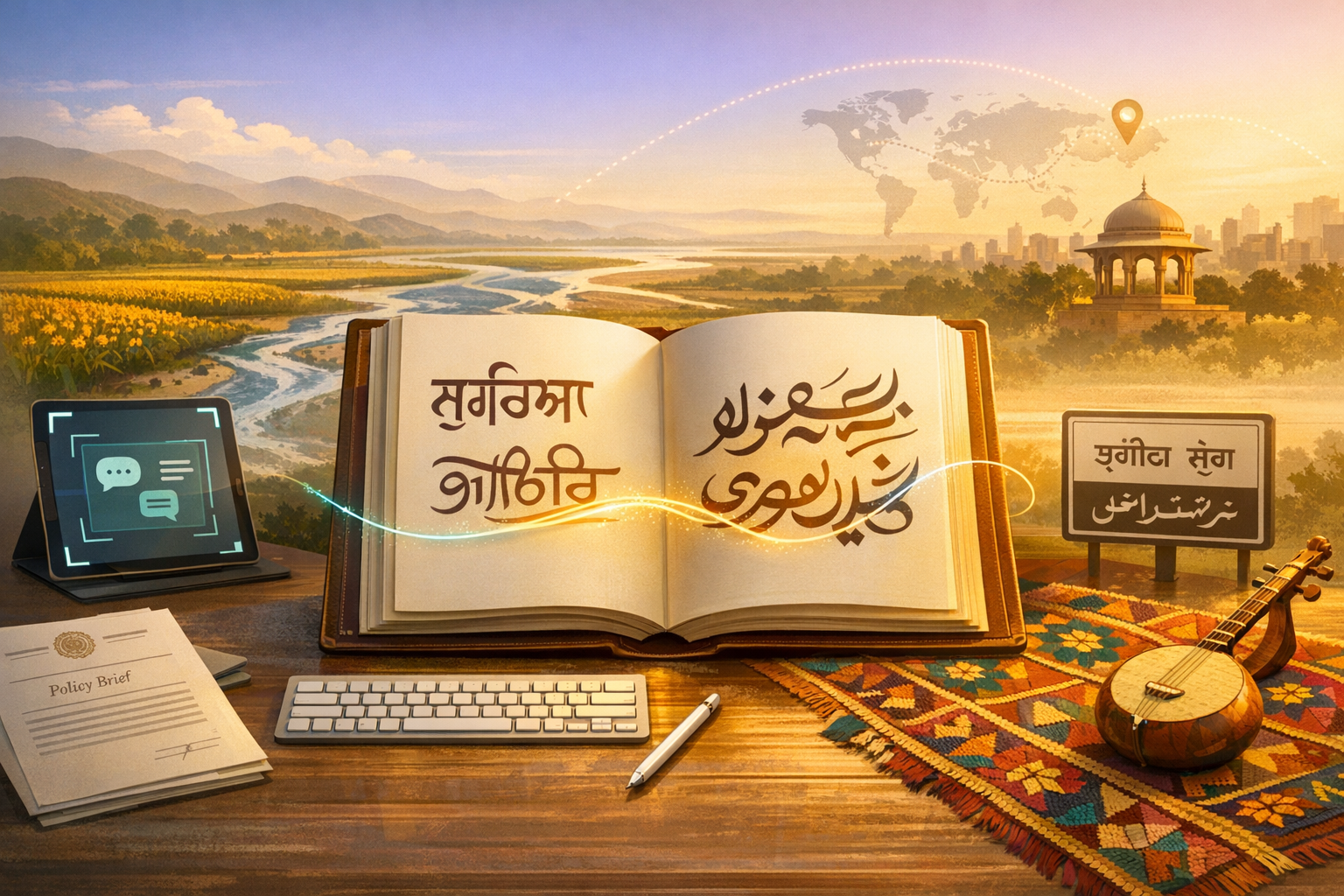
Defending Punjabi is inseparable from safeguarding Punjab’s civilizational identity: a plural, dharmic heritage shared across Hindu, Buddhist, Jain, and Sikh traditions. This long-form analysis outlines historical trajectories, the complementary roles of Gurmukhi and Shahmukhi, and the constitutional scaffolding that enables Punjabi to thrive in schools, administration, and scholarship. It translates research on mother-tongue education into…
-
Sultanpur Lodhi: Sacred Spring of Guru Nanak’s Mission, Sikh Heritage, and Dharmic Unity

Sultanpur Lodhi is the historic river-town in Punjab where Guru Nanak Dev Ji’s public mission took form, anchoring Sikh heritage in lived practice along the Kali Bein. The town’s sacred geography—centered on Gurdwara Sri Ber Sahib and a constellation of related gurdwaras—translates scripture and song into daily acts of kirtan, langar, and seva. Ethical labor,…
-
Pathar Sahib, Leh: A Timeless Testament to Compassion, Forgiveness, and Dharmic Unity
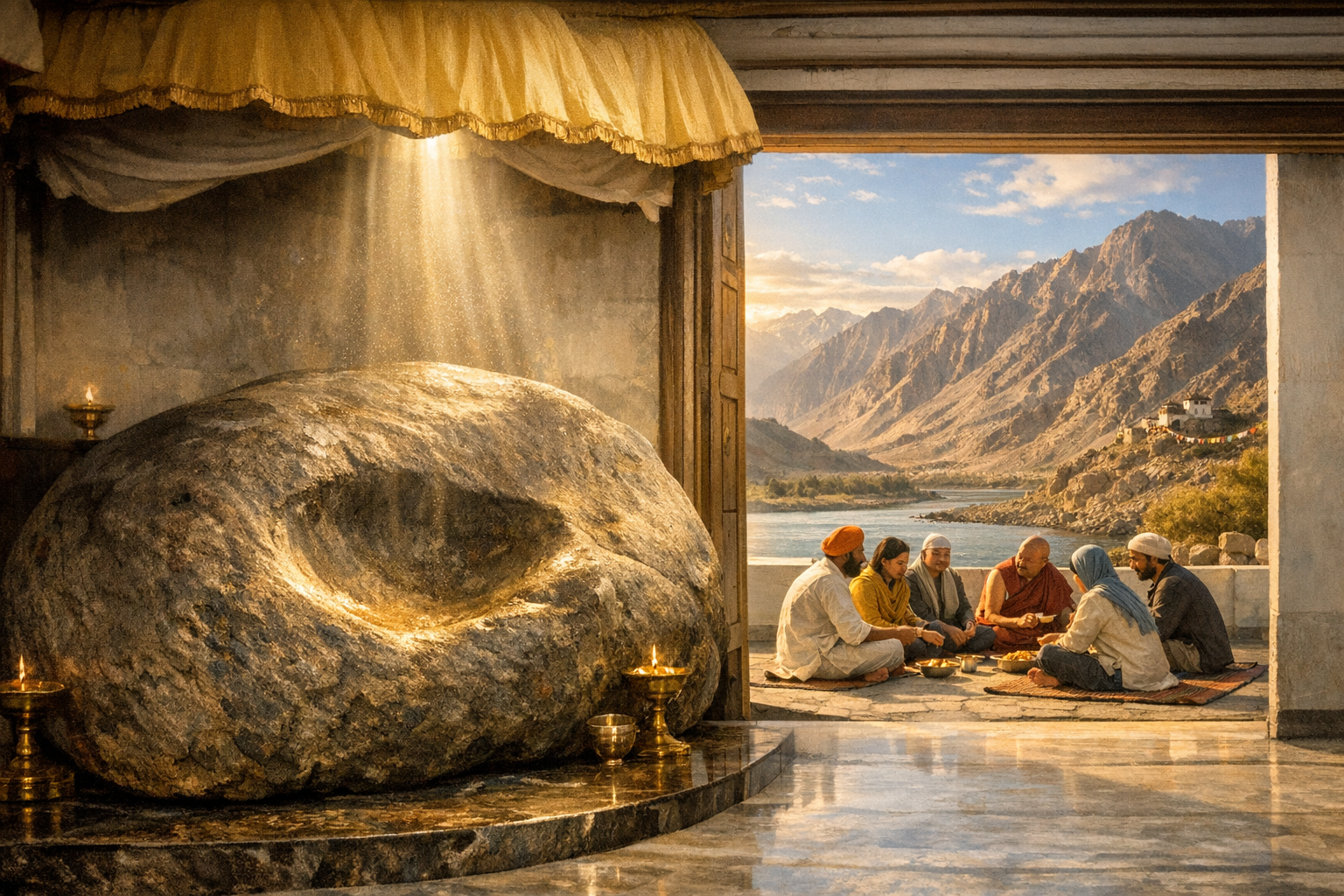
Gurdwara Pathar Sahib in Leh, Ladakh, is a revered Sikh sanctuary where the legend of Guru Nanak’s compassion and forgiveness converges with the high-Himalayan landscape. This comprehensive, research-driven overview situates the site within Janamsakhi traditions, interfaith memory, and Ladakh’s cultural geography. It explains how the venerated boulder and living practices—kirtan, ardas, and langar—translate ideals like…
-
Sikhs of Punjab: Khalsa Nationhood, Miri-Piri Sovereignty, and the Sacred Homeland
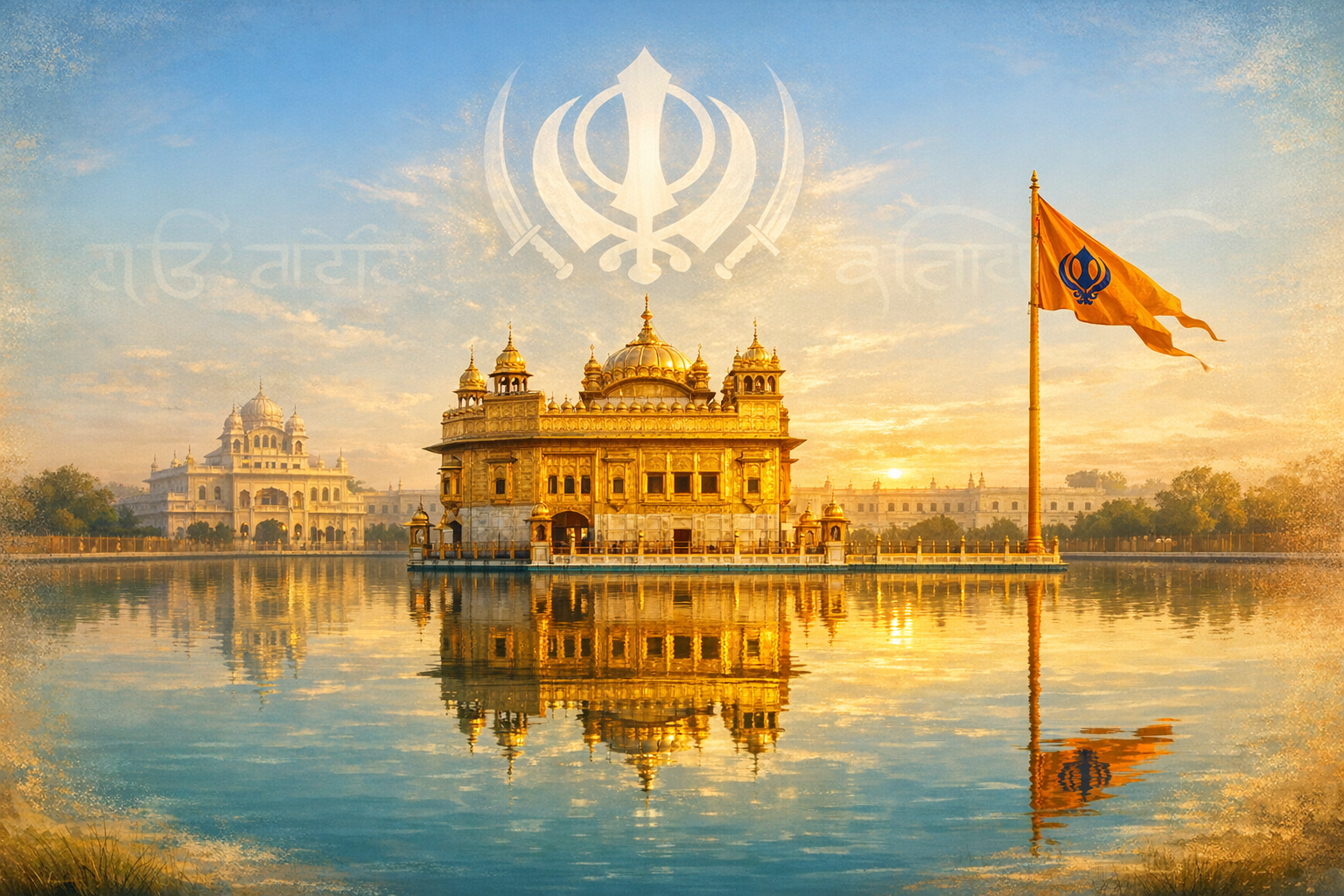
This comprehensive essay examines the Sikhs of Punjab through three lenses: historical nationhood (qaum), religious sovereignty (miri-piri), and the homeland of the Khalsa. It traces the arc from Guru Nanak’s foundational institutions to the Khalsa discipline of 1699, through the Sikh misls and the inclusive statecraft of Maharaja Ranjit Singh, to modern constitutional arrangements and…
-
Meri Janambhumi (Pakistan) Dian Yatravan: Mapping Sacred Punjab and Shared Dharmic Memory
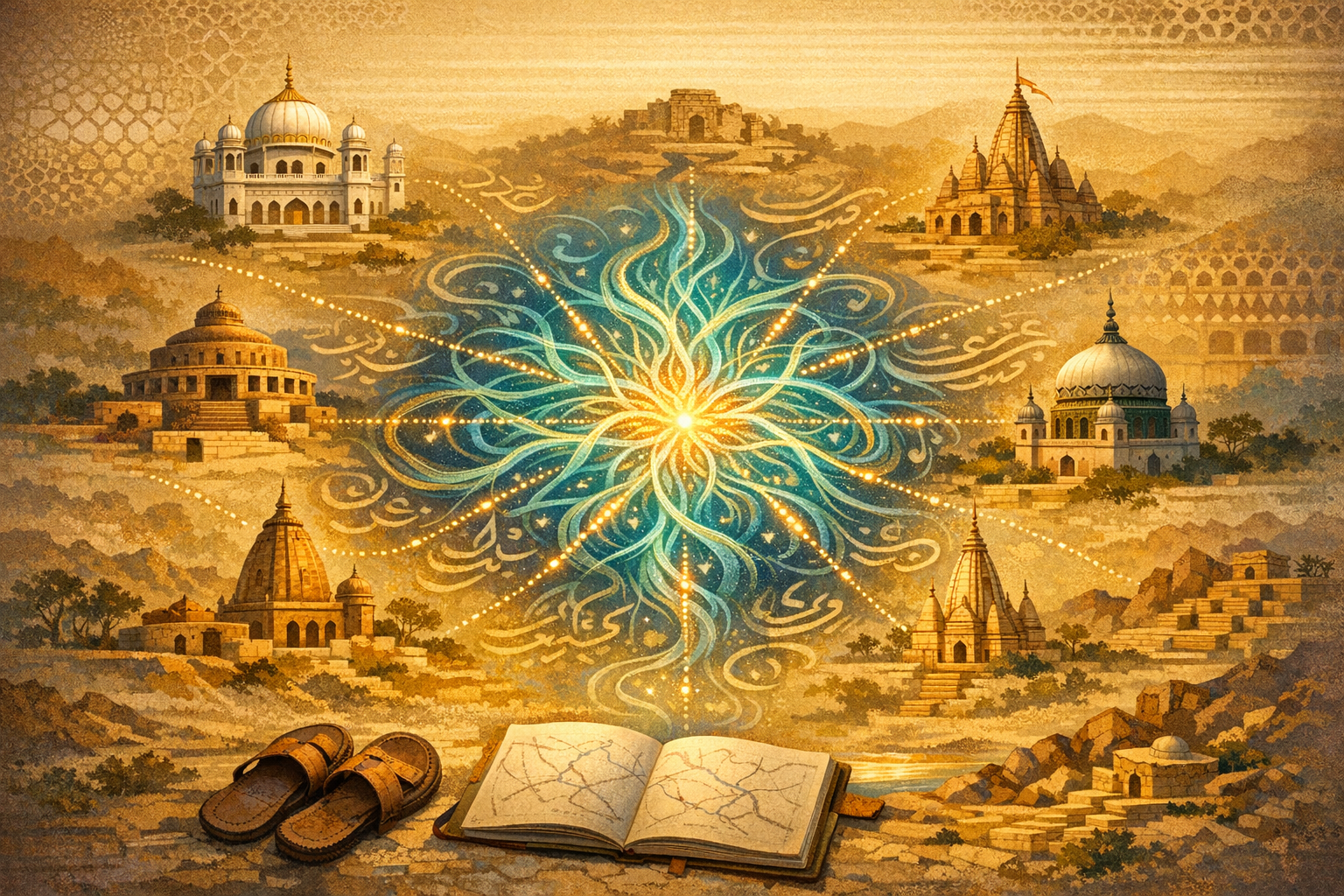
Meri Janambhumi (Pakistan) Dian Yatravan reads Pakistan’s sacred landscape as a living archive of Sikh, Hindu, Buddhist, and Jain memory. Framing “janambhumi” as homeland and “yatravan” as disciplined pilgrimage, it maps gurdwaras, mandirs, stupas, and Jain temples with ethnographic sensitivity and historical care. The narrative highlights well-known sites such as Nankana Sahib, Panja Sahib, Kartarpur,…
-
Historic First: Dr. Gunisha Kaur Named First Sikh to Serve as a U.S. Federal Commissioner

Dr. Gunisha Kaur’s appointment as a U.S. federal commissioner is a historic first for the Sikh community and a milestone for Dharmic unity across Hindus, Buddhists, Jains, and Sikhs. The role carries substantive responsibilities: convening stakeholders, analyzing evidence, and issuing policy recommendations that can strengthen civil rights and religious freedom. The piece explains how federal…
-
The Fragrance of Truth: Why Dharmic Spiritual Wisdom Must Never Be Bought or Sold

A flower does not sell its fragrance—this classical metaphor explains why authentic spirituality in Hinduism, Buddhism, Jainism, and Sikhism cannot be commodified. Drawing on the Upanishads, the Bhagavad Gita, and core dharmic values such as aparigraha, seva, and anekantavada, this analysis distinguishes stewardship from sale and gratitude from price. It shows how guru–shishya pedagogy, dhamma-dana,…
-
The Parashu in Hindu Iconography: A Definitive Guide to Form, Theology, and Dharmic Unity
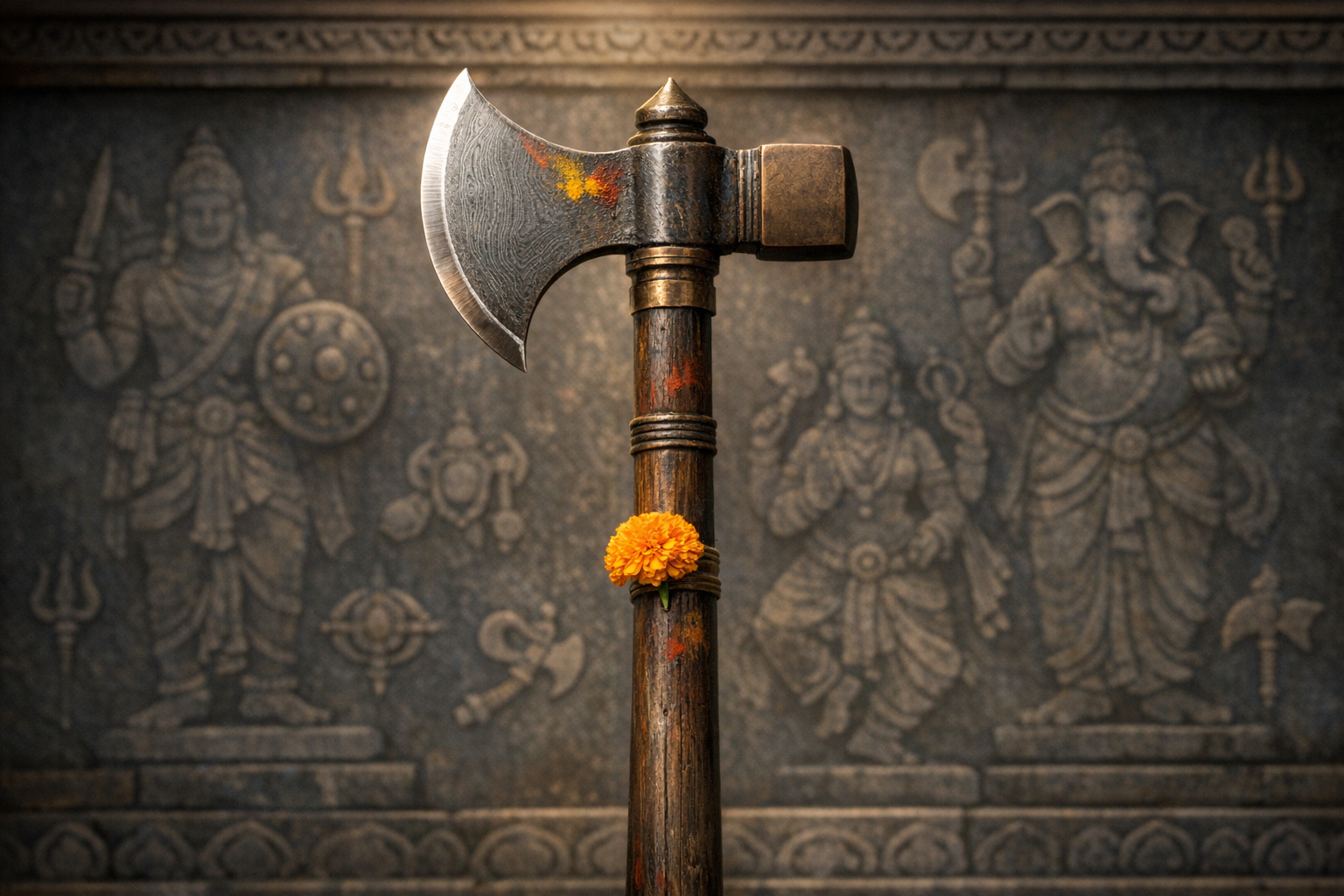
The parashu (paraśu), or sacred battle axe, condenses Hindu theology of force, restraint, and renewal into a single powerful ayudha. This long-form guide explains how to recognize the parashu in Hindu Sculptures, details its associations with Shiva, Ganesha, Durga, and Parashurama, and situates it within the ethics of Kshatra and dharma-yuddha. It connects scriptural narratives…
-
Beyond the Hype: Dharma’s Clear‑Eyed Guide to the Illusion of Permanent Followers

Chasing fans and followers often masks an unexamined attachment to impermanent signals of worth. This essay reframes that chase through a dharmic lens—Hindu, Buddhist, Jain, and Sikh—showing why audiences are structurally volatile and why identity need not be. It draws on the Bhagavad Gita’s Karma Yoga, Buddhism’s anicca and anattā, Jainism’s Anekantavada and aparigraha, and…
-
May 30, 2026 Panchang: Shukla Paksha Chaturdashi to Purnima—Auspicious Timings, Meaning & Guide

May 30, 2026 features Shukla Paksha Chaturdashi until 11:11 AM, followed by Purnima tithi until 1:02, as recorded in the referenced Panchang. The guide explains how tithi timing works astronomically, why times vary by location, and how to apply these details when planning observances. It outlines the spiritual arc from Chaturdashi to Purnima, highlighting practices…
-
Inside Bhakti Bhavan, Kolkata—Awe-Inspiring Darshan of Srila Bhaktivinoda Thakur’s Living Legacy
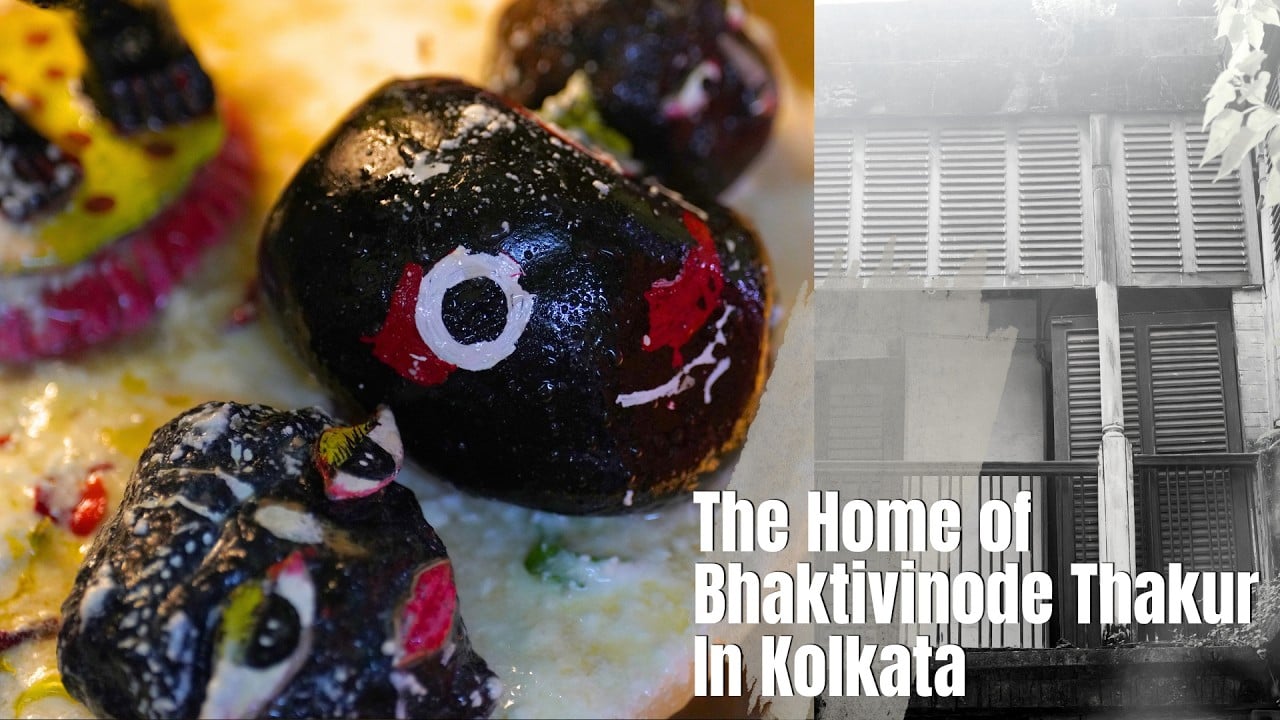
Bhakti Bhavan in Kolkata, the historic home of Srila Bhaktivinoda Thakura, preserves the living heart of Gaudiya Vaishnavism through the Madhava deity, Giriraja Sila, the Salagrama Sila manifest as Jagannatha, and the Kurma Sila. A recent visit demonstrates how careful heritage conservation and daily archana deepen understanding of scripture, lineage, and practice. The site powerfully…
-
Jyeshta Maasa 2026 in Kannada Panchanga: Exact Dates, Sacred Rituals, and Auspicious Timings
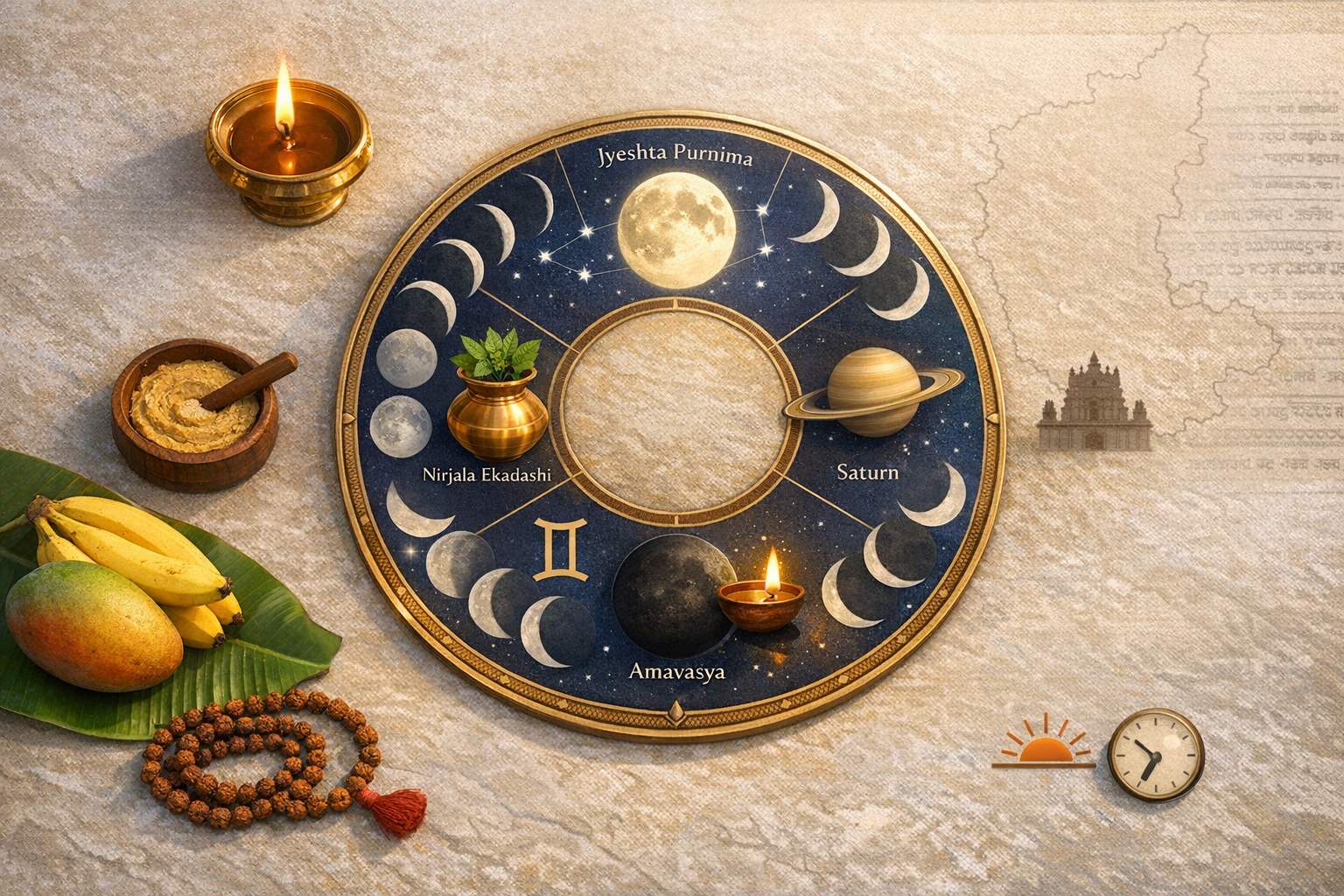
Jyeshta Maasa 2026 in the Kannada Panchanga runs from 15 June to 13 July (IST), defining the third lunar month in the amanta system used across Karnataka. The guide explains how tithis, not civil dates, govern observances and why the month’s name is tied to the full moon near Jyeṣṭhā nakshatra. Key highlights include Nirjala…
-
Jyeshta Maas 2026 (Jeth Mahino) in Gujarati Panchang: Precise Dates, Festivals, and Significance
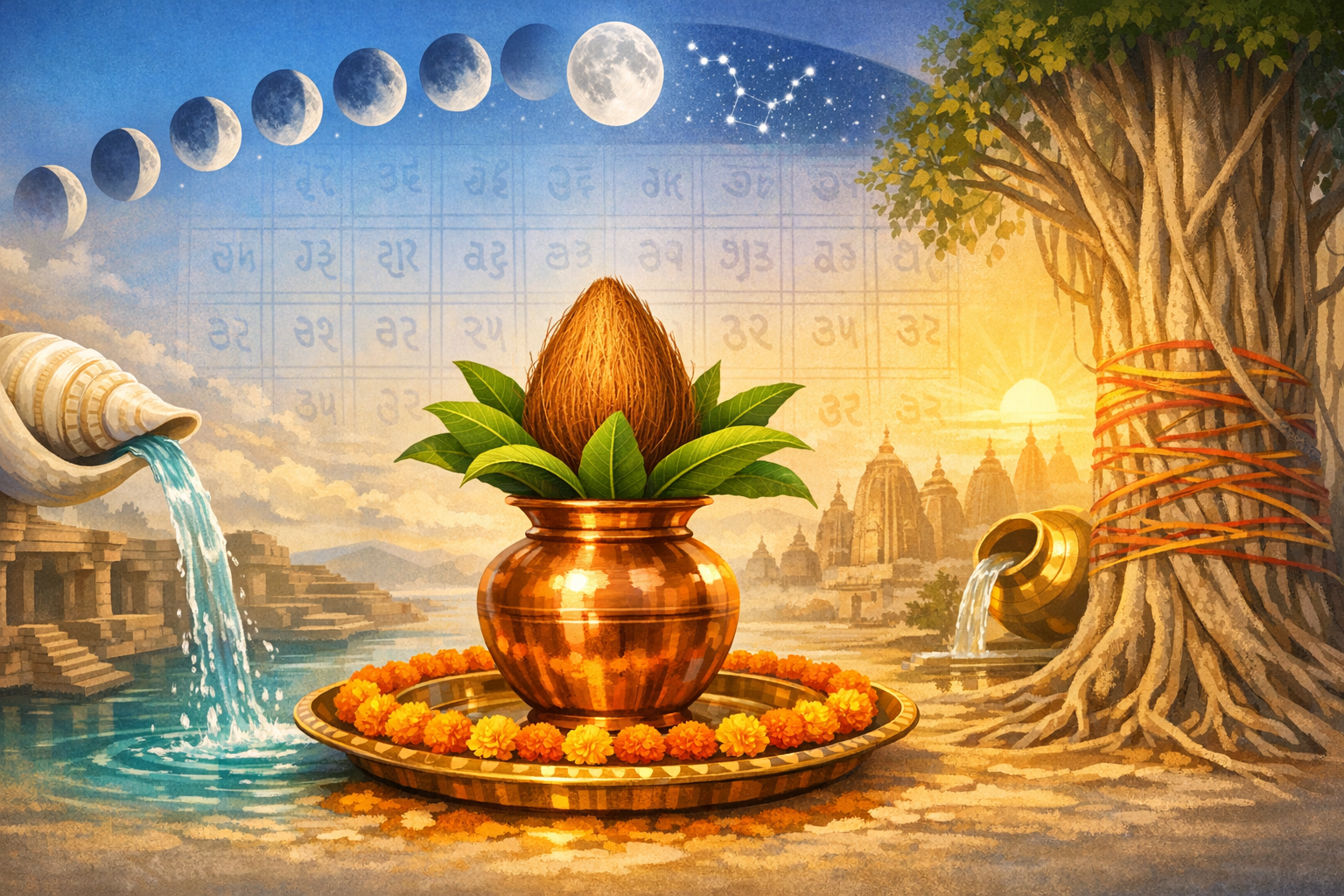
Jyeshta Maas 2026 (Jeth Mahino) in the Gujarati Panchang begins on 15 June 2026 and ends around 14 July 2026, with dates assigned by the tithi at local sunrise. Many Panchangs indicate an Adhik Jyeshta (Adhik Jeth) preceding this span, roughly mid-May to 14 June 2026, inserted because no solar sankranti occurs within that lunar…
-
Jyeshtha Mahina 2026 in Marathi Panchang: Definitive Dates, Adhik Maas Insights, and Key Vrats
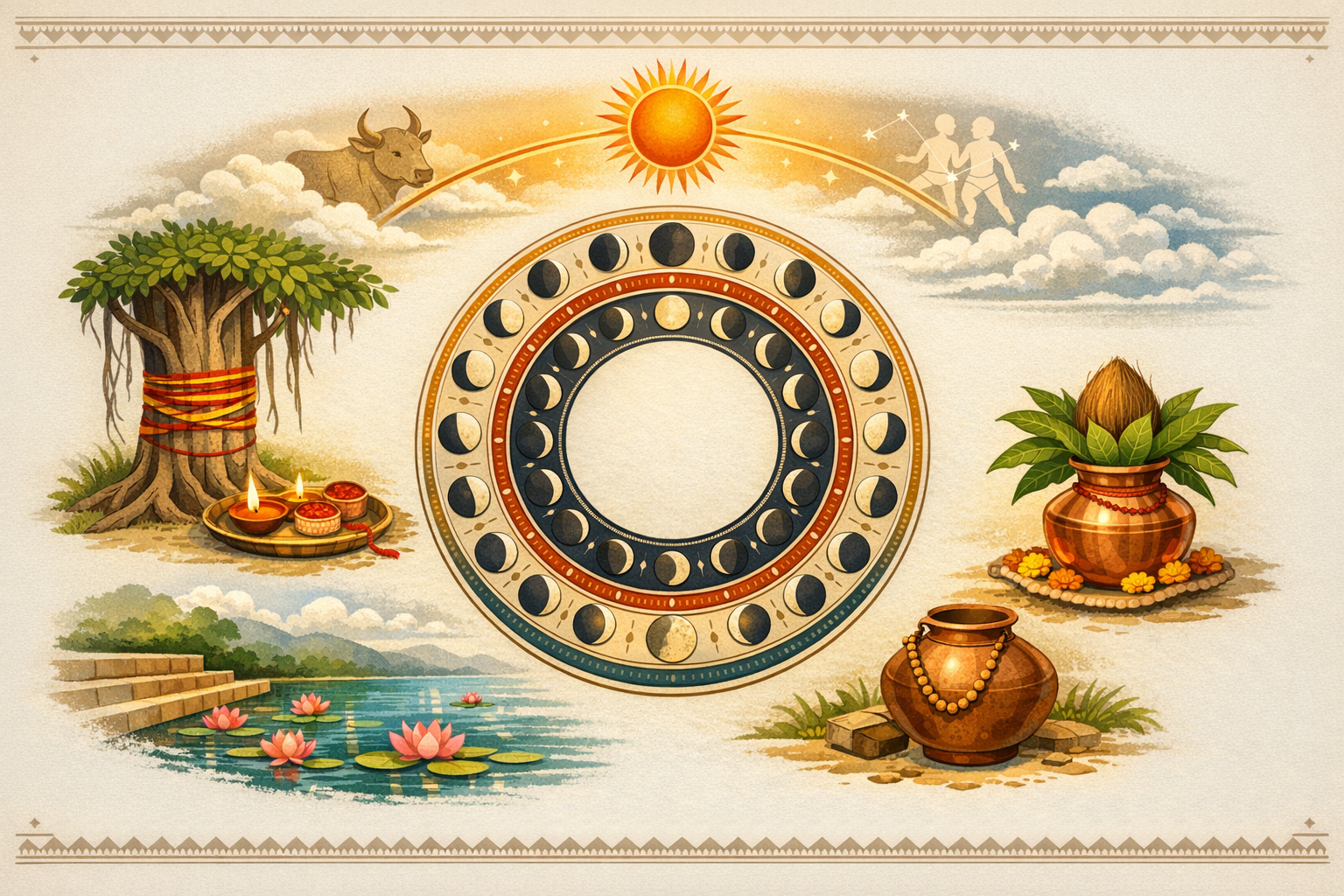
Jyeshtha Mahina 2026 in the Marathi Panchang features an Adhik Maas, creating two consecutive Jyeshtha months. Adhik Jyeshtha runs from 17 May to 14 June 2026 (IST), followed by Nija Jyeshtha from 15 June to 14 July 2026. This arises because no Sankranti occurs between the May and June Amavasyas, a hallmark condition for Adhik…
-
Where Is Humanity Today? A Dharmic Blueprint for Compassion, Ahimsa, and Unity

This essay reframes “Where is humanity?” through a dharmic lens that treats compassion, ahimsa, and service as trainable capacities and civic responsibilities. It explains how Hinduism, Buddhism, Jainism, and Sikhism converge on a shared blueprint grounded in Dharma, dayā, karuṇā, aparigraha, mettā, and seva. Readers gain a research-informed view of how breathwork, meditation, and loving-kindness…
-
Sankashti Chaturthi June 2026: Date, Moonrise Rituals, Puja Vidhi & Deep Significance
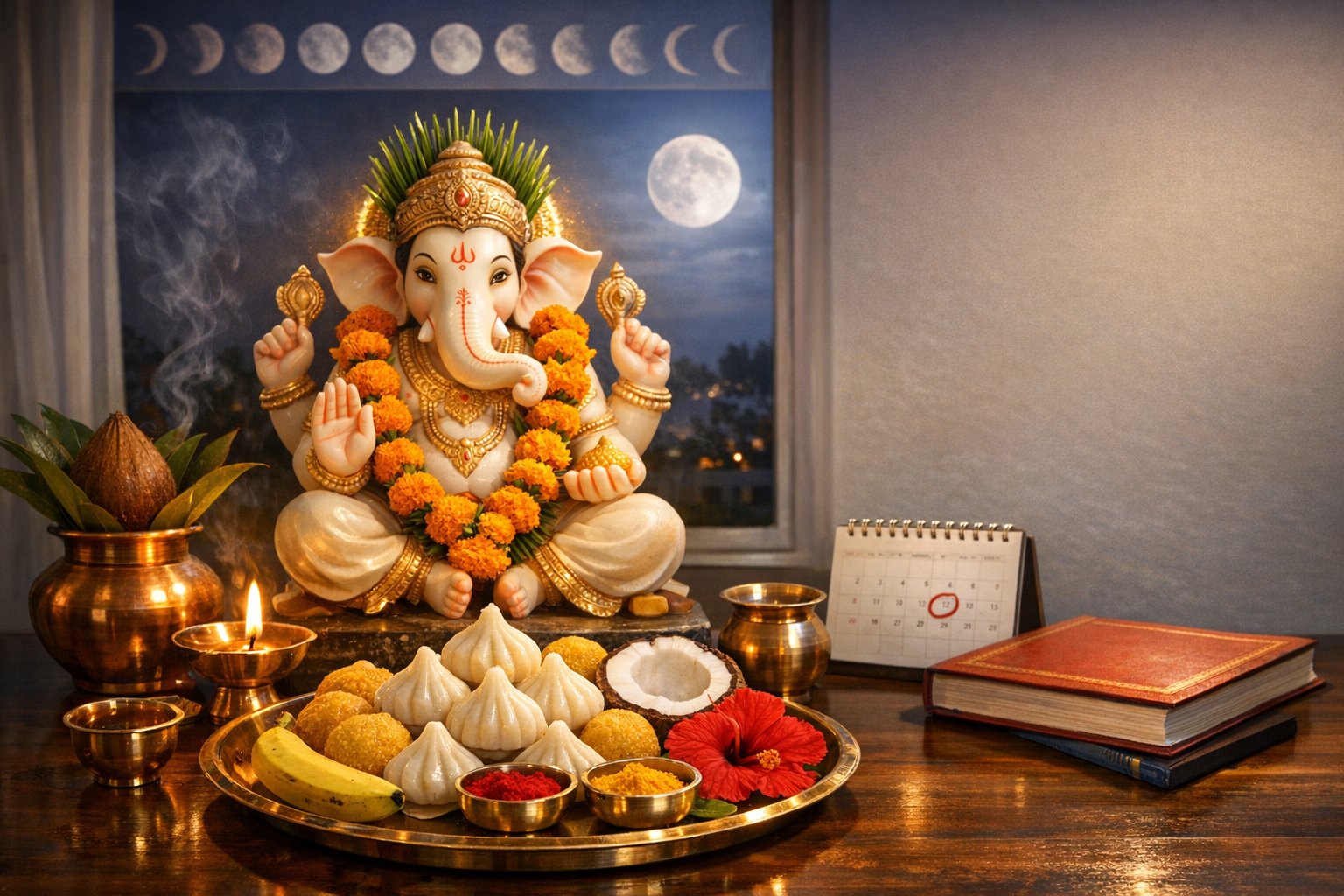
Sankashti Chaturthi in June 2026 falls on Wednesday, June 3, aligning with the Krishna Paksha Chaturthi of Adhika Jyeshta Mahina in North Indian Hindi calendars. The vrat is kept with the tithi-at-moonrise rule, so local moonrise times determine when the fast is concluded. Traditional puja vidhi includes sankalpa, stotra recitation—especially the Sankashta Nashana Ganapati Stotra—offerings…