
-
When Sankirtana Met State Power: Lord Caitanya, Chand Kazi, and Enduring Harmony
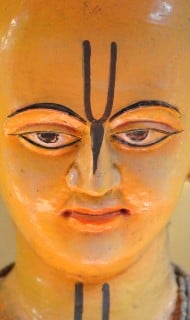
Set in sixteenth-century Navadvipa, the well-attested episode of Lord Caitanya and the Chand Kazi demonstrates how devotional courage, nonviolence, and respectful dialogue can resolve public religious disputes. Drawing from Sri Navadvipa Dhama Mahatmya and Gaudiya sources such as Chaitanya Charitamrita, the narrative shows sankirtana’s harmonizing role alongside lawful civic administration. The sacred mapping of the…
-
Mahasadashiva Unveiled: Rare 25-Headed, 50-Armed Cosmic Shiva in South Indian Temples

Mahasadashivadepicted with twenty-five heads and fifty armsis among the rarest and most conceptually rich forms of Shiva in South Indian temple art. Drawn from the Shaiva Agamas and śilpa treatises, the icon expands the fivefold logic of the pañca-brahma into a full cosmic diagram in stone. The fifty arms are widely read as the Sanskrit…
-
Sunda–Upasunda Unmasked: Mahabharata’s Devastating Lesson on Desire, Unity, and Dharma

The Mahabharata’s tale of Sunda–Upasunda is a rigorous ethical study of desire, unity, and power. Two inseparable asura brothers gain near-invulnerability from Brahma, only to fall when possessive desire fractures their famed cohesion. The strategic creation of Tilottama illustrates beauty as moral intelligence rather than seduction, while Shiva’s multi-faced gaze symbolizes omnidirectional awareness. Read through…
-
Patanjali’s Kriya Yoga Decoded: Tapas, Svadhyaya, Ishvara-Pranidhana for God-Union

Patanjali defines Kriya Yoga as a threefold disciplinetapas, svadhyaya, and Ishvara-pranidhana (Yoga Sutra 2.1)designed to attenuate afflictions and cultivate samadhi (2.2). This synthesis of disciplined effort, self-study, and surrender functions as both foundation and consummation of practice, guiding seekers toward union with God as understood in the Yoga Sutras. The discussion clarifies how each limb…
-
Lunar Eclipse 3 March 2026: Definitive Chandra Grahana Sankalpa, Pitru Tarpana & Dāna Mantras Guide

A shastra-aligned, long-form guide to the 3 March 2026 lunar eclipse (Chandra Grahana), this article provides precise Sankalpa templates that can be filled with local panchanga details, complete Pitru Tarpana ślokas for tilodaka offerings, and Thila Tarpana Anantara Vidhi (Samarpana) mantras. It explains sūtaka observance, outlines pre/during/post-eclipse practice flow, and presents widely recited Chandra mantras…
-
Prabhavali or Prabhamandala: The Sacred Arch of Light, Protection, and Cosmic Order in Temples
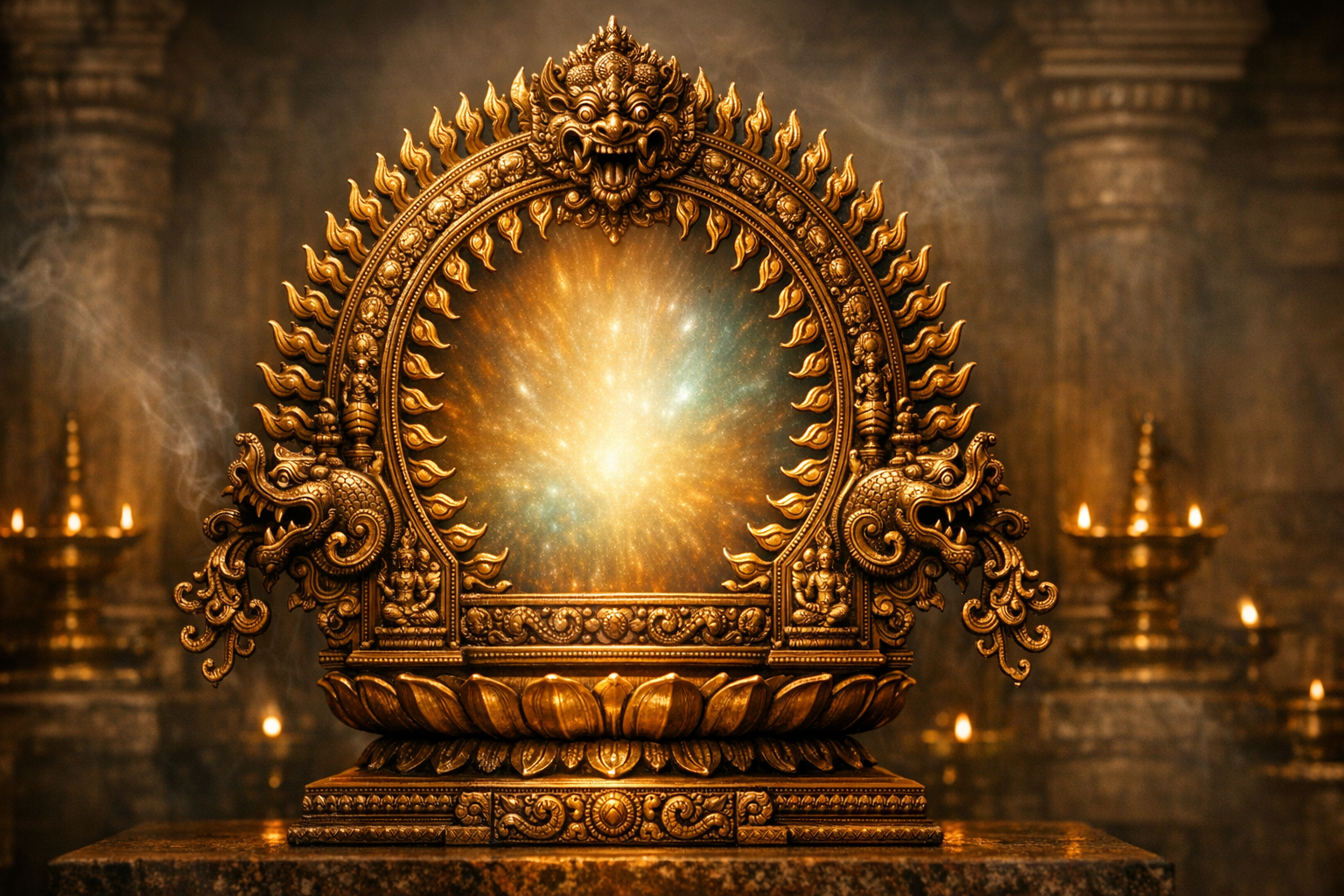
The prabhavali, or prabhamandala, is the luminous arch that frames deities in Hindu temple sanctums, uniting aesthetics, ritual function, and metaphysical meaning. Emerging prominently in classical and medieval India and perfected in traditions such as the Chola bronzes, it encodes protection, radiance, and cosmic order through motifs like kirtimukha, makara, and jvala flames. Stone, metal,…
-
China’s Hidden Hindu Shrines: Maritime Silk Roads, Shared Gods, and a Living Memory

A quiet village shrine in Chedian, Fujian, preserves a living link to Hindu worship in China and opens a window onto the Maritime Silk Road. Archaeological finds in Quanzhoureused temple columns at Kaiyuan Temple and sculptures in maritime collectionsreveal the depth of Hindu presence during the Song–Yuan era. This long-form analysis traces how Indian Ocean…
-
Child Kali on Maa Sarada’s Lap: Decoding Ramakrishna’s Vision of Fierce Grace and Love
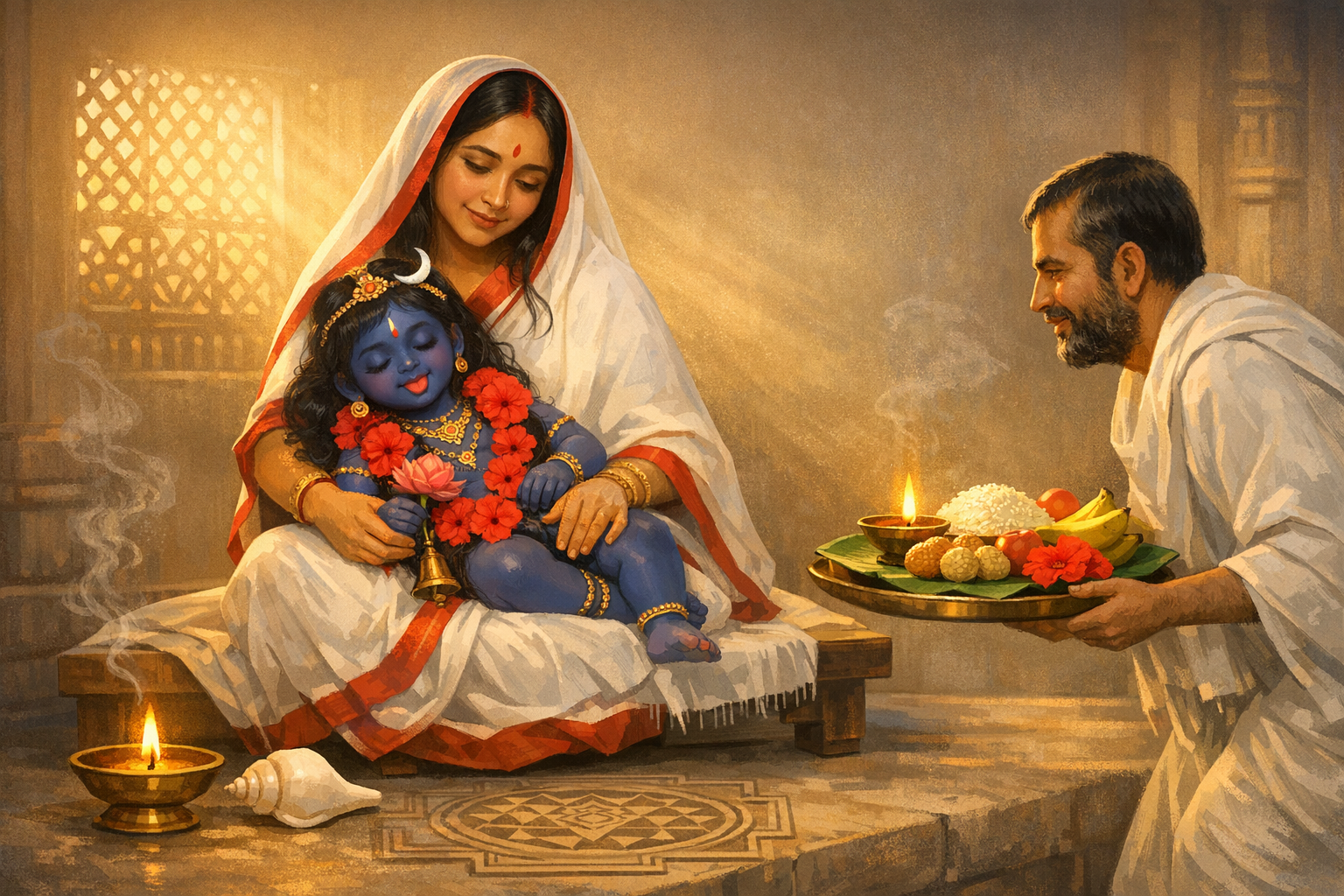
This essay decodes a powerful Hindu symbol: Child Goddess Kali seated on the lap of Maa Sharda as Sri Ramakrishna brings food. It situates the scene within Sanatana Dharma, Shakta Tantra, and Bengal’s devotional culture, showing how fierceness softens into maternal grace through seva. Drawing on Ramakrishna’s lifeespecially the Shodashi Puja to Sarada Deviit interprets…
-
Decoding the Karaga: Draupadi’s Living Shakti, Symbolism, and Community Unity in South India
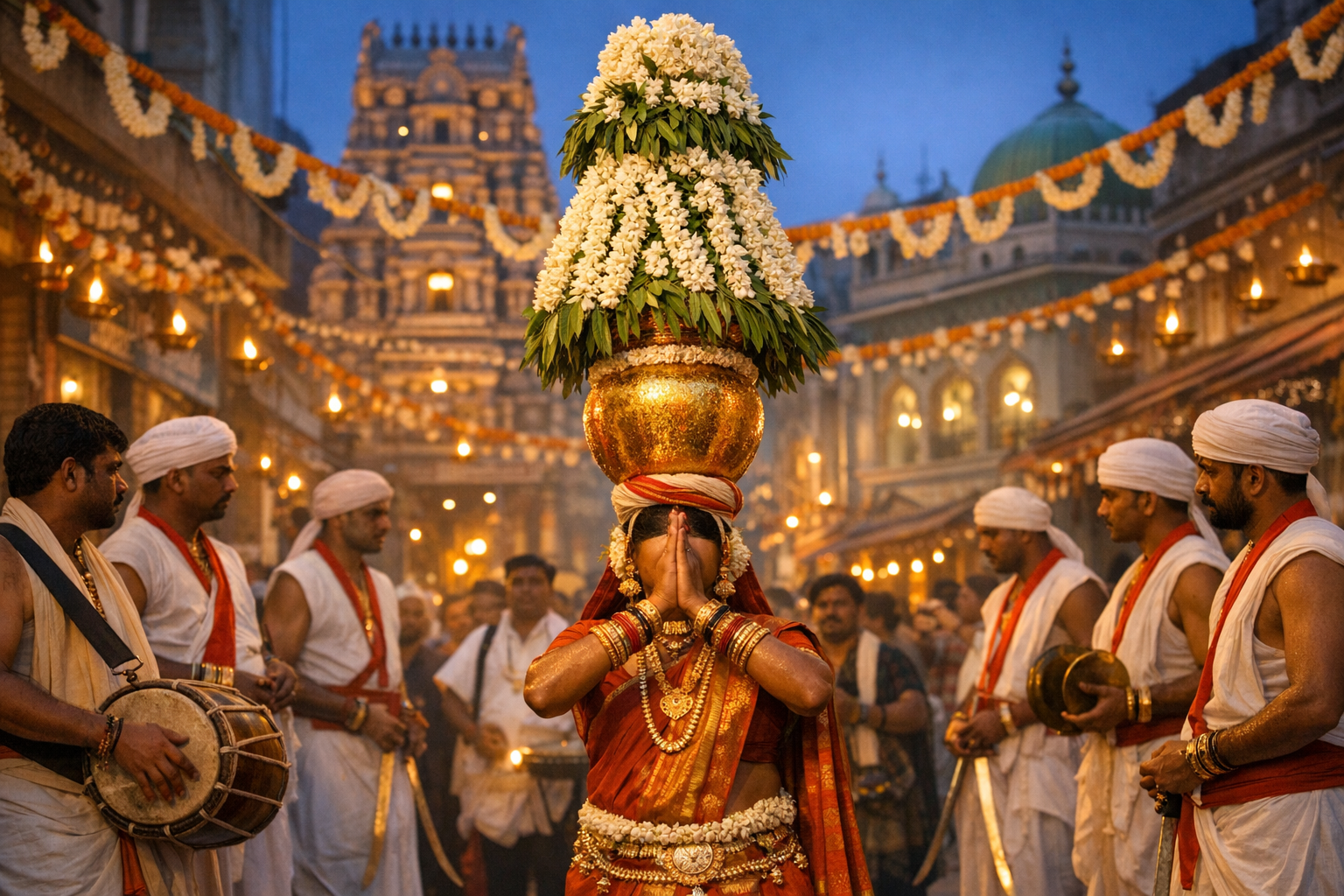
The Karaga festival venerates Draupadi Amman as living Shakti through a sophisticated Shakta ritual centered on a sanctified earthen pot crowned with jasmine and neem. Anchored in Bengaluru’s Sri Dharmaraya Swamy Temple and observed across South India, it integrates vows, purity codes, and processional choreography to transform urban space into a sacred field. The martial…
-
Muthuswami Dikshitar: Timeless Master of Carnatic Music’s Sacred, Scholarly Soundscape

Muthuswami Dikshitar (1775–1835) shaped Carnatic music with compositions that unite devotion, Sanskrit scholarship, and raga–tala architecture. A pillar of the Trinity, his kritis function as sonic maps to South Indian temples, preserving iconography, rituals, and sacred geography. Anchored in the Venkatamakhin asampurna tradition, he crafted raga-lakshana masterpieces and explored talas beyond the ordinary with serene…
-
Hamsa Gita in the Mahabharata: A Timeless Swan-Song of Self-Knowledge and Liberation

The Hamsa Gita in the Mahabharata’s Shanti Parva distills Hindu philosophy into a lucid teaching on witness-consciousness, ethical living, and liberation. It clarifies how ātman stands apart from body and mind, and why steady contemplation and virtue are indispensable for moksha. Read alongside the Bhagavata Purana’s Hamsa avatāra, it reveals a complementary synthesis of jñāna,…
-
Maharashtra Allows Burqa in Class 10–12 Exams: Ensuring Fair, Secure, and Inclusive Access

Maharashtra’s decision to allow Muslim girl students to wear the burqa during Class 10 and 12 board exams balances religious freedom with exam security. Situated against reports from a February 8 CTET sitting where some candidates were asked to remove mangalsutras, the policy highlights the need for uniform, clearly communicated rules. The analysis situates the…
-
Maha Shivratri Puja Vidhi with Mantras: Precise, Devotional, Step-by-Step Home Guide

Maha Shivratri, observed on Krishna Paksha Chaturdashi, centers on Nishita Kaal Puja, mantra japa, and Shivalinga abhisheka. This detailed, home-friendly guide presents a precise, authentic Shivaratri Puja Vidhi with essential mantras and practical adaptations. It explains fasting options, altar preparation, upacharas, abhisheka sequence, Bilva offerings, and night-long vigil structure across four prahars. Clear notes help…
-
396th Birth Anniversary Tribute: Shivaji’s Compassion, Ecology, and Moral Courage for Dharmic Unity
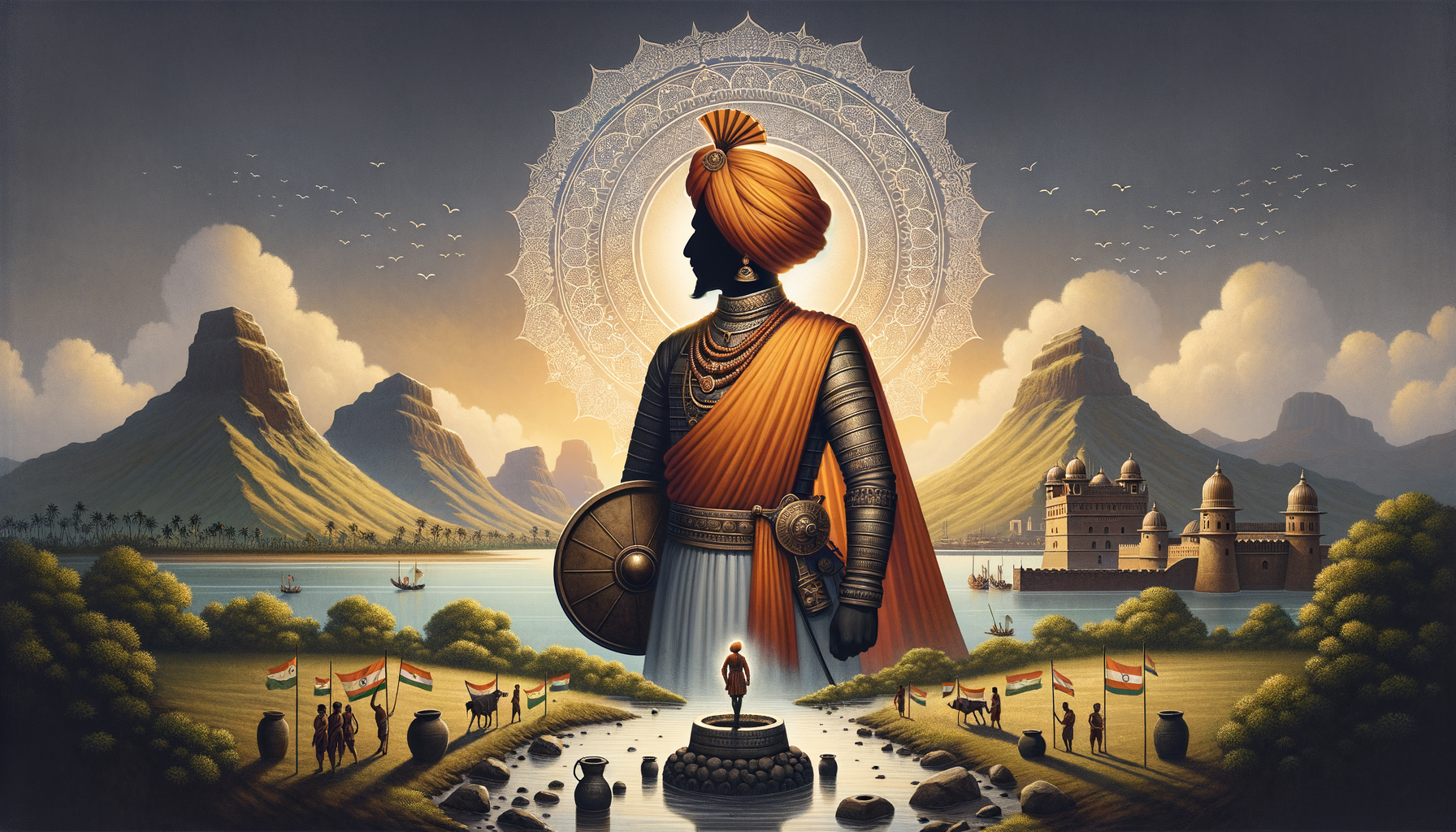
Commemorating the 396th birth anniversary of Chhatrapati Shivaji, this essay examines compassion, ecology, and moral courage as a coherent dharmic framework for governance and social harmony. It shows how ethical restraint toward non-combatants, plural endowments to sacred institutions, and climate-resilient fort design together model a humane and sustainable public ethic. Cross-dharmic resonances in ahimsa, karuṇā,…
-
12 Incarnations of Ganesha: Sacred Avatars of Ganapati in the Mudgala and Ganesha Puranas
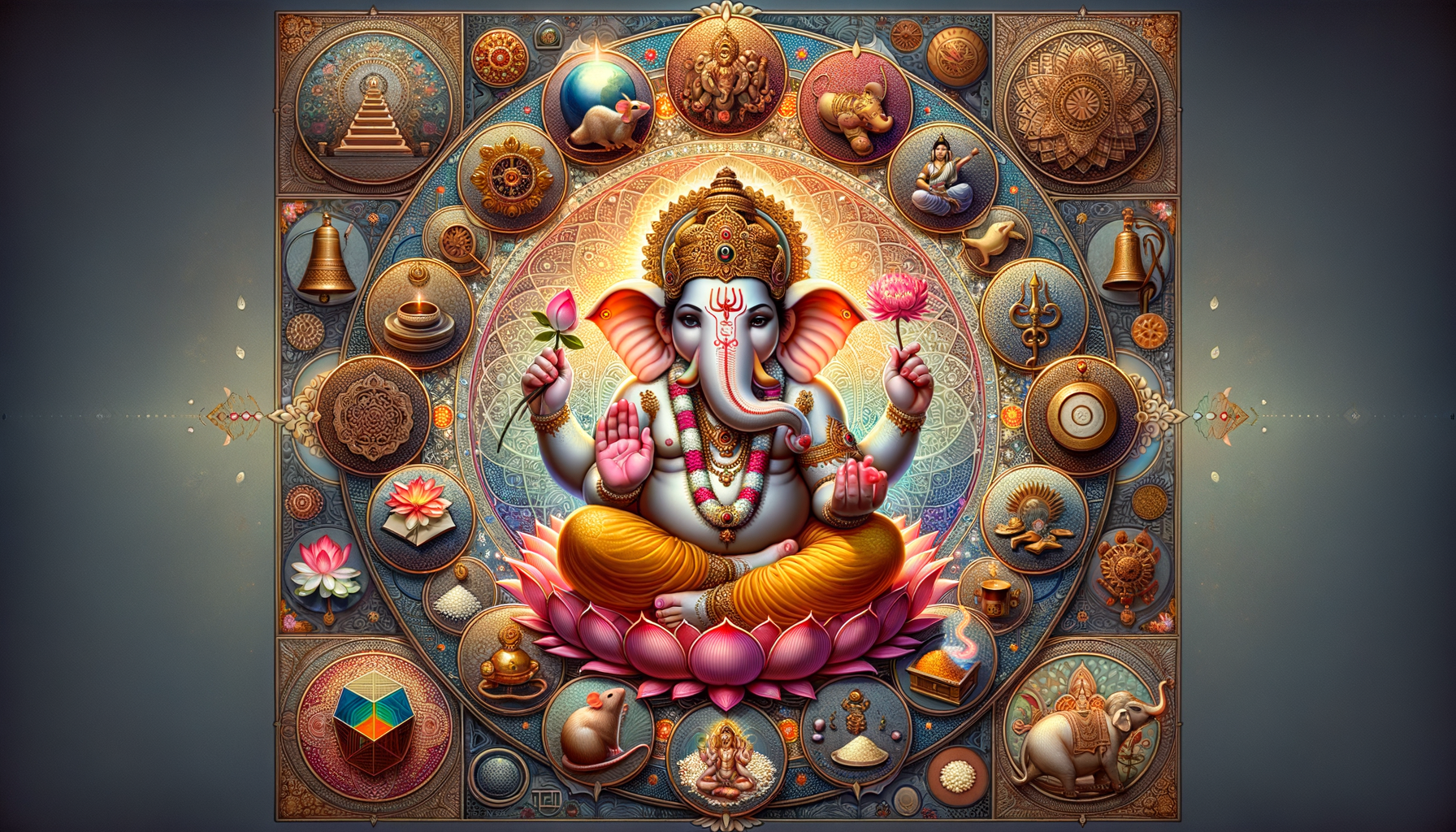
This overview situates the twelve incarnations of Ganesha within the Mudgala Purana and Ganesha Purana, emphasizing accurate, text-grounded understanding. It presents the Mahotkata Vinayaka narrative in the Satya Yuga, where Ganesha vanquishes Devantaka and Narantaka by scattering grains, and explains its ethical symbolism. It notes the fragmentary listing of Mayureshwara in the excerpt without speculating…
-
Nick Jonas Embraces Hindu Values with Priyanka Chopra: Multifaith Parenting and Dharma

Nick Jonas highlights how embracing Hindu values since marrying Priyanka Chopra has shaped a thoughtful, multifaith approach to parenting. He underscores the importance of karma, dharma, and Indian traditions in their home, blending cultural integration with spiritual depth. The family’s practice reflects unity in diversity and illustrates how interfaith households can nurture respect while preserving…
-
Awaken Dharma Shakti for National Renewal: Ramesh Shinde urges an inclusive Ramrajya
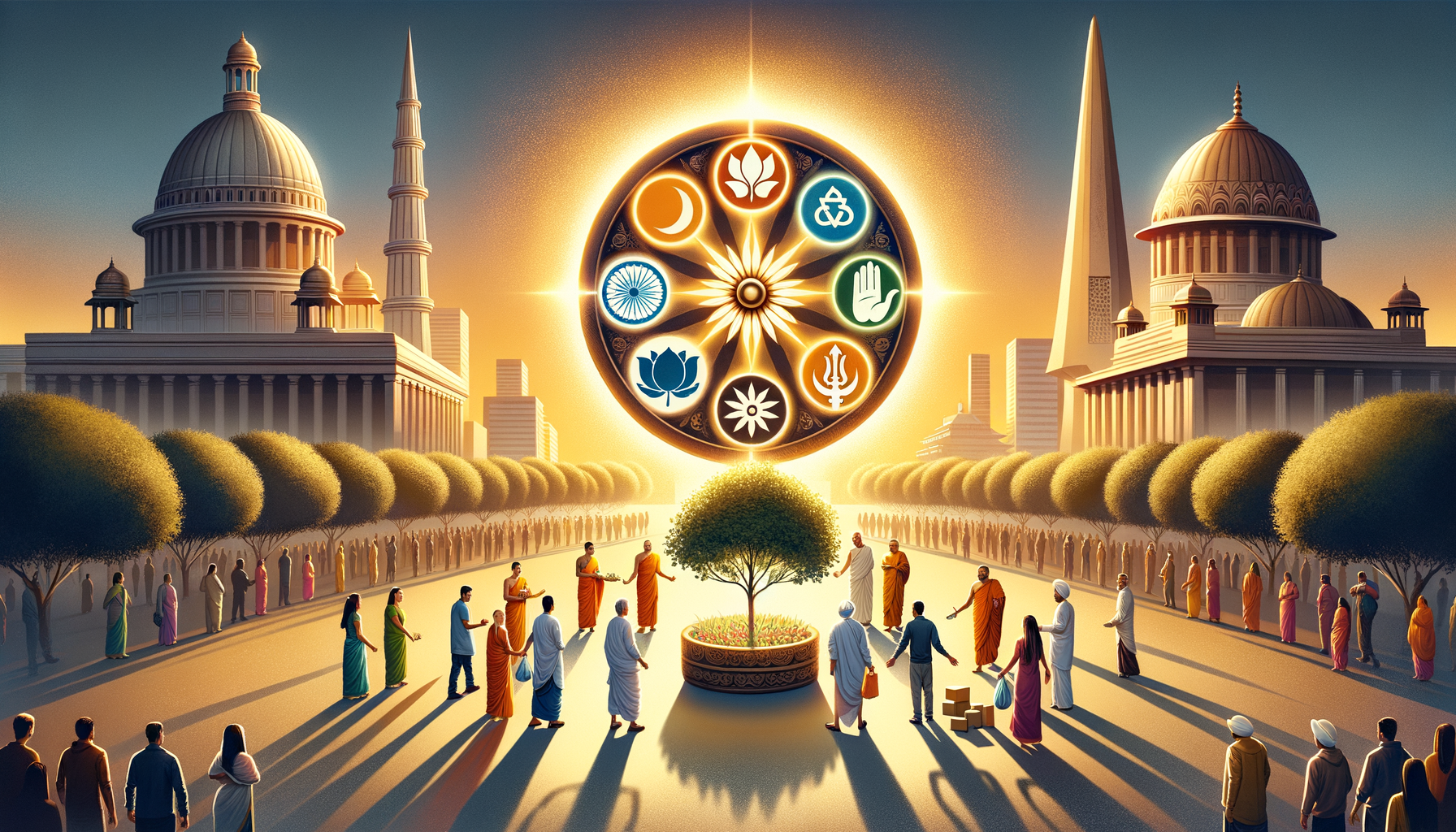
A guidance session in Saharanpur by Ramesh Shinde (HJS) spotlighted the need to awaken Dharma Shakti as a unifying force for national harmony. The address framed ‘Ramrajya’ as ethical, inclusive governance rooted in justice, compassion, and the rule of law. Emphasizing unity in diversity, it highlighted the shared dharmic values of Hinduism, Buddhism, Jainism, and…
-
When Motives Turn Impure: Why Restlessness RisesA Dharmic Insight from Kamsa’s Tale

This essay examines why impure motives generate mental restlessness, drawing on Hindu scriptures and the cautionary tale of Kamsa (Kansa). It explains how fear, greed, and hatred disturb the mind, aligning classical insights with contemporary psychology. The discussion highlights shared dharmic wisdom across Hinduism, Buddhism, Jainism, and Sikhismemphasizing Right Intention, Ahimsa, Aparigraha, seva, and living…
-
Bhagavatha Anugraha Moorthy: Vishnu’s Boundless Grace, Hope, and Protection for Devotees

Bhagavatha Anugraha Moorthy presents Lord Vishnu as the embodiment of unconditional grace responsive to sincere devotion. Classical Puranic narratives of Dhruva, Prahalada, and Narada illustrate how steadfast bhakti invites protection, guidance, and spiritual elevation. The concept emphasizes that divine compassion is inclusive and accessible, not transactional or exclusive. In daily life, practices such as japa,…
-
Unconquerable Love in Epics: Behula and Savitri’s Sacred Quests and Dharmic Resilience

Behula from Manasamangal Kavya and Savitri from the Mahabharata reveal how unwavering love, disciplined practice, and moral intelligence can transform fate into compassion and balance. Readers gain a clear comparative analysis of Bengali folklore and Sanskrit epic traditions, including narrative context, symbolism, and ethical method. The discussion highlights common dharmic valuescompassion, responsibility, and resiliencerecognizable across…