
-
Aadi Velli 2026: Auspicious Fridays in Tamil Nadu – Dates, Rituals, and Shakti Puja Guide

Aadi Velli 2026 spans five Fridays17 July, 24 July, 31 July, 7 August, and 14 Augustwithin the Tamil month of Aadi, a season dedicated to Shakti across Tamil Nadu. Fridays (Velli Kizhamai) align with Shukra (Venus), amplifying the month’s auspicious emphasis on prosperity, protection, and inner strength. Devotees traditionally visit Amman temples and perform home…
-
High Court Review: Peterborough Hindu Temple Sale Tests Equality Duty and Interfaith Trust

A High Court judicial review is scrutinising Peterborough City Council’s decision to sell the Bharat Hindu Samaj temple site to UKIM, raising central questions about due process, equality law, and community cohesion. The claimant argues there were “significant flaws” in officer reasoning, an “unlawful delegation” to officers, and inadequate attention to the Public Sector Equality…
-
Ethical Wealth and Dharma: Keshava Maharaja’s Answers to Money Questions in Amstelveen

In Amstelveen on 1 June 2026, Svayam Bhagavan Keshava Maharaja explored how money becomes meaningful when guided by dharma. The session reframed wealth as a neutral force shaped by intention, aligning artha with ethical action through karma-yoga and stewardship. Unifying principles from Buddhism, Jainism, and SikhismRight Livelihood, Aparigraha, Kirat Karni, Vand Chhakna, and dāsvandhoffered a…
-
A Sacred Farewell to His Grace Prana Das (ACBSP): Vaishnava End-of-Life Rites in Purusottama

An announcement from End of Life Care Alachua, FL recorded the auspicious passing of His Grace Prana Das, ACBSP, on June 4, 2026, during the Holiest month of Purusottama. The setting was suffused with Srila Prabhupada chanting, reflecting Vaishnava emphasis on sacred sound at life’s threshold. This tribute explains the ACBSP designation, the technical logic…
-
Decoding SB 1.2.6: The Power of Ahaitukī Bhakti in Villa Vrindavana’s Global ISKCON Satsang

Streamed from Villa Vrindavana (ISKCON Florence), this deep-dive into Srimad Bhagavatam 1.2.6 explains why selfless (ahaitukī) and uninterrupted (apratihatā) devotion is presented as the supreme dharma for all. The article clarifies each Sanskrit term, situates the verse in its original narrative, and links its insights to practical disciplineshearing, chanting, service, and studyin a digitally connected…
-
Kajari Navami 2026: Sacred Prelude to Kajari PurnimaDate, Rituals, Meaning, and Regional Heritage

Kajari Navami 2026 falls on 22 August, observed on Shukla Paksha Navami in Sawan Maas across Madhya Pradesh, Chhattisgarh, and Uttar Pradesh. The festival inaugurates the nine-day sequence culminating in Kajari Purnima and blends household worship with agrarian gratitude during the monsoon. Core rituals include cleaning and sanctifying the puja room and sowing barley in…
-
Unmatta Bhairava Iconography: Fierce Guardian of Shiva and Ecstatic Freedom
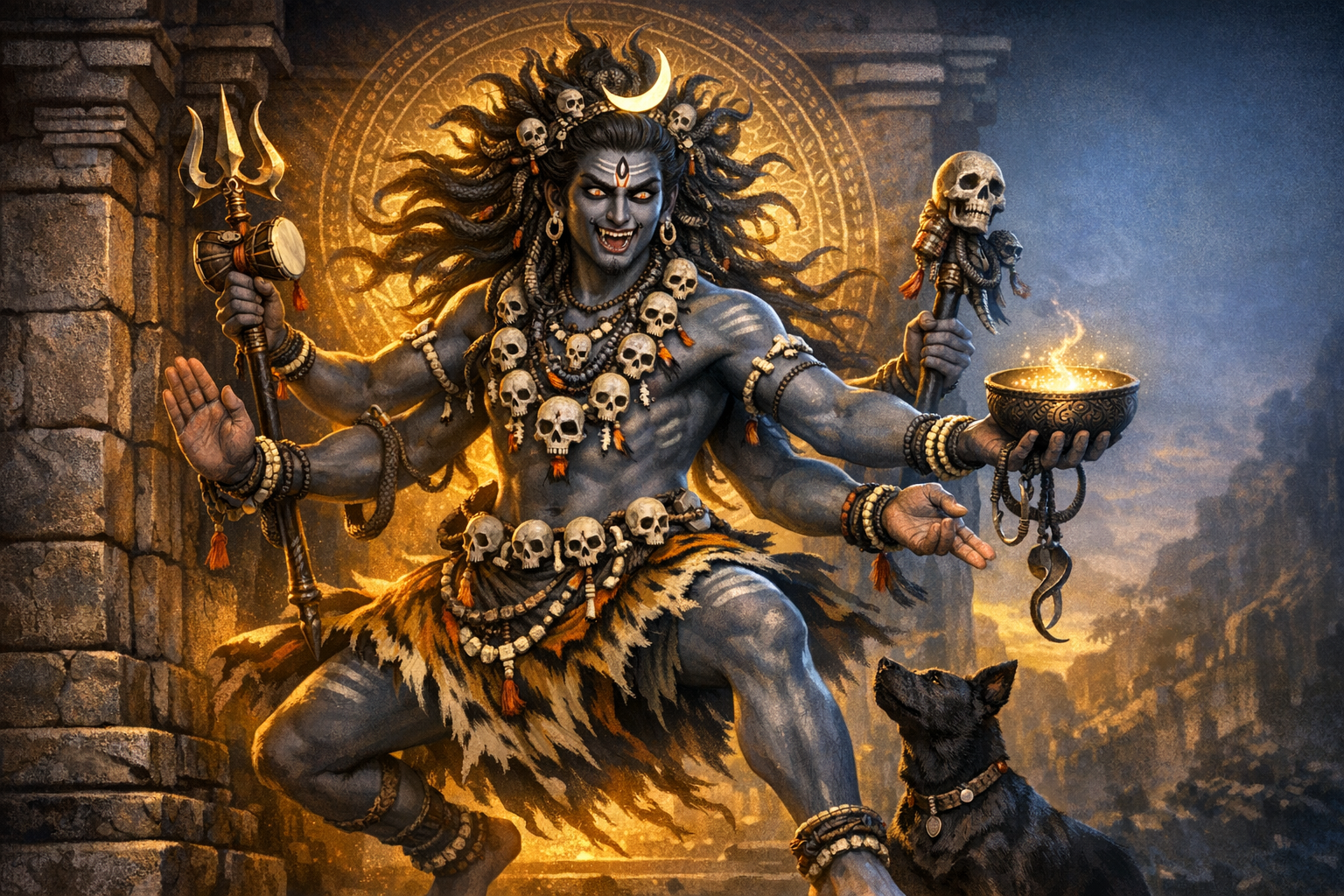
Unmatta Bhairava stands out among the Sixty-Four Bhairavas as an ecstatic guardian whose iconography transforms fear into freedom. This article explains how to identify his murti by face, hair, ornaments, attributes, posture, and dog-vahana, and shows how temple placement and ritual reinforce that identity. Drawing from Purāṇic and Tantric frameworks alongside regional art histories, it…
-
June 11, 2026 Panchang: Krishna Paksha Ekadashi, Shubh Muhurat, Nakshatra & Rashi Guide

Thursday, June 11, 2026, features Krishna Paksha Ekadashi in the Hindu Panchang, ending around 5:53 PM, after which Dwadashi begins. The sequence supports a straightforward next-morning Dwadashi parana, subject to local almanac rules. Practical muhurta planning includes using Abhijit Muhurat near solar noon and avoiding Rahu Kaal, Yamaganda, and Gulika Kaal based on proportional daytime…
-
Narayanpet, Telangana Tragedy: Seeking Justice, Safety, and Communal Harmony After a Teen’s Death

On 2 June 2026, a teenage girl’s death in Narayanpet, Telangana triggered grief, protests, and a swirl of allegations. This analysis separates facts from speculation, explains the applicable legal framework (including Section 306 IPC, POCSO, and cyber-abuse provisions), and outlines best-practice investigative steps that build public trust. It highlights WHO- and Press Council–aligned guidance for…
-
Illuminating Caitanya-caritamrta: HG Bhurijana Dasa’s ISKCON Class on Gaudiya Bhakti
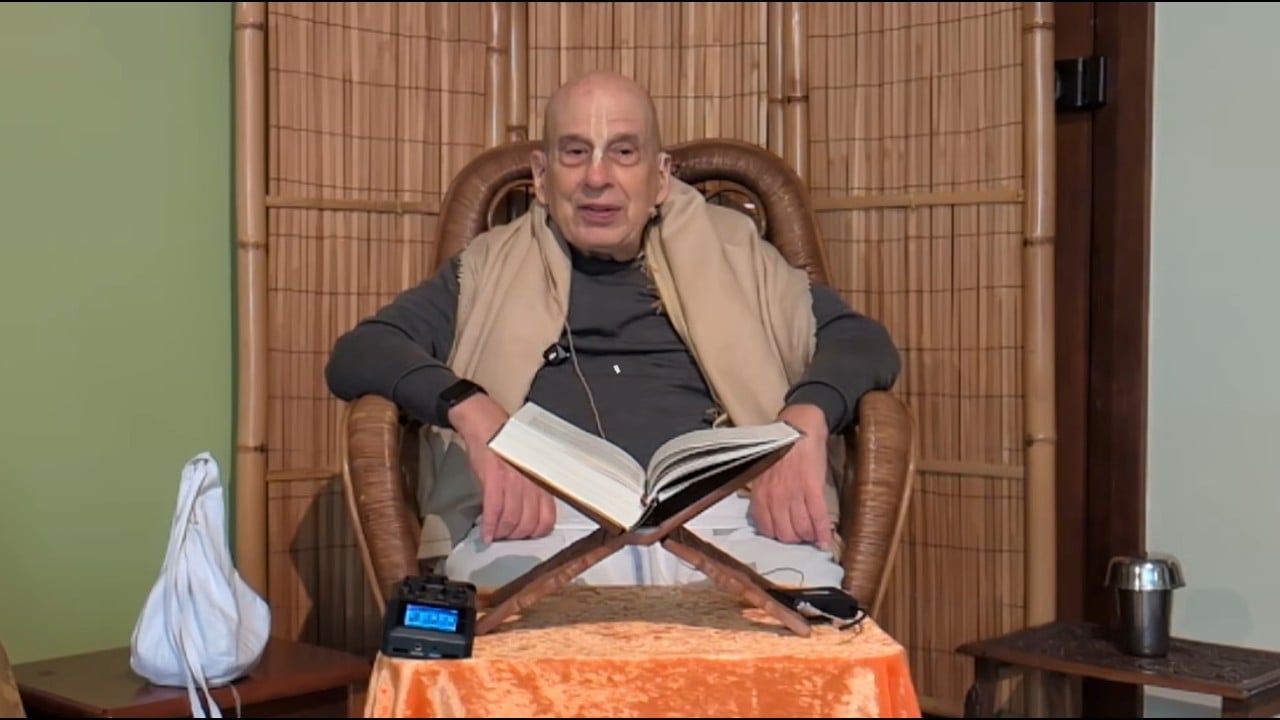
This in-depth exploration of Caitanya-caritamrta, presented by His Grace Bhurijana Dasaa disciple of His Divine Grace A.C Bhaktivedanta Swami Srila Prabhupadaframes the text as both rigorous theology and practical guidance. The class clarifies the tripartite structure of sambandha, abhidheya, and prayojana, and explains acintya-bhedabheda as a balanced, dialogical philosophy. Key episodes (Sarvabhauma’s transformation, Ramananda-samvada, Rupa–Sanatana’s…
-
Srimad Bhagavatam 11.3.47 Unpacked: Transformative Bhakti Sadhana at ISKCON Juhu
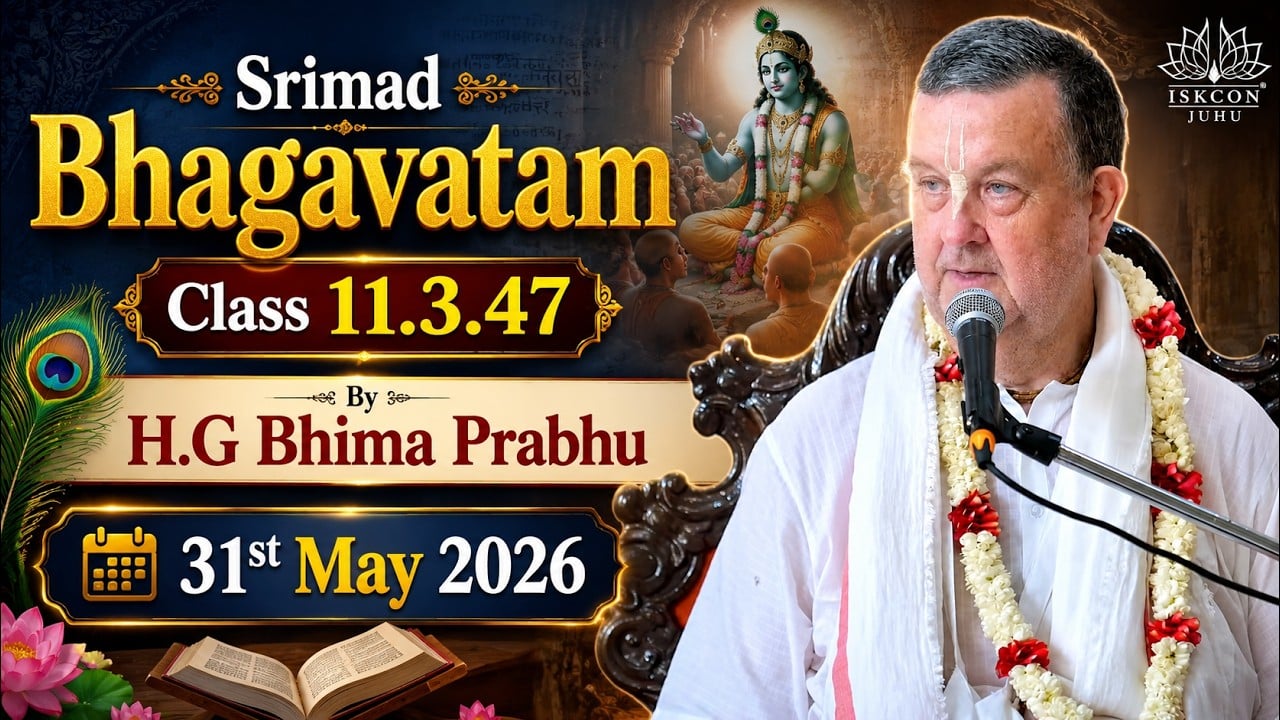
This ISKCON Juhu class by H.G Bhima Prabhu (31st May 2026) unpacks Srimad Bhagavatam 11.3.47 within the broader Nimi–Nava-yogendra dialogue, showing how guru-guided practice, satsaṅga, Deity worship, and nāma-kīrtana cohere into a practical science of devotion. The discussion links 11.3.47 to 11.3.21’s injunction to seek a realized teacher and translates the chapter’s teachings into an…
-
Mahesh Navami 2026: Sacred Date, Auspicious Puja Vidhi, and Maheshwari Heritage Unveiled

Mahesh Navami 2026 falls on June 23, aligning with Jyestha Shukla Navami, and honors Lord Shiva as Mahesh. The festival blends precise tithi-based observance with accessible household and temple rituals, including Abhishekam, Bilva Patra offerings, and mantra-japa. It carries special cultural significance for the Maheshwari community, functioning as a reaffirmation of ethical commerce, philanthropy, and…
-
Overcoming Egoism and Lethargy in Kali-Yuga: Bhagavad Gita Guidance for Humility and Seva

Egoism and lethargy are two subtle forces that derail spiritual progress in Kali-Yuga. Drawing on Bhagavad Gita teachings and parallel insights from Buddhism, Jainism, and Sikhism, this article explains how false ego (ahankara) reframes practice around I and mine, while tamasic inertia fosters delay and neglect. It then offers an integrated, practical program that combines…
-
How One Gita Bridged Burma and New York: A Transformative Journey of Language, Bhakti, and Unity

A real-world case links New York City’s street book distribution to community transformation in Burma (Myanmar) through a single Bhagavad Gita. Burmese doctors, initially drawn by the Dasavatar image that includes Lord Buddha, passed the text to a Hindu colleague aligned with Sankharacharya, and it eventually reached a college student seeking to learn English. Through…
-
Aghori Tradition Demystified: Fearless Aghora, Sacred Practice, Ethics, and Dharmic Unity

Aghora in Sanskrit means “not terrible,” pointing to a serene, compassionate face of Śiva that transforms fear into clarity. The Aghori path draws from Vedic and Śaiva sources and trains practitioners to confront impermanence through disciplined, ethically guided sādhanā, often associated with cremation-ground contemplation. Its symbolsvibhūti, kapāla, and Bhairava iconographyare pedagogies of non-duality, not spectacles…
-
Chosen People or People Who Choose? A Dharmic Analysis of Free Will, Karma, and Grace

This long-form, comparative analysis reframes the classic debate over predestination and free will by drawing on Hindu, Buddhist, Jain, and Sikh philosophies. It explains how dharmic traditions balance karma (conditioning causes), meaningful choice (puruṣārtha), disciplined practice (dharma, śīla, simran, seva), and grace (kṛpā/nādar) where affirmed. Rather than privileging an exclusive elect, these frameworks uphold universal…
-
Defending Punjabi: Safeguarding Punjab’s Civilizational Soul Through Language, Script, and Policy
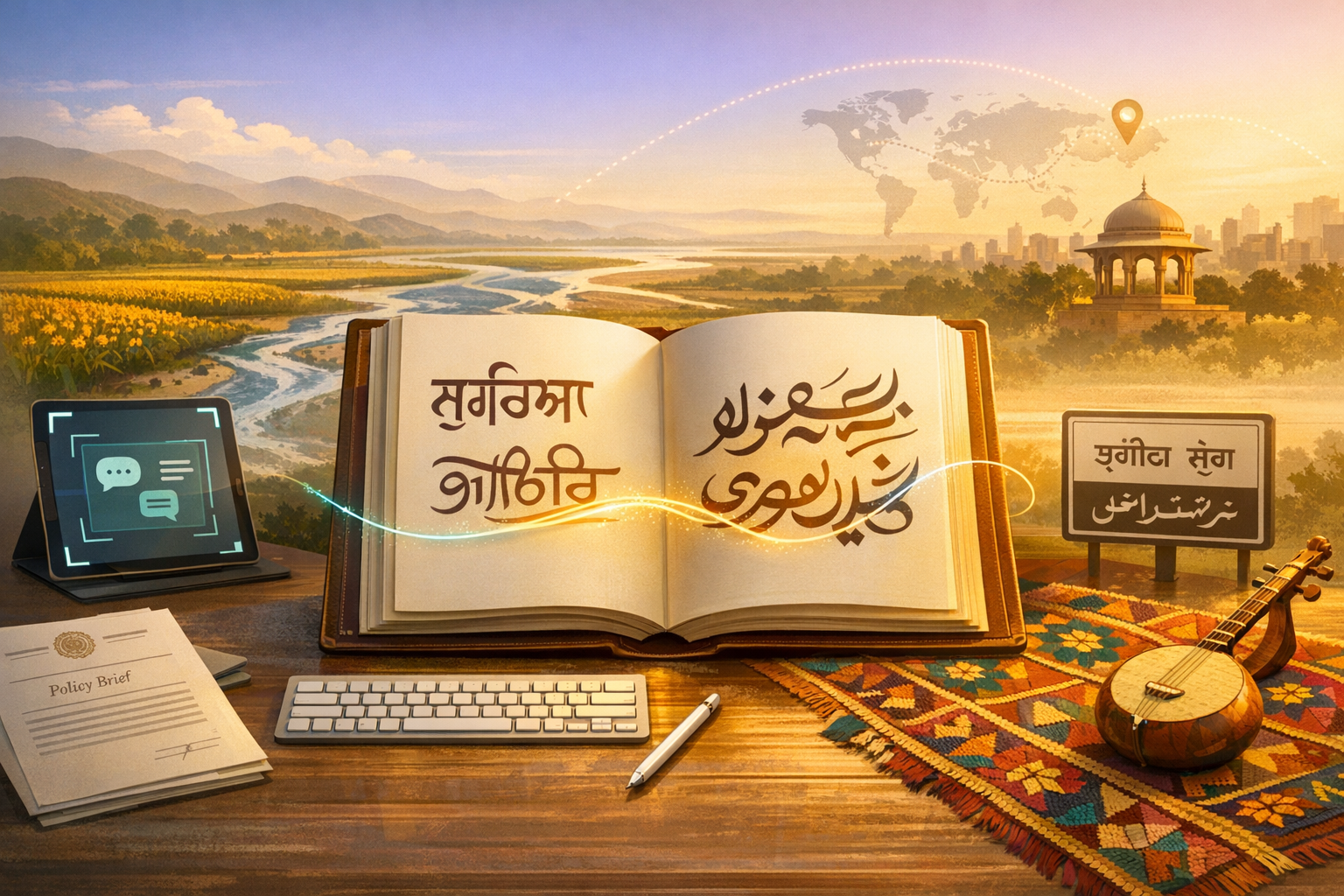
Defending Punjabi is inseparable from safeguarding Punjab’s civilizational identity: a plural, dharmic heritage shared across Hindu, Buddhist, Jain, and Sikh traditions. This long-form analysis outlines historical trajectories, the complementary roles of Gurmukhi and Shahmukhi, and the constitutional scaffolding that enables Punjabi to thrive in schools, administration, and scholarship. It translates research on mother-tongue education into…
-
Unveiling Bhaujya: Aindra Mahabhisheka, Aitareya Brahmana, and the Power of Vedic Statecraft

Bhaujya in the Aitareya Brahmana names both a system of governance and the oath-taking moment of the Aindra Mahabhisheka, where sovereignty is publicly bound to dharma. The celebrated sequence “samrajyam”, “bhaujyam”, “svarajyam”, “vairajya”, and “paramestya” maps layered forms of powerfrom self-rule to apex sovereigntywhile insisting on ethical constraint. Read with Arthasastra and Dharmasastra, bhaujya emerges…
-
Decode Shyam–Shyama: Baul Mysticism’s Bold Union of Krishna and Kali as One

Baul spirituality in Bengal contemplates Krishna (Shyam) and Kali (Shyama) as expressions of one luminous Reality, using their shared dark hue as a theological bridge between bhakti and tantra. This essay explains how Bauls integrate Vaishnava love, Shakta insight, yogic embodiment, and Sufi interiority to honor moner manushthe innermost Beloved. It unpacks the symbolism of…
-
Kishkindha Kanda Unveiled: Hampi’s Sacred Landscape, Dharma Debates, and Hanuman’s Rise
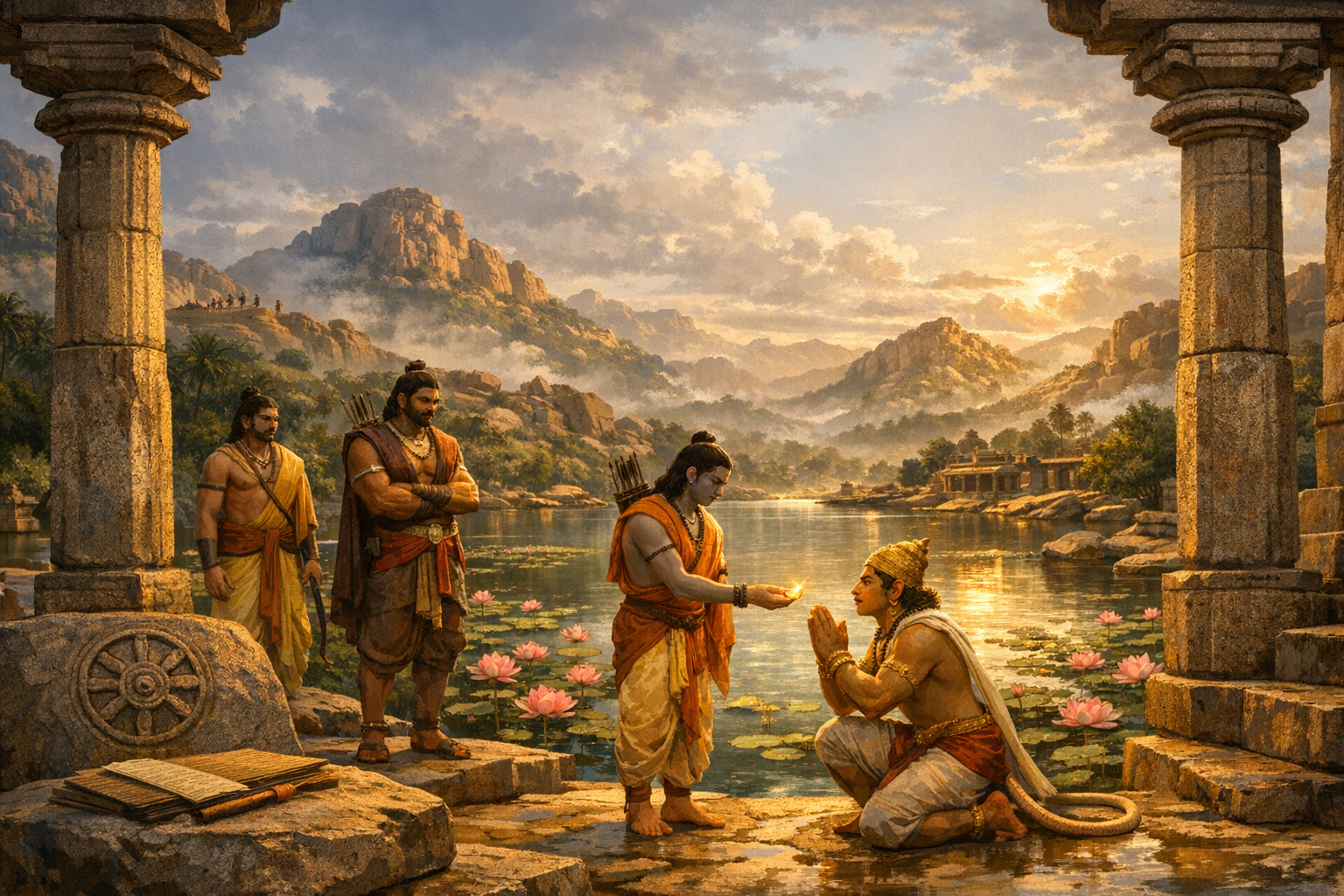
Kishkindha Kanda (Book IV of the Valmiki Ramayana) forges the Rama–vanara alliance, situates the narrative in the sacred Hampi–Anegundi landscape, and prepares the ground for Hanuman’s mission. Readers gain a clear map of key episodesthe pact with Sugriva, Vali-vadha’s dharma debate, Sugriva’s coronation, the monsoon interlude, and the strategic dispatch of search parties. The analysis…