

If you are angry about the death of a teenager in Narayanpet, the most useful discipline is also the hardest: don’t let urgency outrun evidence. You can demand a complete investigation, stand with the bereaved family, and insist on better protection for Hindu girls without circulating an unverified accusation or treating an entire community as guilty.
On 2 June 2026, a Hindu teenage girl in Narayanpet, Telangana, was reported to have died by suicide. Public grief was followed by demonstrations and calls for a bandh from political and social organizations, including the BJP and Vishwa Hindu Parishad. What happens after that first surge of outrage will determine whether the case gains evidence-based accountability or disappears beneath slogans.
Key takeaways: five tests for responsible action
- Label every claim accurately. Separate an established fact, an allegation recorded by authorities, and a social-media assertion that has not been verified.
- Protect evidence before publicizing it. Preserve original devices, messages, account details, footage, and witness information. Do not edit, reset, selectively leak, or endlessly forward them.
- Demand investigative steps, not a predetermined verdict. Ask whether digital evidence, CCTV, witness statements, medical findings, and the chain of custody have been secured.
- Keep protest peaceful and non-coercive. A bandh or demonstration that intimidates shopkeepers, blocks emergency access, or targets uninvolved people weakens the moral case for justice.
- Focus criminal liability on conduct. If evidence establishes coercion, stalking, threats, exploitation, online abuse, or abetment, seek full lawful accountability. Religious identity by itself proves none of those acts.
Separate the verified event from allegation and slogan
The narrow public ground is clear: a Hindu teenager was reported dead by suicide in Narayanpet, the loss caused widespread anguish, and organizations mobilized around it. That ground does not yet establish the complete chain of events, whether a criminal offence occurred, who may be responsible, or whether any one event can be identified as the cause of the death.
Use three labels whenever you discuss the case:
- Established at this stage: information supported by an official record or consistently reported basic fact, such as the place, reported death, and resulting public mobilization.
- Alleged: a claim of harassment, coercion, intimidation, exploitation, or another act that has been formally made but not yet proved.
- Unknown or unverified: identities circulated without an official basis, screenshots without provenance, reconstructed conversations, communal conspiracy claims, and assertions about motive or causation that evidence has not established.
The expression “love jihad” has been applied to the Narayanpet tragedy by some public actors. It is a contested political and social label, not an evidentiary finding or a criminal ingredient. Official inquiries in different jurisdictions over the preceding decade found little evidence of a coordinated conspiracy, even while individual acts of coercion, stalking, fraud, harassment, or violence remained capable of prosecution under ordinary law.
That distinction should not be used to dismiss a family’s concerns. It tells investigators what they must do: identify specific conduct, connect that conduct to admissible evidence, and test every allegation without fear or communal favour. A suspicion may justify asking a question. It cannot substitute for the answer.
Free and informed relationships between adults are legally and ethically different from coercion, deception, stalking, threats, or exploitation. If the teenager was under 18, the Protection of Children from Sexual Offences Act may apply to relevant conduct. Collapsing consent, criminal coercion, and the special legal protection of a person under 18 into one slogan creates confusion precisely where exact facts matter most.
For a dharmic readership, refusing rumour is not retreat. Satya is a condition of justice. If a serious offence is proved, an evidence-led case is more likely to survive scrutiny and deliver accountability than a narrative assembled first and investigated later.
Build justice on evidence that can withstand a court
A death reported as suicide ordinarily requires an inquest, post-mortem examination, and an assessment of whether any cognizable offence may have contributed. Where harassment, coercion, exploitation, or online abuse is alleged, investigators need more than forwarded screenshots or public testimony. They need original material, lawful acquisition, forensic examination, corroboration, and a documented chain of custody.
The family or its authorized lawyer can ask the investigating authority, preferably in writing, whether the following steps have been taken. Exact legal remedies and access to case material should be checked with qualified local counsel.
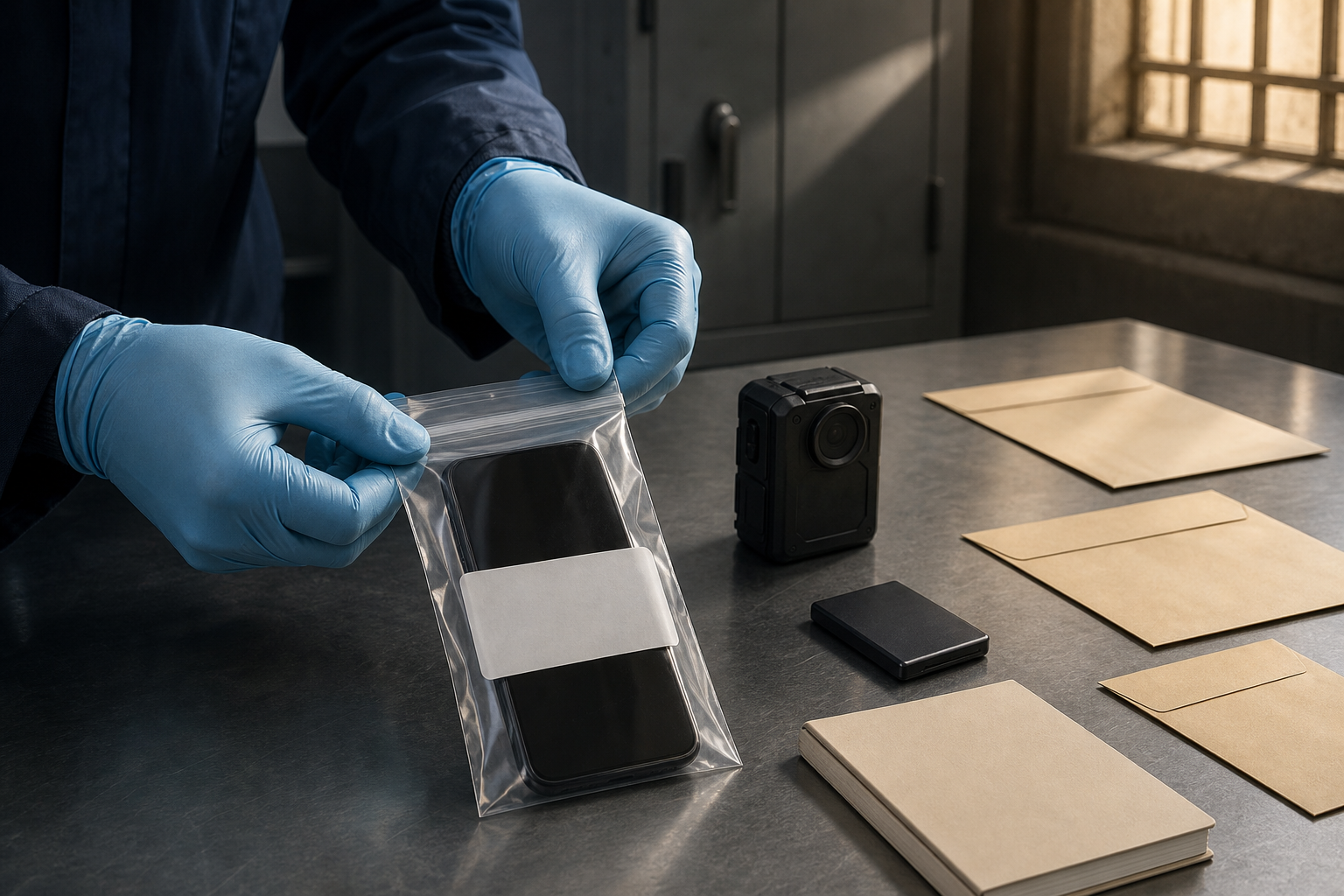
- Secure and forensically image relevant devices. Phones, computers, storage media, and account information should be preserved in their original state. Supporters should not unlock, reset, edit, rename, or delete material in an attempt to help.
- Preserve platform and telecom records through lawful channels. Call-detail records, account logs, and location information can help construct a timeline, but private citizens should not try to obtain restricted data themselves.
- Identify CCTV sources promptly. Investigators should check homes, shops, roads, transport points, campuses, and other relevant locations. Because footage may not be retained indefinitely, potentially relevant locations should be reported without delay.
- Record witnesses separately and accurately. Give investigators names, contact details, dates, and what each person directly observed. Do not rehearse a common account. A magistrate-recorded statement may be appropriate for important witnesses.
- Complete the medical record. A detailed post-mortem and toxicology, where relevant, can resolve or exclude material questions. Medical findings should be interpreted by qualified professionals, not by social-media users examining fragments.
- Maintain the chain of custody. Each physical or digital exhibit should be identified, sealed or preserved appropriately, transferred through recorded hands, and connected to the case. Evidence without provenance is easier to dispute.
A credible inquiry should bring together device forensics, call and location records obtained lawfully, CCTV, witness statements, medical findings, and sealed physical exhibits. No single screenshot should carry a conclusion that the wider evidentiary record does not support.
Potential legal questions may include abetment of suicide, stalking, criminal intimidation, harassment, sexual offences against a person under 18, online abuse, or non-consensual circulation of intimate material. The relevant offence depends on age, conduct, dates, evidence, and the provisions actually recorded in the case papers. A viral list of section numbers is not proof that those offences were registered or committed. The FIR and subsequent official records, reviewed by counsel, are the proper starting point.
You can also judge the investigation by its process without demanding the public release of sensitive evidence. Useful questions include: Is there a named family liaison? Were submitted materials acknowledged? Have relevant witnesses been approached? Was footage preservation initiated? Are procedural updates being issued without revealing the teenager’s identity, medical information, or private communications?
Make public pressure precise, peaceful, and measurable
Public protest can prevent a case from being neglected. It works best when organizers convert anger into a written set of lawful demands. A memorandum should ask for actions that authorities can confirm, not require investigators to announce guilt before the evidence has been tested.
A focused set of demands could include:
- prompt preservation and forensic handling of all relevant digital, physical, CCTV, telecom, and medical evidence;
- recording of material witness statements, including before a magistrate where investigators consider it appropriate;
- a designated official who communicates with the family or its authorized counsel;
- periodic procedural updates that protect the teenager’s dignity and do not compromise the investigation;
- protection against intimidation for the family and material witnesses;
- a review of reporting, counseling, cyber-safety, and harassment-response systems in relevant educational institutions; and
- a verified district communication channel that can correct false claims before they spread.
These demands are compatible with a rigorous investigation whether the eventual evidence confirms the loudest allegation, establishes a different offence, reveals several contributing factors, or fails to support a criminal charge. That is why process-based demands remain useful after a slogan stops trending.
Bandhs and demonstrations must remain peaceful and non-coercive. If a shopkeeper chooses to remain open, do not threaten the owner. Do not obstruct an ambulance, school route, or essential service. Do not identify or surround a person who has not been lawfully charged. Do not use communal slogans against neighbours who had no connection to the case.
This is not a call for passivity. Ahimsa requires control over the means used, not indifference to wrongdoing. A disciplined protest can keep attention on evidence, family rights, institutional responsibility, and youth safety. Coercive shutdowns shift the cost onto daily-wage workers, students, patients, and small businesses while giving authorities a public-order crisis that can eclipse the original demand.
Community leaders should also maintain direct liaison with police, legal-aid representatives, women-and-child protection services, educators, and trusted neighbourhood representatives. A small channel that can verify a claim quickly is more valuable than a large messaging group that rewards speed and outrage.
Protect the teenager’s dignity and prevent the next crisis
A teenager’s death is not public property. Her photograph, private conversations, medical information, personal relationships, and family grief should not be turned into content. Material that might be evidence belongs with investigators, not in edited videos or mass-forwarded message chains.
Before you share a claim, run five checks:
- Does it cite an FIR number, court record, or identifiable official statement?
- Do the date and location match the Narayanpet case?
- Can the image or video be checked through a reverse-image search for an older or unrelated appearance?
- Does sharing it expose the teenager, her relatives, a witness, or an uncharged person?
- Does it reduce a suicide to one asserted cause before investigators have established the causal chain?
If any answer raises doubt, pause. Send a possible lead privately to the investigating authority or the family’s authorized representative instead of broadcasting it. Never forward intimate material as supposed proof of concern. Every additional copy increases the loss of privacy and may complicate evidentiary handling.
Responsible communication about suicide avoids sensational headlines, details of method, blame, and simplistic claims of a single cause. This restraint matters even more when a teenager may be under 18. It protects the family, reduces harm to vulnerable readers, and prevents speculation from hardening into a false public record.
Prevention must continue after public attention moves elsewhere. Schools and colleges should make their safety systems visible and test whether students can actually use them. A policy hidden in an office file is not a reporting channel.
- Provide at least one confidential route for reporting stalking, threats, blackmail, doxxing, image-based abuse, or persistent unwanted contact.
- Name the people responsible for receiving a complaint, responding promptly, and escalating a serious safety concern.
- Connect students with qualified counselors and district mental-health services instead of relying only on disciplinary staff.
- Run practical cyber-safety sessions on account privacy, consent before sharing images, preservation of abusive messages, blocking tools, and when to involve a responsible adult or police.
- Review grievance cells and Internal Complaints Committees, where applicable, for accessibility, confidentiality, and avoidance of secondary victimization.
- Maintain referral contacts for legal aid, child-protection services, women-and-children support facilities, and emergency mental-health care.
Families can lower the barrier to disclosure by checking in without beginning with accusation or punishment. Talk explicitly about digital privacy, consent, threats, manipulation, and whom the teenager can contact if speaking to a parent feels difficult. When serious distress or suicidal thoughts appear, do not wait for the problem to resolve privately; seek urgent help from qualified mental-health or emergency services. Prayer, mentorship, and community support may accompany professional care, but they cannot replace it.
The shared dharmic vocabulary gives us a demanding standard. Satya means refusing to promote what we cannot verify. Ahimsa rules out threats and collective punishment. Karuna protects the bereaved family and every vulnerable young person affected by the case. Seva means staying long enough to improve reporting channels, counseling access, digital safety, and legal support after the march has ended.
A pro-Hindu response should be unafraid of evidence. If coercion, stalking, exploitation, intimidation, online abuse, or abetment is proved, the offender should face the full force of law regardless of identity. If a claim is not proved, repeating it does not become dharma merely because it was spoken in grief.
If you want to help now, choose one concrete role: preserve a genuine lead, submit a precise written demand, stop an unverified rumour, support the family’s access to counsel and counseling, or help a local institution open a confidential safety channel. Justice for Narayanpet will be built through what can be proved, protected, and changed.



References
