
-
Beyond Maya: Dharmic Wisdom on Materialism, Ethical Wealth, and Lasting Fulfilment

Hindu philosophy and its sister Dharmic traditions view wealth as a legitimate aim governed by ethics, moderation, and service. The puruṣārthas align Artha with Dharma and Moksha, while the Bhagavad Gita’s Karma Yoga reframes success as disciplined action without fixation on results. Upanishadic counsel, Yoga’s aparigraha, Buddhism’s Right Livelihood, Jain vows of limitation, and Sikh…
-
May 10, 2026 Panchang: Definitive Guide to Tithi Shift, Shubh Muhurat, Nakshatra & Rashi

On Sunday, May 10, 2026, Krishna Paksha Ashtami lasts until 10:06 AM and is followed by Krishna Paksha Navami. This academic guide explains how to align daily practice with the tithi shift, including Kala Ashtami observances in the morning and steady routines under Navami thereafter. It outlines how to choose a Shubh Muhurat using Abhijit…
-
Shukla Devi Puja 2026 on Jyeshta Shukla Ashtami: Sacred Timings, Kheer Bhavani, Complete Vidhi
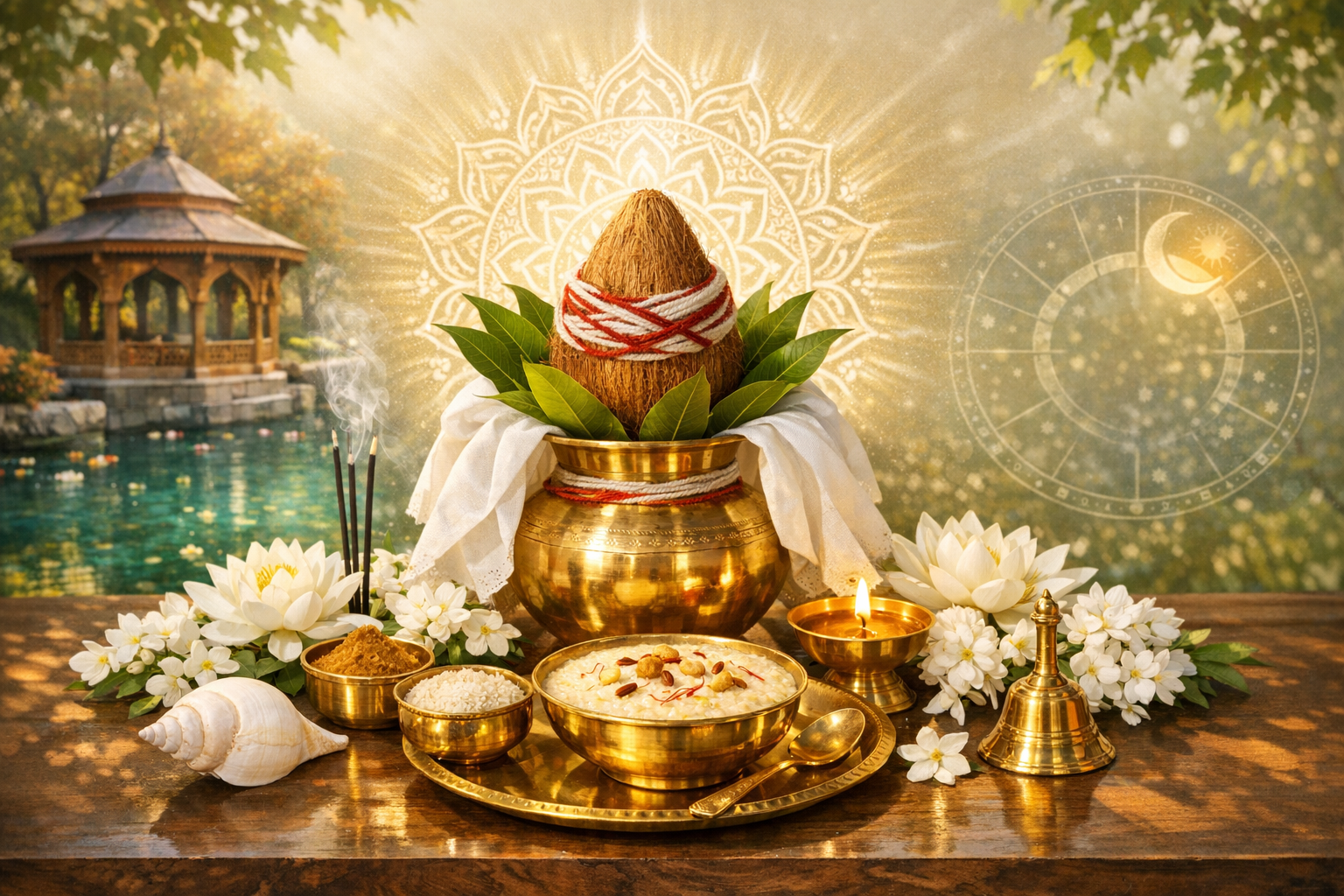
Shukla Devi Puja (Shukla Devi Aradhana) in 2026 falls on 22 June, coinciding with Jyeshta Shukla Ashtami in the Hindu calendar. The day venerates the luminous, sattvika dimension of the Divine Mother and aligns with the Khir Bhavani Mela in Kashmir, where devotees traditionally offer kheer. The article explains how Ashtami tithi is computed, why…
-
Goa Bail Row: Gautam Khattar, St. Francis Xavier Remarks, Protests, and Law vs. Free Speech

On 2 May 2026 in Panaji, Goa, YouTuber Gautam Khattar was granted bail after detention over allegedly derogatory remarks about St. Francis Xavier, triggering Hindu protests and counter-reactions. This analysis explains why St. Francis Xavier holds deep significance in Goa’s cultural fabric and why online remarks can quickly affect offline harmony. It outlines India’s constitutional…
-
Devantaka’s Fall in the Ramayana: Hanuman’s Decisive Blow Against Ravana’s Mighty Son

Devantaka’s fall in the Yuddha Kanda of the Ramayana captures a decisive moral and strategic lesson: disciplined strength, anchored in dharma, defeats ferocity untethered to ethics. Classical sources consistently pair Devantaka with Narantaka, Trisira, and Mahodara as Lanka’s shock corps, yet it is Hanuman’s single, precisely timed strike that ends Devantaka’s assault. The episode’s symbolism…
-
How Merit Died at Mysore University: Anatomy of Decline and a Dharmic Blueprint to Rebuild

The University of Mysore’s trajectory—from a ‘Kashi of Knowledge’ to an institution beset by politicization—reveals how academic cultures unravel when identity and expedience eclipse merit. Drawing on testimonies preserved in Bhyrappa’s Bhitti, H.M. Nayak’s Mysore Diary, and accounts linked to B.G.L. Swamy, this analysis traces the sidelining of master teachers, the embittering of scholars like…
-
Bhairava Unveiled: Symbolism, Meaning, Kala-Time Mastery, and Fearless Liberation

Bhairava Roopaya—named first in the Bhairava Sahasranama—presents Bhairava as the omnipresent intelligence of Shiva that creates, sustains, dissolves, conceals, and liberates. This long-form exploration decodes the name’s etymology (bhaya + rava and Bha–Ra–Va), connects it to the Shaiva pañcakṛtya, and situates it within Kashmir Shaivism’s non-dual vision and Vijnana Bhairava Tantra’s contemplative methods. Readers gain…
-
Radha-Krishna Idols Near Toilets in Delhi: Respectful Removal, Law, and Harmony

Idols of Radha-Krishna were found near a toilet at Indian Cottage Industry in Mehrauli, Delhi, prompting a swift, respectful removal by Youths Stand For Society (YSS) and a commitment to prevent recurrence. The episode highlights why sacred imagery across Hinduism, Buddhism, Jainism, and Sikhism should never be placed adjacent to sanitation areas and how such…
-
Success Sadhana: Shatter Illusions, Master Attention, and Live Aligned with Higher Purpose

This Success Sadhana reflection presents a precise, practice-centered way to move beyond illusion and distraction toward a life aligned with higher purpose. It explains how bhakti practices—sravanam, kirtanam, and smaranam—converge with mindfulness, simran, and samayik across Hinduism, Buddhism, Jainism, and Sikhism. Readers gain a clear daily cadence for breath-centered attention training, scripture study, and reflective…
-
Do Our Words Convey Our Heart? HG Caitanya Charan Das on Dharmic Speech at ISKCON Adelaide

At ISKCON Adelaide on 01.05.26, HG Caitanya Charan Das explored how speech reflects inner consciousness and why language, refined through sādhana, is central to bhakti and community harmony. Grounded in Bhagavad Gita 17.15, the essay outlines a composite ethic for speech—truthful, kind, beneficial, and non-agitating—that resonates across Hinduism, Buddhism, Jainism, and Sikhism. It translates classical…
-
Inside Los Angeles’ Srila Prabhupada Festival: Kirtan, Bhakti, and Community in Action

The 35th Annual Srila Prabhupada Festival in Los Angeles showcases a living tradition of kirtan, devotion, community, and remembrance centered on the legacy of His Divine Grace A.C. Bhaktivedanta Swami Prabhupada. Set within ISKCON’s New Dvaraka community, the event integrates philosophy, ritual, aesthetics, and hospitality into an accessible pedagogy of bhakti-yoga. Kirtan’s call-and-response structure, rhythmic…
-
Sindh’s Hindu textbooks in Pakistan: a pivotal test for minority rights and pluralism

Sindh, Pakistan, is reportedly moving to introduce dedicated Hindu religious textbooks for Hindu students, sparking debate on minority rights and education reform. Grounded in Articles 20 and 22 of Pakistan’s Constitution, the initiative can align classrooms with protections for freedom of belief if executed with parity and quality. A rigorous blueprint calls for representative governance,…
-
Manidweepa Unveiled: Inside the Jeweled Island of the Mother Goddess and Cosmic Consciousness

Manidweepa (Mañidvīpa) is portrayed in the Devi Bhagavatam Purana as the jeweled island of the Mother Goddess, a sacred geography beyond the fourteen worlds and the Ocean of Nectar. This analysis explains how Śrī Nagara, the Chintāmaṇi gṛha, and the Pañcabrāhmāsana encode Hindu cosmology and Śrīvidyā practice. It maps Manidweepa to the nine āvaraṇas of…
-
Rohita in the Atharva Veda: The Crimson Sun-Fire as Supreme Principle of Creation and Order

Rohita in the Atharva Veda is presented as a crimson, world-sustaining principle that unites fire (Agni), the sun (Sūrya), and cosmic order (Ṛta). The Book 13 hymns of the Śaunaka recension elevate Rohita beyond any single deity by identifying this power with Prajāpati, Skambha, and Prāṇa, offering a unifying metaphysical vision. Color symbolism (rohita/lohita) reveals…
-
Tapasya in Hinduism: Transformative Austerity for Self-Realization, Clarity, and Inner Power

Tapasya in Hinduism is a disciplined, life-affirming austerity that refines body, speech, and mind to foster Self-Realization and ethical clarity. Drawing on the Upanishads, Bhagavad Gita, and Yoga philosophy, it is defined as a transformative heat that burns impurities and ripens insight. The Gita’s typology (sāttvika, rājasika, tāmasika) and Patañjali’s Kriyā Yoga supply practical guardrails…
-
Shiva’s Vibhuti Unveiled: Sacred Ash, the Fire of Transformation, and the Path to Liberation

Vibhuti, or consecrated sacred ash, condenses Shaiva philosophy into a simple, daily practice that is both contemplative and transformative. In Hindu thought, fire is a purifier rather than a destroyer, and ash is the final, stable state that reveals what endures after illusion burns away. The tripuṇḍra’s three lines encapsulate key Shaiva triads—impurities, guṇas, and…
-
Know the Infinite Within: A Dharmic Guide to Self-Realization and Mindful Speech

This essay unpacks the teaching Know the Infinite within and give up all vain words as a unified, practical discipline shared across Hinduism, Buddhism, Jainism, and Sikhism. It grounds Self-Realization in the Upanishadic identity of Ātman and Brahman while noting convergences with Buddhist insight, Jain anekāntavāda, and Sikh remembrance of Ik Oṅkār. It translates metaphysics…
-
May 9, 2026 Panchang: Saptami to Ashtami Timing, Shubh Muhurat Cues and Ritual Guidance
On Saturday, May 9, 2026, the Panchang shows Krishna Paksha Saptami prevailing until 9:28 AM, when it transitions to Krishna Paksha Ashtami in most regions. The timing reflects the exact astronomical shift in Moon–Sun elongation from 84°, moving the day from Saptami to Ashtami. The guidance explains how to apply udaya-tithi rules for civil observance…
-
VHP’s Milind Parande Backs BJP in Bengal: Security, Demography and a Dharmic Unity Plan for 2026
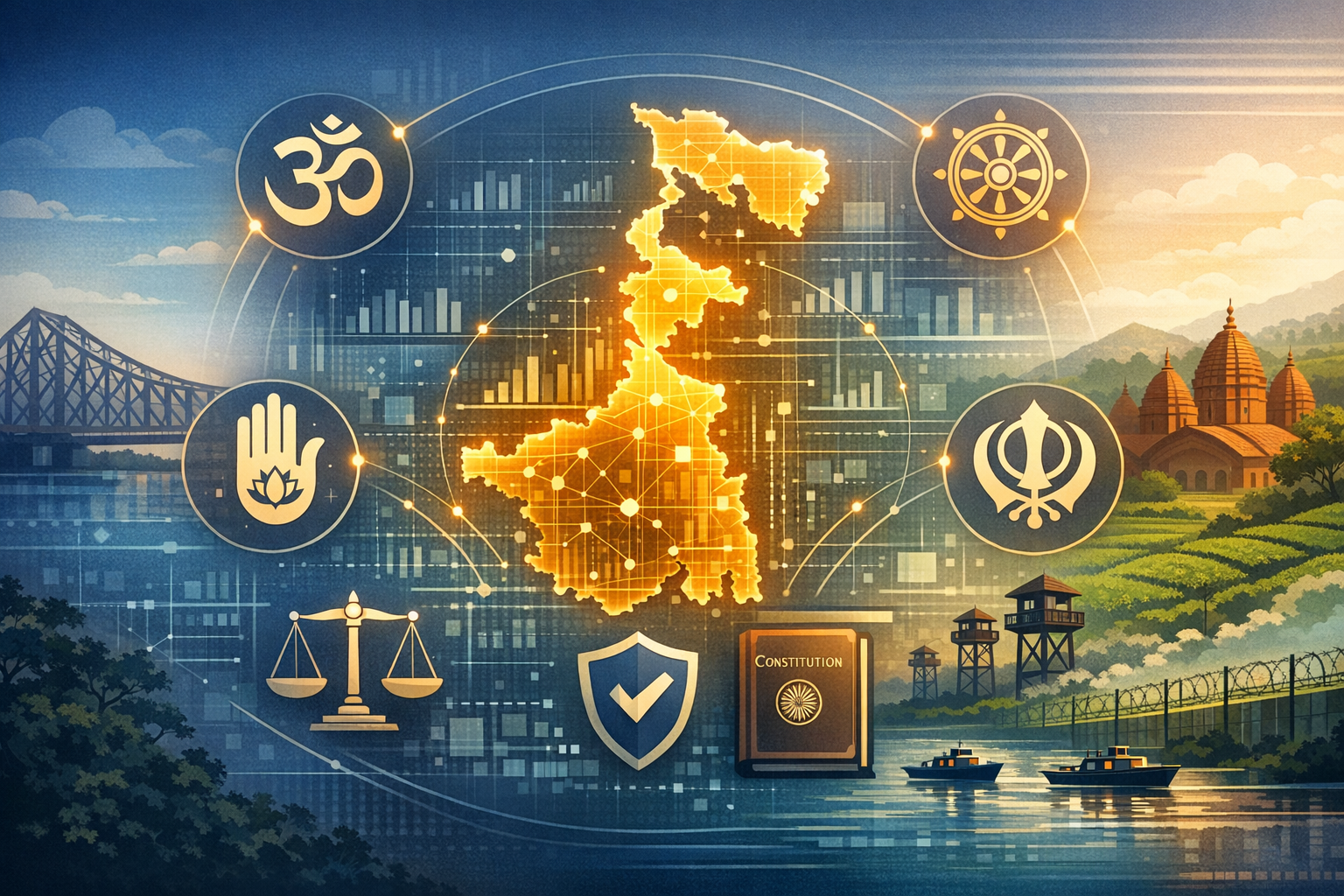
At a 1 May 2026 press interaction in Shimla, VHP’s Milind Parande said a future BJP government in West Bengal would work in Hindus’ interest, foregrounding security and demographic concerns ahead of WB Assembly Election 2026. This analysis interprets those claims through India’s constitutional guarantees (Articles 14–15, 25–30), outlining how community safety and religious freedom…
-
Beyond 330 Million Gods: How Hinduism Unites Many Deities into One Supreme Reality

The familiar claim that Hinduism has 33 crores (330 million) gods is a popular misreading; classical sources enumerate thirty-three devas—eight Vasus, eleven Rudras, twelve Adityas, plus Indra and Prajapati. By clarifying the Sanskrit term koṭi (class/category vs. crore), the article shows how Vedic and Upanishadic texts integrate divine plurality within a single metaphysical reality. It…