
-
Seeking the Supreme: An Academic Exploration of Hindu Pluralism, Ishta, and One Reality
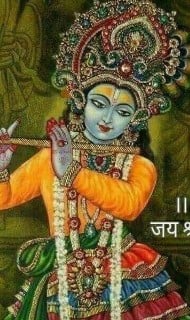
Many seekers raised in temple-centered Hindu life wrestle with two enduring questions: Why so many gods, and who is the Supreme? Hindu philosophy answers with a precise synthesis: the One Reality (Brahman) is accessible both without attributes (nirguna) and with attributes (saguna), and Ishta-devata personalizes that access without denying unity. Rig Veda’s “Ekam sat vipra…
-
Liberating the Householder’s Heart: Aparigraha via Dana, Seva, and Guru-centered Living
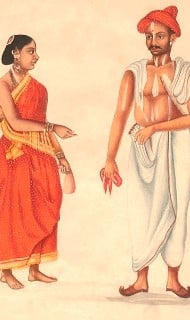
This essay examines possessiveness in the grihastha ashrama and presents aparigraha, practiced through dāna and seva, as the shastric antidote. It outlines a give-first discipline—prioritizing Guru, Ishta, and dharmic service before personal consumption—that steadily dissolves attachment. The discussion contextualizes the aspirational fifty-percent ideal found in certain Vaishnava teachings while advocating progressive, capacity-based steps. Cross-dharmic parallels…
-
From Sensory Illusion to Self‑Realization: A Dharmic Guide to Serving the Supreme

This essay unpacks the Dharmic insight “I am not these senses” and shows how a life changes when the stance shifts from unconsciously receiving to consciously serving the Ultimate Reality. Drawing on the Upanishads, Bhagavad Gita, Yoga Sutra, Buddhist mindfulness, Jain ethics, and Sikh seva, it explains how sense-identification loosens through ethical restraint, pratyahara, meditation,…
-
At the Goddess’s Gate: Manidwipa’s Iron Enclosure and the Discipline of Sacred Choice

The Devi Bhagavatam describes Manidwipa’s Chintamani Griha encircled by progressively subtler enclosures. This essay examines the outermost Iron Enclosure (loha-prakara) as a Hindu symbol of sacred choice and disciplined detachment. It shows how the first threshold functions ethically (yamas–niyamas), psychologically (pratyahara and boundary hygiene), and ritually (temple prakara as didactic space). Readers learn to map…
-
Saranyū, Daughter of Tvaṣṭṛ: The Swift Vedic Goddess of Transformation and ṛta

Saranyū, the swift goddess of the Vedas, unites movement, light, and craftsmanship into a single principle: transformation governed by ṛta. Positioned as daughter of Tvaṣṭṛ and wife of the solar Vivasvat, her narrative encodes lawful speed and timely transition. The Aśvins embody her swiftness in service of healing, while the Chāyā motif distinguishes authentic presence…
-
Bombay High Court Grants Bail to Sharad Kalaskar in High-Profile Dabholkar Murder Case

The Bombay High Court has granted bail to Sharad Kalaskar, an accused in the 2013 murder of Dr Narendra Dabholkar in Pune, marking a notable procedural shift in a long-running prosecution. The order highlights a core principle of Indian criminal law: bail is a conditional release, not an acquittal. Set against the backdrop of a…
-
Sanatan Sanstha files complaint over false programme attribution, pledges harmony and transparency

Sanatan Sanstha clarified it did not organise Gautam Khattar’s programme and has filed a complaint over alleged defamation, highlighting the need for precise event attribution and responsible communication. The analysis explains how Indian law treats defamation, including the shift from IPC to the BNS 2023, and outlines common civil and criminal remedies. It translates legal…
-
Mahant Yati Maa Chetananand Saraswati attains samadhi: enduring Dharma at Shivshakti Dham

Mahant Yati Maa Chetananand Saraswati of Siddhpeeth Shivshakti Dham has attained samadhi, inviting thoughtful reflection on the meaning of mahasamadhi in living Hindu traditions. The article explains samadhi in the Yoga Sutra framework, clarifying samprajnata and asamprajnata states and the role of samyama. It situates the Mahant within the Dashanami Saraswati lineage, outlining the responsibilities…
-
Ashadhi Beej 2026 Date: Ashadha Shukla Dwitiya, Monsoon Traditions, and Dharmic Unity
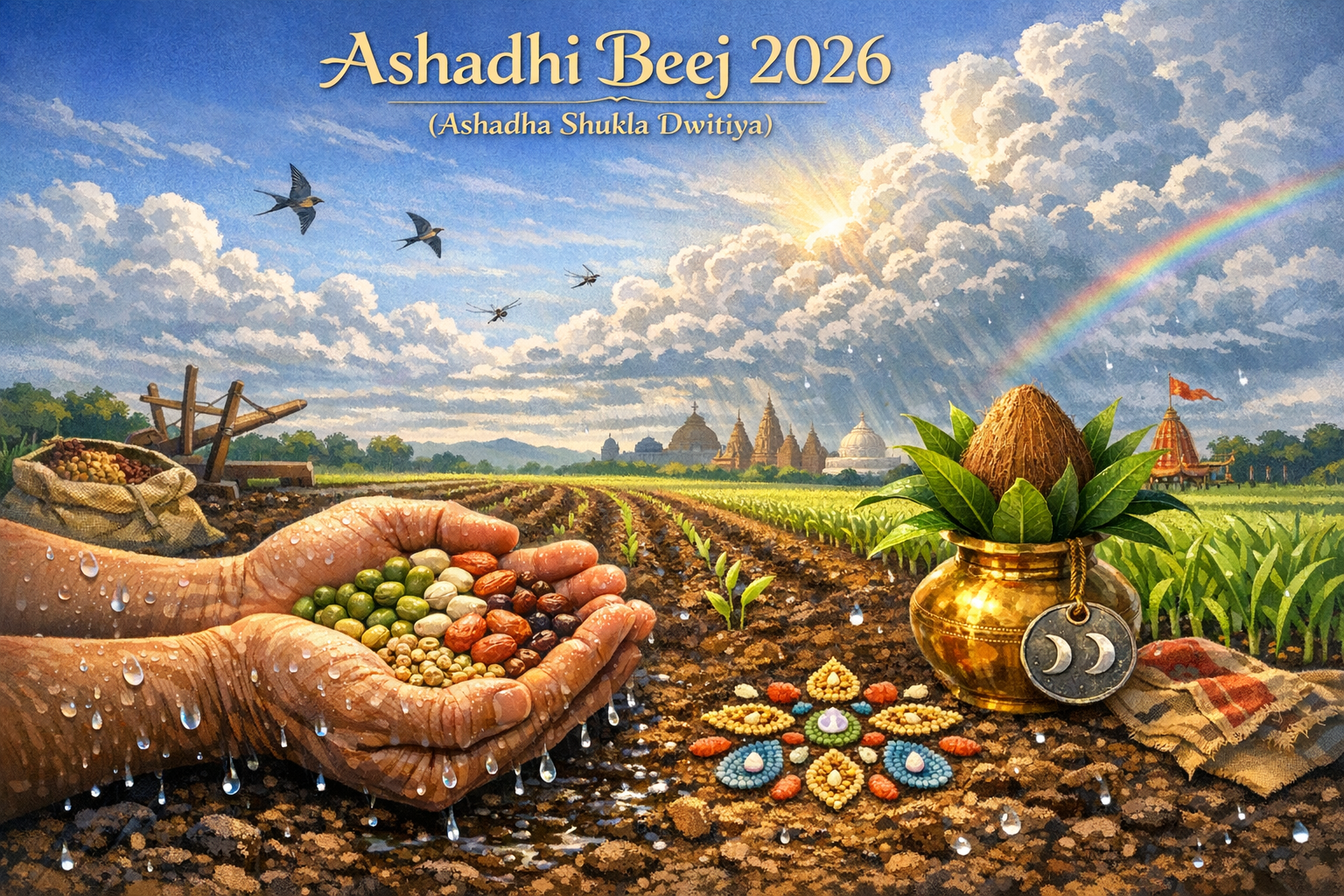
Ashadhi Beej 2026 falls on July 16 (India), aligning with Ashadha Shukla Dwitiya or Ashadhi Sud Beej in the Hindu calendar. Rooted in agrarian life, the observance helps farming communities anticipate the monsoon through time-tested environmental heuristics paired today with meteorological insights. The tithi mechanics (Moon–Sun elongation) explain precisely why it is the second lunar…
-
Tapasya in Kali Yuga: Powerful, Scripture-Sourced and Science-Backed Austerities for Modern Life

Tapasya in Kali Yuga is not self-mortification but an intelligent discipline that purifies body, speech, and mind for clarity and resilient living. Drawing on the Bhagavad Gita, Yoga Sutras, the Bhagavatam, and the Kali-Santarana Upanishad, it reframes penance as preparatory purification rather than an attempt to please the divine or force realization. Practical śarīra-, vāk-,…
-
Paada Puja Explained: The Timeless, Transformative Ritual of Reverence and Dharmic Unity

Paada Puja (Paada Pooja) is a timeless Dharmic ritual that elevates hospitality into sacred practice, honors the guru–shishya relationship, and completes Hindu worship through the upachara of washing and adorning the feet. Rooted in the ideal Atithi Devo Bhava, it appears across sampradayas and Dharmic traditions, from Vaishnava padukas and śāṭāri customs to Buddhist Buddhapada…
-
Hinduism’s ‘330 Million Gods’ Demystified: Unity, Ishta, and the Logic of Many Paths

Why Hindus follow many gods is not a contradiction but a cornerstone of Sanatan Dharma. This essay clarifies the famous “330 million gods” as a later linguistic and devotional interpretation of the Vedic 33 categories (koti) of deities, grounding the discussion in the Vedas, Upanishads, and the Bhagavad Gita. It explains Ishta-devata as a rigorous,…
-
When Do Our Karmas Ripen? A Dharmic, Evidence‑Based Guide to Prarabdha, Agami, Sanchita

This article addresses a common spiritual question: if current experiences reflect past-life karma, when do the karmas of this life bear fruit? Drawing on the clarification by Sri Sri Ravi Shankar—”That is not how it is!”—it explains why karmic results arise on multiple horizons: immediate, near-term within this life, and across future births. It provides…
-
Shanmukha’s Six Heads: Mythic Origins, Deep Symbolism, and Dharmic Philosophical Unity

Why does Shanmukha (Kartikeya) have six heads? This in-depth exploration traces the six-faced form across Purana narratives, Agamic iconography, and philosophical interpretations. It explains how the motif honors the six Krittikas, maps the six directions, and invites a mature reading through the Shad Darshanas. Psychological and yogic lenses show how the image addresses the six…
-
Hanuman Jayanti 2026 at Tirumala: Sacred Silk Vastrams for Japali Hanuman & Special Pujas

Hanuman Jayanti will be observed in Tirumala on 12 May 2026 with Tirumala Tirupati Devasthanam (TTD) presenting silk vastrams (Pattu Vastrams) to Sri Japali Hanuman and conducting special pujas to Sri Bedi Anjaneya. The practice of offering silk vastrams is rooted in Vaishnava agamic injunctions, expressing purity, honor, and protection in temple alankara. Pilgrims can…
-
Why India Reveres Its Rivers: Sacred Geography, Living Heritage, and Dharmic Unity

This in-depth exploration explains why India venerates its rivers as living presences that sustain ecology, economy, and ethics. It traces scriptural roots from the Rigveda to the Puranas, highlights major rivers such as Ganga, Yamuna, Saraswati, Godavari, Narmada, and Kaveri, and shows how sacred geography shapes towns, festivals, and civic infrastructure. It demonstrates unity among…
-
TTD Tirupati Architecture & Sculpture Admissions 2026–27: Train to Preserve Sacred Heritage
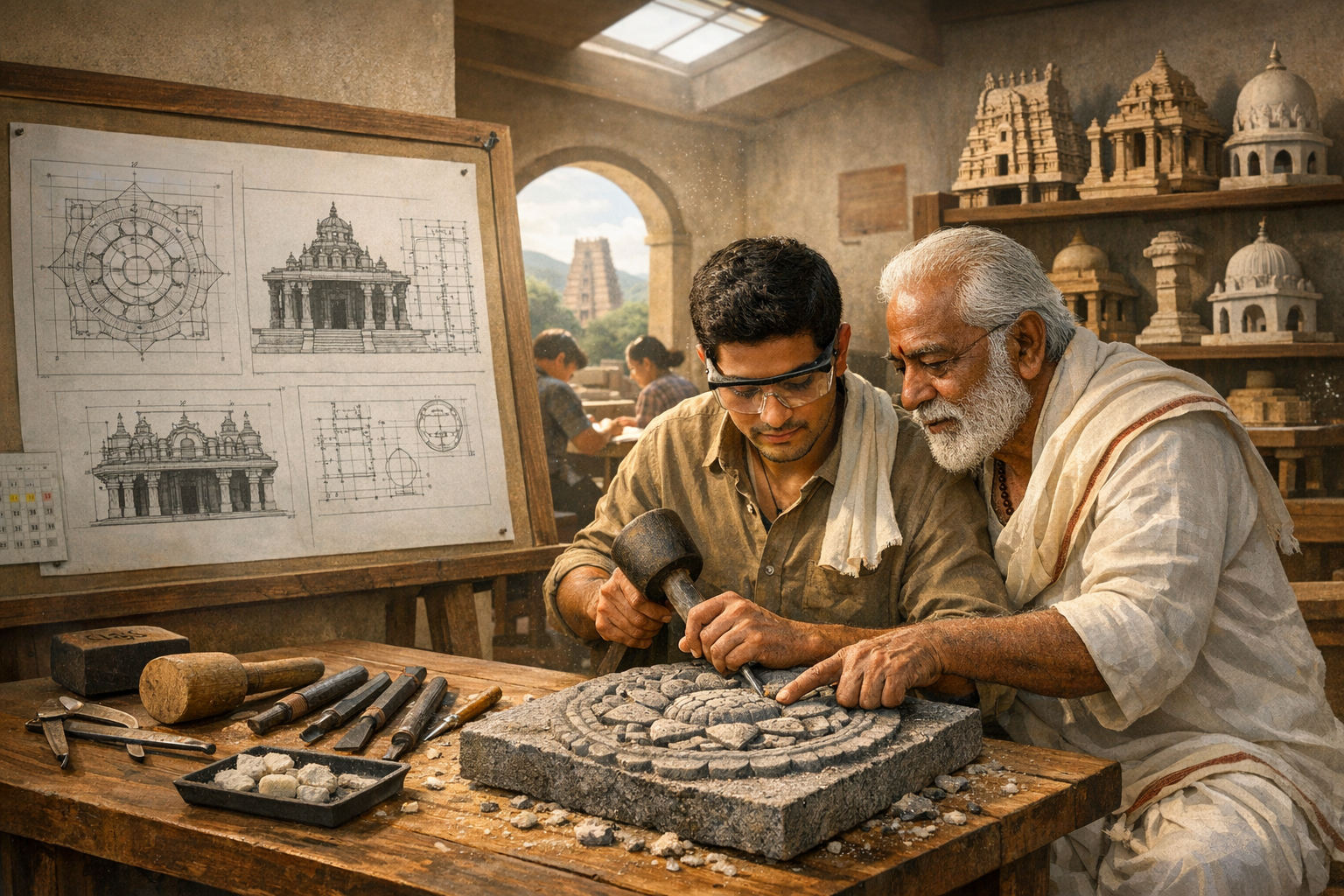
TTD-run Sri Venkateswara Traditional Temple Architecture & Sculpture College, Tirupati, is accepting applications from May 04 to June 20 for its 2026–2027 intake. Eligible Class 10 (SSC) pass candidates can apply for a four-year Diploma or a two-year Certificate. The college provides free accommodation to selected students, reflecting TTD’s heritage-service mandate. Training integrates Sthapatya Veda…
-
Shukla Devi Puja 2026: Jyeshta Shukla Ashtami Date, Complete Vidhi, and Deeper Meaning
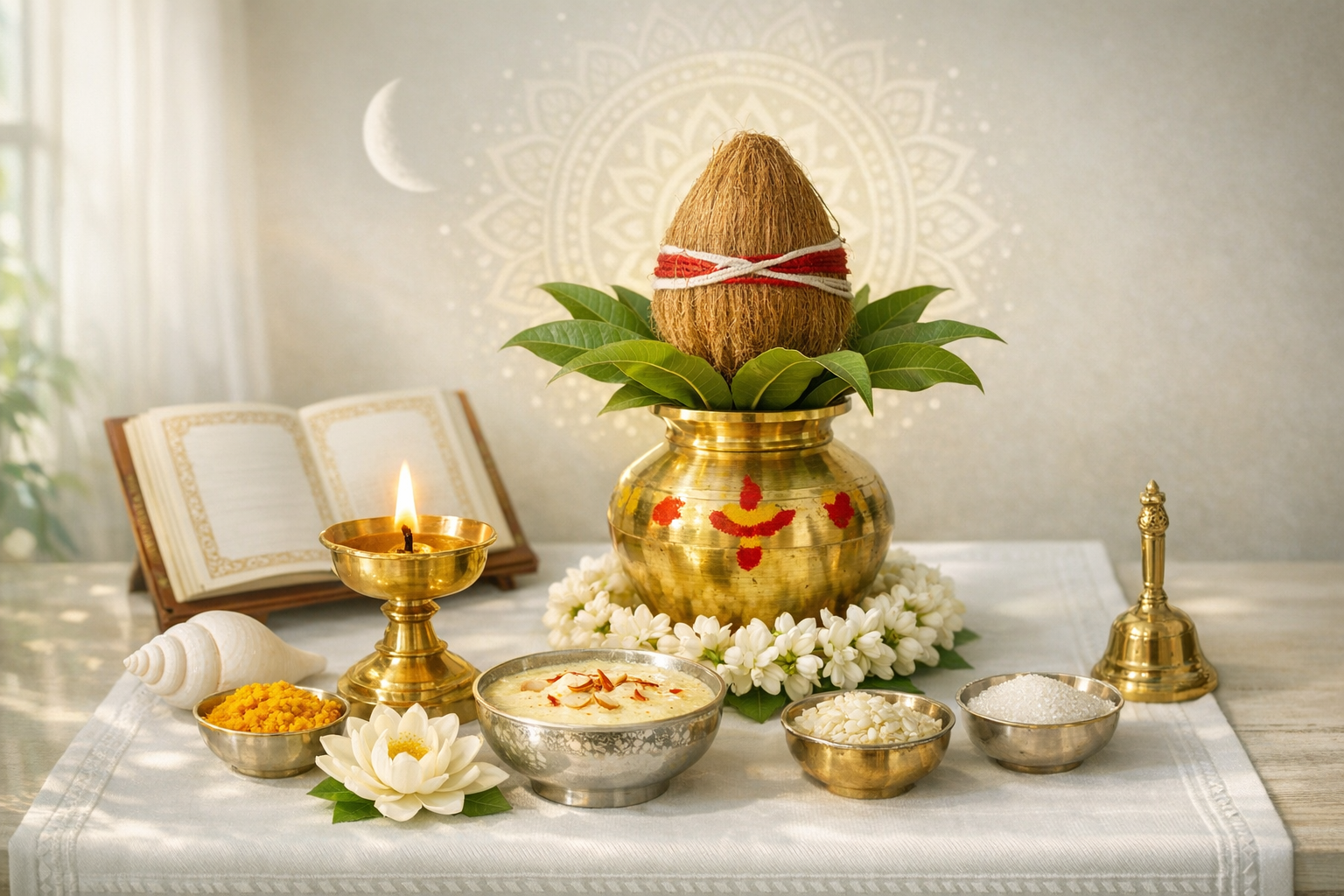
Shukla Devi Puja (Shukla Devi Aradhana) is observed on Jyeshta Shukla Ashtami, and in 2026 this sacred day falls on 22 June in most Indian almanacs. The vrata honors the sattvic radiance of Shukla Devi, integrating Panchopachara or Shodashopachara puja, mindful fasting, and the recitation of Devi stotras. Offerings typically emphasize the Shukla ethos—white flowers,…
-
Beyond Abundance: Why Modest Expectations Foster Lasting Happiness in Dharmic Wisdom

Modern abundance has not eliminated dissatisfaction because expectations often outrun reality. Dharmic wisdom—Hindu, Buddhist, Jain, and Sikh—offers a unifying solution: cultivate santosha (contentment) and aparigraha (non-hoarding) while acting with clarity and purpose. The Bhagavad Gita’s karma-yoga and the Yoga Sutra’s abhyāsa–vairāgya framework train steadiness without suppressing healthy ambition. Contemporary psychology aligns with these teachings: lower,…
-
Inside Patotsav: The Sacred Annual Re‑Consecration Powering Gujarati and Rajasthani Mandirs
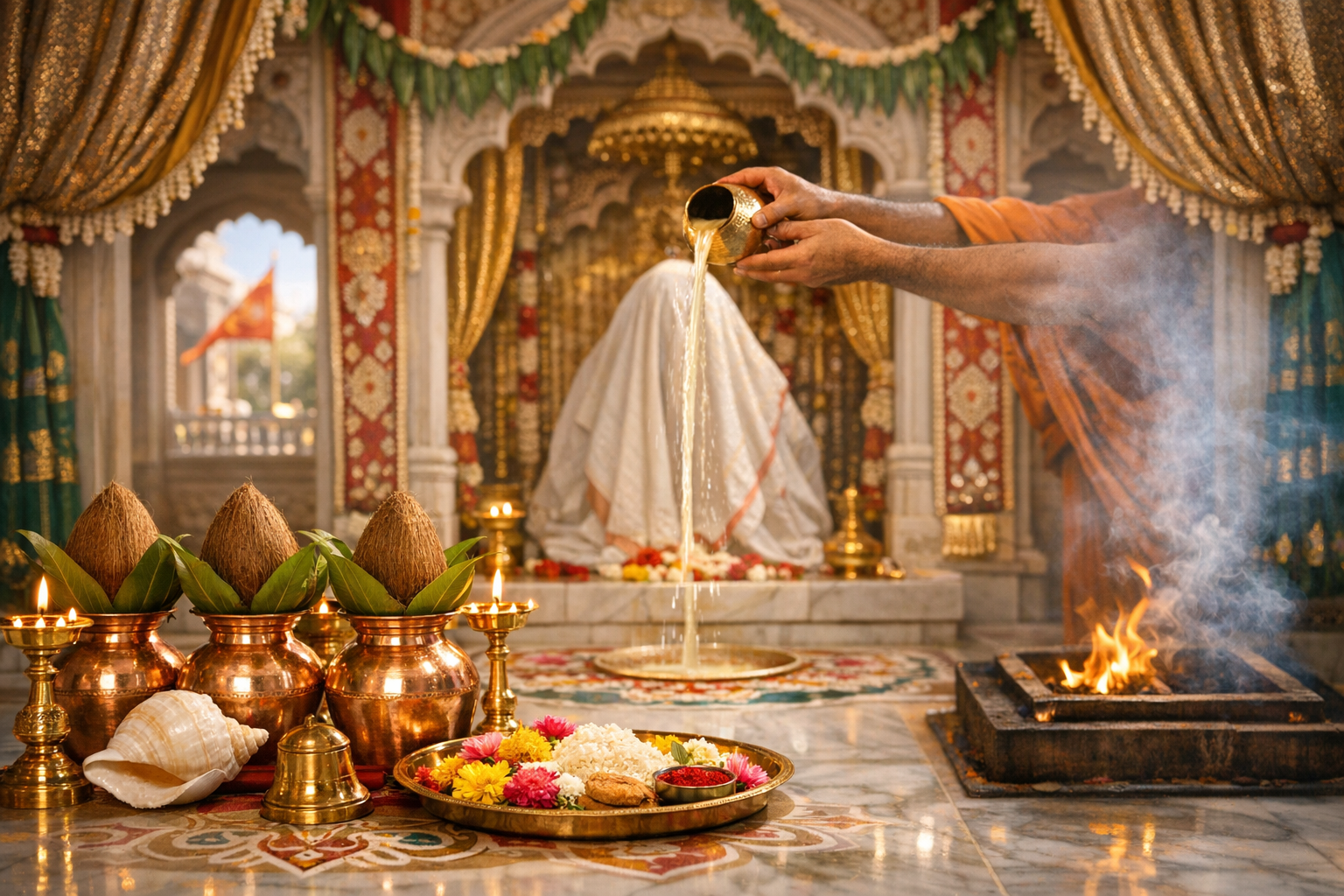
Patotsav is the annual re-consecration that refreshes the sanctity of Hindu mandirs, especially in Gujarat and Rajasthan, by commemorating the original Prana Pratishtha with precise Vedic and Agamic rites. This long-form guide explains the complete sequence—from punyahavachana and kalasha-sthapana to Panchamrita abhisheka, homa, alankara, and maha-arati—so readers understand both practice and meaning. It clarifies how…