
-
From Cosmic Ocean to Cosmic Web: How Scientific Cosmology Can Enrich Dharmic Faith
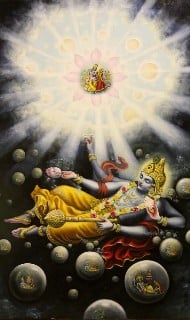
This evidence-based reflection shows how the Srimad-Bhagavatam’s image of a “cosmic ocean” aligns, at the level of metaphor, with the cosmic web mapped by modern astronomy. It explains what science reliably says about origins and possible endings—Big Bang, dark matter, dark energy, and competing end-of-universe scenarios—while clarifying where responsible uncertainty remains. It places these insights…
-
Tripura Tandava of Shiva: Decoding the Sixteen-Armed Dance of Cosmic Dissolution
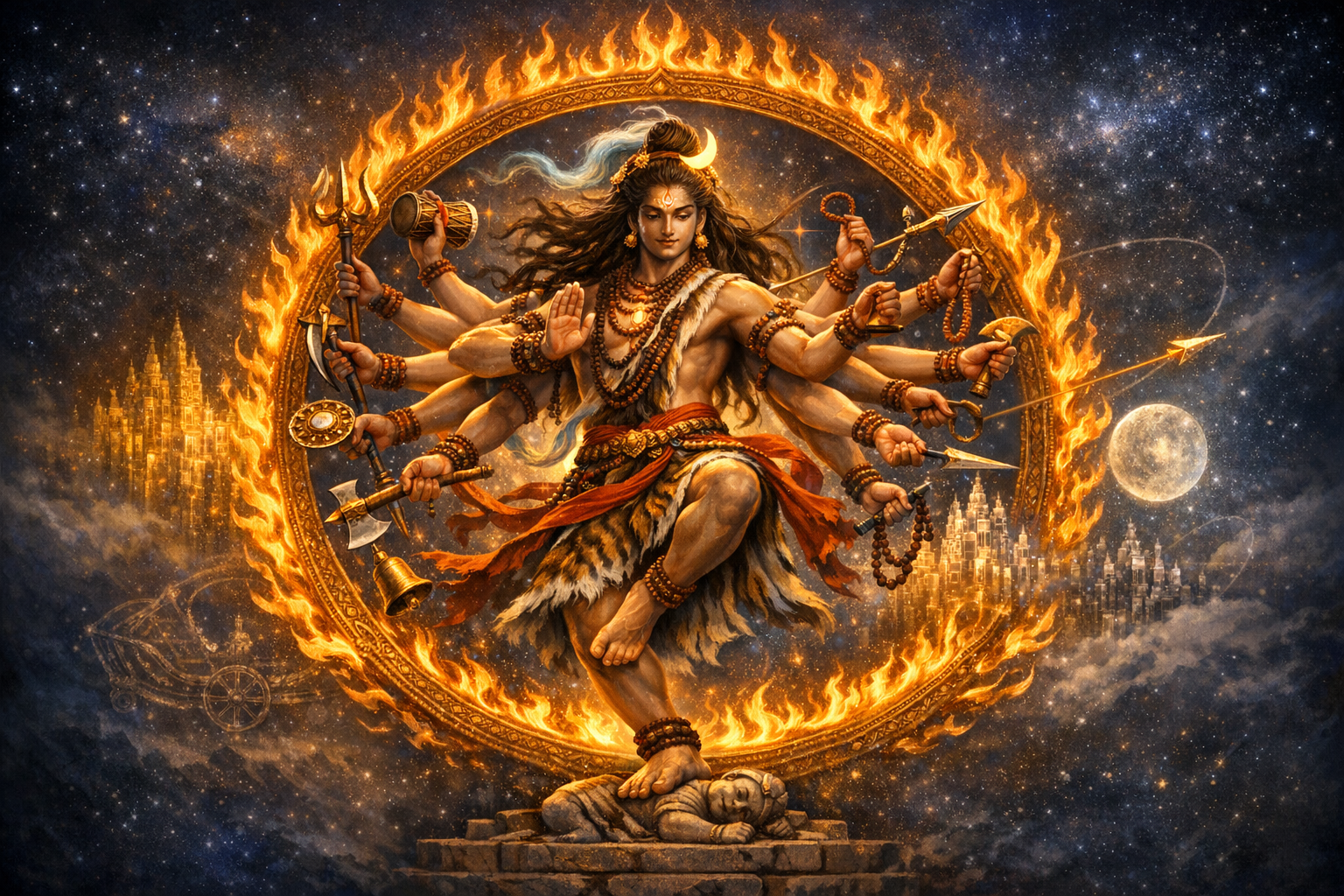
Tripura Tandava, often aligned with Shiva’s role as Tripurāntaka, encapsulates the precise instant of cosmic dissolution where triadic structures resolve into pure awareness. Grounded in the pañcakṛtya framework, it brings together saṁhāra (dissolution) and tirodhāna (concealment) to culminate in laya (absorption). The post examines Purāṇic narratives, āgamic iconography—including the striking sixteen-armed convention—and the dance grammar…
-
Srimad Bhagavatam 3.25.43: Kapila’s Transformative Bhakti‑Sankhya, Sādhu‑Saṅga, and Dharmic Unity
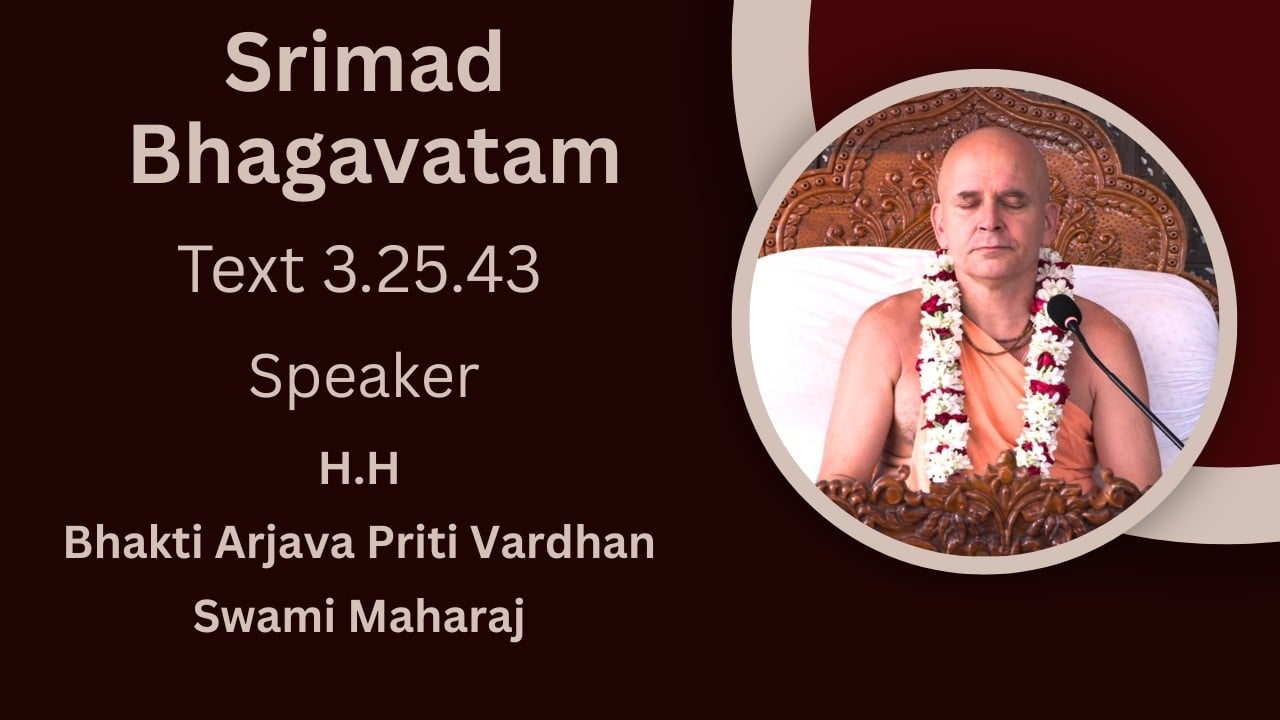
Śrīmad-Bhāgavatam 3.25.43 crowns Kapila’s theistic bhakti‑sāṅkhya, showing how analysis attains completion only when joined to devotion. This academic yet accessible exploration, based on a Mayapur TV – English discourse by H.H. Bhakti Arjava Priti Vardhan Swami Maharaj, explains why sādhu‑saṅga, śravaṇa, and sevā reliably reconfigure consciousness. It clarifies how Bhāgavatam treats bhakti as a rigorous…
-
HH SB Keshava Swami at ISKCON Dallas: Timeless Bhakti-Yoga Wisdom and Dharmic Unity
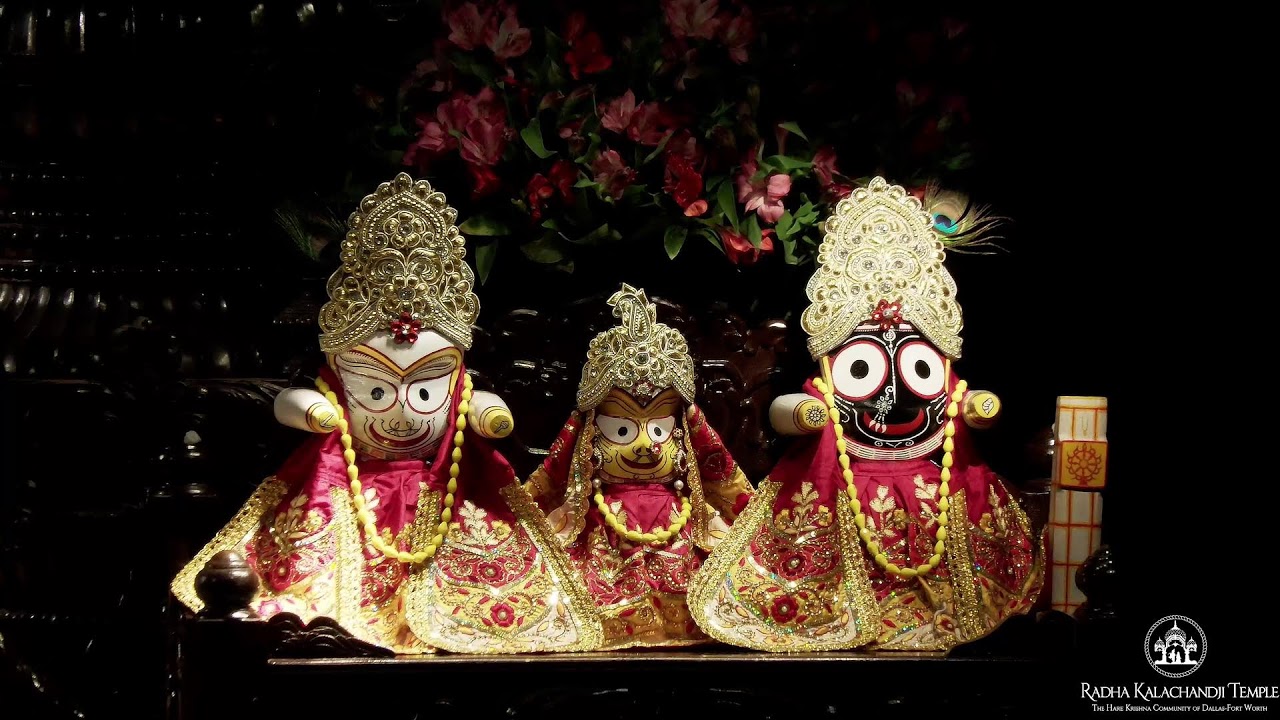
This analysis examines HH SB Keshava Swami’s ISKCON Dallas lecture as a model of rigorous, text-rooted bhakti-yoga tailored for a global audience. It clarifies Gaudiya Vaishnava frameworks such as sambandha–abhideya–prayojana, the nine limbs of devotion, and the acintya-bhedabheda philosophy. Readers gain practical methods to integrate mantra meditation, kirtan, seva, and shastra study into daily life.…
-
Purpose of the Vedas: Why Vaishnavas Champion Bhakti over Jnana, Karma, and Yoga

This in-depth exploration clarifies the purpose of the Vedas, tracing their layered structure from ritual to contemplative wisdom and showing how Vedānta articulates their culmination. It explains why Vaishnava traditions foreground Bhakti: not as sentiment, but as an integrative discipline endorsed by the Bhagavad Gita and Śrīmad-Bhāgavatam. It maps Bhakti’s relationship to Jñāna, Karma, and…
-
Chudamani: Radiant Crest Jewel of Hindu Deities and the Apex of Sacred Iconography

This article explores the chudamani — the crest jewel at the summit of a deity’s crown — as the apex of Hindu iconography and meaning. Readers learn the term’s etymology and literary memory in the Ramayana, its precise placement on mukuta types, and its codification in Shilpa Shastra and Agamic texts. The discussion unpacks symbolism…
-
How Sharing Food Heals Enmity: Timeless Dharmic Practices from Hindu, Buddhist, Jain, Sikh Traditions

Hinduism and its sister dharmic traditions treat shared food as a deliberate instrument of reconciliation. Philosophical axioms such as Annam Brahma, Atithi Devo Bhava, and Vasudhaiva Kutumbakam elevate feeding from charity to peacecraft. Ramayana narratives, temple prasada, Sikh langar, Jain anna-kshetras, and Buddhist dana converge on a single ethic: dignified, vegetarian commensality dissolves social distance…
-
Brahman Alone Is Real: A Rigorous Guide to ‘Jagat Mithyā’ via Sri Ramakrishna

A well-known story about Harinath—later Swami Turiyananda—and Sri Ramakrishna becomes a doorway into the core Advaita Vedanta assertion that Brahman alone is real and the universe is mithyā. This long-form analysis clarifies that mithyā does not mean nonexistence but dependent reality, carefully distinguishing pāramārthika, vyāvahārika, and prātibhāsika levels. It explains key Advaita tools—adhyāsa, adhyāropa–apavāda, and…
-
Govindaraja Swamy Brahmotsavams 2026, Tirupati: Dates, Vahana Sevas, Rituals—A Comprehensive Visitor Guide
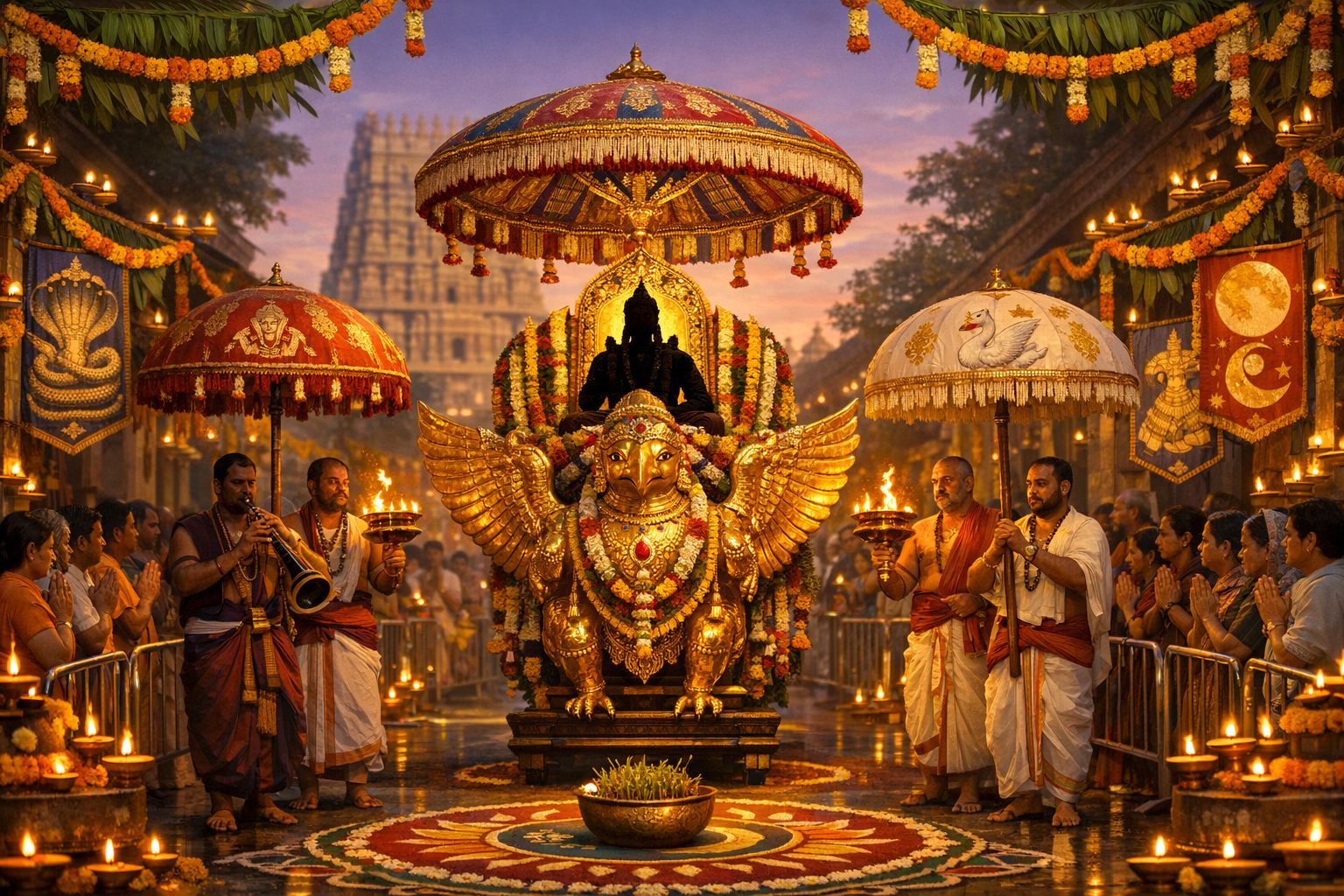
Sri Govindaraja Swamy Temple’s Brahmotsavams in Tirupati will be held from May 23–31, 2026, beginning with Ankurarpanam on the evening of May 22. This comprehensive guide explains the Agamic framework of the nine-day Vaishnava festival and what devotees can expect on the Mada streets during Vahana Sevas, including the widely cherished Garuda Vahanam. Readers gain…
-
Definitive May 19, 2026 Panchang: Shukla Tritiya to Chaturthi, Auspicious Times, Nakshatra, Rashi

May 19, 2026 spans two tithis: Shukla Paksha Tritiya until 6:19 PM (most regions), followed by Shukla Paksha Chaturthi. The article explains how tithi is calculated and why it can end mid-day, then shows how to apply Panchang frameworks—Abhijit Muhurta, Brahma Muhurta, and the avoidance of Rahu Kalam, Yamaganda, and Gulika—to choose Shubh Muhurat intelligently.…
-
D.B. Parasnis: The tireless collector who transformed Maratha archives and Indian historiography

Dattatreya Balawant Parasnis stands out as a transformative force in Indian historiography, above all for rescuing and publishing primary sources at risk of loss. His acquisitions—from the Second Sikh War letters to Sir Frederick Currie, to Mughal and Deccani portraiture, to Marathi bakhar manuscripts—elevated the evidentiary standard of research on the Maratha Empire and beyond.…
-
West Bengal BJP’s decisive push: anti-smuggling crackdown, smart border fencing, welfare

Recent public reporting outlines a three-pillar agenda in West Bengal: a decisive crackdown on cattle smuggling and syndicate networks, accelerated India–Bangladesh border security with fencing and smart surveillance, and a welfare rollout for vulnerable border communities. The approach integrates legal enforcement under the Customs Act and related statutes with inter-agency coordination among state police, BSF,…
-
Trapped in a ‘Perfect’ Life: Evidence-Based Steps to Reclaim Agency, Clarity, and Joy

Many people feel trapped in a life that looks good on paper, yet their bodies and emotions signal misalignment. This analysis explains why such lives are hard to leave—status quo bias, loss aversion, sunk costs, and identity foreclosure—and shows how evidence-based methods can restore clarity. It integrates Self-Determination Theory, mindfulness, breath-based vagal regulation, and values-based…
-
Unmasking Putana and Jara: Demoness-Mother Archetypes, Tyranny’s Birth, and Dharma

Tyranny in Puranic and Itihasic literature emerges through distorted or restorative caregiving. This study compares two maternal archetypes: Putana, who weaponizes nurture under Kamsa’s regime in the Bhagavata Purana, and Jara, who joins the halves of the future Magadhan king Jarasandha in traditions linked to the Mahabharata. The contrast illuminates how intention and method shape…
-
Bhairava as Bhudhara Atma: The Unshakable Ground of Kalika, Earth, and All Worlds

This long-form exploration clarifies Bhudharatmajaya Bhairava as the atma of Bhudhara—the conscious support of Earth and mountains—and the Adhara, the unmoving ground of charachar prakriti. It decodes the Sanskrit terms, situates Bhairava and Kalika within Tantric and Purana frameworks, and maps their complementarity across the panchabhuta and Shaiva tattvas. Temple architecture, kshetrapala guardianship, and contemplative…
-
Phalashruti in Hindu Scriptures: Timeless Promise, Mimamsa Logic, and Transformative Practice
Phalashruti, the fruit of hearing or recitation, is a core feature of Hindu scriptures that links practice to purpose. It functions within Mimamsa hermeneutics as arthavada, motivating ethical discipline and clarifying the benefits of mantra, vrata, pilgrimage, and study. Found across Puranas, sahasranamas, and tirtha-mahatmyas, it maps outcomes from mental clarity and peace to devotion,…
-
From Impermanence to Eternal Service: A Clear Path through Dharma, Devotion, and Liberation

The essay reframes the modern pursuit of longevity through a dharmic lens, showing how Hinduism, Buddhism, Jainism, and Sikhism converge on training attention, purifying intention, and embodying seva. Instead of biological duration, it emphasizes the continuity of rightly directed consciousness and compassionate action. Technical concepts are clarified—atman, saṁsāra, karma, ahaituky apratihata, moksha—while practical disciplines (śravaṇa,…
-
Chanting with Feeling: How Remembrance of Hari Dissolves Fear and Calms the Mind

This article explains how chanting with genuine feeling dissolves fear by uniting scriptural insight and modern psychophysiology. It outlines why Hari—“the one who takes away”—removes anxiety rooted in uncertainty through heartfelt remembrance (smaraṇa) and steady mantra meditation. Readers learn practical, evidence-aligned methods for pacing breath, engaging emotion (bhāva), and consolidating calm after practice. Everyday scenarios…
-
Facing Kāla, the Winkless God: A Dharmic and Scientific Exploration of Time’s Power

This essay examines kāla—“the winkless God”—as a propertyless yet sovereign principle across Hindu, Buddhist, Jain, and Sikh thought. Drawing on classical commentaries that describe time as causally independent and “endless,” it explains how time can terminate all conditioned things without itself being terminated. It situates Purāṇic time reckoning within vast cycles and relates the metaphor…
-
When a Republic Fell: Kamsa’s Coup, Mathura’s Sudharma, and the Price of Lost Dharma
Mathura’s fall from republican equilibrium to Kamsa’s tyranny illustrates how coups dismantle not only rulers but also institutions such as the Sudharma council that once mediated power through counsel and custom. Drawing on the Bhagavata Purana, Vishnu Purana, Harivamsa, and the Arthasastra, the narrative analyzes the mechanics of usurpation, alliance with Magadha, and the militarization…