
-
Porvorim Dialogue: Kajal Hindusthani Champions Women’s Leadership for a Safer, United Society

At a Porvorim programme organised by the Hindu Jagran Manch, Kajal Hindusthani emphasized women’s leadership as central to addressing social and cultural challenges. The event focused on women’s safety, dignity, and community participation, aligning with dharmic values shared across Hinduism, Buddhism, Jainism, and Sikhism. By prioritizing inclusive spaces and practical community engagement, the discussion highlighted…
-
Ravana’s Propaganda Playbook: Ramayana Lessons to Outsmart Modern Fake News

Fake news is not new; the Ramayana documents how Ravana weaponized deception through staged visuals, false alerts, and narrative control. The golden deer ruse functions like a modern disinformation operation, exploiting urgency and emotional reflexes. In response, Hanuman models careful verification and authenticated proofs, while Vibhishana’s dissent shows moral courage against echo chambers. These scenes…
-
The Forgotten Warrior: Reclaiming Vrishasena’s Valor Beyond Abhimanyu’s Shadow

This essay re-examines the Kurukshetra War to recover Vrishasena’s overlooked valor alongside Abhimanyu’s celebrated martyrdom. It explains how narrative framing and cultural pedagogy can elevate certain episodes and obscure others in the Mahabharata. Readers gain a clearer view of kshatra-dharma by recognizing courage across both Kaurava and Pandava camps. The piece outlines Vrishasena’s disciplined role…
-
New Mayapur’s Living Legacy: Srila Prabhupada’s Vision of Bhakti, Community, and Self‑Sufficiency

This concise documentary offers a focused window into New Mayapur in France, where Srila Prabhupada’s vision of rural community life and self‑sufficiency is actively practiced. It highlights how bhakti, kirtan, and seva shape daily rhythms, linking sacred spaces to practical responsibilities. The narrative shows how Hare Krishna traditions can adapt to European settings without diluting…
-
Varṇāśrama and Bhakti in Gauḍīya Siddhānta: A Powerful Guide to Harmonizing Duty and Devotion

Śrī Caitanya-śikṣāmṛta clarifies how varṇāśrama-dharma supports vaidhi-bhakti in Gauḍīya Siddhānta, showing that ethical order stabilizes and nourishes devotion. Rather than competing, duty and devotion complement each other: responsibilities cultivate clarity, while bhakti completes and elevates life. Practitioners benefit from relatable, practical guidance—steady work, family care, and seva make japa and śāstra-study more focused and joyful.…
-
Mystic Power of the Divine Name: How Chanting Awakens the Heart across Dharmic Traditions

This reflection addresses a classic paradox in devotional life: if the Name of God is truly transcendental, what is achieved through congregational chanting? Drawing on Bhaktivinode Thakur’s insight that the Name descends and acts upon the heart, it explains how chanting functions as cooperation with grace rather than a human conquest. The analysis clarifies why…
-
California Highway 54’s Mastodon Mystery: Evidence That Could Reframe Early North American Humans

In 1992–1993, monitoring of State Highway 54 construction in San Diego County revealed mastodon remains that some interpret as evidence of early human activity. Subsequent analyses linked the Cerutti Mastodon site to a late Pleistocene age, igniting robust scholarly debate. Critics point to natural breakage or construction damage, underscoring the need for multiple, independent lines…
-
Economic Shockwaves, Ethical Restraint: India’s Trade Levers to Protect Hindus in Bangladesh

This analysis explores how India can apply calibrated economic pressure—via land routes, sea facilitation, and airspace permissions—to deter violence against Hindus in Bangladesh while preserving regional stability. It outlines practical levers, from targeted suspensions with humanitarian carve-outs to compliance-focused reviews of electricity, fuel, and logistics. It explains risks and second-order effects on Indian exporters, border…
-
Paradox of Progress: Why Discontent and Violence Rise—and Dharmic Ways to Peace

Scientific advancements have brought unprecedented capabilities, yet discontentment and violence continue to rise. This article interprets the paradox through a dharmic lens, highlighting avidyā, restless desire, and information overload as drivers of inner turmoil. It presents unifying insights from Hinduism, Buddhism, Jainism, and Sikhism—dharma, ahiṁsā, karuṇā, and sewa—as complementary solutions. Readers gain practical guidance in…
-
Hinduism’s Fearless Pursuit of Truth: How Dharmic Traditions Cultivate Intellectual Courage

Hinduism elevates intellectual courage as a fearless quest for truth, encouraging rigorous inquiry over rigid dogma. Through Upanishadic dialogues, pramana theory, and shastrartha, it builds disciplined habits of questioning, reasoning, and revising beliefs. Pluralistic practices—multiple marga and freedom of Ishta Devata—create psychological safety for exploration. The dharmic family reinforces this ethos: Buddhism values investigation, Jainism’s…
-
Alopi Devi Temple, Prayagraj: Sacred Shakti Peeth Where a Cradle Becomes the Deity

Alopi Devi Temple in Prayagraj, a revered Shakti Peeth, is renowned for an aniconic sanctum where a red-draped cradle is worshipped instead of an idol. The shrine’s symbolism emphasizes the formless presence of the Divine Mother while honoring maternal tenderness, protection, and renewal. Local lore links the name “Alopi” to disappearance, suggesting a sacred presence…
-
Guru Gobind Singh’s Enduring Legacy: Sacrifice, Justice, and Dharmic Unity Across Faiths

Guru Gobind Singh’s legacy exemplifies an unwavering commitment to justice, seva, and the protection of religious freedom that resonates across Hinduism, Sikhism, Buddhism, and Jainism. Rooted in formative events at Anandpur Sahib and the martyrdom of Guru Tegh Bahadur, his vision culminated in the Khalsa Panth at Baisakhi 1699—an institution dedicated to equality and the…
-
From Curiosity to Courage: Swami Vivekananda’s Living Legacy for Confident Hindu American Youth
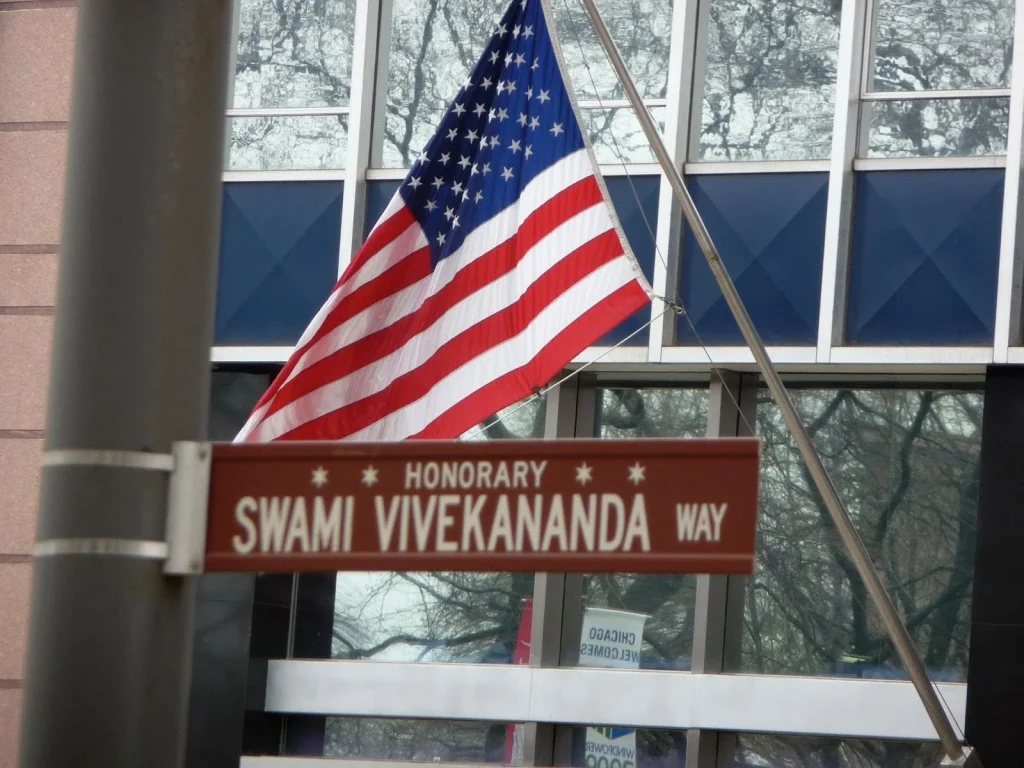
Swami Vivekananda’s legacy offers a rigorous, modern roadmap for Hindu American youth: transform curiosity into disciplined learning, and learning into compassionate seva. His 1893 Chicago address reframed Hinduism as rational and pluralistic, a vision now activated through advocacy and education in groups such as CoHNA. This approach strengthens unity in diversity and aligns with the…
-
January 17, 2026 Panchang Guide: Krishna Paksha Chaturdashi to Amavasya Timings & Meaning

On Saturday, January 17, 2026, the Hindu Panchang notes Krishna Paksha Chaturdashi until 11:52 PM, followed by the start of Amavasya. This late-night transition frames the day around introspection, devotion, and renewal, with many traditions observing Masik Shivaratri on Chaturdashi. Because Nakshatra and Rashi vary by location, local almanacs provide the most reliable details for…
-
Arundai Sivachariar & Marai Jnanasambandar: Timeless 13th‑Century Shaiva Devotion in Tamil Nadu

Arundai Sivachariar, a 13th century devotee from Tamil Nadu, is remembered for steady Shaiva bhakti expressed through regular temple worship and disciplined learning. Mentioned alongside Marai Jnanasambandar, the pairing evokes Tamil spiritual heritage where devotion and knowledge reinforce one another. The narrative highlights how simple, consistent practices—lighting a lamp, reciting a mantra, visiting a shrine—sustain…
-
ED raids and I-PAC in Bengal: data, democracy, and a high-stakes power contest

ED actions tied to I-PAC have sharpened debate in West Bengal about how data, democracy, and power intersect. This analysis explains I-PAC’s rise from strategist to system-level influencer, why ethical data practices matter, and how due process protects public trust. Readers gain clarity on the TMC–BJP contest, the role of the ED, and safeguards needed…
-
Guru Gobind Singh Ji’s 360th Parkash Aagman: Timeless Courage, Seva, and Unity

The 360th Parkash Aagman of Guru Gobind Singh Ji (born 22 December 1666 at Patna Sahib) offers a timely occasion to revisit the sant–sipahi ideal and its enduring relevance. Observed across diverse calendars, the commemoration centers on Akhand Paath, kirtan, Nagar Kirtan, and inclusive langar at sacred sites and in diaspora communities. Guru Gobind Singh…
-
Naam, Daan, Ishnaan: A Transformative Threefold Path to Clarity, Compassion, and Calm

This reflection explores how Naam (attentive remembrance), Daan (ethical generosity), and Ishnaan (purification) form a practical threefold path across Hinduism, Buddhism, Jainism, and Sikhism. It shows how brief, consistent practices—such as early-morning simran or japa, mindful ishnan, and everyday seva—translate inner steadiness into social good. Readers learn accessible ways to integrate the triad into modern…
-
Why Colonial Regimes Feared Indigenous Literacy—and How Dharmic Traditions Resisted

Indigenous literacy has long empowered communities to preserve memory, assert rights, and maintain cultural continuity—capacities that colonial regimes often perceived as threats. In South Asia under British Colonial Rule, vernacular education and scripts strengthened social cohesion across dharmic traditions, connecting Hinduism, Buddhism, Jainism, and Sikhism. Policies privileging English-medium instruction and standardized curricula frequently displaced local…
-
Mian Muhammad Bakhsh (1830–1907): The Soul-Stirring Sufi Voice Behind Saif-ul-Malook

Mian Muhammad Bakhsh (1830–1907), the renowned Punjabi Sufi poet of Khari Sharif in Azad Kashmir, shaped 19th-century literature through Saif-ul-Malook and a broader vernacular corpus that fused classical learning with oral tradition. His allegorical narrative of Prince Saif maps a universal journey from longing to spiritual realization, making profound insights accessible to everyday audiences. The…