-
Nine Sacred Powers of Goddess Lakshmi: A Profound Guide to Prosperity and Inner Grace

Goddess Lakshmi is revered not only as the deity of prosperity but as the source of nine sacred powers that integrate material abundance with inner grace. This guide presents a concise, academically grounded overview of a widely referenced enumeration—the Ashta Lakshmi plus Aishwarya Lakshmi—while honoring regional and textual diversity. Each manifestation illuminates a virtue: from…
-
Ratha Saptami’s Seven Erukkai Leaves: Ritual Symbolism, Inner Purification, Surya’s Grace
Ratha Saptami honors Surya’s northward journey in Magha with a unique sunrise bath using seven erukkai (arka) leaves. Each placement—head, shoulders, chest, back, and knees—maps to clarity, duty, devotion, release, and humility, turning a simple act into contemplative purification. The number seven echoes sapta rishi, sapta dhatu, and sapta lokas, adding depth to the ritual’s…
-
January 31, 2026 Panchang: Shukla Trayodashi to Chaturdashi, Auspicious Timings & Insights

January 31, 2026 begins with Shukla Paksha Trayodashi and transitions to Shukla Paksha Chaturdashi after 7:14 AM, according to the Hindu Panchang in most regions. This shift within the waxing phase of the moon supports steady devotional practice throughout the day. Because Trayodashi ends early, evening observances align with Chaturdashi rather than Pradosh in many…
-
Kabir Jayanti 2026 on Jyeshtha Purnima: Date, Meaning, and Bhakti Traditions Uniting Faiths

Kabir Jayanti 2026 will be observed on June 29, coinciding with Jyeshta Purnima in the Hindu calendar. The day honors Sant Kabirdas and invites reflection on his enduring teachings of truth, compassion, and spiritual equality. Communities often hold processions, satsang, and doha recitations, creating spaces for contemplation and shared devotion. Observances may vary slightly by…
-
Dharmanath Beej 2026: Date, Rituals, and Navnath Legacy Inspiring Spiritual Unity

Dharmanath Beej 2026 will be observed on January 20, aligning with the second day (Beej/Dwitiya) of the Magh Month in the Hindu calendar. The festival commemorates the initiation of Shri Dharmanth, son of Shri Machindranath, and celebrates the Navnath Sampradaya’s enduring guru–shishya tradition. Devotees often mark the day with temple prayers, satsang, and simple home…
-
Ravana vs Mahabali: Unraveling Lineage, Dharma, and Legacy Across Dharmic Traditions

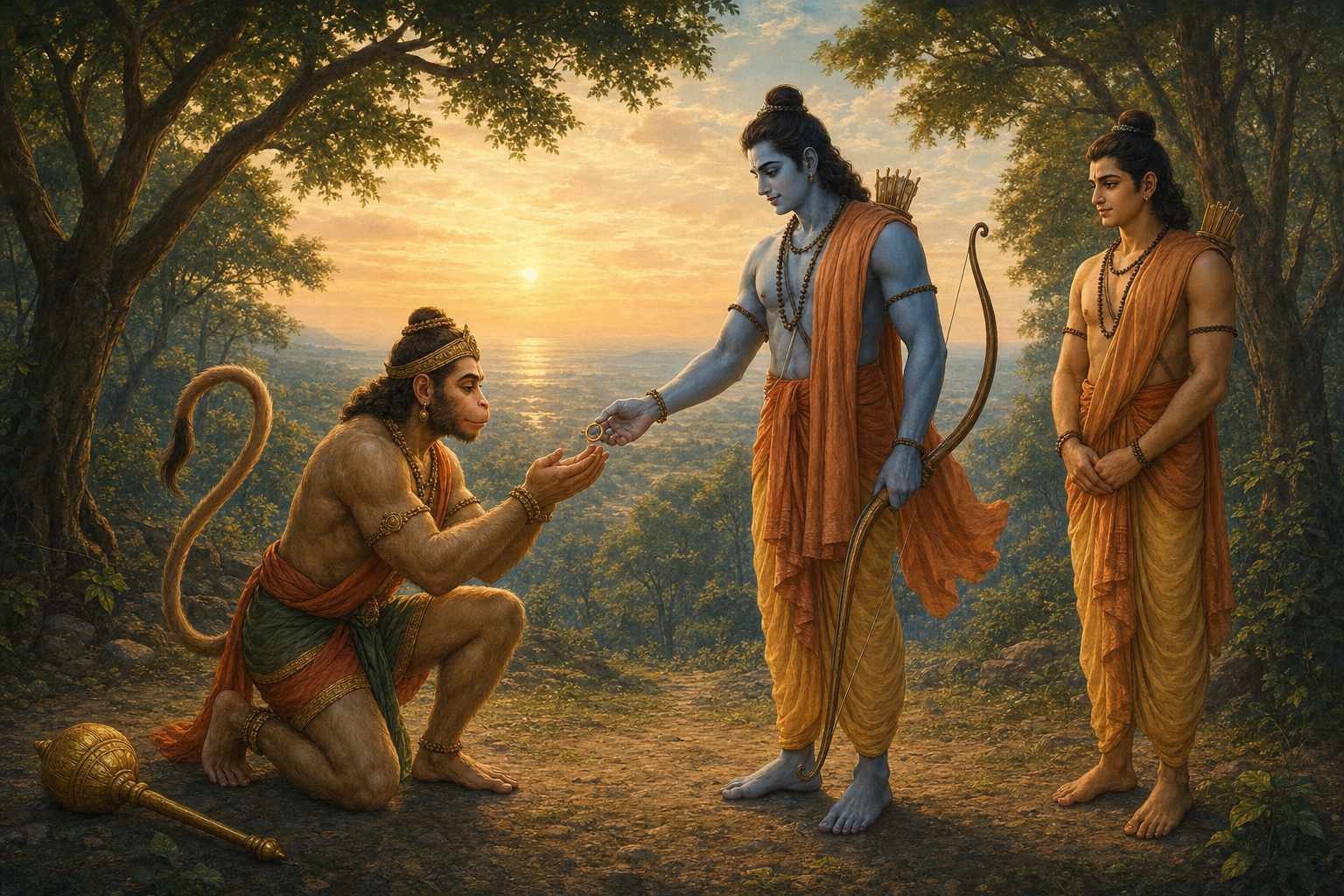
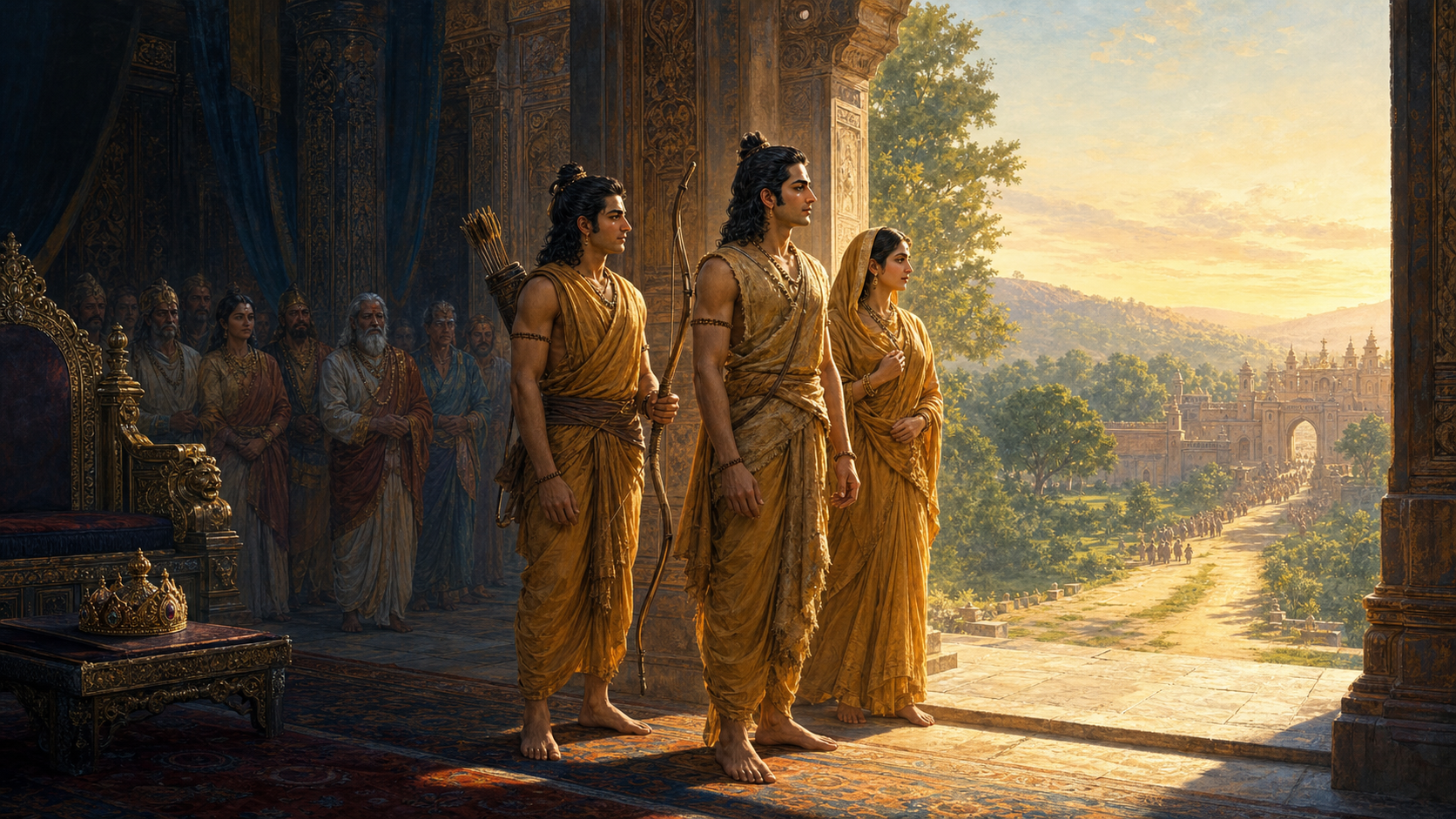
Ravana and Mahabali occupy contrasting roles in Hindu mythology that illuminate dharma, humility, and righteous leadership. Ravana, the learned yet pride-driven king of Lanka, confronts Sri Rama and falls for violating ethical boundaries. Mahabali, the generous asura king and grandson of Prahlada, surrenders to Vamana and receives enduring grace—honored each year during Onam. Comparing lineage,…
-
Magh Purnima 2026 (Feb 1): Auspicious Bathing, Rituals, and Dharmic Unity Guide

Magh Purnima 2026 falls on February 1 and is revered as the Full Moon of Magha month, concluding the season’s observances in North India. The day is especially auspicious for Magh Snan, quiet japa, and generous daana, and carries added significance during the Magh Mela and Kumbh Mela cycle. Families across regions mark the dawn…
-
Mahakavi Kalidas Din 2026: Date, Significance, Rituals, and Timeless Cultural Legacy

Mahakavi Kalidas Din (Kalidas Divas) in 2026 falls on July 15, coinciding with Shukla Paksha Pratipada of Ashada Month in the Hindu calendar. Regionally, it aligns with Aani Masam (Tamil), Midhunam (Malayalam), and Aashar (Bengali Panjika), reflecting its pan-Indian significance. The day honors Kalidasa’s enduring contributions through works like Raghuvamsa, Kumarasambhava, Meghaduta, and Abhijnanasakuntalam. Common…
-
Datta Navratri 2026 Dates: Auspicious Magha Observance from Rath Saptami to Purnima

Datta Navratri 2026 dates run from January 25 (Rath Saptami) to February 1 (Magh Purnima), aligning this nine-day observance with Magha Masam in the Hindu calendar. The period emphasizes devotion to Lord Dattatreya and invites reflection on knowledge, detachment, and compassion. Families and communities can plan temple visits, bhajans, and home worship with clarity and…
-
Guru Ravidas Jayanti 2026 on Magh Purnima: Date, Rituals, and a Bhakti Legacy of Unity

Guru Ravidas Jayanti 2026 falls on 1 February, aligning with Magh Purnima, the Full Moon of the Magh month. The day honors Sant Ravidas, a seminal Bhakti poet-saint, through Akhand Paath, Aarti, and Nagar kirtan, reflecting inclusive devotion and service. Observances at Ravidas temples and many gurdwaras underscore unity across Hinduism, Sikhism, Buddhism, and Jainism.…
-
Guru Pratipada 2026: Celebrate Guru Parampara and Sri Nrusimha Saraswati with Devotion

Guru Pratipada 2026 falls on February 2 and honors the Guru Parampara within the Datta Sampradaya, commemorating the sacred legacy of Sri Nrusimha Saraswati. Celebrated with devotion across Karnataka, Andhra Pradesh, Maharashtra, and parts of Western and Northern India, the day highlights the unifying power of the guru–shishya tradition. Observances include Guru Puja, devotional chanting,…
-
Madhvacharya Jayanti 2026: Date, Significance, and Reflections on Dvaita Vedanta

Madhvacharya Jayanti 2026 falls on October 21, commemorating the birth of Sri Madhvacharya (Purna Prajna, Ananda Tirtha), honored as the ‘Dvaita Siddhanta Kartha’. The observance highlights the intellectual clarity of Dvaita Vedanta, its emphasis on the distinction between jiva and Paramatman, and its lasting impact on the Bhakti movement. Readers gain the essential date, cultural…
-
Ratha Saptami 2026 (January 25): Auspicious Sun Worship for Health, Vitality, and Renewal

Ratha Saptami 2026 falls on January 25, marking Magh Shukla Saptami and an auspicious day of Surya worship for health and well-being. Observances center on sunrise rituals—offering arghya, Surya Namaskar, and chanting—rooted in discipline and gratitude. The festival typically comes two days after Vasant Panchami and signals the seasonal turn toward spring. Many devotees observe…
-
Rakhi Israni’s Congressional Bid: Dharmic Values to Heal American Politics and Renew Civility

American politics faces deep polarization, prompting renewed interest in Dharma as a framework for truth, responsibility, and harmony. In California, a state with a robust Dharmic heritage—from Paramahansa Yogananda’s Lake Shrine to Vedanta Square honoring Swami Vivekananda, and Sathya Sai Baba-inspired seva—Rakhi Israni’s congressional bid highlights how civic life can be guided by ethical principles.…
-
Break Free from Chronic Stress: Powerful Micro-Practices to Reclaim Presence and Peace

Chronic stress often locks attention into past regrets and future worries, obscuring the only place life actually happens: the present moment. This evidence-informed reflection shows how thirty seconds of breath awareness, practiced repeatedly, can restore clarity, regulate the nervous system, and improve communication, decision-making, and creativity. Practical micro-practices—anchors before routine tasks, nonjudgmental noticing, body scans,…
-
Why Liquor Appears in Kali Worship: Tantric Symbolism, Sacred History, Dharmic Unity

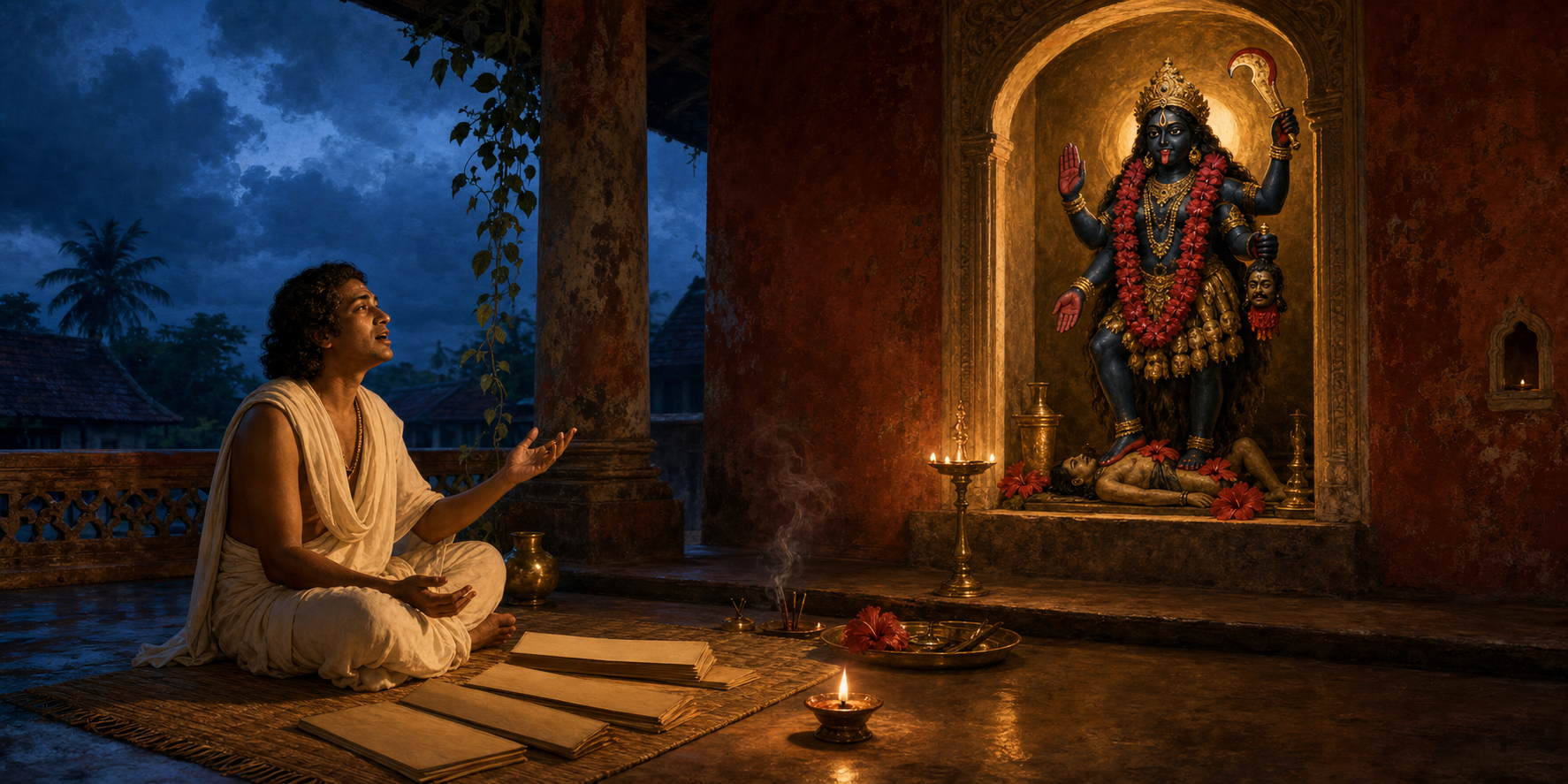
Goddess Kali’s worship historically includes offerings of karanbari (liquor), especially within Tantric frameworks that emphasize transformation through the pañcamakāra: madya, mamsa, matsya, mudra, and maithuna. In this symbolic logic, madya represents ego-surrender and fearlessness rather than indulgence. Communities have adapted the practice across contexts—from cremation-ground rites to household pujas—often opting for symbolic substitutes like coconut…
-
Jishnu: Krishna’s Ever-Victorious Name — Sanskrit Meaning, Origins, and Living Significance

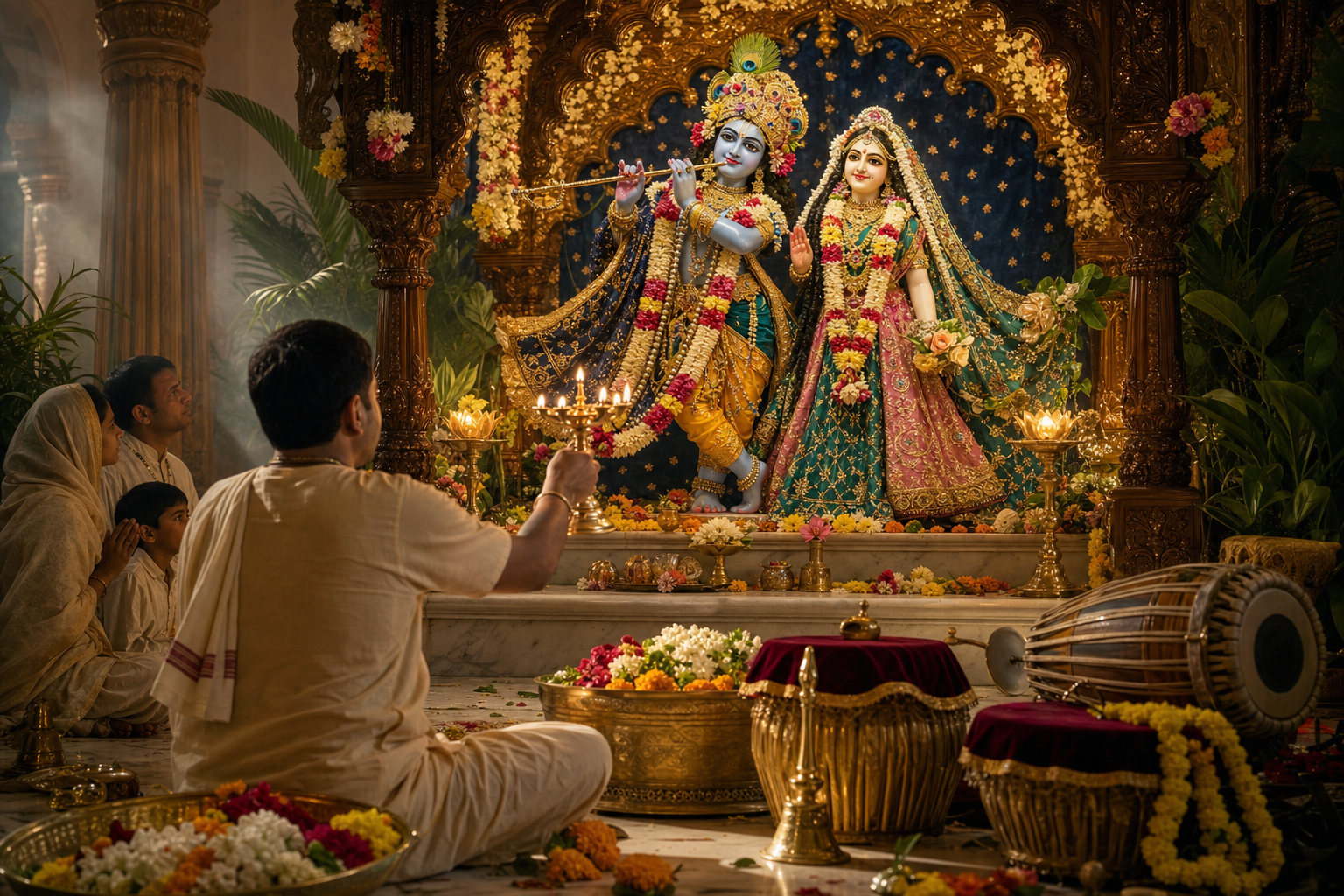
Jishnu, a sacred epithet of Bhagavan Sri Krishna, means the ever-victorious and derives from the Sanskrit root √ji, “to conquer.” Classical sources, including the Vishnu Sahasranama, affirm its scope as the triumph of dharma rather than mere domination. In the Mahabharata and Bhagavad Gita, Krishna’s counsel frames victory as dharma-yuddha—ethical struggle grounded in inner mastery…
-
Hamsa Kshira Nyaya: Vedic Wisdom on Discernment for Unity Across Dharmic Paths

“Hamsa Kshira Nyaya” conveys a Vedic principle of discerning the essential from the incidental, symbolized by the hamsa separating milk from water. Rooted in Hindu philosophy and evoked in the Shukla Yajur Veda (19.73), it becomes a practical guide to viveka—clear discrimination grounded in dharma. The teaching resonates across dharmic traditions: Buddhism’s prajñā, Jainism’s viveka…
-
Ghanapatha: The Brilliant Oral Science That Preserved the Vedas with Unmatched Precision

Ghanapatha is an advanced Vedic recitation method that preserved the Vedas with exceptional precision through patterned repetition and reversal. Situated within the Shiksha Vedanga, it crowns a structured pedagogy—Samhita, Pada, Krama, Jata, and Ghana—that builds redundancy and error-checking into every line. By guarding phonetics and pitch accents (udātta, anudātta, svarita), it retains exact meaning and…
-
Manana in Vedanta: Harnessing Constant Reflection to Realize Atman–Brahman Unity

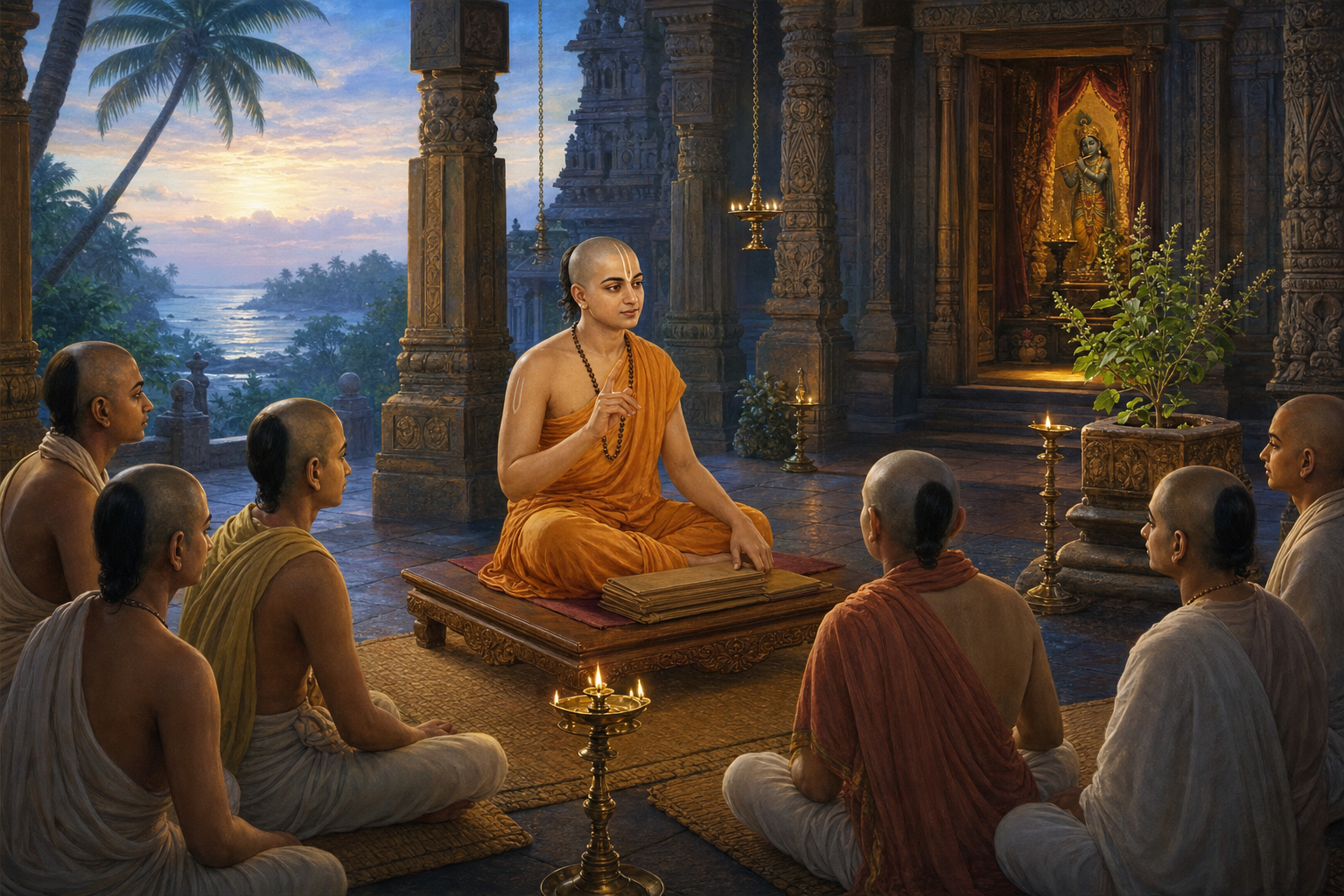
“Manana” in Vedanta means disciplined, constant reflection that converts scriptural listening into firm understanding. As the second step in the sadhana traya—following “sravana” and preceding “nididhyasana”—it resolves doubts through reasoned contemplation. This practice deepens clarity about the unity of Atman and Brahman and anchors insight in everyday conduct. Structured routines, journaling, and guidance from a…