-
Yogini as Kali’s Sacred Companion: Symbolism of Spiritual Mastery and Shakti in Kali Puja

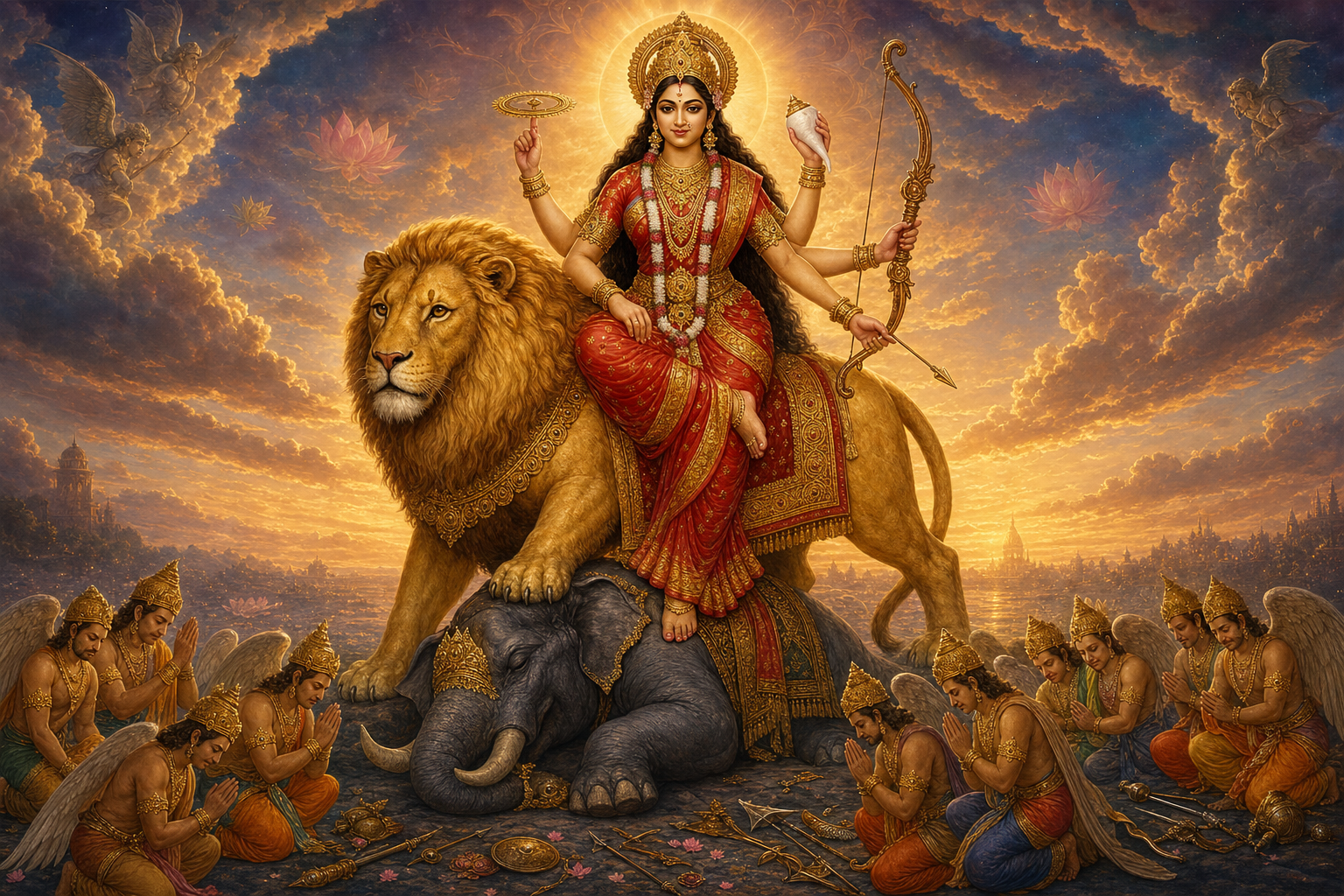
The Yogini, honored as the sacred companion of Mother Kali in Kali Puja, symbolizes realized wisdom and spiritual mastery grounded in Yoga and disciplined sadhana. Rather than an attendant, the Yogini embodies the union of awareness with Shakti’s transformative force, guiding practitioners toward pratyahara, dhyana, and ethical clarity. This symbolism deepens Kali Puja as a…
-
February 1, 2026 Panchang: Auspicious Purnima Tithi Timings, Meaning, and Ritual Insights

February 1, 2026 features a transition from Shukla Paksha Chaturdashi to Purnima tithi, with Chaturdashi ending at 5:20 AM and the full moon extending until 3:46 AM on February 2 (IST-based timings, minor regional variations possible). The post clarifies the significance of Purnima in the Hindu calendar and Panchang while highlighting practices such as fasting,…
-
Ganatantra Divas 2026 ki Shubhkaamnaye: Celebrating India’s 77th Republic Day, Unity & Hope

Ganatantra Divas 2026 ki Shubhkaamnaye. On 26 January 2026, India marks the 77th Republic Day, honoring the Constitution that came into force on 26 January 1950. The day links constitutional governance to the freedom struggle’s moral legacy and underscores civic values—liberty, equality, justice, and fraternity. National and local ceremonies—from the Kartavya Path parade to school…
-
Ratha Saptami and Arka Patra: Timeless Symbolism, Vedic Health Wisdom, and Surya’s Grace

Ratha Saptami Vrata honors Surya Bhagavan as Arogya Devatha, aligning devotees with the sun’s healing and clarifying power. The offering of Arka Patra (Calotropis leaves) symbolizes resilience, purification, and the transformative heat of tapas, linking ritual meaning with Vedic and Ayurvedic insight. Sunrise practices—such as sapta Arka patra snana, arghya, Aditya Hridayam, and Surya Namaskara—reinforce…
-
Ratha Saptami 2026 Vrat Katha: Surya Jayanti Blessings, Rituals, and King Yashovarma’s Legacy

Ratha Saptami (Surya Jayanti) in 2026 falls on January 25, aligning devotion to Surya with the renewal of body, mind, and nature. The Ratha Saptami vrata katha linked to King Yashovarma of the Kamboj Empire underscores how repentance, discipline, and charity restore harmony. Clear, step-by-step puja guidance—sunrise arghya, arka-leaf snana, Aditya Hridayam, naivedya, and dana—helps…
-
Ratha Saptami Puja Vidhi: Time-Honored Surya Pooja Steps, Meanings, and Practical Tips

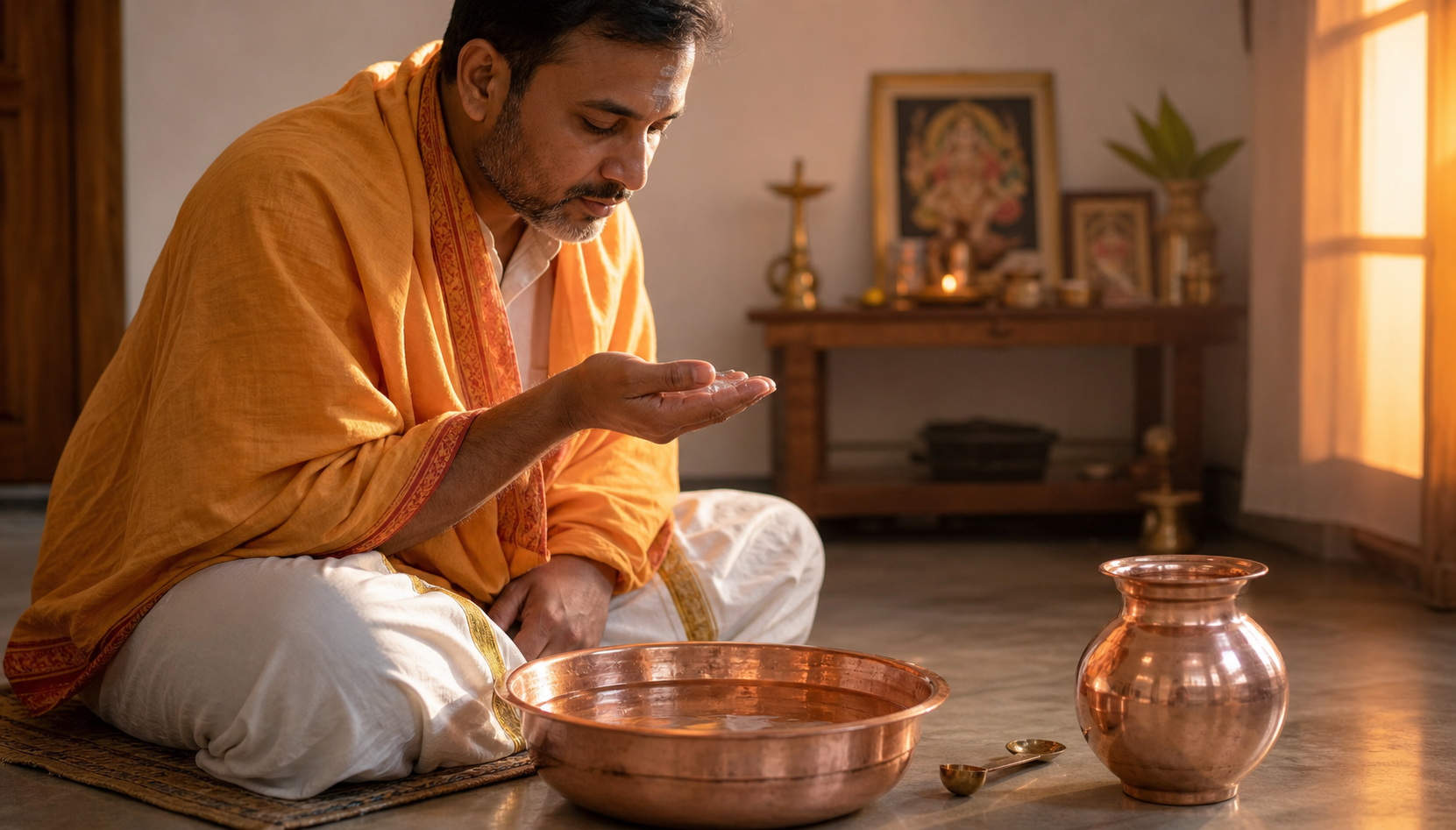
Ratha Saptami, observed on Magha Shukla Saptami, is a revered Surya Pooja that aligns devotion with nature’s rhythm. This guide presents a clear Ratha Saptami Puja vidhi rooted in Shodashopachara Puja, with each step explained for home practice. It highlights sunrise snanam with Arka leaves, offering arghya facing east, reciting Aditya Hridayam, and performing Surya…
-
Ratha Saptami (Radha Saptami) Guide: Sacred Snan Mantra, Sunrise Rituals, and Surya Jayanti

Ratha Saptami (Radha Saptami) celebrates Surya Jayanti with a sunrise ritual bath, sacred mantras, and offerings to Surya Bhagwan. The observance emphasizes gratitude, clarity, and discipline rooted in Vedic tradition, with the ceremonial snana considered especially auspicious at rivers like Ganga, Godavari, Yamuna, Narmada, Cauvery, and Krishna. Devotees commonly offer arghya facing the east and…
-
Gopal Ganapati Temple, Farmagudi: Tracing a Timeless Maratha-Era Legacy in Goa

Gopal Ganapati Temple in Bandivade (Bandiwade), Ponda, Goa, preserves a serene devotional atmosphere while carrying a distinctive seventeenth-century Maratha-era legacy. Historical references link the site to Chhatrapati Sambhaji, whose forces camped nearby and erected a Gudi on a hill, shaping the area’s sacred identity. The temple’s setting illustrates how political history and sacred geography intersect…
-
Ratha Saptami 2026 Puja Muhurat & Snana Muhurtham: Harness the Sacred Brahmi Dawn

Ratha Saptami (Surya Jayanti) falls on January 25, 2026, with the most auspicious Snana Muhurtham in the Brahmi Muhurtham from 5:02 AM to 5:49 AM. Observing the pre-dawn bath and offering Arghya to Surya during this window is traditionally considered highly meritorious. Many households experience a distinctive calm before sunrise that enhances focus and gratitude.…
-
Reclaiming Indian Historiography: Hindu Civilizational Memory, Foreign Rule, and Dharmic Unity

This essay reassesses Indian historiography through evidence-based analysis and the lived memory of Bharatavarsha. It explains why popular Hindu remembrance did not typically view certain medieval sultanates as indigenous while carefully separating critique of historical regimes from respect for present-day communities. It situates debates like Aryan Migration -vs- Out of India within an open, scholarly…
-
Majestic Legacy of Kubera: Guardian of the North and Lord of Wealth Revealed

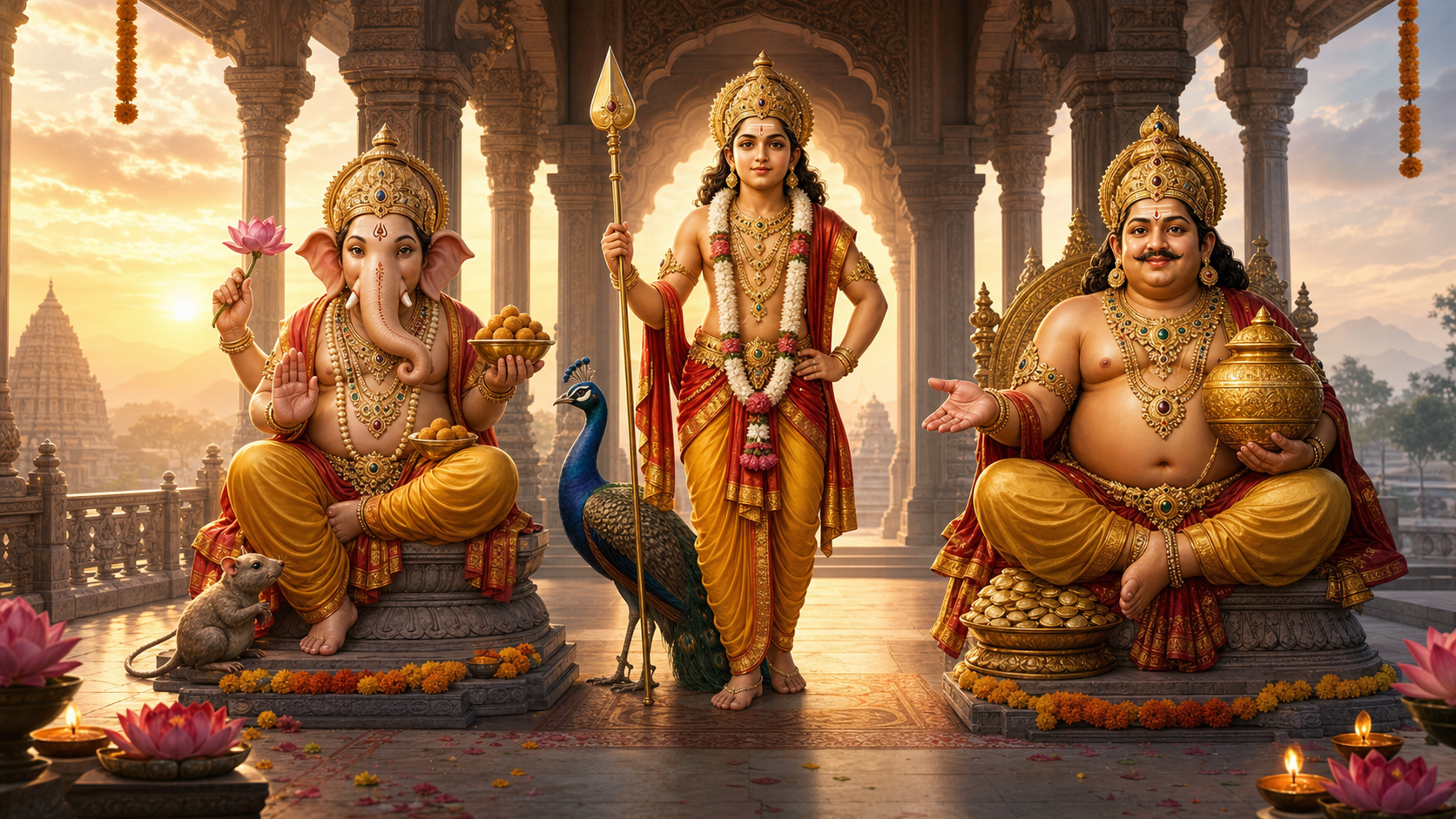
Kubera—Lord of Wealth, King of the Yakshas, and guardian of the northern direction—embodies prosperity grounded in dharma. Rooted in Hindu scriptures and echoed across Buddhist and Jain traditions (as Vaisravana and through Yaksha guardianship), his story aligns material abundance with ethical responsibility. The Mahabharata acclaims him as radiant and exemplary, while Puranic lineages present a…
-
Conch of Bravery Resounds in Durg: 1,000+ Youth Pledge Self-Defense, Nation & Dharma

A two-day ‘Shaurya Jagruti Prashikshan Shivir’ in Mahesh Colony, Durg brought together over 1,000 youth from Durg, Rajnandgaon, Raipur, and Khairagarh. Jointly organized by the Hindu Janajagruti Samiti and Vedic Gurukul Welfare Foundation, the camp emphasized disciplined self-defense, civic responsibility, and the protection of nation and dharma. The pledge taken by participants affirmed values common…
-
Nagpur’s Gittikhadan on Edge: Alleged Activist Stabbing Spurs Calls for Calm and Unity

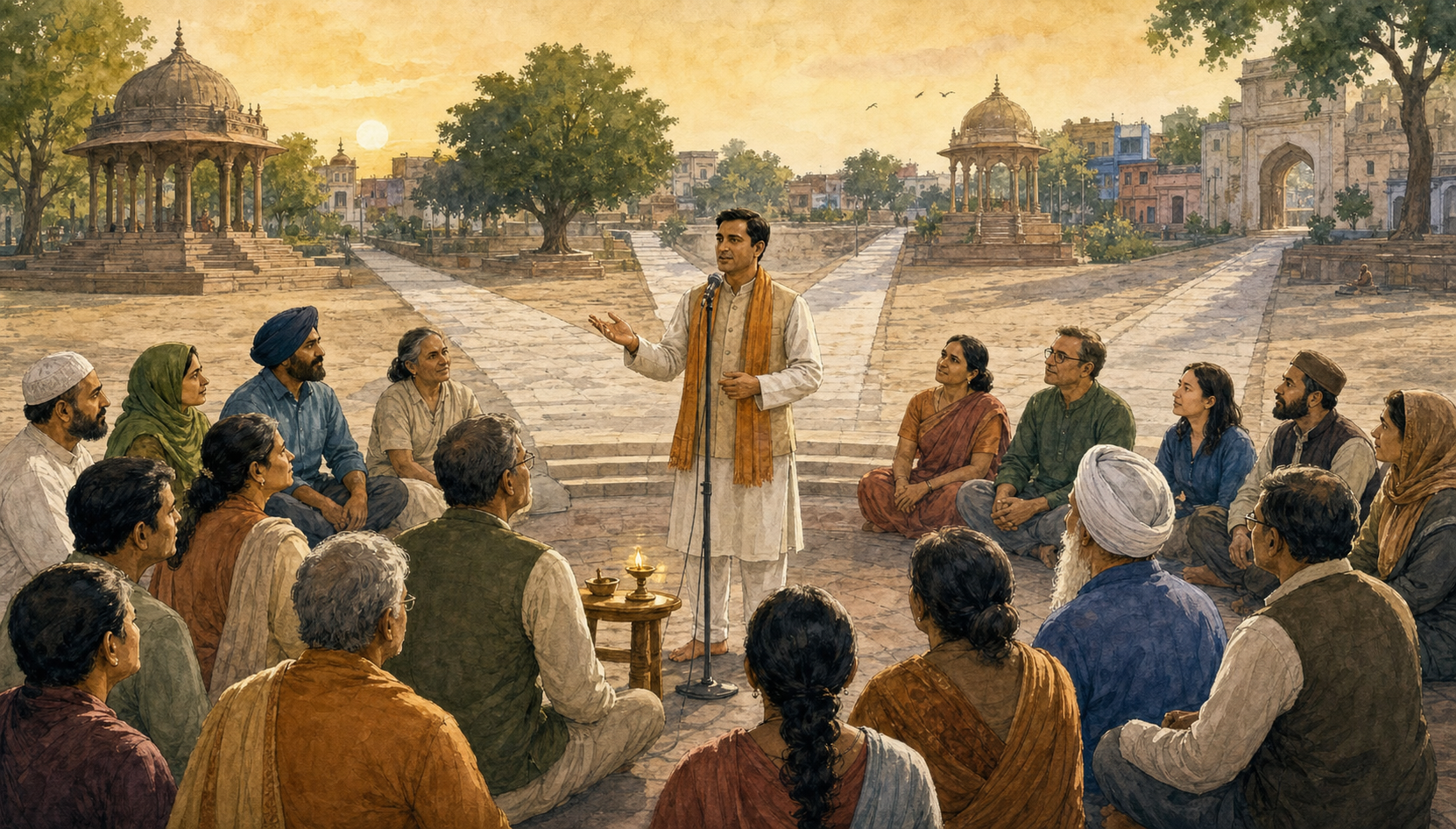
Gittikhadan, Nagpur, witnessed heightened tension after the alleged stabbing of a Hindutva activist, with police probing a personal dispute that may carry communal undertones. Authorities have tightened patrolling and urged residents to avoid speculation while the investigation continues. Community leaders from Hindu, Buddhist, Jain, and Sikh traditions have emphasized non-violence, dialogue, and cooperation with law…
-
Timeless Foundations of Dharma: Gautama’s Dharmasutra on Law, Ethics, and Daily Life
Gautama’s Dharmasutra is among the earliest and most influential Hindu scriptures on law, ethics, and social order, dated to roughly 600–400 BCE. It systematically codifies duties, rites, legal procedures, and penances, shaping the foundations of the Hindu legal system. Its ethical core—non-violence, truthfulness, generosity, and self-restraint—resonates across Buddhism, Jainism, and Sikhism, reinforcing unity among dharmic…
-
Ekajata’s Single Braid: Powerful Symbolism of Focus, Protection, and Supreme Consciousness

Goddess Ekajata’s single braid is a concentrated teaching in Hindu Tantra: a symbol of supreme consciousness, one-pointed focus (ekagrata), and vigilant spiritual protection. Read as Tantric anatomy, it reflects the unification of ida and pingala within the sushumna nadi, supporting sustained dhyana and the ascent of Kundalini. The braid’s tightly bound form evokes vows, secrecy,…
-
Virat Purusha Awakens: Srimad Bhagavatam 3.26 Reveals the Power of the Supersoul

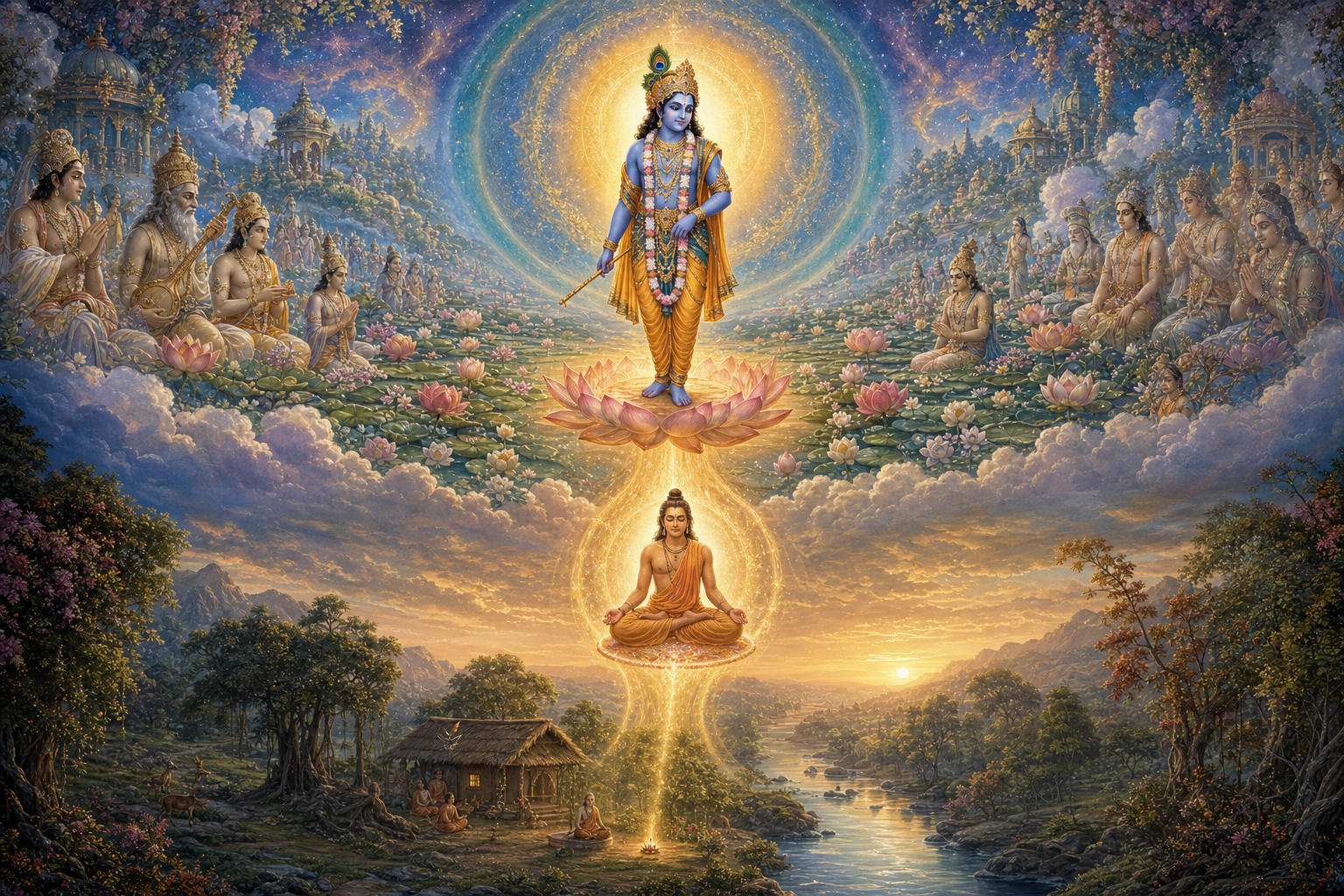
Srimad Bhagavatam 3.26.62–71 presents a clear philosophical insight: the senses, mind, and intelligence remain inert until the Supersoul (Paramatma) enters and animates the Virat Purusha. Mukunda Goswami’s exposition clarifies that all faculties are instruments requiring the integrative power of consciousness to become meaningful. Readers gain a practical framework for aligning speech, thought, and action through…
-
Vasant Panchami’s Sacred Radiance: Vishnu Priya, Pundarika, and Raghunatha’s Renunciation

This Vasant Panchami reflection, drawn from a class by His Grace Atul Krishna Prabhu, clarifies why the day is considered uniquely auspicious in Gaudiya Vaishnavism. It highlights the appearance of Srimati Vishnu Priya Devi and Pundarika Vidyanidhi, illustrating how humility, learning, and devotion converge in living practice. The life of Raghunatha Dasa Goswami exemplifies actionable…
-
From Sadhu-Sanga to Perfection: SB 3.25.25-37’s Transformative Map of Krishna Bhakti

This analysis of SB 3.25.25–37 with Kalakantha Prabhu presents a precise roadmap of Krishna consciousness grounded in the Srimad-Bhagavatam. It explains why sadhu-sanga is the essential catalyst that turns knowledge into lived devotion. The discussion clarifies how śravaṇa and kīrtana function as the heart’s medicine, steadily cultivating śraddhā, rati, and bhakti. Listeners will recognize the…
-
Fearlessness and Detachment in Hinduism: Powerful Practices for Inner Freedom and Growth

Fearlessness (abhaya) and detachment (vairagya) are central to Hindu philosophy, shaping a confident, ethical, and compassionate way of life. Fearlessness stabilizes decision-making under uncertainty, while detachment clarifies judgment by releasing attachment to outcomes. Practical disciplines—Yoga, meditation, pranayama, japa, svadhyaya, and seva—help integrate these virtues into daily interactions at home, work, and online. The approach strengthens…