
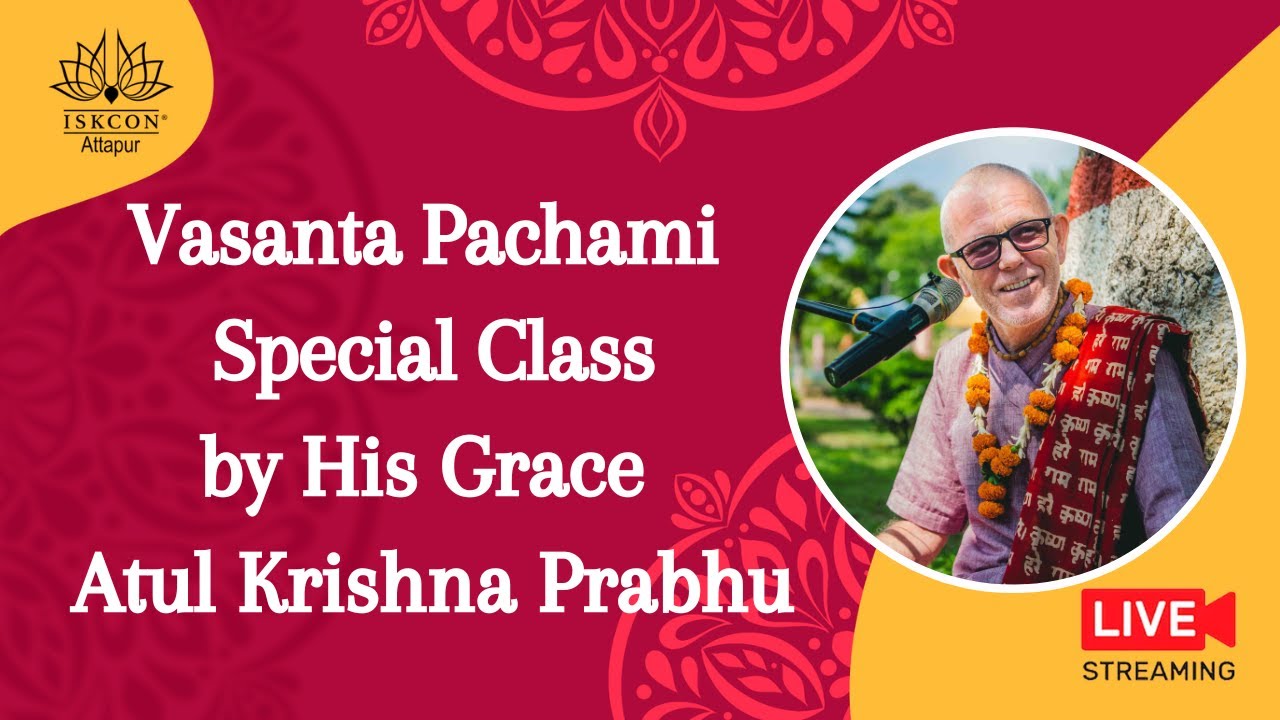
Vasant Panchami, as presented in a special class by His Grace Atul Krishna Prabhu, is framed as a profoundly auspicious threshold in the devotional calendar. The day is linked with multiple divine commemorations, notably the appearance of Srimati Vishnu Priya Devi and Pundarika Vidyanidhi, and invites a reflective return to the foundations of learning, devotion, and inner refinement often associated with Saraswati Puja. Within Gaudiya Vaishnavism, these observances deepen historical consciousness and ethical aspiration, aligning spiritual practice with humility, service, and study.
Srimati Vishnu Priya Devi is remembered for unwavering fidelity to dharma and to the mission of Lord Chaitanya. Her life represents a disciplined synthesis of devotion and restraint that continues to guide contemporary practitioners. Listeners frequently report that the remembrance of her appearance day fosters renewed commitments to compassion, integrity in daily conduct, and the cultivation of knowledge as a sacred duty.
Pundarika Vidyanidhi is honored for profound bhakti marked by humility and transformative inner experience. His appearance day, acknowledged on Vasant Panchami, underscores a central teaching: authentic spiritual attainment rests not on external status but on sincerity of heart. Devotional narratives connected with Pundarika Vidyanidhi often inspire contemplative practices that prioritize introspection, scriptural reflection, and a conscious softening of pride.
Raghunatha Dasa Goswami stands as a widely cited exemplar of renunciation (vairagya). Born into great affluence, he relinquished worldly security to serve Lord Chaitanya, later residing in Jagannatha Puri and at Radha-kunda in Vrindavan. His disciplined austerity, meticulous devotion, and steady service continue to inform discussions on how to translate spiritual insight into daily actionwhether through simplicity of lifestyle, compassionate outreach, or sustained scriptural study.
Beyond sectarian boundaries, the ethos of Vasant Panchami resonates across dharmic traditions. The festival’s emphasis on learning, truth-seeking, and ethical restraint is cherished in Hinduism, Buddhism, Jainism, and Sikhism, each nurturing a shared reverence for wisdom and non-harm. This common ground encourages mutual respect and unity, affirming that diverse paths can harmonize around knowledge, compassion, and self-mastery.
For contemporary practitioners, these commemorations offer practical guidance. Many observe the day by engaging in scriptural reading, kirtan, meditation, or service, translating devotion into measurable habits: reducing excess, elevating speech and conduct, and aligning choices with a higher purpose. Such practices reflect the living legacy of Srimati Vishnu Priya Devi, Pundarika Vidyanidhi, and Raghunatha Dasa Goswami, where inner discipline becomes a catalyst for communal harmony and personal transformation.
The class illuminates Vasant Panchami as an opportunity to unify head and heart: Saraswati Puja encourages the pursuit of knowledge, while Gaudiya bhakti emphasizes loving service rooted in humility. Together, these strands point to a sustainable spiritual cultureone that values the discipline of learning, the courage of renunciation, and the grace of compassionultimately strengthening unity within and across dharmic communities.
Inspired by this post on Dandavats.
