
-
Sankashti Chaturthi December 2025: Dates, Moonrise Puja Vidhi, and Auspicious Poush Guide

Sankashti Chaturthi in December 2025 falls across 7–8 December (Sunday–Monday), as the Krishna Paksha Chaturthi tithi can span two civil dates and moonrise varies by location. Observed as per the Hindu panchang—Poush month in the North Indian calendar—this vrat honors Shri Ganesha with fasting until moonrise and an evening puja. Devotees typically offer durva grass,…
-
Dec 16, 2025 Panchang: Krishna Paksha Dwadashi Timings, Auspicious Muhurat, Ritual Insights

December 16, 2025 falls on Krishna Paksha Dwadashi in the Daily Hindu Calendar, lasting all day until 12:17 AM on December 17, when Krishna Paksha Trayodashi begins. The day supports gentle rituals, parana for those who observed Ekadashi, and acts of charity. Readers gain clear tithi timings for planning puja and family observances with confidence.…
-
Youth Across Mumbai Unite to Oppose Drug-Linked Festival, Demand Safer Community Spaces

Students and citizens across the Mumbai Metropolitan Region are opposing the Sunburn festival over concerns related to drug culture and public nuisance. The Nasha Virodhi Sangharsha Abhiyan has launched an awareness movement that emphasizes public health, community harmony, and responsible cultural practices. Youth from Hindu, Buddhist, Jain, and Sikh families are collaborating to promote safety…
-
Mahant Mukesh Nath Reaffirms Sanatan Dharma’s Timeless Power and Dharmic Unity in Udaipur

Delivered in Udaipur on Dec 09, 2025, the address by Mahant Mukesh Nath Maharaj reaffirmed Hindutva as the living expression of Sanatan Dharma—an inclusive civilizational ethos rooted in dharma, ahimsa, karuna, and seva. The message emphasized unity among Hinduism, Buddhism, Jainism, and Sikhism, highlighting shared ethical foundations that strengthen religious pluralism in India. By linking…
-
Stay Compassionate Without Self-Destructing: Evidence-Based Boundaries for Toxic Relationships

Kindness can coexist with clear boundaries. This analysis presents a real-world scenario in which compassion collided with chronic disrespect, and it distills four practical lessons for maintaining empathy without enabling toxic behavior. It explains why transactional kindness backfires, how kindness functions as an expression of identity, and when withdrawing or pausing generosity is both healthy…
-
Jatamandala: Unlocking the Sacred Halo of Shiva’s Locks and Dharmic Cosmic Symbolism
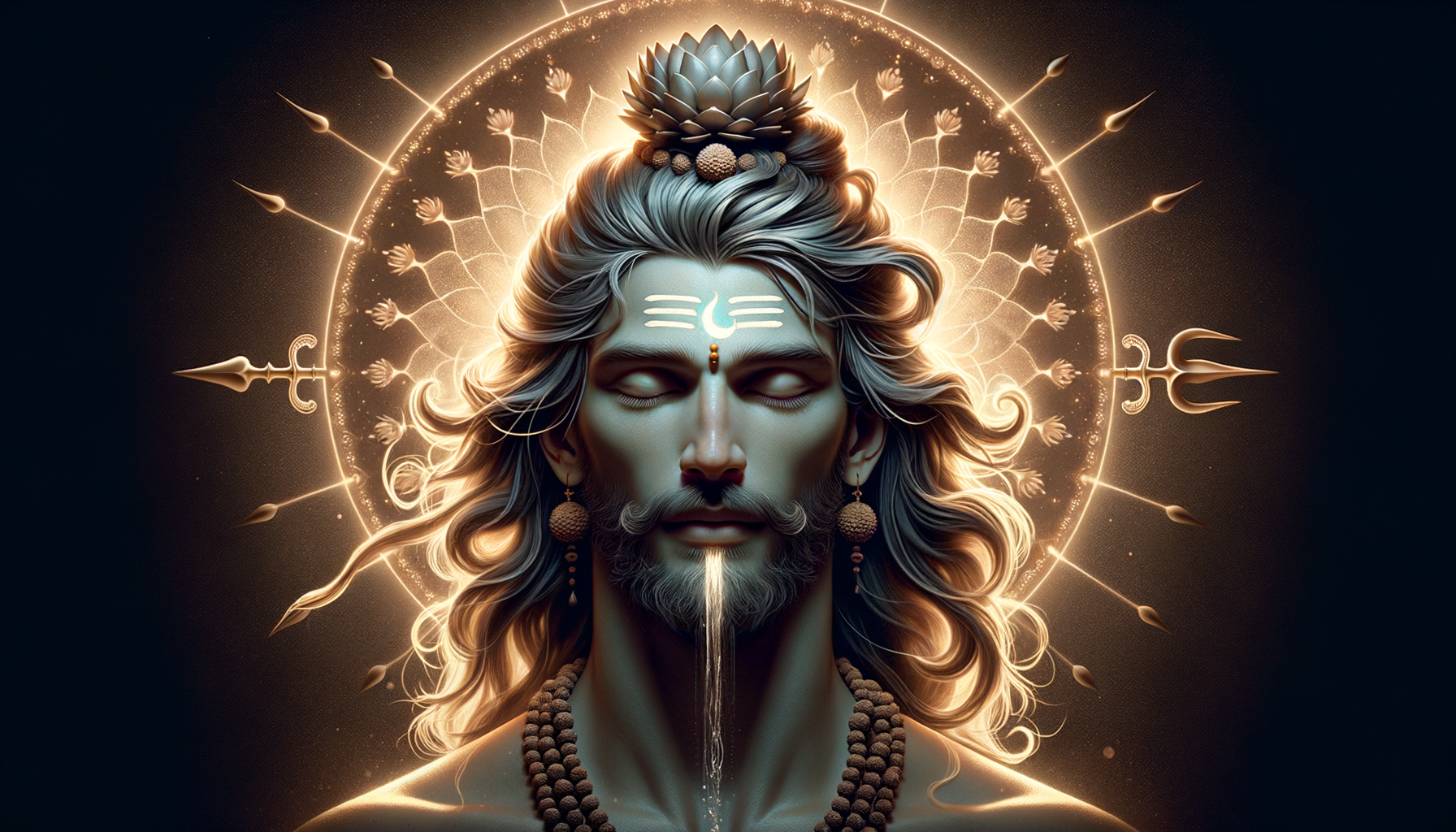
Jatamandala, from Sanskrit “jata” (matted hair) and “mandala” (circle), is a defining feature of Lord Shiva’s iconography that represents concentrated spiritual energy and cosmic order. Seen most vividly in Nataraja bronzes and paintings, it encircles the head like a radiant halo and anchors attributes such as the crescent moon and the descent of the Ganga.…
-
Ashtavakra’s Quiet Revolt Against Hustle Culture: Timeless Dharmic Wisdom for Inner Freedom

This essay explores how Ashtavakra’s Advaita teaching offers a precise, compassionate alternative to hustle culture. Rather than glorifying strain, the Ashtavakra Gita centers the unchanging witness (atman), enabling action without anxiety and excellence without exhaustion. The discussion connects this orientation to shared principles across Buddhism, Jainism, and Sikhism—mindful awareness, aparigraha, anekāntavāda, Naam Simran, and seva—highlighting…
-
From Flight to Fortitude: Prince Uttara’s Mahabharata Lesson on Pride, Guidance, and Courage

Prince Uttara’s story in the Mahabharata reveals how fear can yield to courage when guided by humility and mentorship. Set during the Virata Parva, the episode exposes the brittleness of pride built on bravado and the strength that comes from accepting instruction. Brihannala (Arjuna in disguise) reframes crisis as training, modeling the guru–shishya ethos. The…
-
Paryavartanakam Explained: Hinduism’s Warning Against Denying Food and the Power of Compassion

Paryavartanakam, described within Hindu ethical thought, warns against the grave act of denying food to the hungry and elevates anna-dāna as sacred duty. Purāṇic narratives such as those in the Garuḍa Purāṇa frame Naraka as a mirror of karmic consequence, not mere punishment. This teaching aligns with a wider dharmic consensus: Buddhist dāna, Jain ahiṃsā…
-
Ramabhadra, Not King of Ayodhya: Sri Rama’s Humility in Bhavabhuti’s Uttara Rāma

This article explores why classical sources such as Bhavabhuti’s Uttara Rāma emphasize the intimate name “Ramabhadra” for Sri Rama over the formal title “King of Ayodhya.” It shows how the choice reflects a deliberate centering of dharma, humility, and ethical proximity rather than hierarchical distance. Readers gain insight into Rama’s model of kingship, where restraint,…
-
Srila Prabhupada’s Kolkata–Nabadwip Journey: Moving Lessons in Bhakti, Safety, and Dialogue

This account, as narrated by H.G. Kusha Mataji, revisits Srila Prabhupada’s December 7 journey through Kolkata and Nabadwip, highlighting devotion, safety, and respectful dialogue amid bustling Indian rail travel. It shows how Achyutananda and Ramanuja exemplified the Guru–Shishya Relationship through attentive, practical care. A courteous philosophical exchange with Bengali gentlemen models reasoned, compassionate discourse rooted…
-
Cornerstone Ceremony for Sri Sri Radha Golokananda: Sacred Rituals Uniting a Community

The cornerstone ceremony for the new temple of Sri Sri Radha Golokananda combined precise Hindu rituals with a moving sense of community. Guided offerings by Maharaj and resonant calls of “Haribol” created an atmosphere of devotion and cultural continuity. Symbolism centered on Ananta Shesha underscored stability and divine support for the project’s foundations. The use…
-
Sat Sanga Deep Dive: Unveiling 64 Elements of Pure Devotional Service, Mayapur 2025
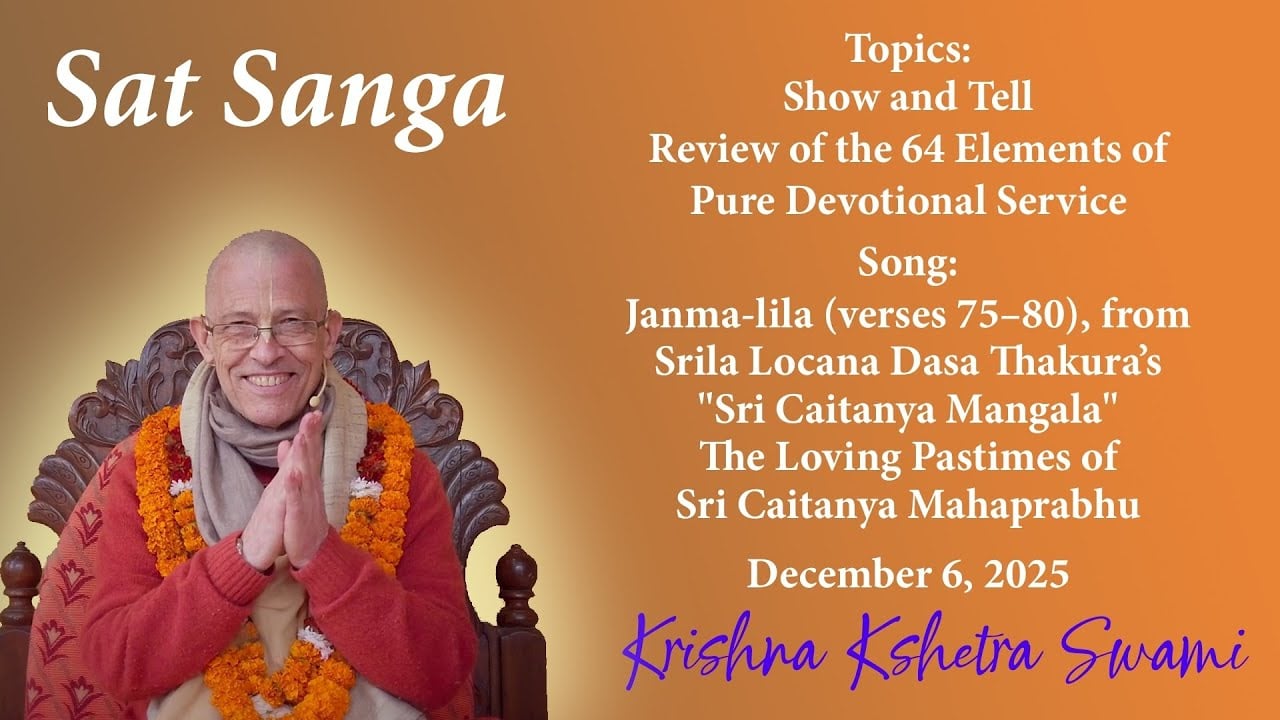
This Sat Sanga in Mayapur (December 6, 2025) presented a clear, practice-focused review of the 64 Elements of Pure Devotional Service with HH Krishna Kshetra Swami. Using a Show and Tell format, the session translated scriptural insights into daily disciplines like japa, kirtan, study, humility, and seva. A devotional interlude from Janma-lila (verses 75–80) in…
-
True Progress Means Harmony with Nature: A Dharmic Vision of Compassionate Living

This reflection presents a dharmic view of progress that honors nature as sacred and interconnected with human flourishing. It explains how Hinduism’s insight into Brahman, alongside Buddhism, Jainism, and Sikhism, fosters environmental harmony, Ahimsa, and dharmic responsibility. It reframes success beyond material wealth, emphasizing balanced living guided by the puruṣārthas and spiritual ecology. Practical examples—community…
-
Breaking the Chains of Maya: Hindu Wisdom on Attachment, Ego, and Inner Freedom

Hindu philosophy explains attachment as a product of avidya—ignorance of the true Self—projected through maya and consolidated by habit patterns and the gunas. The Bhagavad Gita and the Upanishads show how identification with body-mind-ego fosters craving and suffering, while disciplines like viveka-vairagya, karma yoga, and dhyana dissolve clinging. Advaita Vedanta, Sankhya-Yoga, and Bhakti offer complementary…
-
Beyond Dashavatar: Unveiling Vishnu’s Overlooked Avatars in India’s Living Traditions

Hinduism’s vision of Vishnu extends far beyond the familiar Dashavatar. Drawing on Puranic sources and regional traditions, this exploration reveals a wider range of sacred manifestations—such as Hamsa, Dhanvantari, Hayagriva, Vyasadeva, and Jagannath—that enrich Vaishnavism and everyday devotion. The discussion clarifies theological categories like vyuha, archa, antaryami, and shaktyavesha, making complex ideas accessible. Examples from…
-
December 15, 2025 Panchang: Krishna Ekadashi, Nakshatra & Rashi, Auspicious Timings

December 15, 2025, is observed as Krishna Paksha Ekadashi until 10:22 PM, after which it shifts to Krishna Paksha Dwadashi. The day emphasizes upavāsa, japa, and dhyāna, with parāṇa typically performed on Dwadashi as per tradition. Readers are advised to consult a location-specific Panchang for exact Shubh Muhurat, Nakshatra, and Chandra Rashi, as these vary…
-
Kolkata’s Historic Gita Chanting Unites Dharmic Traditions: A Peaceful Call for Harmony

A massive Gita recitation at Kolkata’s Brigade Parade Ground on 7 December 2025 became a powerful unity rally grounded in Sanatan Dharma’s shared values. The program emphasized harmony across Hinduism, Buddhism, Jainism, and Sikhism, reframing unity as cooperation rather than uniformity. Participants experienced disciplined devotion, accessible explanations of key verses, and an inclusive atmosphere. The…
-
Viscount Valentia’s India Voyage: A Candid Colonial Chronicle and Dharmic Unity Lessons

This analytical retelling situates Viscount Valentia’s 1802–1806 voyage within the accelerating arc of British East India Company power and the late-Mughal political landscape. It highlights the work’s value as a meticulously dated primary source that blends geography, society, and statecraft across India, Ceylon, the Red Sea, Abyssinia, and Egypt. Readers gain a clear view of…
-
Arjuna’s Misplaced Compassion: How the Gita Transforms Confusion into Dharmic Clarity

Arjuna’s crisis on the Kurukshetra battlefield shows how compassion, when clouded by attachment, can become confusion. The Bhagavad Gita reframes his hesitation as a failure of clarity (viveka), not a triumph of sensitivity. Krishna’s counsel aligns compassion with duty through equanimity and non-attached action, preserving justice and social welfare (loka-sangraha). The analysis highlights a unifying…