
-
Supreme Court Safeguards Temple Funds: Landmark Ruling Bars Bailouts of Cooperative Banks

The Supreme Court has ruled that temple funds cannot be used to bail out cooperative banks, ensuring that sacred assets remain dedicated solely to the temple’s benefit. This decision strengthens fiduciary responsibility, improves transparency, and reinforces public trust in religious endowments. By separating religious funds from external financial risks, the ruling reduces moral hazard and…
-
Thiruparankundram Lamp Row: RSS chief urges peaceful, strength-based resolution in Tamil Nadu

The Thiruparankundram lamp row has sharpened attention on how Tamil Nadu can protect sacred temple traditions while preserving public harmony. Recent remarks by RSS chief Mohan Bhagwat underscore confidence in a peaceful, strength-based resolution that aligns devotion with constitutional processes. The dispute touches deep emotional bonds around deepam rituals, making inclusive consultation and transparent planning…
-
Jivat Shraddha Explained: The Profound Hindu Rite of Honoring One’s Life Before Death

Jivat Shraddha describes a rare, context-specific Hindu ritual in which a living person performs Shraddha for oneself to acknowledge impermanence, resolve obligations, and recommit to dharma. Grounded in Dharmashastra discussions and later ritual digests, it is typically associated with life transitions such as vanaprastha or sannyasa and with prāyaścitta. The rite resembles elements of conventional…
-
Paryagnikarana Explained: Sacred Ghee Purification That Elevates Vedic Yajna and Devotion

Paryagnikarana, the Vedic rite of purifying ajya (ghee) before offering it into the sacred fire, shows how material preparation and mental intention unite to elevate yajna. The procedure integrates clarity of substance, mantra recitation, and reverence for Agni to transform an ordinary ingredient into a consecrated medium. Beyond technical steps, the rite embodies an inner…
-
Kalachakra in Pancaratra: Decoding Vishnu’s Six-Spoked Wheel of Time and Cosmic Order

This article explores Kalachakra—the six-spoked wheel of time—in the Pancaratra teachings of Vaishnavism, showing how it frames time as a sacred, ordered reality upheld by Bhagavan Vishnu. It explains how the spokes are read through six seasons, six transformations, or six existential waves, each illuminating the rhythm of change and renewal. The piece outlines Pancaratra’s…
-
Chaitanya Mahaprabhu’s Bold Science of Consciousness: Ending Ego’s Grip and Social Strife
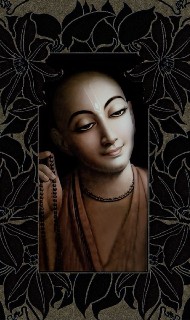
This essay presents Sri Chaitanya Mahaprabhu’s rigorous analysis of consciousness as a practical science aimed at social harmony. It identifies ahankara—misidentification of self with matter—as the root cause of unrest, not a mere symptom. Drawing on Sri Brahma Samhita and the Bhagavatam, it situates the problem and solution within Vedic philosophy. It then shows how…
-
Reconstructing Sri Chaitanya Mahaprabhu’s Life: An Evidence-Based Gregorian Timeline

Sri Chaitanya Mahaprabhu’s birth on February 18, 1486 anchors an evidence-based reconstruction of his life events in the Gregorian calendar. Because many traditional sources record seasons and durations but not exact years, this study correlates those cues from Sri Caitanya Caritamrita with Sri Caitanya Candrodaya and Sri Krsna Caitanya Carita Maha Kavya. The result is…
-
Transcendental Art in ISKCON: Visualizing Krsna’s Forms to Deepen Devotion and Unity
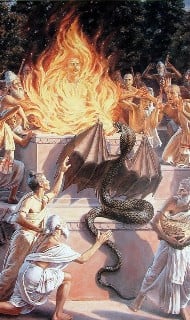
This article explores how transcendental art within ISKCON transforms individual talent into meaningful devotional service rooted in Vedic literature. It explains how illustrations of Krsna’s many forms, as described in Bhagavad-gita and Srimad-Bhagavatam, function as both spiritual practice and pedagogy. Readers gain insight into why Prabhupada emphasized richly illustrated texts and how ISKCON’s art department…
-
First English Release of Kavya-kaustubha: Unlocking Sri Baladeva Vidyabhusana’s Poetics

Kavya-kaustubha, composed by Sri Baladeva Vidyabhusana, is now available in English for the first time, opening a precise gateway to Sanskrit poetics. The work’s rigorously defined concepts, each paired with clear examples, make complex ideas accessible for students, educators, and researchers. This edition enhances classroom teaching and self-study while supporting comparative literary analysis. It also…
-
NCERT’s new textbook reveals Ghaznavi’s raids and Somnath to foster balanced, inclusive learning

NCERT’s new textbook presents a more detailed, evidence-based account of Mahmud Ghaznavi’s campaigns, including the attack on Somnath, within the fuller context of 11th-century Indian history. The material prioritizes historiographical rigor by drawing on multiple sources and clarifying the political, economic, and cultural drivers of conflict. Students benefit from clearer timelines, geographies, and motives that…
-
Leave Work at Work: Dharma, Vairagya, and Peaceful, Sustainable Work‑Life Balance in Hindu Thought

Leaving work at work reflects the Hindu synthesis of dharma and vairagya: act with full integrity, then release attachment to results. Grounded in Bhagavad Gita 2.47 and Karma Yoga, it cultivates mental clarity, prevents burnout, and improves ethical decision-making. Simple rituals—end-of-day summaries, mindful commutes, brief pranayama, and digital sunsets—reduce rumination and restore balance. The insight…
-
Reclaim Consciousness with Timeless Hindu Wisdom: Upanishadic Insights for a Unified Dharma

Hindu philosophy presents consciousness as the essence of existence, summarized by the Mandukya Upanishad’s “Ayam atma brahma.” This post clarifies how witnessing awareness (sakshi) and the four states culminating in turiya offer a practical framework for modern life. It outlines accessible methods—pranayama, mantra japa, and meditation—to improve focus, emotional balance, and resilience. Ethical foundations (yama…
-
Sacred Parenting Mastery: Shiva–Parvati’s Timeless Lessons for Raising Wise, Compassionate Children
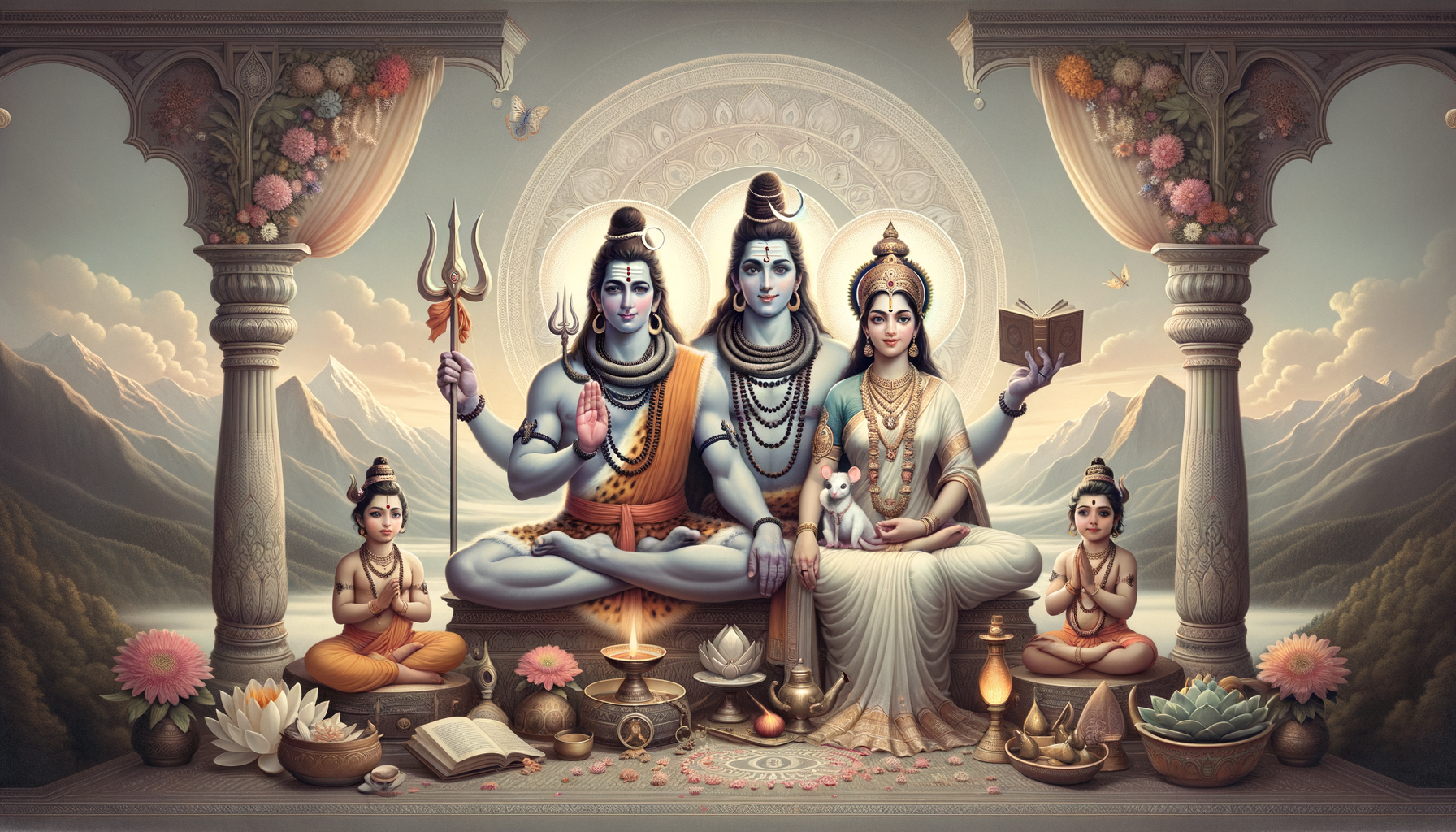
Hindu scriptures present the divine family of Lord Shiva, Mata Parvati (Pārvatī), Lord Ganesha, and Lord Kartikeya as a practical model of sacred parenting. Their narratives teach restorative accountability, healthy sibling dynamics, and the harmony of discipline with compassion. The Ganesha guardianship episode highlights firm boundaries coupled with reconciliation, while the brothers’ contest affirms diverse…
-
December 18, 2025 Panchang Guide: Tithi Change, Krishna Paksha Chaturdashi, Ritual Meaning

December 18, 2025 in the Hindu Panchang begins with Krishna Paksha Trayodashi until 2:35 AM and continues as Krishna Paksha Chaturdashi thereafter. The dark fortnight is traditionally associated with reflection, discipline, and inward practice. Chaturdashi often carries a devotional focus, and many observe Masik Shivaratri on Krishna Chaturdashi with quiet worship and japa. Good Time…
-
Saphala Ekadashi 2025 Date and Significance: Paush Krishna Paksha Vrat Guide for Inner Success

Saphala Ekadashi in 2025 is on December 15, observed during Paush Krishna Paksha in North Indian calendars and during Margashirsha Krishna Paksha in Gujarati, Marathi, Kannada, and Telugu traditions. The vrat emphasizes inner success through disciplined fasting, Vishnu puja, sacred recitation, and compassionate conduct. Devotees typically perform parana on Dwadashi after sunrise, following local Panchang…
-
Discover the Timeless Pillars of Hinduism: Temples, Saints, and Living Pluralism

Hinduism’s enduring features include a global network of Hindu temples, a lineage of rishis and saints, and historic royal patronage that nurtured sacred architecture and social welfare. Its core principles—dharma, karma, ahimsa, and moksha—support multiple valid paths such as Bhakti, Jnana, Karma, and Yoga. This religious pluralism aligns naturally with the broader dharmic family of…
-
Eighteen-Faced Rudraksha (Astadasa Mukhi): Earth-Energy Significance, Identification, and Mantras

The eighteen-faced Rudraksha (Astadasa Mukhi) is revered as an embodiment of Bhumi—Mother Earth—symbolizing stability, nourishment, and patient strength. Identified by its eighteen natural lines extending end-to-end, it is valued for grounding practitioners in clarity, resilience, and responsible action. Puranic narratives, including accounts involving Madhu and Kaitabha, highlight Earth’s sanctity and the bead’s profound earth-energy symbolism.…
-
Sarpa Abharana Moorthy: Why Shiva Wears Vasuki—and the Powerful Promise of Protection

Sarpa Abharana Moorthy presents Lord Shiva wearing the sacred serpent Vasuki to convey protection, fearlessness, and compassion. This revered image communicates mastery over poison and danger while reassuring devotees facing anxieties about illness and harm. Puranic and Agamic traditions describe Shiva as naga-bhushana, integrating Naga symbolism of wisdom and auspiciousness into Shaiva iconography. Dharmic unity…
-
Dhanurmasa Vratam 2025–2026: Sacred Dawn Devotion, Key Dates, and Scriptural Insights

Dhanurmasa Vratam, observed from Dhanu Sankramana to Makara Sankranti, invites dawn-centered devotion, scripturally affirmed in the Brahmanda Purana, Matsya Purana, Sri Bhagavatham, and the Narayana Samhita. For 2025–2026, it runs from 16 December 2025 to 14 January 2026, with regional panchang variations guiding precise timings. Households commonly offer lamp, tulasi, and naivedya to Vishnu, chant…
-
Toe Rings (Metti) in Hinduism: Timeless Symbolism, Ritual Power, and Marital Grace

Toe rings—Metti in Tamil, bichiya in North India—are worn on the second toe by married Hindu women as a sacred marker of marriage within Hindu customs. Typically fashioned in silver, they symbolize auspiciousness, fidelity, and the sanctity of household life. Ritual placement during the vivaha ceremony blends duty with emotional resonance, making the moment memorable…