
-
Sanatan Rashtra Shankhnad Mahotsav: A Resonant Call for Valour, Culture, and Security

Scheduled for 13–14 December 2025 at Bharat Mandapam, New Delhi, the ‘Sanatan Rashtra Shankhnad Mahotsav’ brings national security, cultural heritage, and valour into a single scholarly forum. A rare exhibition of historical weaponry and sacred relics provides context for ethical defence traditions within Sanatan Dharma. Moderated dialogues explore contemporary security challenges with rigor, linking policy…
-
Bahraich 2024 Verdict: Sarfaraz Gets Death Penalty, Nine Sentenced to Life; Call for Calm

A Bahraich district court has pronounced a landmark verdict in the Ramgopal Mishra murder case linked to the 2024 violence, awarding the death penalty to Prime Accused Sarfaraz and life imprisonment to nine others. The ruling underscores due process, evidentiary rigor, and the judiciary’s deterrent stance against lethal mob violence. It also reminds citizens that…
-
Why Lack of Contentment Fuels Suffering: Santosha in the Yoga Sutras and Dharmic Wisdom

This article explains why the absence of contentment (santosha) intensifies suffering and how the Niyamas in Patanjali’s Yoga Sutras offer practical remedies. It connects Hindu insights with convergent teachings from Buddhism, Jainism, and Sikhism, highlighting a shared dharmic path toward inner peace and ethical action. Readers learn how karma yoga stabilizes effort without attachment to…
-
Chamunda’s Sacred Elephant: Fierce Shakti, Ego’s Undoing, and the Path to Inner Freedom

Goddess Chamunda’s association with the elephant in select iconography conveys a profound lesson: the fierce subjugation of ego, pride, and inertia that obstruct spiritual growth. Read as a visual theology of Shakti, the motif transforms heaviness into purposeful clarity aligned with dharma. The symbolism resonates psychologically, echoing Vedantic neti neti and Yogic pratyahara as disciplined…
-
Iccha Mrityu in Hinduism: The Awe-Inspiring Power to Choose Death with Conscious Grace
Iccha Mrityu—“death by will”—is a profound Hindu concept linking ethical living, yogic mastery, and fearless acceptance of mortality. The Mahabharata’s account of Bhishma illustrates this ideal with clarity and dignity. Rather than endorsing self-harm, texts frame conscious dying as a rare fruit of disciplined practice and deep realization. Parallels across dharmic traditions—Buddhist parinirvana, Jain Sallekhana,…
-
How the Sahibzaade’s Martyrdom Ignited Two Teens’ Inner Mission and Lifelong Courage

Two teenagers discovered a practical path to courage and clarity after studying the Sahibzaade’s martyrdom in a youth workshop. The narrative of Guru Gobind Singh’s sons—set around Anandpur Sahib, Chamkaur, and Sirhind—became a framework for daily discipline. By linking seva, simran, and small vows (anuvrat) to study habits, the teens improved focus and reduced anxiety.…
-
Illuminating Review: Guru Nanakpanthi Heritage Series—Sikhs in Sindhi Society, Past to Present

This review examines Volume One of the Guru Nanakpanthi Heritage Series—Sikhs in Sindhi Society: Legacy and Present—highlighting its clear analysis, compassionate tone, and relevance to Cultural Heritage and History. The book traces how seva, kirtan, sangat, and langar shaped Sikh–Sindhi bonds while documenting present-day continuities across India and the diaspora. It advances Religious pluralism in…
-
NGAI unveils nationwide initiative to empower Gatka officials, elevate safety and fair play
The National Gatka Association of India has launched a nationwide initiative to strengthen Gatka officiating through standardized training, tiered certifications, and harmonized rulebooks. The program prioritizes athlete safety, fair play, and transparent decision-making to build trust among participants and spectators. Inclusive pathways will encourage women, youth, and regional practitioners to join, supported by multilingual resources…
-
December 19, 2025 Panchang: Amavasya Tithi Timings, Shubh Muhurat Overview, and Guidance

December 19, 2025 is observed as Amavasya (no-moon day) in the Hindu calendar, with Krishna Paksha Chaturdashi ending at 4:35 AM IST and Amavasya continuing until 6:37 AM IST on December 20. The civil day is therefore largely Amavasya, a period that traditionally favors reflection, quiet practice, and charitable intent. Across dharmic traditions, this lunar…
-
Krishna’s Cows in New Vrajamandala: Devotional Bonds of Care, Ahimsa, and Sacred Ecology

Krishna’s Cows in New Vrajamandala offers an academically grounded yet accessible meditation on the sacred relationship among Krishna, devotees, and cows. The work highlights go-seva and ahimsa as living practices that nurture compassion, ecological stewardship, and communal responsibility. Guided by an introduction from Yadunandana Swami, the text invites reflective reading—beginning with “In the pages …”—and…
-
Shani Sade Sati for Kanya Rashi: Decode Janma Shani’s Second Phase, Effects, Remedies

Janma Shani, the second 2 1/2-year phase of Shani Sade Sati for Kanya Rashi (Virgo sign), invites disciplined effort, clarity, and ethical alignment. The transit’s effects vary by Lagna, Nakshatra, natal Shani, and Dasha, making outcomes neither fixed nor fated. Practical responses—structured routines, mindful finances, meditation, and steady seva—reduce stress and enhance resilience. Traditional upaya…
-
Shani Sadesati for Kanya Rashi: Master the Final 2.5 Years (Paada Shani) with Grace

Shani Sadesati for Kanya Rashi culminates in Tula Rashi as Paada Shani, an exalted Saturn phase that refines speech, strengthens family duties, and stabilizes resources. The emphasis shifts from short-term comfort to long-term integrity, making discipline and ethical clarity essential. Observing Panchang, and considering Nakshatra and Dasha, helps contextualize individual experiences. Simple, steady practices—seva, daan,…
-
Yadagirigutta Temple Timings Guide: Precise Opening/Closing, Darshanam Tips, and Eclipse Rules

Yadagirigutta Lakshmi Narasimha Swamy Temple is open year-round and typically begins the day around 3:30 am, enabling an early, serene darshanam for pilgrims. In accordance with tradition, the temple remains closed during Chandra Grahanam and Surya Grahanam and reopens only after purification rituals. Timings can vary with seasons, crowd flow, and special sevas, especially during…
-
Lal Kitab Moon in 3rd House: Powerful Chandra Remedies, Pujas, Vratas, and Gem Guidance

Lal Kitab views Moon in the 3rd house as a placement that heightens sensitivity in communication, initiative, and sibling ties while noting possible 8th-house vulnerabilities. Practical remedies emphasize Somvar Vrat, Shiva and Chandra worship, and mantra recitation such as “Om Chandraya Namah.” Charity with Moon-friendly items (milk, rice, white sweets) and mindful conduct support emotional…
-
Powerful Lal Kitab Remedies for Venus in 2nd House: Protect Wealth, Harmonize Family, Avoid Misery

Lal Kitab associates Venus in the 2nd house with wealth, speech, and family harmony, while warning against homes that are broad in front and narrow at the rear, and against trading in gold. Practical remedies include Friday donations of white items, gentle recitation of “ॐ शुक्राय नमः,” and cultivating truthful, compassionate speech. Respect for women,…
-
Shani Sade Sati for Kanya Rashi: First 2.5 Years (Viraya Shani) Insights & Remedies
Shani’s entry into Simha Rashi begins Shani Sade Sati for Kanya Rashi, with the first 2 ½ years known as Viraya Shani. This phase emphasizes restraint, careful budgeting, and a compassionate reordering of priorities. Many experience increased responsibilities and subtle lifestyle shifts, which Saturn uses to teach discipline and clarity. Practical steps—mindful spending, organized routines,…
-
Menopause Revealed Hidden Trauma: A Decade-Long Journey to Healing, Resilience, and Rest

Menopause can unmask long-buried trauma, especially in women with higher Adverse Childhood Experiences (ACEs), and research links this history to more severe perimenopausal symptoms. This account traces a decade-long journey from insomnia and anxiety to nervous-system literacy and emotional resilience. Evidence from Maturitas, Emory University, and the Journal of Clinical Psychiatry clarifies why trauma heightens…
-
How Tagore Illuminates Kalidasa: Forest Hermitages and the Soul of Sanatana Dharma
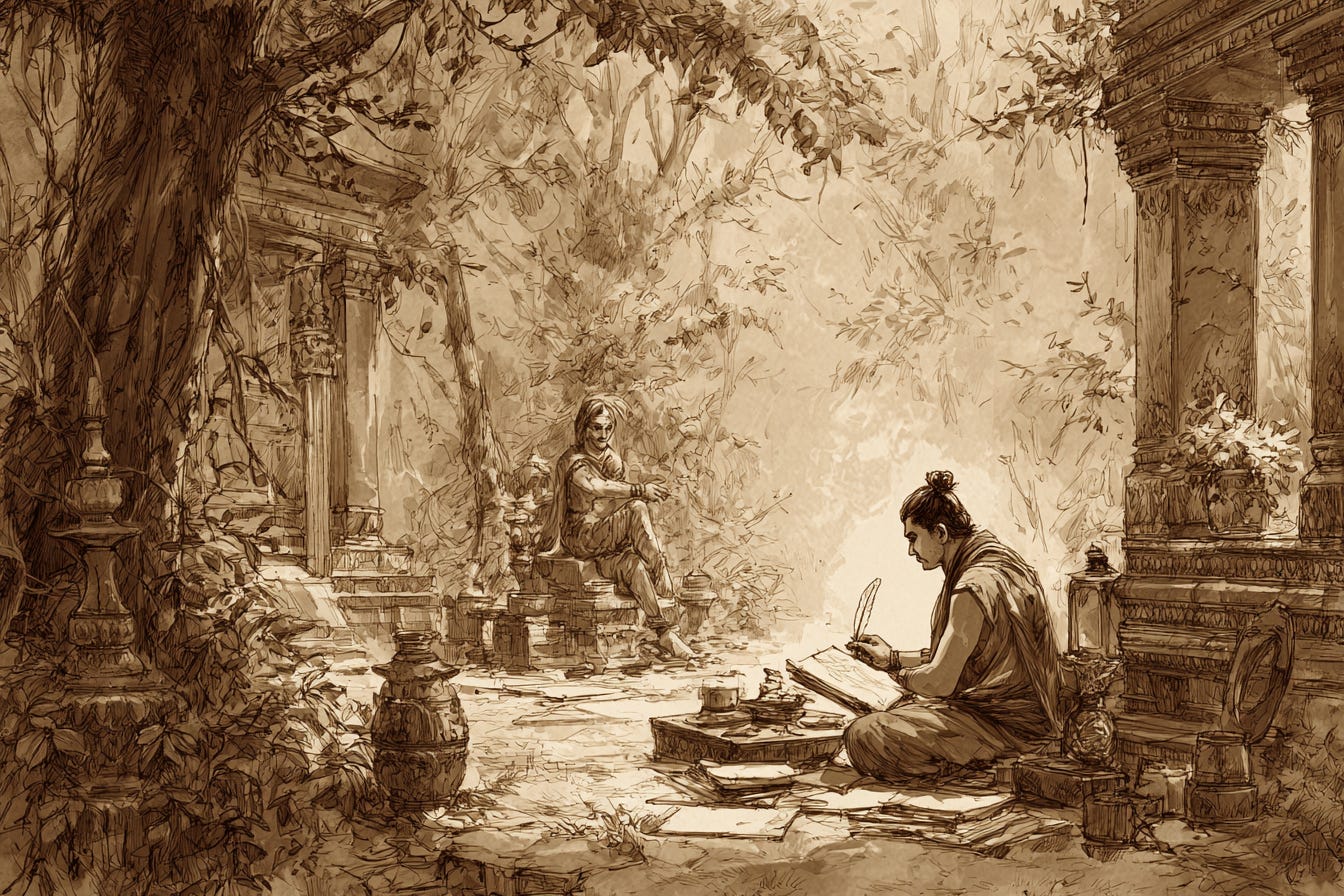
This essay distills Rabindranath Tagore’s reading of Kalidasa to show how forest hermitages embody the ethical and aesthetic heart of Sanatana Dharma. Drawing on The Springhead of Indian Civilisation (translated by Acharya Jadunath Sarkar), it traces how the forest nurtured both Vedic and Buddhist ages and continues to inform a broader dharmic ethos. Kalidasa’s Raghuvamsa…
-
Protect Your Sacred Energy: Hindu Wisdom to Resist Attention Hijacking in the Digital Age
Ancient Hindu concepts such as prāṇa, indriya-nigraha, pratyāhāra, and dhyāna provide a clear framework to understand how the attention economy drains energy and clarity. Read with Buddhist sati, Jain samayik, and Sikh simran, these ideas form a unifying dharmic ethic that protects attention as sacred. The article outlines practical, low-friction habits—breath-before-click, notification pruning, device-free zones,…
-
Harihara’s Sacred Synthesis: Uniting Vishnu and Shiva as a Living Symbol of Oneness
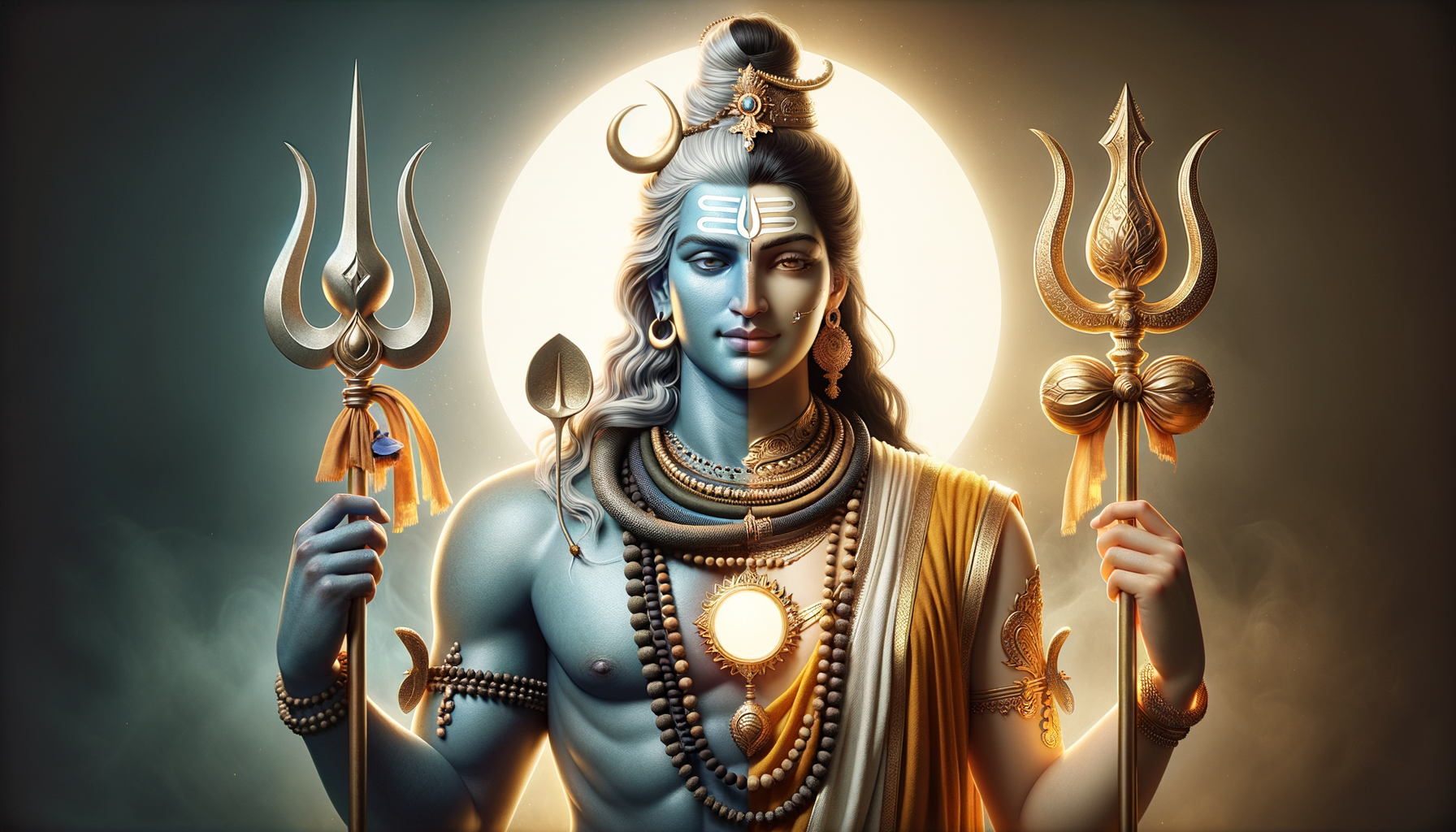
Harihara, the composite form of Vishnu (Hari) and Shiva (Hara), embodies Hinduism’s profound principle of unity in diversity. Its iconography fuses preservation and transformation, offering a clear ethical model: protect what is essential while courageously renewing what has run its course. The image resonates with non-dual insights, Bhakti devotion, and plural worship centered on Ishta,…