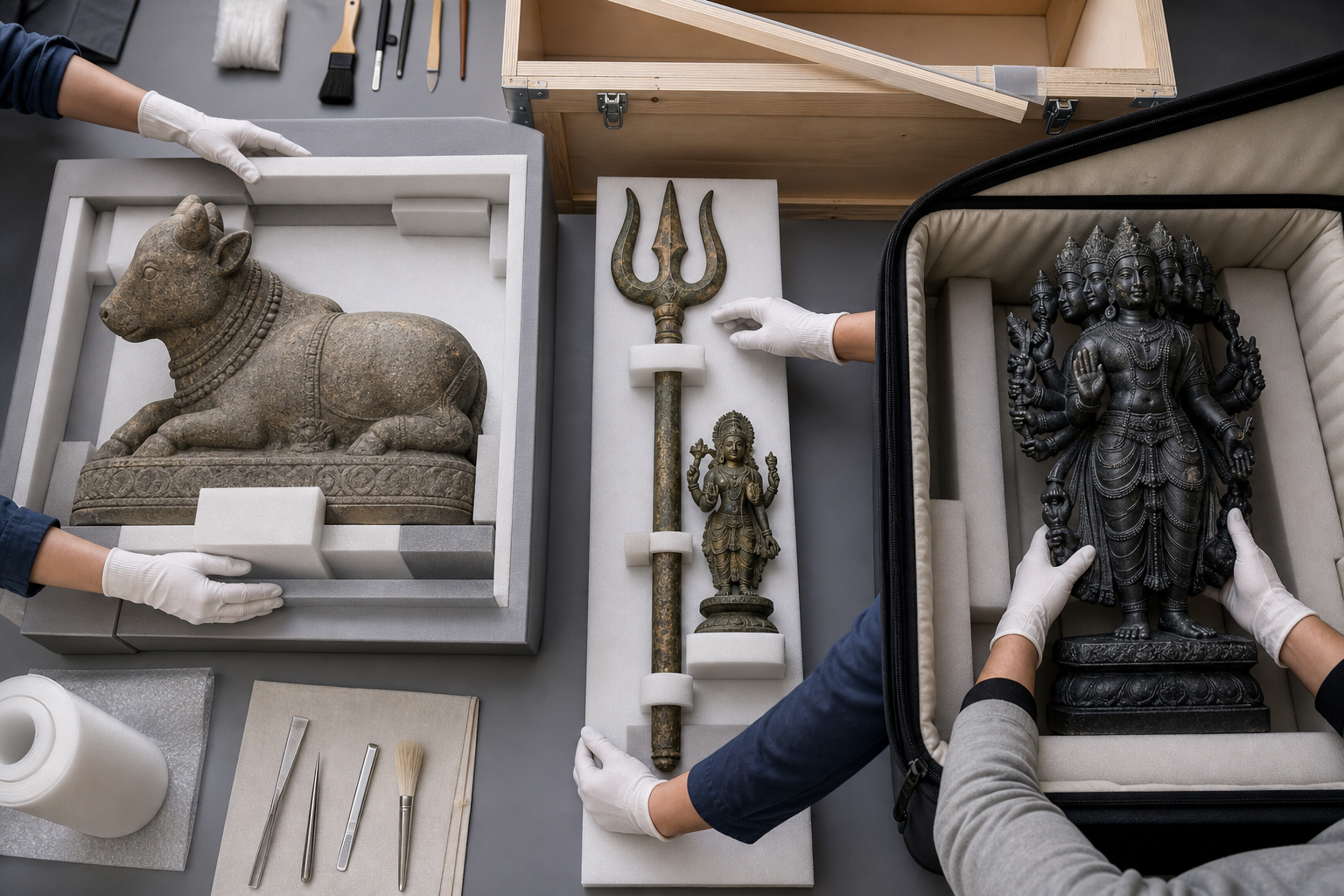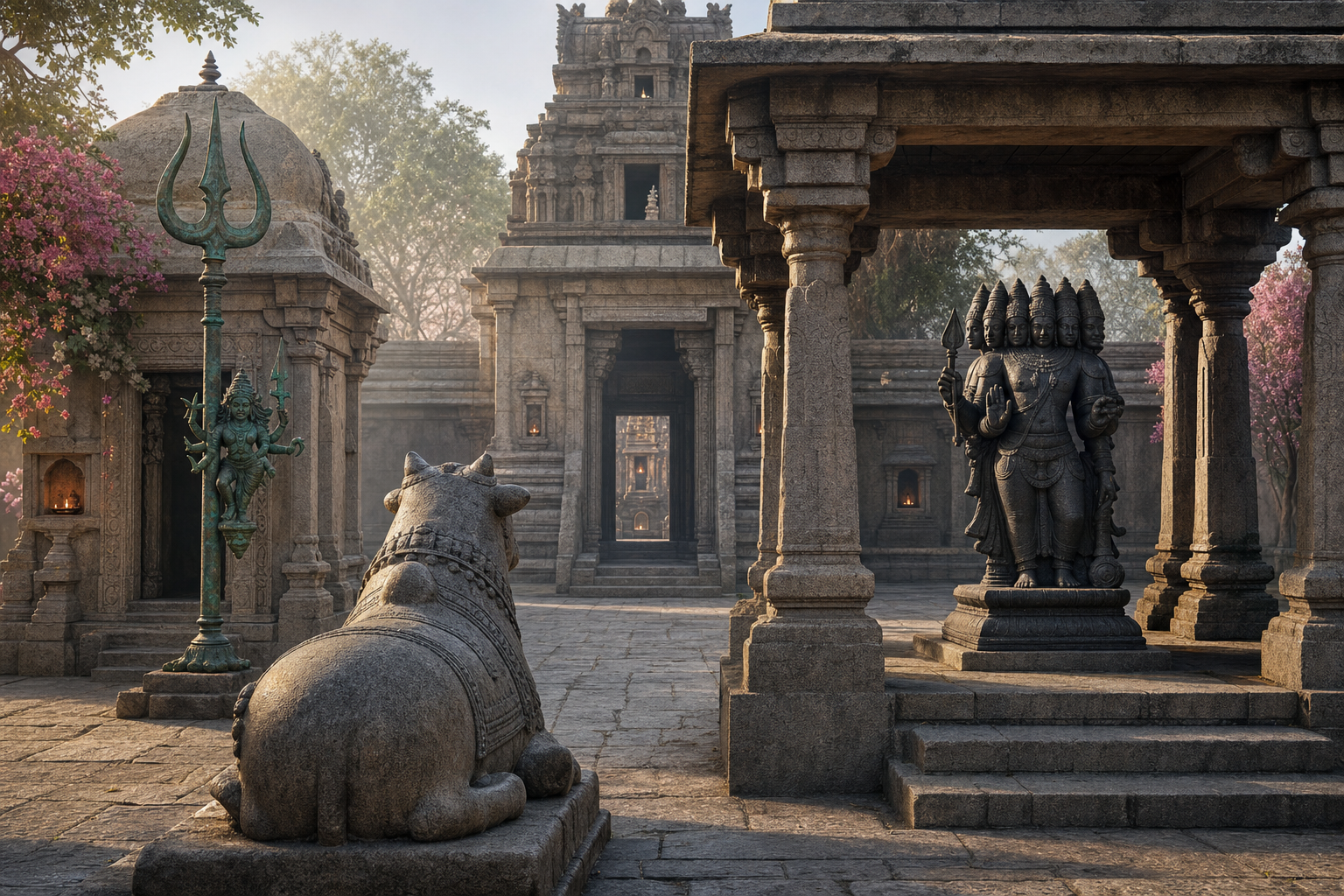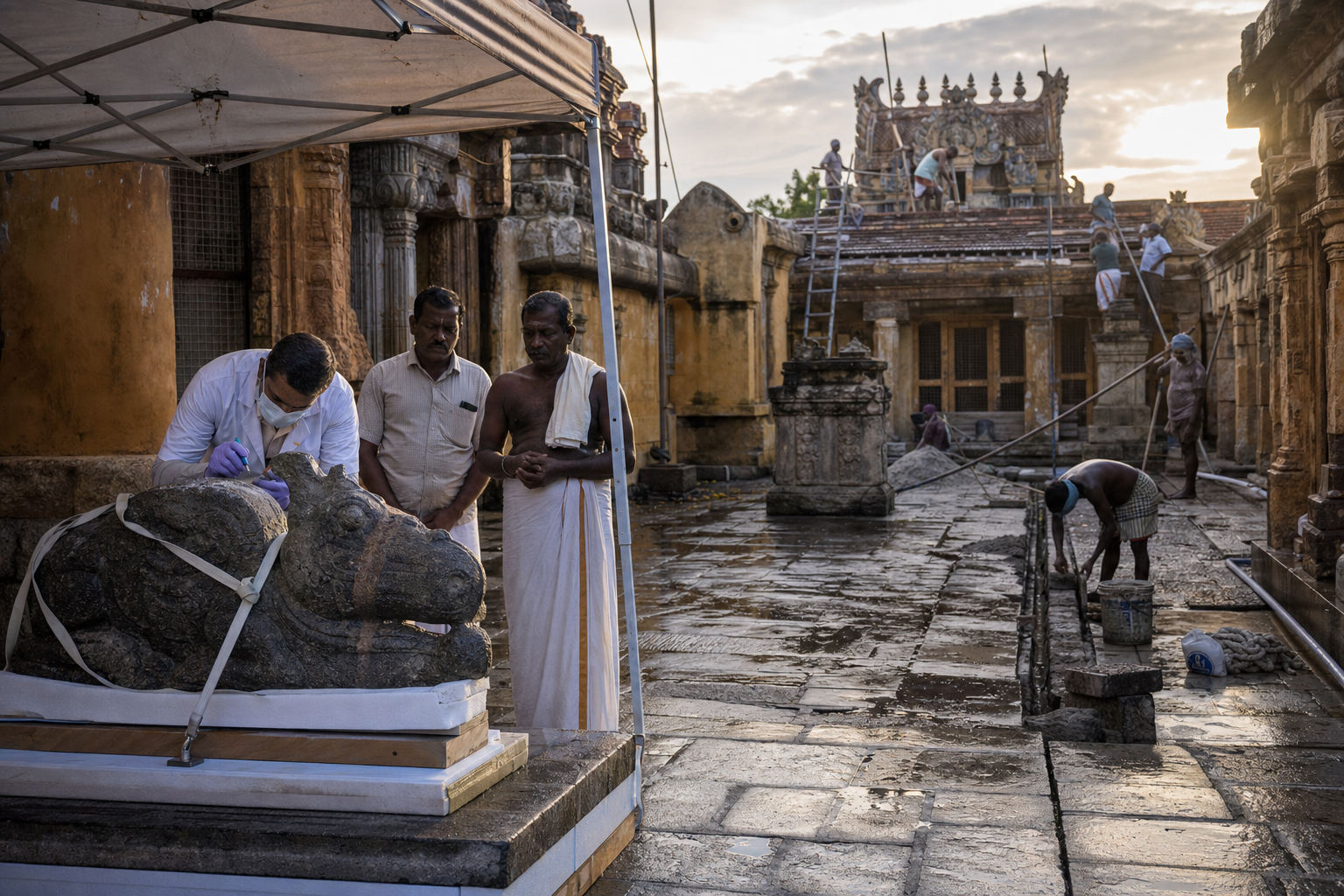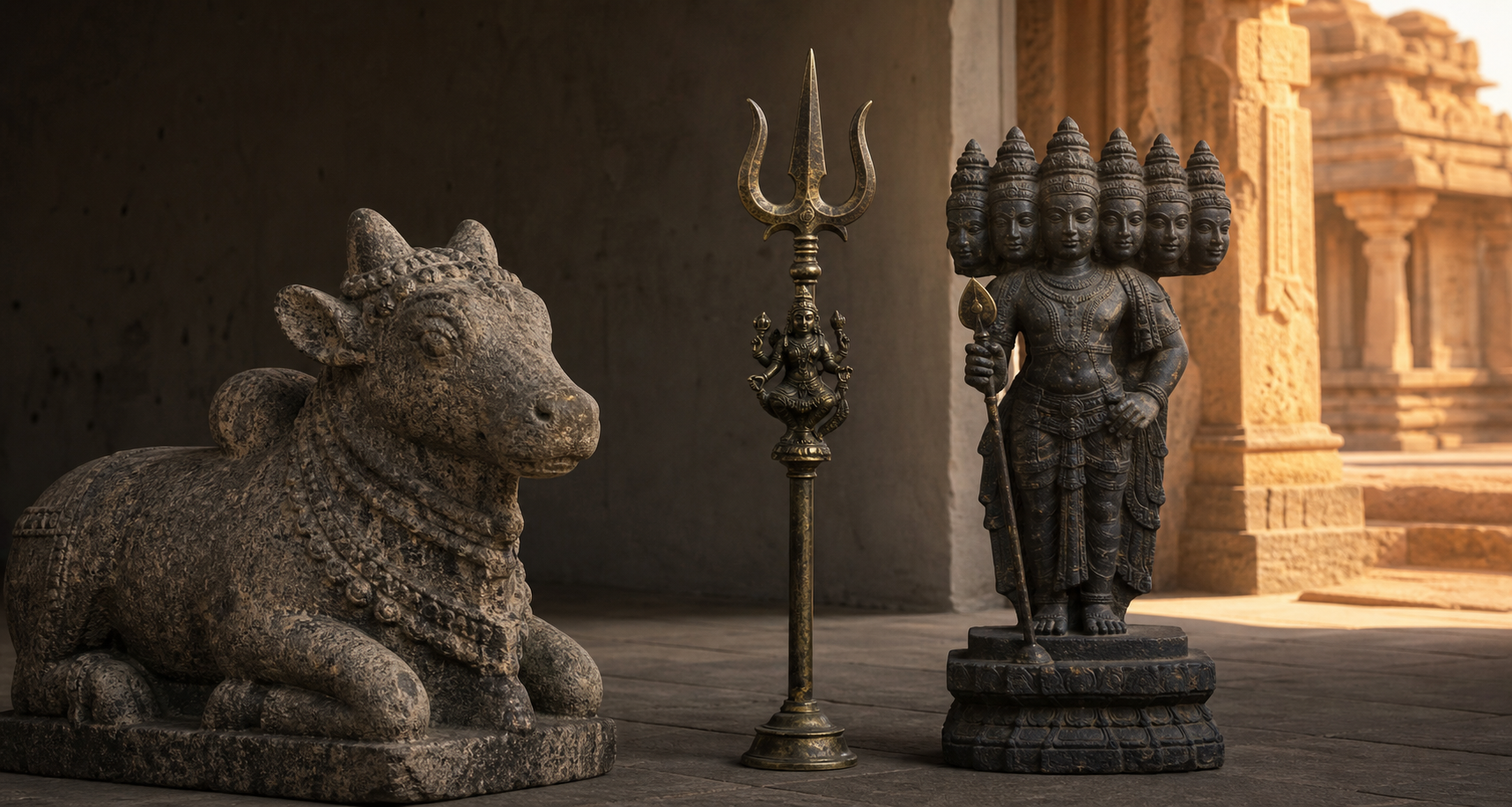
Australia’s decision to repatriate three Tamil sacred antiquities should be understood as more than a transfer between governments. An earlier DharmaRenaissance report says the commitment was announced during the Third Australia-India Annual Summit in Melbourne on 9 July 2026, during Prime Minister Narendra Modi’s visit, and concerns a granite Nandi, a bronze trident bearing Bhadrakali and a basalt image of six-headed Skanda.
The larger question is what a meaningful return requires. Provenance records, conservation, ritual setting, temple conditions and community relationships all determine whether repatriation repairs the objects’ separation from their original cultural landscape.
Key takeaways
- The summit announcement established a commitment to repatriate the antiquities, but the supplied report cautions that this did not necessarily mean they had already been transported or ritually reinstalled.
- The three objects belong to interconnected Murugan, Shaiva and Shakta traditions rather than three isolated categories of religious art.
- The provenance history reported for the Nandi and Bhadrakali trident shows why acquisition paperwork alone cannot establish lawful removal or a complete ownership history.
- A responsible homecoming should connect custodial transfer with conservation records, temple-site assessment, provenance transparency and consultation about the objects’ future setting.
From a summit announcement to completed repatriation
The earlier DharmaRenaissance account reports that the Government of India’s summit outcomes identified the objects by date, material and iconography. It also says Australia described the action as a voluntary return, while the bilateral record presented their return to India as an agreed outcome.
That language establishes the diplomatic decision, not every subsequent stage. Repatriation commonly involves confirmation of custody, condition assessment, transport planning, documentation at departure and arrival, and a decision about long-term care. The supplied report specifically warns against assuming that all three objects had already completed those stages when the announcement was made.
Return to a country and restoration to a particular temple are also distinct decisions. The first changes national custody; the second may depend on an object’s condition, the safety of the proposed setting, administrative review and the needs of the associated religious community. Keeping these milestones separate makes later reporting more accurate and protects against turning a diplomatic commitment into a premature claim of ritual restoration.
Three objects within one Tamil sacred landscape
The group is significant because it brings three devotional traditions into view at once. The following identifications, dates and temple associations are those reported in the supplied DharmaRenaissance article.
| Antiquity | Reported date and material | Reported temple association | Sacred context |
|---|---|---|---|
| Six-headed Skanda, or Karttikeya | 12th-century basalt | Naganathaswamy Temple at Manambadi, near Kumbakonam | Murugan worship and the form known as Shanmukha |
| Nandi | 11th-12th-century granite | Sri Kasiviswanathaswamy Temple at Kollumangudi in Tiruvarur district | Shaiva devotion and the axial relationship with a Shiva sanctum |
| Trident bearing Bhadrakali | 11th-century bronze ceremonial object | Sri Kasiviswanathaswamy Temple at Kollumangudi | Ritual metalwork joining Shaiva and Shakta symbolism |
The Skanda image is reported as a representation of Murugan in his six-faced form. The earlier article associates its place of origin with a temple landscape linked to the era of Rajendra Chola I and reports that the Naganathaswamy Temple has suffered serious physical deterioration. That context enlarges the purpose of repatriation: the sculpture can encourage attention to the monument, its inscriptions and its historical setting, even though returning one object cannot by itself repair a vulnerable temple.
Nandi demonstrates why physical setting is part of meaning. In a Shiva temple, Nandi conventionally faces the sanctum along a deliberate axis. His orientation expresses constancy and attentive devotion; it also helps organize the devotee’s encounter with the sacred space. A gallery can conserve and interpret the stone, but it cannot reproduce that architectural and ritual relationship in full.
The Bhadrakali trident raises a related issue. The supplied report treats it as ceremonial metalwork, not merely a bronze sculpture made for detached viewing. Its form brings the trishula together with a protective manifestation of the Goddess. Examination of its construction, wear and possible evidence of handling may illuminate its ritual life, while conservation decisions must recognize that scientific value and sacred significance can coexist.
Viewed together, the objects resist a simple division into three museum classifications. Murugan devotion, Shiva worship and reverence for Shakti overlap within Tamil religious culture. Repatriation therefore reconnects not only individual artefacts with India, but also an ensemble of relationships among deity, temple architecture, ritual practice and collective memory.
How provenance shifted the case from display to accountability
Provenance is the supported chronology of an object’s location, ownership and movement. For an antiquity, a useful record must do more than identify the dealer who completed the final sale. It should clarify where the object was located, when and under what authority it left its country of origin, who held it at each stage, and whether independent evidence supports those claims.
According to the earlier DharmaRenaissance report, the National Gallery of Australia examined all three antiquities through its Asian Art Provenance Project. The article relays that an April 2017 gallery release said the Tamil Nadu Idol Wing had reported the Nandi and Bhadrakali trident, together with two other sculptures, as stolen. It further reports that the gallery regarded the relevant provenance as suspect or inadequately documented and was discussing the works with the Indian High Commission.
The account also says the gallery purchased the granite Nandi from New York dealer Carlton Rochell in 2009 and obtained the Bhadrakali trident from the same dealer in 2006. Those acquisition details identify the immediate commercial source, but they do not by themselves reconstruct the objects’ earlier journeys or establish whether their export was lawful.
This is the central lesson for collecting institutions. A sales record can document a transaction without resolving the legitimacy of everything that preceded it. Unexplained decades, unnamed collections and evidence produced only at the point of sale should prompt further investigation. Where the record remains materially incomplete, transparent review and voluntary return can form part of institutional accountability.
What a responsible return should accomplish next
Preserve a continuous custody and conservation record
The handover should leave a clear documentary trail: who released each object, who received it, what its condition was before transport and what treatment was considered necessary afterward. The supplied report identifies physical movement, conservation assessment and transfer of custody as stages that may follow the diplomatic decision. Recording them protects the objects and makes the process publicly verifiable.
Decide the setting with ritual context in view
National return should not automatically predetermine immediate installation at a particular site. The Nandi’s orientation toward Shiva and the trident’s character as a ceremonial implement make context essential, but condition and security also matter. Consultation among custodial authorities, conservators and relevant temple communities can help determine whether temple restoration, protected local display or another arrangement best serves both preservation and sacred continuity.
Connect the objects with the condition of their temples
The reported deterioration of the Naganathaswamy Temple makes the Skanda image especially instructive. A symbolic homecoming would be incomplete if the associated monument remained undocumented or structurally unsafe. The earlier article identifies architectural recording, structural conservation, inscriptional study and responsible revival of the temple’s cultural life as constructive possibilities arising from renewed attention.
Keep the provenance record accessible
Repatriation should not erase the history of displacement. Publishing the known ownership chronology, unresolved gaps, conservation findings and successive custody decisions would support scholarship and help other museums recognize comparable warning signs. It would also allow the public to distinguish evidence from assumptions as the objects move through later stages.
Future reporting should distinguish the announcement, formal handover, arrival in India, conservation assessment and any eventual ritual reinstallation, giving dates and custodians when they become documented. Such precision would allow the return to develop into a durable partnership among heritage authorities, scholars and the communities for whom these antiquities remain sacred.