
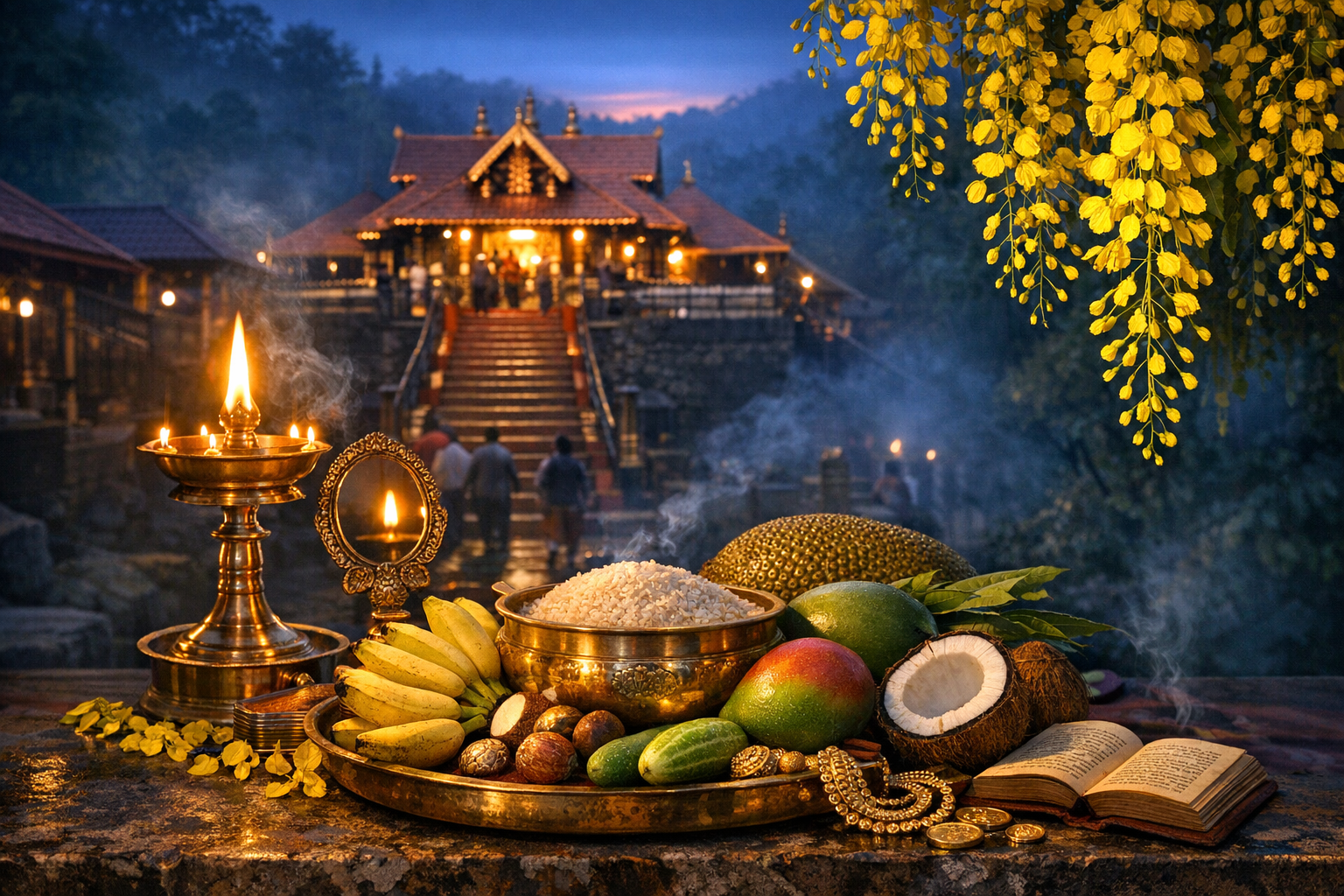
Vishu, the Malayalam astrological New Year, begins with the deeply symbolic Vishu Kani (Vishukkani)the first blessed sight at daybreak that sets an auspicious tone for the year. Among the most revered settings for this observance is the Sabarimala Ayyappa Temple, where the pre-dawn Vishu Kani Darshanam is sought by thousands who arrive to align with the season’s promise of renewal, order, and prosperity.
For 2026, Vishu falls on 14 April (Medam 1 in the Malayalam calendar). Subject to the Travancore Devaswom Board’s final notification, Vishu Kani Darshanam at Sabarimala is expected in the pre-dawn window of approximately 4:00–6:00 IST on 14 April 2026. As with all festival operations at Sabarimala, exact timings are confirmed by temple authorities and may adjust for crowd management, security, and ritual sequencing; devotees are advised to verify updates on the official channels before travel.
Astrologically, Vishu marks Mesha Sankramanathe Sun’s ingress into sidereal Ariessignifying a cosmological reset that many in Kerala honor as the New Year. The discipline of viewing the Kani at dawn reflects a civilizational understanding shared across dharmic traditions: the experience of the first sight of light and order (rita) fortifies inner resolve, ethical clarity, and collective well-being for the cycle ahead.
Vishukkani traditionally includes a lit nilavilakku (lamp), a polished mirror (val kannadi or Aranmula mirror), an arrangement of rice in a brass uruli, seasonal fruits and vegetables, a split coconut, arecanuts, gold or coins symbolizing prosperity, an image of the chosen deity (in Kerala homes often Sri Krishna or Mahavishnu, and at Sabarimala Sri Dharma ShasthaAyyappa), sacred texts, and the golden-yellow kani konna blossoms (Cassia fistula) that bloom in mid-April. Each element encodes a value: light for wisdom, mirror for self-reflection, grain for abundance, and blossoms for seasonal harmony.
At Sabarimala, this sacred array is prepared within the sanctum’s ritual framework so that devotees may behold the Kani as the first darshan of the year. Many pilgrims describe a palpable stillness in those dawn minutesan atmosphere in which the rhythm of the forest, the fragrance of lamp soot and flowers, and the soft hum of mantras blend into a singular moment of grace. The Kani, perceived in silence and devotion, becomes not only a sight but a resolve to live the year in dharma.
Following the pre-dawn opening, the morning typically moves through core temple rites such as Nirmalyadarshanam, Usha Pooja, and processional worship (Seeveli), culminating in darshan streams organized through the queue system. Popular offerings like neyyabhishekam (ghee abhisheka) and aravana payasam or appam as prasada may be available per schedule and stock. Given festival attendance, early arrival and patient adherence to temple protocols ensure a calmer and more contemplative experience.
Travel logistics merit careful planning. Access is via Nilakkal base camp (vehicle parking) with regulated KSRTC chain services to Pamba. From Pamba, the 5-km forest pathway ascends to Sannidhanam. During festival windows, a Virtual-Q/online darshan system may be activated; check availability and book in advance if required. Accommodation around Nilakkal and Pamba is limited and in high demand on Vishu; confirmations should be secured early.
Pilgrim etiquette at Sabarimala emphasizes simplicity, safety, and environmental stewardship. Modest, comfortable attire suited to hill trekking, minimal luggage, and adherence to plastic-free norms are strongly encouraged. Hydration, basic first-aid, and suitable footwear support a safe ascent. All visitors are requested to comply with current court and Travancore Devaswom Board guidelines in letter and spirit, recognizing that Sabarimala lies within a sensitive ecosystem of the Periyar Tiger Reserve.
Vishu at home complements the temple observance. Many families rise before dawn to light the lamp and guide younger members to the Kani with eyes gently closed, unveiling the first sight at sunrise. Vishu kaineettamelders gifting coins or currencyaffirms intergenerational care and prosperity; a festive Vishu sadya follows, drawing households together in gratitude and resolve. These practices, mirrored in spirit by the Sabarimala darshan, cultivate a year-opening rhythm of reverence and responsibility.
Seasonally, this period resonates across the wider dharmic world: Sikhs commemorate Vaisakhi, and communities in South and Southeast Asiaincluding Sri Lankaobserve New Year traditions aligned with the mid-April solar ingress. In Kerala, Vishu embodies the same civilizational ethoswelcoming a new cycle by honoring light, order, and shared prosperity. Such convergences strengthen mutual respect and unity among Hindu, Buddhist, Jain, and Sikh communities, affirming a common commitment to ethical living and spiritual growth.
Key planning pointers for 2026 include verifying final opening times with the Travancore Devaswom Board, allowing sufficient buffer for transport from Nilakkal to Pamba, and choosing an entry slot (if Virtual-Q is active) aligned with the 4:00–6:00 IST Kani window. Those who prioritize a quiet Kani moment often reach Pamba the previous evening, rest adequately, and begin the ascent earlybalancing devotion with safety. Patience, humility, and care for fellow pilgrims transform logistical constraints into part of the spiritual discipline.
In essence, Vishu Kani Darshanam 2026 at Sabarimala offers a rare confluence: a precise astrological threshold, an iconic temple steeped in the worship of Sri Ayyappa (Dharma Shastha), and a community gathered to behold the first light of the year. Experienced as a disciplined, compassionate, and environmentally respectful pilgrimage, this darshan becomes an invocationthat life in the coming year may reflect the lamp’s clarity, the mirror’s honesty, and the blossom’s grace.
Inspired by this post on Hindu Pad.
