
-
Repakula Subbamma Thota Utsavam, Tirupati: Sacred Garden Procession at Sri Kodandarama Swamy Temple
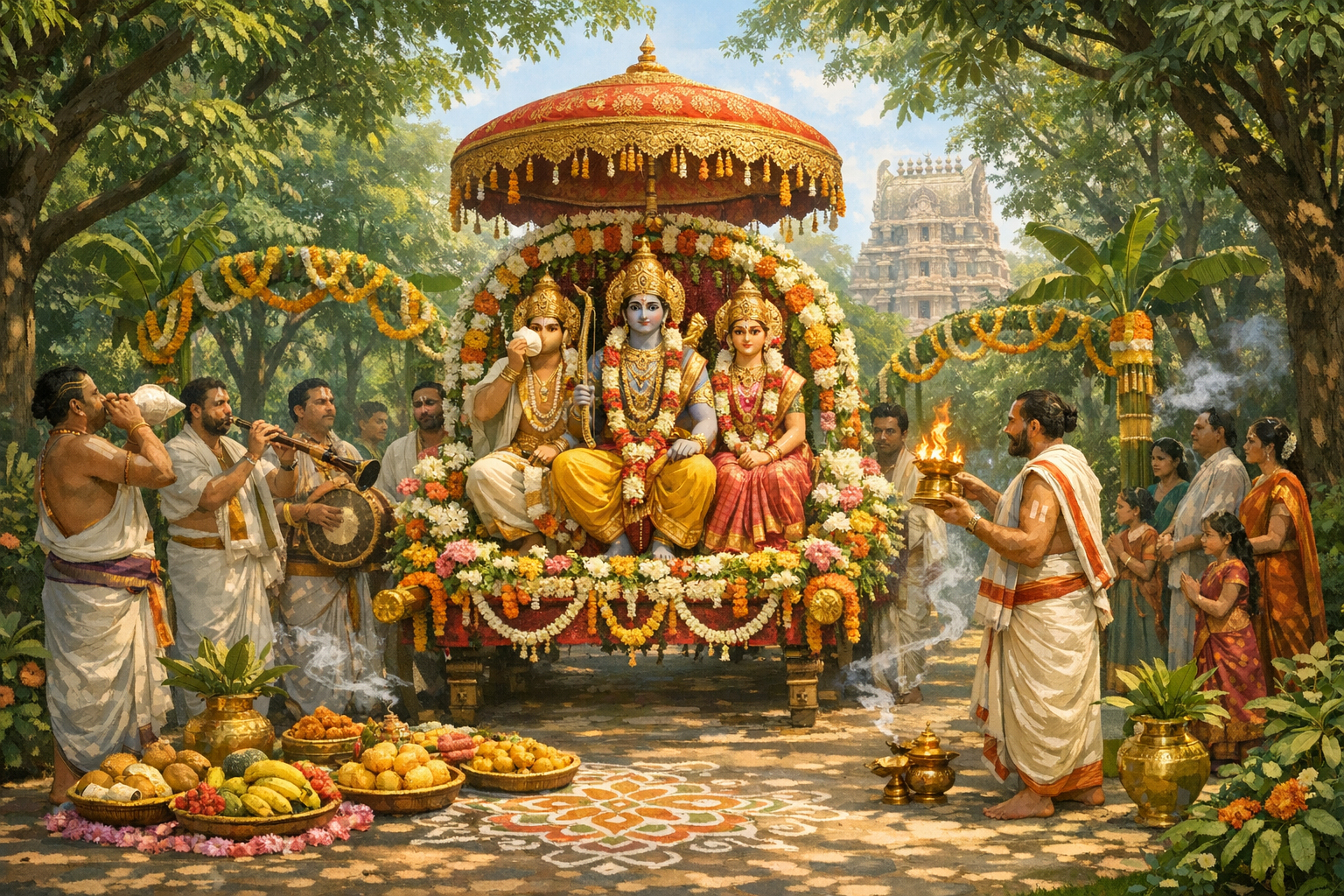
The “Repakula Subbamma Thota Utsavam” in Tirupati is a spring garden festival honoring Sri Sita, Rama, and Lakshmana at the Sri Kodandarama Swamy Temple. Observed on Saturday, 4 April 2026, it began with a 9:30 AM procession of the Utsava Murthies, bringing sacred presence into a verdant public space. The thota (garden) setting reflects a…
-
Ashes of Lanka: Subaltern Ramayana Insights on Dharma, Civilians, and War Ethics

This essay reframes the burning of Lanka in Sundara Kanda through a subaltern, ethically rigorous lens that centers the ordinary people of the golden city. It retains reverence for Hanuman’s strategic brilliance and Sri Rama’s cause while probing the moral costs of urban fire on artisans, traders, elders, and children. Drawing on Dharmayuddha norms and…
-
Sita’s Sacred Resolve: Why Only Rama Could Rescue Herand What It Teaches About Dharma

Why did Sita insist that only Rama rescue her, even when Hanuman could have carried her to safety? This long-form analysis of Sundara Kanda shows how her decision unites maryada, kshatra-dharma, reputation, and tactical prudence into a single, coherent ethic. Drawing on Valmiki Ramayana and key regional traditions, it explains why justice in the Ramayana…
-
Rama Katha: Scholarly, Soul-Stirring Life History of Sri Rama, the Maryada Purushottama
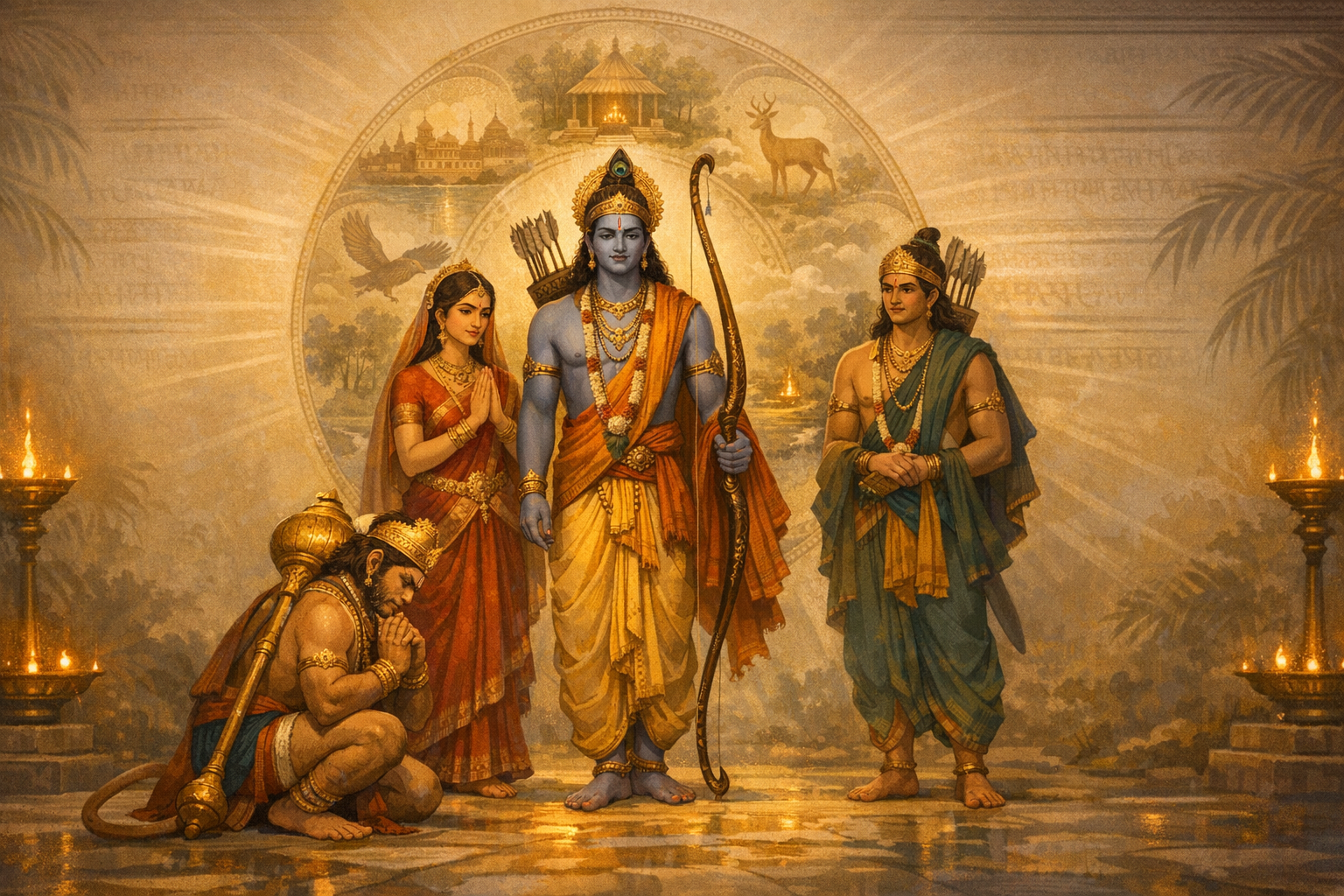
This comprehensive Rama Katha presents a scholarly yet accessible life history of Sri Rama, the Maryada Purushottama, rooted in Valmiki Ramayana and allied traditions. Readers gain a clear overview of the seven kandas, from Ayodhya and vanvas to the Setubandha, Yuddha Kanda, and Sri Rama Pattabhishekam. Ethical complexitiessuch as Vali-vadha and the Agni Parikshaare examined…
-
Ramayana’s Powerful Blueprint: Dharma vs. Disorder and the Quest for Just Leadership

This essay examines how the Ramayana confronts humanity’s enduring paradox: the quest to draw order from chaos without promising utopia. It analyzes dharma as a multi-layered systemcosmic, social, and personaland shows how Rama’s choices model rule-bound leadership (rajadharma) under real-world constraints. Readers gain a technically grounded framework for just decision-making: prioritize norms, exhaust diplomacy before…
-
How Rama and Lakshmana Overcame Viradha’s Boon: A Defining Battle in Aranya Kanda
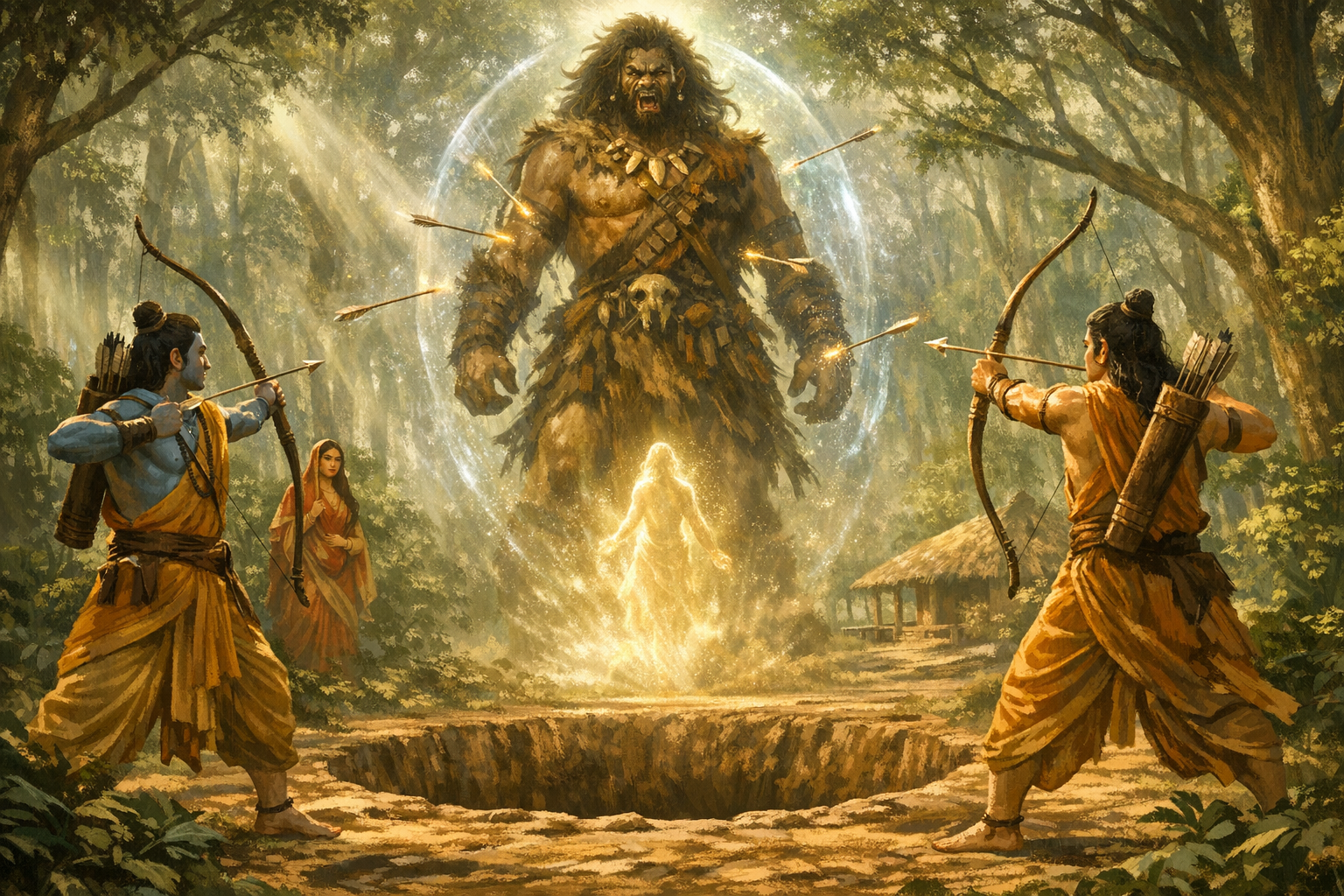
Set in the early sargas of the Aranya Kanda, the encounter with Viradha in Valmiki’s Ramayana demonstrates how Rama and Lakshmana combine disciplined courage with lawful ingenuity to defeat a rakshasa protected by a boon. The episode transforms a battlefield into a seminar in applied ethics: honor the letter and spirit of law, adapt strategy…
-
Washerman’s Whisper and Sita’s Ordeal: Unraveling Ramayana’s Most Debated Mystery

The ‘washerman episode’ in the Ramayana is more than a narrative twist; it is a rigorous exploration of ethics, governance, and compassion. This article situates the scenefive spies praising Sri Rama and a sixth overhearing a washerman’s harsh rebukein its textual and historical contexts, noting variations across Valmiki’s Uttara Kāṇḍa and later vernacular traditions. It…
-
Inside the Narasimha Purana: The Maya Sita Mystery behind Ravana’s Abduction
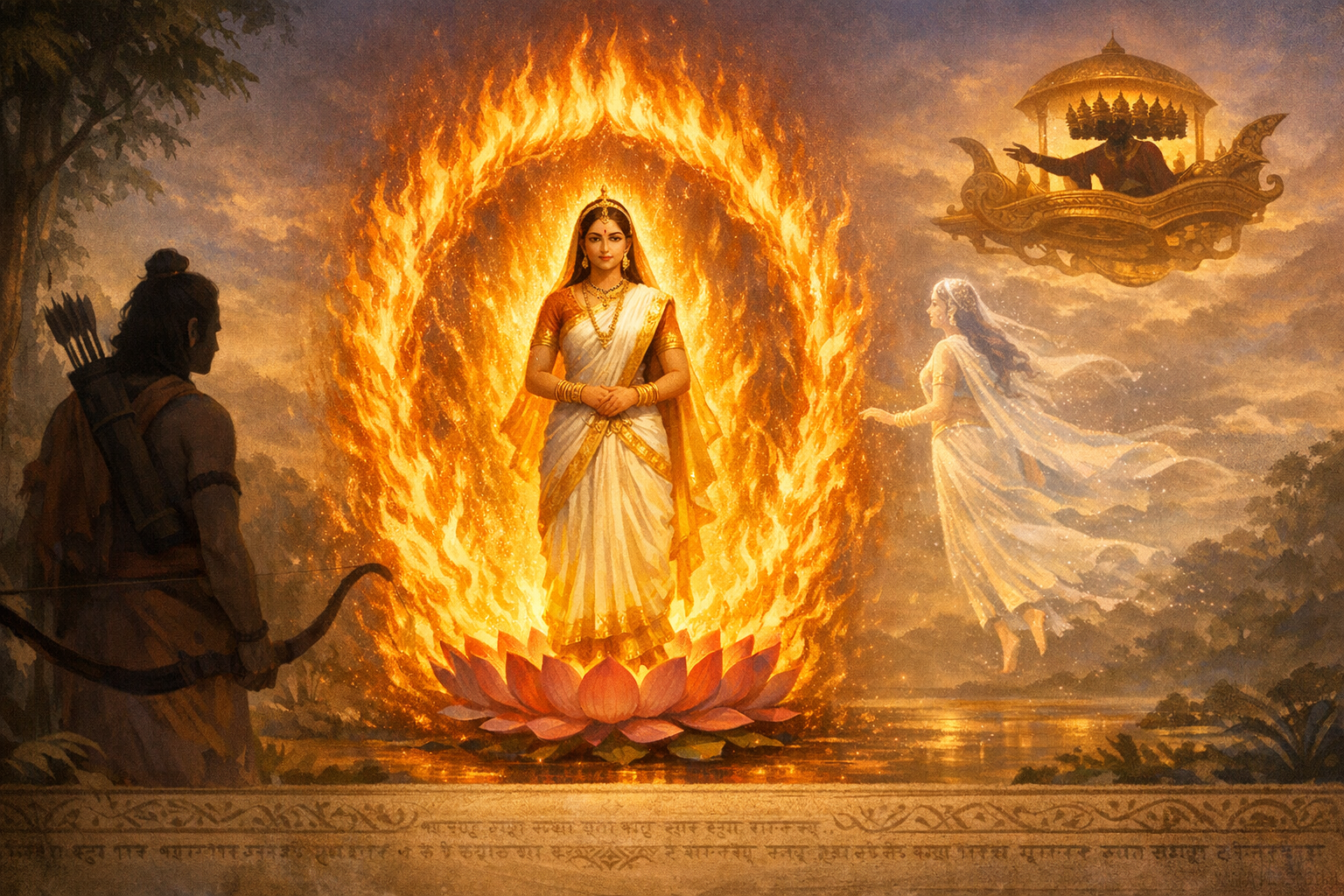
This essay explores a Puranic reinterpretationattributed to the Narasimha Puranaof the Ramayana episode in which Ravana kidnaps Sita, proposing that he abducted a divinely fashioned “Maya Sita.” It explains how Agni shelters the true Sita, reframing the Agni-pariksha as a public revelation of truth rather than a punitive ordeal. Readers gain a clear, technical understanding…
-
Child Sita’s Mercy Stops Dasharatha’s Ashvamedha Horse: A Timeless Lesson in Dharma
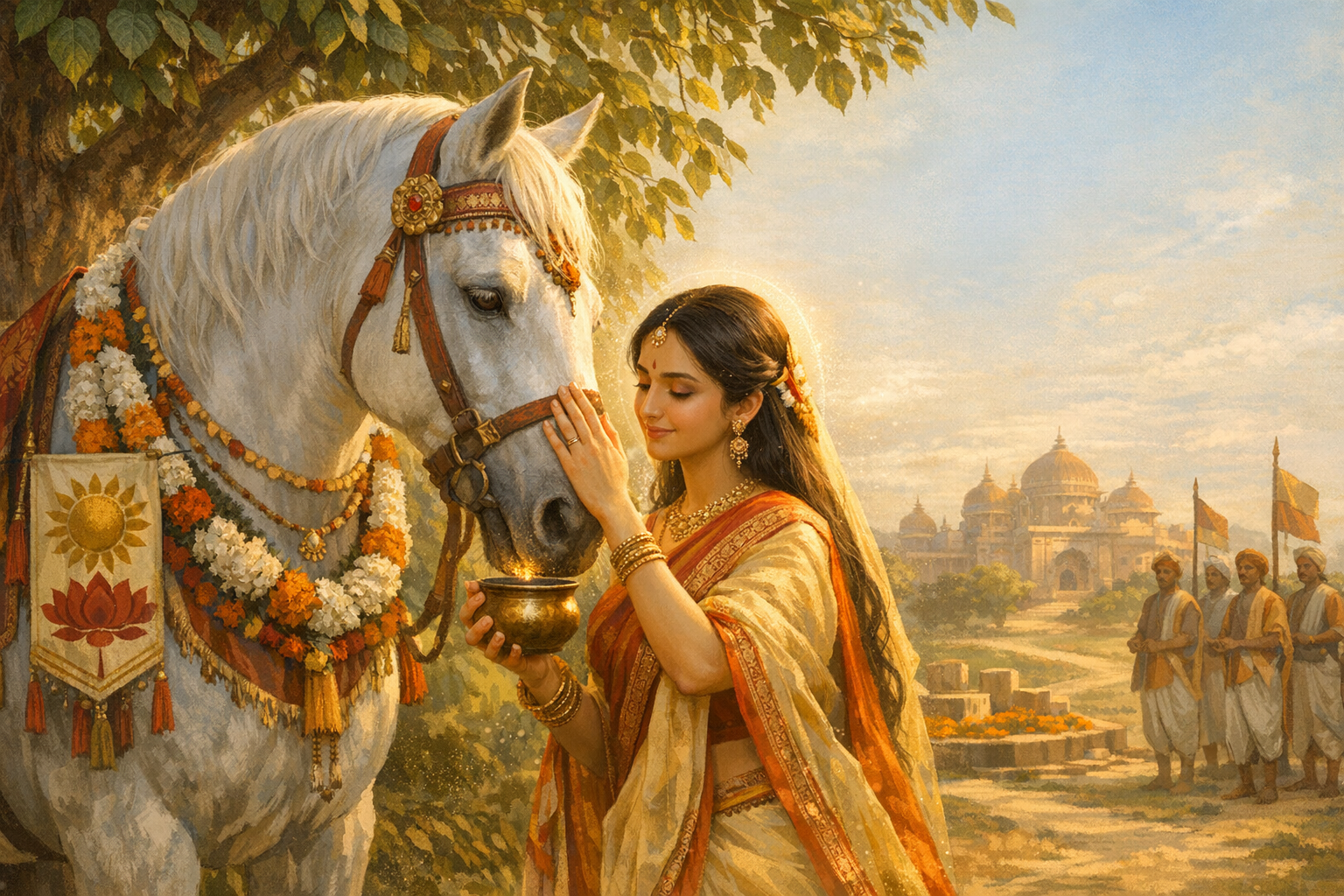
A lesser-known Ramayana tradition recounts child Sita protecting King Dasharatha’s Ashvamedha yajna horse, transforming a display of sovereignty into a lesson in compassion. Situated within the technical history of Vedic ritual, the episode illuminates how dharma transcends mechanical observance and centers ahimsa. While the Ashvamedha affirmed political order through a wandering, consecrated horse, Sita’s intervention…
-
Ravana Grounded: Kamban’s Earthbound Abduction of Sita and the Curse That Altered Dharma

This analysis explores how Kamban’s Tamil Iramavataram reshapes the abduction of Sita into an earthbound ordeal governed by a curse that limits Ravana’s agency. In contrast to Valmiki’s aerial abduction, Kamban’s version compels Ravana to carry Sita upon a slab of earth, intensifying witness, pathos, and ethical indictment. The study situates Kamban historically and theologically,…
-
Beyond the Furrow: Peahen’s Egg Legends and Sita’s Birth Symbolism in Folk Ramayanas

Hindu folk Ramayanas preserve Sita’s sanctity through imaginative origin stories that complement the canonical Valmiki account. A striking variant presents Sita as arising from a peahen’s egg, recasting her as andaja while affirming her core identity as ayonija. The peahen symbolizes guardianship, beauty, and monsoon renewal, while the egg evokes the cosmic Hiranyagarbhaboth intensifying the…
-
Sri Rama Navami 2026 at Bhadrachalam: Timeless Brahmotsavam & Soul‑Stirring Sita Rama Kalyanam
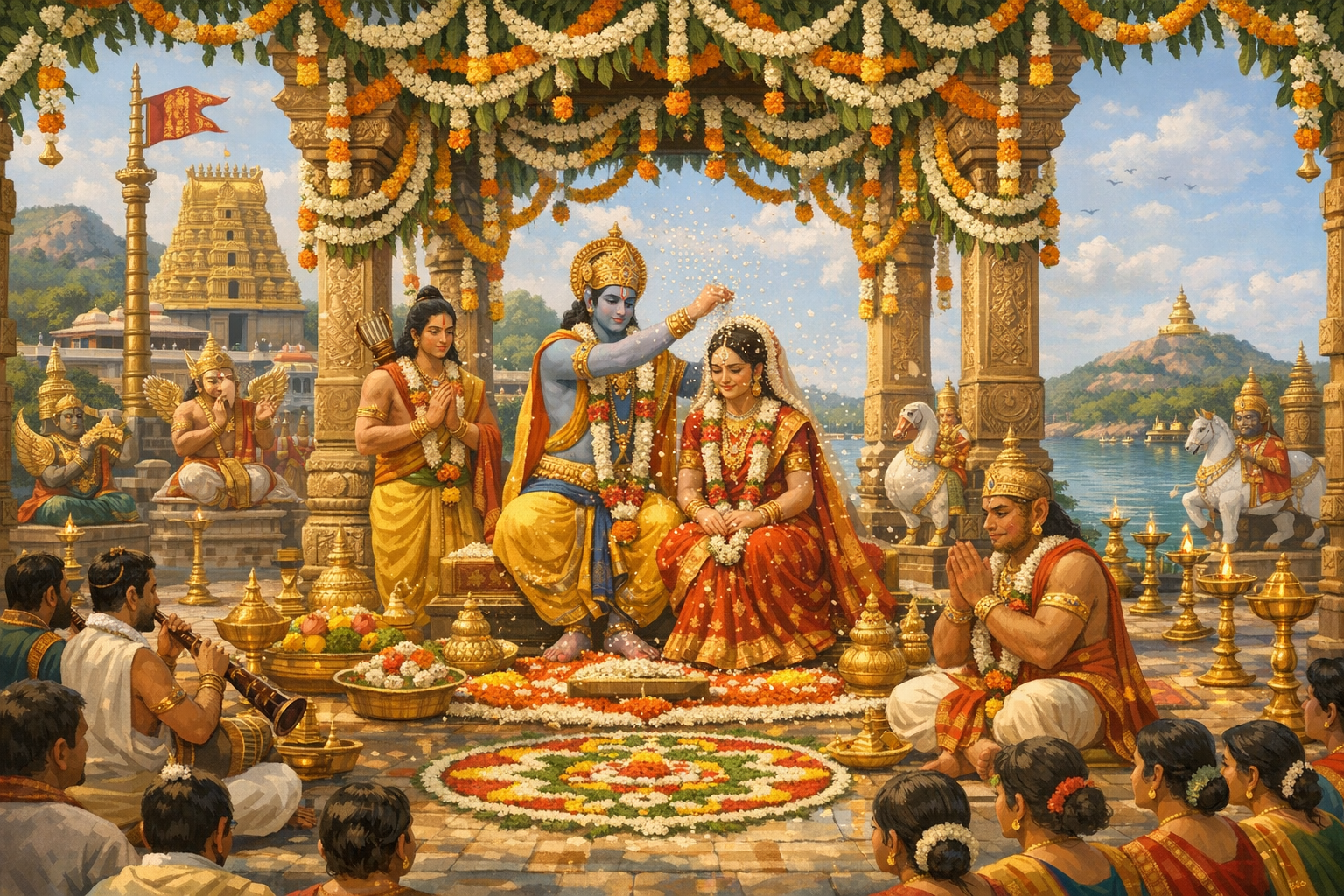
Sri Rama Navami 2026 at Bhadrachalam will be observed during the Vasanta Paksha Thirukalyana Brahmotsavalu from March 19 to April 2, with Sri Sita Rama Kalyanam expected in the Madhyahna window around March 27. The temple’s liturgy follows Vaishnava Agamas with Ankurarpana, Dwajarohanam, vahana sevas, the Kalyanam, and Pattabhishekam on Dasami. Devotees can expect a…
-
From Mortal Hero to Sacred Ideal: Rama’s Journey from Valmiki to the Bhakti Age

Rama’s image evolves from Valmiki’s ethically tested human king to the Bhakti movement’s compassionate divine, illuminating how dharma and devotion converge rather than compete. Valmiki Ramayana presents Maryada Purushottama as a ruler who chooses justice amid painful dilemmas; Bhakti-era RamayanasKamba Ramayanam, Adhyatma Ramayana, and Tulsidas’s Ramcharitmanasreframe those dilemmas through grace, interior devotion, and inclusive accessibility.…
-
Shattering the Myth: Why Valmiki’s Ramayana Has No Maya SitaEvidence and Dharma
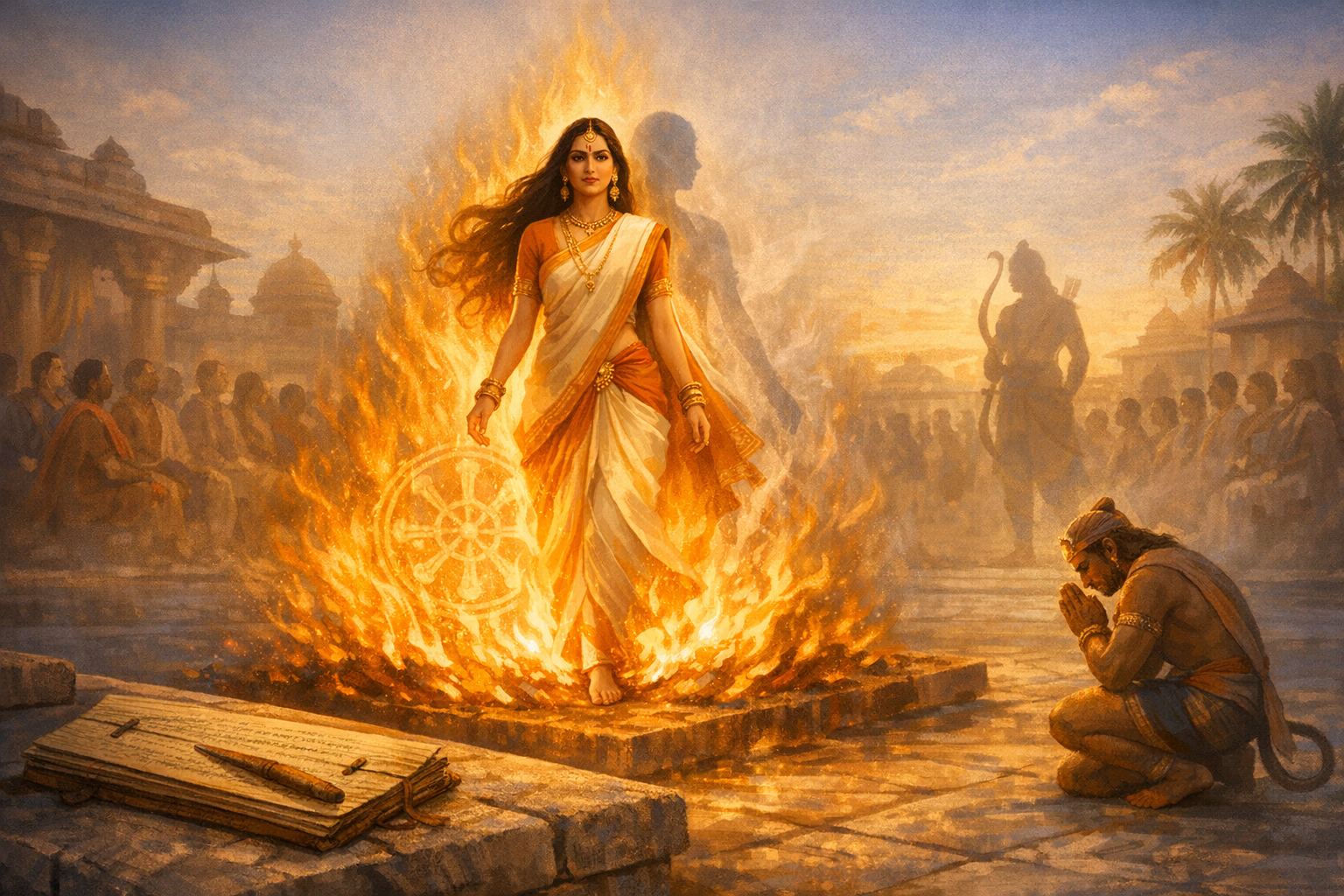
The Maya Sita motifan illusory duplicate of Sitadoes not appear in Valmiki’s Ramayana. Textual criticism across northern and southern manuscript families confirms its absence, especially in the Yuddha Kanda where Sita’s Agni-praveśa serves as public vindication. Later Puranic and bhakti-era tellings, such as the Adhyātma Rāmāyaṇa, introduce Maya Sita to offer a theologically protective reading…
-
Enigmatic Two-Headed Golden Deer: What Regional Ramayanas Reveal about Sita’s Abduction
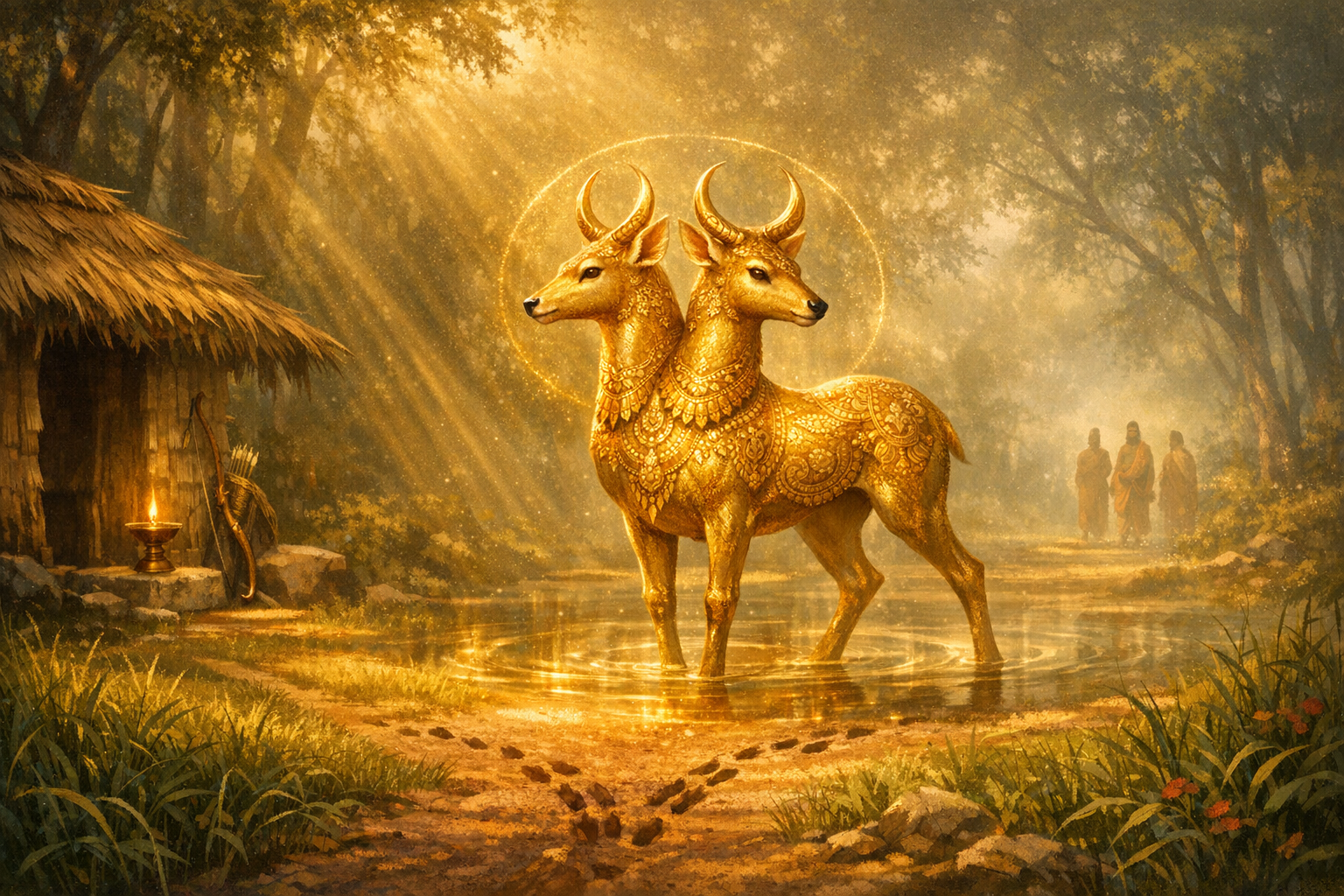
The Ramayana’s Sita abduction episode is not a fixed script but a living tradition across India. In select Kerala and Tamil Nadu repertoires, the golden deer becomes a two-headed marvel, amplifying the epic’s meditation on maya, desire, and deception. Anchored in Valmiki’s Aranya Kanda yet enriched by Kamba Ramayanam, Adhyatma Ramayanam Kilippattu, and folk performance,…
-
Ravana’s Abduction of Sita Revisited: Dharma, Curses, and a Deliberate Path to Moksha
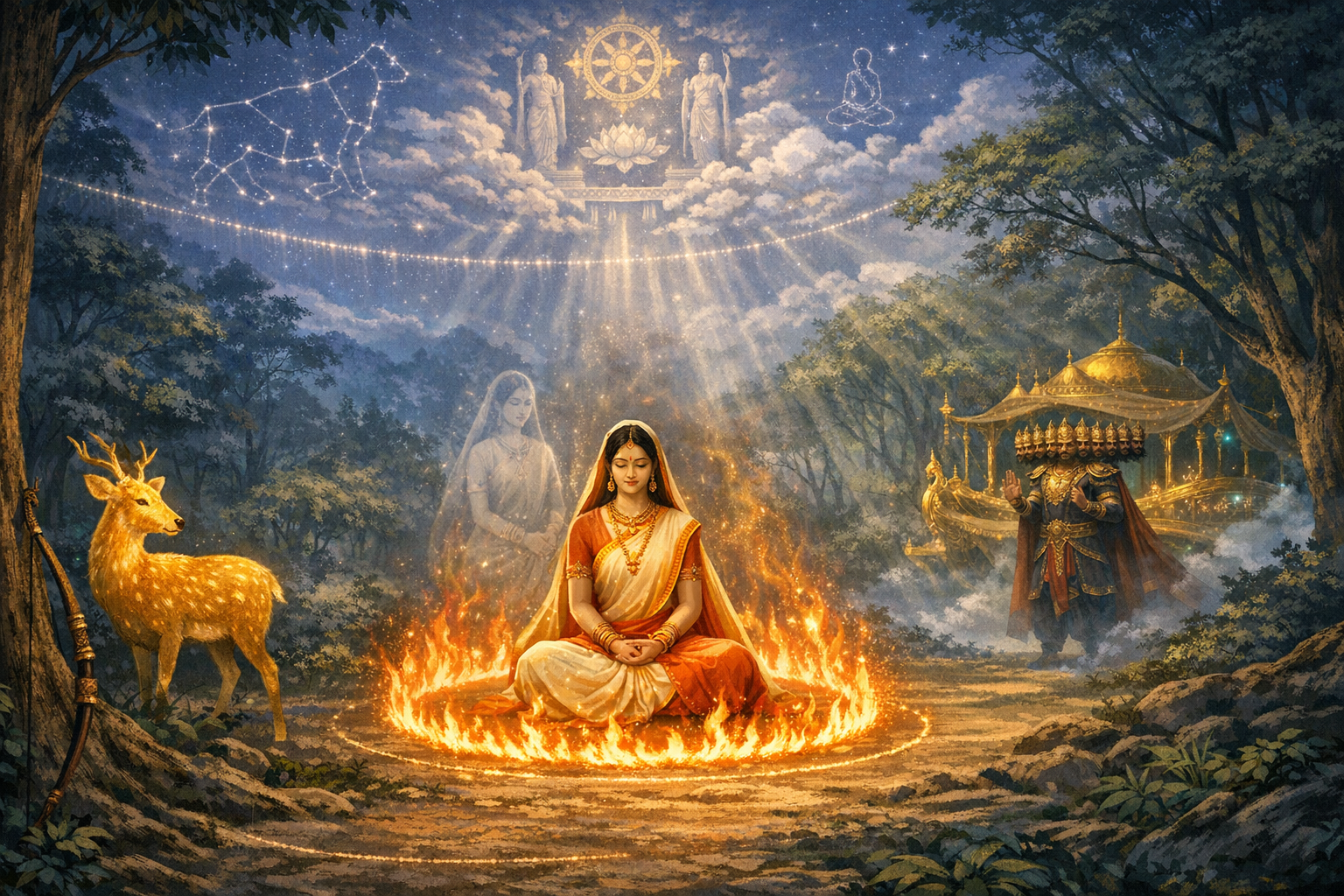
Did Ravana kidnap Sita to be slain by Sri Rama and attain moksha? A careful, text-sensitive study shows that while Valmiki’s Ramayana emphasizes Ravana’s pride and desire, later Puranic and bhakti traditions interpret his fall within a cosmic design of grace. The Jaya–Vijaya doctrine, vaira-bhakti (absorption through enmity), karmic curses, and the Maya Sita motif…
-
Kaliyuga Ramayana: Timeless Dharma, Courage, and Compassion for Today’s World

Kaliyuga Ramayana offers a contemporary, ethical reading of the Ramayanaset in the Treta Yugaapplied to modern challenges. It distills lessons from Lord Rama, Mata Sita, Lakshmana, Bharata, and Shatrughna into practical guidance for leadership, family duty, and social harmony. The text’s symbolsRavana as ego, the vanara sena as collective service, and the bridge to Lanka…
-
Sitayana: A Powerful Ramayana Retelling Celebrating Sita’s Courage, Grace, and Dharma

Sitayana presents the Ramayana through Ma Sita Devi’s perspective, highlighting courage, grace, and dharma with academic clarity and devotional warmth. It complements classical tellings by foregrounding Sita’s agency, compassion, and steadfastness during exile and separation. Readers gain ethical insights grounded in shared dharmic values that resonate across Hinduism, Buddhism, Jainism, and Sikhism. The text enriches…
-
Thirumana Kandam Explained: The Sita Kalyanam Chapter Shaping Living Ramayana Devotion
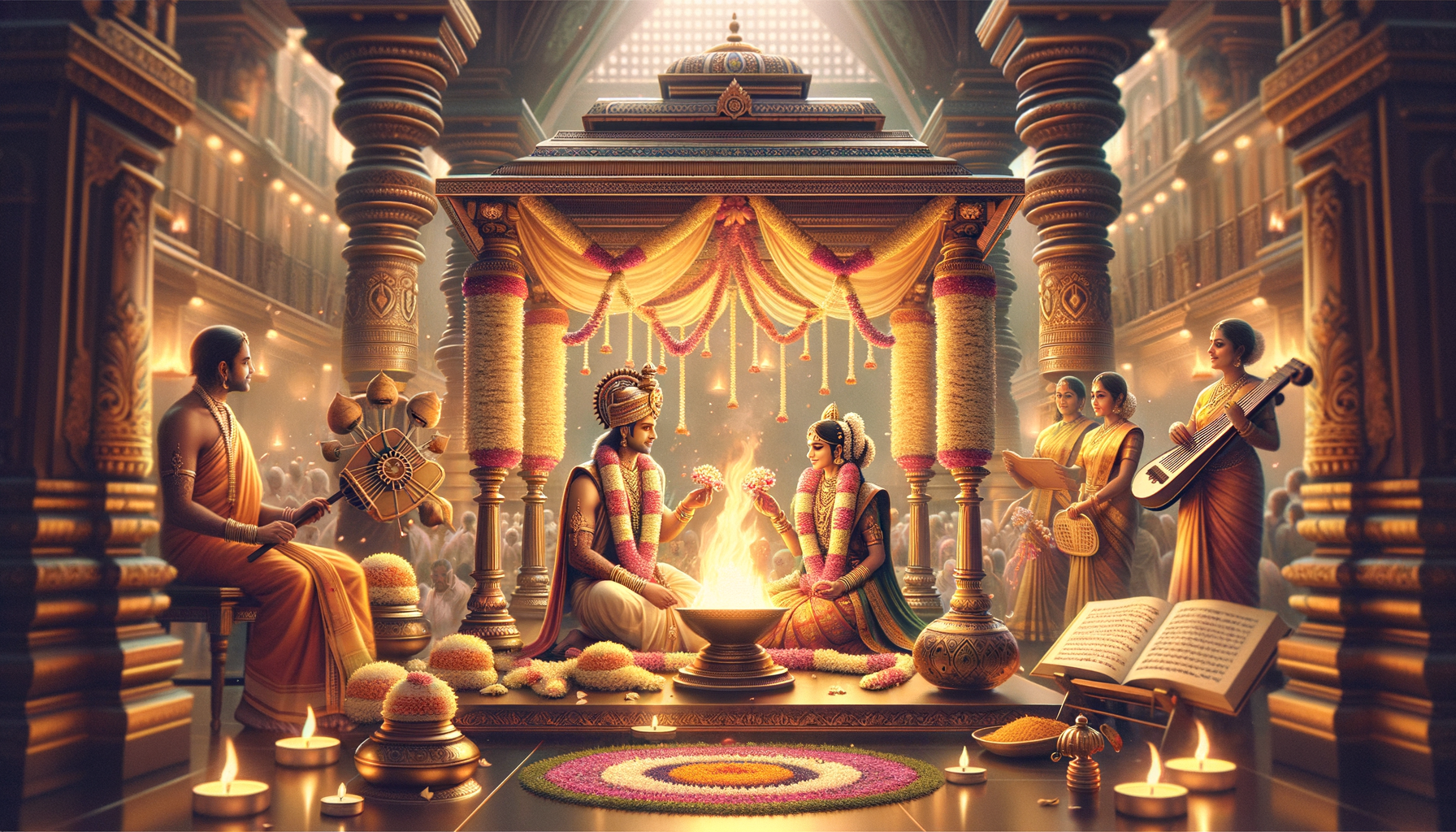
Thirumana Kandam is a devotional, standalone presentation of Sita Kalyanam that does not exist as a separate kanda in the Sri Valmiki Ramayana but highlights the wedding narrative found in Bala Kanda. Traditional accounts place its composition with a Sanskrit scholar about a century ago as a gesture of gratitude to Prabhu Sri Rama. The…
-
When Ravana Became Rama: A Brief Awakening to Dharma and the Transformative Power of Virtue

This exploration of a lesser-known Ramayana motifRavana assuming Rama’s formexamines how virtue resists imitation and demands inner transformation. By situating the episode in the ethical drama of Sita’s steadfastness in the Ashoka grove, it shows how adharma collapses under the weight of authentic dharma. The analysis highlights literary, psychological, and philosophical dimensions, clarifying the difference…