
-
Sundari Kandam Explained: Sita Devi’s Profound Sacrifice and the Timeless Ethics of Dharma

Sundari Kandam is a lesser-known strand associated with the Ramayana that highlights Sita Devi’s great sacrifice and ethical resolve. Absent in the Valmiki Ramayana but referenced in later regional recensions, it reflects the living, plural nature of Hindu epic traditions. The narrative centers on Sita’s tyaga and steadfast adherence to dharma, presenting moral courage as…
-
When Faith Meets Fear: Lakshmana’s Unshakable Trust vs Sita’s Anxious Love in the Ramayana

The golden deer episode in the Ramayana illuminates a timeless tension between Lakshmana’s confident faith in Rama’s invincibility and Sita’s urgent, love-driven concern. Set in Aranya Kanda, the incident shows how māyā exploits the gap between trust and perception, turning virtue into vulnerability. Read as moral philosophy, it pairs compassion with the necessity of discernment…
-
Sundara Kanda Unveiled: Hanuman’s Epic Journey to Lanka and the Hope it Inspires

Sundara Kanda, the fifth book of the Ramayana by Valmiki, chronicles Hanuman’s mission to find Sita and transform uncertainty into hope. The narrative highlights the ocean leap, encounters with Mainaka, Surasa, and Simhika, the discovery of Sita in Ashoka Vatika, and the powerful audience with Ravana. Hanuman’s burning of Lanka is framed as disciplined, ethical…
-
Ramayana’s Defining Episodes: Dharma, Devotion, and the Journey Uniting Dharmic Traditions

This structured overview of the Valmiki Ramayana highlights the epic’s defining episodesfrom Ahalya’s redemption and Sita’s swayamvara to the exile, Sundara Kanda, and the battle of Lankaexplaining how each advances dharma, devotion, and ethical leadership. Readers gain a clear framework for understanding the narrative arc and its moral significance. The account emphasizes unity across dharmic…
-
Ayodhya Kanda’s Defining Moments: Duty, Exile, and Timeless Dharma in the Ramayana
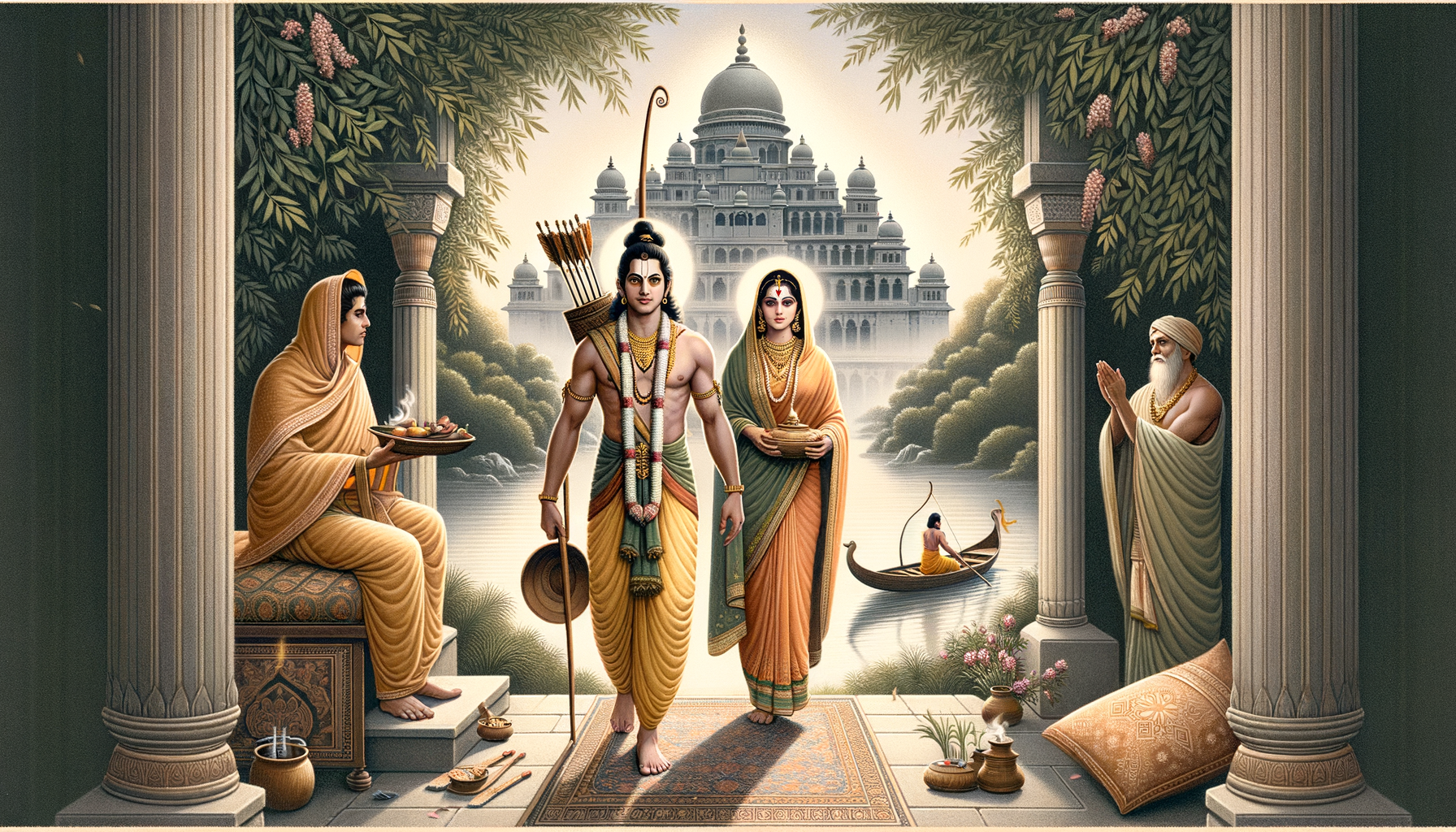
Ayodhya Kanda, the second book of Valmiki’s Ramayana, presents a rigorous exploration of duty, vows, and righteous leadership centered in Ayodhya. It follows King Dasharatha’s plan to crown Rama, Kaikeyi’s boons, and Rama’s voluntary exile (vanvas), with Sita and Lakshmana choosing to accompany him. The grief of Ayodhya, the sanctity of Chitrakoot, and Bharata’s principled…
-
Vedavati to Sita Mata: Goddess Lakshmi’s Incarnation of Bhudevi, Courage, and Dharma

Vedavati’s story, culminating in her rebirth as Sita Mata, illuminates a continuous thread of devotion, purity, and dharma drawn from Ramayana and Puranic traditions. Readers gain a clear view of her lineage as Kushadhvaja’s daughter and Brihaspati’s granddaughter, her tapasya for Lord Vishnu, and the ethical force of her vow against Ravana’s adharma. The narrative…
-
10 Defining Moments of the Ramayana: Timeless Lessons from Rama’s Epic Journey

This concise guide highlights ten defining moments of the Ramayanafrom Rama’s birth in Ayodhya and Sita’s swayamvara to the vanvas, Hanuman’s Sundara Kanda mission, and the return to Ayodhya. Each episode is presented with clear context and ethical significance to illuminate Dharma in action. Readers gain practical insights into righteous leadership, loyalty, compassion, and the…
-
Chakravana: The Western Sea’s Sacred MountainAn Awe-Inspiring Anchor of Hindu Epics

Chakravana, portrayed as a sacred mountain rising from the Western Sea, holds a distinctive place in Hindu scriptures and the imagination shaped by Indian Epics. This account situates Chakravana amid Vishnu’s protective triumphs and the Ramayana’s search for Sita, highlighting how sacred geography deepens narrative meaning. Readers gain an accessible, academic summary that clarifies the…
-
Rama–Sita and Shiva–Shakti: Sankhya’s Purusha–Prakriti and the Promise of Wholeness

Sankhya’s vision of Purusha (consciousness) and Prakriti (primordial nature) is illuminated by the sacred unions of Rama–Sita and Shiva–Shakti. These symbols present wholeness as a harmonious interplay rather than a clash of opposites. The essay connects Ardhanārīśvara, Maryāda-Puruṣottama, and Shakti’s resilience to psychological integration and ethical balance. Parallels from Buddhism (prajñā–upāya), Jainism (jīva–ajīva and the…
-
Why Shiva Rejected Ravana After Sita’s Abduction: Dharma, Bhakti, and Divine Justice

This analysis explores why Shiva is portrayed as withdrawing protective grace from Ravana after the abduction of Sita, drawing on the Valmiki Ramayana and regional traditions like Kamba and Krittivasi Ramayanas. It shows that divine boons operate within the moral framework of dharma and cannot shield adharma. The piece highlights how Ravana’s sacred deceptionmisusing the…
-
Bhasa’s Bold Reimagining of Sita’s Abduction in Pratima Natakam: Ethics, Dharma, Drama

Bhasa’s Pratima Natakam (Pratimanatakam) presents Sita’s abduction not as onstage spectacle but as a reflective, ethically charged episode grounded in classical Sanskrit dramaturgy. By channeling the event through memory, messenger-reports, and the symbolic power of the pratima (statue), the play emphasizes dharma, agency, and the psychology of crisis over physical action. This approach foregrounds rasaespecially…
-
Darbha Sayana Murthy: Sri Rama’s Yoga Nidra Before LankaSymbolism, Strength, and Serenity

Darbha Sayana Murthy recalls the moment Sri Rama, poised to reach Lanka, prays to Lord Varuna and enters Yoga Nidra upon a bed of Darbha grass. The scene blends disciplined patience with strategic resolve, presenting leadership as calm strength before decisive action. Darbha symbolizes purity and protection, turning the earth into a sacred altar that…
-
Unmasking the Golden Deer: The Ramayana’s Allegory of Desire, Maya, and Dharma

The golden deer episode in the Ramayana functions as a refined allegory of human desire, maya (cosmic illusion), and ethical vigilance. By tracing Sita’s captivation, Rama’s pursuit, and Ravana’s exploitation, the narrative shows how alluring appearances disperse attention and compromise dharma. Read symbolically, the deer represents desire’s shimmerradiant yet elusivewhile the episode models the need…
-
Lakshmana’s Impossible Choice: Duty, Honor, and Dharma in Ramayana’s Golden Deer Episode

The Golden Deer episode in the Ramayana crystallizes Lakshmana’s ethical dilemma between explicit duty and perceived emergency. The narrative contrasts svadharma with maryada, asking how to act when a clear mandate collides with an uncertain cry for help. By highlighting discernment, foresight, and proportional response, it shows how intention and outcome must be balanced. The…
-
Lakshmanrekha in the Ramayana: Why Valmiki omits itand how later retellings reshape it

The Lakshmanrekha is one of the Ramayana’s most iconic imagesyet it does not appear in the Valmiki Ramayana. This article clarifies the textual record, explains how the motif emerged in later Ramayanas and folk performance traditions, and explores why it endures as a vivid symbol of maryada. Readers gain a clear distinction between the earliest…
-
Sita’s Ashokavana Ordeal: Unwavering Dharma, Karma, and Timeless Strength to Endure

Sita’s ordeal in Ashokavana exemplifies how dharma and karma inform spiritual resilience under extreme duress. Confined by Ravana and pressured to capitulate, she remained unwavering through ethical clarity, disciplined remembrance, and self-restraint. Her acceptance of karma’s ripening never became fatalism; instead, it sustained equanimity and moral agency. The Sundara Kanda encounter with Hanuman affirmed her…
-
Surpanakha Reimagined: Folk Ramayana’s Haunting Lament and Dharma’s Grey Zones

South Indian folk Ramayana retellings give Surpanakha a complex, empathetic voice that challenges simplistic binaries of dharma and adharma. This analysis explains how Yakshagana, Kathakali, and Kaliyattam frame her suffering as an ethical prompt rather than a narrative footnote. Readers gain a nuanced understanding of gender dynamics, humiliation, and proportionality in responses. The piece connects…
-
Lakshmana’s Measured Justice: Symbolism and Dharma in Surpanakha’s Nose-Cutting

The Dandaka forest episode of Surpanakha in the Ramayana presents a nuanced study in proportionate justice. Lakshmana’s cutting of her nose and ears is framed not as impulse but as a measured defense of Sita within Kshatra Dharma. Dharmashastra context shows such penalties aligned with culturally recognized sanctions for harassment and attempted harm. Symbolically, the…
-
Sita’s Compassion Tested: Dharma and the Ethics of Lakshmana’s Punishment of Surpanakha

The Aranya Kanda episode of Surpanakha’s attack and Lakshmana’s response invites a careful reading of dharma and compassion. Valmiki’s text does not quote Sita’s immediate reaction, so understanding her stance relies on her consistent character across the Ramayanarooted in karuṇā and kṣamā. Interpreted through proportionality and restraint, Lakshmana’s non-lethal action reflects kṣātra-dharma: protecting the innocent…