
-
Amrit Sanchar in Tohana: A Transformative Khalsa Initiation at ‘Prabh Milnae Ka Chao’

Held in Tohana under the devotional theme “Prabh Milnae Ka Chao,” this detailed analysis explains how Amrit SancharSikhism’s Khalsa initiationcombines precise ritual, ethical rigor, and communal service. It outlines the ceremony’s canonical steps (Panj Piare, preparation of Amrit, five banis), the Five Ks and daily Nitnem discipline, and the social ethic of Sarbat da Bhala…
-
Anand Karaj Unveiled: A Soul-Stirring, Shabad-Centered Guide to Lifelong Companionship

Anand Karaj is more than a wedding; it is a Shabad-centered rite that orients marriage around Guru Granth Sahib and the lived culture of Gurbani. This long-form guide explains the ceremony’s canonical flow, the musicology of the Laavan and Anand Sahib, and the ethical commitments enshrined in Sikh Rehat Maryada. It clarifies common misconceptions, distinguishes…
-
Beyond Degrees: Reclaiming Education’s Purpose to Awaken Spiritual Identity and Shared Dharma

Modern education excels at producing skilled professionals, yet it risks losing its soul when detached from deeper purpose. This article proposes a rigorous, plural approach that integrates scientific excellence with dharmic insights from Hinduism, Buddhism, Jainism, and Sikhism. Drawing on frameworks like pañcakośa, UNESCO’s four pillars, and NEP 2020, it outlines research-aligned methods to cultivate…
-
At the Guru’s Last Breath: A Mango, Mindfulness, and the Taste of Immortality

A classical Hindu teaching story recounts a Guru who, at the threshold of death, uses a simple mango to demonstrate how breath awareness, mindful attention, and remembrance reveal the peace of the Atman. The narrative is analyzed through the Bhagavad Gita and the Upanishads, showing how last-thought psychology aligns with daily practice in dhyana, japa,…
-
The Conscious User: Mastering AI with Jain, Buddhist, Hindu, and Sikh Wisdom

Artificial Intelligence is now a household reality; the challenge is using it without losing clarity, agency, or ethics. This essay outlines a dharmic frameworkrooted in Jainism and harmonized with Buddhism, Hinduism, and Sikhismfor human-centered, responsible AI. It translates anekantavada, syadvada, and nayavada into concrete practices for uncertainty handling, multi-metric evaluation, and context-aware decisions. Ahimsa informs…
-
Embracing Sukha and Dukha: Dharma’s Transformative Science of Resilience and Freedom

This essay explains why Sanatana Dharma views Sukha (happiness) and Dukha (distress) as complementary threads woven into the fabric of life. Drawing on the Bhagavad Gita, the Yoga Sutra, and convergent insights from Buddhism, Jainism, and Sikhism, it shows how Dharma transforms hardship into clarity and compassion. Readers learn practical methodsKarma Yoga, Bhakti, Jnana, Raja…
-
Science of Sacrifice: Dharmic principles to practice tyaga, seva, and everyday yajna wisely

Sacrifice in a dharmic sense is intelligent, freely chosen renunciation that serves a higher, shared good. This comprehensive guide defines tyaga in relation to dana, tapas, seva, and yajna, and shows how sattva, rajas, and tamas shape the quality of any offering. It unifies insights from Hinduism, Buddhism, Jainism, and Sikhismlinking loka-sangraha, dana, Aparigraha, and…
-
Unquenchable Spiritual Thirst: A Dharmic Path of Bhakti, Japa, Seva, and Inner Realization

Spiritual thirst is a disciplined, one-pointed aspiration for ultimate truth, cultivated through listening, singing, remembrance, mantra-japa, and ethical living. Across Hinduism, Buddhism, Jainism, and Sikhism, it matures when aspiration is yoked to steady practice, community support, and responsible conduct. The Varkari tradition exemplifies how sustained kirtan, abhangas, and pilgrimage transform longing into culture. Vedānta names…
-
Idle Mind Is the Devil’s Workshop: A Dharmic, Scientific Guide to Focus and Virtue

This article reframes the proverb ‘An idle mind is the devil’s workshop’ through a dharmic and scientific lens, unifying insights from Hinduism, Buddhism, Jainism, and Sikhism with contemporary psychology. It distinguishes restorative rest from unstructured idleness and shows how right effort, seva, and mindfulness reduce rumination and impulsivity. Readers gain a practical framework: align purpose…
-
From War Thunder to Living Gods: Ratha (Chariot) as Weapon, Ritual, and Wisdom in Ancient Hinduism

This long-form, research-driven essay follows the ratha (chariot) from its earliest Vedic mentions through epic warfare, temple architecture, and living festivals. Readers gain a balanced view of textual evidence (Rigveda, Mahabharata, Upanishads), archaeological debates (including Sinauli), and the Arthaśāstra’s statecraft, alongside technical insights into chariot design, crew roles, and battlefield tactics. It unpacks the Kaṭha…
-
The Lantern of Dayā: Uniting Dharmic Traditions through Compassion, Ahimsa, and Seva

The Lantern of Dayā advances a clear, comparative framework for compassion that unites Hinduism, Buddhism, Jainism, and Sikhism without erasing their distinct identities. It traces how dayā/karuṇā functions as disciplined practice, social ethic, and policy-relevant principle rooted in Dharma, Ahimsa, Anekantavada, and Seva. Readers gain a rigorous yet accessible mapping across texts and institutionsfrom Yoga…
-
Re-reading Guru Tegh Bahadur: A Fearless Beacon of Religious Freedom and Dharmic Unity

This interdisciplinary re-reading of Guru Tegh Bahadur situates his life and bani within history, music, philosophy, and public ethics. It explains how his teachings on detachment, compassion, and fearlessness formed a coherent ethic of conscience, culminating in a martyrdom for the protection of others’ faith. The narrative highlights how Sikhism’s sarbat da bhala converges with…
-
Sikhi Through Story: Evidence‑Based, Gurmat‑Aligned Narratives for a Dharmic Unity Vision

This message articulates how SikhNet Stories approaches children’s narratives as rigorous, Gurmat-aligned pedagogy. It roots storytelling in the Guru Granth Sahib’s inclusive vision while honoring Sikh maryada and the lived practices of Naam, Seva, and Sangat. Drawing on research in educational psychology, it explains why narrative transportation, dual-coding, and social learning improve attention, retention, and…
-
Timeless Grace Beyond Scholarship: Women’s Devotional Intelligence Unifying Dharmic Traditions

This essay reframes spiritual intelligence through a Dharmic lens, showing how sincerity of purposeexpressed through bhakti, seva, and ethical disciplineelicits transformative results more reliably than scholastic display alone. It grounds this claim in Indian epistemology (pramana), the Bhagavad Gita, and parallel concepts in Buddhism, Jainism, and Sikhism. Historical exemplarsfrom Gargi and Maitreyi to Andal, Mirabai,…
-
Vaisakhi Through Sikh Art: An Invitation to the VillaA Powerful Blueprint for Unity

This exhibition blueprint frames Vaisakhi as an academic and community-centered journey through Sikh art within an intimate villa setting. It traces the Khalsa’s founding at Anandpur Sahib, highlights Gurmukhi calligraphy and manuscript traditions, and situates paintings, textiles, and martial regalia within rigorous historical context. Preventive conservation, ethical display practices, and bilingual interpretation ensure scholarly integrity…
-
Shabda Pramana in Mimamsa: The Timeless Power of Vedic Testimony for Truth and Dharma

Shabdaverbal testimonyholds a privileged place in Mimamsa Darshana, where it functions as a rigorous means of valid knowledge for matters of dharma beyond the reach of perception and inference. By affirming the Vedas as apauruṣeya (authorless), Mimamsa secures scriptural authority through a detailed theory of semantics, sentence meaning, and hermeneutic indicators. The Bhāṭṭa and Prābhākara…
-
Five Sacred Trees of Tantra: Living Altars for Deep Meditation and Inner Awakening

Tantric practitioners across the dharmic traditions purposefully select five sacred treesAśvattha (Peepal), Nyagrodha (Banyan), Bilva, Nimba (Neem), and Āmalakī (Amla)to create a stable, lucid environment for deep meditation. Each species contributes a distinct blend of scriptural symbolism, ayurvedic energetics, ecological benefit, and subtle-body alignment. The Peepal supports clarity and uplift; the Banyan grounds long sittings;…
-
Shaheedi of Guru Tegh Bahadur: 350 Years of Courage that Secured Freedom of Conscience
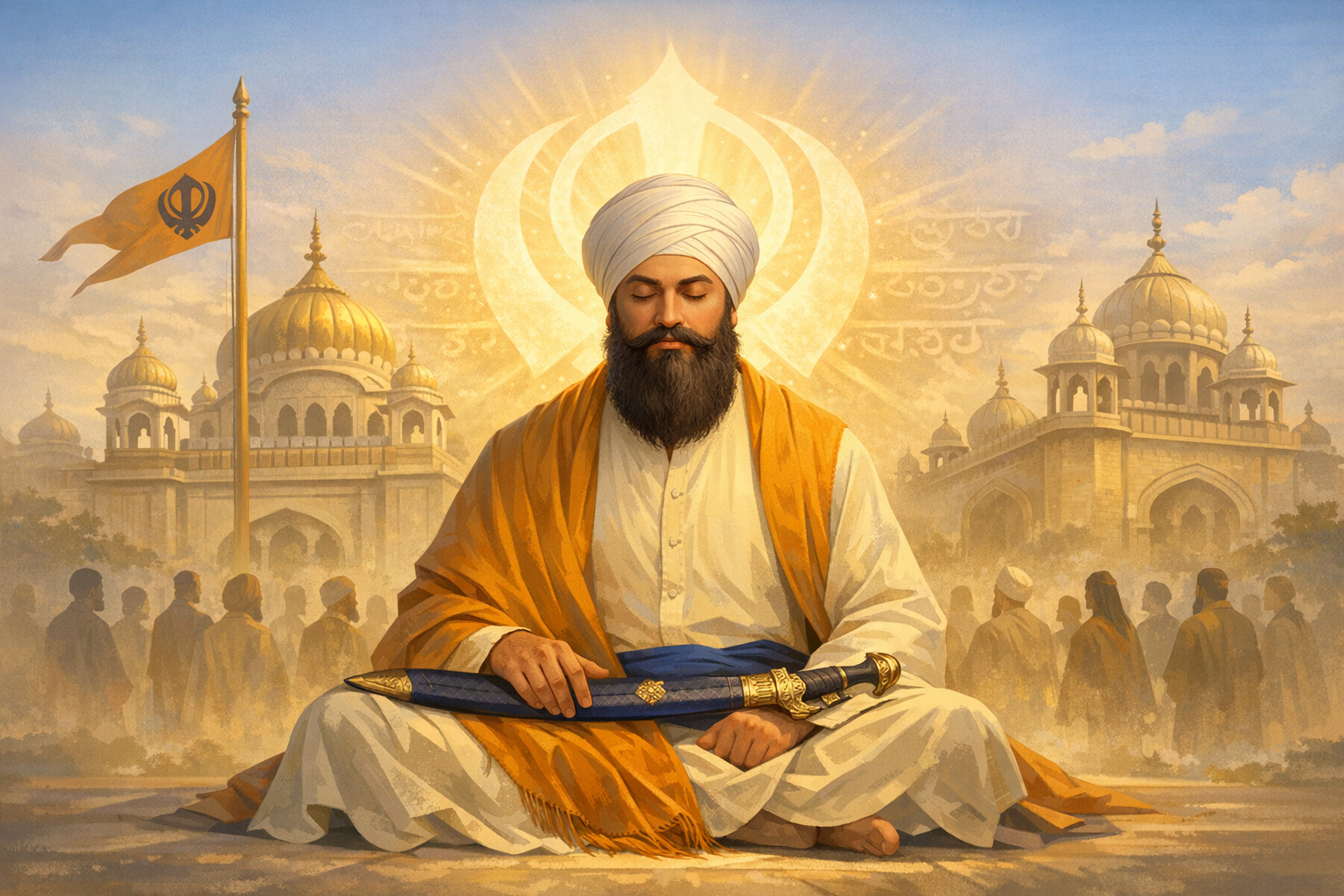
This long-form essay marks 350 years since the Shaheedi of Guru Tegh Bahadur Sahib Ji and examines the event’s historical context, ethical significance, and enduring legacy. It synthesizes Sikh, Persian, and European accounts while noting interpretive variations to present a rigorous, balanced narrative. Readers gain a concise timeline, a survey of key sites of memory…
-
Digital Maya Unmasked: Rethinking Influencer Culture with Sikh Wisdom and Dharmic Ethics

Influencer culture often amplifies urgency, comparison, and performance, but Sikh philosophy reframes these pressures as Digital Maya that can be met with clarity and care. Grounded in Hukam, Seva, Santokh, and Sarbat da Bhala, the article offers a practical, ethical framework for creators. It shows how Naam Japna, Kirat Karni, and Vand Chhakna translate into…
-
Upamana in Mimamsa Darshana: Unlocking How Comparison Becomes Valid Knowledge in Hindu Epistemology

Upamāna, or comparison, is treated in the Mimamsa Darsana as a disciplined source of valid knowledge that aligns testimony, perception, and relevant similarity. Rather than a loose metaphor, it is a technical pramāṇa with clear conditions: credible prior śabda, relevance of features, and the absence of defeaters. Classical debatesespecially with Nyāyaclarify whether comparison yields the…