
-
From Turmoil to Tranquility: SB 3.28.10 on Yogic Breathing and the Power of Chanting
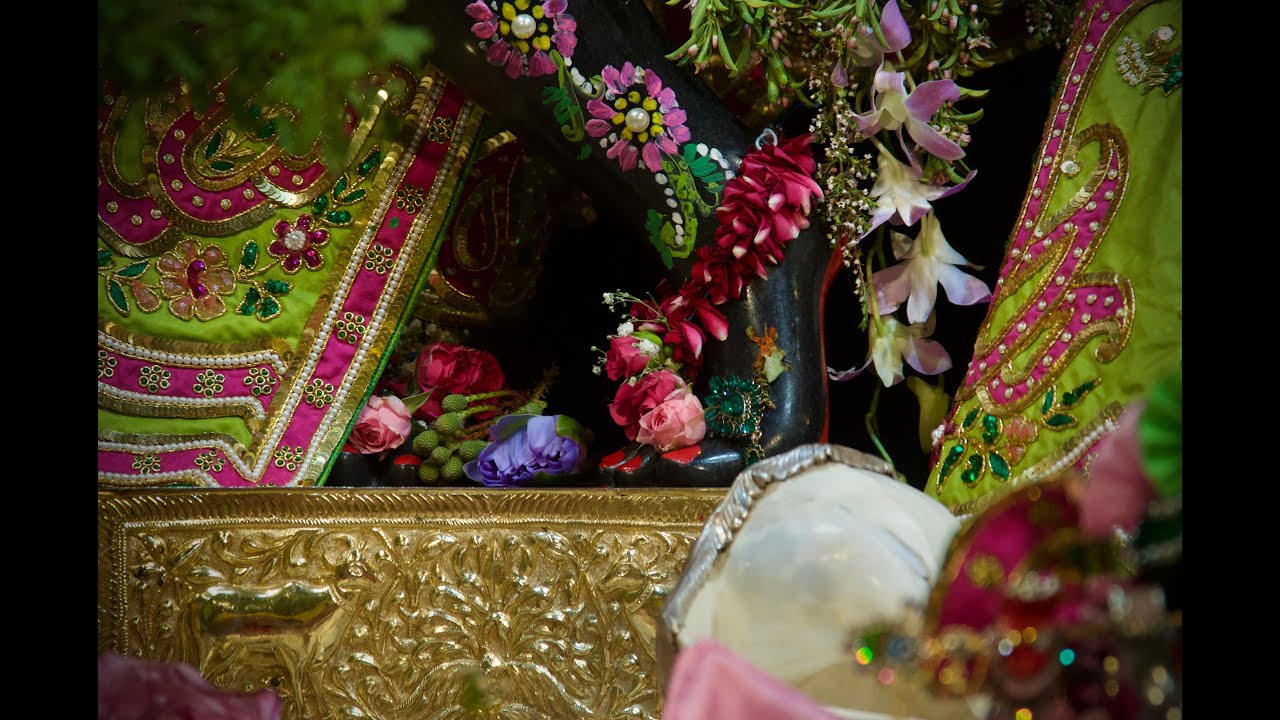
Srimad-Bhagavatam 3.28.10 presents a precise blueprint for mental purification: disciplined attention (the fire) and regulated breath (the air) refine the mind as heat and fanning purify gold. Framed by HH Ramai Swami’s exposition, the verse aligns with modern findings on vagal tone, heart-rate variability, and the calming effects of slow, coherent breathing. Lord Caitanya’s recommendation…
-
Modern Education’s Illusion of Control: Dharmic Wisdom to Build Resilient, Purposeful Lives

Modern culture often trains people to believe life can be engineered into submission. Dharmic traditionsHinduism, Buddhism, Jainism, and Sikhismoffer a corrective: disciplined agency paired with principled surrender. The Bhagavad Gita’s focus on action without attachment, the Yoga Sutra’s blend of practice and non-attachment, Buddhism’s insight into impermanence, Jainism’s many-sidedness, and Sikhism’s hukam together form a…
-
Vaisakhi 2026 Explained: Timeless Khalsa Legacy, Sacred Rituals, and Dharmic Unity
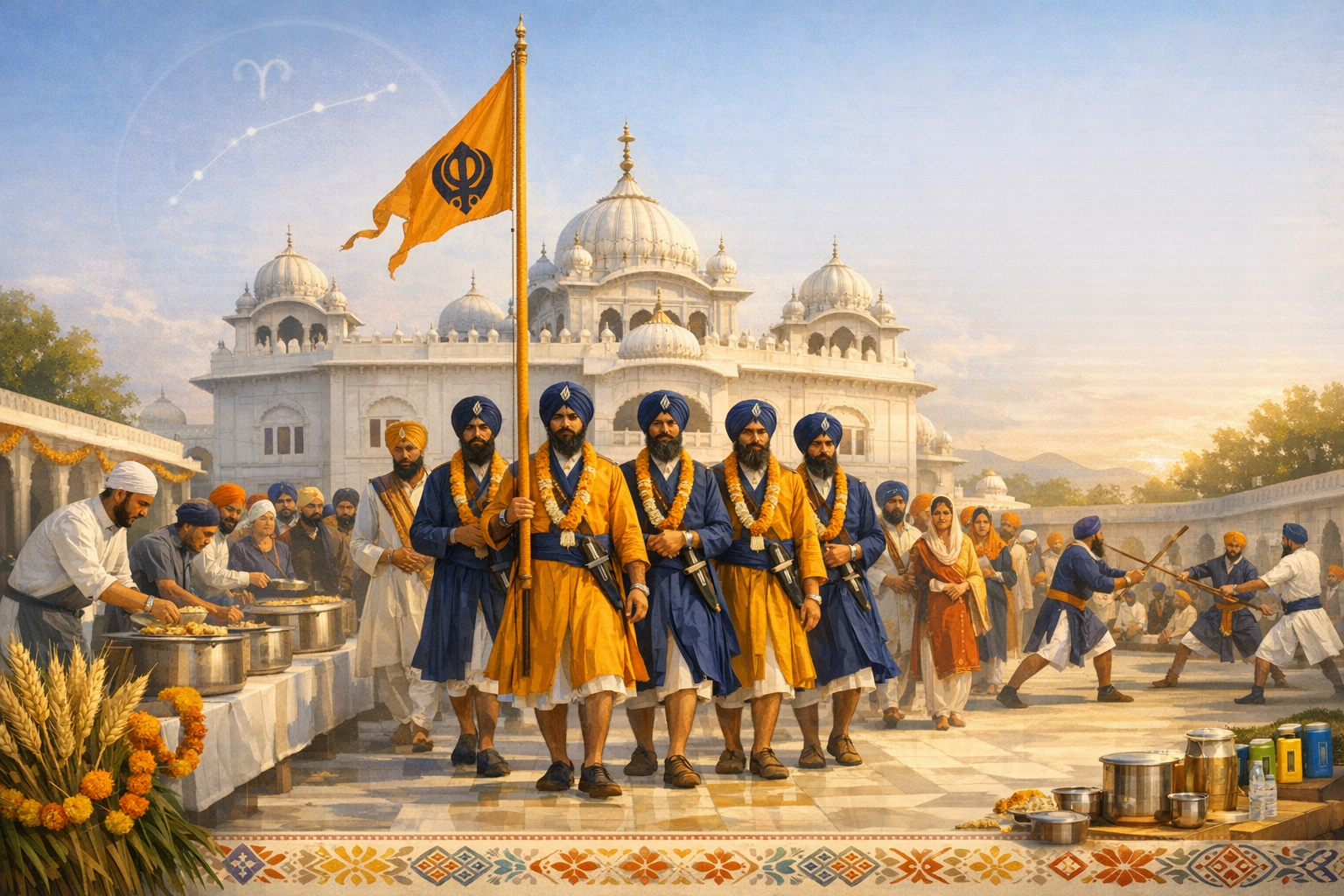
Vaisakhi 2026 offers a comprehensive moment of renewalhonoring the Khalsa’s founding at Anandpur Sahib while welcoming the Punjabi agrarian new year tied to the Sun’s entry into sidereal Aries. The guide explains why many communities will observe Vaisakhi on April 13–14 in 2026, clarifying the role of solar calculations, sunrise, and regional calendars. Readers gain…
-
Ego’s Illusion of Difference: Dharmic Wisdom on Avidya, Unity in Diversity, and Healing
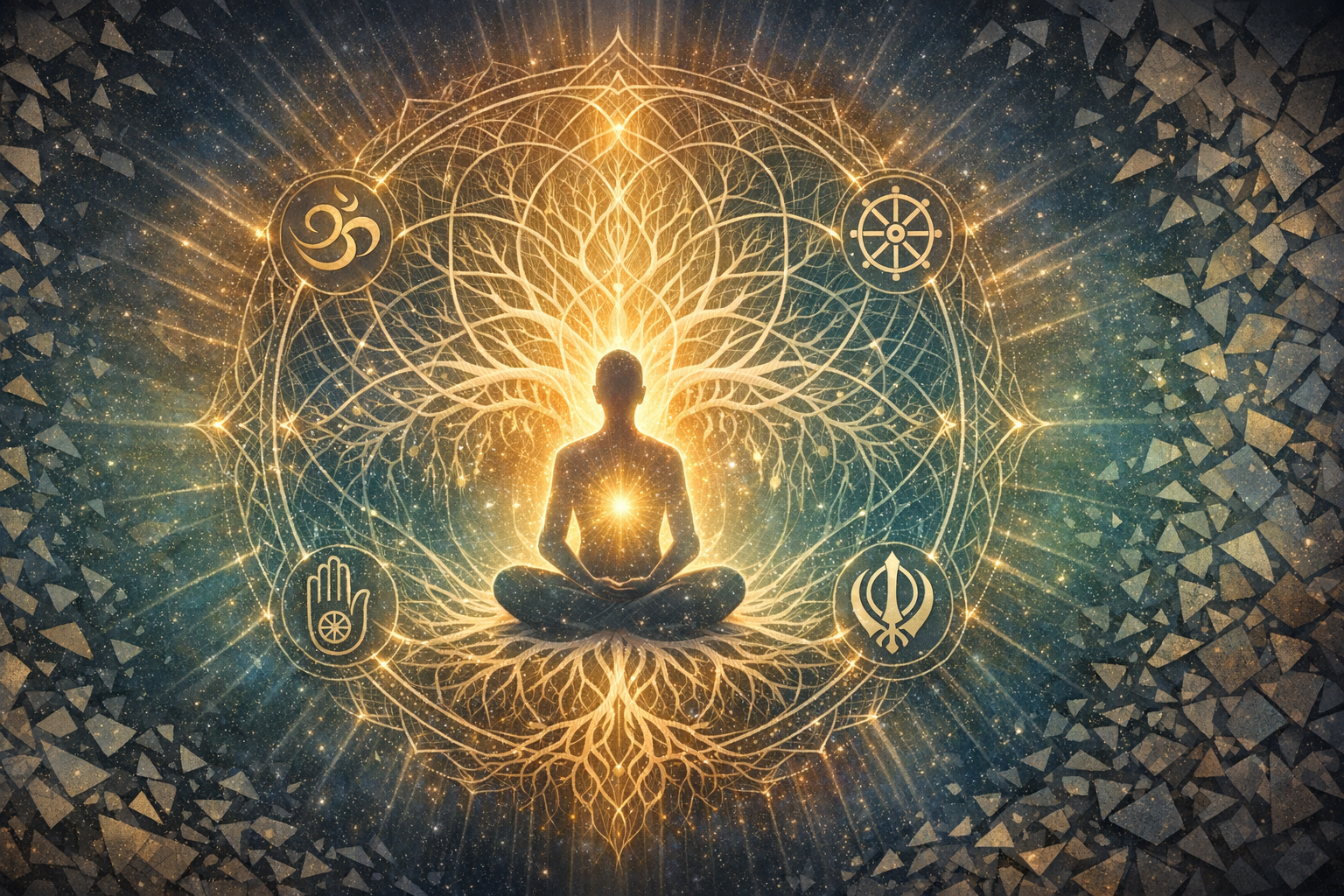
This essay examines why humans manufacture differences where none ultimately exist, using a dharmic framework drawn from the Upanishads, the Bhagavad Gita, Yoga Sutra, Anekantavada, Buddhist anatta, and Sikh teachings on Ik Onkar. It explains how avidya and ahankara harden provisional distinctions into identity, and how sama-darshana resists that process. It integrates classical Indian logic…
-
Person or Energy? Find Clarity in a Dharmic Synthesis across Vedanta, Buddhism, Jainism, Sikhism

This essay clarifies whether the Divine is best understood as Person or Energy by synthesizing perspectives from Vedanta, Buddhism, Jainism, and Sikhism. It defines key terms (Brahman, purusha, shakti, prana) and shows how saguna–nirguna, nirgun–sargun, and anekantavada converge in a coherent framework. Readers gain a precise yet accessible model that honors both devotional intimacy and…
-
Pure Mind Beyond Desire: A Rigorous Path to Moksha in the Gita, Upanishads, and Yoga

This article offers a rigorous, text-anchored exploration of the Hindu ideal of a pure mind free from desire, linking it to moksha in the Bhagavad Gita, the Upanishads, and Patanjali’s Yogasutra. It clarifies the difference between eliminating compulsive craving and nurturing dharma-aligned intention, avoiding the common pitfall of suppression or nihilism. Readers gain a practical…
-
Decoding the Golden Temple (Harmandir Sahib): Marble Motifs, Sacred Geometry, and Seva

This in-depth exploration decodes the Golden Temple (Harmandir Sahib) as a readable language of marble, motifs, and gilded form, revealing how architecture teaches Sikh ethics of oneness, seva, and equality. Readers will discover how geometry, calligraphy in Gurmukhi, floral arabesques, and jaali screens cohere into a visual theology aligned with continuous kirtan. The essay traces…
-
Kali Yuga’s Vanishing Divide: Decoding How Asuras ‘Turn Human’ and What It Means for Dharma

This in-depth analysis decodes the Hindu claim that in Kali Yuga the line between asuras and humans fades, showing it as a moral-psychological map rather than a literal prophecy. Drawing on the Vishnu Purana, Bhagavata Purana, and the Bhagavad Gita, it explains how dharma degrades across the yugas and why the age demands simpler, heart-centered…
-
Deep Ecology through Vedic Wisdom: A Dharmic Blueprint for Compassionate Sustainability

This essay presents a rigorous, dharmic framework for deep ecology rooted in Vedic culture and enriched by convergences across Hinduism, Buddhism, Jainism, and Sikhism. It explains how Krishna-centrism and principles like ahimsa, aparigraha, and seva generate practical Environmental stewardship. Readers gain a clear understanding of the Bhagavad Gita’s ethical architecture, the Guna model’s relevance to…
-
The Eternal Now: Guru Nanak’s Mindfulness for Fearless Clarity and Compassionate Living

Guru Nanak’s teachings present a precise, research-aligned path to mindfulness that integrates attention training (Naam Simran), ethical action (Kirat Karo, Vand Chhako, Seva), and wise acceptance (Hukam). By cultivating fearless clarity (nirbhau) and non-resentment (nirvair), practitioners stabilize presence in the “eternal now” and translate inner poise into compassionate service. The approach resonates with dharmic practices…
-
Forged in Faith: Weaponry in the Dasam Granth SahibHistory, Shastra-Vidya, and Symbolic Power

Weaponry in the Dasam Granth Sahib is presented as a disciplined convergence of steel and spirit, where shastra-vidya is sanctified by ethics and devotion. Set in the historical crucible of the Khalsa’s formation, these hymns catalog armsfrom khanda and kirpan to chakkar, banduq, and topwhile binding their use to Dharma-Yuddha principles. The text’s poetic multilingualism…
-
Vedic Environmentalism: Dharmic Ethics for Sustainability, Ahimsa, and Planetary Care
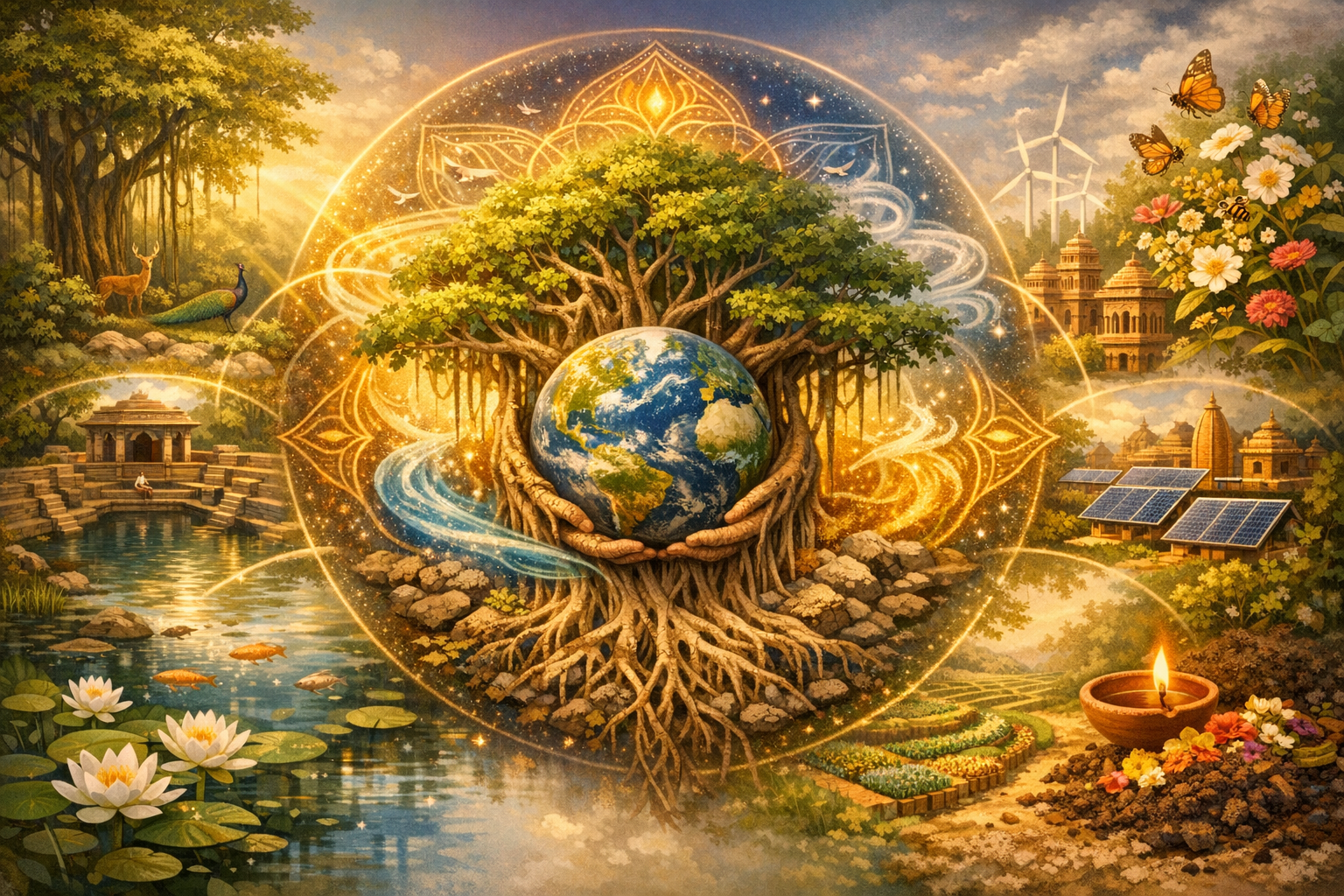
This in-depth exploration of Vedic environmentalism presents a rigorous, dharmic framework for sustainability that unites Hinduism, Buddhism, Jainism, and Sikhism around shared ecological ethics. Drawing on the Īśā Upaniṣad, Bhūmi Sūkta, and the Bhagavad Gītā, it translates reverence into practical guidance on resource conservation, circular economy design, and Clean Energy transitions. It highlights sacred groves,…
-
Beyond Perfection: Liberating Dharmic Wisdom on Impermanence, Dharma, and Divine Order

Perfection, as popularly pursued, continually recedes because all conditioned things are impermanent; dharmic traditions convert this problem into a path by aligning aspiration with dharma and the Divine Order. Drawing on the Bhagavad Gita, Upanishads, Yoga philosophy, and the broader insights of Buddhism, Jainism, and Sikhism, the essay reframes success as excellence grounded in clarity,…
-
Prayer Is the Voice of the Soul: Timeless Dharmic Science for Healing, Clarity, and Grace

This article unpacks the Hindu teaching “Prayer is the voice of the soul” as a precise, reproducible inner science shared across Hinduism, Buddhism, Jainism, and Sikhism. It explains technical frameworks such as vāk (levels of speech), Pancha-kosha viveka (five sheaths), and the discipline of japa, dhyana, and pranayama. Readers gain a clear practice framework that…
-
Facing Mortality, Finding Dharma: Why Mastering Dying Is the Ultimate Art of Living

A pivotal episode from the Mahabharata frames a universal insight: death is certain, denial is common, and wisdom begins when that denial ends. This long-form analysis shows how Hinduism, Buddhism, Jainism, and Sikhism converge on a shared disciplinefacing mortality to live more ethically, courageously, and compassionately. Drawing on the Bhagavad Gita, the Upanishads, maranasati, samayik–pratikraman,…
-
Beyond Endless Craving: Dharmic Science of Ambition, Lust, and Lasting Happiness
Progressive ambition often fails to produce lasting happiness because the senses–mind complex is mismatched to the goal of enduring joy. Vedic philosophy explains this law of material nature and locates fulfillment in the jiva’s spiritual quality as a particle of Sachidananda Vigraha. Converging insights from Hinduism, Buddhism, Jainism, and Sikhism show that inner realignmentnot external…
-
Ego (Ahamkara), Conflict, and Liberation: A Dharmic Synthesis with Practical Tools for Peace

This article examines why ego (ahamkara) is repeatedly identified by Hinduism, Buddhism, Jainism, and Sikhism as a root driver of conflict, and how each tradition prescribes precise methods to transform it. It clarifies the mechanism from avidya to anger found in the Bhagavad Gita and Yoga philosophy, then correlates those insights with Buddhist anatta, Jain…
-
Empathy as the Mark of Divinity: Dharmic Teachings on Karuṇa, Dayā, and Universal Compassion

Empathy is presented as the defining mark of divinity across Hinduism and the broader dharmic family, where compassion (karuṇa/dayā) is both spiritual practice and social ethic. Grounded in scriptural foundations such as Bhagavad Gita 6.32 and 12.13, the article links inner realization with the welfare of all beings. It highlights convergences with Buddhism’s Brahmavihāras, Jainism’s…
-
Avanaddha: The Sacred Science of Indian Drums from Vedic Pushkara to Pakhawaj

Avanaddha, the classical Indian family of drums defined in the Natyashastra, links Vedic references such as pushkara and dundubhi with today’s diverse performance, ritual, and communal traditions. This article explains how construction techniquesshell materials, membrane fastening, and the famed syahi loadingengineer near-harmonic overtones and pitch-centered strokes. It surveys major drum types (mridangam, pakhawaj, khol, chenda,…
-
Hik Sathi Laddham: The Timeless Companion Uniting Dharmic Wisdom and Sindhi Sufi Song

Anchoring on the Sindhi phrase “Hik Sathi Laddham” (“The Companion”), this essay maps a unifying motif across Hinduism, Buddhism, Jainism, and Sikhism, in dialogue with Sufi song. It clarifies the companion as inner witness and outer guide through Upanishadic sakshi, Buddhist kalyāṇa-mitra, Jain śuddhātman and the Three Jewels, and the Sikh Satguru and Śabad. Readers…