
-
Matak Hulāre Unveiled: The Swaying Rhythms of Punjabi Grace and Sacred Dharmic Unity

Matak Hulāre distills the Punjabi ideal of graceful sway and jubilant lift into a recognizable movement-music dialect spoken across Giddha, Bhangra, and festival gatherings. The piece unpacks its biomechanics, showing how pelvic sway, spinal curves, and shoulder release create the matak, while rhythmic accents and chest lift generate the hulāre. It maps the form’s rhythmic…
-
Nyaya Darshana Unveiled: How Indian Logic and Epistemology Power Clear Thinking

Nyaya Darshana presents a powerful, time-tested framework for clear thinking through its four pramanasperception, inference, comparison, and testimonyand a celebrated ethics of debate. By detailing the five-part syllogism, fallacies (hetvabhasa), and rigorous tests for reliable evidence (vyapti and upadhi), it equips readers to evaluate claims and avoid common reasoning errors. Its dialogical history with Buddhism,…
-
Harinama Sankirtana in Public Spaces: 11 Evidence-Based Actions for Peaceful, United Communities
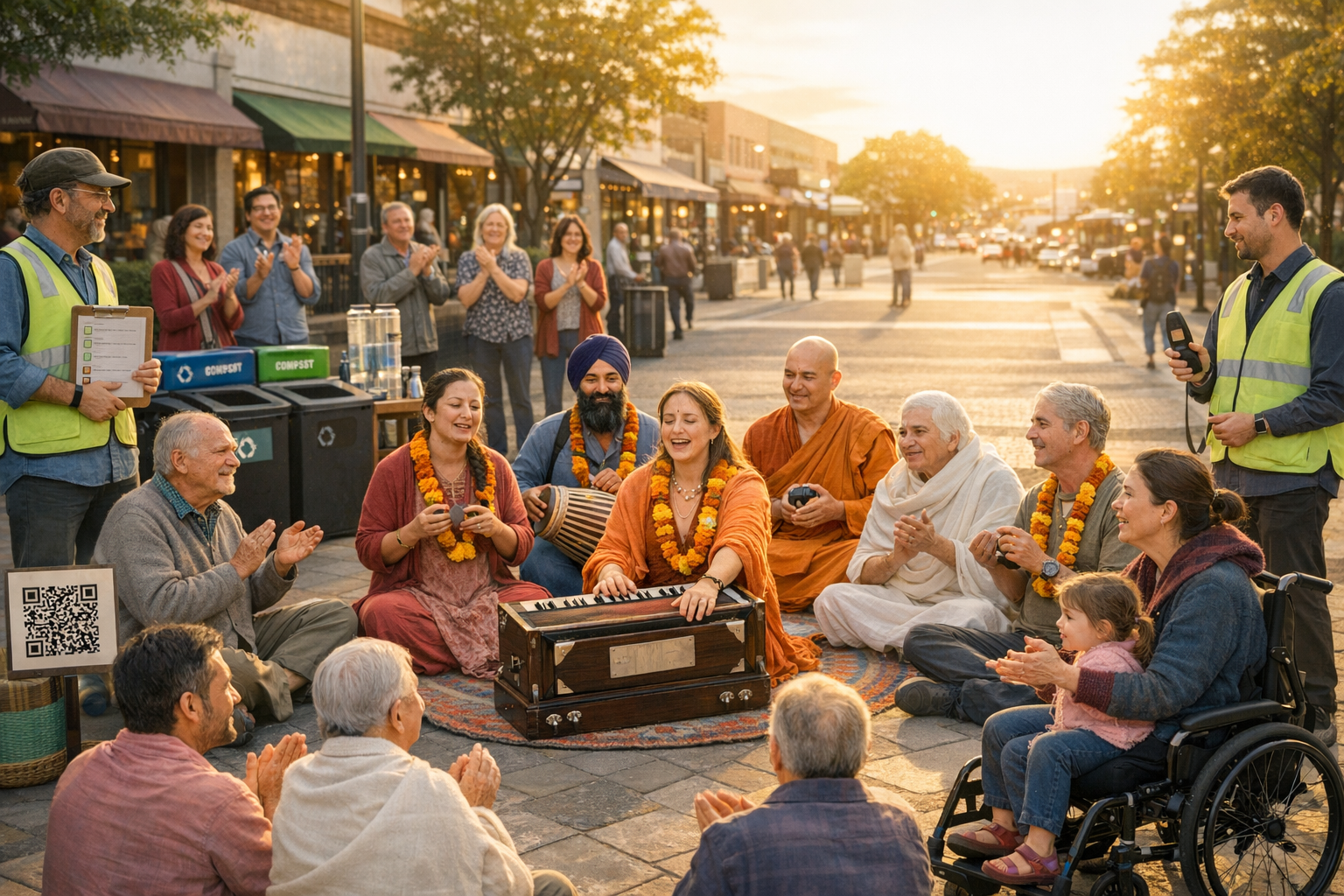
Public Harinama Sankirtana often raises a simple question: why chant on the streets? This article provides a clear, academically grounded answer rooted in Gaudiya Vaishnava theology, shared Dharmic principles across Hinduism, Buddhism, Jainism, and Sikhism, and emerging scientific research on chanting and group singing. It presents 11 evidence-based actions for making public kirtan welcoming, lawful,…
-
Unattached Like the Sun: Dharmic Wisdom on the Divine Light That Impartially Illumines All

This article examines the Hindu aphorism that the Divine is like the sunilluminating all without attachmentand shows how this insight unifies the Dharmic traditions of Hinduism, Buddhism, Jainism, and Sikhism. Drawing on scriptural anchors such as the Bhagavad Gita (13.33; 5.10; 9.9; 15.6; 15.12) and the Upanishads, it explains why Brahman/Īśvara is described as nirlepa…
-
Stop Buying What the Mind Sells: A Dharmic Art of Witnessing for Lasting Inner Freedom

A tireless inner salesmanfear, regret, desire, anxietyconstantly pitches stories and urges. This long-form analysis presents the dharmic antidote: the art of witnessing across Hinduism, Buddhism, Jainism, and Sikhism. Drawing on Patanjali’s Yoga Sutra, Sankhya, the Bhagavad Gita, Vedantic discernment, Buddhist mindfulness, Jain samayik, and Sikh simran, it explains why the mind’s pitch works and how…
-
Transformative Devotee Relationships: A Dharmic Blueprint for Clear Guidance and Unity

Across Hinduism, Buddhism, Jainism, and Sikhism, deep relationships with committed practitioners serve as a reliable channel for spiritual wisdom. Such association, known variously as satsanga, Saṅgha, kalyāṇa-mitra, and Saadh Sangat, refines perception, stabilizes practice, and grounds ethical action. By prioritizing quality over quantity, seekers gain epistemic reliability, ethical modeling, and attentional steadiness. Discernment is essential:…
-
Unveiling the Serpent Divine: Rigorous Comparison of Hindu Nagas and Ancient Greece’s Glycon

Serpent deities crystallize a universal human intuition about healing, protection, and moral order. This rigorous, evidence-based comparison places Hindu Nagasplural, ecologically integrated, and cosmologically centralalongside the Greco-Roman Glycon, a historically bounded healing and oracular cult. Drawing on the Mahabharata, Puranas, and living festivals such as Naga Panchami and Nagula Chavithi, it shows how Nagas unify…
-
Indratva vs Nidratva: Kumbhakarna’s Boon, Ambition, and the Lost Science of Balance

Kumbhakarna’s story in the Ramayana, often reduced to a trope of excess, encodes a precise philosophy of balance through the dialectic of Indratva (unbounded agency) and Nidratva (overpowering inertia). Read across Valmiki and later retellings, the episode becomes a systems lesson in regulating rajas and tamas under sattva’s guidance. The analysis connects dharmic psychology with…
-
Idle Mind, Restless Life: Dharmic, Yogic, and Mindfulness Practices to Build Purposeful Focus

The age-old saying that an idle mind becomes a workshop for unwholesome impulses is reframed here through the shared wisdom of Hinduism, Buddhism, Jainism, and Sikhism. Instead of moralizing idleness, the analysis distinguishes healing rest from tamasic drift and presents a technical, evidence-aligned path to train attention and action. Readers gain a clear map of…
-
Beyond Luck and Fate: Timeless Dharmic Wisdom on Karma, Free Will, and Untouched Truth

This article reframes “luck” and “fate” through a dharmic lens as shorthand for complex causality rather than forces that control life. It integrates Hindu, Buddhist, Jain, and Sikh perspectives to show how karma, dependent origination, niyama, and hukam together replace fatalism with responsibility and wisdom. Hindu teachings on sañcita–prārabdha–kriyāmāṇa karma and puruṣārtha emphasize effort within…
-
Akshaya Tritiya: Sacred Charity, Timeless Seva, and Dharmic Unity Across Traditions

Akshaya TritiyaVaishakha Shukla Tritiyacelebrates inexhaustible merit through charity, seva, and study across the Dharmic traditions of Hinduism, Buddhism, Jainism, and Sikhism. This guide explains the festival’s astronomical timing, its standing as a Sade-Teen Muhurat, and its plural mythic associations, including Parashurama Jayanti and the Mahabharata’s transcription. Readers gain a practical ritual grammar and a dana-first…
-
Divine Justice and Fallen Kings: How Hindu Scriptures Enshrine Honor for Women

Ancient Hindu scriptures deliver a consistent warning: mistreating women is adharma that invites downfallof men, dynasties, and entire realms. Drawing on the Mahabharata, Ramayana, Bhagavata Purana, and Dharmashastra, this analysis shows how narratives like Draupadi’s humiliation, Ravana’s abduction of Sita, Amba’s denial of agency, and Ahalya’s deception culminate in moral and political collapse. Legal traditions…
-
The Curse of Immediacy: Reclaiming Kshama and Dhairya for Deep Focus in a Digital Age

Modern life rewards speed yet quietly punishes impatience with poor judgment, anxiety, and brittle relationships. This essay examines Kshama (forbearance) and Dhairya (steadfast patience) as precise antidotes drawn from Hindu philosophy and aligned with Buddhist, Jain, and Sikh insights. It clarifies the terms linguistically and textually, situates them within the Bhagavad Gita, Vedānta’s preparatory disciplines,…
-
Singing Between the Lines: Ekendra Das on Spiritual Messaging in Krsna Conscious Music and Theater
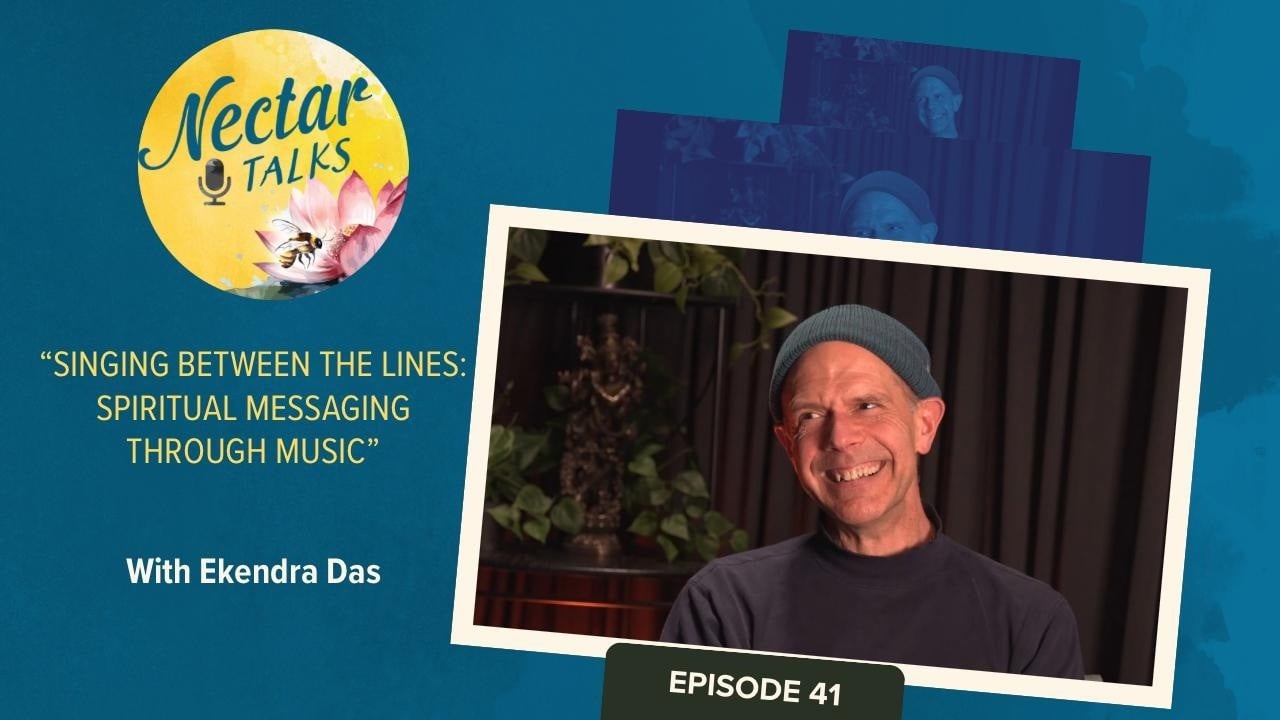
This long-form profile examines how Ekendra Das (Ekendra Prabhu) unites professional musicianship with disciplined seva to communicate dharmic wisdom through Krsna Conscious bands, theater, and responsible humor. It explains how Straight Edge ethics parallel Hindu vrata and align with Buddhist, Jain, and Sikh disciplines, framing music as a practice of clarity rather than escape. Drawing…
-
Design Your Destiny: A Dharmic Guide to Karma, Choice, and Responsible Living

This article examines how Hindu philosophy and related dharmic traditions align on a rigorous, empowering approach to choice, karma, and destiny. It clarifies the technical distinctions among sanchita, prarabdha, and agami karma, and explains how the purushartha framework and the shreyas–preyas distinction guide ethical decision-making. Drawing on the Bhagavad Gita, Yoga philosophy, and insights from…
-
Beejabhidhana in Tantrism: Decoding Sacred Seed Syllables for Transformative Mantra Yoga
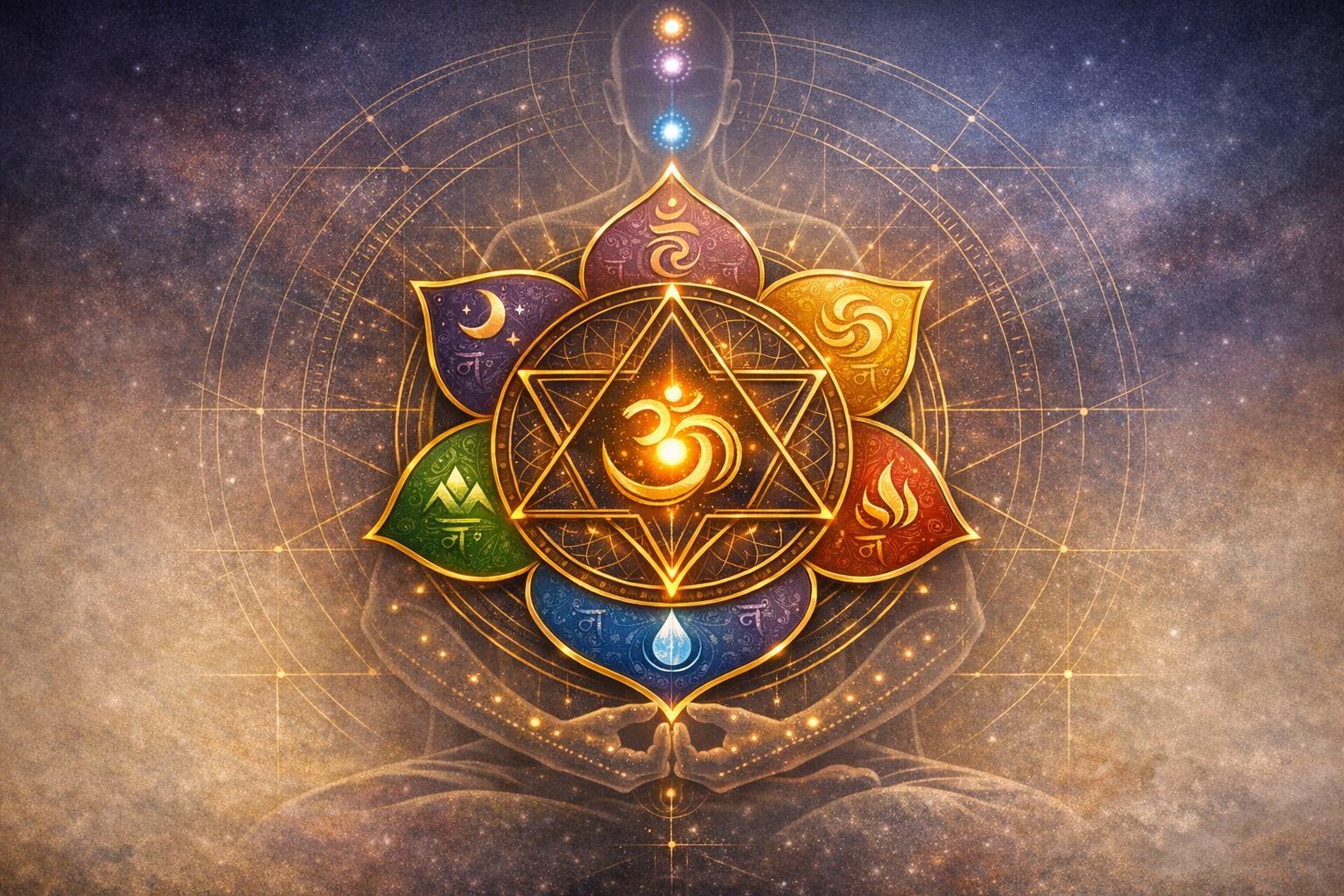
Beejabhidhana in Tantrism offers a rigorous map of sacred sound, explaining how seed syllables (bījākṣaras) encode cosmology, deity-function, and method in a single phonemic unit. It clarifies the technical relation between letters, elements, chakras, nyāsa, and japa, enabling precise, lineage-aligned practice. The framework is academically rich yet experientially grounded, integrating phonetics, grammar, and ritual design…
-
Unveiling Nāga Kanyā: A Research-Backed Guide to Hinduism’s Boundless Serpent Guardian

Nāga Kanyā“the virgin serpent”is a pan-Indic guardian archetype whose maidenly autonomy and serpentine potency protect thresholds, waters, and life. This research-grounded overview situates Nāga Kanyā in Hindu scriptures and art (Jaratkaru, Ulūpī, Hoysala and Chola sculptures) while clarifying that “virgin” signifies self-sovereignty, not social status. It explains how nāga-kanyā symbolism converges with festivals such as…
-
When Darkness Becomes Light: Dharmic Perspectives for Clarity, Compassion, and Unity

This essay unpacks the metaphor “Darkness from one side is light from the other side” through Hindu philosophy and its sister Dharmic traditionsBuddhism, Jainism, and Sikhism. Drawing on the Upanishads, the Bhagavad Gita, Advaita Vedanta, Nyaya, Samkhya, and Yoga, it explains why perspectives diverge and how disciplined methods convert contradiction into clarity. Jain Anekantavada and…
-
Preserving Raag and Reverence: International Seminar on Bhai Avtar Singh Ragi’s Legacy

This in-depth overview of the International Seminar on Bhai Avtar Singh Ragi’s legacy explains how his disciplined, raag-based approach to Sikh kirtan shaped modern Gurmat Sangeet. Readers gain a clear view of the musicological building blocksraag, taal, rahao, ghar, and partaaland how they serve the semantic and spiritual heart of the shabad. The summary outlines…
-
Why Nothing Is Ever Lost: Dharmic Wisdom to Transform Grief into Clarity and Peace

This long-form exploration explains why, across Hinduism, Buddhism, Jainism, and Sikhism, nothing is ever truly lostforms change while meaning, memory, and value continue. It clarifies Vedanta’s two levels of truth, showing how the atman remains untouched even as prakriti transforms. It integrates Buddhist dependent origination, Jain Anekantavada, and Sikh Hukam to present a unified dharmic…