
-
The Curse of Immediacy: Reclaiming Kshama and Dhairya for Deep Focus in a Digital Age

Modern life rewards speed yet quietly punishes impatience with poor judgment, anxiety, and brittle relationships. This essay examines Kshama (forbearance) and Dhairya (steadfast patience) as precise antidotes drawn from Hindu philosophy and aligned with Buddhist, Jain, and Sikh insights. It clarifies the terms linguistically and textually, situates them within the Bhagavad Gita, Vedānta’s preparatory disciplines,…
-
Beyond Form: Hindu Dharma’s Powerful Vision of God as All Forms and the Formless

The teaching that “God is not the name for a form; it is the name for all the forms” captures Hinduism’s union of transcendence and immanence: Brahman is beyond description yet luminous in every meaningful image and practice. Drawing on the Upanishads and the Bhagavad Gita, the discussion explains how nirguna and saguna complement each…
-
Bhadrachalam Sthala Puranam: Sacred Legends, Living Devotion at Sita Ramachandra Swamy

Set on the banks of the Godavari, the Bhadrachalam Sita Ramachandra Swamy Temple embodies a living synthesis of Valmiki’s Ramayana, sacred geography, and historical tradition. Its Sthala Puranam links Ayodhya’s epic events to the forests of Dandakaranya, where Sri Rama, Seetha, and Lakshmana are venerated in the unique Vaikuntha Rama iconography. The kshetra’s renaissance under…
-
Decoding the True Guru: Parampara, srotriyam, and brahma-nistham for Dharmic seekers
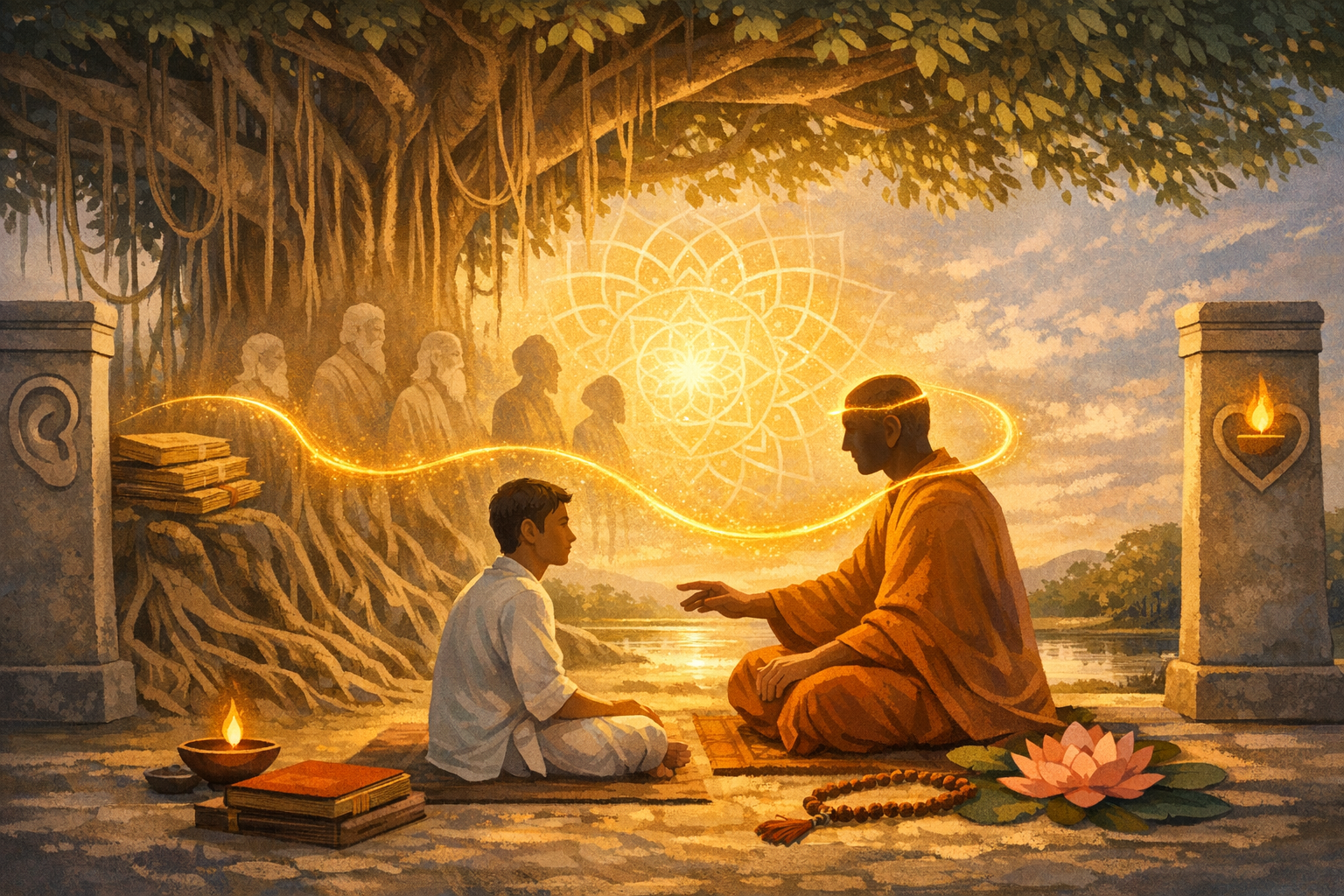
What makes a true guru, and how can seekers discern reliable guidance today? Drawing on the Upanishadic standard of “srotriyam” (lineage-grounded hearing) and “brahma-nistham” (unwavering dedication to the Supreme Truth), this analysis shows why parampara safeguards Vedic wisdom from speculation. It explains how a realized teacher blends scriptural fidelity with lived steadiness, aligning with the…
-
Why Nothing Is Ever Lost: Dharmic Wisdom to Transform Grief into Clarity and Peace

This long-form exploration explains why, across Hinduism, Buddhism, Jainism, and Sikhism, nothing is ever truly lostforms change while meaning, memory, and value continue. It clarifies Vedanta’s two levels of truth, showing how the atman remains untouched even as prakriti transforms. It integrates Buddhist dependent origination, Jain Anekantavada, and Sikh Hukam to present a unified dharmic…
-
Washington’s Moral Authority in 2026: The Constitution as a Dharmic, Pluralist Compass

Washington’s moral authority in 2026 should be anchored in the U.S. Constitution understood as a moral covenant rooted in popular sovereignty, natural law, and inalienable rights. Treating separation of powers, checks and balances, and federalism as ethical constraints on power safeguards liberty while enabling responsive governance. The piece offers a practical constitutional impact protocolrights risk…
-
Beyond ‘God of War’: Murugan’s origins, Vel symbolism, and Thaipusam’s transformative devotion

Murugan, revered across Hindu, Buddhist, Jain, and Sikh milieus as a symbol of disciplined compassion, emerges in Tamil sources as the mountain-born “Beautiful One” whose power is guided by wisdom. Classical narratives from the Tolkappiyam and Puranic traditions explain his sixfold awareness, the gift of the Vel, and the transformation of Surapadman from pride into…
-
Ayodhya’s Sacred Flame Debate: Honouring Akhand Jyoti while Meeting Modern Safety Norms
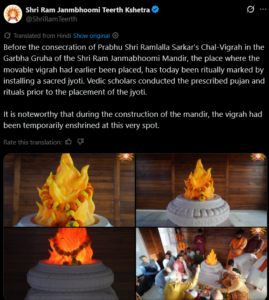
A social media dispute about an alleged plastic lamp at the Shri Ram Janmabhoomi Mandir sparked a wider discussion about the Akhand Jyoti, ritual integrity, and heritage stewardship. This analysis distinguishes the sacred, ghee-fed flame from decorative or safety lighting, clarifying why Agni as Devata cannot be reduced to mere illumination. It draws on safety…
-
Embracing Sukha and Dukha: Dharma’s Transformative Science of Resilience and Freedom

This essay explains why Sanatana Dharma views Sukha (happiness) and Dukha (distress) as complementary threads woven into the fabric of life. Drawing on the Bhagavad Gita, the Yoga Sutra, and convergent insights from Buddhism, Jainism, and Sikhism, it shows how Dharma transforms hardship into clarity and compassion. Readers learn practical methodsKarma Yoga, Bhakti, Jnana, Raja…
-
Who Is the Real Father? ISKCON and Gita on the Soul, Death, and the Supreme Source

This essay explores the Hare Krishna (ISKCON) understanding of who the “real father” is by distinguishing bodily from spiritual parenthood through the lens of the Bhagavad Gita. It explains why everyday bereavement language“he has gone”implicitly recognizes the self (ātmā) as distinct from the body. Drawing on key verses (Gita 14.4, 2.13, 2.20, 15.7), it shows…
-
Unveiling the Soul’s Journey: Life After Death in HinduismKarma, Yama, Moksha

Hinduism presents life after death as a just, compassionate, and educative journey governed by karma and oriented toward moksha. Foundational textsthe Upanishads, Bhagavad Gita, and Puranasaffirm that the immortal ātman continues through realms (lokas) or returns via reincarnation according to ethical causality. Lord Yama Dharma embodies impartial moral order, while rites such as antyeṣṭi, śrāddha,…
-
A Vision for Bharat: Shivamogga Sammelan Calls for Dharmic, Constitutional, Unifying Governance

At a provincial Hindu Rashtra Sammelan in Shivamogga on April 6, 2026, the Hindu Janajagruti Samiti (HJS) called for “Hindu Ideology-Based Governance” in Bharat. Read through a constitutional and inclusive lens, this can be translated into a broader, dharmic governance model that upholds pluralism, compassion, and rule of law for Hindus, Buddhists, Jains, Sikhs, and…
-
Hinduism’s Universal Ideals: Defeating Stagnation and Igniting Flourishing with Dharma
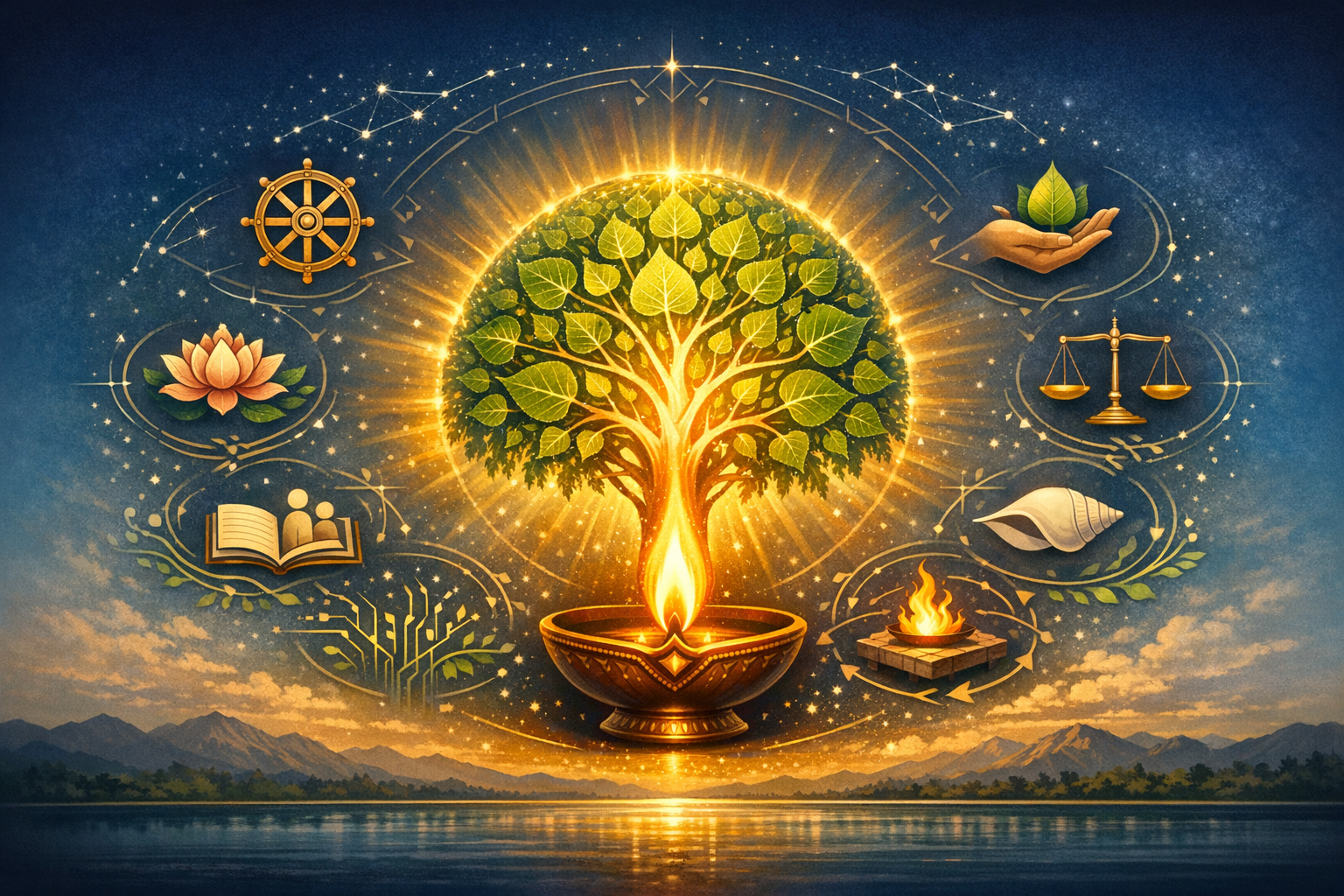
This article argues that the absence of shared, universal ideals creates moral drift, weakens institutions, and precipitates social stagnation. Drawing on the Vedas, Upanishads, the Bhagavad Gita, Ramayana, Mahabharata, and Puranas, it distills Dharma, Ahimsa, Satya, Aparigraha, Seva, and Lokasangraha as civilizational anchors. It highlights resonances across Buddhism, Jainism, and SikhismAnekantavada, the Brahmaviharas, and sarbat…
-
Kali Yuga’s Vanishing Divide: Decoding How Asuras ‘Turn Human’ and What It Means for Dharma

This in-depth analysis decodes the Hindu claim that in Kali Yuga the line between asuras and humans fades, showing it as a moral-psychological map rather than a literal prophecy. Drawing on the Vishnu Purana, Bhagavata Purana, and the Bhagavad Gita, it explains how dharma degrades across the yugas and why the age demands simpler, heart-centered…
-
Mudgala Upanishad and the Purushasukta: Decoding Cosmic Personhood, Unity, and Dharma
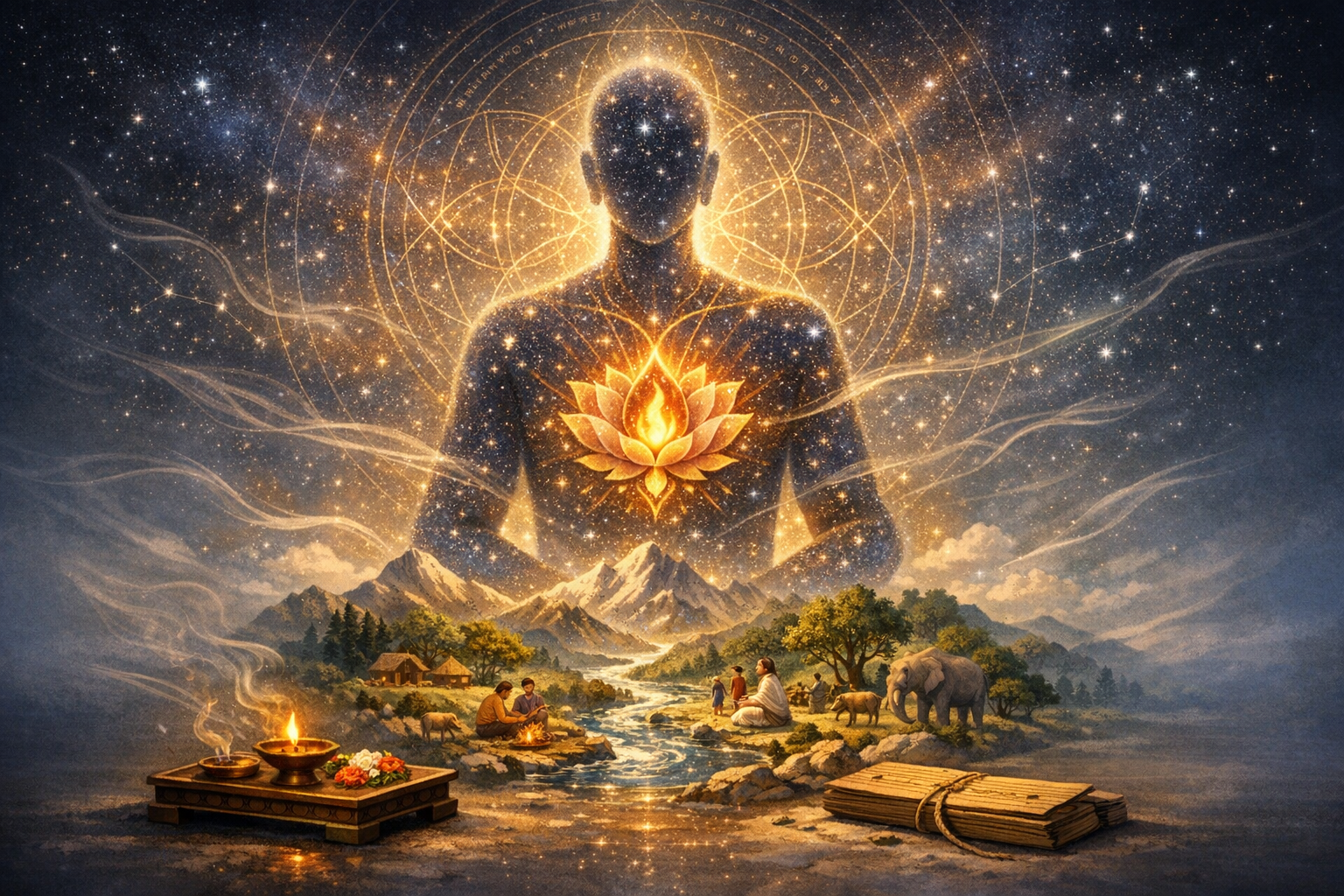
The Mudgala Upanishad, preserved in several Rigvedic lists, offers a concise contemplative counterpart to the Purushasukta (Rig Veda 10.90). Read together, they articulate a powerful vision of the Cosmic Person (Purusha) that harmonizes ritual symbolism with precise Upanishadic metaphysics. The essay explains key motifsimmanence and transcendence, cosmic sacrifice, and microcosm–macrocosm mappingswhile clarifying socially sensitive verses…
-
Unveiling the Fourteen Lokas: A Deep, Clarity-Driven Journey through Hindu Consciousness
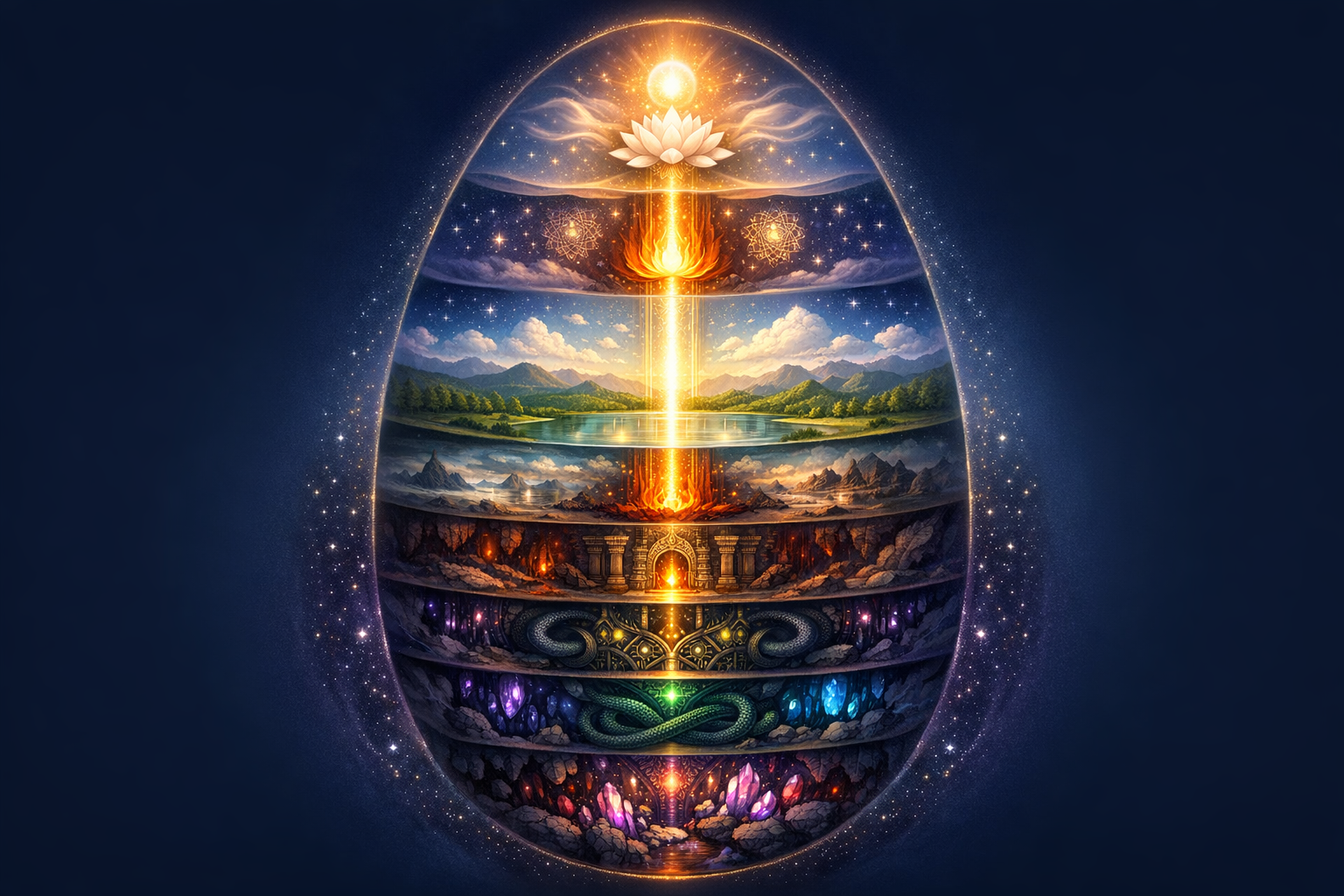
This long-form, research-driven exploration clarifies the fourteen lokas (seven Urdhva and seven Adho) in Hindu cosmology as both cosmic regions and states of consciousness. Drawing on Hindu scriptures and Vedic philosophy, it explains each loka’s pedagogical role, distinguishes Adho lokas from Naraka, and shows how the “cosmic ladder” aligns with yogic practice. The piece emphasizes…
-
Deepavali under Fire: Data, Media Narratives, and a Roadmap to Safeguard Dharmic Heritage

Every year, Deepavali triggers fierce arguments about fireworks and air quality, yet the debate often leans on rhetoric rather than data. This piece synthesizes CPCB and research findings, explains festival-night PM2.5 spikes in the context of seasonal sources, and clarifies the current Supreme Court and regulatory framework for green crackers and time windows. It outlines…
-
Beyond Varna and Ashrama: The Ativarnashrami Ideal and a Fearless Path to Moksha
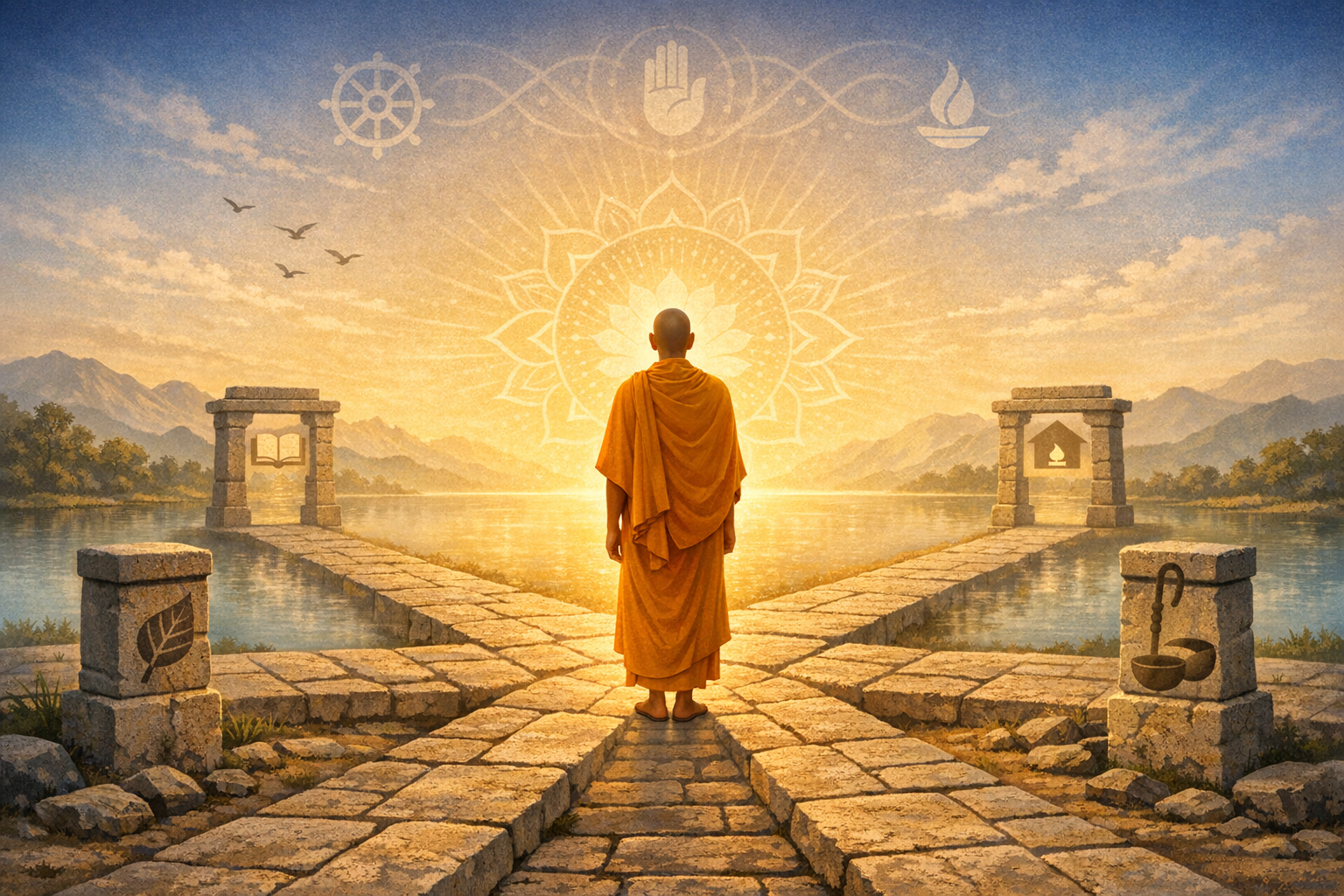
This long-form exploration clarifies the Ativarnashrami ideal as the realized state beyond social and life-stage identifiers in Hindu philosophy. It situates the concept within varnashrama dharma, the purusharthas, and scriptural anchors from the Upanishads and the Bhagavad Gita. Readers gain a technical yet readable account of renunciant gradations, ethical implications, and the principle of loka-samgraha.…
-
Vedic Environmentalism: Dharmic Ethics for Sustainability, Ahimsa, and Planetary Care
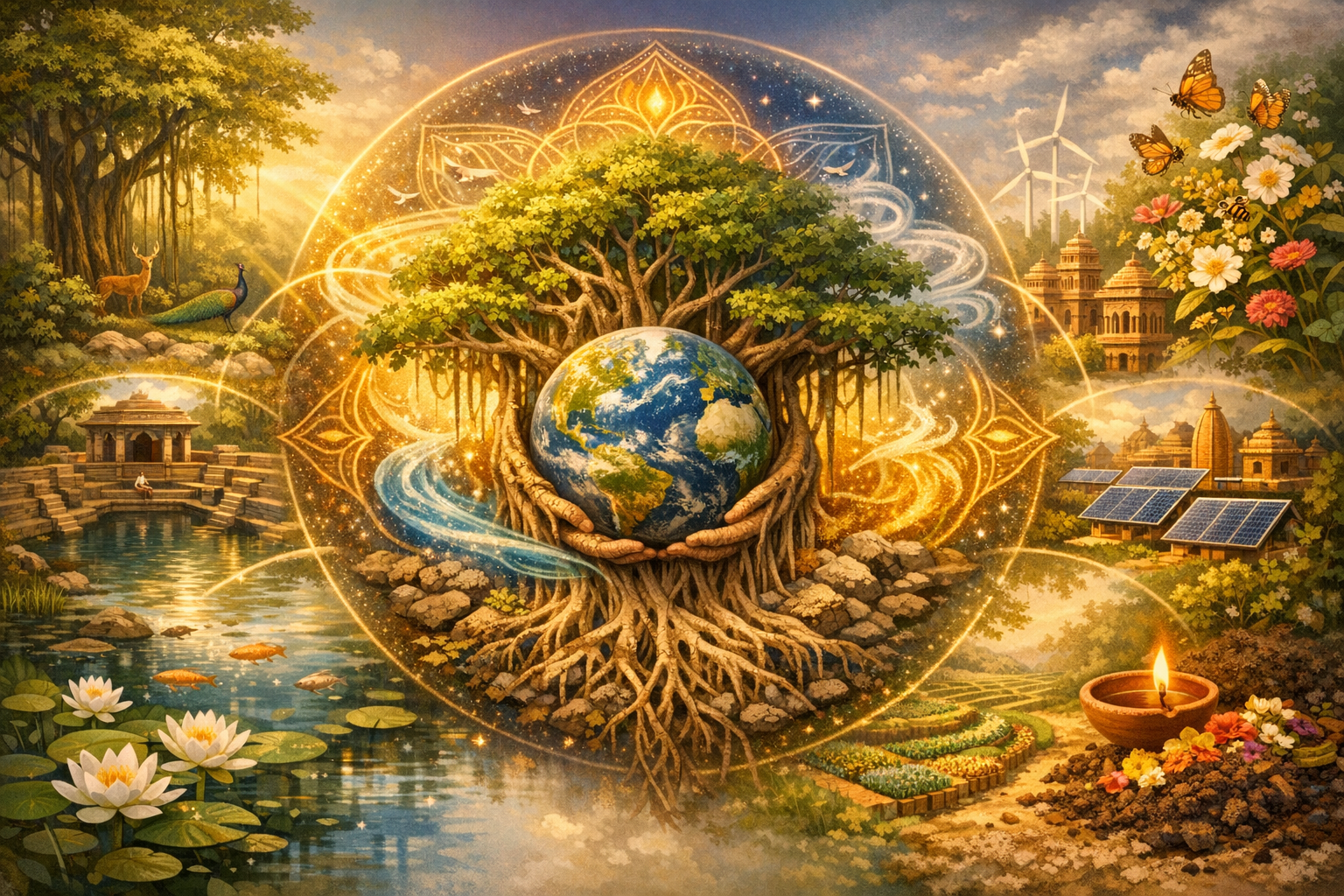
This in-depth exploration of Vedic environmentalism presents a rigorous, dharmic framework for sustainability that unites Hinduism, Buddhism, Jainism, and Sikhism around shared ecological ethics. Drawing on the Īśā Upaniṣad, Bhūmi Sūkta, and the Bhagavad Gītā, it translates reverence into practical guidance on resource conservation, circular economy design, and Clean Energy transitions. It highlights sacred groves,…
-
Kali Yuga’s Hidden Crisis: How Daily Divine Remembrance Ends Confusion, Stress, and Suffering

Kali Yuga’s defining crisis is not doctrinal disagreement but the everyday amnesia that severs attention from the Divine and amplifies stress and confusion. Rooted in the Bhagavad Gita’s call to remember at all times and the Bhagavata Purana’s praise of nāma-kīrtana, this analysis details a practical, inclusive protocol for continuous remembrance. It integrates japa, kīrtana…