
-
Dhumavati and Shiva Unveiled: Origin Myths, Smoke-Clad Symbolism, and Transformative Wisdom

Dhumavati, the smoke-clad Mahavidya, teaches how endings and absence become gateways to discernment across the Dharmic family. This in-depth essay clarifies her origin myths, including the Sati–Shiva narratives and the Daksha yajna smoke motif, and interprets their philosophical stakes. It decodes her iconographycrow, broom, winnowing basket, cremation groundas a curriculum in viveka and vairagya. Readers…
-
Shiva-bhog in Kali Temples: Feeding Jackals with Prasada and the Wisdom of Shakta Tantra
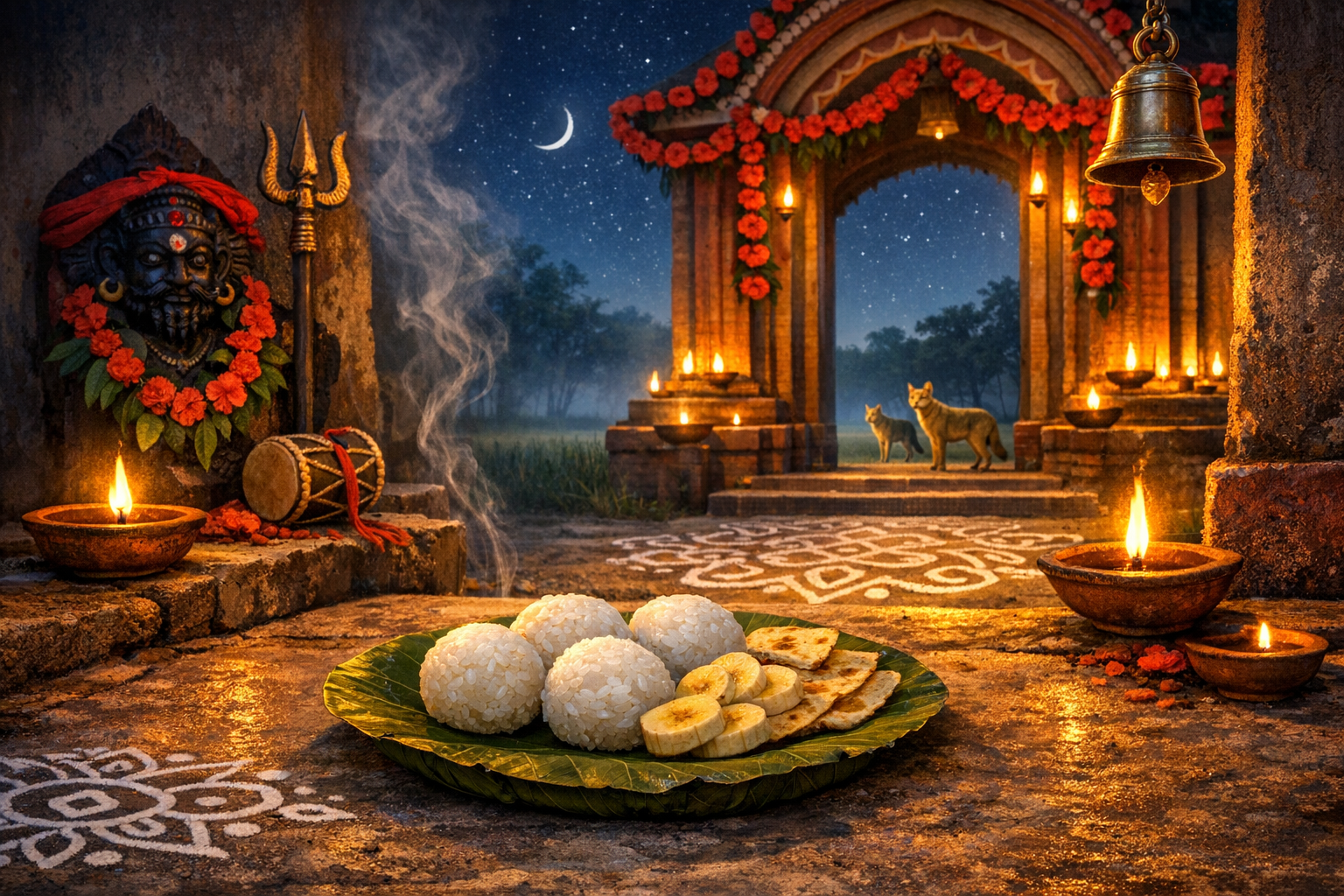
Shiva-bhog in Kali temples is a Shakta Tantra rite in which a consecrated share of prasada is respectfully offered to jackals, seen as attendants of the Mother and guardians under Bhairava. Rooted in classical iconography that pairs Kali and Chamunda with the smashana and its liminal beings, the practice integrates Shaiva–Shakta theology with ecological awareness.…
-
Kalachakra in Hindu Tantra: Decoding the Wheel of Time, Consciousness, and Dharmic Unity
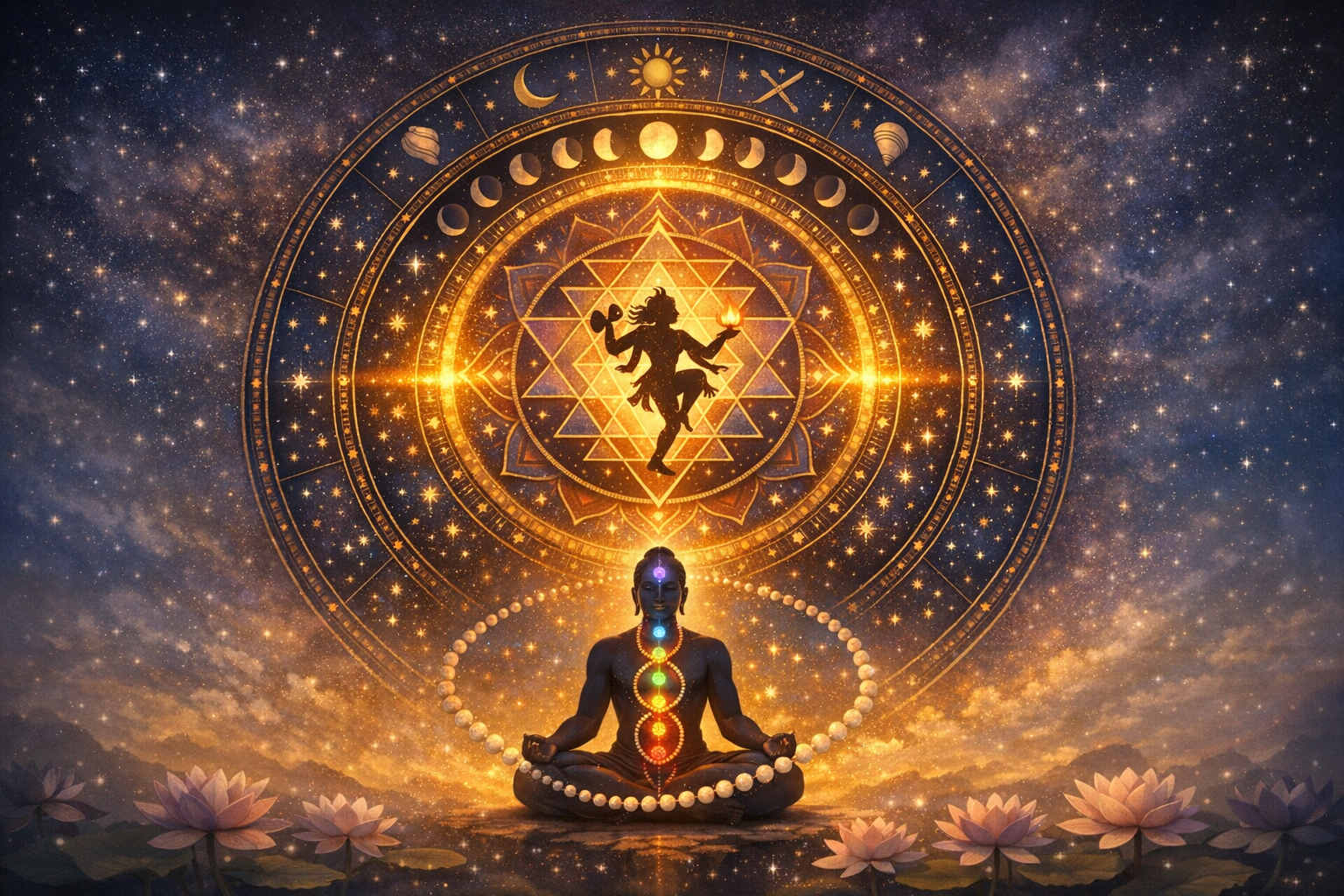
Kalachakra in Hindu Tantra presents time as a living cycle that unifies microcosm and macrocosm, offering a precise path to the timeless ground of awareness. Drawing on the Maitri Upanishad and the Bhagavad Gita, it treats time as both measurable rhythm and doorway to the Akāla, the unconditioned. The framework integrates Vedic cosmology, pañcāṅga timing,…
-
Dashamahavidya Jayanti 2026–2027: Accurate Tithi Guide, Deep Meanings, and Home Puja Methods
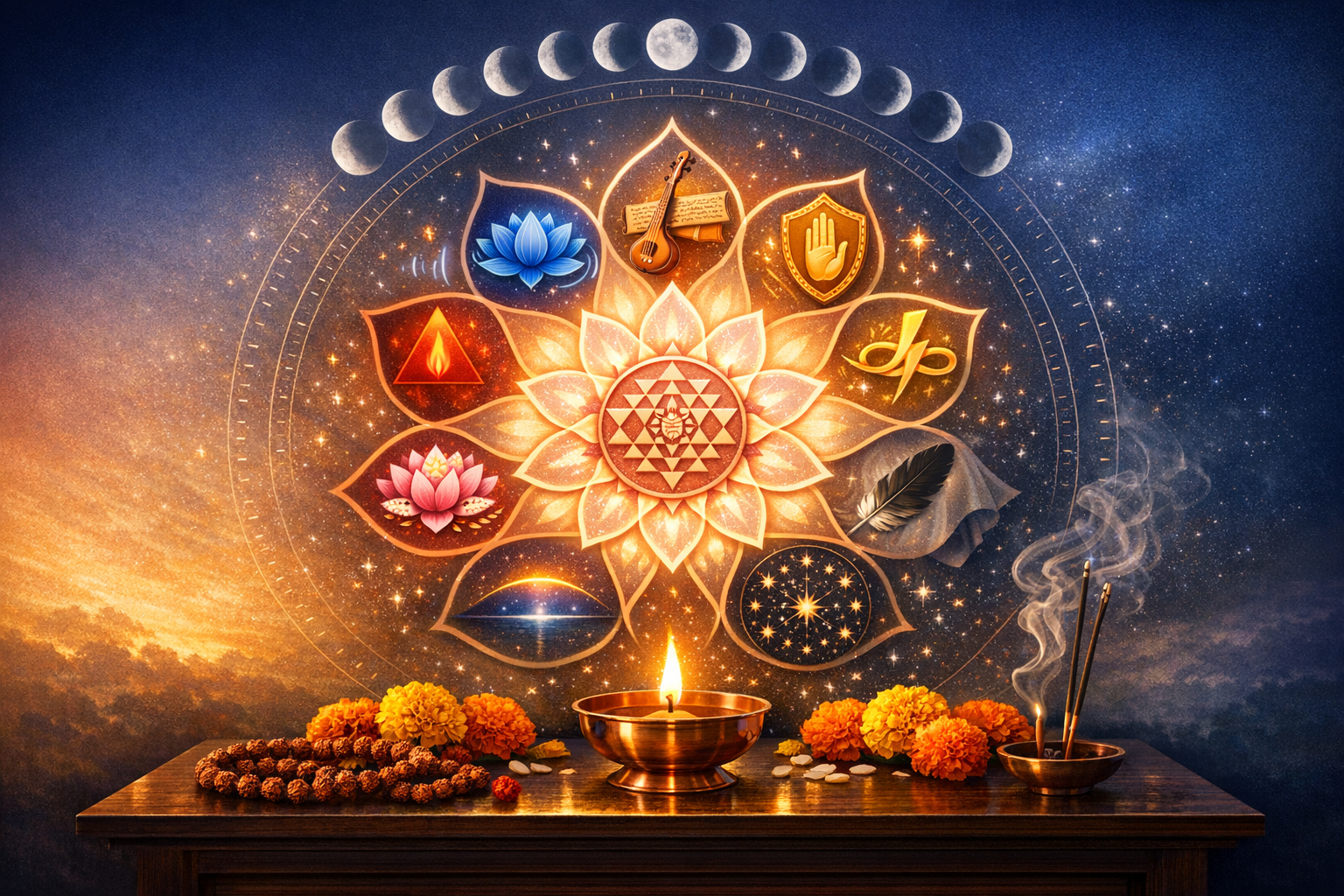
This comprehensive guide to Dashamahavidya Jayanti 2026–2027 explains how the ten Jayantis of Mahatara, Matangi, Bagalamukhi, Chinnamastika, Dhumavati, Mahakali, Bhuvaneshwari, Kamala, Tripurabhairavi & Lalita are determined by tithi, with clear notes on regional calendar differences. It summarises widely observed tithis for each Mahavidya, indicates likely 2026–2027 Gregorian windows, and offers practical home-puja methods aligned to…
-
From Nataraja to Raas Leela: The Awe-Inspiring Science, Symbolism, and Legacy of Divine Dance
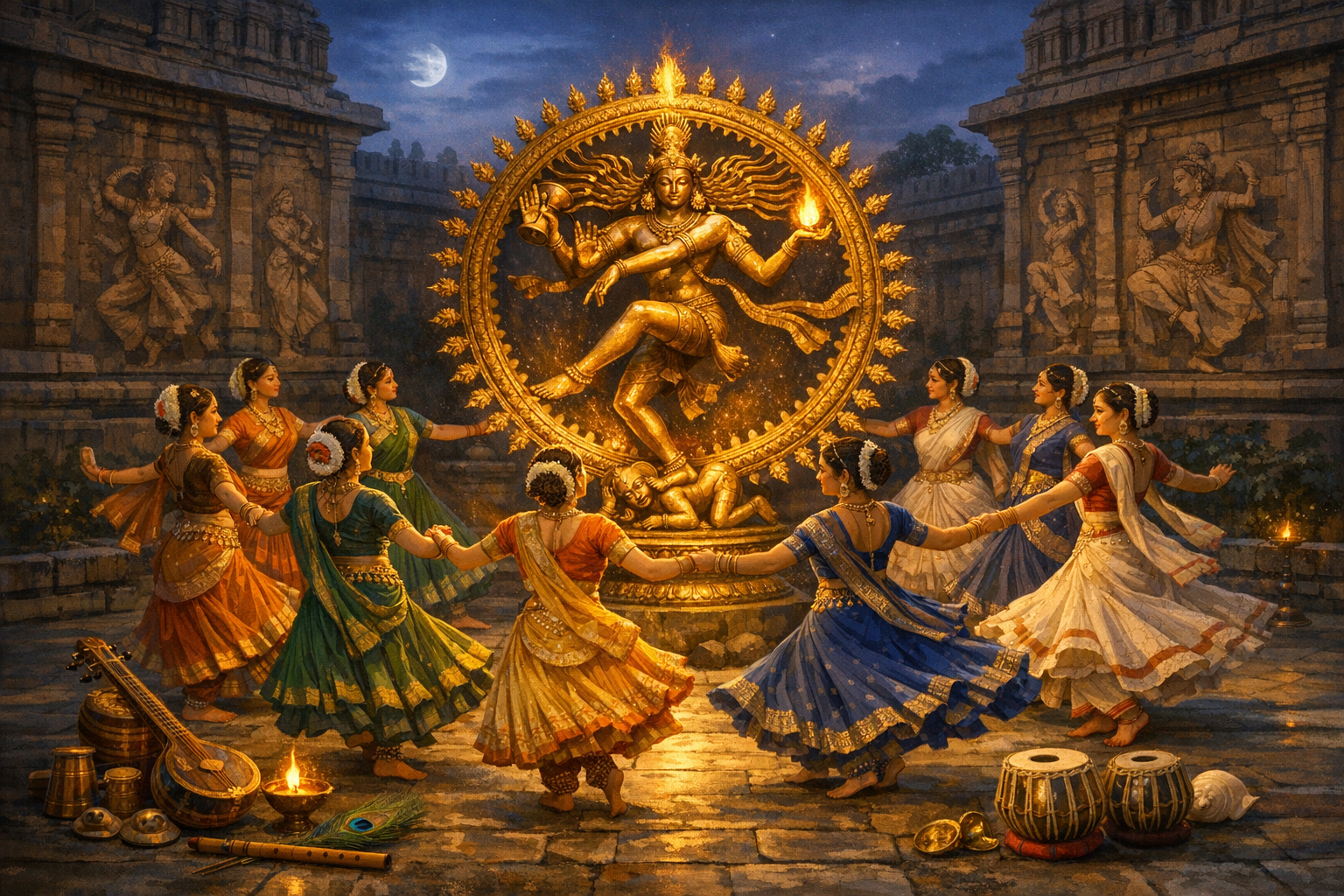
Divine dance in the dharmic traditions is a precise language of cosmology and devotion. This article explains Shiva as Nataraja with technical iconography (damaru, agni, abhaya, Apasmara) and maps his pañcha-kṛtya to movement, clarifying how sound (nada) and rhythm underpin Sanskrit and ritual. It situates Bharatanatyam, Odissi, Kuchipudi, Kathak, Mohiniyattam, Sattriya, Chhau, Yakshagana, Chakyar Koothu,…
-
Raksha Kali: Fierce Protector of DharmaIconography, Mantras, Ritual Practice, Living Devotion
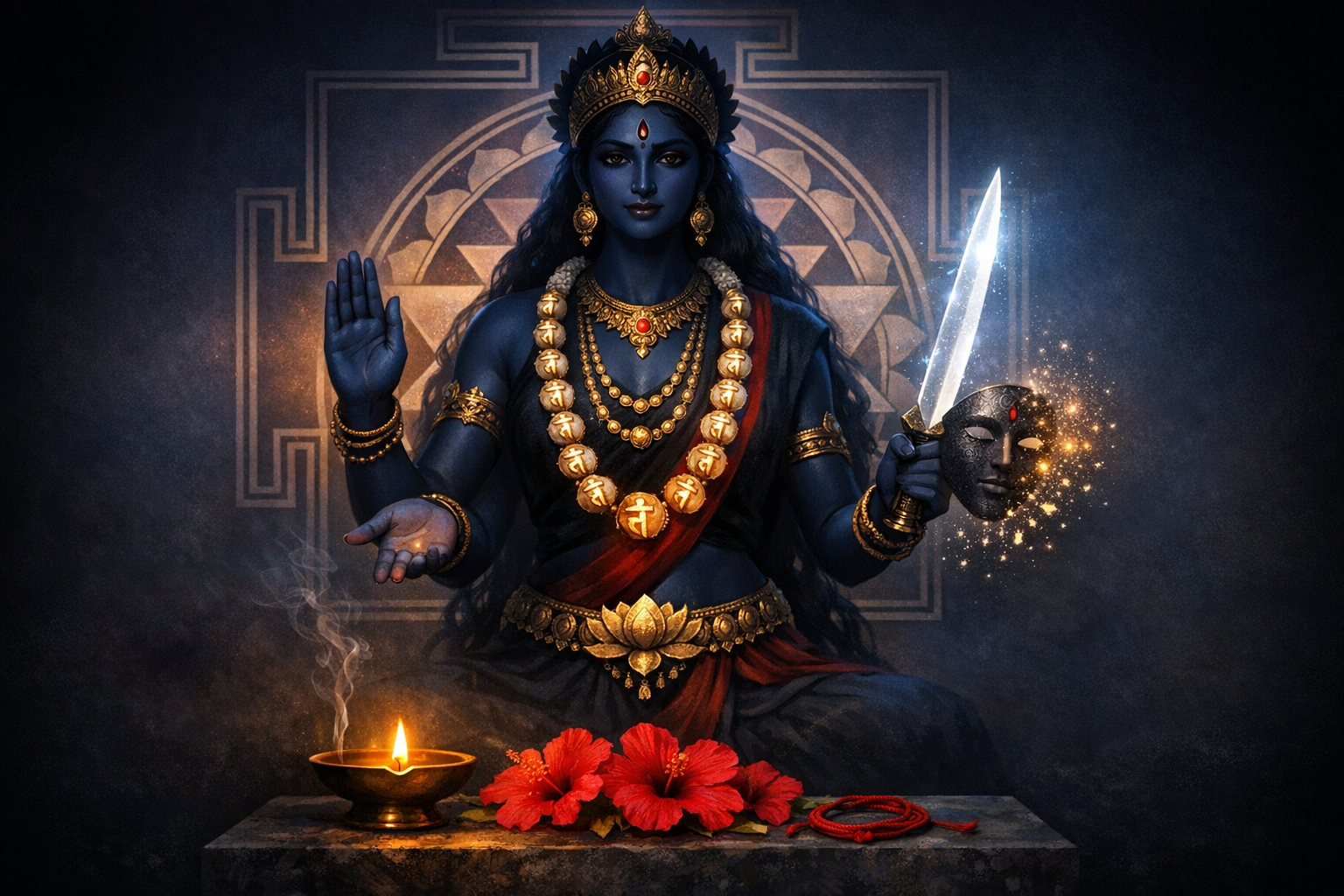
Raksha Kali is revered in Shakta Tantra as the Divine Protector, an aspect closely aligned with Dakshina Kali that amplifies compassionate guardianship. The name “raksha” (protection) captures her role in safeguarding devotees and sustaining dharma, a function expressed through powerful iconographyabhaya and varada mudras, the sword of discernment, and symbols of ego-transcendence. The article explains…
-
Bhadrakali Amman Unveiled: Sacred Iconography, Rituals, and Time-Transcending Philosophy
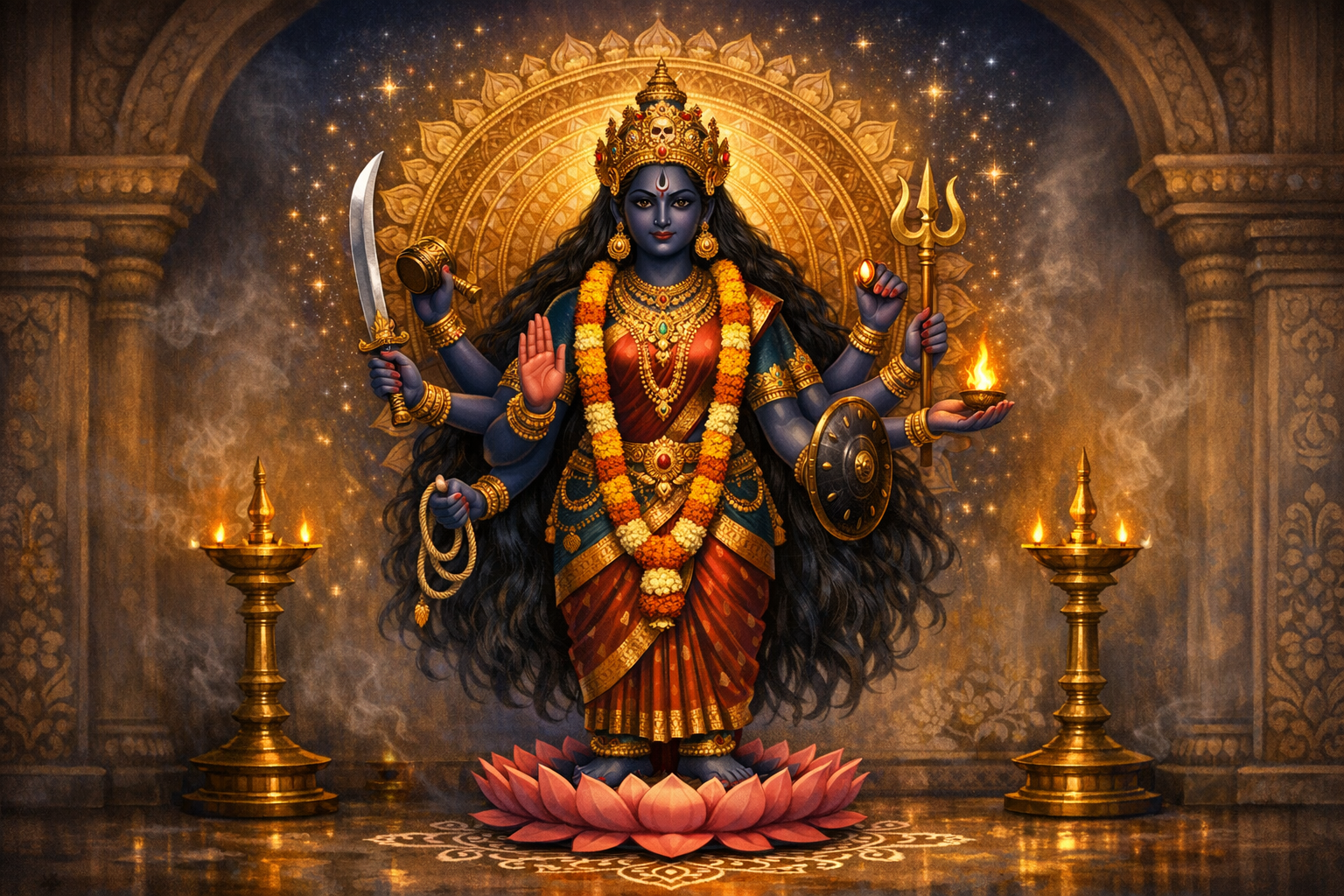
Bhadrakali Amman is presented as fierce grace: a guardian who unites auspiciousness with the transformative power of time. The analysis explains the etymology from Kala, the iconography of weapons and mudrās, and the ritual ecosystem of Amman worship in Tamil Nadu and Kerala. It highlights key festivals such as Attukal Pongala and the ethical turn…
-
Shiyali Kali (Kokmukha Devi): Unveiling the Enigmatic Jackal-Faced Shakti of India
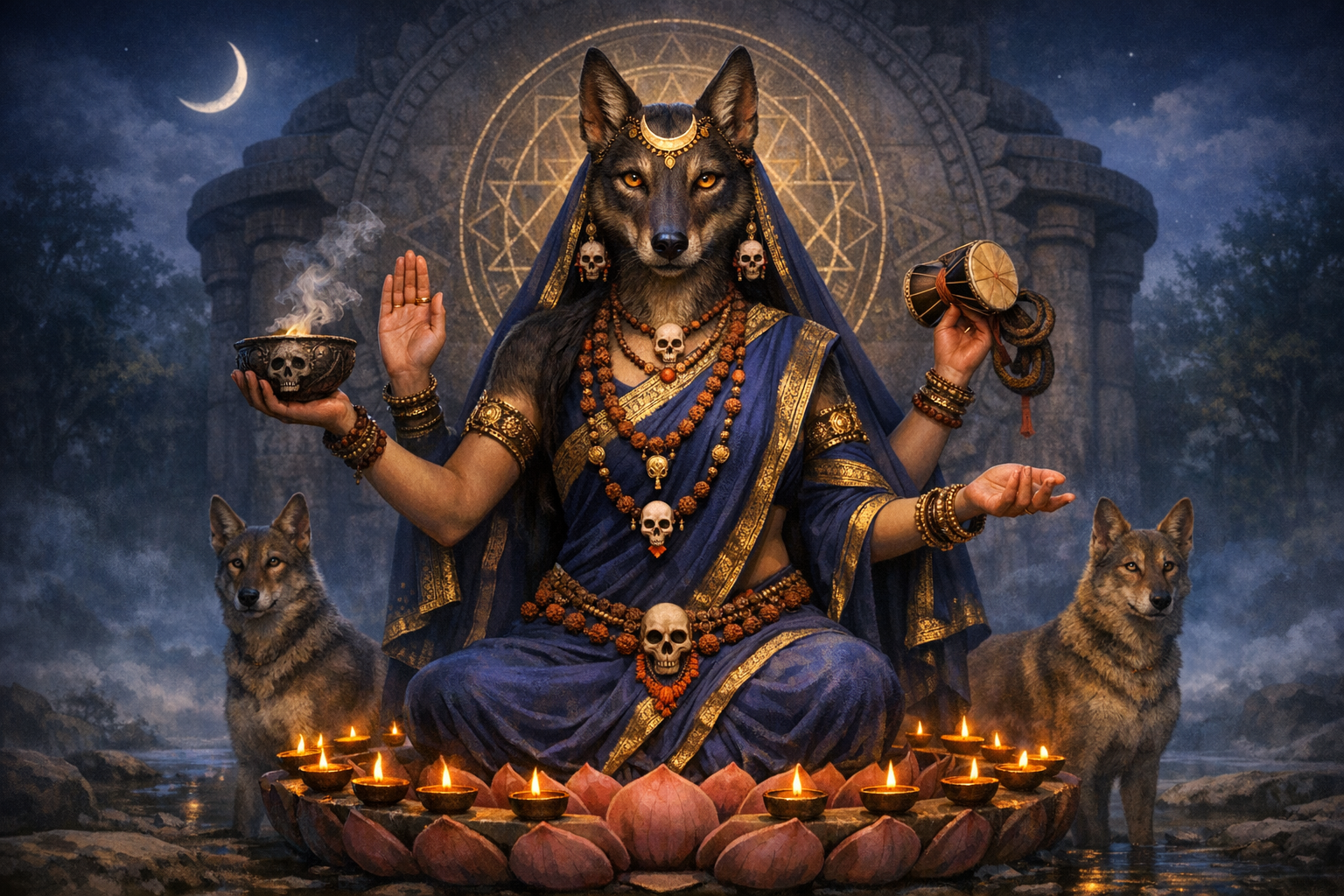
Shiyali Kali (Kokmukha Devi) is a rare, jackal-faced manifestation of the Hindu Goddess that embodies the sacred power of liminalitynight, the cremation ground, and the frontier between life and death. Although largely forgotten today, this form remains legible through Ancient Texts, Archaeology, regional memory, and the broader Śākta iconographic grammar linking the Goddess with jackals.…
-
Devotion That Disarmed a Dacoit: Ramprasad Sen, Kali, and the Transformative Power of Grace
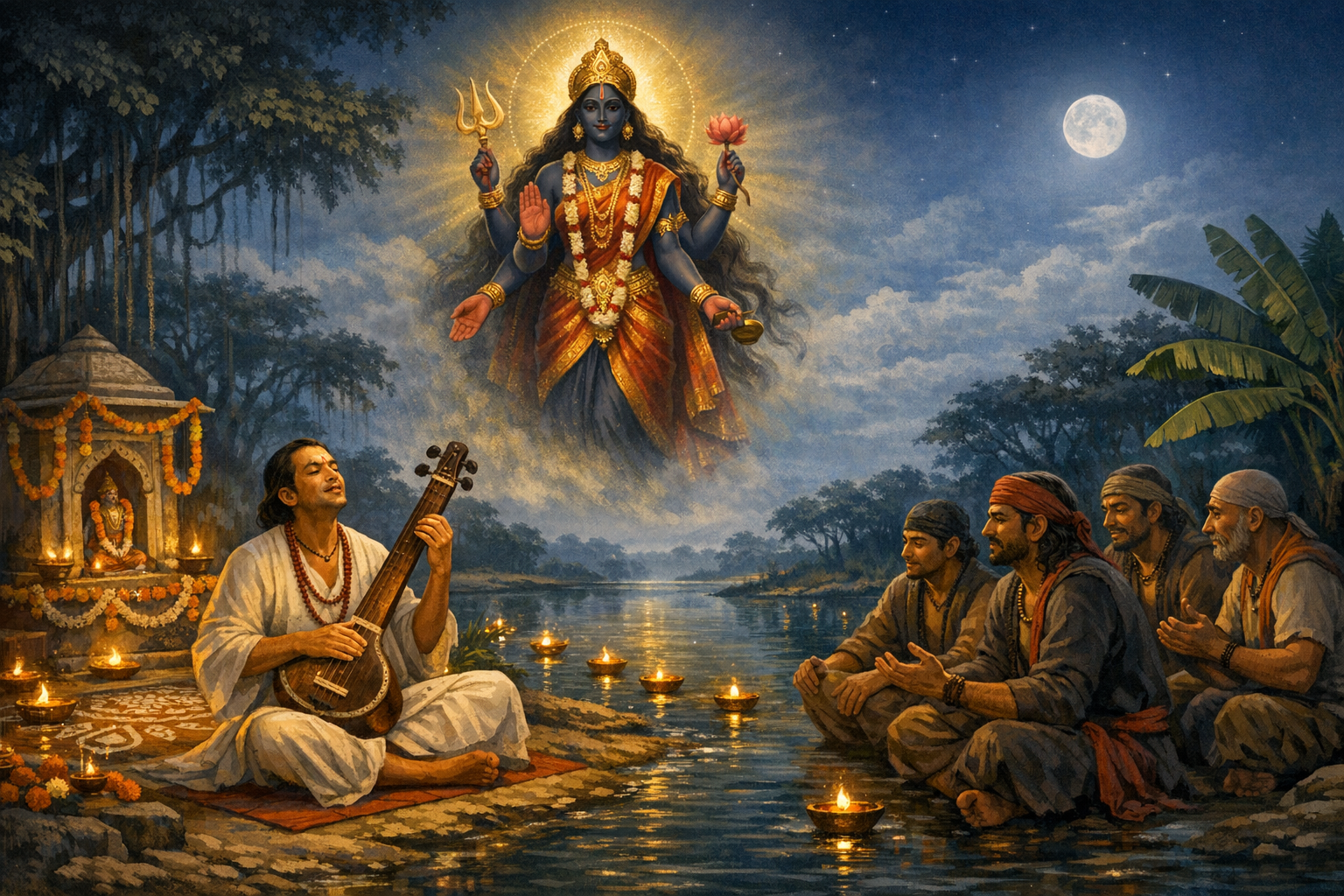
Set in eighteenth-century Bengal, this analysis revisits the famed encounter between the poet-saint Ramprasad Sen and Raghu the dacoit to show how devotion can disarm violence. It situates the legend within Shyama Sangeet performance, Kali worship, and the social volatility of the period. The story is unpacked theologically (kripa and sharanagati) and psychologically (music, breath,…
-
Kali Yuga and Immediate Karma: A Clear, Cross-Dharmic Guide to Action, Reaction, and Dharma
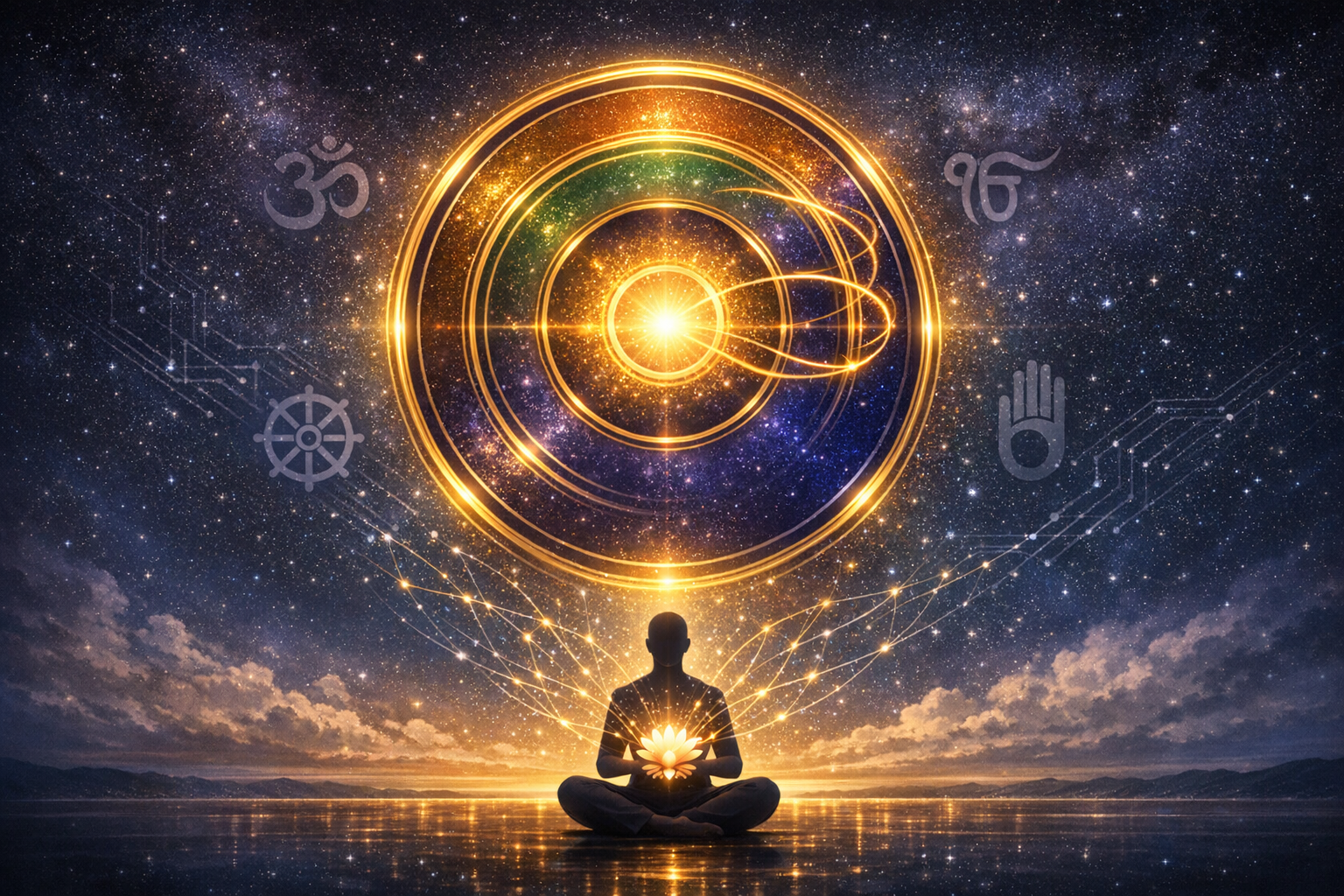
This essay explains why the belief that actions trigger swift, sometimes near-immediate consequences in Kali Yuga is both philosophically coherent and practically observable. It situates the claim within Hindu cosmology and classical karma theory (sanchita, prarabdha, kriyamana; drishta/adrishta-phala). It shows how social and technological conditions of Kali Yuga create faster feedback loops for both harm…
-
Kali Yuga’s Vanishing Divide: Decoding How Asuras ‘Turn Human’ and What It Means for Dharma

This in-depth analysis decodes the Hindu claim that in Kali Yuga the line between asuras and humans fades, showing it as a moral-psychological map rather than a literal prophecy. Drawing on the Vishnu Purana, Bhagavata Purana, and the Bhagavad Gita, it explains how dharma degrades across the yugas and why the age demands simpler, heart-centered…
-
Kali Yuga’s Hidden Crisis: How Daily Divine Remembrance Ends Confusion, Stress, and Suffering

Kali Yuga’s defining crisis is not doctrinal disagreement but the everyday amnesia that severs attention from the Divine and amplifies stress and confusion. Rooted in the Bhagavad Gita’s call to remember at all times and the Bhagavata Purana’s praise of nāma-kīrtana, this analysis details a practical, inclusive protocol for continuous remembrance. It integrates japa, kīrtana…
-
Siddha Kali and the Science of Siddhis: Tantric Methods, Mantras, and Ethical Mastery

Siddha Kali is revered in Shakta traditions as the beneficent source of siddhisspiritual capacities that ripen through disciplined mantra, meditation, and ethical living. This long-form exploration presents the iconography, mantric grammar, and ritual architecture that distinguish her worship, from nyasa and yantra to Panchopachara offerings. It situates siddhi within a pan-dharmic ethos shared by Hinduism,…
-
Matrisadbhava of Kerala: Authoritative Guide to Shakta Tantra and Bhadrakali (Rurujit)
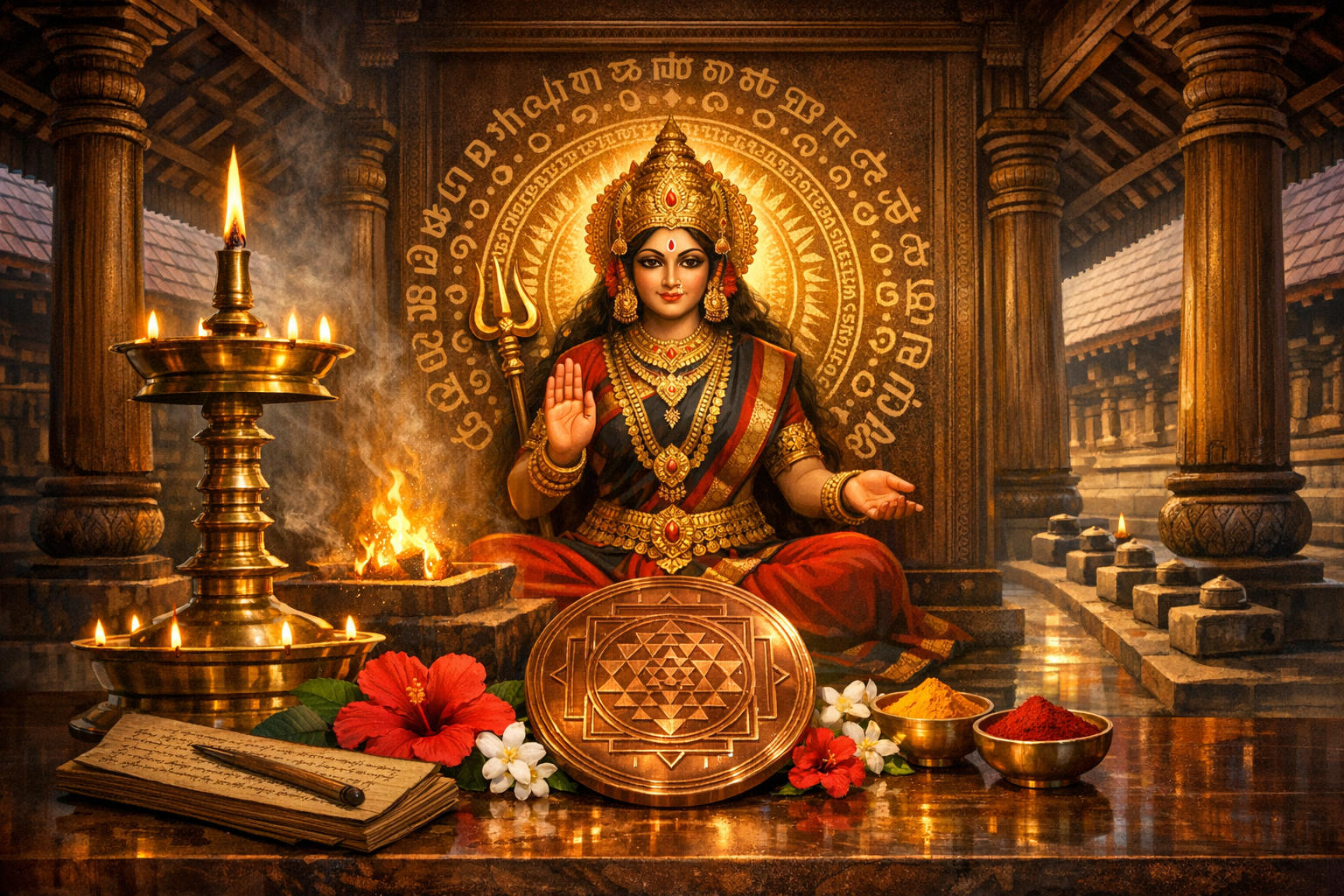
Matrisadbhava stands out in Hindu scriptures as a Kerala-centered Shakta Tantra that systematically encodes the worship of Goddess Bhadrakali, also revered as Rurujit. It unites doctrinal depth with Kerala’s temple pragmaticsnyāsa, mantra, yantra, homa, and baliwhile foregrounding an ethic of care and precision. The text’s maternal vision affirms unity in diversity across Dharmic traditions, highlighting…
-
Serpents, Secrets, and Shakti: Decoding the Hidden Power of Goddess Guhya Kali
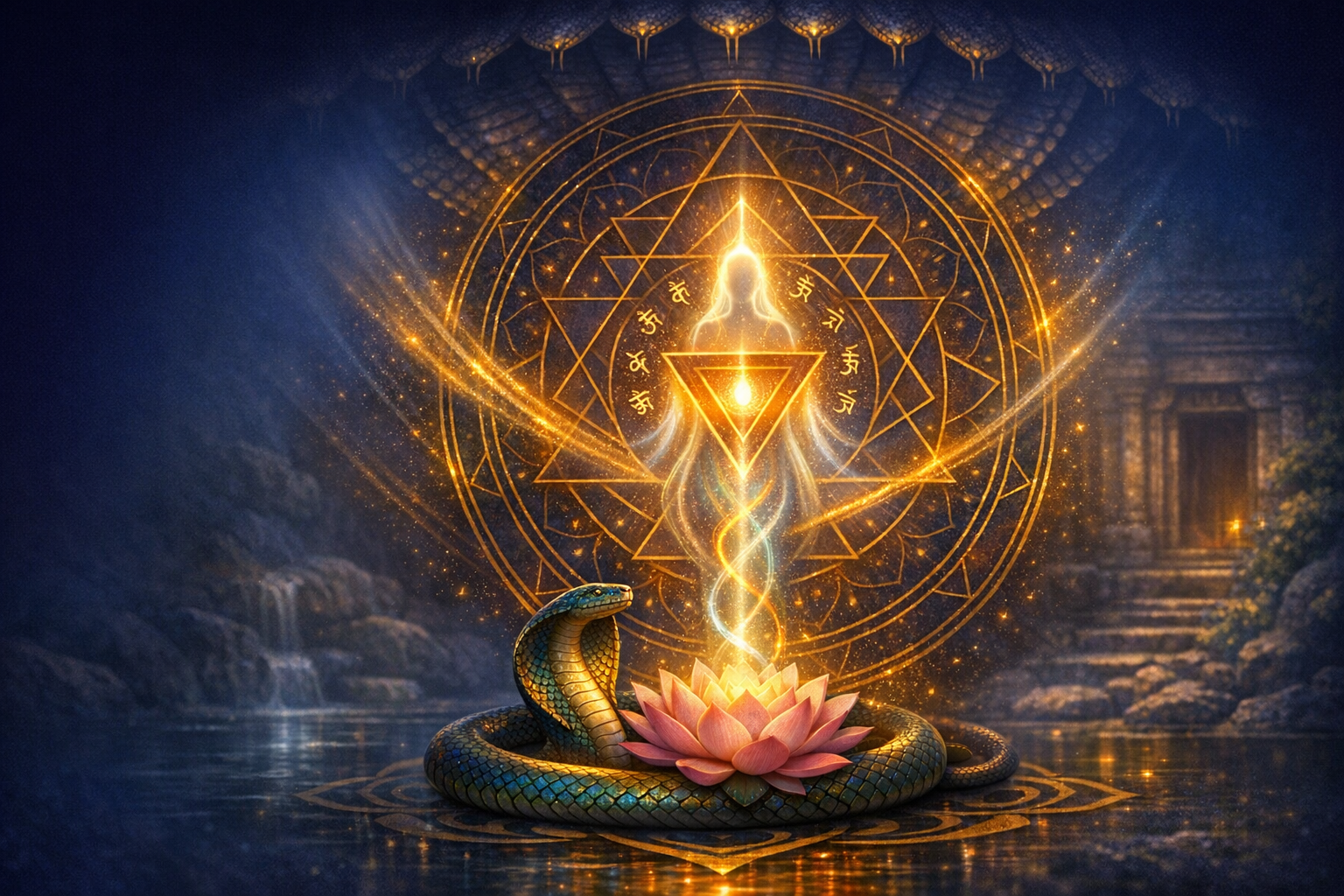
This in-depth exploration decodes the symbolism of serpents alongside the esoteric presence of Goddess Guhya Kali in Shakta Tantra. It clarifies the meaning of guhya (secret) as ethical, paced revelation and shows how Kali, as Shakti, cuts through inner knots that obscure clarity. Readers gain a technical overview of kundalini, the nadis (ida, pingala, sushumna),…
-
Skull Symbolism in Tantra: Decoding Kali, Bhairava, Chinnamasta to Cut Through Ego and Fear
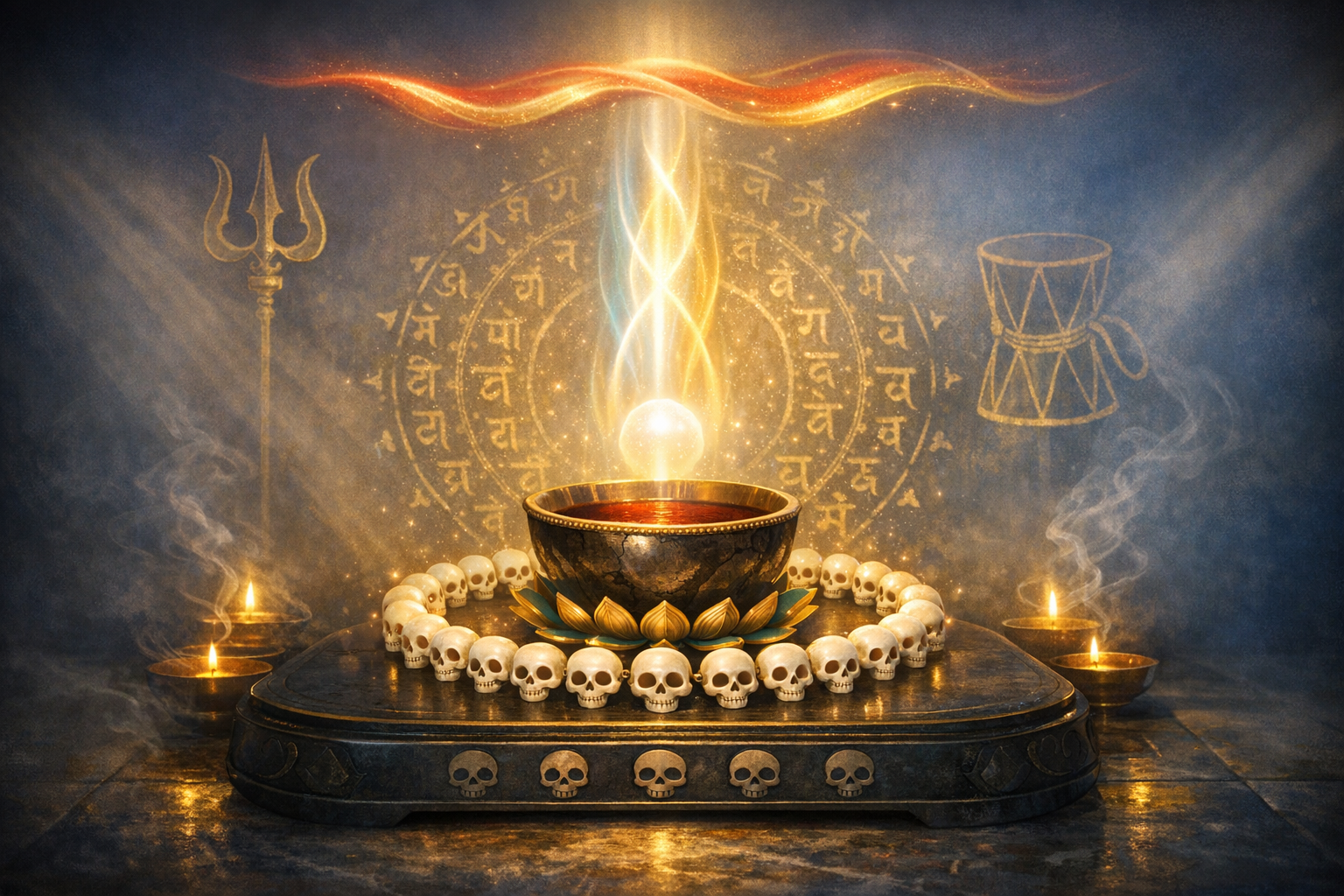
Skull imagery in Tantric art is often misunderstood as morbid when it functions as a precise spiritual pedagogy that cuts through ego, pride, and pretension. This long-form analysis decodes the kapala, mundamala, and self-decapitation motifs across Shiva, Bhairava, Kali, and Chinnamasta, and situates them within the historical currents of Shaiva–Shakta Tantra and Vajrayana Buddhism. The…
-
Goddess Kali’s Fearless Paradox: Creator, Destroyer, and Tantric Symbolism of Transformation
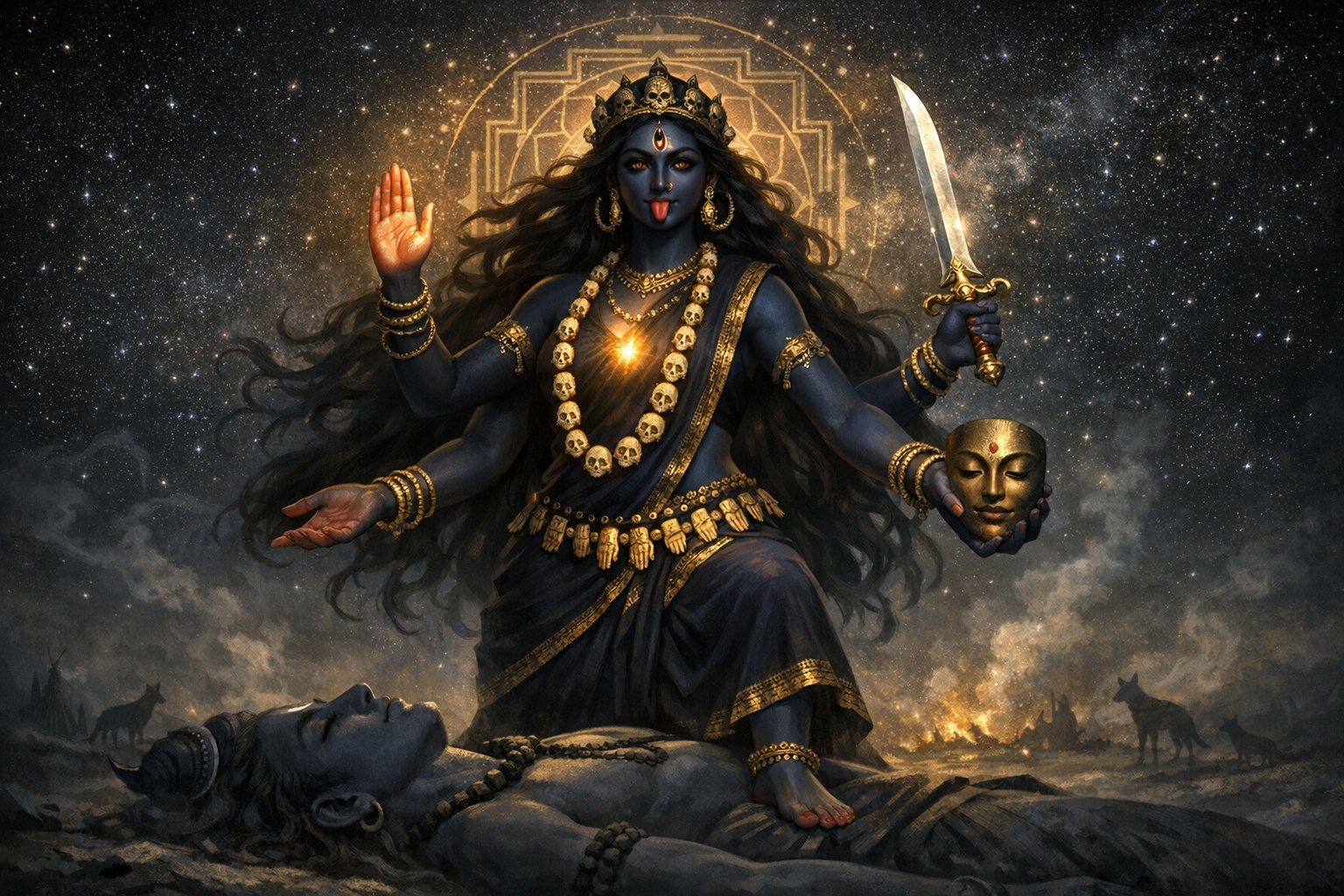
Goddess Kali unites the roles of creator, destroyer, and transformer, encoding a precise Śākta metaphysics within striking iconography. Readers gain a clear, research-informed guide to her symbolsfrom the muṇḍamālā and cremation ground to abhaya and varada mudrāsand how each maps to ethical action and psychological resilience. The narrative situates Kali within scripture (Devī Māhātmya, Kālīkā…
-
Kamyakali Unveiled: The Desire-Fulfilling, Fierce-Compassionate Power of Goddess Kali
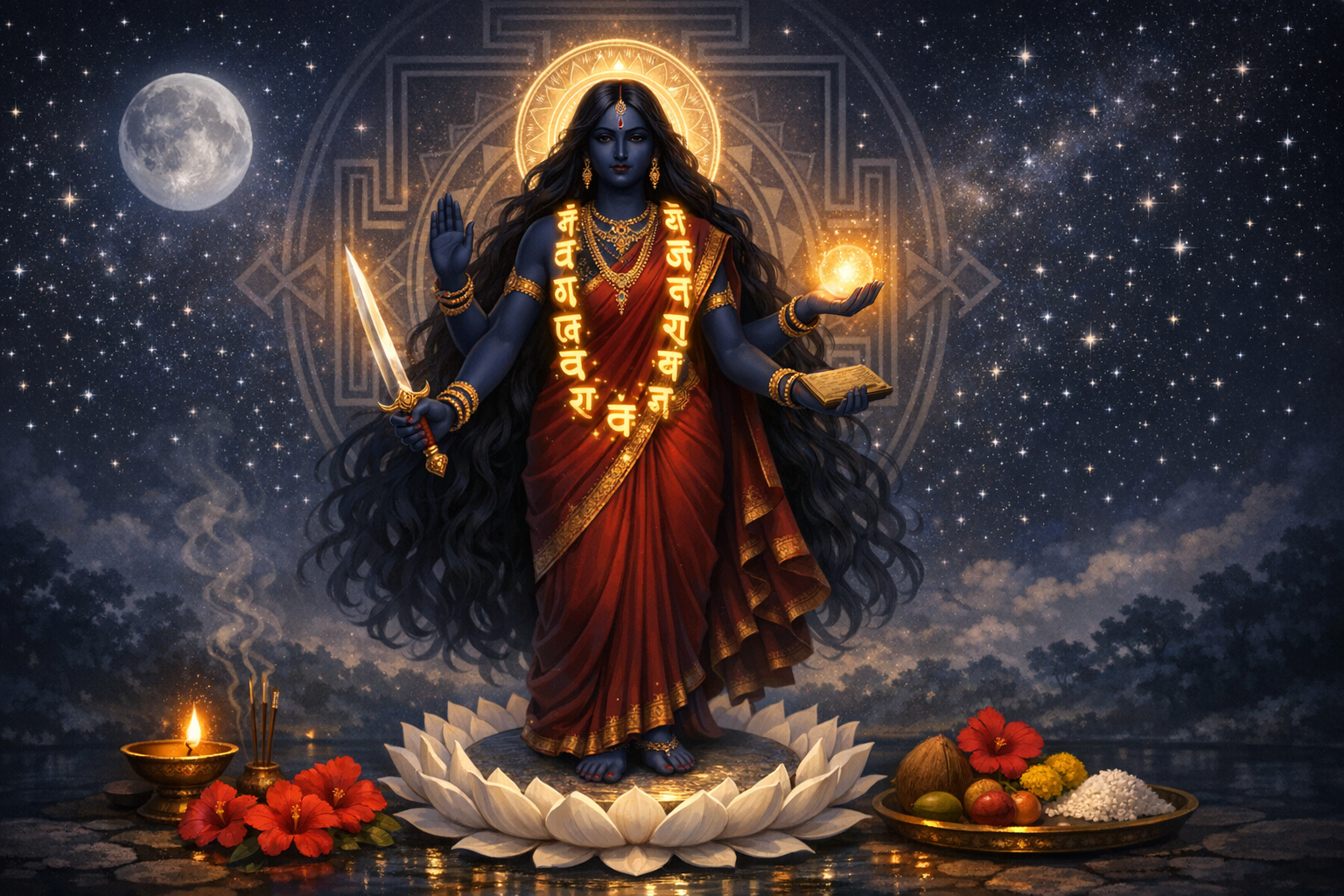
Kamyakali is venerated in Shakta traditions as a form of Goddess Kali who unites fierce protection with maternal compassion while fulfilling desires aligned with dharma. The discussion clarifies the Sanskrit root of kāmya, connecting it to ethical, purpose-driven worship rather than unexamined craving. It explores Kali’s core iconography and explains how Kamyakali highlights blessing gestures…
-
Shweta Kali Unveiled: The White Radiance of Kali, Creation’s Source and Ash’s Return

Shweta Kali, the white, luminous manifestation of Kālī, embodies both creation’s dawning radiance and the serene return of all forms to ash. Rooted in Shakta Tantra and cherished in Bengal and Nepal, this form unites sattvic clarity with Kālī’s timeless power, offering a sophisticated theology of origin, transformation, and dissolution. The essay surveys iconography, mantric…
-
Kapalini: Shakti’s Terrifying Grace and the Awe-Filled Storm that Seeds Creation Cycles

Kapalini, the skull-bearing form of Goddess Shakti, stands at the threshold where dissolution gives birth to creation. Set against the awe-filled storm of pralaya, Kapalini carries the Brahma-substancethe causal seed from which new worlds emergeoffering a precise map of Hindu cosmology. The narrative clarifies the five cosmic acts, types of pralaya, and the role of…