
-
Across the Waters: Divine Protection, Tirtha Symbolism, and Rebirth in Dharmic Traditions

Sacred river crossings in Dharmic traditions encode a shared grammar of divine protection, purification, and rebirth. From Krishna’s midnight passage over the Yamuna in the Bhagavata Purana to the Jain ideal of the Tirthankara as a “ford-maker,” from Buddhism’s raft simile to Sikh teachings on crossing the bhavsagar through the Guru’s Naam, each tradition converges…
-
Curiosity as Sacred Practice: How Hinduism Champions Inquiry, Dialogue, and Self-Realization

This article presents a rigorous, accessible account of why Hinduism treats curiosity as a sacred discipline. It traces the spirit of inquiry from the Upanishadic dialogues and Bhagavad Gita to Nyaya logic, Mimamsa hermeneutics, Vedanta inquiry, and Yoga’s epistemology. It explains pramanavalid means of knowledgeand shows how disciplined questioning is bound to ethics, humility, and…
-
Choose Mental Fuel, Not Noise: Dharmic Wisdom to Protect Self‑Respect and Clarity
This essay presents a rigorous, dharmic framework for curating a nourishing “mental diet” that protects clarity and self‑respect in an age of digital distraction. Drawing on the Upanishads, the Bhagavad Gita, and Yoga Sutra, it explains how sattva, abhyasa–vairagya, and pratyahara translate into concrete media habits. Buddhist thought contributes the four nutriments and wise attention;…
-
The War They Could Not Win: How Dharmic Resilience Defied Empire and Erasure
This long-form analysis explains why attempts to subdue India’s civilizational core repeatedly failed. It argues that dharmic polycentricityrooted in Hindu, Buddhist, Jain, and Sikh traditionsproduced resilient networks of ethics, learning, and care beyond the reach of central control. Drawing on the Revolt of 1857, British Colonial Rule, and the intellectual countercurrents of Vivekananda and Aurobindo,…
-
Pournami Deepa Puja Explained: Sacred Science and Spiritual Power of Full-Moon Lamps
Pournami Deepa Puja (Deepa Pooja on the Full Moon) brings together ritual precision, contemplative focus, and communal warmth through the shared act of lighting lamps. Rooted in Vedic invocations to Agni and elaborated in Puranic-Agamic practice, the rite uses a living flame to link outer worship with inner steadiness. Aligning with the Full Moon’s clarity,…
-
Is Life Easy or Difficult? Dharmic wisdom unites dukkha and ananda with practical tools

The longstanding paradoxBuddhism’s dukkha versus the claim that life is joyresolves when viewed through dharmic frameworks that distinguish conventional from ultimate truth. Buddhism names the instability of conditioned life, while Vedanta points to ananda as the intrinsic nature of consciousness; Jain Anekantavada and Sikh Chardi Kala further harmonize these insights. This synthesis is practical, not…
-
Krishna and the Six Sons of Devaki: A Compassionate Jain Harivamsa vs Hindu Puranas
This long-form, comparative study examines how Hindu scriptures (Bhagavata Purana, Vishnu Purana) and the Jain Harivamsa Purana narrate the episode of Devaki’s six sons and Kamsa’s violence. It clarifies the difference between the Hindu Harivamsha and the Jain Harivamsa Purana, then maps their contrasting theological aims: divine descent and restoration of dharma versus karmic causality…
-
Memento Mori as Dharmic Practice: Urgent Living, Clear Priorities, and Courageous Leadership

This article presents a disciplined, Dharmic approach to mortality contemplation as a practical technology for urgent living and ethical leadership. It synthesizes insights from Hinduism, Buddhism, Jainism, and Sikhismmaranasati, pratikraman, simran, and dharmato convert awareness of impermanence into decisive action. A step-by-step protocol guides breath awareness, a regrets inventory, value-based reprioritization, and execution of one…
-
Dissolving Trishna’s Hidden Fire: Timeless Dharmic Strategies to Transform Craving into Freedom

This long-form, research-driven exploration explains trishna (craving) as the subtle energy that precedes actionthe “root before the root.” It integrates Hindu, Buddhist, Jain, and Sikh perspectives to present a unified Dharmic framework for transforming craving into clarity and freedom. Readers gain a technical map (kleśas, vāsanās, vedanā, dependent arising), scriptural anchors (Yoga Sutra, Bhagavad Gita,…
-
Is Life Easy or Difficult? An Evidence-Backed Dharmic Guide to Joy, Suffering, and Mastery

Is life easy or difficult? A dharmic analysis shows the question spans two complementary levels: the conventional reality of dukkha (unsatisfactoriness) and the ultimate discovery of ananda (joy). Buddhism’s Four Noble Truths, the Yoga Sutra, Vedanta’s ananda doctrine, Jain anekantavada, and Sikh Chardi Kala together form a unified method for transforming difficulty into resilience while…
-
Ramayana’s Unfinished Truth: Why Rama and Sita Don’t Get a Fairy-Tale Ending (and Dharma’s Lesson)

Ramayana is not a fairy tale about bliss after victory; it is a rigorous meditation on dharma under the pressures of love, power, and public trust. The narrative after Ravana’s defeat intensifies into a study of rajadharma, where Rama’s personal anguish and public duty collide. Sita’s trialsAgni Pariksha, exile, and her return to Mother Earthexpose…
-
How Sharing Food Heals Enmity: Timeless Dharmic Practices from Hindu, Buddhist, Jain, Sikh Traditions
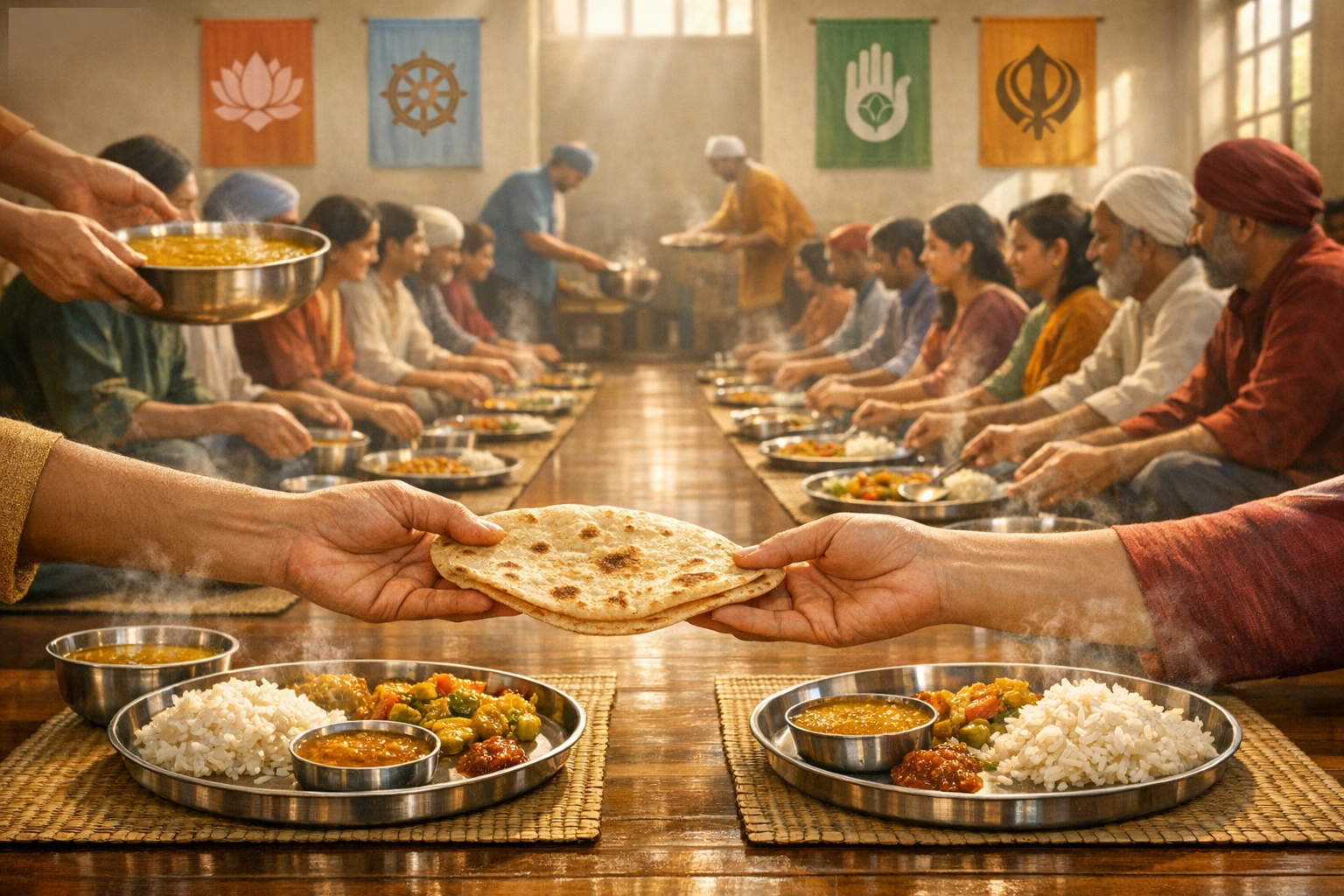
Hinduism and its sister dharmic traditions treat shared food as a deliberate instrument of reconciliation. Philosophical axioms such as Annam Brahma, Atithi Devo Bhava, and Vasudhaiva Kutumbakam elevate feeding from charity to peacecraft. Ramayana narratives, temple prasada, Sikh langar, Jain anna-kshetras, and Buddhist dana converge on a single ethic: dignified, vegetarian commensality dissolves social distance…
-
As You Believe, So You Live: Hindu Dharma’s Science of Mindset, Health, and Longevity

This long-form analysis explores how dharmic wisdomHinduism, Buddhism, Jainism, and Sikhismanticipated modern findings on the mind-body connection by showing that belief (śraddhā, bhāva) measurably shapes healthspan and longevity. It integrates Bhagavad Gita and Yoga Sūtra insights with Ayurveda’s sattvavajaya and rasāyana, and aligns them with contemporary stress biology, autonomic regulation, and immune resilience. Practical guidance…
-
Kamsa Syndrome: How Fear Breeds Tyranny and How Dharmic Wisdom Defuses It

The Bhagavata Purana’s portrait of Kamsa presents a precise psychology of tyranny: fear, mishandled as policy, becomes a self-fulfilling catastrophe. This article defines the “Kamsa syndrome” and analyzes how a single prophecy, filtered through insecurity, produced surveillance, purges, and escalating violence in Mathura. It reads the narrative alongside the Bhagavad Gita’s ethics of abhaya and…
-
Self‑Born, Mind‑Born, Womb‑Born: Decoding the Profound Hindu Cosmology and Sanat Kumaras
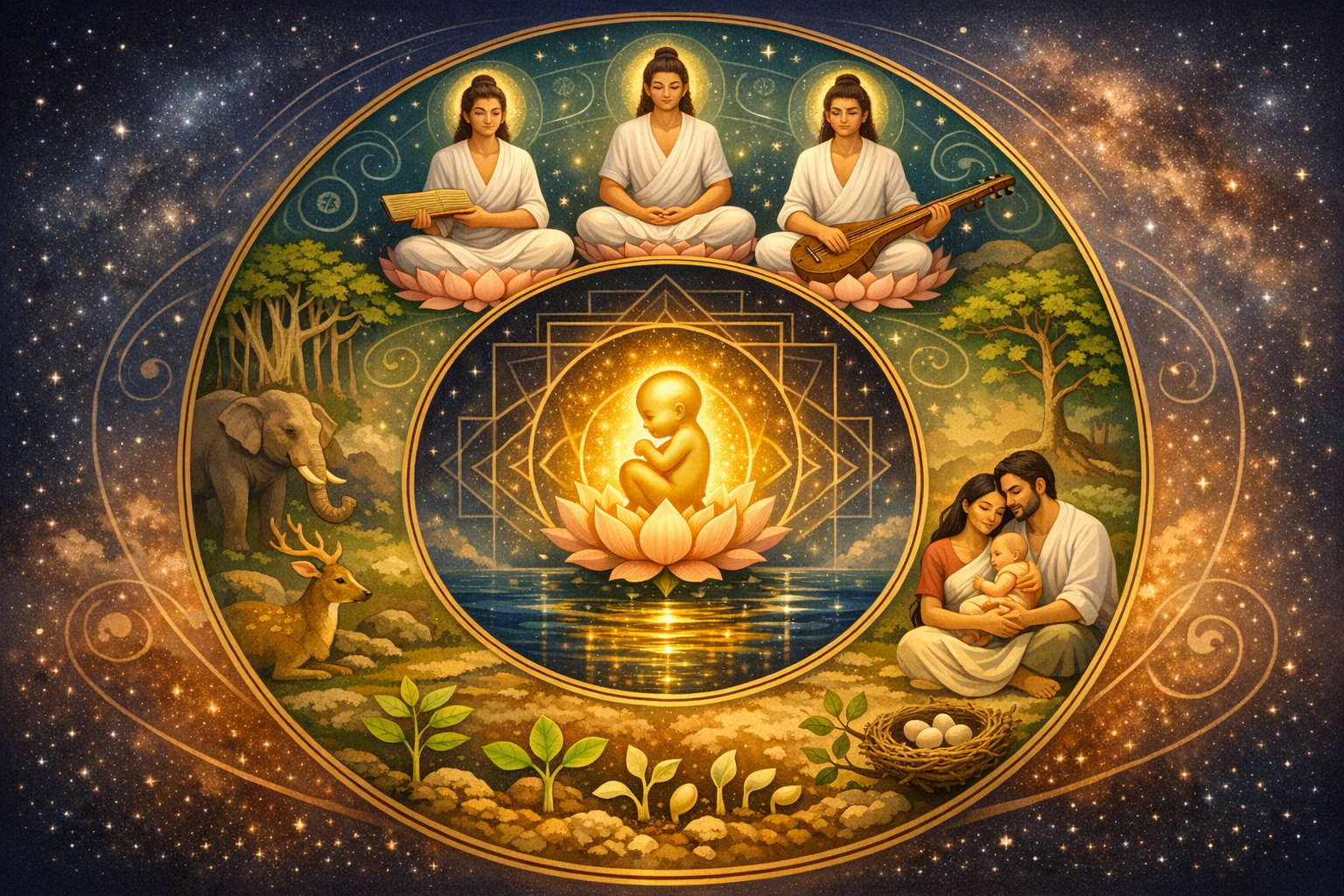
Hindu cosmology describes creation in three interlinked stages: self-born (svayambhū), mind-born (mānasa), and womb-born (jarāyujā). Drawing on the Viṣṇu Purāṇa, Śrīmad-Bhāgavatam, and allied texts, this analysis shows how sarga (primary emanation) and visarga (secondary diversification) structure a descent from subtle principle to mental formation and biological life. The Sanat Kumaras and Nārada exemplify the mind-born…
-
Dissolve Thoughts at Their Source: Hindu Wisdom and Dharmic Science for a Clearer Mind

Ancient Hindu wisdom teaches that thoughts gain power only when grasped; dissolving them at inception restores clarity and self-mastery. The method aligns with Yoga Sutra principles of vritti-nirodha, abhyasa, and vairagya, and is reinforced by Upanishadic and Bhagavad Gita guidance. Practical protocolsbreath coherence, light labeling, mantra gating, atma-vichara, and somatic defusionmake the technique accessible in…
-
Kapal‑Muni in Bhagat Maalaa: Unifying Hindu, Buddhist, Jain, and Sikh Wisdom Today
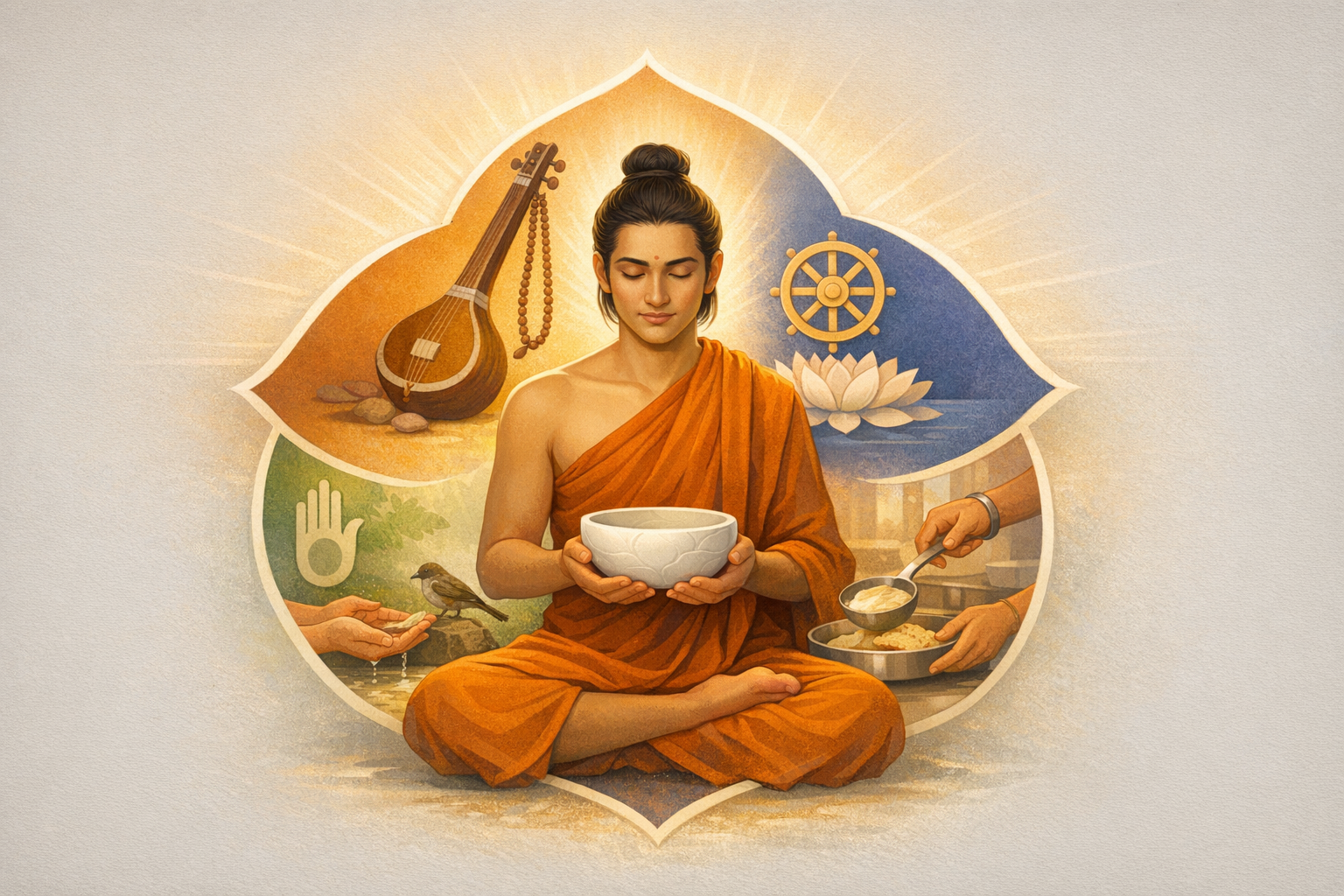
This article examines the Kapal‑Muni motif within the broader Bhagat Maalaa/Bhaktamal tradition as a didactic lens on impermanence, ego, and compassion. It clarifies how skull‑cup symbolism functions ethically rather than sensationally, inviting readers to privilege inner transformation over outward austerity. The discussion surveys convergences and distinctions across Hindu Śaiva and Vaishnava currents, Sikh teachings centered…
-
Beyond Guru Worship: Living Sanatana Dharma through Practice, Pluralism, and Service
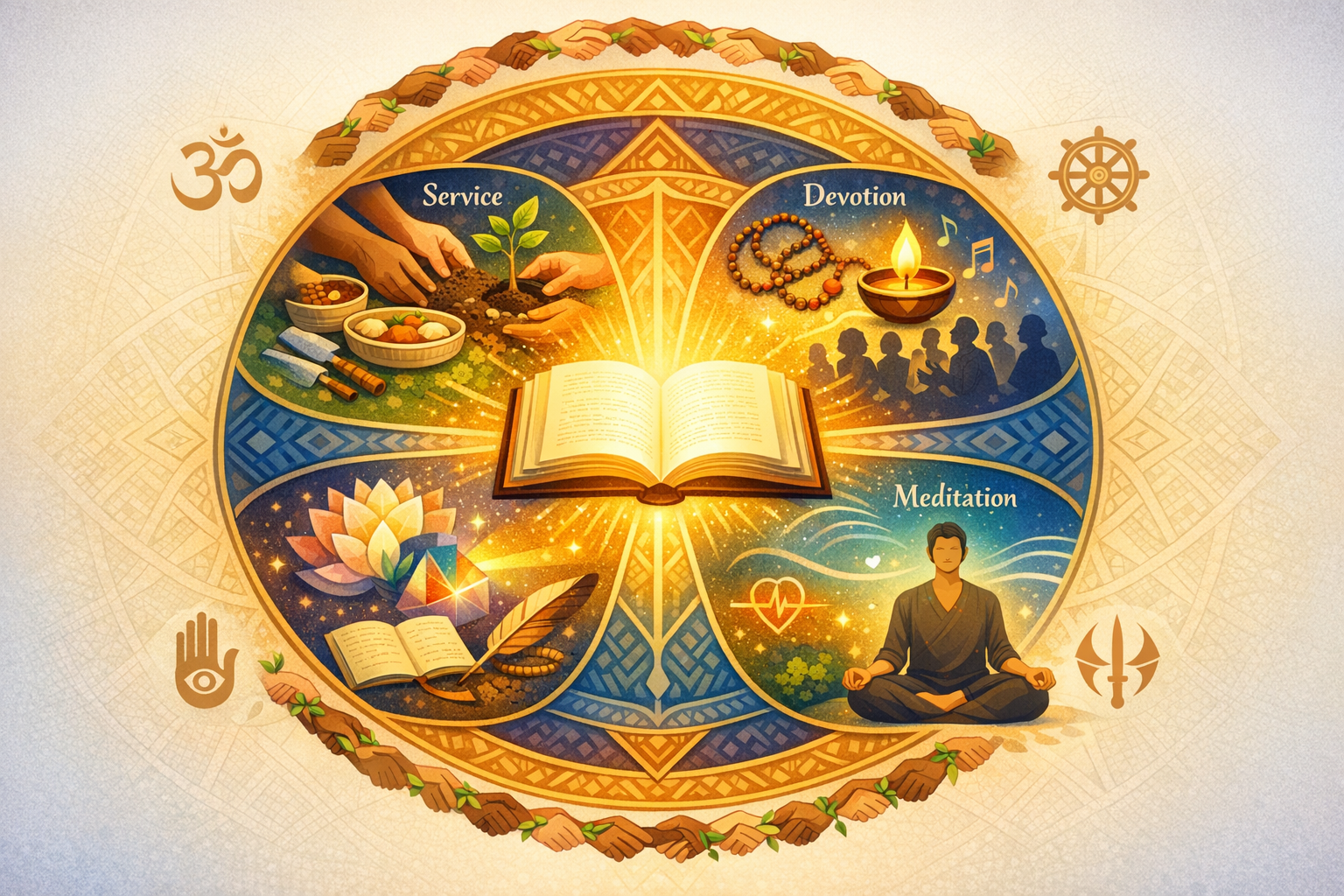
Public celebrations of guru anniversaries have grown spectacular, but the risk of drifting from teachings to personality worship is real. This essay reframes devotion through a Dharmic lens shared by Hinduism, Buddhism, Jainism, and Sikhism: live the message, not the messenger. It maps classical yardsticks of authentic progressyamas and niyamas, lokasangraha, simran and seva, sīla…
-
Unlock the Ocean Within: Dharmic Pathways to Atman, Timeless Wisdom, and Resilient Strength

This essay examines the statement “You know little of that which is within you. Within you is the ocean of infinite power” through the shared frameworks of Hinduism, Buddhism, Jainism, and Sikhism. It explains the Upanishadic vision of ātman and Brahman, the yogic map of prāṇa and kundalinī, and the ethical preconditions that make inner…
-
Beyond Chant and Dance: The Transformative Science of Nama, Naam Simran, and Scriptural Hearing
Chanting the Holy Name stands supreme in Sri Caitanya Mahaprabhu’s teaching, yet it flourishes when supported by hearing, reflection, and ethical alignment. Drawing on Srimad-Bhagavatam’s ninefold path of devotion, this article explains why sravana (hearing) provides the sambandha-jnana that turns sound into a living relationship with Krishna (Krsna). It clarifies the difference between mere “shadow…