-
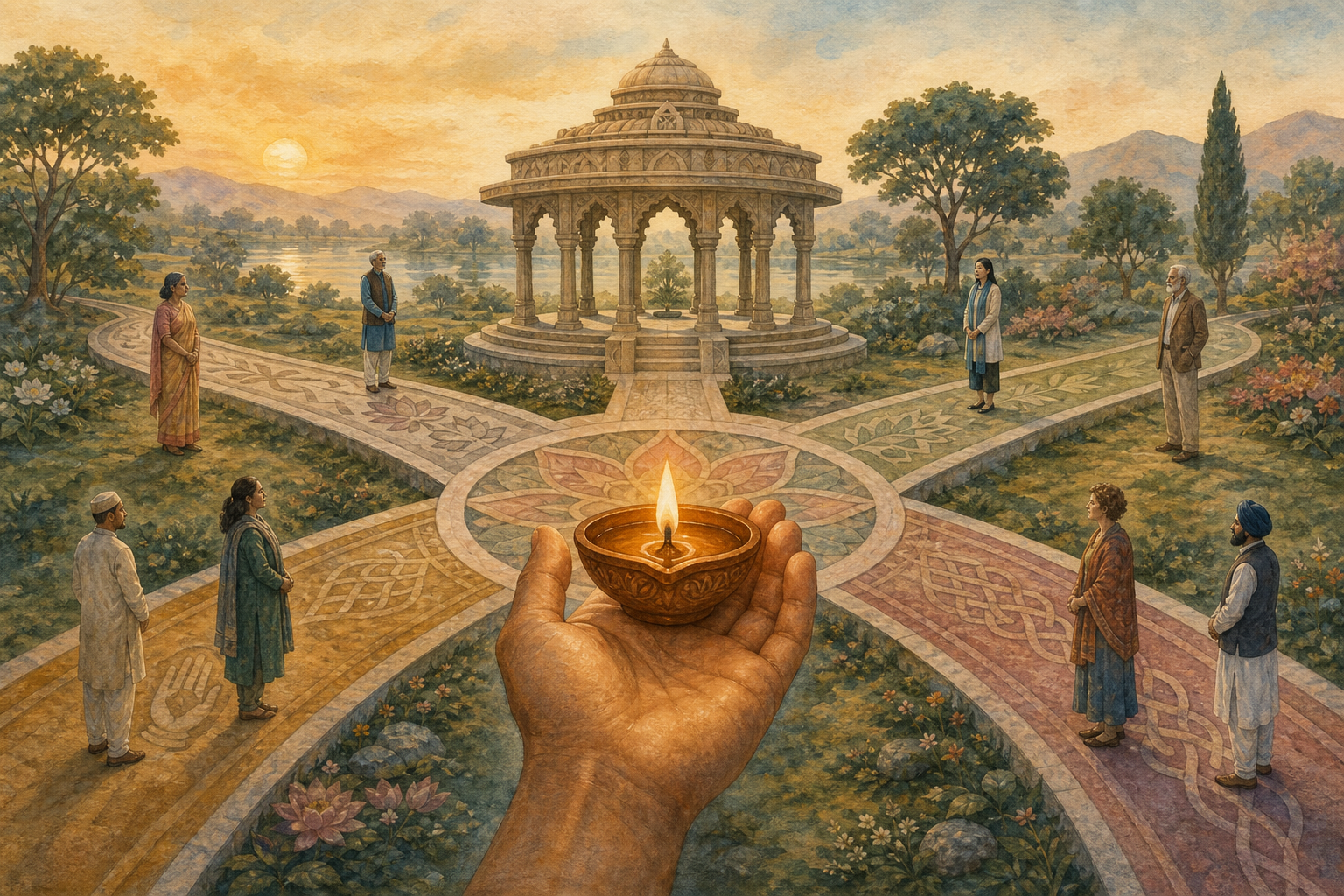
In Kali Yuga’s Shadow, Karuṇā Shines: The Dharma of Empathy for Collective Survival

Kali Yuga accentuates speed, scarcity, and social fragmentation, making empathy not just virtuous but vital. Drawing on Hinduism, Buddhism, Jainism, and Sikhism, this essay frames karuṇā as strategic dharmaethically right and instrumentally wise. It grounds empathy in the Bhagavad Gita, Anekantavada, Brahmavihāra practice, and Sikh seva, aligning with the civilizational ideal of Vasudhaiva Kutumbakam. Contemporary…
-
Samputikarana Bija Mantras Explained: Bija Akshara, Tantric Methods, and Cross‑Dharmic Harmony

Samputikarana is a classical mantrashastra method that “encases” a mantra with carefully chosen Bija Akshara to concentrate and stabilize its power. The technique appears across Shaiva, Shakta, Vaishnava, and Vajrayana systems and is preserved in regional lineages from Kerala, Bengal, and Kashmir. This guide clarifies how seed syllables like Hrim, Shrim, Klim, Krim, Hum, and…
-
Beyond Dates and Dynasties: Why Dharmic India Chose Timeless Truth over History

Ancient India developed a distinct historiography that privileged timeless truth over exhaustive chronologies. Rather than ignoring the past, Hinduism, Buddhism, Jainism, and Sikhism embedded history in genres like Itihāsa, Purāṇa, and Śāstra to illuminate Dharma and guide conduct. Epigraphy, coins, and temple records demonstrate rigorous documentation when it served justice, patronage, and community welfare. Examples…
-
Why Devas Drink Amrita While Asuras Wield Sanjeevani Vidya: The Timeless Balance of Dharma

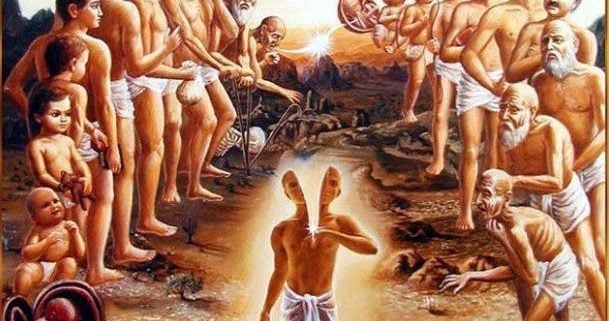
This article decodes why Hindu narratives pair Amrita with Sanjeevani Vidya as complementary boons that create a dynamic equilibrium between Devas and Asuras. It explains Samudra Manthan’s mechanicsMandara, Vasuki, and Kurmaand the ethical meaning of Shiva as Neelakantha. Readers learn how Dhanvantari’s Amrita and Shukracharya’s Sanjeevani Vidya prevent any single force from achieving unchecked dominance.…
-
Trauma Dumping to AI: Evidence-Based Risks, Real Benefits, and Dharmic Design Principles

More people now confide in AI systems during moments of distress, a shift that brings both promise and risk. This analysis defines trauma dumping to AI, explains how large language models simulate empathy, and outlines what current evidence actually supports. It details privacy safeguards, safety triage, and cultural-linguistic competence, with particular attention to South Asian…
-
Resolute Mind, Unstoppable Path: Dharmic Science of Determination from Gita to Guru Granth

This essay examines the dharmic science of determination across Hinduism, Buddhism, Jainism, and Sikhism, showing how unwavering resolve yields reliable results when aligned with ethics and sustained practice. It grounds the teaching in the Bhagavad Gita’s vyavasāyātmikā buddhi, the Yoga Sutras’ abhyāsa–vairāgya, Buddhism’s adhiṭṭhāna pāramī, Jainism’s vīrya and Anekantavada, and Sikhism’s Chardi Kala and sevā.…
-
From Navadvipa to Neal’s Yard: Discover a Dharmic Sanctuary in London’s West End

A short turn from Covent Garden into Neal’s Yard reveals a compact London courtyard designed by scale, color, and greenery to function as a threshold oasis. Read as a cultural metaphor, the path ‘From Navadvipa to Neal’s Yard’ links Gaudiya Vaishnavism’s living bhakti lineage with everyday West End life through the Hare Krishna Movement (ISKCON)…
-
Mastering Lifelong Learning: Dharmic Methods that Transform Observation into Wisdom

Rote learning produces fragile knowledge; dharmic education converts observation into durable wisdom. Drawing on Hinduism, Buddhism, Jainism, and Sikhism, this piece outlines a replicable pathway: inquiry, reasoning, contemplative assimilation, and ethical action. It maps classical pramanas to modern evidence-based methods such as retrieval practice, spaced repetition, and mindfulness. Nyaya’s tarka, Mimamsa’s hermeneutics, Vedanta’s sravana–manana–nididhyasana, Buddhist…
-
Ashadha Purnima (Guru Purnima) 2026: Date, Rituals, Vyasa Puja Guide & Dharmic Unity

Ashadha Purnimaalso known as Guru Purnima or Veda Vyasa Purnimafalls on 29 July 2026 and honors the Guru-Shishya Tradition across the dharmic family. The festival venerates Bhagavan Veda Vyasa and the transpersonal Guru principle that links knowledge with ethical living. This long-form guide explains the lunar calendar basis of the observance, regional variations, and the…
-
Stop Chasing Birthplaces: Honor Guru-Bhakti by Living the Teaching, Not Worshiping Soil

This essay clarifies a core paradox in dharmic spirituality: gurus teach transcendence of body and place, yet communities often fixate on birthplaces and relics. It reframes sacred geography as a valid but secondary aid to sadhana, drawing on the Bhagavad Gita, the Upanishads, and the Guru-Shishya Tradition. Case studies from Hinduism, Buddhism, Jainism, and Sikhism…
-
When Life Finds Balance: The Dharmic Science of Harmony in Hinduism, Buddhism, Jainism, Sikhism

This in-depth exploration shows how balancedefined as dynamic homeostasis guided by dharmaproduces well-being, clarity, and social harmony across Hinduism, Buddhism, Jainism, and Sikhism. Drawing on puruṣārtha, guna theory, Panchakosha, the Bhagavad Gita, Patanjali’s Yoga, and Ayurveda, it explains why moderation is a rigorous discipline, not a compromise. Parallels with the Buddhist Middle Path, Jain Anekantavada,…
-
Pasha in Hindu Iconography: The Sacred Noose of Compassion, Control, and Liberation

The sacred noose (pasha) is among the most philosophically charged ayudhas in Hindu iconography, signifying compassionate restraint and ethical governance rather than brute force. Vedic evocations of Varuna’s pasha, Shaiva-Siddhānta’s Pati–Pāśu–Pāśa triad, and Śrīvidyā’s Lalitā Tripurasundarī together establish the noose as a symbol of both bondage and salvific attraction. Sculpturally, it appears as a coiled…
-
Become the Witness: Rise Above Matter and Realize Consciousness with Timeless Dharmic Wisdom

This long-form, academically grounded essay explains why over-identification with matter creates volatility and how dharmic traditions teach a precise, trainable alternative: witness-consciousness (sakṣi-bhāva). Drawing from Sāṅkhya–Yoga, Advaita Vedānta, the Bhagavad Gītā, Buddhist mindfulness, Jain anekāntavāda, and Sikh practices such as Naam Simran, it shows the deep unity of Hinduism, Buddhism, Jainism, and Sikhism. Readers gain…
-
Ramayana’s Human–Asura Divide: Dharma, Social Order, and the Psychology of Power

This long-form analysis reads the Ramayana as a rigorous philosophical statement about two enduring orientations: the social human bound by maryada and the Asura driven by unbounded appetite. It clarifies how Dharma-Yuddha, Rajadharma, and lokasangraha translate into modern ethics of governance, technology, and community. Drawing on Hindu, Buddhist, Jain, and Sikh perspectivesMāra in Buddhism, Anekantavada…
-
Why Detachment Unlocks Maximum Happiness: A Dharmic, Evidence-Based Guide from Gita to Yoga

Detachment in Hinduism is a trainable skill that unlocks maximum happiness by freeing the mind from compulsion. Grounded in the Isha Upanishad and Bhagavad Gita, it reframes enjoyment as arising from renunciation and the release of outcome-clinging. Yoga Sutra’s abhyasa-vairagya method makes this pragmatic, while allied teachings in Buddhism, Jainism, and Sikhism affirm the shared…
-
Timeless Dharmic Science of Joy: A Sacred Blueprint for Lasting Happiness Within

Hindu philosophy holds that lasting happiness is not acquired but uncovered by cultivating a living relationship with the Divine within. Drawing on the Upanishads, Bhagavad Gita, and Yoga philosophy, this exploration distinguishes fleeting pleasure from the abiding fullness called ānanda. The analysis integrates Advaita, Viśiṣṭādvaita, and Dvaita perspectives, while honoring dharmic unity with Buddhism, Jainism,…
-
Neither Sat Nor Asat: Rigveda’s Nasadiya Sukta, Vedic Cosmology, and Sacred Paradox Explained

Rigveda’s Nasadiya Sukta opens with the paradox “neither sat nor asat,” a precise philosophical strategy rather than a rhetorical flourish. Read in concert with the Upanishads, the hymn marks a pre-categorical horizon where ordinary predicates fail, complementing later Vedantic distinctions between ultimate and conventional truth. Classical schools clarify its logic: Sāṅkhya’s causal latency, Nyāya’s theory…
-
From Reactivity to Freedom: Dharmic Wisdom on Maya, Attention, and Inner Mastery

Modern life conditions people to react incessantly; dharmic traditions explain this reflex as a misperception of appearancesMaya in Hinduism, avidyā and dependent origination in Buddhism, mithyātva and kashāyas in Jainism, and the pull of Maya away from Naam in Sikhism. Rather than denying experience, these lineages teach methods to recalibrate perception and lengthen the gap…