
-
Beyond Religious Rigidity: Dharmic Paths Realize the Divine Through Personal Freedom

This article examines how Hinduism, Buddhism, Jainism, and Sikhism converge on a core principle: authentic divine realization emerges through personal freedom rather than religious rigidity. Drawing on the Upanishads, the Bhagavad Gita, Ishta philosophy, Anekantavada, and Sikh devotion to Naam, it shows how discipline functions as a tool for liberation, not coercion. The discussion clarifies…
-
Decoding Śūnya, Bhakti, and Avatāra: Profound Insights from Kashi’s ‘Mad Monk’
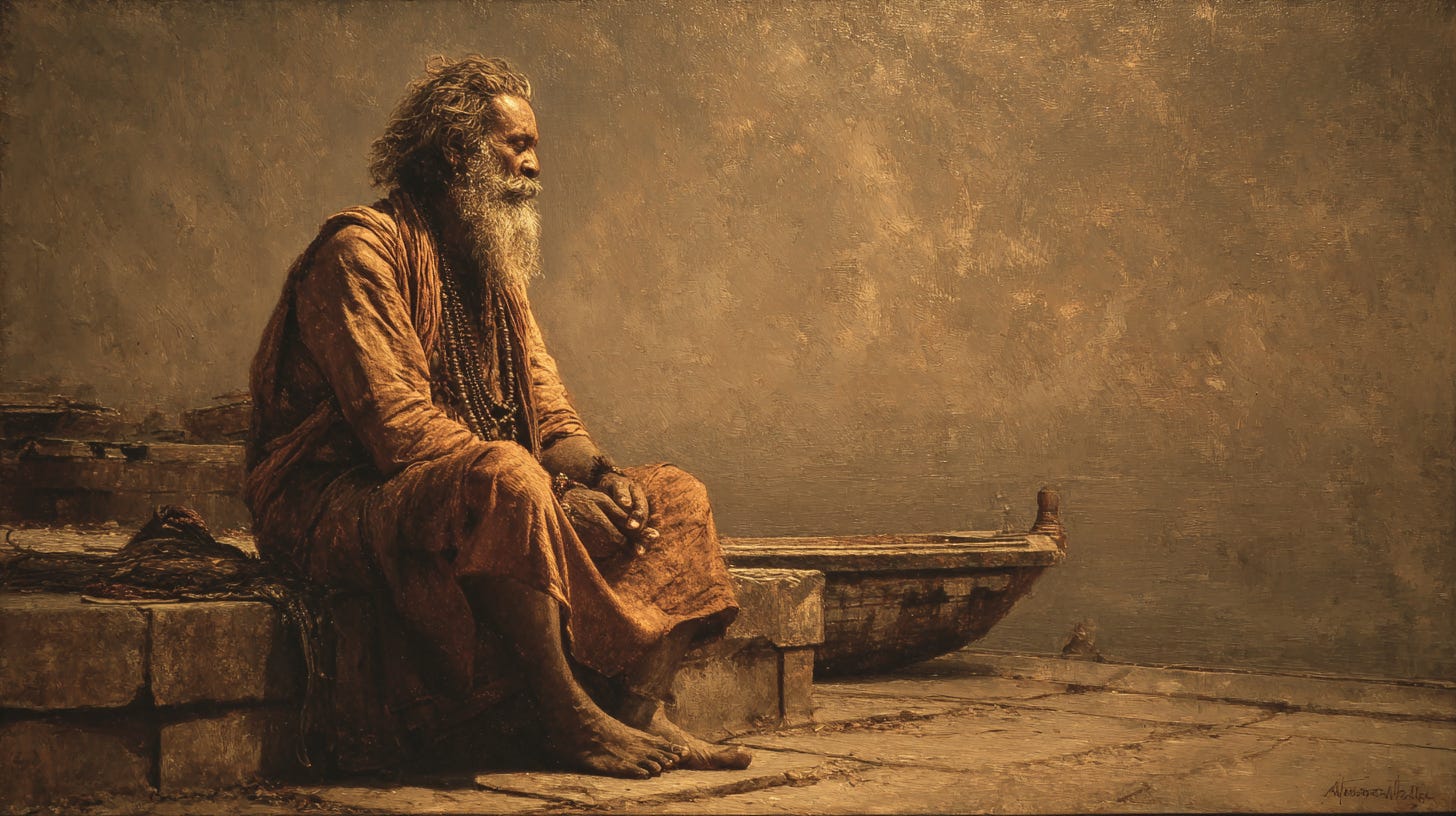
A rare Kashi dialogue with the so-called “Mad Monk” maps creation from Bhāvākāśa to bindu, rekhā, and vṛtta, framing śūnya as a luminous interval rather than mere emptiness. The Sadhu links kāma and prema to two textures of creation, explains how inner blossoming at sahasrāra, anāhata, maṇipūra, or mūlādhāra colours experience, and outlines a tenfold…
-
Stop Overthinking, Start Living: Hindu Wisdom for a Life of Presence and Joy

Hindu wisdom highlights a simple paradox: the more life is overanalyzed, the less it is truly lived. Drawing from the Hindu way of life and allied dharmic traditions, the path emphasizes presence, ethical action (dharma), and mindful awareness over relentless explanation. Karma yoga reframes daily duties as opportunities for clarity by releasing attachment to outcomes.…
-
Sacred Stillness, Lasting Clarity: A Dharmic Guide to Mindful Observation over Endless Seeking

Modern life rewards endless seeking, yet dharmic wisdom demonstrates that mindful observation offers deeper clarity and freedom. Drawing from Hindu philosophysakshi-bhava, pratyahara, dhyana, and aparigrahathis piece shows how observation refines attention and aligns action with dharma. Convergences with Buddhism’s vipassana, Jainism’s samayik, and Sikhism’s simran and sehaj reveal a shared contemplative core that nurtures unity…
-
Ancient Hinduism on Conversion: Inclusive Paths, Organic Belonging, and Dharmic Unity

Ancient Hindu society did not rely on a single, formal rite of conversion. Instead, belonging developed organically through practice, ethics, and community participation. Outsiders who resonated with Hindu thought were welcomed via temples, festivals, and guilds, reflecting a civilizational commitment to religious pluralism. Textual references such as Vratya-stoma and Mlēccita-śuddhih emphasize social restoration rather than…
-
Does God Really Exist? Experiential Practices to Sense the Divine Within Every Day

This reflection presents an experiential approach to the timeless question: Does God exist? Drawing on Sri Sri Ravishankar’s assurance that the Divine dwells within, it integrates methods shared across Hinduism, Buddhism, Jainism, and Sikhism. Readers gain practical stepsbreath awareness, dhyana (meditation), mantra (japa), ethical alignment, and sevato cultivate inner clarity. The guidance of community and…
-
If Something Changes Your Life, Let It: Dharmic Wisdom to Cultivate Resilience and Grace

The reflection “If something changes your life, let it” expresses a core dharmic insight shared by Hinduism, Buddhism, Jainism, and Sikhism: change, met with discernment and non-attachment, catalyzes spiritual growth. Drawing from the Bhagavad Gita, Patanjali’s Yoga Sutra, anicca, Anekantavada, Hukam, and Chardi Kala, the post outlines a practical pathpause, breathe, discern, act ethically, reflectto…
-
Love Those Who Lift You, Forgive Those Who Hurt: Dharmic Wisdom for Resilient Living
This article explores the dharmic wisdom behind the maxim “Love the people who treat you right, forgive the ones who don’t.” It clarifies how loving support builds sattva, while forgiveness safeguards inner peace without excusing harm. The analysis balances compassion with justice, showing how Dharma requires both accountability and kṣamā. Cross-tradition parallels in Buddhism, Jainism,…
-
Padma’s Sacred Power: How the Divine Lotus Unites Hindu, Buddhist, Sikh, and Jain Paths
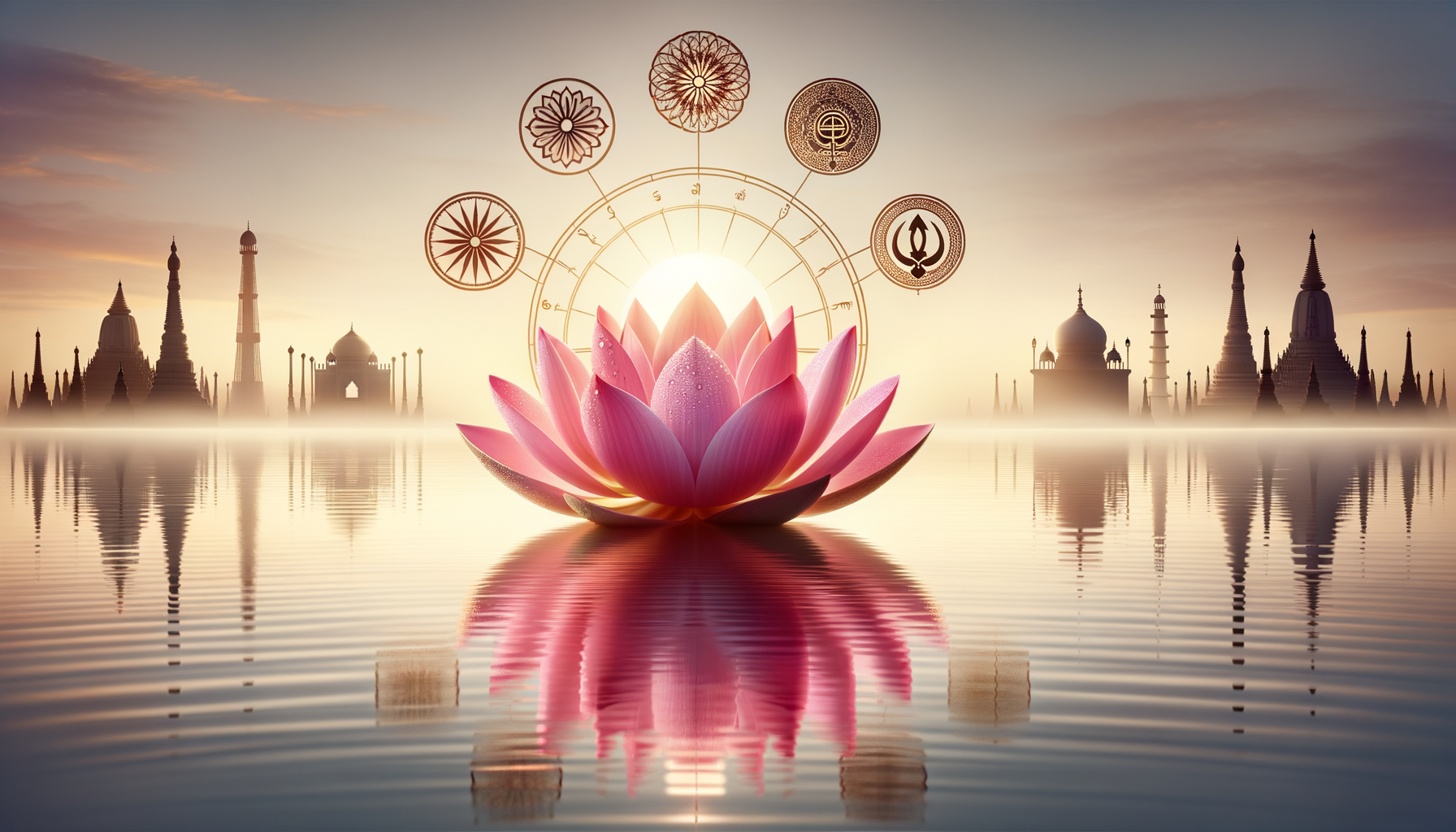
Padma, the divine lotus, is a shared sacred symbol across Hinduism, Buddhism, Sikhism, and Jainism that embodies purity, resilience, and spiritual awakening. In Hindu practice, it serves as the seat of Mata Lakshmi Devi and is offered in puja to Lord Vishnu and Ma Lakshmi, signifying prosperity and auspiciousness. Buddhist teachings present the lotus as…
-
Lagna and the 1st House Explained: A Transformative Guide to the Ascendant in Vedic Astrology

Lagna (Ascendant) is the Vedic astrology anchor of the 1st House, linking the soul’s entry into life with identity, vitality, and direction. Classical guidance, including Sarvartha Chintamani (II.5), affirms that a house gains strength when occupied by its own lordan insight crucial for interpreting Lagna. Assessing dignity, aspects, Shadbala, and vargas (notably Navamsa) clarifies health…
-
Arjuna’s Battlefield Anxiety: A Timeless Guide to Dharma, Mental Resilience, and Action

The Bhagavad Gita’s opening presents Arjuna in acute distresstrembling, disoriented, and morally tornoffering a precise portrait of battlefield anxiety. Rather than pathologizing, the text frames his vishada as the starting point for ethical clarity and inner steadiness. Krishna’s counsel models a pragmatic sequence: reframing, values-based duty, equanimity, breath regulation, and focused attention. These principles map…
-
Enlightenment Demystified: Clear Signs, One Essence, and a Unified Dharmic Path to Peace

Across Hinduism, Buddhism, Jainism, and Sikhism, realization is singular while pedagogical stages vary. Signs of enlightenment commonly include steady equanimity, spontaneous compassion, ethical ease, and a quieting of egoic narratives. Emptiness (śūnyatā) is one essence taught for different purposes, dissolving clinging and opening fearless presence. Traditions use diverse skillful meansethics, meditation, devotion, and insightto mature…
-
Right Thinking, Real Change: Hindu Dharma’s Timeless Tools to Transform Self and Society

Ancient Hindu wisdom teaches that the quality of thoughts shapes realityan insight echoed across the Bhagavad Gita, the Upanishads, and yogic psychology. This post outlines practical tools such as mindfulness, breath awareness, and values-aligned intention to cultivate clarity and compassion. It highlights how right thinking extends beyond personal wellness to strengthen social trust and community…
-
Rajasthan’s Anti-Conversion Law: Prior Permission, Ghar-Wapsi, and Religious Freedom

Rajasthan’s anti-conversion law requires prior Government permission for any change of religion, while exempting ‘ghar wapsi’a return to one’s original faith. The policy distinguishes new affiliation from reversion, aligning the latter with continuity of identity. For families, the process encourages clarity and documentation, while institutions may benefit from greater transparency. Reactions vary: some see safeguards,…
-
Why Materialism Fuels Endless Anxiety: Hindu Wisdom on Desire, Aparigraha, and Peace

Hindu wisdom explains why unchecked materialism intensifies anxiety by fueling attachment and craving. It reframes prosperity within dharma so possessions serve purpose rather than define identity. Aparigraha, shared across Hinduism, Buddhism, Jainism, and Sikhism through allied principles like santokh and dana, offers a practical antidote to compulsive desire. Readers gain a clear model for balancing…
-
Spiritually Rich, Politically Vulnerable: Why India Fell to British Ruleand Rose United
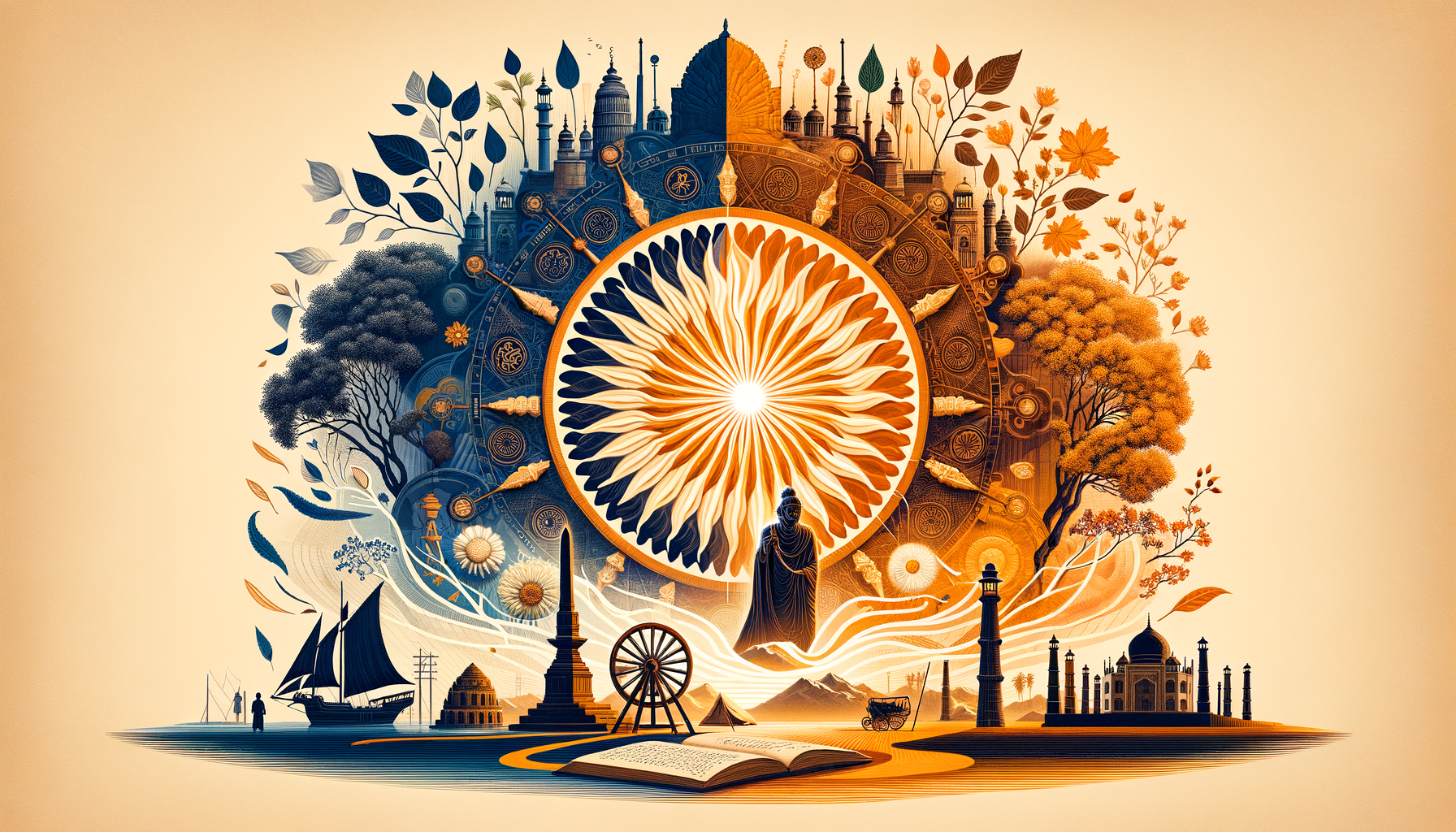
This analysis examines why a spiritually rich India became vulnerable to British Colonial Rule while preserving civilizational continuity. Drawing on Sri Sri Ravi Shankar’s cyclical metaphor of the seasons, it situates conquest within broader structural forcesEast India Company strategy, technological-military advantage, and administrative codification. It highlights how dharmic traditionsHinduism, Buddhism, Jainism, and Sikhismsustained social cohesion…
-
Kartik Purnima 2025 (Tripuri/Tripurari): Auspicious Date, Dev Deepavali, Sacred Rituals, and Unity

Kartik Purnima 2025, also called Tripuri Poornima or Tripurari Purnima, falls on November 5 and is celebrated as the most auspicious Full Moon of the Kartik month. North Indian calendars mark it as the month’s close, while Amanta systems observe it as Kartik maas day 15. The festival commemorates Shiva’s triumph over Tripurasura and is…
-
Unshakable Calm: Hindu Wisdom for Emotional Resilience and Inner Peace Under Pressure
Hindu philosophy teaches that true success rests on composure, especially in moments of emotional turmoil. The Bhagavad Gita urges steadiness amid joy and sorrow, aligning inner balance with ethical, effective action. The Upanishads guide attention to the witnessing self, recommending practices like prāṇāyāma, dhyāna, and svādhyāya to cultivate inner peace. Parallel insights in Buddhism (upekkhā),…
-
Essential Dharma of Food: Proven Paths to Transform Waste into Seva and Nourish Every Devotee

Lavish feasts and nearby hunger reveal a logistical, not theological, gap in food distribution. Drawing on annadanam, langar, dāna, ahimsa, and aparigraha, this piece outlines a unified dharmic ethic for equitable nourishment. It presents proven, low-friction strategiesdata-informed meal planning, staggered serving windows, mobile distribution, and interfaith Community kitchensthat reduce waste and expand access. Governance tools…
-
Master Inner Upheaval: The Essential Dharmic Guide to Self-Governance and Peace

The phrase “When your mind creates upheaval, practice self-governance” distills a shared dharmic insight: calm the mind first, then act wisely. Drawing on Hindu Dharma, Raja Yoga, the Upanishads, and the Bhagavad Gitaalongside convergent practices in Buddhism (sati), Jainism (Samayik), and Sikhism (Simran)it frames self-governance as practical, learnable discipline. A simple sequencepause, breathe with Pranayama,…