
-
Hanuman and the Five Elements in Kamba Ramayanam: Transformative Symbolism and Yogic Science
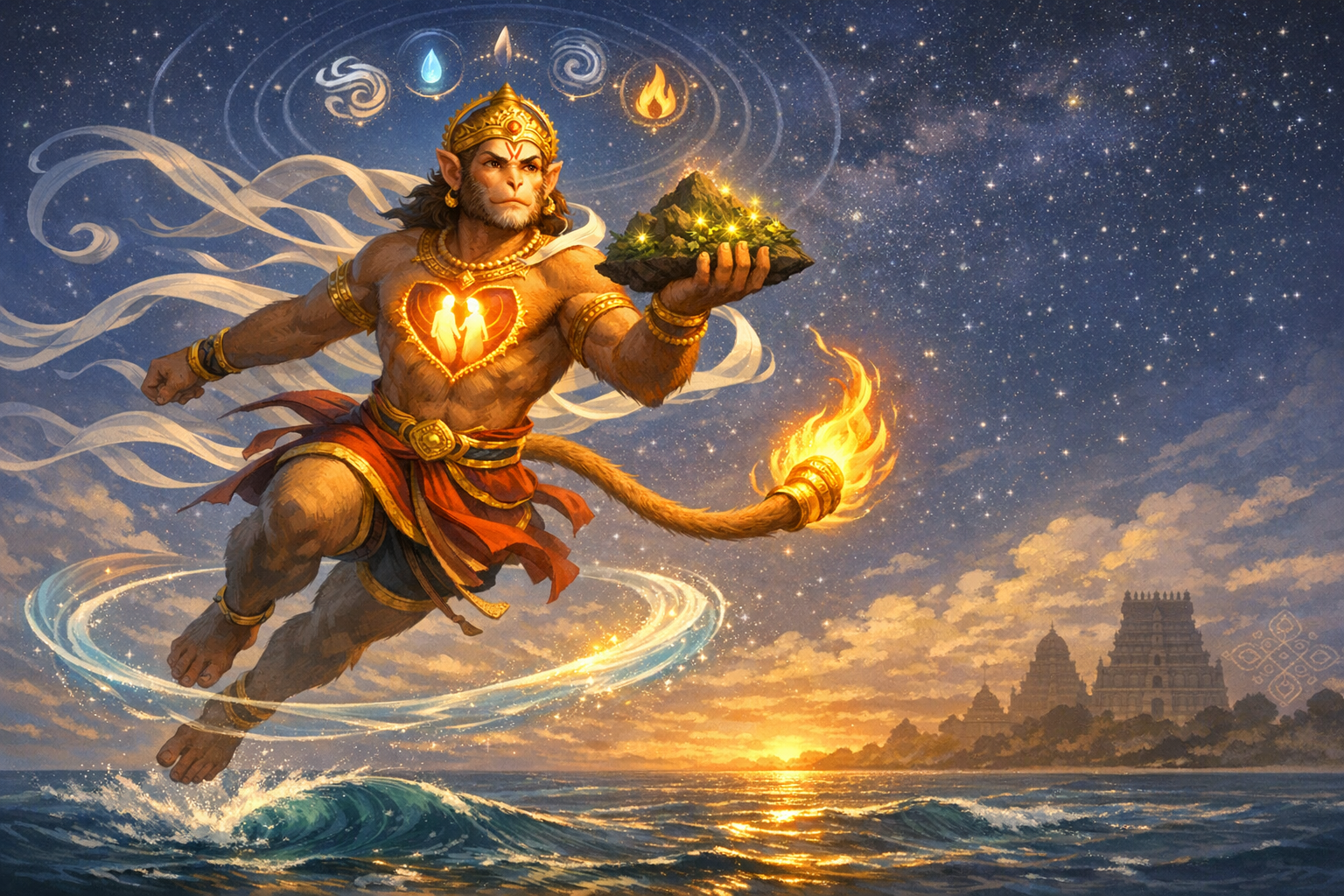
The Kamba Ramayanam presents Hanuman as an embodied map of the five great elementsVayu, Jala, Akasha, Agni, and Bhoomitransforming epic episodes into a precise guide for ethical action and inner balance. Vayu becomes pranic mastery and courage, Jala becomes adaptable resolve, Akasha becomes the clarity of spacious awareness, Agni becomes purifying discernment, and Bhoomi becomes…
-
Forgotten Guardian: Riksharajas, the Androgynous Vanara Who Shaped Kings Bali and Sugriva
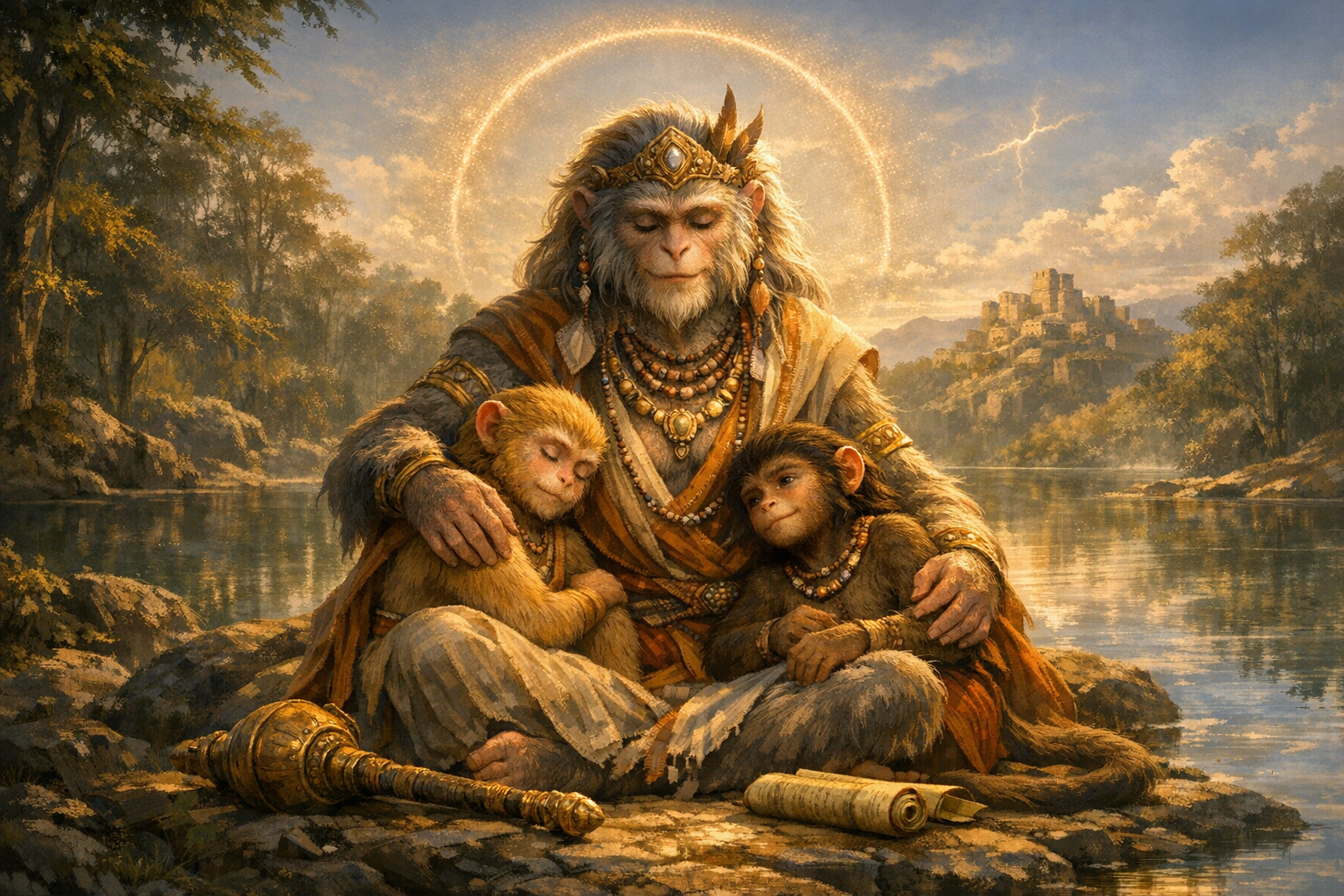
This long-form exploration brings to light Riksharajasalso known as Riksharaja and sometimes rendered as Vriksharajasthe often-overlooked guardian in the Ramayana who raised Bali (Vali) and Sugriva. Drawing on Valmiki’s Kishkindha Kanda, Kamba Ramayanam, Krittivasi traditions, and Puranic echoes (Skanda Purana, Padma Purana), it explains how and why different recensions describe divine paternity while preserving Riksharajas’s…
-
From Mortal Hero to Sacred Ideal: Rama’s Journey from Valmiki to the Bhakti Age

Rama’s image evolves from Valmiki’s ethically tested human king to the Bhakti movement’s compassionate divine, illuminating how dharma and devotion converge rather than compete. Valmiki Ramayana presents Maryada Purushottama as a ruler who chooses justice amid painful dilemmas; Bhakti-era RamayanasKamba Ramayanam, Adhyatma Ramayana, and Tulsidas’s Ramcharitmanasreframe those dilemmas through grace, interior devotion, and inclusive accessibility.…
-
Kishkinda to Vijayanagara: Sacred Geography, Imperial Brilliance, and a Breach of Sanctity

This essay situates Hampi within the Ramayana’s sacred geography and the Vijayanagara Empire’s statecraft, tracing how Kishkinda’s mythic landscape informed an imperial capital of dazzling scale. Drawing on Valmiki’s lyrical account of Pampa, historical records of Vijayanagara’s global magnetism, and the catastrophe of Talikota, it examines why the material loss was matched by an erosion…
-
Sri Hanuman Das: A 1st-century Devotee-Poet of Rama and HanumanHistory, Poetics, Legacy
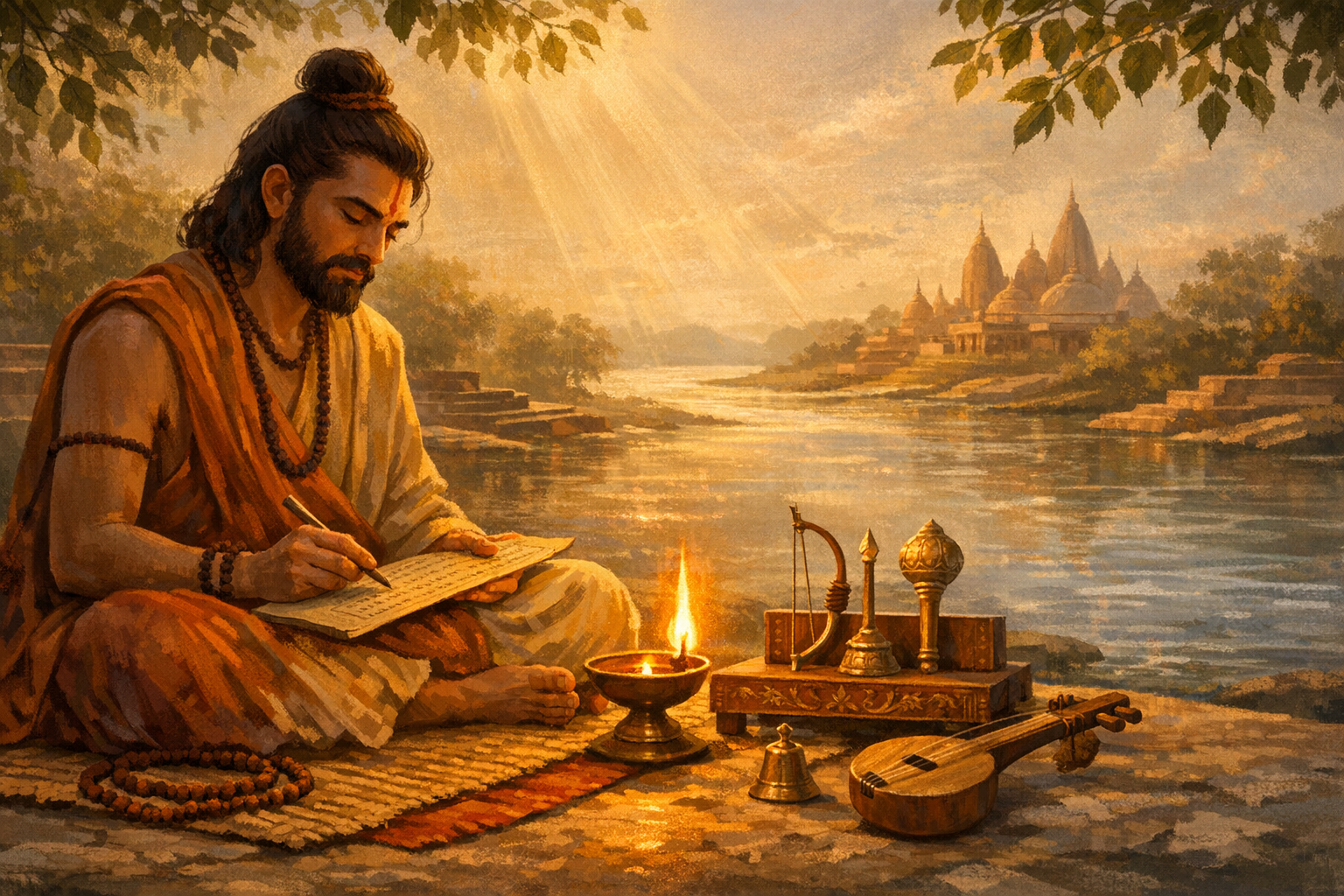
Sri Hanuman Das is remembered as a Hindu saint and Sanskrit poet from present-day Uttar Pradesh, traditionally dated to the 1st century CE and celebrated for deep devotion to Lord Rama and Lord Hanuman. The devotional name “Hanuman Das” reflects dāsya-bhāvaservice as a spiritual pathlinking Hanuman’s exemplary loyalty to Rama-bhakti. While the precise chronology remains…
-
Sri Hanuman Das: Enigmatic Early Bhakti Poet of Uttar Pradesh and Rama-Hanuman Devotion

Sri Hanuman Das is remembered as a Hindu saint and Sanskrit poet from Uttar Pradesh, celebrated for ardent devotion to Lord Rama and Lord Hanuman. While a 1st-century CE date appears in some traditions, available evidence suggests this chronology is hagiographic, not epigraphically confirmed. Placed within the broader Bhakti Tradition and the ritual geography of…
-
Samarth Ramdas Swami Jayanti 2026 on Ram Navami: Date, Rituals, History, and Enduring Legacy
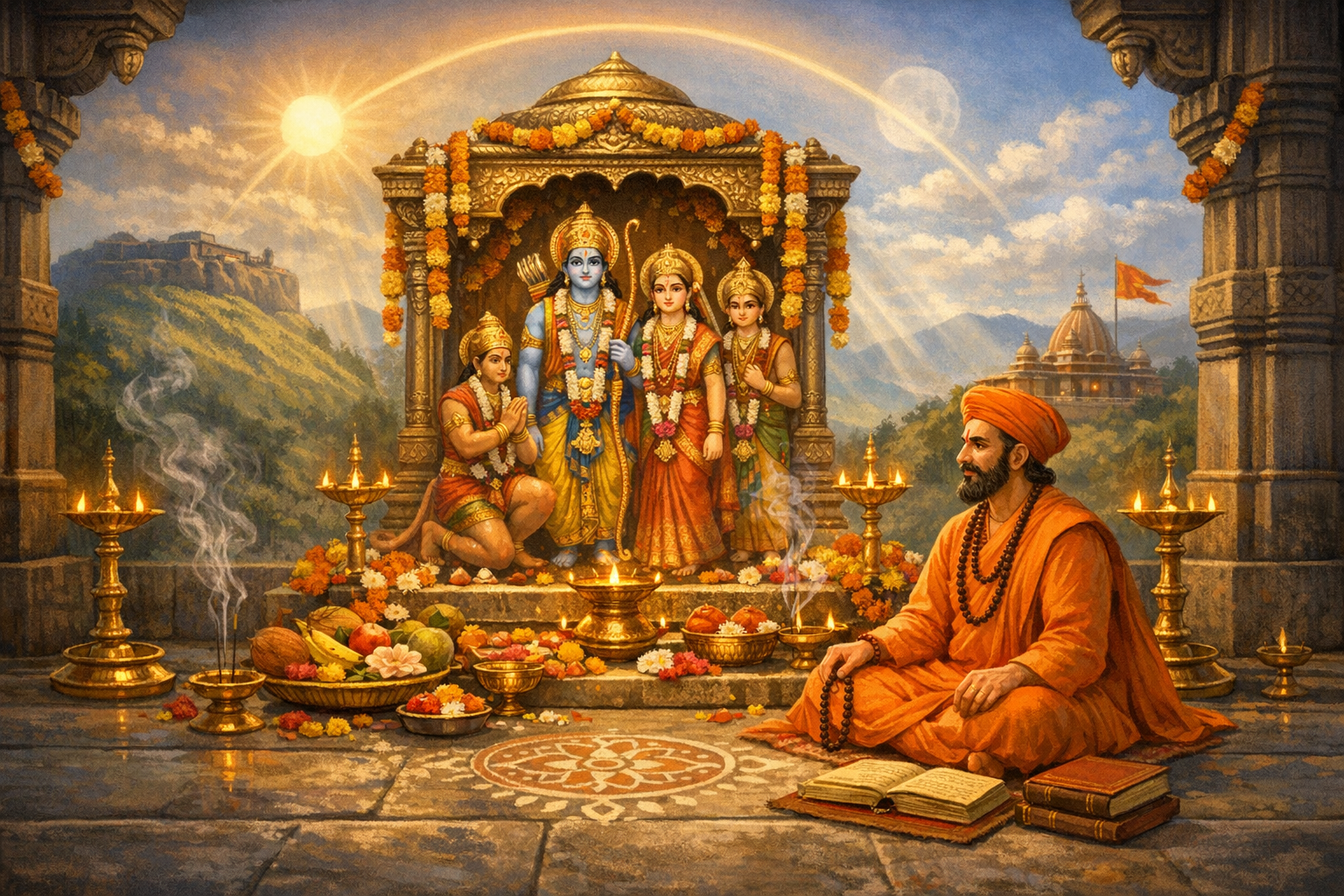
Samarth Ramdas Swami Jayanti in 2026 will be observed on March 26, the day of Sri Ram Navami (Chaitra Maas Shukla Paksha Navami). Rooted in Rama-bhakti and Hanuman’s ideal of disciplined strength, the observance blends inward contemplation with outward service. The legacy of Samarth RamdasGuru of Chhatrapati Shivaji Maharajspans profound texts like Dasbodh and Manache…
-
Vibhishana’s Daring Intervention: How Dharma Rescued Rama and Lakshmana from Indrajit’s Sorcery

Vibhishana’s interventions during the Lanka campaign reveal how moral clarity and technical insight can rescue an army immobilized by occult warfare. By correctly identifying Indrajit’s Naga-pāśa and steadying the Vanara ranks until Garuḍa’s release, he prevents collapse at a decisive moment. He repeatedly exposes māyā, including the illusion of Sita’s severed head, foiling psychological warfare.…
-
Chakratirtha, Hampi: Vyasaraja’s Divine Vision of Mukhyaprana and Vijayanagara’s Sacred Legacy
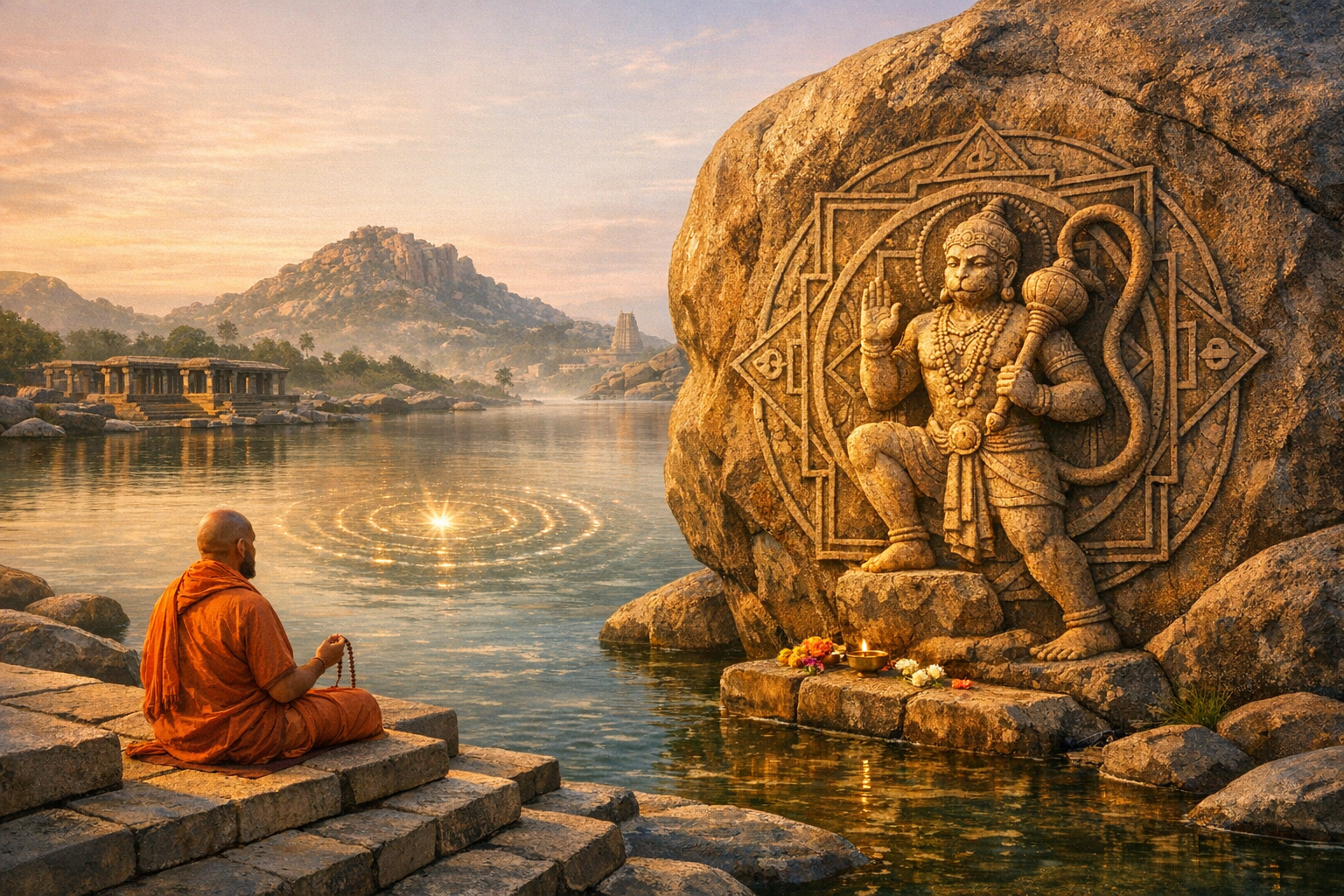
Chakratirtha in Hampi, Karnataka, fuses sacred geography with Vijayanagara history, centering on Sri Vyasarajaru’s revered vision of Mukhyaprana (Hanuman/Vayu Deva). This long-form study explains how the riverine “ford” (tirtha) becomes a lived crossing through disciplined snana, japa, and meditation, reflecting the Dvaita Vedanta ethos Vyasaraja advanced. It situates the site within Vijayanagara’s inclusive sacred landscape…
-
Indrajit Samhara Moorthy: Lakshmana’s Slaying of Meghanada and the Dharma of the Ramayana

Lakshmana’s epithet “INDRAJIT SAMHARA MOORTHY” commemorates his defeat of Indrajit (Meghanada) during the Lanka war in the Ramayana. The episode centers on the Nikumbila yajna (yagna), where Lakshmana, supported by Hanuman and guided by Vibhishana, intervened to prevent an invincibility boon and then prevailed in open combat. Ethically, the act aligns with Dharma-Yuddha principles: stopping…
-
Panchmukhi Hanuman: Transformative Symbolism for Mastering the Five Senses (Indriyas)

Panchamukhi Hanuman, the five-faced form of Hanuman, presents a refined dharmic framework for mastering the five senses (indriyas). The iconographyHanuman, Narasimha, Garuda, Varaha, Hayagrivamaps to qualities that transform sensory life from distraction to clarity. Through pratyahara, breath regulation, and mantra, perception becomes disciplined and inwardly focused. Devotion and seva anchor this process ethically, turning insight…
-
क्या सच में हनुमान जी के ‘पांच सगे भाई’ थे? प्रामाणिक ग्रंथ, लोककथा और भक्तिपरक दृष्टि

यह लेख “हनुमान जी के भी है पांच सगे भाई” जैसे लोकप्रिय दावे को शास्त्रीय प्रमाण और लोककथादोनों मानकों से स्पष्ट करता है। Valmiki Ramayana और Ramcharitmanas में हनुमान के भाइयों का उल्लेख नहीं मिलता, अतः मूल शास्त्र इस दावे की पुष्टि नहीं करते। साथ ही, क्षेत्रीय लोककथाएँ और उत्तरवर्ती आख्यान समय-समय पर ऐसे विचार…
-
Unraveling the Mystery: Does Hanuman Ji Have Five Brothers? Evidence, Legends, Insights

This article examines the widely circulated query“हनुमान जी के भी है पांच सगे भाई”through a careful review of Hindu scriptures, later Puranic compilations, and regional folklore. It clarifies that standard editions of Valmiki Ramayana and Ramcharitmanas do not mention five biological brothers of Hanuman. It also explains how later or local traditions sometimes enumerate five…
-
Sundara Kanda Unveiled: Hanuman’s Epic Journey to Lanka and the Hope it Inspires

Sundara Kanda, the fifth book of the Ramayana by Valmiki, chronicles Hanuman’s mission to find Sita and transform uncertainty into hope. The narrative highlights the ocean leap, encounters with Mainaka, Surasa, and Simhika, the discovery of Sita in Ashoka Vatika, and the powerful audience with Ravana. Hanuman’s burning of Lanka is framed as disciplined, ethical…
-
Ramayana’s Defining Episodes: Dharma, Devotion, and the Journey Uniting Dharmic Traditions
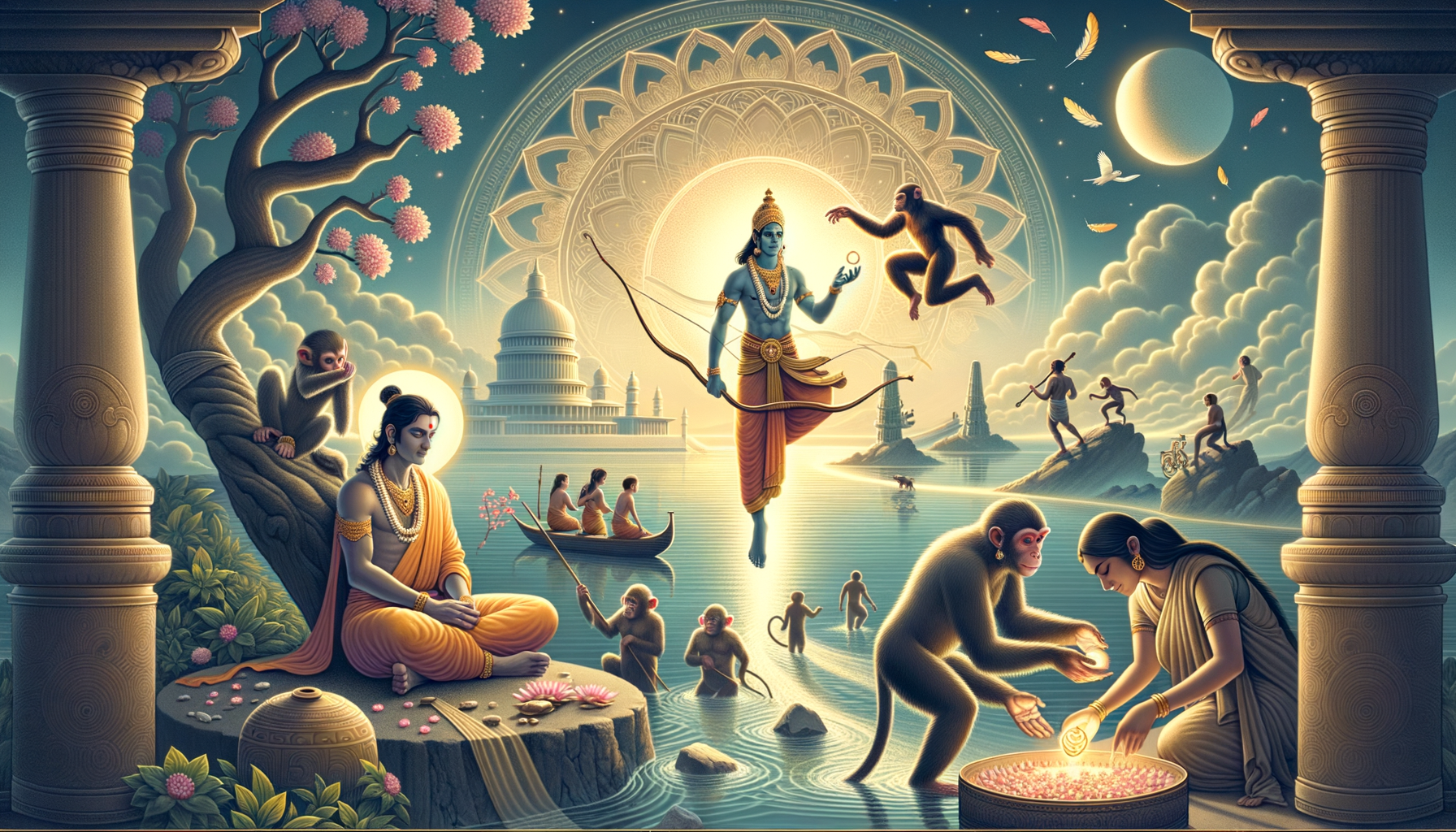
This structured overview of the Valmiki Ramayana highlights the epic’s defining episodesfrom Ahalya’s redemption and Sita’s swayamvara to the exile, Sundara Kanda, and the battle of Lankaexplaining how each advances dharma, devotion, and ethical leadership. Readers gain a clear framework for understanding the narrative arc and its moral significance. The account emphasizes unity across dharmic…
-
Sri Hanumad Ramayana: The Awe-Inspiring Himalayan Legend of Hanuman’s Sacred Epic
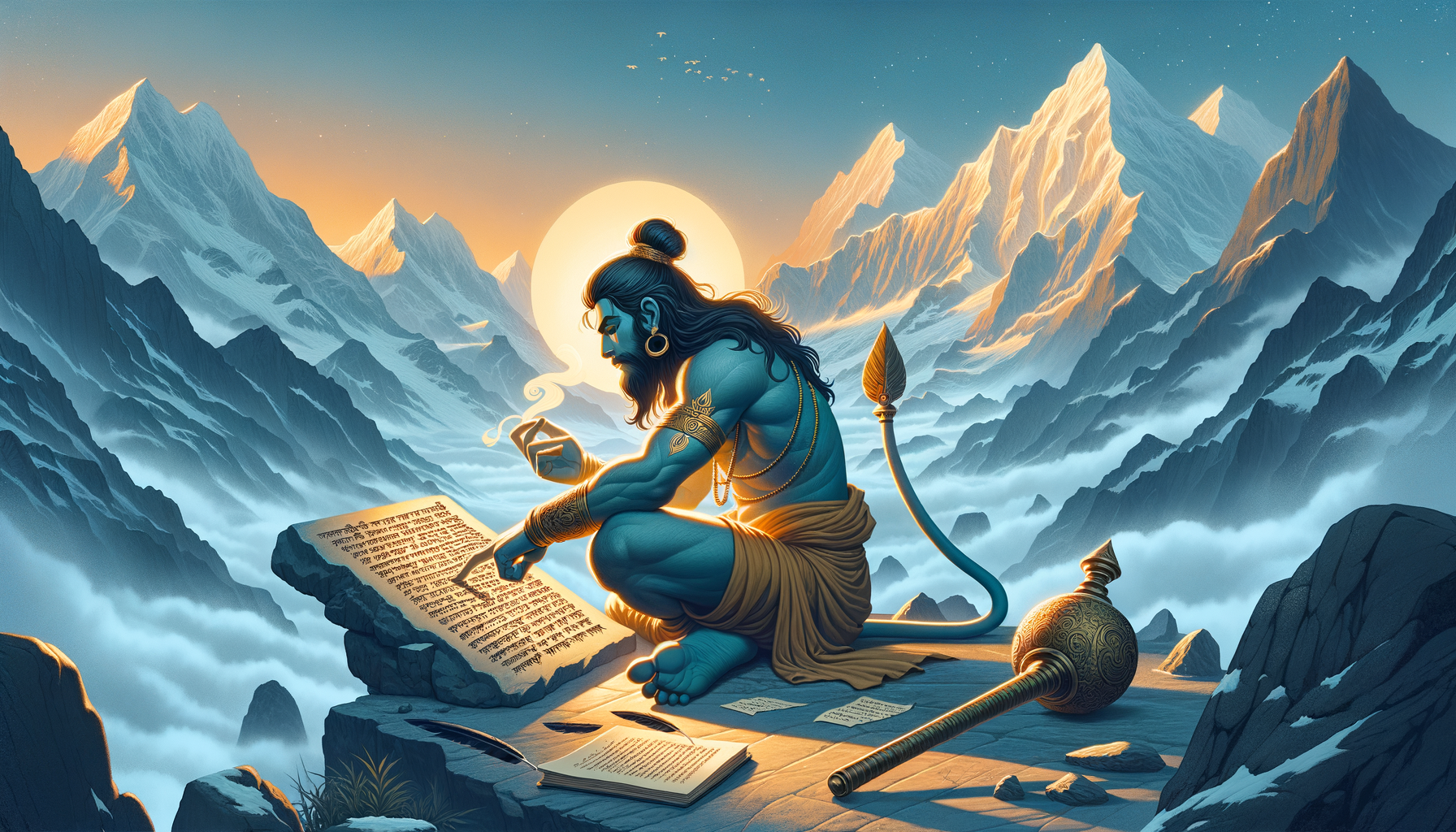
The legend of the Hanumad Ramayana tells of Lord Hanuman inscribing an early Ramayana on Himalayan rocks and then humbly effacing it to honor Valmiki’s destined epic. Presented as a sacred teaching story rather than a recoverable text, it illuminates core values of devotion, service, and humility. The narrative enriches understanding of Hindu scriptures as…
-
Rama’s Timeless Counsel: Restraint Over Impulse in Lakshmana’s First Meeting with Hanuman
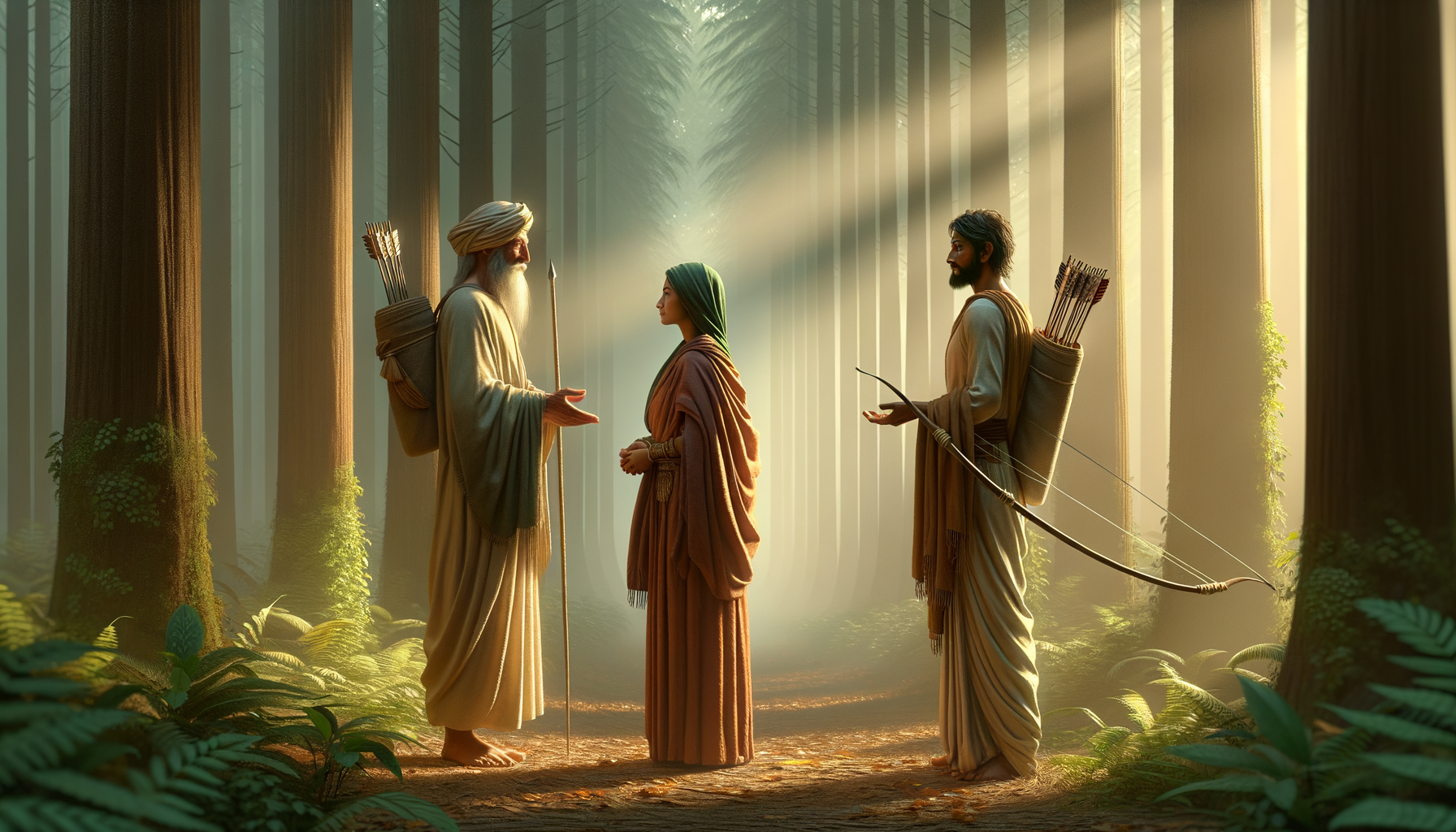
This article examines a pivotal Ramayana episode in which Rama counsels Lakshmana to practice restraint when first meeting Hanuman in disguise. It analyzes how careful listening and discernment transform potential suspicion into trust, modeling dharma in action. The discussion connects this ethos to shared values across Hinduism, Buddhism, Jainism, and Sikhism, highlighting unity within the…
-
Prophecy and Peril: Hanuman’s Divine Birth That Defied Vali’s Deadly Plot
A lesser-known episode from the Kamba Ramayana recounts how Vali, fearing a prophecy, sought to destroy Hanuman before birth, only for Vayu to shield Anjana and the unborn child in a stunning affirmation of dharma. This retelling clarifies how regional variants complement the Valmiki Ramayana, enriching the epic’s living tradition. Readers gain insight into why…
-
Anjana’s Sacred Teachings: Maternal Wisdom That Forged Hanuman’s Eternal Devotion

This essay explores how Anjana’s maternal wisdom formed the inner discipline behind Hanuman’s legendary devotion in the Ramayana. It highlights her role as an apsara-turned-seeker whose tapas and ethical guidance laid the foundation of spiritual strength. Readers discover how humility, service, and steadfastnessinstilled earlyshaped Hanuman’s fearlessness and discernment. The discussion frames bhakti as practical ethics…