
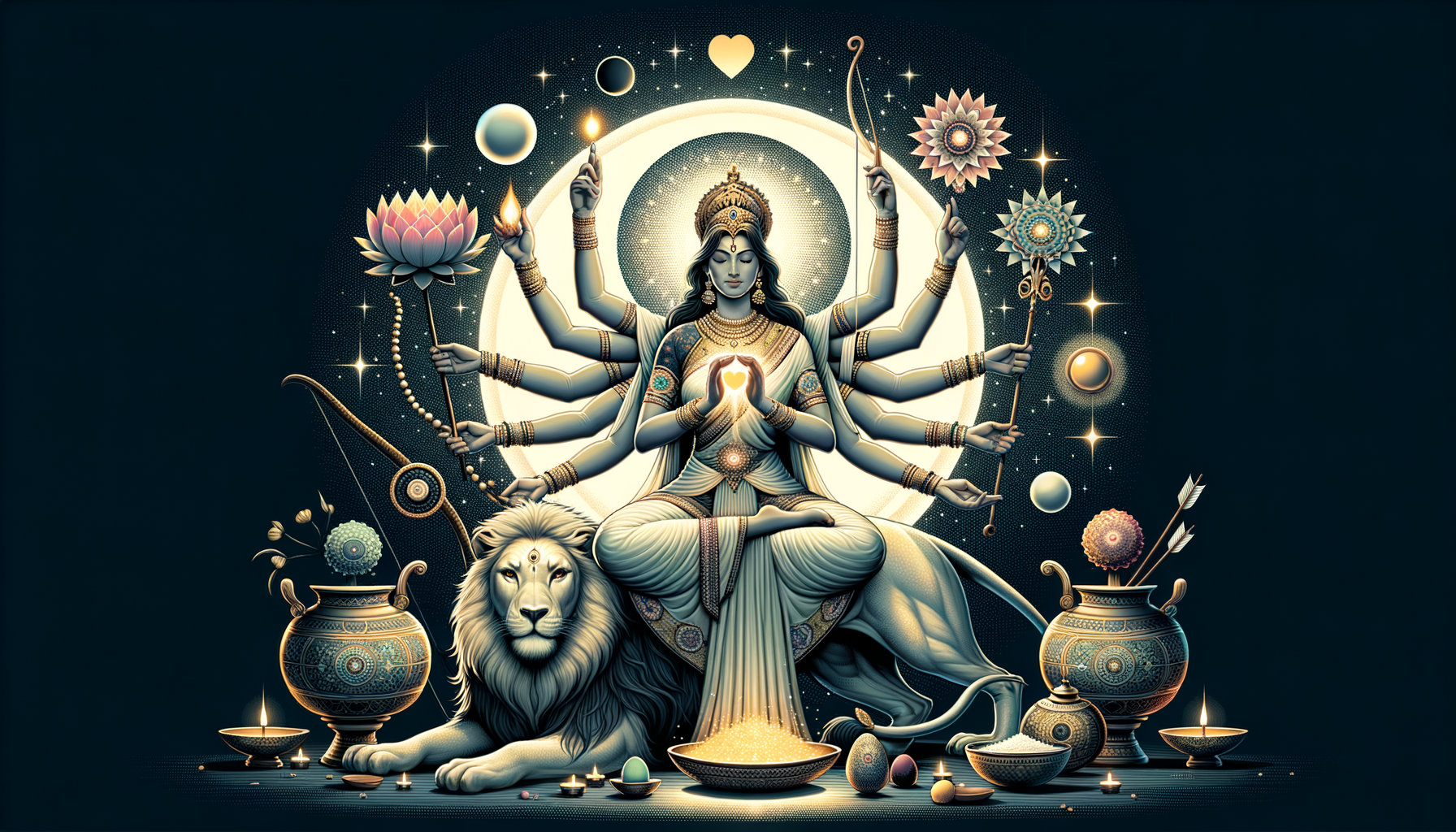
Kushmanda, revered as the fourth manifestation of Goddess Durga, is celebrated in Hindu philosophy as the creative force that initiates the universe. The name itself conveys profound spiritual meaning, pointing to the primordial energy that births existence. Among the nine forms of Durga honored during Navaratri, Kushmanda stands out as the radiant source from which manifestation unfolds.
Within the Navaratri sequence, the fourth day is traditionally dedicated to Kushmanda, aligning devotion with the idea of beginningsthe moment when subtle energy takes shape. This form of Devi Shakti symbolizes the transition from the unmanifest to the manifest, a theme that resonates deeply with practitioners seeking clarity, confidence, and renewal.
Traditional etymologies parse the name “Kushmanda” as a layered expression of creation. Devotional literature often relates it to ku (subtle), ushma (warmth or vital heat), and anda (cosmic egg), evoking the image of the Brahmanda coming alive through primordial warmth. In many teachings, Kushmanda thus emerges as the creatrix whose subtle radiance incubates and animates the cosmos.
The symbolism is both cosmological and experiential. Cosmologically, the “cosmic egg” signifies totalitywhere time, space, and life germinate. Experientially, it reflects the inner spark that gives direction to thought, discipline to action, and compassion to conduct. In this way, Kushmanda bridges metaphysics and practice, linking Hindu philosophy with lived devotion centered on Shakti.
Iconography commonly depicts Kushmanda with eight arms (Ashtabhuja), holding objects such as the bow, arrow, rosary, lotus, and a pot of nectar (amrita), and riding the lion. The serene yet potent visage communicates the creative courage that dispels inertia and illuminates understandinga visual theology of energy transforming into order.
During Navaratri, worship of Kushmanda emphasizes gratitude for life, vitality, and prosperity. Practices often include mantra recitation, meditative contemplation on inner light, and offerings. In several traditions, gourds (kushmanda/ash gourd) are offered as symbols of nourishment and abundancean earthbound mirror of her cosmic provisioning.
Devotees frequently describe a felt sense of warmth, optimism, and steadiness when reflecting on Kushmanda’s name and qualities. The emphasis on creative beginnings becomes a lens for personal renewal: setting clear intentions, cultivating resilience in adversity, and sustaining compassion in relationships. Such reflections make the theology of Shakti immediately relevant to everyday life.
The values evoked by Kushmandainner strength, compassionate action, and disciplined creativityspeak to a shared ethical vision across Dharmic traditions. While the worship of Goddess Durga is rooted in Hinduism, the underlying ideals of courage, mindful living, and service harmonize with the spiritual aspirations found in Buddhism, Jainism, and Sikhism. This convergence underscores unity in diversity within the broader Dharmic family.
As a contemplative focus, Kushmanda’s symbolism can be integrated into simple daily practices: mindful breathing to attune to inner warmth (ushma), intentional beginnings to honor the creative moment, and acts of seva that carry the energy of Shakti into the world. These practices translate cosmic imagery into practical wisdom.
Ultimately, the name Kushmanda encapsulates a powerful insight: creation is not a distant event but an ever-present movement from subtle potential to tangible goodness. By honoring this form of Goddess Durga, seekers situate themselves within a living cosmos sustained by Devi Shaktian elegant synthesis of philosophy, devotion, and compassionate action.
Inspired by this post on Hindu Blog.
