-
Transcend Forms, Find Clarity: Hindu Wisdom for Locating the Cause Behind All Phenomena

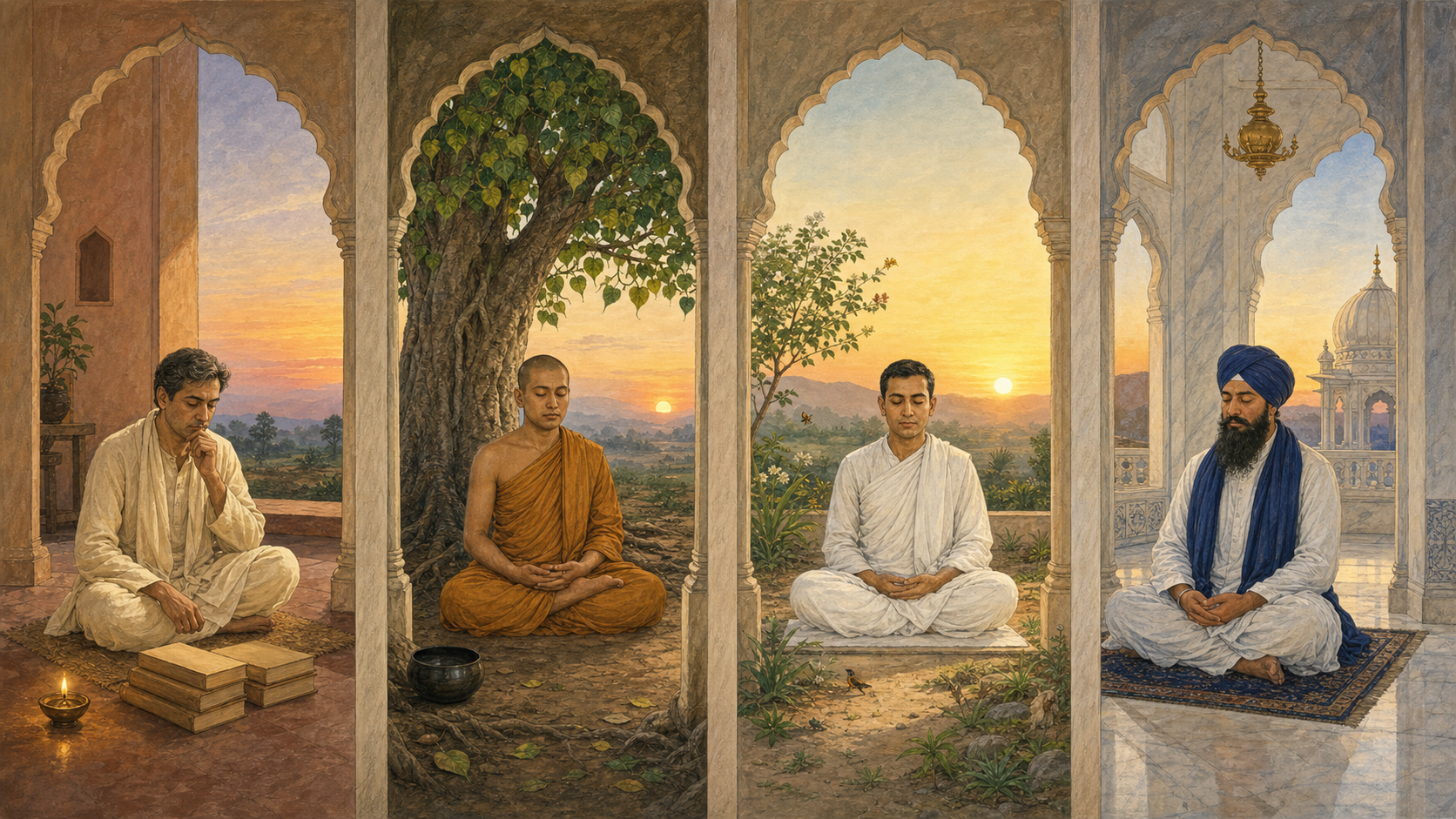
This article examines a central teaching of Hindu philosophy: look past nāma-rūpa (names and forms) to the abiding kāraṇa (cause). Drawing on the Upaniṣads and Bhagavad Gītā, it explains how Vedānta distinguishes empirical from ultimate reality and why māyā is a principle of appearing rather than mere illusion. It shows how forms function as upāyameans…
-
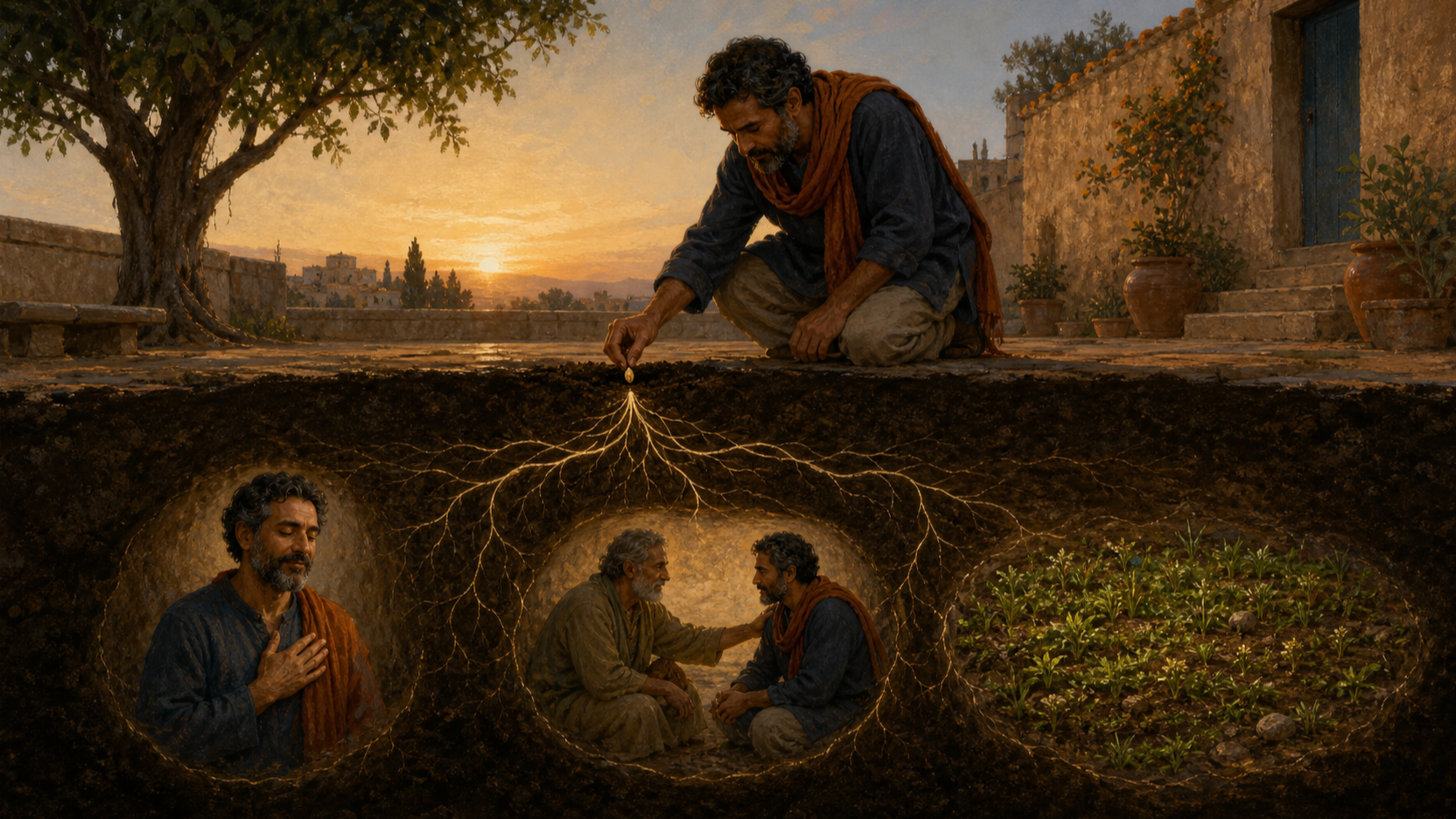
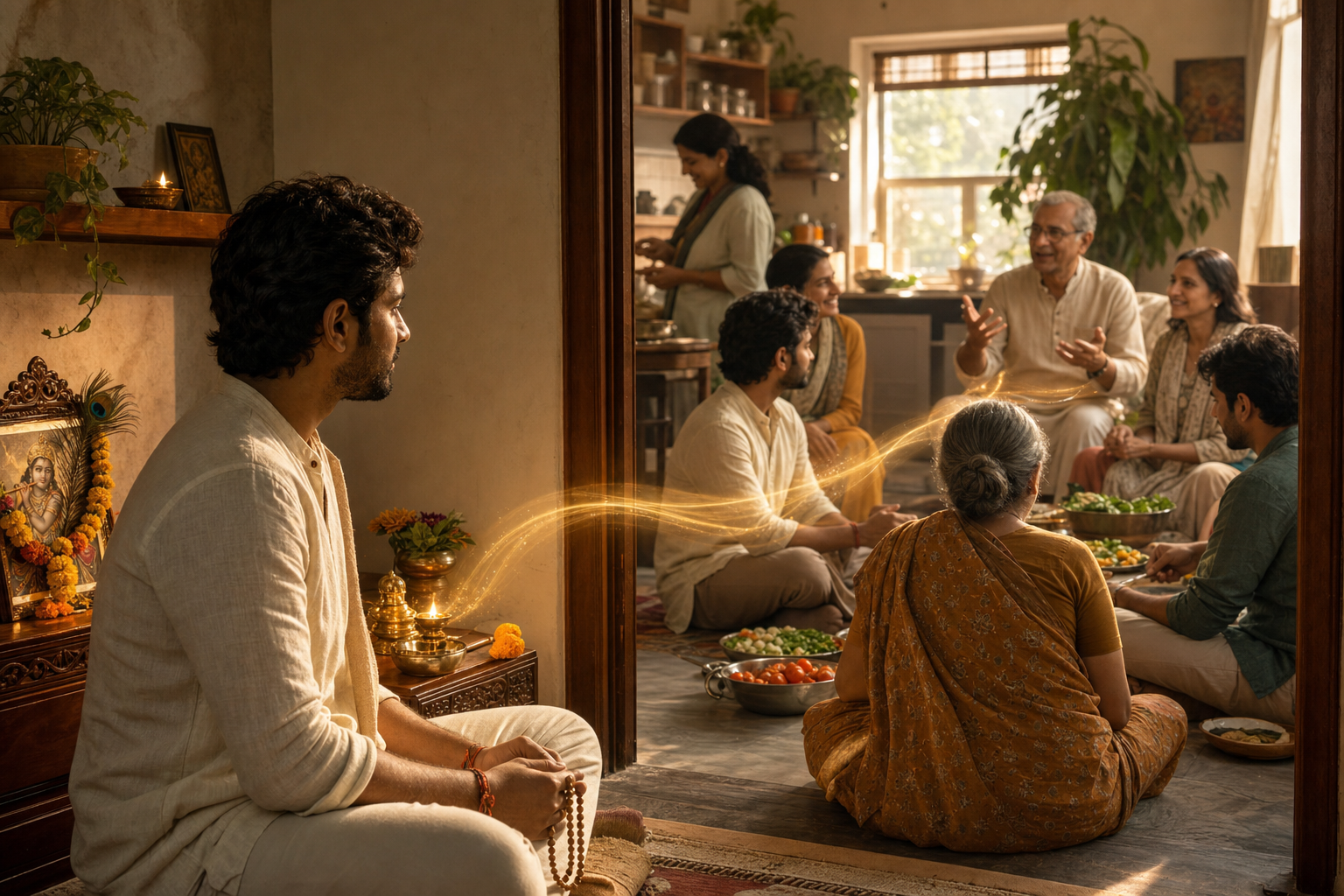
Dissolve Thoughts at Their Source: Hindu Wisdom and Dharmic Science for a Clearer Mind

Ancient Hindu wisdom teaches that thoughts gain power only when grasped; dissolving them at inception restores clarity and self-mastery. The method aligns with Yoga Sutra principles of vritti-nirodha, abhyasa, and vairagya, and is reinforced by Upanishadic and Bhagavad Gita guidance. Practical protocolsbreath coherence, light labeling, mantra gating, atma-vichara, and somatic defusionmake the technique accessible in…
-
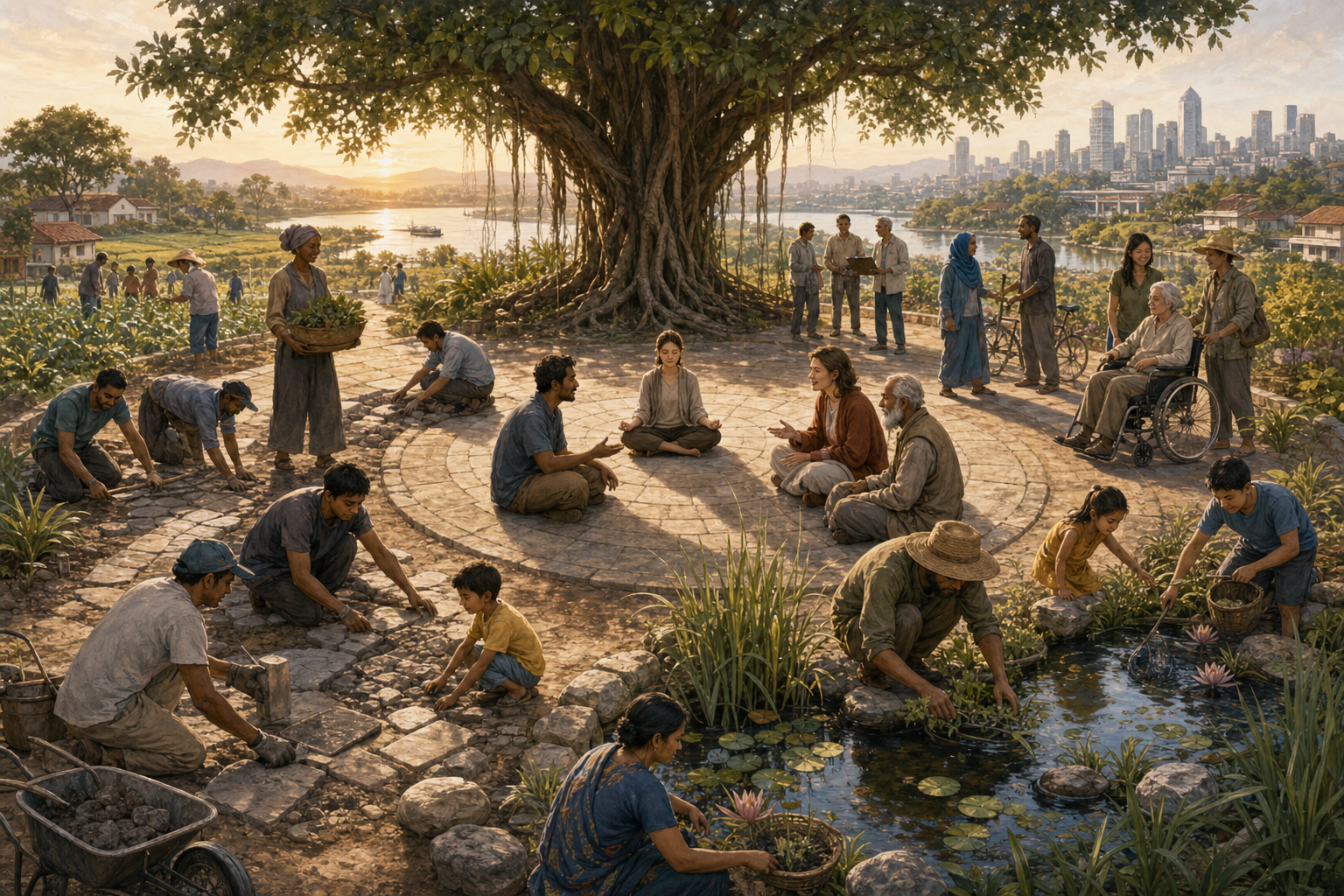
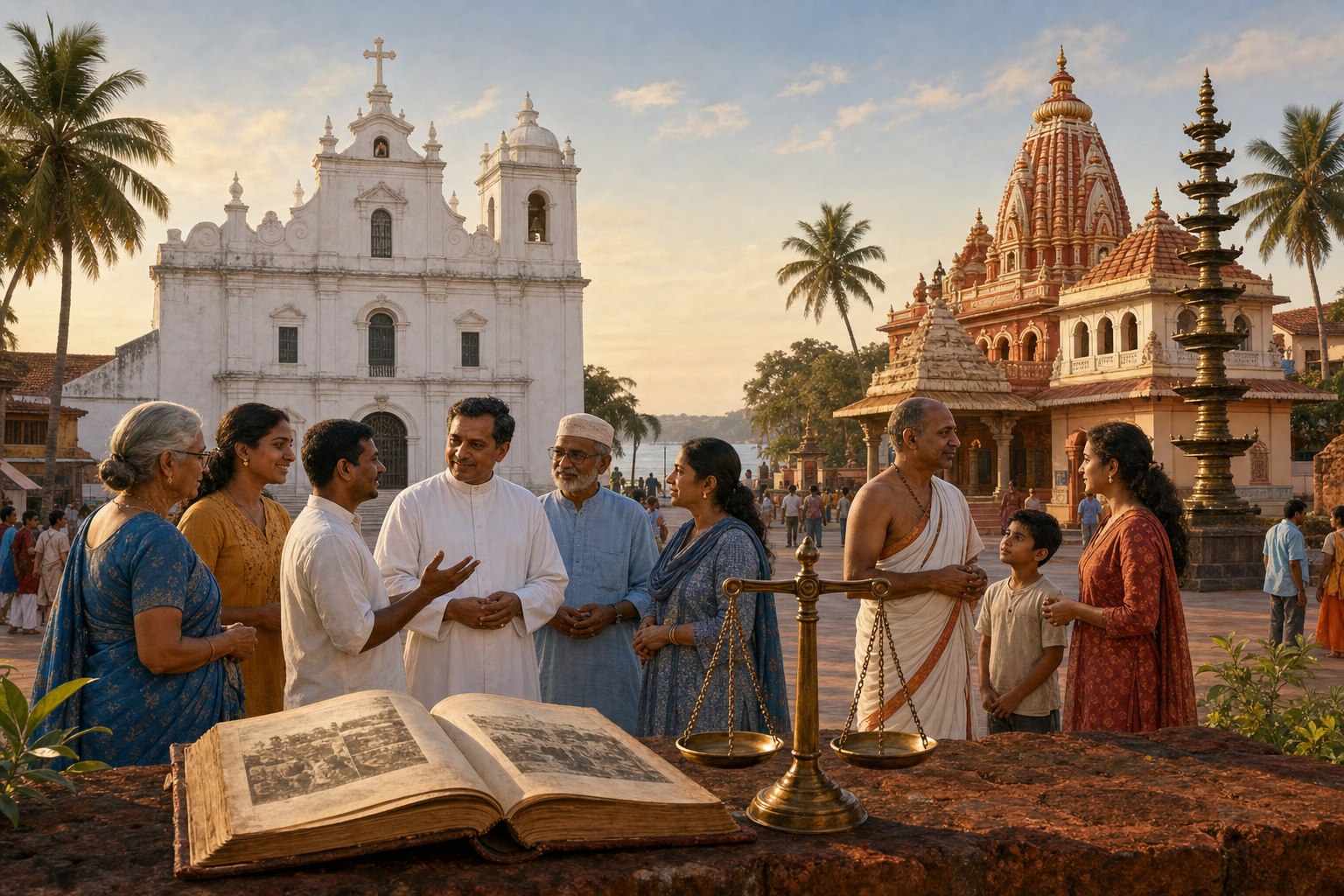
Beyond Guru Worship: Living Sanatana Dharma through Practice, Pluralism, and Service

Public celebrations of guru anniversaries have grown spectacular, but the risk of drifting from teachings to personality worship is real. This essay reframes devotion through a Dharmic lens shared by Hinduism, Buddhism, Jainism, and Sikhism: live the message, not the messenger. It maps classical yardsticks of authentic progressyamas and niyamas, lokasangraha, simran and seva, sīla…
-
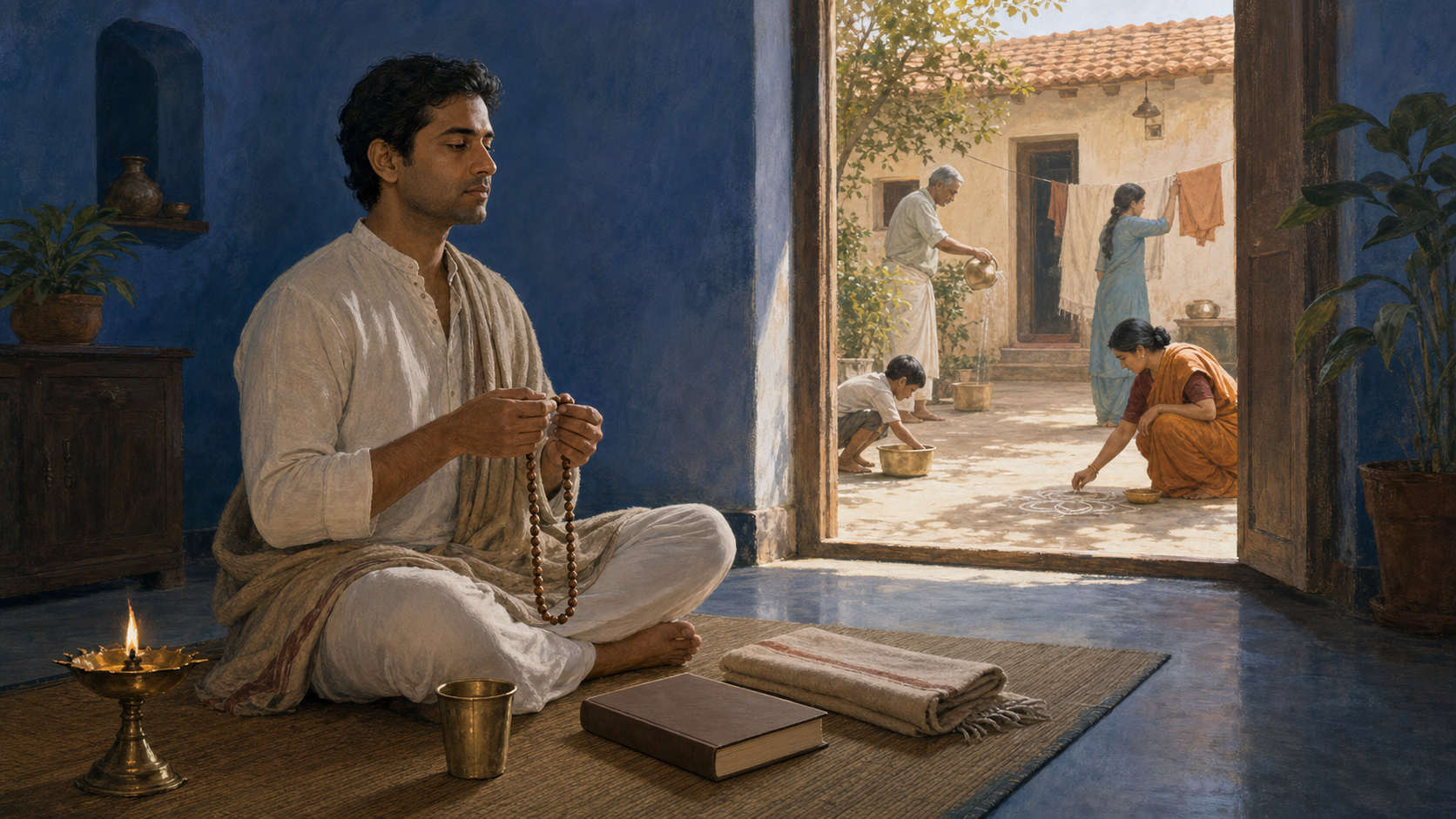
Unlock the Ocean Within: Dharmic Pathways to Atman, Timeless Wisdom, and Resilient Strength

This essay examines the statement “You know little of that which is within you. Within you is the ocean of infinite power” through the shared frameworks of Hinduism, Buddhism, Jainism, and Sikhism. It explains the Upanishadic vision of ātman and Brahman, the yogic map of prāṇa and kundalinī, and the ethical preconditions that make inner…
-
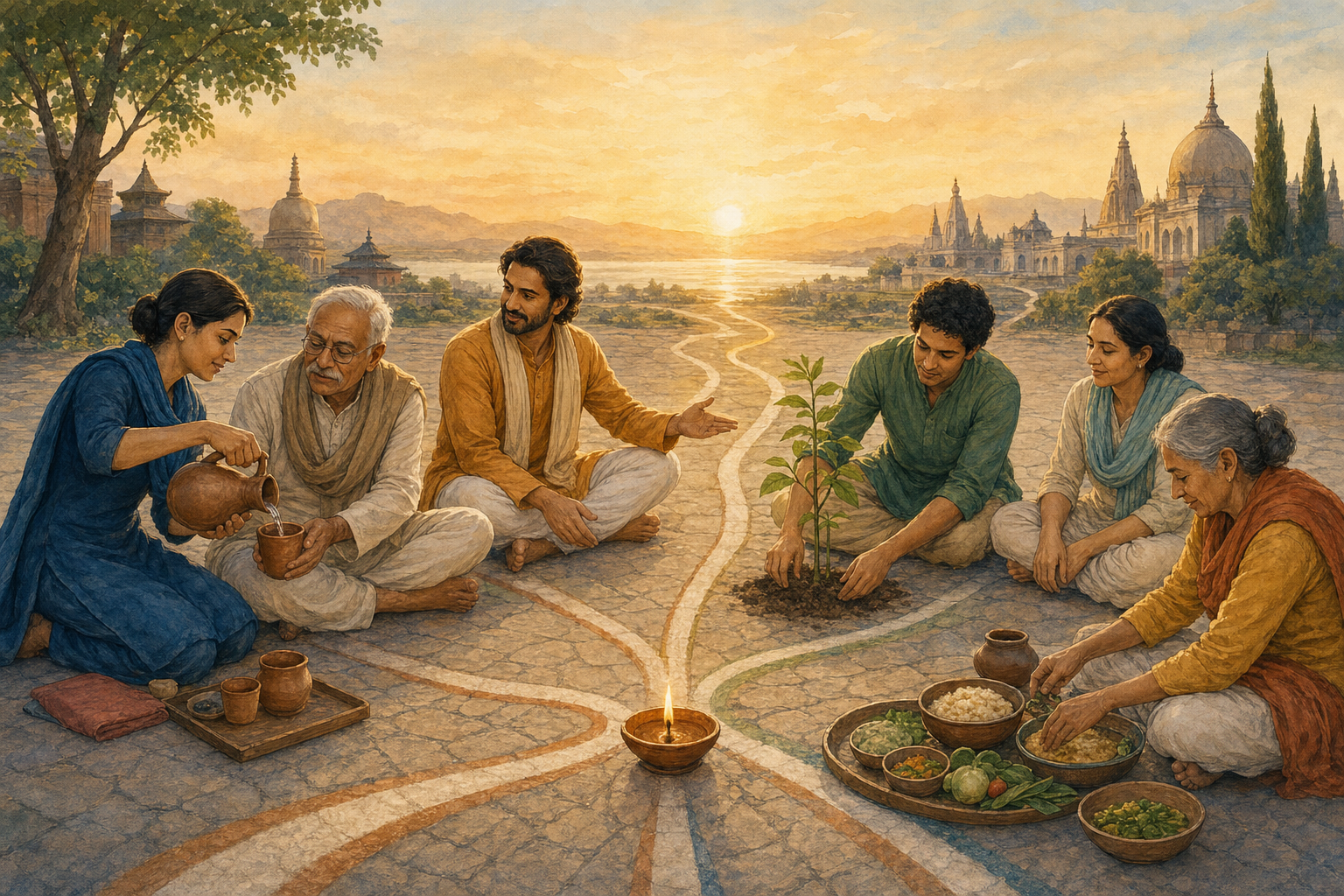
Beyond Sectarianism: Dharmic Wisdom for an Inclusive, Boundless Vision of the Divine

This essay examines the insight that a sectarian mind yields a defective image of the Divine, drawing on Hindu philosophy and the wider Dharmic traditions. It traces Vedic and Upanishadic roots of pluralism, explains the Bhagavad Gita’s inclusivism, and shows how Ishta, Advaita, Vishishtadvaita, and Dvaita approach the One-and-many problem without mutual negation. It integrates…
-
Manusmriti in Modern India: Separating Myth from Method for a Dharmic, Inclusive Future

This evidence-based exploration separates myth from method to answer whether Manusmriti is relevant today. It explains what the text is within Dharmashastra, how it actually functioned through custom and commentary, and why colonial codification distorted public perception. It clarifies hotly debated verses on women and caste with historical context while affirming modern constitutional equality. It…
-
Beyond Heaven and Hell: Karma, Consciousness, and Self-Reward in Dharmic Philosophy

This essay explains, in clear academic terms, why Dharmic traditions reject an externalized reward-and-punishment model after death while affirming a rigorous moral universe. It clarifies karma-phala using concepts like sanchita, prarabdha, and agami, and links Mimamsa’s apurva and Nyaya–Vaisheshika’s adrishta to a self-executing moral order. Hindu philosophy, Buddhism, Jainism, and Sikhism are presented in harmony:…
-
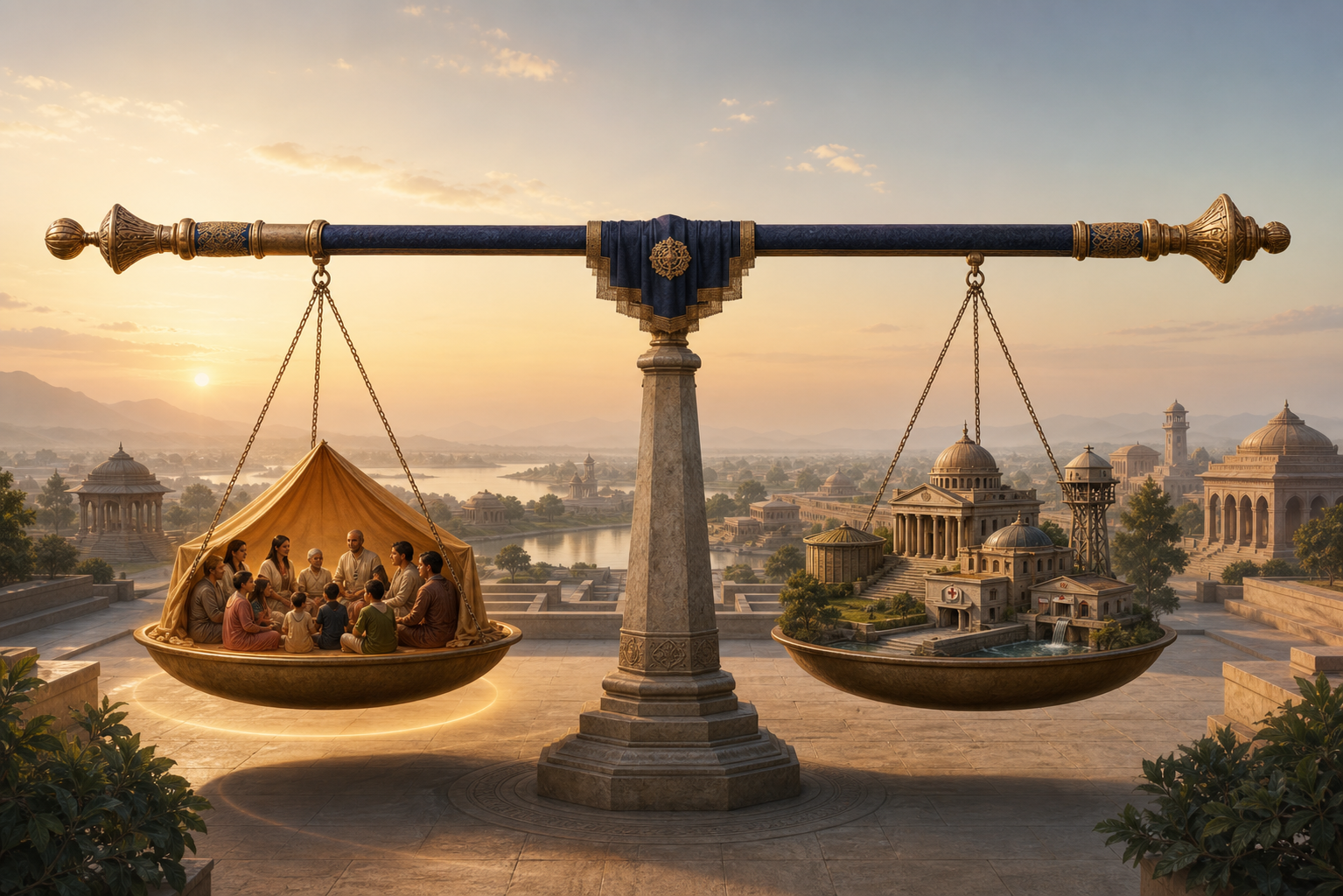
Dharma Unveiled: The Living Code of Virtue Guiding Daily Life Across Dharmic Traditions

Dharma is presented as a living, context-sensitive code of virtue shared across Hinduism, Buddhism, Jainism, and Sikhism. The article clarifies its scopefrom universal virtues like ahiṃsā and satya to role-specific dutiesand shows how it governs the pursuit of prosperity and well-being without compromising conscience. It draws on classical sources (Dharmashastras, the Bhagavad Gita, Buddhist canons,…
-
Servant of a Glorious Master: The Transformative Power of Seva and Guru-Tattva Across Dharmic Paths

This long-form reflection reframes ‘Servant of a Glorious Master’ as a disciplined path of seva, wisdom, and devotion shared across Hindu Dharma, Buddhism, Jainism, and Sikhism. It clarifies how dasya-bhava, prapatti, nam-simran, refuge, ahimsa, and anekantavada converge as a common grammar of service. Drawing on the Bhagavad Gita and classical Bhakti theory, it distinguishes service…
-
Introspection to Self-Realization: A Rigorous Dharmic Blueprint for Knowing the Divine

This long-form analysis explains why disciplined self-analysis is a direct, repeatable path to self-realization and knowing the Divine across Hinduism, Buddhism, Jainism, and Sikhism. It integrates the Upanishads, the Bhagavad Gita, Patanjali’s Yoga Sutra, the Satipaṭṭhāna Sutta, Jain Anekāntavāda with Samayik and Pratikraman, and Sikh Naam-centered living under hukam. A rigorous seven-phase practice cycleintention, observation,…
-
Bageshwar Dham’s Bold Challenge: Dhirendra Krishna Shastri Invites Critics to Witness ‘Divine Knowledge’

Pandit Dhirendra Krishna Shastri’s open challenge at Bageshwar Dham invites critics to witness ‘divine knowledge’ firsthand, creating an unusual opportunity for transparent observation in a public darbar. This analysis frames the event through Dharmic epistemologypratyaksha, anumana, and shabdawhile drawing on Anekantavada and Sikh Gurmat to promote interpretive humility and ethical evaluation. It outlines practical, consent-driven…
-
Beyond 330 Million Gods: How Hinduism Unites Many Deities into One Supreme Reality

The familiar claim that Hinduism has 33 crores (330 million) gods is a popular misreading; classical sources enumerate thirty-three devaseight Vasus, eleven Rudras, twelve Adityas, plus Indra and Prajapati. By clarifying the Sanskrit term koṭi (class/category vs. crore), the article shows how Vedic and Upanishadic texts integrate divine plurality within a single metaphysical reality. It…
-
Ripples on the Cosmic Ocean: Turn Life’s Fleeting Moments into Dharma, Wisdom, Oneness

Hinduism likens each life to a ripple on a boundless ocean, a metaphor that dignifies impermanence and intensifies responsibility. Read how Advaita Vedānta, Sāṅkhya-Yoga, and the Bhagavad Gita converge on ethical action, contemplation, and realization of unity. Discover parallel insights in Buddhism’s anicca and dependent arising, Jainism’s anekāntavāda, and Sikhism’s Ik Onkārdiverse paths that affirm…
-
Hindu Wisdom Beyond Pride: Shattering Ego’s Illusion to Reveal the Sacred in All Creation

This essay examines the illusion of worthlessness through Hindu philosophy and a classic teaching tale, The Search for the Void. It explains how ahaṃkāra (ego) and avidyā (misapprehension) distort judgment, while the Upaniṣadic visionīśāvāsyam idaṁ sarvam and sarvaṁ khalvidaṁ brahmareveals intrinsic, relational value. A detailed retelling of the Guru–Śiṣya narrative shows how “void” becomes a…
-
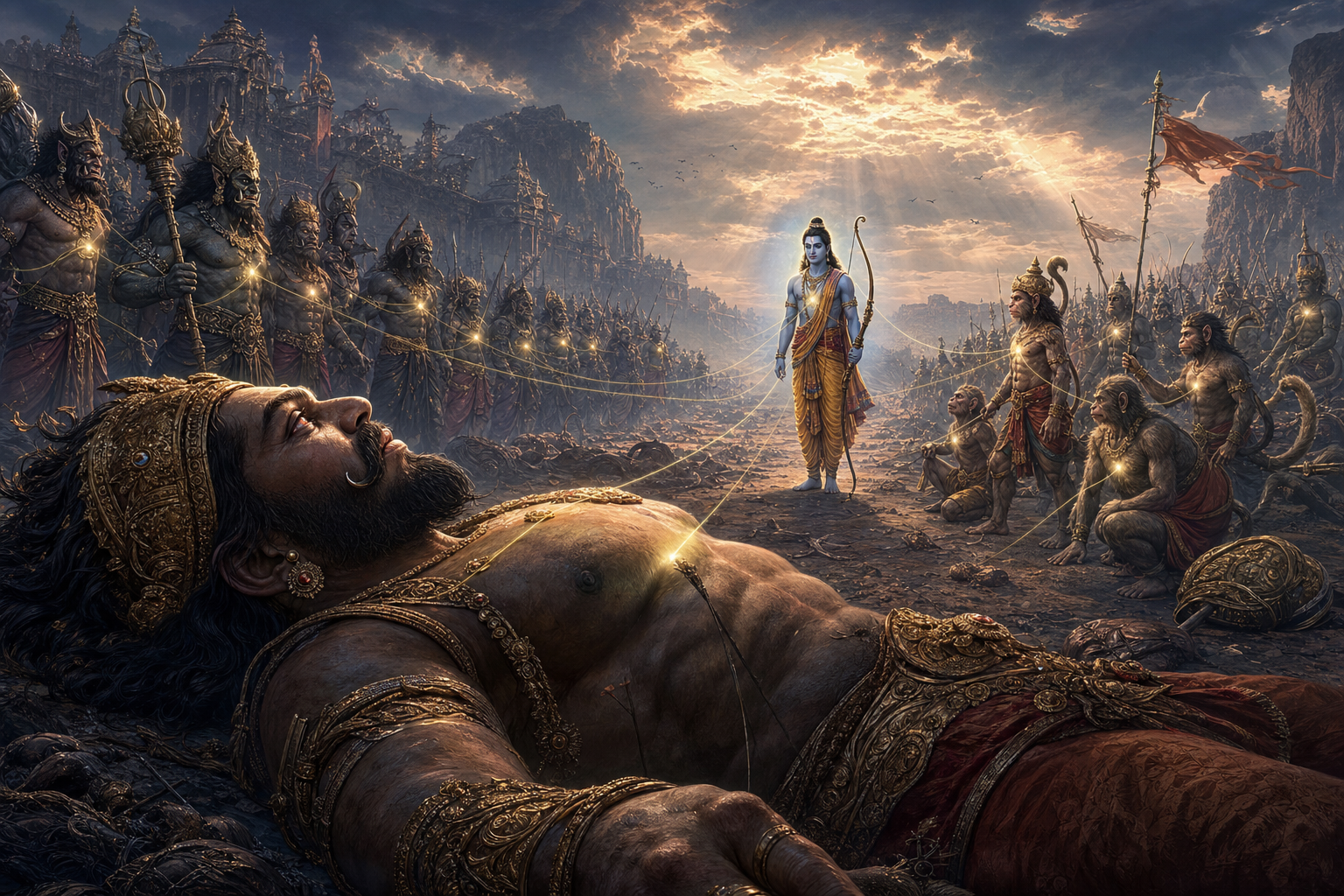
Kumbhakarna’s Vision of Oneness: Ramayana’s Battlefield as a Revelation of Non-Dual Truth

Kumbhakarna’s encounter with Rama in the Ramayana is more than a dramatic duel; it is a philosophical disclosure that reframes war as a revelation of oneness. Grounded in Yuddha Kanda and illuminated by Vaishnava doctrine on Jaya–Vijaya, the episode supports a Vedantic reading in which multiplicity is undergirded by a single reality. Advaita, Vishishtadvaita, and…
-
Many Paths, One Dharma: How the Ramayana Maps Righteous Action Across Conflicting Duties

This long-form, scholarly exploration reads the Ramayana as a rigorous map of dharma where competing duties are weighed rather than simplified. It clarifies crucial categoriessādhāraṇa-dharma, svadharma, āpad-dharma, maryādā, and rājadharmaand shows how they animate choices made by Rāma, Sītā, Bharata, Lakṣmaṇa, Hanumān, Vibhīṣaṇa, and others. Multiple retellings (Valmiki, Kamban, Tulsidas, Adhyatma Ramayana, Jain Paumachariya) are…
-
Reviving Sacred Questioning: Vedic, Buddhist, Jain, and Sikh Paths to Intellectual Freedom

Sacred questioning sits at the heart of the dharmic heritage. This long-form analysis traces how Vedic dialogues, Nyāya–Mīmāṃsā logic, Buddhist pramāṇa theory, Jain anekāntavāda, and Sikh vichar cultivated disciplined inquiry as a path to truth and social harmony. It explains the technical tools of reasoningpramāṇas, syllogisms, hermeneutic canons, and fallacy-detectionand shows how classical śāstrārtha fostered…
-
Pratyaksha in Nyaya Darshana: Mastering Direct Perception as the Bedrock of True Knowledge

This long-form, research-driven overview presents pratyaksha (direct perception) in Nyaya Darshana as the foundational pramana that grounds inference, analogy, and testimony in Indian epistemology. It clarifies Nyaya’s definition of valid perception, its two-stage phenomenology (nirvikalpa and savikalpa), and its fine-grained analysis of sense–object contact and extraordinary forms such as samanyalakshana, jnanalakshana, and yogaja pratyaksha. Readers…
-
Nyaya Darshana’s Four Pramanas: A Practical Guide to Valid Knowledge and Clear Reasoning

Nyaya Darshana locates the pursuit of truth in four reliable pramanasperception, inference, analogy, and trustworthy testimonyoffering a rigorous, practical method for valid knowledge. It clarifies how accurate observation is secured, how reasons genuinely support conclusions, how analogies bridge the known and the unfamiliar, and how credible sources can be identified without cynicism. The framework diagnoses…